Chindia Alert: You’ll be Living in their World Very Soon
aims to alert you to the threats and opportunities that China and India present. China and India require serious attention; case of ‘hidden dragon and crouching tiger’.
Without this attention, governments, businesses and, indeed, individuals may find themselves at a great disadvantage sooner rather than later.
The POSTs (front webpages) are mainly 'cuttings' from reliable sources, updated continuously.
The PAGEs (see Tabs, above) attempt to make the information more meaningful by putting some structure to the information we have researched and assembled since 2006.
Tsai Ing-wen visited exiled Hong Kong bookseller a day after NPC voted in favour of legislation
Lam Wing-kee said fleeing Hongkongers saw Taiwan as a step towards applying for asylum in the West
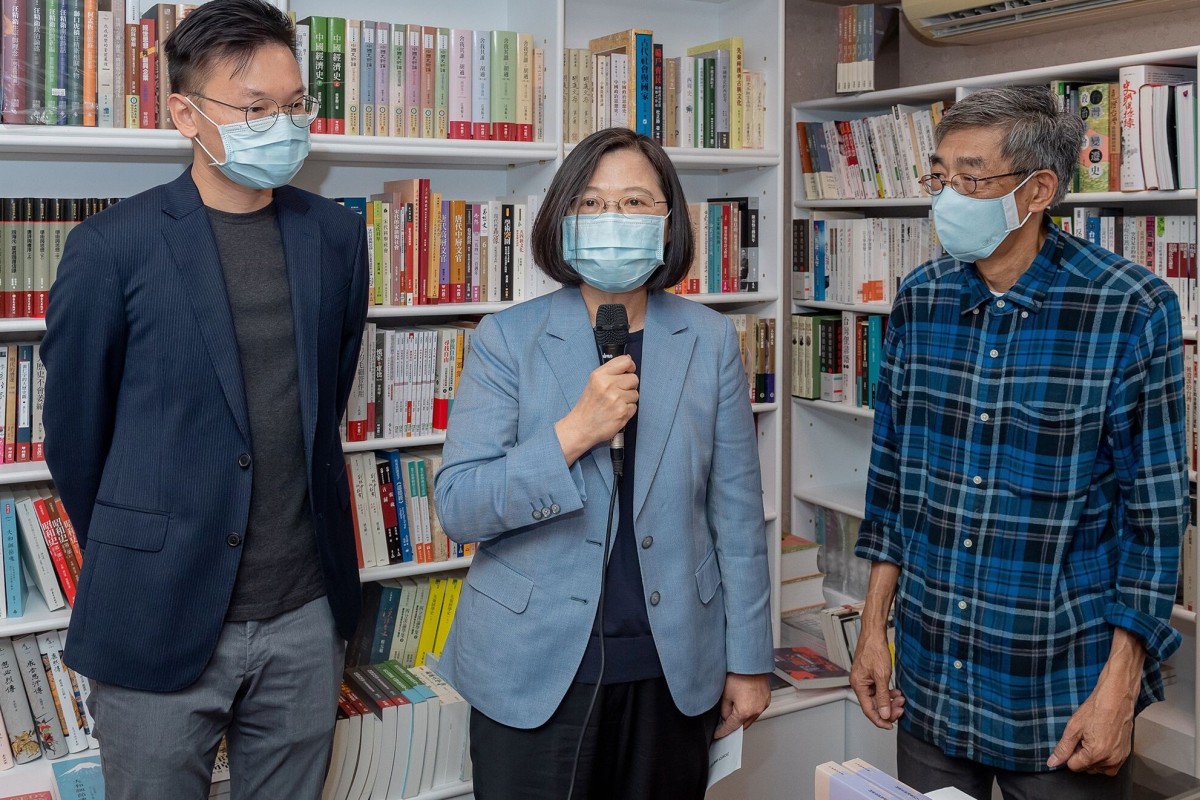
President Tsai Ing-wen (centre) shows her support for Hong Kong bookseller Lam Wing-kee (right) with Lin Fei-fan, deputy secretary general of the ruling Democratic Progressive Party. Photo: Taiwan presidential office/AFP
Her visit came a day after China’s legislature, the National People’s Congress, voted in favour of a resolution to initiate the legal process for a national security law to be imposed on Hong Kong, despite concerns from the United States, the European Union and elsewhere that the move would erode human rights, freedom and autonomy in the city.
Tsai said on behalf of all Taiwanese people, she welcomed Lam to stay in Taiwan where he could bolster the island’s efforts to further freedom and democracy.
Hongkongers who want to flee to Taiwan ‘will go through strict screening’
28 May 2020
Lam, one of the five shareholders and staff at Hong Kong’s Causeway Bay Books, fled to Taiwan in April last year after he was detained by Chinese agents for eight months in 2015 for selling books critical of the Chinese leadership.
between October and December that year and it emerged they had been detained on the Chinese mainland.
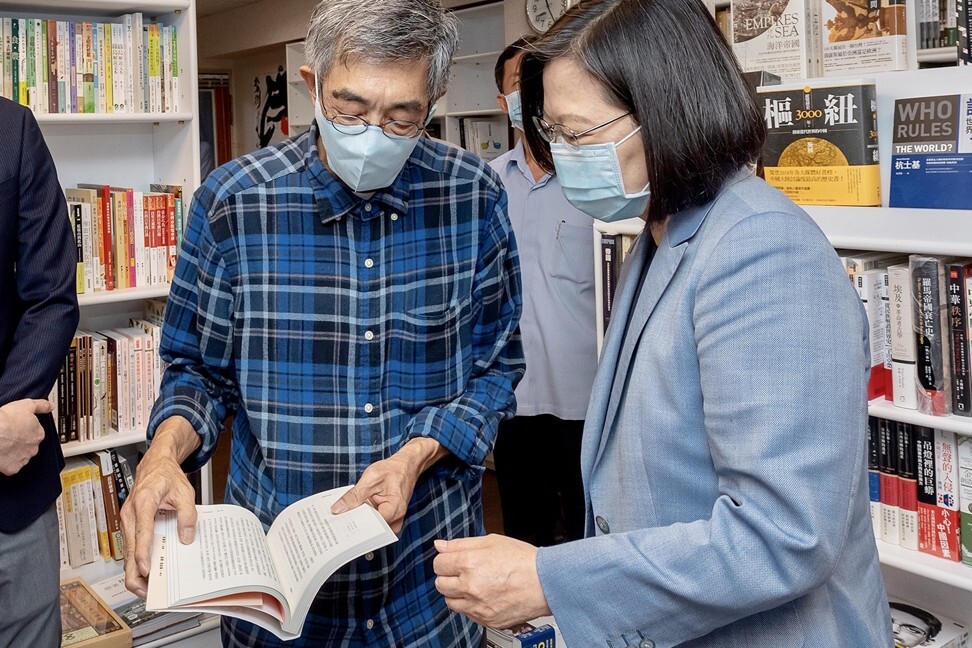
President Tsai Ing-wen looks at a book while visiting Lam Wing-kee on Friday. Photo: Taiwan presidential office/AFP
Lam later said he had been detained and blindfolded by police after crossing the border into mainland China from Hong Kong in October 2015.
The case triggered a huge controversy and raised fears of growing Chinese control in the city.
Seeing Lam as a representative of Hongkongers fleeing to Taiwan to avoid political persecution, Tsai said she wanted to understand what challenges these exiles faced and what help they needed during their stay on the self-ruled island.
“I want to tell Boss Lam [Wing-kee] and our Hong Kong friends that the government here has set up an ad hoc committee to offer help to them very soon,” she said.
On Wednesday, Tsai called for the government to set up an ad hoc committee to work out a “humanitarian help action plan” for Hong Kong people seeking to live in Taiwan or immigrate to the island. It was borne out of concern they would be arrested or prosecuted for taking part in months of anti-government protests triggered last year by the now-shelved extradition bill.
Chen Ming-tong, head of the Mainland Affairs Council, the island’s top mainland policy planner, said on Thursday his council would draft the measures for cabinet’s approval in a week.
Under the plan, the Mainland Affairs Council would issue special measures and coordinate with the island’s authorities on how to help Hongkongers relocate to Taiwan and take care of them.
Bookseller Lam told Tsai what Hongkongers needed most was to have their stay in Taiwan extended.
Lam said that currently, because of the absence of a political asylum law, Hongkongers could only apply to live in Taiwan through study, work, investment, their professional skills or close relatives.
He said fleeing Hongkongers usually came to Taiwan on tourist permits, which at most allowed them to stay for up to six months, giving them not enough time to apply for long-term residence in Taiwan.
“It would be better if they can stay for nine months and preferably one year,” he said.
Lam said some fleeing Hongkongers saw Taiwan as an intermediary base as they hoped to apply for asylum in the West, but it took a long time for Western countries to screen and approve their asylum requests.
Meanwhile, Premier Su Tseng-chang said Article 18 of the Laws and Regulations Regarding Hong Kong and Macau Affairs was good enough to deal with the current crisis in the absence of a political asylum law in Taiwan.
That article states that “necessary help shall be provided to Hong Kong or Macau residents whose safety and liberty are immediately threatened for political reasons”.
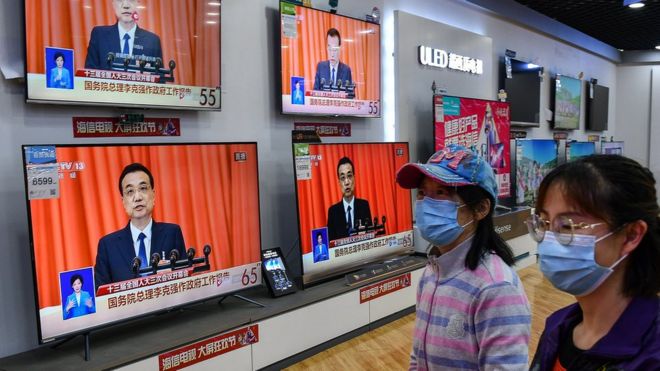
Image copyright AFP / GETTYImage caption Shoppers walking past a broadcast of Chinese Premier Li Keqiang delivering his speech at the opening of the NPC on Thursday
China’s ruling Communist Party has set in motion a controversial national security law for Hong Kong, a move seen as a major blow to the city’s freedoms.
The law to ban “treason, secession, sedition and subversion” could bypass Hong Kong’s lawmakers.
Critics say China is breaking its promise to allow Hong Kong freedoms not seen elsewhere in China.
It is likely to fuel public anger and may even trigger fresh protests and demands for democratic reform.
The plan was submitted at the annual National People’s Congress (NPC), which largely rubber-stamps decisions already taken by the Communist leadership, but is still the most important political event of the year.
Hong Kong, a semi-autonomous region and an economic powerhouse, was always meant to have introduced such laws after the handover from British control to Chinese rule in 1997.
After last year’s wave of sustained and violent protest, Beijing is now attempting to push them through, arguing “law-based and forceful measures” must be taken to “prevent, stop and punish” such protests in the future.
On Friday, Hong Kong’s government said it would co-operate with Beijing to enact the law, adding it would not affect the city’s freedoms.
That article says Hong Kong “must improve” national security, before adding: “When needed, relevant national security organs of the Central People’s Government will set up agencies in Hong Kong to fulfil relevant duties to safeguard national security in accordance with the law.”
China could essentially place this law into Annex III of the Basic Law, which covers national laws that must be implemented in Hong Kong – either by legislation, or decree.
Addressing the congress, Premier Li Keqiang spoke of the economic impact of the coronavirus and on Hong Kong and Macau said: “We’ll establish sound legal systems and enforcement mechanisms for safeguarding national security in the two Special Administrative Regions.”
What do opponents say the dangers are?
Hong Kong is what is known as a “special administrative region” of China.
It has observed a “one country, two systems” policy since Britain returned sovereignty in 1997, which has allowed it certain freedoms the rest of China does not have.
Pro-democracy activists fear that China pushing through the law could mean “the end of Hong Kong” – that is, the effective end of its autonomy and these freedoms.
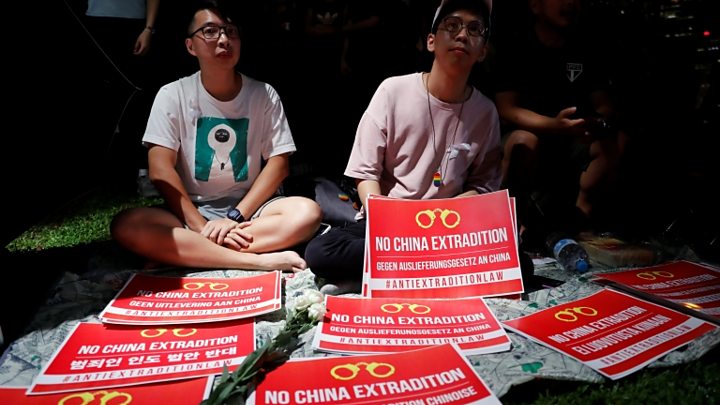
Last year’s mass protests in Hong Kong were sparked by a bill that would have allowed extraditions to mainland China.
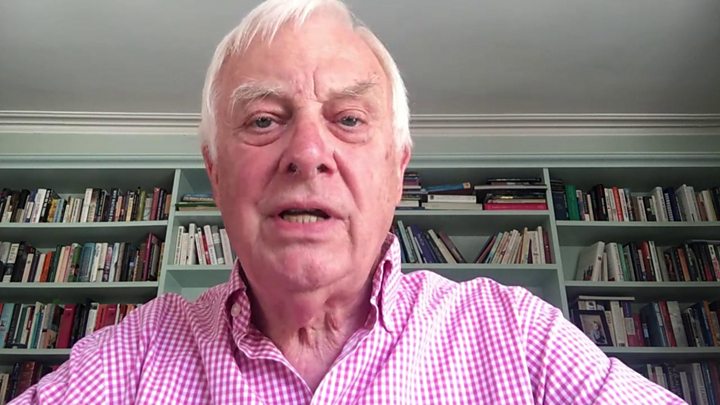
Media caption Former Hong Kong governor Chris Patten: “UK should tell China this is outrageous”
The bill was paused, then withdrawn – but the protests continued until the virus outbreak at the end of the year.
The US has also weighed in, with President Trump saying the US would react strongly if it went through – without giving details.
It is currently considering whether to extend Hong Kong’s preferential trading and investment privileges.
Why is China doing this?
Mr Wang said the security risks had become “increasingly notable” – a reference to last year’s protests.
“Considering Hong Kong’s situation at present, efforts must be made at the state-level to establish and improve the legal system and enforcement mechanisms,” he is quoted as saying in state media.
Media caption The BBC’s Helier Cheung on Hong Kong’s 2019 protests
Beijing may also fear September’s elections to Hong Kong’s legislature.
If last year’s success for pro-democracy parties in district elections is repeated, government bills could potentially be blocked.
What is Hong Kong’s legal situation?
Hong Kong was under British control for more than 150 years up to 1997.
The British and Chinese governments signed a treaty – the Sino-British Joint Declaration – that agreed Hong Kong would have “a high degree of autonomy, except in foreign and defence affairs”, for 50 years.
This was enshrined in the Basic Law, which runs out in 2047.
BEIJING, May 2 (Xinhua) — Chinese religious circles have slammed the United States Commission on International Religious Freedom for smearing China’s freedom of religious belief in the commission’s recent report.
The annual report, which groundlessly blamed the freedom of religious belief in China and viciously slandered China’s religious policies, was met with general revulsion and indignation among Chinese religious circles and numerous religious believers, said a statement issued by the secretariat of the joint conference of China’s national religious groups.
“We express our strong condemnation,” the statement said.
It is obvious to all that the Chinese government protects citizens’ basic rights in accordance with the law, and religious believers enjoy full freedom of religious belief, the statement noted.
Chinese religious circles have made remarkable achievements in the development of theological theories, the construction of religious venues and the cultivation of talents, it said.
However, the United States has ignored the facts and piled unwarranted criticism on China’s religious situation, exposing its arrogance and prejudice, the statement said, adding that the acts have interfered in China’s internal affairs, smeared China’s freedom of religious belief and hurt the feelings of Chinese religious believers.
“We urge the United States to stop using religious matters to interfere in other countries’ internal affairs and stir up troubles,” it said.
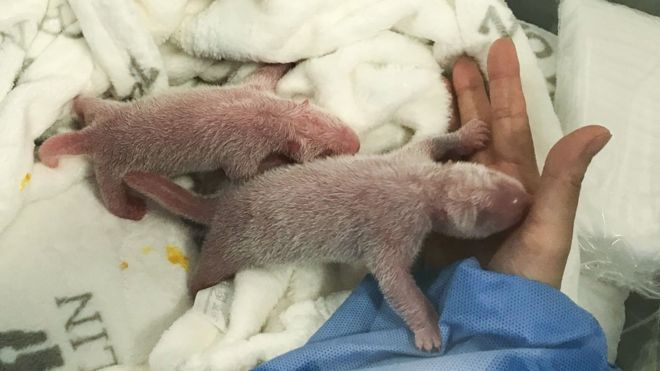
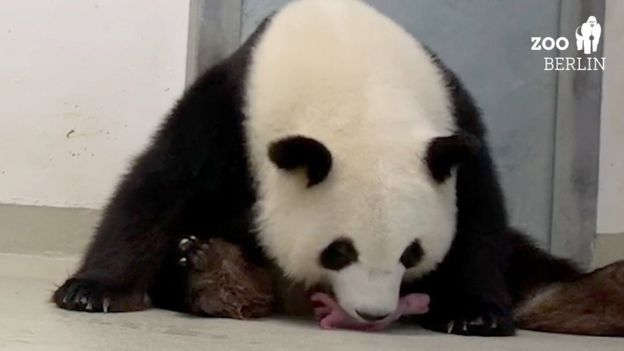
Image copyright AFPImage caption Meet Hong and Kong?
Two newborn panda cubs at Berlin Zoo have been unexpectedly caught up in Hong Kong’s political unrest, after German newspapers started a campaign to name them “Hong” and “Kong”.
One of Berlin’s leading papers, Der Tagesspiegel, asked its readers to come up with name suggestions.
Top of the poll: “Hong” and “Kong”.
One reader wrote in to say they should be named “in solidarity with a city fighting for survival”.
Other suggested names included “Joshua Wong Chi-fung” and “Agnes Chow Ting” – after two prominent Hong Kong democracy activists.
Loaning pandas to zoos around the world is part of China’s soft diplomacy, aimed at winning hearts and minds abroad.
As the cubs will have to be returned to China in two to four years, the paper suggested that naming them after the activists might even be a sneaky way of keeping them in Germany.
The poll is in no way binding or even related to the zoo – but it was soon picked up by Germany’s leading tabloid, Bild, which issued a passionate call “to politicise” the naming of the little pandas.
“Bild is choosing to call the panda cubs Hong and Kong because it’s China’s brutal politics that lies behind these panda babies,” the paper wrote on Thursday.
“Bild is demanding of the German government that it reacts in a political way to the birth of these small bears.”
As German Chancellor Angela Merkel is currently on a visit to China, Bild said she could even relay the news to President Xi Jinping in person.
Image copyright EPAImage caption Mother panda Meng Meng has been on loan to Germany since 2017
Hong Kong activists had already called on Ms Merkel to raise their cause during her talks in Beijing.
In an earlier interview with Bild, activist Joshua Wong had suggested the zoo should name the animals “Freedom” and “Democracy”.
The German media’s foray into panda PR came as Hong Kong’s government launched a series of full-page adverts in international newspapers, designed to reassure investors that the city is still open for business.
The ads, which will run in leading papers around the world, say the government is determined to achieve a “peaceful, rational and reasonable resolution” to present political tensions.
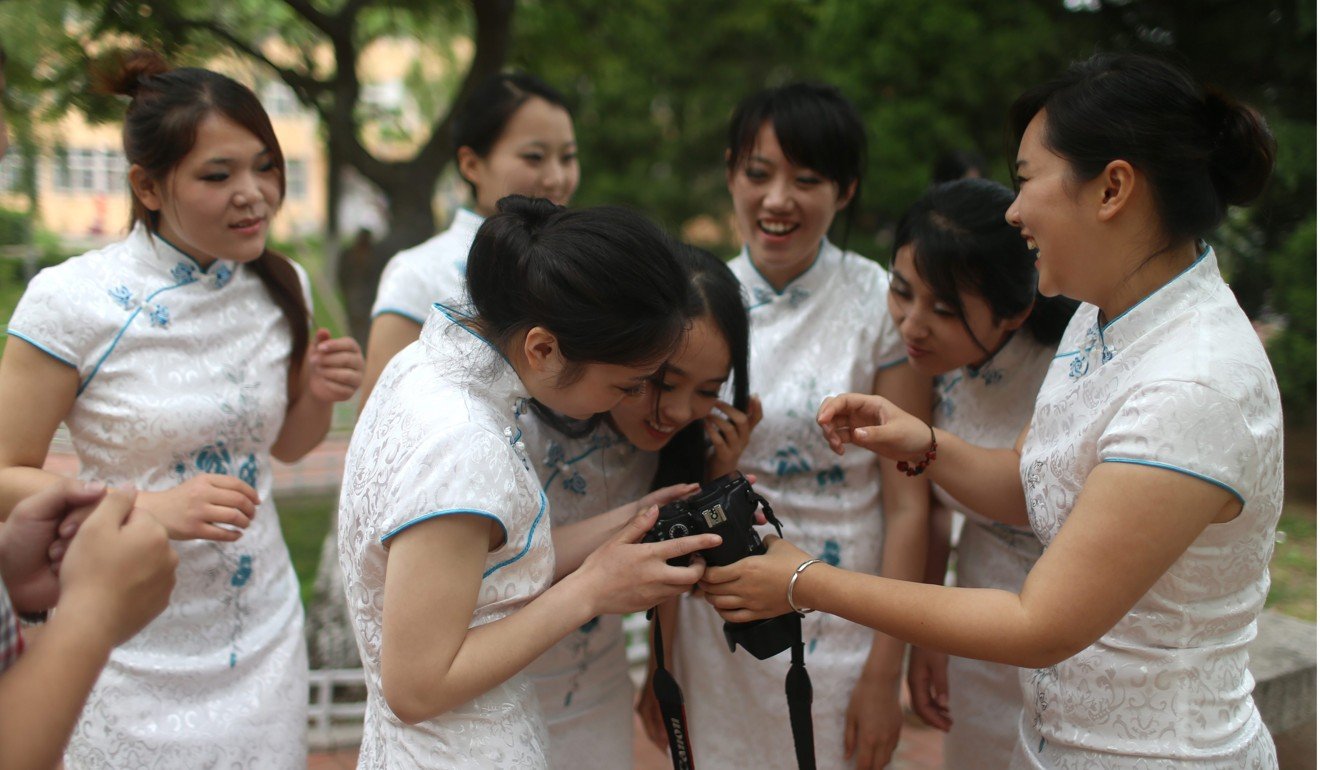
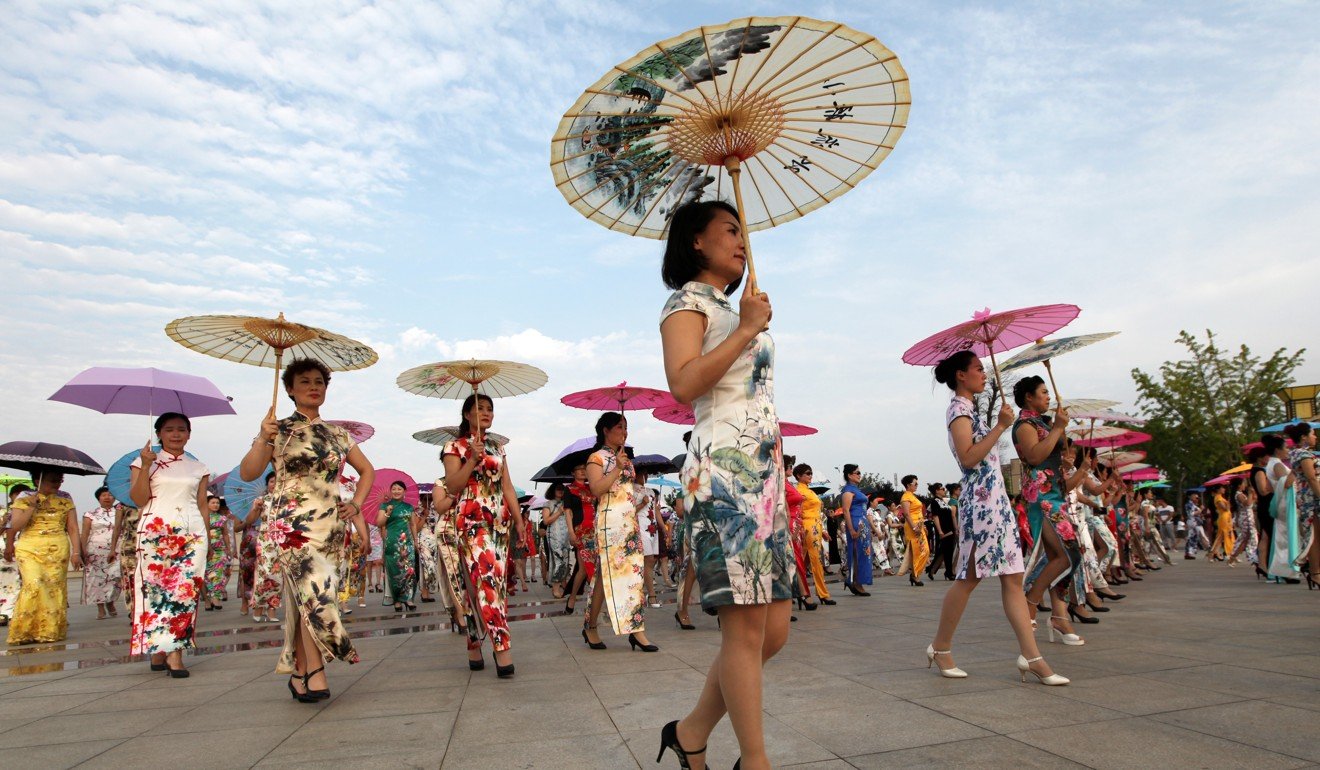
When Kazakh actress Reyizha Alimjan arrived in Shanghai last month wearing jeans and a camisole it reignited a long-running debate over who gets a say on how Chinese women should dress
Fashion choices that would be regarded as unremarkable in Europe or North America are often seen as outrageous in the world’s most populous nation
Kazakh actress Reyizha Alimjan’s fashion choices sparked a social media storm in China last month. Photo: Weibo
When Li Xiang broke up with her boyfriend over a selfie she posted on social media, it was not just about a woman letting a man know he wasn’t entitled to tell her how to dress in public, but a matter of personal freedom, social norms and cultural tradition.
A few weeks ago, the 24-year-old media worker from Shanghai shared a photo on WeChat that showed her posing at her bedroom door in a camisole and mini shorts. Her boyfriend said it made him very “uncomfortable”, and they quarrelled.
“‘Look how scantily clad you are, and [if] that is not enough, you shared it online,’ he said,” Li recalled.
“I got mad when he said, ‘You should go and ask other men if they’d like their girlfriends to dress like that’, as if he should decide what I wear – as if I were his appendage,” she said, referring to the archaic notion that a woman is secondary to a man in their relationship.
What clothes Chinese women should or should not wear has been the subject of intense online debate in recent weeks. Photo: EPA
Their argument was not unusual in China, especially over the past month when the online world became embroiled in a war of words about women’s freedom to dress as they please.
The controversy erupted when an article defending Reyizha Alimjan – the Kazakh actress criticised for showing too much flesh when she arrived at an airport in Shanghai in late July wearing jeans and a camisole – appeared on a WeChat movie review account called Staff of the 3rd Hall on August 12.
Reyizha Alimjan was criticised for her outfit on Chinese social media. Photo: Weibo
While that perspective was supported by many women online, others disagreed and said that society was open and tolerant but that people had the right to disagree.
By coincidence, a poll about women wearing camisoles in public was launched on August 10 by a WeChat account called Cicada Creativity. About 70 per cent of the nearly 14,000 respondents said they did not dare to do so.
More than 40 per cent avoided doing so for reasons such as thinking they were “not thin enough”, but a quarter said they said no because either their boyfriends disapproved or would not allow it, or they feared they would be harassed.
Chinese women spurn Victoria’s Secret for home-grown lingerie brands
Joy Lin, a feminist from Shanghai, said the debate was so fierce because it was not just about dress.
“It’s more about people’s judgment about one’s character and morals behind what she wears,” Lin said. “If you wear revealing clothes, they would say you are asking for harassment. If you show a little skin, you are frigid. And if you are casual, they call you ‘dama’ [Chinese slang, often derogatory, for middle-aged and elderly women].”
Some women say they are often judged by the clothes they wear. Photo: AP
In her experience, Lin said that if she appeared on the streets of Shanghai – the most cosmopolitan city in China – without a bra, there would be judgmental looks from passers-by before she had walked 10 metres (33 feet).
In contrast, she did just that in Paris in July, and, “no one stared at me or came near me at all”.
“Usually, when it comes to comments about what we wear, they’re not about whether the dress matches the hairstyle or things like that, but about our bodies, whether we’re slim or not and stuff like that,” she said. “Some [comments] can be very malicious and insulting.”
#MeToo rally accuses Hong Kong police of sexual violence against protesters
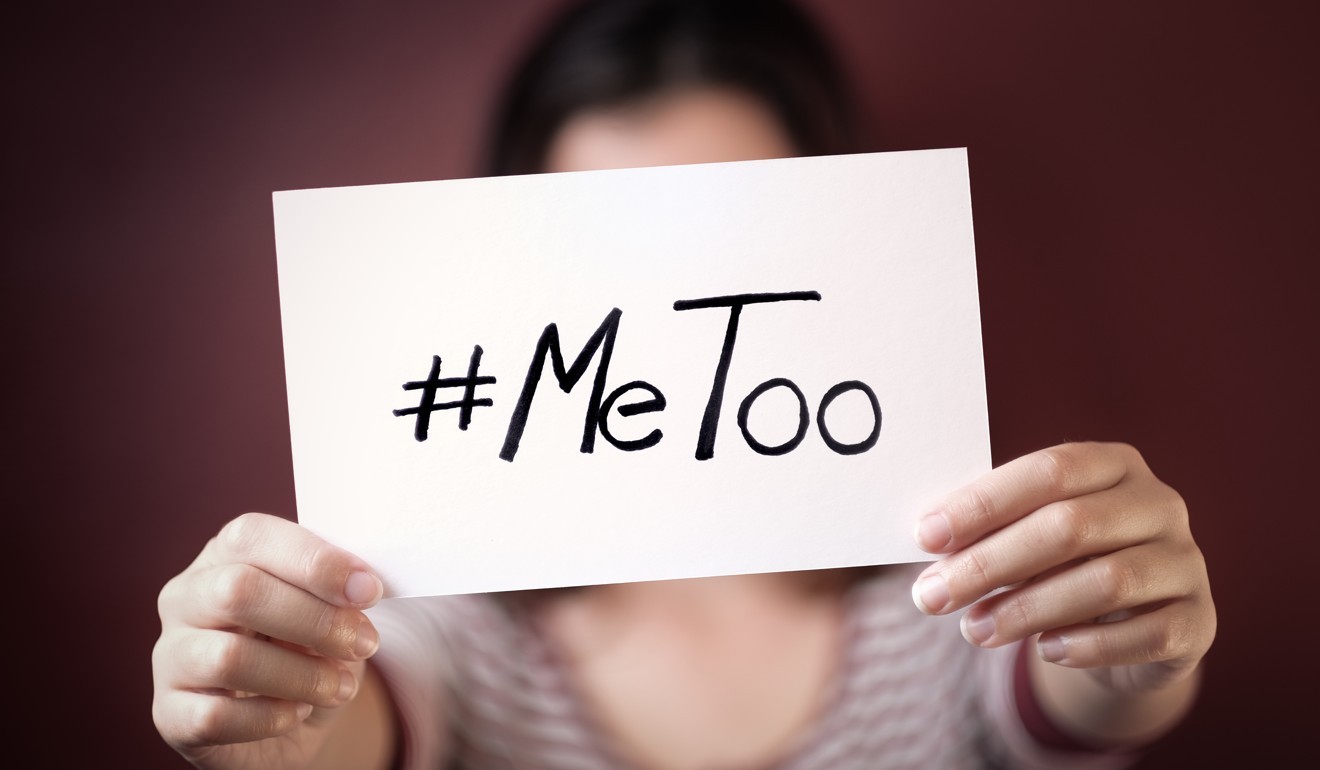
While shaming women for their clothing choices has been an issue for many years, it reached peak public awareness in China after the #MeToo movement took off in the US.
The social media campaign went viral in 2017 when dozens of women accused American film producer Harvey Weinstein of sexual assaults over a period of nearly 30 years.
The #MeToo movement took off in the US in 2017 after dozens of women accused film producer Harvey Weinstein of sexual assault. Photo: Shutterstock
Lu Peng, a researcher from the Shanghai Academy of Social Sciences, said the online debate helped encapsulate conflicts between a growing desire for freedom, gender norms and generations of tradition.
“There will hardly be a consensus on such a question about whether women have the freedom to dress,” he said. “But if this discussion can make people realise that men, not just women, also face restrictions in dressing, then it’s bringing progress.”
The simplest example was to dress for the occasion, which applies to both sexes.
“We have never been free in dressing. We’re only free within a certain extent … About what to wear in public, I don’t think we should emphasise freedom only and ignore the local culture and society,” Lu said.
Keeping a low profile has long been part of the Chinese philosophy. Photo: Xinhua
In China, there is no law banning states of dress or undress in public, nor do the Han people, who make up most of the population, have religious beliefs that restrict their mode of dress. But keeping a low profile and avoiding unwanted attention has long been part of the Chinese philosophy.
“My father will also ask me not to be ‘overexposed’, because he believes it’s increasing the risk of being harassed,” Li, the Shanghai media worker, said.
“They think they mean well, but I just want to be myself. I’m not breaking any law. I want to make my own contribution in changing this culture,” she said.
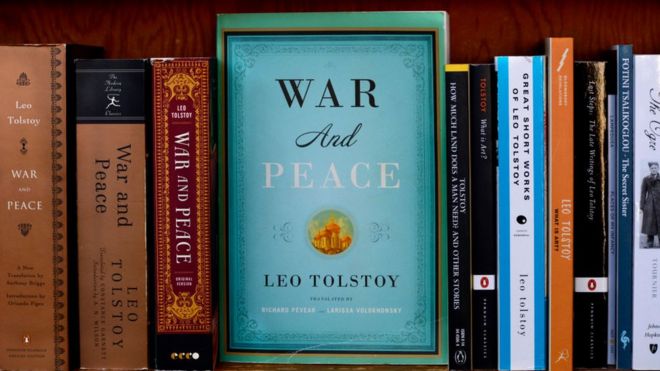
Leo Tolstoy’s War and Peace is in the news in India after a judge asked an activist to explain why he had a book “about war in another country”.
Vernon Gonsalves had appeared in the high court in Mumbai city on Wednesday for a hearing on his bail plea.
The judge’s question sparked a flurry of tweets, with users both outraged and bemused by it.
Five activists, including Mr Gonsalves, were arrested in August 2018 in connection with caste-based violence.
Police raided and searched their homes at the time and submitted a list of books, documents and other belongings to the court. The public prosecutor told the court that police had found “incriminating evidence” in Mr Gonsalves’ home, including “books and CDs with objectionable titles”.
“Why were you having these books and CDs at your home? You will have to explain this to the court,” the judge told Mr Gonsalves.
Police said that all five activists incited Dalits (formerly untouchables) at a large public rally on 31 December 2017, leading to violent clashes that left one person dead. They accused them of “radicalising youth” and taking part in “unlawful activities” which led to violence and showed “intolerance to the present political system”.
The arrests had been criticised by many at the time who saw them as an attack on free speech, and even a “witch hunt” against those who challenged the governing Bharatiya Janata Party (BJP).
So the judge’s question quickly made news and War and Peace was soon trending on Twitter.
The tweets ranged from jokes to shock over the state of India’s judiciary.
Others wondered how they would fare in a courtroom given what’s on their bookshelf, and some have issued a call out asking people to share books from their own “subversive” collection.
Zhang Lin, a Beijing-based independent political economy commentator, questions why returnees are becoming ardent supporters of the government-directed model
China’s economic boom offers returnees far more advantages than Western societies could upon their graduation
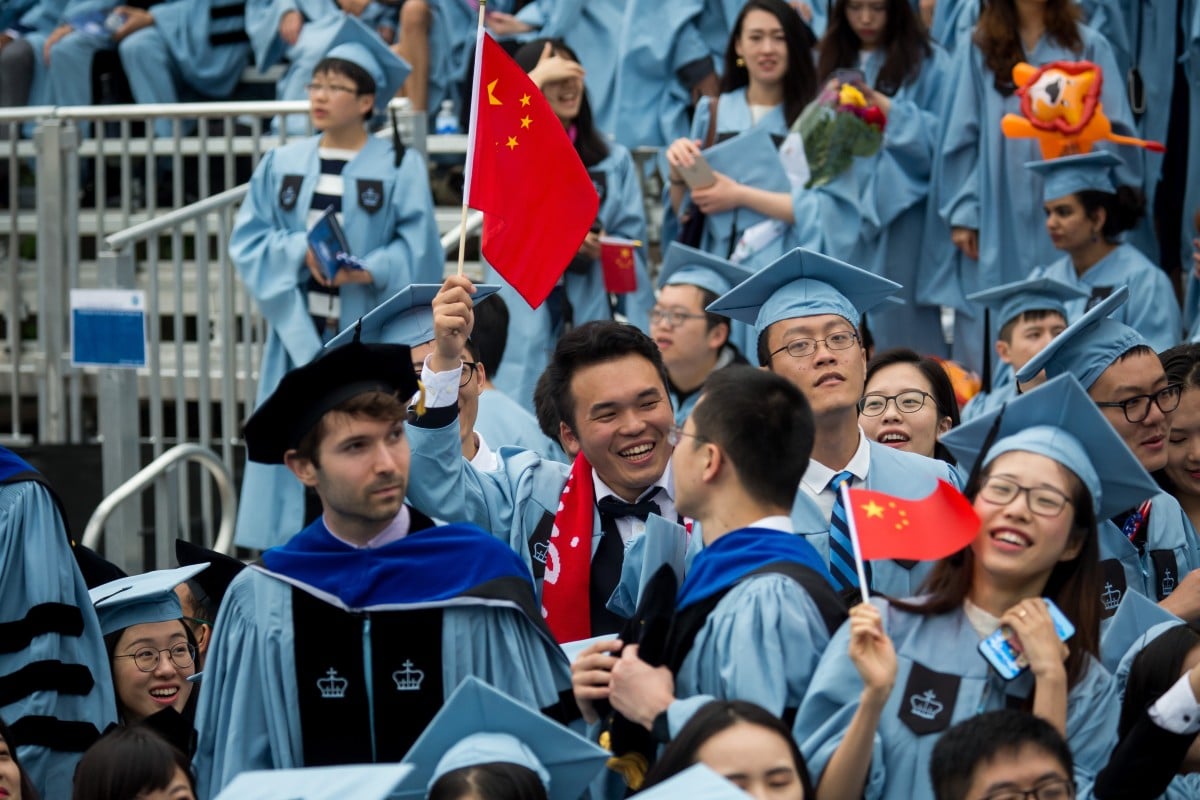
The number of Chinese students studying in the US and European schools soared, offering fresh hope that returnees with an overseas educational background would facilitate China’s transformation into a society that resembled the west. Photo: Xinhua
At the turn of the century, many people foresaw a “westernisation” process taking place in China – the development of a market economy and a freer society – especially after China joined the World Trade Organisation in 2001 with a clear commitment to reform its state-owned enterprises.
The number of Chinese students studying in the US and European schools soared, offering fresh hope that returnees with an overseas educational background would facilitate China’s transformation into a society that resembled the west.
But it has not turned out as expected, with more and more returnees who graduated from Western universities becoming ardent and vocal supporters of the Chinese government-directed model. It seems strange on the surface that young Chinese people, who have several years’ first-hand experience of Western democracy and freedom, would become big fans of an intrusive state.
One explanation is that the overseas students who worship the Western lifestyle never return to China.
In the 1980s and 1990s, Chinese students who studied abroad did not rely on wealth or family background, but excellent academic achievement, and most of the students who went abroad were funded by China’s Ministry of Education. After experiencing the huge gaps between China and the West at that time in terms of living standards and social development, many chose to stay after graduation.
China’s overseas study policy at that time dictated that these students needed to return back within five years, or else their families could have faced punishment. Despite this, according to statistics from 2002, 92 per cent of Chinese students who obtained doctorate degrees in the United States during the 1990s choose not to return to their homeland.
Things began to change in the late 1990s. China’s private businesses started to boom after Deng Xiaoping’s “southern tour” in 1992, with many government officials and local leaders quitting their public jobs to pursue private wealth, in a trend dubbed “smashing their and jumping into the sea”. Blessed by their connections to the state apparatus, many of them became filthy rich in the process.
These Chinese nouveau riche could suddenly afford foreign university tuition fees and started sending their children to study abroad. The Chinese government also relaxed its policy on overseas education, and most overseas Chinese students became “second generation” rich and powerful.
At the same time, western universities particularly in the US and Britain opened their arms to the flow of Chinese students who were willing to pay hefty tuition fees and sometimes willing to make sizeable donations.
Most of these returnees, whose families have made significant gains from China’s state-led market economy, were beneficiaries of the Chinese model
According to statistics from the “Report on the Survey of Overseas Students” covering the years 2000 to 2011, 1.9 million Chinese students studied abroad, with 91.3 per cent of them “self-funded”. By 2014, the proportion of overseas students who returned to China had risen to 51.4 per cent, according to the “2015 China Returnees Development Report”.
This report also pointed out that 32 per cent of returnees were willing to work for the government.
Most of these returnees, whose families have made significant gains from China’s state-led market economy, were beneficiaries of the Chinese model. The experience of studying abroad, ironically, only enhanced their understanding of their advantages and privileges back home.
China’s economic boom offered far more chances for this well-educated, and well-connected, group than Western societies could, upon their graduation. If they chose to stay in the Western country where they studied, they were faced with the prospect of starting from scratch, but if they chose to go back China, they could get a better job, probably earn more money, inherit the wealth of the previous generation and live as a member of the elite.
That China’s overseas returnees are supporters of the Chinese model indicates that the Western concept of freedom is not always a powerful incentive. If competition between countries is competition between elite groups, conflicts between the Chinese model and the US model may last for several generations and spread to more countries.
HONG KONG, June 15 (Xinhua) — An official in charge of the Office of the Commissioner of the Chinese Foreign Ministry in Hong Kong Special Administrative Region (HKSAR) on Saturday expressed understanding, respect and support for the decision by the HKSAR chief executive to suspend the exercise to amend the HKSAR’s Fugitive Offenders Ordinance and the Mutual Legal Assistance in Criminal Matters Ordinance.
The official also voiced continuous staunch support for HKSAR Chief Executive Carrie Lam and the SAR government in governing Hong Kong in accordance with law, safeguarding the country’s sovereignty, security and development interests, and upholding Hong Kong’s enduring prosperity and stability.
“We firmly support the SAR government’s efforts to amend the ordinances,” he said, adding that the amendments to the two ordinances aim to plug a legal loophole in the existing legal framework, demonstrate social justice and improve Hong kong’s rule of law, which is necessary, legitimate and reasonable.
The contents of the amendments conform to the international law and the common practices of the international community, and help fight crimes, he said.
The official strongly condemned the violent acts by some people, and voiced firm support for the Hong Kong police force to mete out punishment in accordance with law, uphold Hong Kong’s rule of law and protect Hong Kong’s social stability.
Since Hong Kong’s return to the motherland, Hong Kong people have been enjoying unprecedented and extensive rights and freedoms, including the freedoms of speech and assembly, he said.
However, freedom is by no means without boundaries, and rights must be exercised within the framework of the rule of law. Any civilized society ruled by law will not tolerate unlawful acts which impact peace and security, he said.
He stressed that Hong Kong is China’s Hong Kong and its affairs are purely China’s internal affairs. “We resolutely oppose any external forces interfering in its affairs with any excuse or in any form. Any attempts to create chaos in Hong Kong and jeopardize its prosperity and stability are doomed to fail,” he said.
“Again, we urge relevant countries to comply with the international law and the basic norms governing international relations, fully respect China’s sovereignty and the SAR government in exercising governance in accordance with law and immediately stop the wrong words and deeds that undermine Hong Kong’s prosperity and stability,” the official said.
MARCHING by the thousands this week in stifling heat through their small coastal village, residents of Wukan carried Chinese flags and shouted out slogans in support of the Communist Party. That was just to protect themselves from retribution by the riot police, who watched them closely but did not intervene. Their real message was in other chants: “Give us back our land!” and “Free Secretary Lin!”
The secretary in question was their village chief, Lin Zulian, whom they elected in 2012 in what was widely hailed at the time as a breakthrough for grassroots democracy. Mr Lin had led Wukan in a months-long rebellion against local authorities. Villagers kicked out party officials and police from their offices in protest against the alleged seizure of some of Wukan’s land by corrupt officials who had lined their pockets with the proceeds of selling it. Police responded by blockading the village, turning it into a cause célèbre—including in some of the feistier of China’s heavily censored media. In the end the government backed down: it allowed Wukan to hold unusually free elections and it promised to sort out the land dispute. The “Wukan model” became Chinese reformists’ shorthand for what they hoped would be a new way of defusing unrest.
They have been disappointed. Villagers did not get their land back, or the money some wanted in lieu of it. Mr Lin, who won another landslide victory in elections two years ago, announced plans on June 18th to launch a new campaign for the return of the land. That was clearly too much for the local government: Mr Lin was promptly arrested on charges of corruption. Angry residents took to the streets again.
Villagers in China often stage protests over land rights; local authorities usually deal with them either with force, or by promising concessions and then rounding up the ringleaders. Restoring calm to Wukan will be tougher. Because of its fame, journalists have poured in, especially from nearby Hong Kong. Local officials may be reluctant to resort to the usual thuggish tactics in front of such an audience.
In an effort to undermine support for Mr Lin, the government has tried blackening his name. On June 21st officials released a video showing him confessing to bribe-taking. But that merely stoked the villagers’ anger. His wife, Yang Zhen, says she is certain the confession was coerced. His halting delivery in substandard Mandarin, she believes, was his way of letting villagers know this. “They are trying to deceive everyone, but no one believes it,” she says. Dozens of furious villagers went to a local school where nervous officials had barricaded themselves behind metal doors and barred windows; they kicked the doors and shouted abuse. As The Economist went to press, Wukan was preparing to embark on its sixth consecutive day of protest.
Many residents say they have lost all faith in the local government, and that only the central authorities in Beijing will be able to find a fair solution. “They took our land. My father and grandfather farmed it, and now I have nothing. No work and no other path forward,” says a 39-year-old villager. “We have a black government, all corrupt. They cannot trick us again with more talk of the ‘Wukan model’. We need our land back,” he fumes.
But the central government will be reluctant to cave in to the protesters’ demands. “Handling the Wukan problem well means much to the rest of China,” said Global Times, a pro-party paper in Beijing. But it warned that if the “drastic actions” of Wukan’s villagers were copied by others, China would “see mess and disturbance” at the grassroots. In a country where many seethe with grievances similar to Wukan’s, officials do not want the village to become a model for revolt.
China’s ruling Communist Party is cracking down on internal criticism, and the editor of one of the country’s most nationalist tabloids isn’t going to take it anymore.
In a post on his Weibo microblog over the weekend, Hu Xijin, editor in chief of the Global Times, called on Chinese authorities to show greater tolerance for dissenting opinions.
“China should open up more channels for criticism and suggestions and encourage constructive criticism,” Mr. Hu wrote on Sunday. “There also should be a certain amount of tolerance for unconstructive criticism.”
While allowing greater freedom of speech can lead to some problems, it brings greater benefits, he wrote, adding that recent Chinese history since the beginning of Communist rule in 1949 shows that freedom of speech “is inseparably linked to the vitality of society.”
“As for the problems it causes, the state has ample capacity to respond,” Mr. Hu wrote, without elaborating.
The message had received more than 2,000 comments and 1,500 “likes” as of Wednesday afternoon, on par with some of Mr. Hu’s other recent posts.
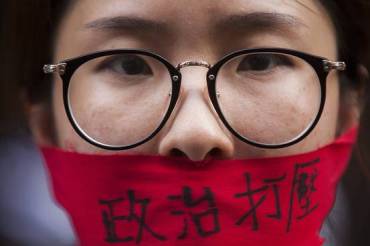
The posting comes as the Communist Party is doubling down on its efforts to stifle dissent among cadres. The sacking last November of Zhao Xinyu, an editor at a state-run newspaper, drew attention to a new tool in the party’s repertoire: the punishment of members for “groundlessly commenting” on official policies.
Introduced in a set of party rules last October, the prohibition against speaking out on national policies – known in Chinese as 妄议中央, wangyi zhongyang – is likely to have a chilling effect on political discussion within China, experts say.
It wasn’t clear whether Mr. Hu’s posting was in reaction to the new regulation – although some of the comments on his post indicated that the issue is on Chinese Internet users’ minds. “Aren’t you afraid of [being fired for] groundlessly commenting on official policies?” one user wrote.







 CHINDIA ALERT: You'll be living in their world, very soon