Archive for July, 2019

02/07/2019

China Focus: China starts implementing tougher vehicle emission standards

BEIJING, July 1 (Xinhua) — Several provincial-level regions on Monday started implementing the “China VI” vehicle emission standards ahead of schedule to ramp up efforts against a major source of air pollution.

Sales and registrations of new vehicles in regions including Beijing, Shanghai, Tianjin, Hebei Province and Guangdong Province now have to comply with what is believed to be one of the world’s strictest rules on automobile pollutants.

In Beijing, all new buses and other heavy-duty diesel vehicles shall follow the new emission rules, while all new vehicles are expected to follow suit starting Jan. 1, 2020.

All existing vehicles on the roads are obliged to meet the previous “China V” emission standards.

According to official data, emissions from some 6.2 million vehicles were responsible for 45 percent of Beijing’s concentration of small, breathable particles known as PM2.5, a key indicator of air pollution.

Compared with the “National V” standards, the new rules demand substantially fewer pollutants such as nitrogen oxides and particulate matters and introduce limits on particulate number and ammonia.

The new emission standards were initially set to take effect nationwide from July 1, 2020. A three-year action plan on air pollution control released last July urged early implementation in major heavily-polluted areas, the Pearl River Delta region, Sichuan Province and Chongqing Municipality.

Automakers and the market have been preparing for the tougher rules.

Manufacturers have completed the development of most “China VI” models and have entered the stage of mass production and sales, said Liu Youbin, a spokesperson with the Ministry of Ecology and Environment.

By June 20, 99 light vehicle makers had unveiled environmental protection information of 2,144 new models and 60 heavy-duty vehicle manufacturers unveiled information on 896 green models, Liu said.

“The market has basically accomplished a smooth transition,” Liu said.

Li Hong, an official with the China Association of Automobile Manufacturers (CAAM), said roll-outs of “China VI” vehicles as well as preferential tax and fee policies would boost China’s auto market.

“The production and sales of new energy vehicles (NEVs) will continue its relatively fast growth,” Li said.

Car sales in China continued to drop in May, with about 1.913 million vehicles sold, down by 16.4 percent year on year, CAAM showed. Bucking the trend, sales of NEVs kept growing that month, edging up 1.8 percent year on year.

China saw robust sales growth of NEVs in the first four months this year with 360,000 NEVs sold, surging by 59.8 percent from the same period a year earlier.

Chinese authorities have announced that the tax exemptions on NEV purchases will continue through 2020 to boost the country’s green development and retain a strong domestic market.

Source: Xinhua

02/07/2019

Rules of the house prove too much for Chinese housemaid

  • A Shanghai woman who set 20 ‘strict’ rules for her employee has sparked a fairness debate on social media
  • By 2025 it is estimated 5 million people will work in China’s home service industry
A list of rules for a new housemaid in Shanghai has sparked a debate on Chinese social media about the demands placed on workers in the home service industry. Photo: Shutterstock

The demands made on Chinese housemaids by their employers have triggered a heated debate after a Shanghai woman gave her new employee a list of 20 rules to memorise before she started work.

The new housemaid was required to sleep on the living room floor, change in to special clothes when caring for her employer’s baby, clean floors by hand with just a towel, and refrain from eating garlic.

Jail for Singapore woman who abused helper for doing chores slowly

According to Shanghai news channel STV, the woman, surnamed Zhou, offered 12,000 yuan (US$1,750) a month – far above the city’s average housemaid’s wage of 5,929 yuan – for someone to care for her baby and do the housework after her maternity leave.
The attractive compensation drew many applicants and a woman, surnamed Tang, was eventually offered the position. But when she was told of the rules she would have to follow, Tang rejected the offer.
“I have worked as a housemaid for 16 years, yet these are the strictest rules I have ever seen,” she said.
The 20 rules were divided into three parts: basic requirements and privacy protection, instructions for taking care of the newborn, and a set of personal hygiene requirements for the housemaid.

The list was leaked and circulated on a number of housemaid groups on WeChat, China’s most popular messaging app, before being posted on Weibo, China’s Twitter-like service, on June 29 where it quickly went viral. The hot trend attracted 140 million people to discuss and comment on the issue.

Saudi Arabia executes Filipino domestic worker for murder

Yet, others agreed with the employer, leaving comments like, “Actually, these rules are very basic, not immoral or unlawful”, and “I think is reasonable to raise the 20 rules with this high salary, if you cannot accept it then back to apply for the job with 4,000 to 5,000”.

The position was finally taken by a woman, surnamed Wang, who said, “Nowadays it is getting harder to earn money, no pain no gain. Housemaids are here for giving a high quality and friendly service, aren’t we?”

On Monday, Beijing Youth Daily reported the Shanghai Home Service Industry Association as saying the 20 rules were “strict and a rare requirement in the current home service industry, but didn’t contain any discrimination to the housemaid so it is a normal employer’s requirement”.

A 2018 report on China’s home service industry said there were more than 2.5 million people employed in home service work in 2016, and estimated that by 2025 the demand for household service would increase to 5 million.

On June 26, China’s State Council issued guidelines to improve standards in the home service industry. Among the recommendations were the establishment of courses to improve the quality of housemaids in China, the provision of health check services to the workers and the establishment of related laws to improve their working conditions

Source: SCMP
01/07/2019

India arrests after mob attacks female forest officer

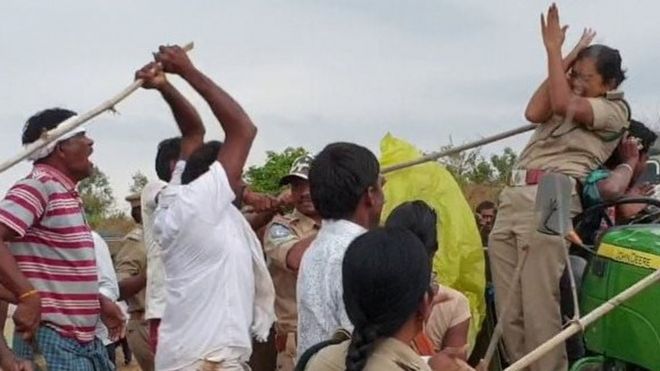
A still from the viral video in which a mob of men are seen attacking a woman forest officerImage copyright BBC TELUGU

Sixteen men have been arrested after a female forest official was brutally beaten with sticks by a mob as police officers watched in the southern Indian state of Telangana.

The mob, led by a member of the state’s ruling party, was protesting against a tree plantation drive on Sunday.

A video of the incident has gone viral, and the party’s president has condemned the attack on Twitter.

The forest officer is being treated in hospital for severe injuries.

A video of the incident shows the mob attacking the officer with bamboo sticks, as she stands on a tractor and tries to placate them.

She is repeatedly hit with the sticks until forest officials and local police step in to disperse the mob and contain the attack.

The footage has gone viral in India and led to outrage across the country.

This prompted a high-ranking official of the Telangana Rashtra Samithi (TRS) party, Kalvakuntla Taraka Rama Rao, to condemn the incident on Twitter.

Media caption ‘This ambitious water project killed my husband’

Two police officers, who were at the scene at the time of the attack, have been suspended for failing to protect the officer, BBC Telugu confirmed.

The incident occurred in the town of Kagaznagar, where the state’s forest department has been authorised to carry out a plantation drive as part of the Kaleshwaram project – a large irrigation scheme, which was inaugurated last week.

Opposition parties in the state, the Bharatiya Janata Party (BJP) and the Congress party, have strongly condemned the attack.

Source: The BBC

01/07/2019

Heavy rains batter India’s Mumbai, disrupting air, rail traffic

MUMBAI (Reuters) – Heavy rains battered India’s financial capital Mumbai on Monday causing disruption to the commuter train network, snarling traffic on water-logged streets and delaying flights from the country’s second-busiest airport.

The city, home to India’s two biggest stock exchanges and the headquarters of several major companies, has been hit by heavy rain since Sunday night and could get more over the next 24 hours, the weather department said.

Suburban trains were delayed by as much as two hours because the tracks were submerged under water while some long distance trains were cancelled.

Several flights were delayed by around half an hour, said a spokeswoman for Mumbai International Airport.
Thousands of commuters were stranded in trains and vehicles during peak morning hours as they tried to reach offices.
“Fifty minutes train journey took two and half hours today as railway tracks were flooded,” said Ketan Bondre, who works for a private sector company.
Although Mumbai is trying to build itself into a global financial hub, large parts of the city struggle to cope with annual monsoon rains.
Unabated construction on floodplains and coastal areas, as well as storm-water drains and waterways clogged by plastic garbage, have made the city increasingly vulnerable to chaos.
Floods in 2005 killed more than 500 people in Mumbai. The majority of deaths occurred in shanty town slums, which are home to more than half of Mumbai’s population.
Source: Reuters
01/07/2019

First China-Africa Economic, Trade Expo closes in central China

CHANGSHA, June 30 (Xinhua) — The first China-Africa Economic and Trade Expo closed Saturday in Changsha, the capital city of central China’s Hunan Province.

A total of 84 deals worth 20.8 billion U.S. dollars were reached in trade, agriculture, tourism and other fields during the three-day event, which saw 14 activities, including the opening ceremony, seminars, conferences and forums, as well as an exhibition.

Experts, businessmen and officials from China and African countries discussed the new methods of the cooperation between the two sides during the event.

International organizations including the United Nations Industrial Development Organization, the World Food Programme and the World Trade Organization have sent representatives to the expo.

The expo, with an exhibition area of more than 40,000 square meters, attracted over 100,000 guests and traders, including those from 53 African countries, according to the organizing committee.

Source: Xinhua

01/07/2019

Spotlight: Xi’s trip to Osaka drives multilateralism, G20 cooperation, global economy

JAPAN-OSAKA-XI JINPING-G20 SUMMIT

Chinese President Xi Jinping attends the 14th G20 summit held in Osaka, Japan, June 28, 2019. Xi called on G20 to join hands in forging high-quality global economy while addressing the 14th G20 summit held in the Japanese city of Osaka. (Xinhua/Xie Huanchi)

BEIJING, June 29 (xinhua) — Attending the summit of the Group of 20 (G20) major economies and holding meetings with his counterparts, Chinese President Xi Jinping paid a three-day visit to Osaka, Japan, which has proved a success with expanding consensus on the promotion of multilateralism and providing direction for both the G20 cooperation and global growth.

Chinese State Councilor and Foreign Minister Wang Yi made the remarks while noting that the 14th summit happened at a historic moment when chaos and uncertainties have brought the world to a critical crossroads, and that Xi’s tight diplomatic agenda marked China’s continuous efforts as a reliable and responsible major country to help with broad visions and workable solutions.

Envisioning a new type of international relations and a community with a shared future for mankind, Xi’s efforts were focused on promoting multilateralism, partnerships, mutually beneficial cooperation and joint development, which helped expand consensus, push forward cooperation, and increase confidence in global peace and development.

According to Wang, Xi’s speech at the G20 summit struck an extensive chord and China’s ideas received widespread support. In addition, the world is happy to see that Xi’s meetings with other leaders will help shape healthier major-country relations, that new opportunities will come with the new measures Xi announced for China’s further opening-up, and that Xi and U.S. President Donald Trump agreed that the two countries will restart trade talks.

WIDE CONSENSUS

During his trip to Osaka, by upholding multilateralism, the Chinese president guided the dialogue and discussions towards the direction of cooperation and inclusiveness in order to achieve win-win results.

Xi made four overseas trips since the beginning of June, setting a record for the history of the diplomacy of The People’s Republic of China, Wang said.

Xi put forward a four-point proposal in his speech at the summit, including exploring driving force for growth, improving global governance, removing development bottlenecks, and properly addressing differences.

Those proposals have outlined the direction to tackle the challenges facing the world economy, which is conducive to creating greater space for the global development and a better environment for international cooperation, Wang said.

With joint efforts, the G20 summit in Osaka has voiced support for multilateralism. It has been proven that upholding and practicing multilateralism is not just China’s choice, but a consensus and wish of the majority of countries in the world, Wang said.

Besides, on the sidelines of the G20 summit, Xi also attended a meeting of BRICS nations, China-Africa leaders’ meeting, China-Russia-India leaders’ meeting, and held a series of bilateral meetings.

During the meetings, Xi urged more efforts to promote global governance based on the principle of extensive consultation, joint contribution and shared benefits, safeguard the international system with the UN at the core and the international law as the foundation, preserve the multilateral trade regime with the World Trade Organization at the core and the rules as the foundation, promote multilateralism and free trade, push forward the democratization of international relations, and build an open world economy, Wang said.

Meanwhile, Xi met with Japanese Prime Minister Shinzo Abe with the two sides reaching a 10-point consensus to promote the development of bilateral relations.

When meeting with UN Secretary-General Antonio Guterres, Xi said the more complex and severe the situation is, the more necessary it is to highlight the UN’s authority and role.

Xi also exchanged views and reached new consensus with South Korean President Moon Jae-in on bilateral relations and the Korean Peninsula situation. Xi’s meetings with his French counterpart, Emmanuel Macron, and German Chancellor Angela Merkel will promote the in-depth development of China-Europe relations, Wang said.

Xi also met with Trump, South African President Cyril Ramaphosa, Indonesian President Joko Widodo during his visit.

COOPERATION, NOT CONFRONTATION

As China’s legitimate and lawful rights have been undermined by a series of unilateral and protectionist measures by the United States, China has to adopt necessary counter-measures, Wang said.

During the summit, Xi, at the invitation of his U.S. counterpart, met with President Trump, stating China’s stance on fundamental issues concerning the development of bilateral relations, and conducting candid communication over major challenges facing the two sides, Wang added.

Summing up the experience and illumination in the past the four decades since China and the United States established diplomatic ties, Xi said the two sides both benefit from cooperation and lose in confrontation, and that cooperation and dialogue are better than friction and confrontation.

China and the United States have highly integrated interests and extensive cooperation areas, and they should not fall into so-called traps of conflict and confrontation, Xi said.

On issues involving China’s sovereignty and dignity, China must safeguard its core interests, Xi stressed.

For his part, Trump said he values the good relationship with Xi and that it is of great significance for the two heads of state to maintain close contacts.

The U.S. side attaches importance to its relations with China, and harbors no hostility towards China, Trump said, adding that his country is willing to cooperate with China and that he hopes for better relations between the two countries.

During the meeting, Xi also reiterated the position of the Chinese government on the Taiwan issue, urging the United States to stick to the one-China principle and the three China-U.S. joint communiques.

The U.S. stance has not changed and it continues to pursue the one-China policy, Trump said.

When talking about the China-U.S. trade frictions, Xi emphasized that the essence of the China-U.S. economic and trade cooperation is mutual benefit and win-win, and that the two sides will eventually have to find a mutually acceptable solution to their differences through equal dialogue and consultation. Trump agreed with Xi in this regard.

Trump said the differences in such fields as economy and trade between the two sides should be properly settled, and that the United States will not add new tariffs on imports from China.

The most important consensus reached between the two heads of state is that China and the United States agree to continue to advance a China-U.S. relationship featuring coordination, cooperation and stability, Wang said.

They announced the restart of economic and trade consultations between their countries on the basis of equality and mutual respect. These significant consensuses send positive signals to the international community and global markets, Wang said.

As long as the two sides follow the principles and consensus established by the two heads of state, firmly grasp the correct direction of bilateral ties, expand cooperation based on mutual benefit, manage differences on the basis of mutual respect, and properly settle all problems that exist or will likely happen in bilateral relations, there is hope of a long-term and steady growth of the China-U.S. ties, and of more benefit to the two peoples and the people from other parts of the world, Wang said.

BRIGHT FUTURE OF CHINA

During the G20 summit and meetings with other world leaders, Xi explained China’s development philosophy and cooperation proposals.

According to Wang, Xi stressed that China is confident in pursuing its path, handling its own affairs well, achieving peaceful co-existence and win-win cooperation with all other countries, which has enhanced their understanding and support for China.

Stressing that the Chinese economy is registering a stable performance with good momentum for growth, Xi introduced a clear attitude and the latest measures on opening up the Chinese market, expanding imports, improving business environment as well as advancing free trade arrangements and regional economic integration, Wang said.

The Chinese president said China is breaking new ground in opening-up and pressing ahead with high-quality development.

Meanwhile, during the summit, Xi invited all interested parties to join the Belt and Road Initiative, amplifying the positive effects of the second Belt and Road Forum for International Cooperation.

Xi also advocated international cooperation in innovation so as to benefit more countries and people, Wang said.

According to Wang, all sides are optimistic about China’s development prospects, and believe that the new round of reform and opening-up measures announced by Xi are sincere and substantial, and the high-quality cooperation on building the Belt and Road corresponds with the trend of the times and the aspirations of people in the world.

It has been once again proven that China is a driving force for world economic growth, promoting openness in the world and providing a major market for other countries to explore business opportunities, Wang said.

Source: Xinhua

01/07/2019

Shallow 5.3 earthquake shakes southwest China’s Sichuan Province just days after deadly quake in same region

  • Quake hit about 18km east of the town of Xunchang and 43km southeast of Yibin city
A train running on the Chengdu-Ya'an railway in Ya'an City, southwest China's Sichuan Province. Photo: Xinhua
A train running on the Chengdu-Ya’an railway in Ya’an City, southwest China’s Sichuan Province. Photo: Xinhua
A shallow 5.3 earthquake shook China’s southwest Sichuan Province on Saturday, less than a week after 
a larger quake in the same region

killed 13 and left dozens injured.

There were no immediate reports of casualties or damage from the earthquake that occurred at about 10.30pm at a depth of 10km (6 miles), according to the US Geological Survey.
It hit about 18km east of the town of Xunchang and 43km southeast of Yibin city, which has a population of some 250,000 people, USGS said.
An earthquake near Yibin struck on Monday, forcing more than 8,000 people to relocate as a large number of structures were damaged or collapsed.
State TV showed rescuers dragging survivors to safety from rubble, while cracks appeared in several roads and a major highway was closed.
Earthquakes regularly strike Sichuan, where a powerful 7.9-magnitude quake left 87,000 people dead or missing in 2008.
Source: SCMP
01/07/2019

Crunch time as gaokao exam season starts for China’s university hopefuls

  • Annual tests still an academic pressure cooker for students wanting to get into the nation’s top universities, despite efforts to change the system
  • The gruelling exam is the sole criteria for admission to university in China
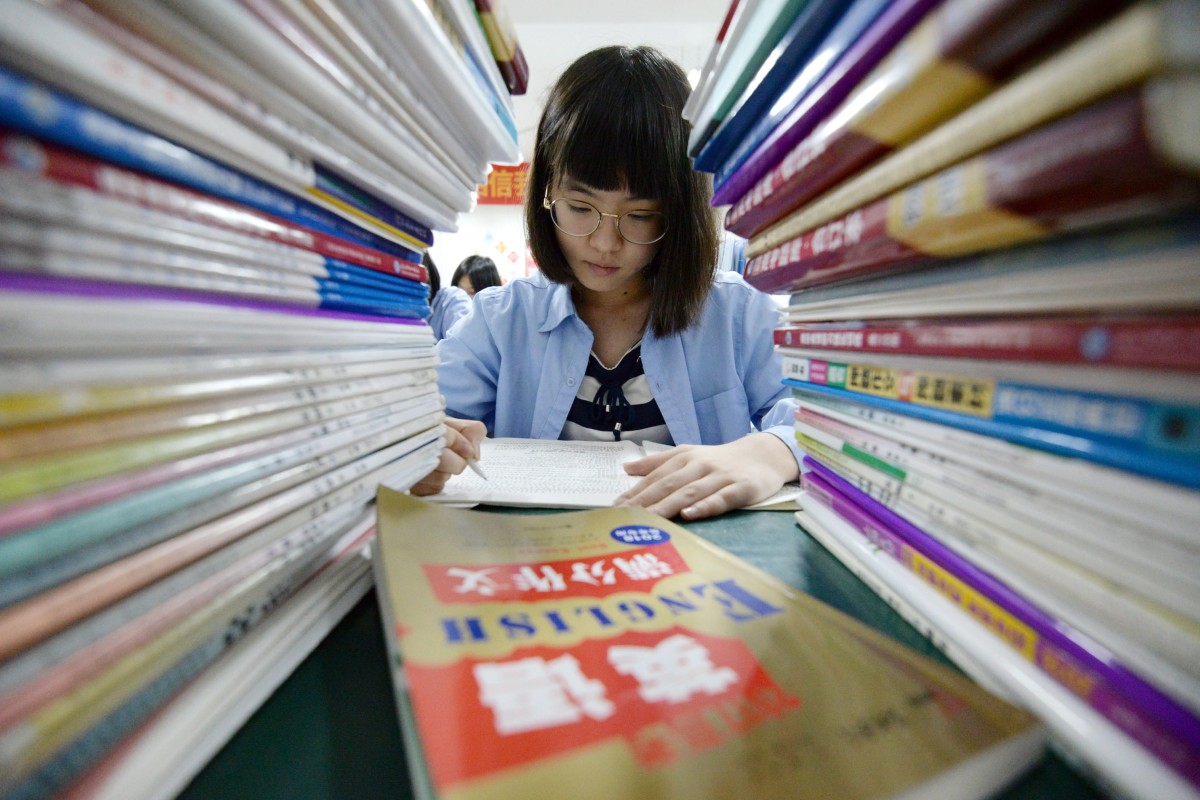
After months of study, China’s high school students are about to be put to the test in the annual “university entrance examinations which begin on Friday. Photo: EPA-EFE
For the past six months, the life of 18-year-old Shanghai student Xiao Qing has revolved around preparation for one of China’s annual rites of passage.
Every day at school, from 7.20am to 5.30pm, the final-year secondary school student in Changning district has studied previous test papers for the gaokao, officially known as the National Higher Education Entrance Examination.
“Sometimes I feel my bottom hurts from sitting for so many hours,” she said. “We feel like we are test machines.”
Xiao Qing will put all of that preparation to the real test from Friday, when over two to three days she will be among more than 10 million people trying to qualify for one of the spots at a Chinese university.
Most students get just one shot at the gaokao, the sole criteria for admission to university in China. It’s a gruelling process that has been criticised over the years as too focused on rote learning, putting too much pressure on students and privileging applicants living near the best universities.
Education authorities have gone some way to try to address these problems. In 2014, the Ministry of Education started letting students choose half of their subjects to introduce some flexibility into the system.

Apart from the compulsory subjects of Chinese, mathematics and English, students are now supposed to be able to choose any three of six other subjects: physics, chemistry, biology, politics, history and geography.

Previously, secondary school students had been split strictly into liberal arts or science majors in a system that was introduced in 1952 and revived in 1977 after being suspended during the Cultural Revolution.

Last go at exam success for China’s ‘gaokao grandpa’

Wen Dongmao, a professor from Peking University’s Graduate School of Education, said the changes expanded the opportunity for students to follow their interests.

“The new gaokao gives students plenty of choices of subjects to learn and to be evaluated on. I think people should choose which subject to learn based on what they are interested in,” Wen said.

Gaokao reform is designed according to some methods by overseas universities, like American and Hong Kong schools. Its direction is right, but there will be inevitable problems brought by it.”

One of the problems is the uneven implementation of the changes throughout the country, with just 14 of China’s 31 provinces, municipalities and autonomous regions having introduced them.

In the eastern province of Anhui, for example, the reforms were supposed to go in effect from September last year but were postponed without reason, news portal Caixin.com reported.

The report quoted a teacher from Hefei No 1 Middle School in the provincial capital as saying the school was not ready for the changes.

Is the university entrance exam in China the worst anywhere?

“Shanghai and Zhejiang are economically advanced and we are not at that level,” he was quoted as saying. “It’s a big challenge for us to manage so many students’ choices of gaokao subjects.”

In neighbouring Jiangxi province, a high school history teacher said many places opposed the reform mainly “because of the shortage of resources”.

“It’s hard to roll out gaokao reform because we don’t have enough teachers or classrooms to handle the students’ various choices of subjects. Students can choose three out of six courses and that means there are 20 potential combinations,” the teacher was quoted as saying.

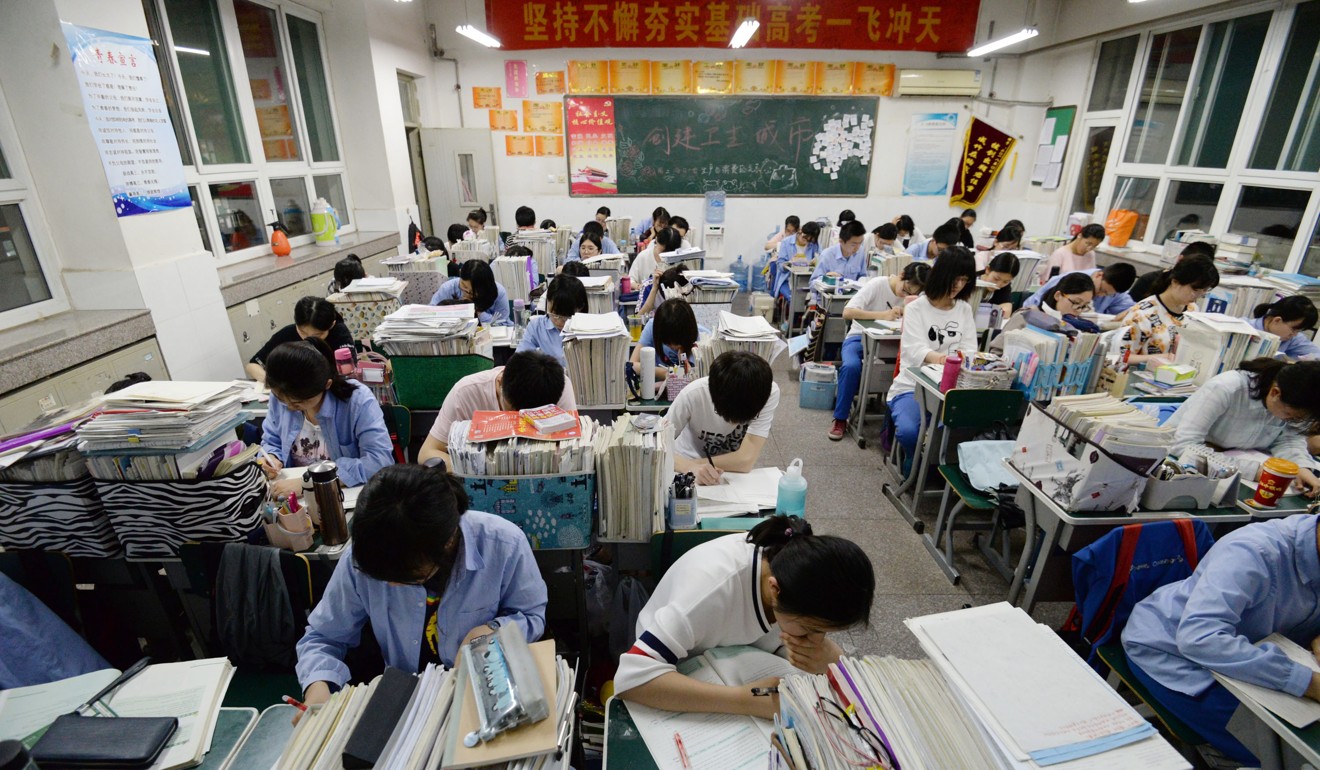
Chinese high school students study late into the night for the National Higher Education Entrance Examination. Photo: EPA-EFE

In addition, the system allows students to take the tests in more than one year and submit the highest scores when applying to universities.

“I heard from teachers in other provinces that students will take the tests of the selected subjects again and again for fear that other students will overtake them. That’s exhausting and will just put more burden on the students,” the Jiangxi teacher said.

He also said the gaokao process put extra pressure on teachers who feared the tests would push students to extremes. One of his students contemplated jumping from a bridge after she thought she had done poorly in the Chinese section of the exam.

“She called me, saying she felt it was the end of the world. I was shocked and hurried to the bridge,” he was quoted as saying. He spoke to her for more than an hour about before the girl came down, going on to get a decent score.

Critics also say the system is weighted in favour of students in bigger cities such as Beijing, Tianjin and Shanghai, home to the country’s top universities.

China private education industry is booming despite economic slowdown

Li Tao, an academic from the China Rural Development Institute at Northeast China Normal University in Changchun, Jilin province, said about 20-25 per cent of gaokao candidates from Beijing, Tianjin and Shanghai were admitted to China’s elite universities, compared with just 5 or 6 per cent in places like Sichuan, Henan and Guangdong.

Li said that was because the top universities were funded by local governments and gave preference to applicants from those areas.

“To make it fairer, the Ministry of Education has insisted over the years that elite universities cannot have more than 30 per cent of incoming students from the area in which it is located,” he said.

Despite these challenges, gaokao was still a “fair” way to get admitted to university in China, Li said.

Gaokao is the fairest channel to screen applicants on such a large scale, to my knowledge,” he said. “It does not check your family background and every student does the same test paper [if they are from the same region]. Its score is the only factor in evaluating a university applicant.”

Fake nursing degree scandal prompts China-wide fraud check

In Shanghai, as the clock ticks closer to the gaokao test day, Xiao Qing said she was feeling the pressure.

She said she would keep up her test prep to ensure she got the score she needed to study art in Beijing.

“I am trying my utmost and don’t want to regret anything in the future,” she said.

At the same time, she is not pinning her entire life on it.

“Life is a long journey and it is not decided solely by gaokao,” she said.

“I don’t agree with my classmates that life will be easy after gaokao. I think we still need to study hard once we get to university.”

Source: SCMP

01/07/2019

Why West means best for middle-class parents fleeing the Chinese education system

  • International schools and companies offering extracurricular services have sprung up to prepare children to study overseas
  • Families disenchanted with exam-based classes and intense competition for tertiary places look offshore for alternatives
A group of young Chinese students tour the University of Cambridge in England. Photo: Alamy
On a sunny summer’s day, 24 schoolchildren head off on a four-day field trip to Guizhou province in southwestern China.
The children, aged eight to 16, have gone into the far reaches of the mountainous province not to see its picturesque Huangguoshu waterfall or to meet people from the ethnic Miao minorities. Instead, they are there to see the Five-hundred-metre Aperture Spherical Telescope, or Fast – the world’s biggest radio telescope, built in 2016.
The trip was organised by All in One Education, a Shenzhen-based company offering extracurricular classes and educational trips for Chinese students who aim to study abroad.
The agency has organised similar trips to Hebei and Yunnan provinces, catering to parents who want to expand their children’s horizons.
“This kind of experience is not usually available to students who follow the traditional Chinese education model, but it does appeal to those who go to international schools and schools that emphasise exploration,” Zhang Yong, the teacher leading the field trip, said.

Zhang said other agencies in China arranged educational trips abroad, including to universities such as Harvard and Oxford.

Many Chinese parents want their children to have a broader education than they get in the public schools system. Photo: Reuters

The companies are part of an industry targeting an ever-growing market of parents who have high expectations for their children and who are anxious to ensure their children go to the best schools they can afford.

The services are also aimed at parents who see studying abroad as a way to avoid the intense competition and discipline of the Chinese education system.

Crunch time as gaokao exam season starts for China’s university hopefuls

An overseas education has long been reserved for the privileged few in China but it is becoming more of an option as people become more affluent and more services open up to cater to the demand to give the best to the next generation.

According to the Ministry of Education, 662,100 people studied abroad last year, 53,700 more than in 2017.

For Shanghai parent Iris Wang the best means a Western university. She said that not only were Western universities better than their Chinese equivalents but she had also lost faith in China’s secondary education system.

With her daughter starting at an international middle school in September, Wang is now planning for the child to go overseas for experience and study.

She said that although the teachers working in public schools in China were responsible, the system itself was too rigid.

“In summer, the pupils have to take naps at noon, and teachers write down the names of those who don’t sleep and tell their parents,” she said. “And even if you don’t want to take nap, you are not allowed to take a walk or talk; you must rest your heads and arms on the table.”

Many middle-class Chinese parents are seeking alternatives to the public education system. Photo: AP

Such rules are common in Chinese public schools and meant to instil a sense of discipline among the pupils.

“But educating kids is not the same as making a product on an assembly line,” Wang said.

By withdrawing her daughter from the public system, Wang has forfeited her child’s chance to go to a Chinese high school or university.

It’s a route more Chinese parents are taking, according to a report released in April by the Social Sciences Academic Press and the 21st Century Education Research Institute, a Beijing-based think tank. In 2018, there were 821 international schools in China, up 12 per cent from a year earlier.

Wang has not just sent her daughter to an international school but has also begun researching the next steps, convinced that her daughter should leave China early to better adapt to university abroad.

“She will need to learn the language, develop a different learning mindset, as well as adapt to the lifestyle there,” Wang said.

China’s infamous gaokao university entrance exam

Shenzhen mother Yao Li has also decided that an early exit from the Chinese education system would be good for her daughter, who is still in primary school.

Yao plans to send her daughter to an international secondary school so she can receive a Western education and eventually apply to schools abroad.

Compared with the traditional Chinese education, which focused on exams as measures of excellence, an international education could give a child more possibilities, she said.

“The competition in China for a good education is so fierce that my child will not have sufficient room for development if she stays here,” she said. “We hope that she can become more international and have more diverse abilities as well.”

Why did one of China’s elite universities need to offer big money to get the best students?

Yao has already signed her daughter up for extracurricular classes such as English, art and public speaking, hoping that she can develop a diverse set of skills instead of focusing on academic results alone.

Zhang, the teacher at All In One Education, said there was a huge market in China catering to parents who are interested in such classes.

“The reason is simple, the university entrance examination in China is very difficult,” Zhang said. “So parents in areas like Shenzhen who are doing well will send their children abroad to study instead.”

But making the decision to send a child to an international school is just the start. For the middle-class parents who are preparing their children early, there are many more decisions to make, many more classes to attend and many more tests to take.

“We will have to think about which country to send her to in a year or so,” Wang from Shanghai said. “The options are different and so are the preparations – even the language tests required are different, one is TOEFL, one is IELTS.”

Source: SCMP

01/07/2019

‘Young people don’t have it easy’: Chinese pensioner takes a stand for younger passengers

  • Subway passenger’s LED badge reading ‘no need to give me a seat’ makes him talk of the town
The man’s badge reading “no need to give up your seat” captured attention. Photo: Weibo
A 76-year-old man from northwest China has taken to wearing an LED badge on his chest that says “no need to give up your seat [for me]” on the subway.
The photos of the man riding the subway in Dalian in Liaoning province started circulating on Weibo last week, Dalian Radio Television Network reported on Thursday.
The man, identified as retiree Liu Zengsheng, put his actions down to his sympathy for the younger generation.
“Nowadays, young people don’t have it easy. It is obviously more comfortable to have a seat, but standing is not a problem for me,” Liu was quoted as saying.
Liu said he started wearing the LED badge, which he bought online last year, to avoid the “awkwardness” of having to repeatedly decline young people’s offers to give up their seats for him.
Chinese pranksters’ subway landmine stunt blows up in their faces
He added that he knew other elderly people who wore similar badges on public transport and said that young people were “too kind”.

The man’s actions won him praise on social media, especially since stories of passengers’ bad behaviour on public transport make the news much more frequently.In recent months, members of the public have been jailed for taking up seats on trains booked by others, and verbally and physically assaulting bus drivers.

There have also been squabbles over younger people not giving up their seats to the elderly. In July last year, the video of an older man in Chengdu sitting on a young boy to force him off a bus seat went viral in China.

“When a good person turns old, they remain good,” read one top-rated comment on Weibo.

Source: SCMP

Law of Unintended Consequences

continuously updated blog about China & India

ChiaHou's Book Reviews

continuously updated blog about China & India

What's wrong with the world; and its economy

continuously updated blog about China & India