28/04/2020
BEIJING, April 28 (Xinhua) — China’s youth organizations awarded May Fourth Medals to 94 individuals and 34 groups Tuesday for their great contributions to the country.
The medals, which are awarded annually, are the top honor for young Chinese. The Central Committee of the Communist Youth League and the All-China Youth Federation released the list of winners.
Medical teams assisting Hubei Province to combat the novel coronavirus disease (COVID-19) epidemic are among the groups awarded.
Covering a wide range of sectors, the individual winners include firefighters, military personnel, scholars, teachers, engineers, workers and medical staff.
Among the list, 34 were honored posthumously, including those who sacrificed their lives in the fight against COVID-19.
Source: Xinhua
Posted in All-China Youth Federation, awarded, Beijing, China, contributions, COVID-19, engineers, fight, firefighters, groups, honors, hubei province, individuals, lives, May Fourth Medals, medical staff, military personnel, novel coronavirus disease, organizations, outstanding, posthumously, sacrificed, scholars, teachers, The Central Committee of the Communist Youth League, Uncategorized, workers, young, Youth |
Leave a Comment »
14/04/2020
- Vietnamese ships spent months last year shadowing the Haiyang Dizhi 8 as it surveyed the resource-rich waters within Vietnam’s exclusive economic zone
- Its return follows charges laid by the US that China is ‘exploiting the distraction’ and vulnerability caused by the pandemic
The Haiyang Dizhi 8 at sea. Photo: Weibo
A Chinese ship
embroiled in a stand-off with Vietnamese vessels last year
has returned to waters near Vietnam as the United States accused
China
of pushing its presence in the
South China Sea while other claimants are pre-occupied with the coronavirus.
Vietnamese vessels last year spent months shadowing the Chinese Haiyang Dizhi 8 survey vessel in resource-rich waters that are a potential global flashpoint as the
challenges China’s sweeping maritime claims.
China and Vietnam ‘likely to clash again’ as they build maritime militias
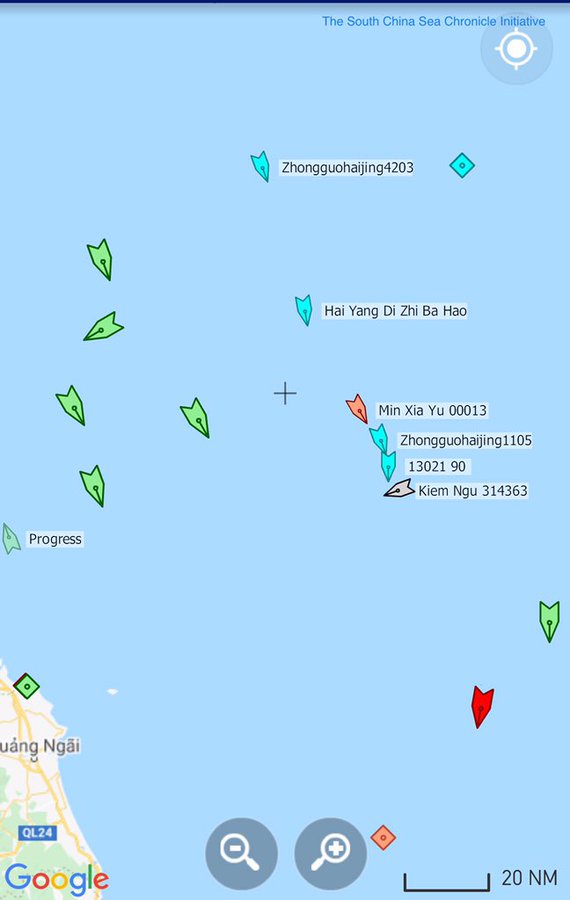
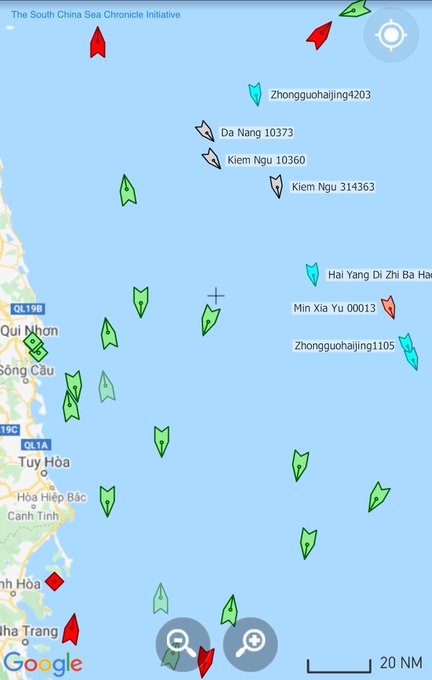
On Tuesday, the ship, which is used for offshore seismic surveys, appeared again 158km off
Vietnam’s coast, within its exclusive economic zone (EEZ), flanked by at least one Chinese coastguard vessel, according to data from Marine Traffic, a website that tracks shipping.
At least three Vietnamese vessels were moving with the Chinese ship, according to data issued by the Marine Traffic site.
The presence of the Haiyang Dizhi 8 in Vietnam’s EEZ comes towards the scheduled end of a 15-day nationwide lockdown in Vietnam aimed at curbing the spread of the coronavirus.
It also follows
, an act that drew a protest from Vietnam and accusations that China had violated its sovereignty and threatened the lives of its fishermen.
“We call on the PRC to remain focused on supporting international efforts to combat the global pandemic, and to stop exploiting the distraction or vulnerability of other states to expand its unlawful claims in the South China Sea,” the US State Department said in a statement, referring to China.
Vietnam pulls DreamWorks’ ‘Abominable’ over South China Sea map
, which also has disputed claims in the South China Sea, has raised its concerns too.
On Saturday, the Global Times, published by the official People’s Daily newspaper of China’s ruling Communist Party, said Vietnam had used the fishing boat incident to distract from its “ineptitude” in handling the coronavirus.
Vietnam’s Ministry of Foreign Affairs did not immediately respond to a request for comment.
Helped by a mass quarantine and aggressive contact-tracing, Vietnam has recorded 265 cases of the novel coronavirus and no deaths. Nearly 122,000 coronavirus tests have been carried out in Vietnam.
Coronavirus: what’s behind Vietnam’s containment success?
China and Vietnam have for years been at loggerheads over the potentially energy-rich waters, called the East Sea by Vietnam.
China’s U-shaped “nine-dash line” on its maps marks a vast expanse of the waters that it claims, including large parts of Vietnam’s continental shelf where it has awarded oil concessions.
and Brunei claim some of the waters that China claims to the south.
During the stand-off last year, at least one Chinese coastguard vessel spent weeks in waters close to an oil rig in a Vietnamese oil block, operated by Russia’s Rosneft, while the Haihyang Dizhi 8 conducted suspected oil exploration surveys in large expanses of Vietnam’s EEZ.
“The deployment of the vessel is Beijing’s move to once again baselessly assert its sovereignty in the South China Sea,” said Ha Hoang Hop, at the Singapore-based ISEAS-Yusof Ishak Institute.
“China is using the coronavirus distraction to increase its assertiveness in the South China Sea, at a time when the US and Europe are struggling to cope with the new coronavirus.”
Source: SCMP
Posted in Aircraft carrier, amid, awarded, ‘exploiting the distraction’, “Abominable”, Beijing’s, Brunei, caused, charges, Chinese, coastguard vessal, Communist Party, concessions, containment, Continental Shelf, coronavirus, Coronavirus pandemic, Da Nang, disputed waters, distraction, DreamWorks, Europe, follows, Global Times, last year, Malaysia, maps, marks, Ministry of Foreign Affairs, months, newspaper, off, Oil, oil block, operated, pandemic, People’s Daily, PRC, pre-occupied, resource-rich, return, returns, Rosneft, Russia’s, shadowing, Singapore, South China Sea, spent, success, survey ship, surveyed, Uncategorized, US, vast expanse, Vietnam, Vietnam’s, Vietnamese ships, vulnerability, waters |
Leave a Comment »
29/09/2019
- Millions of Chinese children are raised by their grandparents but some seniors are demanding compensation
For generations in China grandparents have provided childcare, but some are no longer willing to do so for free. Photo: Shutterstock
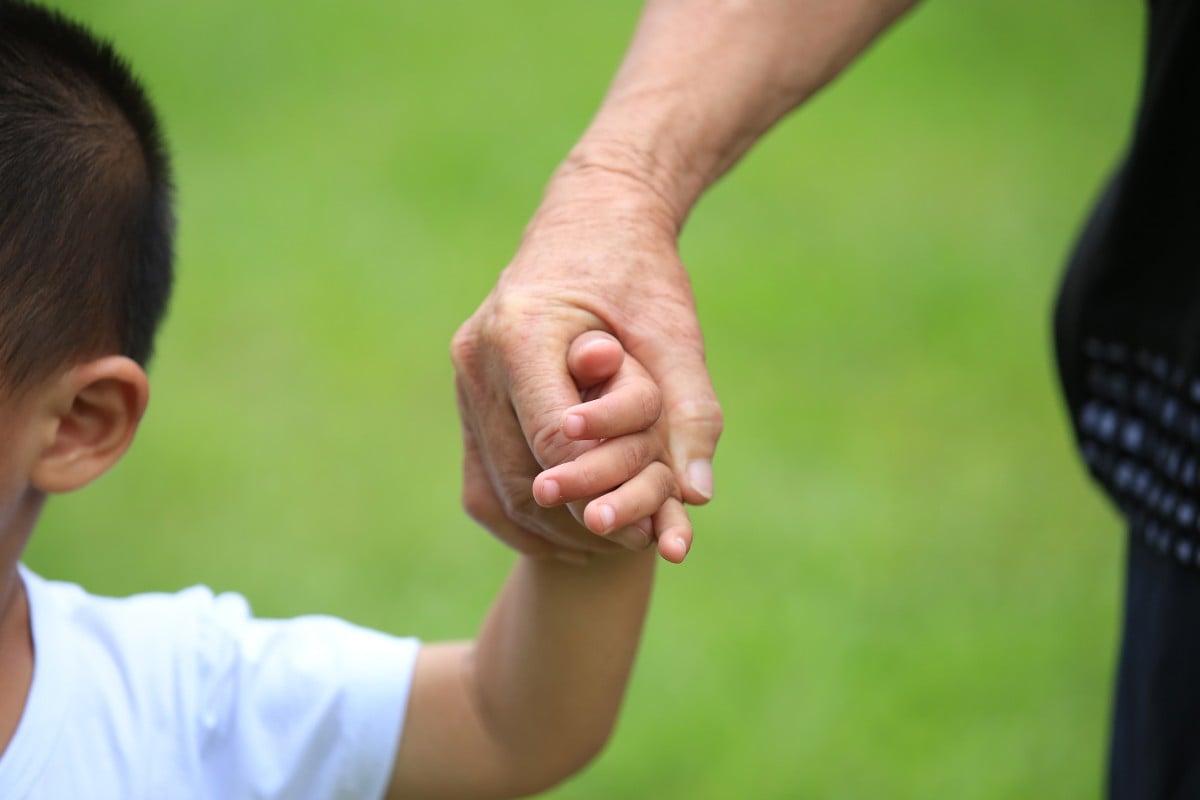
The traditional role of grandparents in caring for China’s children has been called into question with two recent lawsuits sparking debate about whether seniors should be paid for their efforts.
Two grandmothers took their demands for compensation to court in separate cases which have highlighted the reliance of Chinese workers on their parents to provide childcare while they pursue professional advancement.
A woman in Mianyang, in the southwestern province of Sichuan, was awarded more than 68,000 yuan (US$9,500) by a local court after she sued her son and daughter-in-law for the costs of raising her nine-year-old grandchild, according to Red Star News.
The woman, identified only by her surname Wang, had been the child’s full-time carer for eight years after his parents left home to seek better-paid jobs elsewhere. Wang said she had taken care of most of her grandson’s living expenses and had decided to seek compensation when his parents said they were considering a divorce.
They should respect our contribution. Grandmother Wang, Sichuan province
“I only want to let them know through this lawsuit that it’s their obligation to raise their children,” she was reported as saying. “The young ones should not take it for granted that old people ought to look after their grandchildren. They should respect our contribution.”
Despite winning the case, she has not received a penny and the boy still lives with her.
In another case, three months ago, a Beijing court supported a woman’s demand for compensation for helping to raise her granddaughter since her birth in 2002.
The stories of the two women generated a public reflection on the Chinese way of childcare which, for generations, has involved leaving most – if not all – of the burden on grandparents.
One of 60 million: life as a ‘left-behind’ child in China
From a cultural perspective, it has been a matter of course in a country with a long history of several generations living under one roof, for grandparents to participate in child rearing, according to Xu Anqi, a researcher specialising in family studies at the Shanghai Academy of Social Sciences.
“Today, as people face fierce competition and great pressure from work, it’s still common to rely on their old parents to look after their children,” she said.
While rapid urbanisation in recent decades has broken up multi-generational households, Chinese elderly still take an active role in child rearing, with many relocating to their children’s cities to take on the job.
Millions more families do it the other way round – with parents leaving children in their hometown with the grandparents while they seek better paying jobs in the cities. In August last year, according to the Ministry of Civil Affairs, China had nearly 7 million “left behind kids”, as they are known.
My little granddaughter is adorable, and generally I enjoy doing all this.Li Xiujuan, grandmother
“Many grandmothers like me would joke that we are ‘unpaid nannies’, but at the same time we feel it’s our responsibility to help them out – they would be in financial stress if one of them quit or they hired a nanny,” said Li Xiujuan, who relocated from her hometown in the central province of Henan to Shanghai two years ago to help look after her granddaughter.
“I’m a 24-hour nanny for my grandkid. I prepare food for her, wash her clothes, attend early childhood classes with her, take her for a walk in the park twice a day, sleep beside her at noon and night …” she said.
“I never cared for my daughter when she was little like I do her daughter now. You know, it was also her grandmother who mainly took care of her daily life when she was young,” Li said, laughing.
“My little granddaughter is adorable, and generally I enjoy doing all this. The hard part is that I miss my friends and relatives back home. We don’t have friends here. I have plenty of things to do at home, but here, nothing but babysitting. People are polite, but it’s difficult to make new friends,” she said.
‘Left behind’ sisters cry when parents leave home to go to work
In a 2017 study of about 3,600 households in six major cities including Beijing and Guangzhou, the Chinese Society of Education found almost 80 per cent of surveyed households had at least one grandparent as carer before children began primary school.
The study also showed that 60 per cent of parents still relied on help from grandparents after children were old enough for primary school at the age of six.
Whether grandparents should be compensated for their efforts split a poll of 49,000 users conducted by social media platform Weibo in late June, with half believing that the older generation should be paid for raising their grandchildren. Only 2.3 per cent said babysitting grandchildren was “an unalterable principle” for the elderly.
“This arrangement could be well managed and improve blood ties if children reward the elderly in their own ways, such as sending gifts on holidays and taking them on trips,” Shanghai researcher Xu said.
I think what they need more is words of appreciation, which many of us have neglected. David Dai, Beijing parent
Grandmother Li agreed: “I think regular payment is a little awkward, but I do expect some kind of reward, like cash gifts on festivals and daily necessities as presents.”
David Dai, a 30-year-old white collar worker in Beijing, said how to reward grandparents for their contribution depended on the financial situation of each household.
“My parents are farmers – they are in good shape and not so old – in their late 50s, and if they didn’t come all the way from my hometown in Anhui to Beijing to look after my son, they would still be taking some odd jobs,” he said.
“Therefore, besides covering their living costs at my place, I give them cash gifts on their birthdays, the Spring Festival and other important occasions, because babysitting their grandchild means they lose the opportunity to work,” he added.
“In some families, the grandparents might have retired and have a good pension. They don’t lack money and enjoy spending time with their grandkids. I don’t think they need to be paid. I think what they need more is words of appreciation, which many of us have neglected,” Dai said.
China boosts childcare and maternal health services in bid to lift birth rate
But for those who never show any gratitude, their parents have every reason not to offer child rearing help or to demand payment, Xu said.
Zhang Tao, a lawyer at the Hiways Law Firm in Shanghai, noted that as long as at least one parent of a child was living, the grandparents had no obligation to help with childcare.
“The grandparents should be compensated for the money they have paid for the child’s education, medical fees, and accommodation from the beneficiary,” he said.
But whether they should be paid has become the latest controversy as more grandparents find it a burden.
Source: SCMP
Posted in 'left-behind’ child, accommodation, adorable, an unalterable principle, Anhui province, appreciation, awarded, babysitting, Beijing, beneficiary, better-paid jobs, blood ties, burden, cash gifts, child rearing help, childcare, childcare services, China’s grandparents, Chinese Society of Education, compensation, controversy, court, daily necessities, daughter-in-law, demand payment, demanding, Divorce, education, elderly, farmers, festivals, financial situation, free childcare, friends, generations, good shape, granddaughter, grandparents, gratitude, Henan province, Hiways Law Firm, holidays, hometown, Household, Lawyer, living expenses, local court, maternal health services, medical fees, Mianyang, Ministry of Civil Affairs, neglected, pension, presents, primary school, raised, rapid urbanisation, reaching, regular payment, relatives, retired, reward, sending gifts, seniors, Shanghai, Shanghai Academy of Social Sciences, sichuan province, son, Spring Festival, sued, taking them on trips, their limits, Uncategorized, unpaid nannies, Weibo, white collar worker |
Leave a Comment »
19/07/2019
Anita Kiki Gebe, deputy joint special representative of the United Nations-African Union Mission in Darfur (UNAMID), awards UN peace medal to a soldier of the 2nd China Medium Utility Helicopter Unit (CMUHU02) in El-Fashir, Sudan, July 17, 2019. The 140 officers and soldiers of the 2nd China Medium Utility Helicopter Unit (CMUHU02), a peacekeeping contingent to Sudan’s Darfur, were awarded UN peace medals. (Xinhua)
KHARTOUM, July 18 (Xinhua) — The 140 officers and soldiers of the 2nd China Medium Utility Helicopter Unit (CMUHU02), a peacekeeping contingent to Sudan’s Darfur, were awarded UN peace medals.
At the award ceremony on Wednesday, Anita Kiki Gebe, deputy joint special representative of the United Nations-African Union Mission in Darfur (UNAMID), spoke highly of the devotion of the Chinese helicopter unit to the peace and stability of Sudan.
“The second Chinese peacekeeping helicopter unit to Darfur demonstrated their outstanding professionalism and excellent service in their mandate,” said Gebe, also one of the presenters of the UN award.
Their “outstanding work has enhanced the friendship between China and Sudan and the world nations,” she added.
Equipped with four Mi-17 helicopters, the CMUHU02 in UNAMID is mainly tasked with 24-hour air patrol, battleground reconnaissance, personnel movement, casualty evacuation and material transportation.
So far, the Chinese helicopter contingent to Darfur has carried out 636 sorties, rescued more than 280 people and delivered 3,800 passengers, 220 tons of cargo, 16.6 tons of dangerous goods such as weapons and ammunition.
Source: Xinhua
Posted in awarded, China Medium Utility Helicopter Unit (CMUHU02), Chinese peacekeeping helicopter unit, Darfur, helicopter unit, KHARTOUM, peace medals, Sudan, UN, Uncategorized, United Nations-African Union Mission in Darfur (UNAMID) |
Leave a Comment »
22/02/2019
PM Modi and President Moon held constructive talks on enhancing bilateral cooperation in key areas including trade, investment, defence and security.
SNS Web | New Delhi | February 22, 2019 1:08 pm
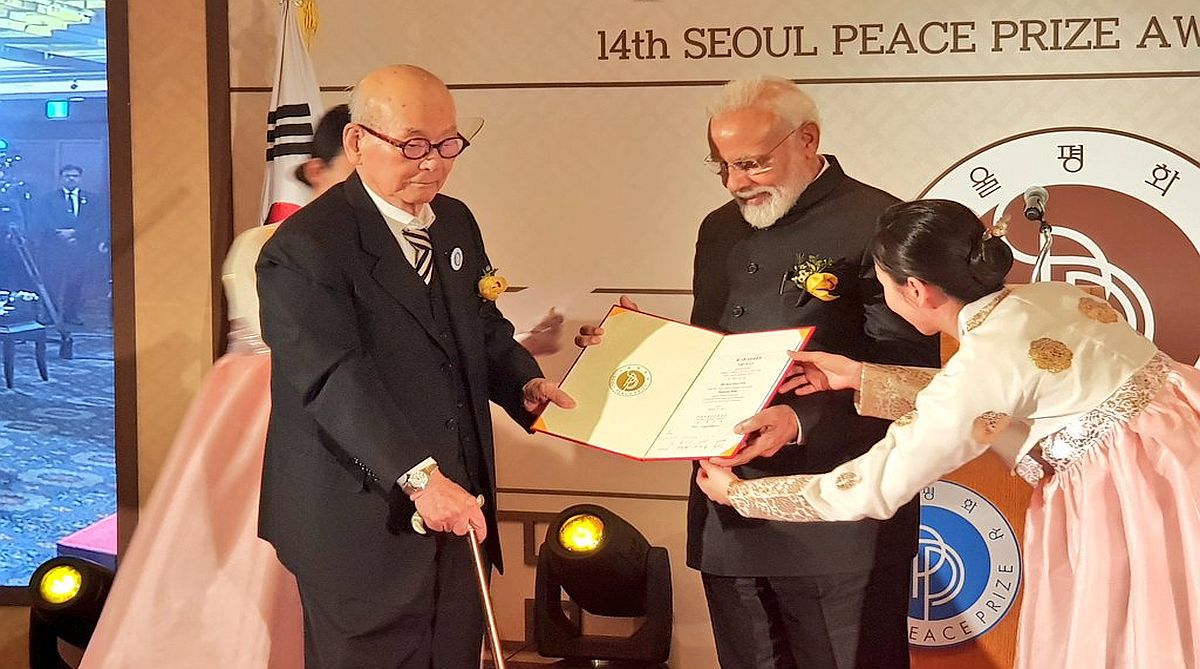
Prime Minister Narendra Modi conferred Seoul Peace Prize (Photo: @MEAIndia)
Prime Minister Narendra Modi was on Friday awarded the Seoul Peace Prize in recognition of his efforts aimed at raising global economic growth, accelerating the human development of the people of India and furthering the development of democracy through anti-corruption and social integration efforts.
Dedicating the award to the people of India, PM Modi said, “This award does not belong to me personally but to the people of India, the success India has achieved in the last 5 years, powered by the skill of 1.3 billion people”.
He further said he was honoured that the award was conferred on him in the year India celebrates the 150th birth anniversary of Mahatma Gandhi.
Talking at the 14th Seoul Peace Prize award ceremony, PM Modi said radicalisation and terrorism are the biggest threats to world peace and security in the present time.
He further called upon the need to join hands to completely eradicate terrorist networks. “Only by doing so, can we replace hate with harmony,” he said.
The Prime Minister also quoted a portion of the 1988 Olympics theme song, which goes as “Hand in hand, we stand, all across the land, we can make this world, a better place in which to live”.
PM Modi’s speech comes in the wake of the Pulwama terror attack that killed at least 44 CRPF personnel on February 14.
While choosing PM Modi, the award committee had recognised the Indian leader’s contributions to the growth of the Indian and global economies, crediting ‘Modinomics’ for reducing social and economic disparity between the rich and the poor.
The panel had also lauded Modi’s initiatives to make his government cleaner through anti-corruption measures and demonetisation. It also credited him for his contribution towards regional and global peace through a proactive foreign policy with countries around the world under the ‘Modi Doctrine’ and the ‘Act East Policy.’
Earlier in the day, PM Modi met South Korean President Moon Jae-in and expressed his gratitude to the President for his condolences on Pulwama attack and support against terror.
PM Modi and President Moon held constructive talks on enhancing bilateral cooperation in key areas including trade, investment, defence and security.
Addressing the media after the “productive talks” with President Moon, PM Modi said that South Korea is an important partner in India’s economic transformation.
He further said the defence sector was an important part of India’s growing partnership with South Korea. “An example of this is the induction of K-9 Vajra artillery gun in Indian Army,” the PM added.
Following the talks, India and South Korea signed seven agreements to enhance cooperation in key areas, including infrastructure development, media, start-ups and combating trans-border and international crime.
An important MoU was signed between the Korean National Police Agency and the Ministry of Home Affairs to enhance cooperation between the law enforcement agencies of the two countries and combat trans-border and international crimes.
Modi, who is on a two-day visit to South Korea to strengthen India’s strategic ties with the country, was accorded an official reception at the Blue House, the executive office and official residence of the South Korean President here. He also met First lady Kim Jung-sook.
PM Modi is visiting South Korea on the invitation of President Moon Jae-in. This is his second visit to the Republic of Korea since 2015 and a second summit meeting with President Moon Jae-in.
Source: The Statesman
Posted in awarded, Defence, economic ties, First lady Kim Jung-sook, India alert, indian army, international crime, K-9 Vajra artillery gun, Korean National Police Agency, mahatma gandhi, Ministry of Home Affairs, MoU, Olympics theme song, PM Modi, President Moon Jae-in, Pulwama, Republic of Korea, S Korea, Seoul Peace Prize, strategic ties, Uncategorized |
Leave a Comment »







 CHINDIA ALERT: You'll be living in their world, very soon