Chindia Alert: You’ll be Living in their World Very Soon
aims to alert you to the threats and opportunities that China and India present. China and India require serious attention; case of ‘hidden dragon and crouching tiger’.
Without this attention, governments, businesses and, indeed, individuals may find themselves at a great disadvantage sooner rather than later.
The POSTs (front webpages) are mainly 'cuttings' from reliable sources, updated continuously.
The PAGEs (see Tabs, above) attempt to make the information more meaningful by putting some structure to the information we have researched and assembled since 2006.
A video shows how makeup artist Iza Setia dressed up as Demon Nun to prank people in Delhi. The clip has gone viral.
Some content creators often dress up as different characters from films to surprise unsuspecting passersby and record their reactions. In a spine-tingling rendition of the trend, a woman in Delhi decided to roam around at night dressed as the terrifying character Demon Nun from the horror film Nun. Clad in a white and black outfit with realistic makeup that matched the Demon Nun’s look from the film, Instagram user Iza Setia managed to invoke both fright and fascination with her stunt. While some embraced the chilling thrill and even asked for pictures, others were clearly scared and hurriedly moved away from her.
The image shows a makeup artist dresses as the character Demon Nun. (Instagram/@izasetia_makeovers)
“As they say GUTS!” Setia, who is a makeup artist by profession, wrote as she shared her video on Instagram. The video opens to show a man on a bike with a kid looking at Setia, sitting inside a car, and saying that her getup looks realistic. As the video progresses, another woman is heard letting out a shriek after resting her eyes on Setia.
The video also captures different reactions of people – from running away after seeing her to saying her costume is “very cool” to even posing with her for pictures. The video ends with a montage of clips that show people getting genuinely scared by seeing her and also laughing after realising how she just pranked them.
HONG KONG, Oct. 10 (Xinhua) — Hong Kong’s stock market ended higher on Tuesday with the benchmark Hang Seng Index up 0.84 percent to close at 17,664.73.
The Hang Seng China Enterprises Index saw an uptick of 0.9 percent to end at 6,052.51, and the Hang Seng Tech Index rose 1.29 percent to close at 3,874.67.
Earlier in the day, party spokesperson Randeep Singh Surjewala had said “She (Sonia Gandhi) has developed mild fever and some symptoms and has isolated herself and has been given requisite medical attention”.
Prime Minister Narendra Modi on Thursday wished a speedy recovery to Congress president Sonia Gandhi after she tested positive for Covid-19. “Wishing Congress President Smt. Sonia Gandhi Ji a speedy recovery from Covid-19,” PM Modi tweeted.
Earlier in the day, party spokesperson Randeep Singh Surjewala had said “She (Sonia Gandhi) has developed mild fever and some symptoms and has isolated herself and has been given requisite medical attention”.
Later, Surjewala tweeted that Sonia Gandhi had been meeting leaders and activists over last week, some of whom were found positive for Covid. The other Congress leaders who have also tested positive includes general secretary (organisation), KC Venugopal.
Surjewala clarified that the Congress president will still appear before the Central agency for questioning. “Congress President will appear before ED on 8th June, as informed by us earlier. We, at Indian National Congress, shall keep you posted about any future developments,” he said.
Rahul Gandhi, however, wrote to the ED to postpone the date to after June 5 as he is not in India.
INDIA NEWS
2:37
Russia shots down Ukraine army’s Sukhoi jet | Moscow pounds Ukrainian positions near Kharkiv1 hour ago
3:54
Hardik Patel joins BJP before Gujarat polls; Wants to work under PM as ‘small soldier’1 hour ago
3:35
Kejriwal alleges Modi govt to arrest Sisodia after Jain; Smriti calls out ‘conspiracy theory’2 hours ago
3:56
Indian Team In Kabul2 hours ago
2:32
India’s teary farewell for KK: Iconic singer laid to rest in Mumbai2 hours ago
3:02
Oklahoma: 4 civilians killed in Tulsa hospital massacre; Uproar over another mass shooting3 hours ago
2:31
On Cam: Terrorist shoots Hindu bank manager in Kulgam; Second hate attack in J&K in 48 hours4 hours ago
2:19
U.P officer suspended for glorifying Osama Bin Laden; Called Al Qaeda founder best engineer4 hours ago
5:30
Johnny Depp VS Amber Heard defamation case: Key moments from the long, televised trial4 hours ago
3:37
Mercedes GLC 2023 facelift SUV: First Look6 hours ago
The mother-son duo was summoned by the Enforcement Directorate (ED) in the National Herald case, which was closed by the central agency back in 2015. The National Herald case relates to alleged financial irregularities in the party-promoted Young Indian, which owns the National Herald newspaper.
‘Not saying we shouldn’t read about Mughals but…’: Akshay Kumar
The Bollywood star, on a promotional tour for his upcoming movie ‘Samrat Prithiviraj,’ also called for ‘balance’ in school curriculums that, he claims, lacks information on Indian Kings.
Bollywood actor Akshay Kumar, actress Manushi Chillar and director Chandraprakash Dwivedi pose for a picture during their visit to the Somnath Temple to offer prayers, in Gir Somnath district of Gujarat.(ANI)
Bollywood actor Akshay Kumar on Wednesday appealed to union education minister Dharmendra Pradhan to include in history textbooks stories related to Indian kings like Prithivi Raj and Mewar’s Pratap Singh I (popularly known as Maharana Pratap). Speaking to news agency ANI, Akshay Kumar claimed “nobody is there to write about it (history of Indian kings)…”. “I would like to appeal to the education minister to look into this matter and see if we can change it,” he said.
The Bollywood star, on a promotional tour for his upcoming movie ‘Samrat Prithiviraj,’ also called for ‘balance’ in school curriculums that, he claims, lacks information on Indian Kings.
“I am not saying that we should not read about Mughals… but balance it out (with teaching about Indian kings as well). They were great too,” the actor said.
The statement was an excerpt from an ANI interview with Akshay Kumar and ‘Samrat Prthviraj’ director Chandraprakash Dwivedi Kumar.
The movie is based on the life of 12th-century Rajput king Prithviraj Chauhan. It features Akshay Kumar in the main role. Miss World 2017 Manushi Chhillar makes her Hindi film debut as Sanyogita.
‘Samrat Prithviraj’ also stars Sanjay Dutt and singer Sonu Sood in pivotal roles.
The film is scheduled to be released theatrically on June 3.
Earlier this month, Dwivedi said union home Minister Amit Shah would watch the period drama film on June 1, two days ahead of its theatrical release.
“It is our honour that the honourable home minister of our country, Amit Shah ji, is going to witness the epic saga on the glorious life of one of Bharatmata’s bravest sons, Samrat Prithviraj Chauhan, who sacrificed his life for the country,” the filmmaker said in a statement on May 24.
The statement, however, did not mention where the screening would take place.
Beijing has stepped up its diplomatic push in the remote region where regional power Australia and the US are elbowing to retain their influence
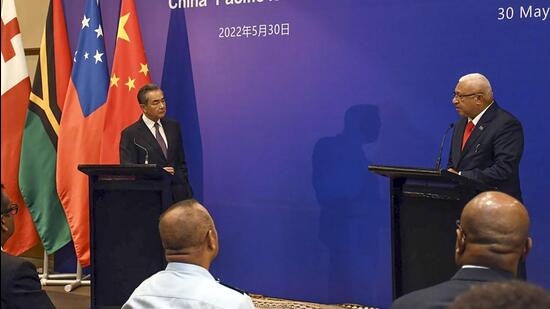
China’s foreign minister Wang Yi (left) and Fiji’s Prime Minister Frank Bainimarama address a press conference at the Pacific Islands Foreign Ministers’ meeting in Suva, Fiji, on Monday. (AP)
Updated on May 30, 2022 03:11 PM IST
BySutirtho Patranobis I Edited by Amit Chanda
BEIJING: China and a cluster of Pacific island countries failed to reach a consensus on an overarching security and economic deal on Monday in what appears to be a setback to Beijing’s expanding ambitions in the South Pacific region.
A meeting of Pacific foreign ministers and Chinese foreign minister, Wang Yi, in the Fijian capital, Suva, the first such meeting, failed to reach an agreement with Wang later telling his counterparts not to be “too anxious” about his country’s aims.
“China’s plan to sign a sweeping trade and security deal with ten Pacific Island countries was dealt a setback as some of them expressed concern about specific elements in the proposal,” Australia’s ABC News reported.
Beijing has stepped up its diplomatic push in the remote region where regional power Australia and the US are elbowing to retain their influence.
China has said its cooperation with the islands is not aimed at any third country.
In a written speech delivered at the meeting Wang hosted on Monday, Chinese President Xi Jinping said China will always be a good friend, brother and partner to Pacific Island nations no matter how the international situation changes.
“No matter how the international landscape may evolve, China will always be a good friend that shares the same ideal and follows the same path, a good brother going through thick and thin as well as a good partner forging ahead side by side of Pacific island countries,” Xi said in the statement, released by the Chinese government.
China, Xi said, will stay committed to equality of all countries “regardless of size” and remains guided by principles of sincerity and good faith in developing friendly ties with island countries.
At the meeting in Suva, foreign minister Wang, said five areas of cooperation were agreed on by the participating countries but further discussions were needed for more consensus.
The five areas he listed, according to Reuters, included economic recovery after the Covid-19 pandemic, and new centres for agriculture and disaster, but did not include security.
WORLD NEWS
0:34
At least 14 dead in Nepal plane crash1 hour ago
0:29
France to put down orca stranded in Seine river1 hour ago
1:00
High-tech race to map Ukraine’s damaged historic buildings1 hour ago
1:10
Missile strikes continue to hit Kharkiv region1 hour ago
1:28
Over 100 dead or missing in Brazil after heavy rains1 hour ago
1:19
President Joe Biden visits grieving community of Uvalde after deadly shooting1 hour ago
3:00
The fuzz with the buzz: How bees are helping Italy’s Carabinieri police fight pollution2 hours ago
1:17
Ukrainian troops patrol Donetsk frontline trenches2 hours ago
1:59
Colombia presidential vote heads to second round2 hours ago
1:37
Zelenskyy visits Ukraine’s east for the first time since invasion3 hours ago
Ministers from Samoa, Tonga, Kiribati, Papua New Guinea, Vanuatu, Solomon Islands, Niue and Vanuatu besides Fiji took part in the meeting, many via video link.
“China will release its own position paper on our own positions and propositions and cooperation proposals with Pacific island countries, and going forward we will continue to have ongoing and in-depth discussions and consultations to shape more consensus on cooperation,” Wang said.
Wang is on an island-hopping of eight countries in the South Pacific in the backdrop of mounting international concerns about Beijing’s military and economic ambitions in the region.
Wang is visiting seven of the islands during his diplomatic trip including the Solomon Islands, Kiribati, Samoa, Fiji, Tonga, Vanuatu and Papua New Guinea in addition to Timor-Leste.
The prime ministers of three countries, the Cook Islands, Niue, and the Federated States of Micronesia took part in Monday’s meeting via video link.
IIT Madras, IoT study: The strategy proposed is an algorithm that builds spare capacity in a given network – like the spare wheel present in a car that can be changed in case of a flat tire.
(Representational) Passenger planes take off from Benito Juárez International Airport in Mexico City, Thursday, May 12, 2022. (AP Photo/Marco Ugarte)(AP)
Researchers at the Indian Institute of Technology (IIT) in Madras have developed an algorithm to mitigate disruptions to critical networks like air traffic control and power distribution during a terror attack. The research – peer-reviewed and published in international journal ‘Physica A: Statistical Mechanics and its Applications’. Experts have noted that with IoT, or Internet of Things – devices that exchange data with other devices over the internet – becoming popular, it is critical to protect networks vital to national security.
“The terror attacks of September 11, 2001… targeting a single country resulted in the entire airline industry coming to a standstill. Such threats are a reminder that in today’s highly interconnected world, there is high risk of one adverse event leading to the disruption of the entire network.”
“Air and road traffic, power distribution and even social media platforms are all examples of highly connected networks and are, therefore, highly vulnerable to targeted attacks,” Karthik Raman, a core member of IIT-M’s Robert Bosch Centre for Data Science and Artificial Intelligence, said.
“A variety of technological networks form the backbone of modern world infrastructure, and it is essential to build safeguards to protect these against both failures and targeted attacks.”
The strategy proposed is an algorithm that builds spare capacity in a given network. This means if one node (name given to an entity linked to others) is attacked, traffic of the affected node is routed through this spare capacity and the network can keep functioning.
This has been tested on two infrastructure networks – air traffic and power distribution.
“It was found that the algorithm increased the robustness of these networks to targeted attacks,” Sai Saranga Das, a student and the lead author of the study, was quoted by PTI.
“The algorithm was also highly effective in increasing the robustness of ‘canonical scale-free networks,’ which are representative of many real-world networks when compared to existing strategies to mitigate targeted attacks on these networks,” he added.
With input from PTI
SHARE THIS ARTICLE ON
ABOUT THE AUTHOr – HT News Desk Follow the latest breaking news and developments from India and around the world with Hindustan Times’ newsdesk. From politics and policies to the economy and the environment, from local issues to national events and global affairs, we’ve got you covered.…view detail
The Russian defence ministry added it would consider NATO transport carrying weapons in Ukraine as targets meant to be destroyed, this on the 75th day of war.
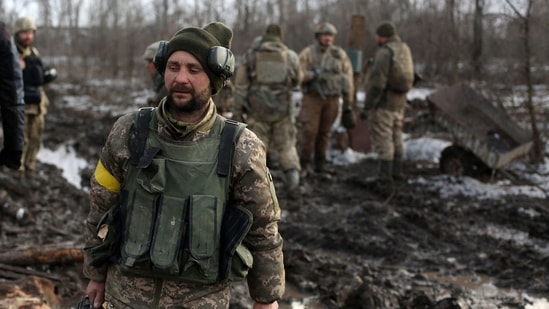
Servicemen of the Ukrainian Military Forces gather after the fighting against Russian troops and Russia-backed separatists near Zolote village, Luhansk region.(AFP)
Russia on Monday said it destroyed a US-made counter-battery radar station near the Ukrainian town of Zolote, Reuters reported. The Russian defence ministry added it would consider NATO transport carrying weapons in Ukraine as targets meant to be destroyed, this on the 75th day of war.
The claim by Russia comes on a day when it marks the Victory Day, signifying the Soviet Union’s win over Nazi Germany in the Second World War. Russian president Vladimir Putin presided over his military might at Moscow’s Red Square on the occasion.
“You are fighting for the fatherland, for the future, so that nobody forgets the lessons of World War II, so that there’s no place for executioners, persecutors and Nazis,” Putin said.
Ukrainian president Volodymyr Zelensky released a video on the occasion, saying Ukraine will have two Victory Days.
“We will never forget what our ancestors did in World War II. Where more than 8 million Ukrainians died. And every fifth Ukrainian didn’t return home. In total, the war claimed at least 50 million lives,” Zelenskyy said. “We don’t say we can repeat.'”
On Sunday, the Russian defence ministry had said its high-precision missiles had destroyed weapons and military equipment supplied to Ukrainian forces from the United States and unspecified Western countries at a railway station near the town of Soledar.
The ministry also said that it had destroyed six depots storing missile and artillery weapons in the Luhansk, Donetsk and Kharkiv regions while its air defences shot down a Ukrainian Su-25 warplane.
The fighting between the Russian and Ukrainian forces has continued for the 75th day with no signs of peace. Denying reports of atrocities committed by forces in Ukraine, Moscow has accused Kyiv of stalling talks.
Russian chief negotiator Vladimir Medinsky said on Monday that peace talks with Ukraine had not stopped and were being held remotely, according to the Interfax news agency.
This comes as China’s economy is under a lot of strain due to oil and gas price hikes and disruption to the supply chain caused by the Ukraine conflict, and strict implementation of the zero-COVID policy.
ANI | May 9, 2022 3:01 pm
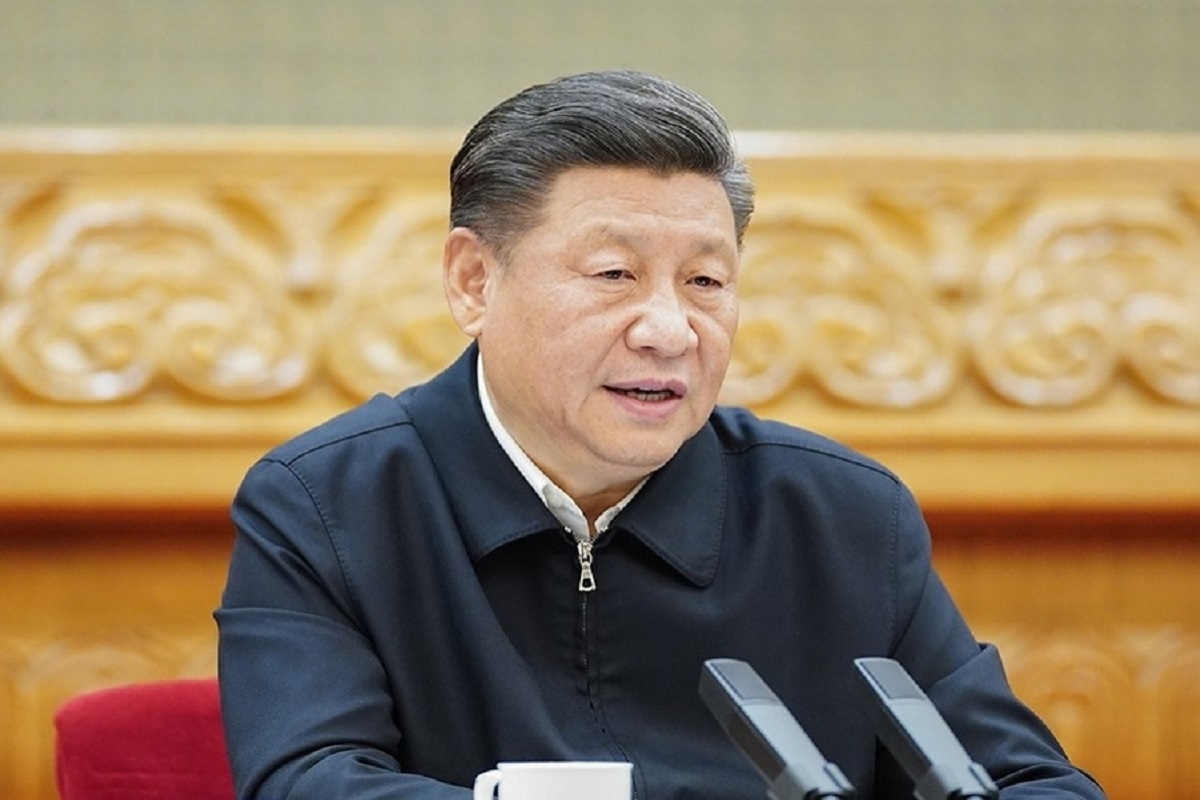
Chinese President Xi Jinping (Photo: IANS)
With Chinese President Xi Jinping eyeing a historic third term, the country, in a tactical move, has decided to temporarily suspend focusing on “common prosperity”, slapping penalties on tech behemoths and instead is scurrying to stabilizing the economy, which is under a lot of stress.
This comes as China’s economy is under a lot of strain due to oil and gas price hikes and disruption to the supply chain caused by the Ukraine conflict, and strict implementation of the zero-COVID policy.
In the run-up to the forthcoming 20th Party Congress, the Chinese Communist Party (CCP) is tactically moving away from its “common prosperity” policy as with the economic slowdown the country does not want to become a less attractive market for investors, as per reports.
As Xi prepares to get re-elected for a third five-year term later this year, he has attempted to portray China as more prosperous, influential, and stable under his rule.
The country’s officials who till a few months ago were ferociously advertising a new era of “Common Prosperity” slapping penalties on tech behemoths and wealthy celebrities have shifted their focus to keeping the economy stable and growing, for now.
The postponement is more of a tactical retreat than a complete abandonment of Xi’s plans, which the Chinese Communist Party continues to portray as a long-term goal.
It also serves political goals, such as bolstering public support for Xi’s leadership and promoting China’s centralized management system as superior to the West.
Beijing also sought to reassure stakeholders such as international investors that it was still open for business.
However, Beijing’s crackdown on the personal sector has continued to rattle traders both at home and abroad.
As China imposed strict lockdowns to combat COVID-19 outbreaks and Russia’s invasion of Ukraine raised commodity costs, confidence in China’s economic system has waned.
In order to secure his third term, Xi would be looking to not rock the boat on the economy too much, lest he draws China into a financial cesspool given the volatile economic situation worldwide.
The minister’s announcement came after he held talks with his American counterpart Antony Blinken, during which the two leaders also discussed ways to ‘unlock Ukraine’s food exports.’
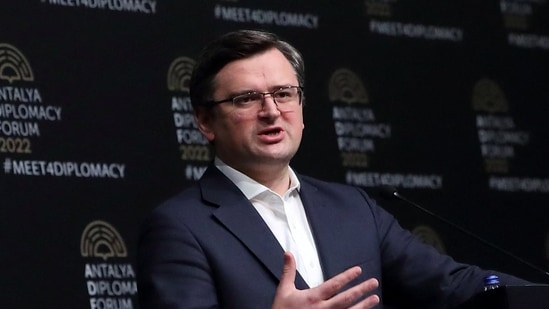
Ukrainian Foreign Minister Dmytro Kuleba speaks during a news conference after meeting with his counterparts Russian Sergei Lavrov and Turkish Mevlut Cavusoglu, amid Russia’s invasion of Ukraine, in Antalya, Turkey March 10, 2022.
Ukrainian foreign minister Dmytro Kuleba said on Sunday that the United States will impose fresh sanctions against Russia for Moscow’s ongoing invasion of his home nation, as he discussed the Russian aggression with his American counterpart Antony Blinken. “On the Day of Remembrance and Reconciliation, Victory in Europe Day, @SecBlinken and I coordinated steps to bring the day of Ukraine’s victory closer. New stiff U.S. sanctions on Russia are coming. Discussed ways to unlock Ukraine’s food exports and ensure global food security,” Kuleba posted on Twitter.
While he did not elaborate on the ‘new stiff sanctions’ that he claimed Washington will impose on Moscow, the US has led the West in slapping sanctions on Russia for attacking the east European nation. It has also helped Ukraine with frequent military aid.
“I have authorized $150 million in additional U.S. arms, equipment, and supplies for Ukraine to reinforce its defenses to counter Russia’s offensive in the East. We stand #UnitedwithUkraine,” Blinken had announced a day ago.
Jill Biden speaks with Ukrainian refugee families38 mins ago
0:43
Panic as fighter jet flies over Ukraine’s Kostiantynivka40 mins ago
2:03
Ukrainian farmers export their harvest via Romania49 mins ago
0:59
Displaced Mariupol residents arrive in Zaporizhzhia2 hours ago
1:11
Devotees take holy dip in River Ganges to mark festival2 hours ago
1:25
Macron leads WW2 Victory Day commemoration in Paris3 hours ago
0:44
Ukraine military shows Snake Island aircraft explosion6 hours ago
0:53
School bombing kills at least two in Ukraine – governor6 hours ago
1:30
Hong Kong’s ex-security chief picked as next leader6 hours ago
1:10
‘Stop war,’ street artists around the world plead7 hours ago
Kuleba’s tweet, meanwhile, came on a day that saw two high-profile dignitaries arrive in the war-torn country on impromptu visits. While US First Lady Jill Biden met her Ukrainian counterpart Olena Zelenska in Uzhhhord in western Ukraine, Canadian prime minister Justin Trudeau was in Irpin, a suburb of the capital, Kyiv.
Blinken himself had visited Kyiv, on April 24, as he went there with secretary of defense, Lloyd Austin, to meet President Volodymyr Zelensky. US House Speaker Nancy Pelosi, British prime minister Boris Johnson, too, have travelled to the metropolis.
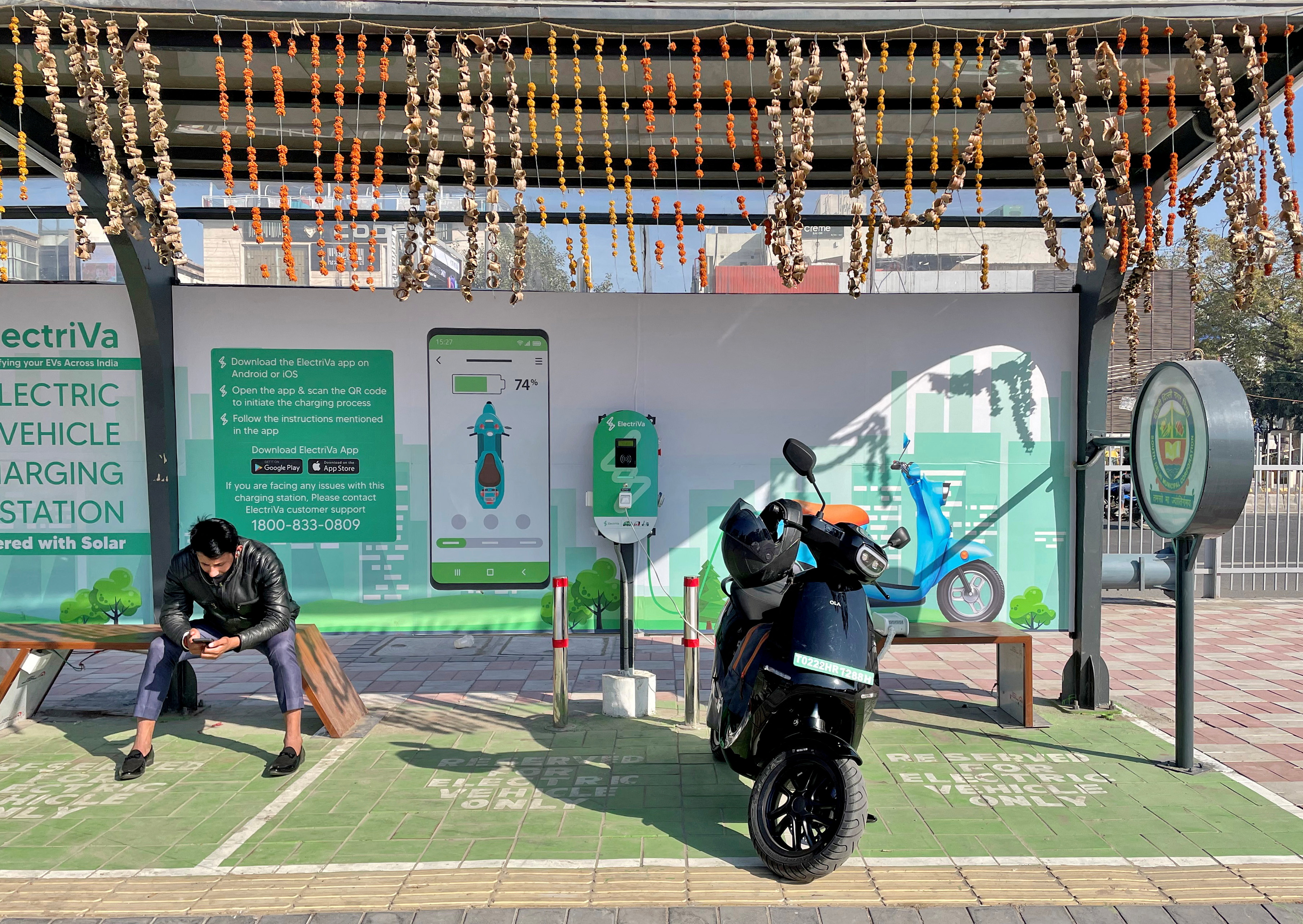
A man checks his mobile phone as he waits while recharging his Ola electric scooter at an electric vehicle charging station in New Delhi, India, February 12, 2022. REUTERS/Aditi Shah
NEW DELHI, May 6 (Reuters) – Faulty battery cells and modules have been identified as the leading cause of electric scooters catching fire in India in recent weeks, according to the findings of an initial federal investigation, two government sources told Reuters.
Reporting by Aditi Shah, additional reporting by Heekyong Yang in Seoul; Editing by Louise Heavens
































 CHINDIA ALERT: You'll be living in their world, very soon