

China Daily: “China raised fuel prices for the second time this year, hiking gasoline and diesel by 6.5 percent to 7 percent effective on Tuesday, amid rising world crude oil prices and falling domestic inflation. Prices went up by 600 yuan $94.90 a metric ton, the biggest hike since June 2009. The average gasoline price went up 6.5 percent to 9,980 yuan a metric ton, while diesel prices rose 7 percent to 9,130 yuan a metric ton.Both prices are record highs. China, the worlds second-biggest oil user, raised fuel prices for the first time this year by 300 yuan a ton on Feb 8.”
20/03/2012
* Chinese fuel prices raised by 6.5-7%
19/03/2012
* $77m embezzled from Chinese high-speed rail project
China Daily: “China’s auditing authorities said on Monday that 491 million yuan ($77.84 million) had been embezzled from the Beijing-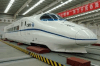 Shanghai High-speed Railway project. In a report based on an audit conducted between June and September in 2011, the National Audit Office NAO listed some irregular practices in the construction and management of the project. Purchases that were not made through standard bidding involved 849 million yuan, while the cancellation of wind-shielding barriers construction in some sections meant 413 million yuan of purchasing funds was not used, according to the report.”
via $77m embezzled from high-speed rail project|Economy|chinadaily.com.cn.
Related pages:
- https://chindia-alert.org/political-factors/chinese-tensions/
- https://chindia-alert.org/prognosis/chinese-challenges/
- Transparency International annual index
19/03/2012
* India displaces China as world’s largest arms importer
Times of India: “India has become the worlds biggest importer of arms, displacing China by accounting for 10 per cent of global arms  sales volumes. Over the past five years, Indias imports of major weapons increased by 38 per cent between 2007-11, a Swedish security think tank said with Asia topping other regions in arms imports.
The Stockholm International Peace Research Institute SIPRI in its new report said that India was closely followed by China and Pakistan whose weapons imports constituted 5 per cent each of global sales. Pakistan took delivery of “significant numbers of combat aircrafts during this period : 50 JF-17s from China and 30 F-16s from US,” SIPRI said. The Swedish think tank said China which had been world’s top arms importer in 2006-2007 has now dropped to fourth place, attributing this to improvements in the country’s arms industry and its rising arms exports.
SIPRI said China is now world’s sixth largest world exporter of weapons behind the US, Russia, Germany, France and UK.But “while the volume of Chinas arms export is increasing, this is largely a result of Pakistan importing more arms from China. “Beijing has not achieved a major breakthrough in any other significant market,” the report said. According to SIPRI estimates India is likely to spend more than USD 100 billion on weapons and systems in the next 15 years.”
via India displaces China as worlds largest arms importer – The Times of India.
Related articles
16/03/2012
* India: ‘Need for urgent reforms as corruption, civil society activism delay decisions’
The Hindu: “The government on Thursday gave a clarion call for urgent economic reforms while conceding that corruption scandals and compulsions of coalition politics have slowed down the decision-making process, as a result of which it is faced with fiscal slippages in 2011-12.
Making a strong pitch for raising tax resources and higher compliance, the Economic Survey 2011-12, tabled in Parliament on Thursday in tandem with the Reserve Bank in its mid-quarter policy review, expressed serious concern over the deteriorating state of government finances and stressed the need for fiscal consolidation if inflation is to be tamed.
Highlighting inflation and fiscal slippages as among the major challenges confronting the economy, the Survey said a slackening in the pace of reforms and high-profile corruption scandals along with “welcome civil society activism” have led to delay in decision-making by civil servants.
Tabled in the Lok Sabha by Finance Minister Pranab Mukherjee, the Survey said “coalition politics and federal considerations played their roles in holding up economic reforms on several fronts, ranging from diesel and LPG pricing to FDI in retail” and also pointed to the economic slowdown partly resulting from domestic issues “like pressures of democratic politics.”
In concert with the apex bank on the need for fiscal consolidation, the Survey said: “The principal way in which this has to be achieved is by raising tax-GDP ratio and cutting down wasteful expenditures.”
The Survey noted that the dismal economic performance this fiscal should be a “wake-up call” but, at the same time, expressed cautious optimism that the GDP growth in 2012-13 would go up to 7.6 per cent following a moderation in inflation and consequent low interest rates.
“The growth rate of real GDP [is expected] to pick up to 7.6 per cent [plus or minus 0.25 per cent] in 2012-13 and faster beyond that,” the Survey said and noted that economic expansion this fiscal would moderate to a three-year low at 6.9 per cent. Arguing out a case for fiscal consolidation, tax reforms, opening of the multi-brand retail to global chains, freeing of diesel prices and the need for honesty among political leaders and policy-makers, the Survey said that although government’s fiscal deficit was likely to significantly go off the target of 4.6 per cent of GDP this fiscal, it would narrow down to 4.1 per cent in 2012-13 on the strength of a pick-up in economic activities. After tabling the pre-budget document, the Finance Minister said: “It [the Survey] charts economic development and challenges faced during the fiscal year. It is a vital input for the preparation of the budget.”
At a press briefing later during the day, Chief Economic Adviser Kaushik Basu, prime architect of the document, said growth in manufacturing and agriculture sectors were likely to be key drivers in the next fiscal. “There could be one more year of a slight slowing down of investment and saving rates. We expect… rates to pick up handsomely after that,” he said.”
Related page: https://chindia-alert.org/political-factors/indian-tensions/
16/03/2012
* India changes strategy to stay competitive globally in IT sector
extract from The Hindu: “Competition to India’s information technology and IT-enabled services (ITeS) companies from other cost-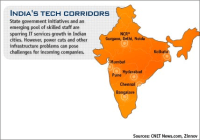 effective nations and protectionist moves of some key markets like the U.S. have caught the attention of the government. As a result, the government is not only changing its strategy to stay competitive globally but also taking initiatives to promote growth of the sector by increasing IT adoption within the country. …
As per industry estimates, India’s IT and BPO sector (excluding hardware) revenues were $87.6 billion in 2011-2012 (a growth of 14.8 per cent) – $68.7 billion exports and $19 billion domestic, while it generated direct employment for nearly 2.8 million people and indirect for around 8.9 million people.
As a proportion of national GDP, IT and ITeS sector revenues have grown from 1.2 per cent in 1997-98 to around 7.5 per cent in 2011-12. “Consistent demand from the U.S., which increased its share from 61.5 per cent to 62 per cent, characterised 2011-12. Emerging markets of the Asia Pacific and the rest of the world also contributed to overall growth,” the Survey pointed out.
Referring to future strategy for the sector, the Survey said the government had been a key catalyst for increased IT adoption – through sector reforms that encouraged IT acceptance, National e-Governance Plan (NeGP), and the Unique Identification Development Authority of India (UIDAI) programme that created large-scale IT infrastructure and promoted corporate participation.
Talking about electronics hardware production, the Survey said it was expected to grow by 27.6 per cent in 2011-12 and cross Rs.1.55-lakh crore ($33 billion). Electronics hardware exports is expected to grow by 12.8 per cent and cross Rs.47,090 crore ($10 billion) in 2011-12 as against Rs.41,721 core ($8.86 billion) in 2010-11. In its recently released draft, the National Policy on Electronics (NPE), the government projected that the electronics system design and manufacturing industry was likely to reach a turnover of $400 billion by 2020, involving investment of about $100 billion, besides creating 28 million jobs.”
via The Hindu : News / National : Centre changes strategy to stay competitive globally in IT sector.
Related articles
- https://chindia-alert.org/economic-factors/information-technology/
- IT industry will hit $ 100 billion in March, says Nasscom chief (thehindu.com)
- IT sector prepares to move up value chain (thehindu.com)
- Indian government clears distribution of 5 million tablet PCs in schools, colleges (chindia-alert.org)
- India losing choice nation status for ITeS cos (thehindu.com)
16/03/2012
* India to be a youngest nation by 2020
The Hindu: “India will be one of the youngest nations by 2020 and this changing demographic condition, while providing great  opportunities, could pose some challenges too, the Economic Survey 2011-12 has said.
India is passing through a phase of unprecedented demographic changes, wherein the proportion of the working age population (15-59 years) is likely to rise from around 58 per cent in 2001 to over 64 per cent by 2021, according to the Survey. The comparative figures for China and the U.S. are 37 years, while it is 45 for West Europe and 48 Japan.
The ‘demographic dividend’ would pose a challenge, as the average Indian will be only 29 years old in 2020, the Survey notes. In absolute numbers, there will be around 63.5 million new entrants to the working age group between 2011 and 2016. These changes are likely to contribute to a substantially increased labour force. However, it will benefit India only if the population is “healthy, educated, and appropriately skilled.”
The bulk of this increase is likely to take place in the relatively younger age group of 20-35. According to the Human Development Report (HDR) published by the United Nations Development Programme (UNDP), India is still in the ‘medium human development’ category, while countries such as China, Sri Lanka, Thailand, Philippines, Egypt, Indonesia, South Africa, and Vietnam have a better rank.
Notwithstanding the fact that life expectancy in India has increased by one percentage point from 64.4 in 2010 to 65.4 in 2011, it was way behind the global average and some other nations, including Sri Lanka. Life expectancy at birth in Norway was 81.1 years, Australia (81.9), Sri Lanka (74.9), China (73.5), while the global average was 69.8 years.
Similarly, the performance of India in terms of mean years of schooling is not only much below that of countries such as Sri Lanka, China, and Egypt, which have higher per capita incomes, but also below that of Pakistan, Bangladesh, and Vietnam that have lower per capita incomes. It is also much lower than the global average.
In terms of the gender inequality index, there is a higher degree of gender discrimination in India compared to countries such as China, Pakistan, Bangladesh, Bhutan and Sri Lanka, as also the global average.”
via The Hindu : News / National : India to be a youngest nation by 2020.
The young Indian population is one of the main reasons some economists cite to predict that India will overtake China sometime during the 21st Century.
Related page: https://chindia-alert.org/prognosis/and-india/
15/03/2012
* Indian census: Half of homes have phones but no toilets
extracted from BBC News: “Nearly half of India’s 1.2 billion people have no toilet at home, but more people own a mobile phone, according to the latest census data. Only 46.9% of the 246.6 million households have lavatories while 49.8% defecate in the open.  The remaining 3.2% use public toilets.
Census 2011 data on houses, household amenities and assets reveal that 63.2% of homes have a telephone.
Analysts say the data show the complex contradictions of the Indian system. They say the census reveals a country where millions have access to cutting-edge technology and consumer goods but a larger number of poor who lack access to even basic facilities. …
“Cultural and traditional reasons and a lack of education are the prime reasons for this unhygienic practice. We have to do a lot in these fronts,” Registrar General and Census Commissioner C Chandramouli said while releasing the latest data.
The data also reveal that Indians now largely live in nuclear families with 70% of homes consisting of only one couple – a dramatic change in a country where joint families were always the norm.
The census figures also show changes in how people access information and entertainment. More than half the population – 53.2% – have a mobile phone. There has been a 16% rise in the number of homes with television sets, while the use of radios has declined by 15%. The data show that 47.2% of households have a television while only 19.9% have a radio.
And the reach of computers with internet access is still minuscule, with only 3.1% of the population connected.”
via BBC News – India census: Half of homes have phones but no toilets.
India has made some progress in 10 years. But nothing like China in the same period.
Related page: Indian economic & social tensions?
15/03/2012
* Bo Xilai replaced by Zhang Dejiang as Chongqing Party chief
China Daily: “Zhang Dejiang has been appointed Party chief of Chongqing, replacing Bo Xilai, according to a decision of the Communist Party of China (CPC) Central Committee announced Thursday. Bo will no longer serve as secretary, standing committee 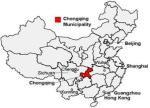 member or member of the CPC Chongqing municipal committee.
The decision was announced by Li Yuanchao, head of the Organization Department of the CPC Central Committee, at a meeting of officials in Chongqing on Thursday. Li said the CPC Central Committee made the decision after discreet consideration and based on current circumstances and the overall situation.
Zhang delivered a speech at the meeting of Chongqing officials, according to xinhuanet.com.
Zhang, born in November 1946, is a native of Tai’an, Liaoning province. He became a member of the Political Bureau of the CPC Central Committee in 2002 and began serving as vice premier of the State Council, China’s Cabinet, from 2008. Zhang had previously served as Party chief in Jilin, Zhejiang and Guangdong provinces, respectively, between 1995 and 2007.
via Zhang Dejiang replaces Bo as Chongqing Party chief|Politics|chinadaily.com.cn.
Bo was seen to be a strong contenders for one of the seven places on the Standing Committee of the Political Bureau of the Communist Party (total 9 members), equivalent to the inner cabinet, when the incumbents will retire this autumn due to mandatory retirement age. He was extremely successful in bringing Chongqing on from a secondary inner city into a thriving first city (one of four) in China. However, his views were seen by many of his colleagues as veering back to the left in recent times. This demotion means that he is no longer a candidate for the SC of the Politburo.
Related articles
14/03/2012
* Stephen Roach on the consumer opportunity in China
McKinsey: “Focusing on exports to the world’s second-largest economy will help the United States generate growth and jobs, says Morgan Stanley Asia’s former non-executive chairman.
A year ago, the National People’s Congress enacted China’s 12th five-year plan, which included three main building blocks: a greater focus on jobs, urbanization to boost wages, and financing a social safety net that encourages families to spend rather than save. Stephen Roach, a professor at Yale University and former nonexecutive chairman of Morgan Stanley Asia, says that this document’s implementation is marking a major shift in China’s model, away from exports and investment and toward internal, private consumption. Therein lies a huge opportunity for other nations to benefit from the emergence of the world’s largest consumer population.
China, currently the biggest and most rapidly growing US export market, is well on its way to “create a consumption dynamic that will outstrip the growth of any consumer market in the world,” Roach asserts—“and shame on us if we’re not a part of that.” In this video, Roach explains how China must turn to internal demand to drive economic development and prosperity and why improving the testy China–US bilateral relationship is so critical for the economic future of both countries. McKinsey Publishing’s Rik Kirkland conducted the interview at the World Economic Forum, in Davos, in January 2012.”
Related page: https://chindia-alert.org/economic-factors/consumerism-blossoms/
14/03/2012
* 40 years on: senior US diplomat recalls China trip as “single most dramatic, important event” in career
Extract from Xinhua: “For 74-year-old Winston Lord, former U.S. assistant secretary of state, his trip to China with former U.S.

President Richard Nixon 40 years ago was “the single most dramatic and most important event” in his decades-long career. …
Years of hostility between China and the United States dispersed after Nixon’s world-stunning visit to China on Feb. 21, 1972, allowing the most powerful country and most populous one in the world to join hands in carving out a new future.
Lord, then a top aide to U.S. National Security Adviser Henry Kissinger and the first U.S. official to visit China after 22 years of mutual hostility and isolation, was proud of first secret trip to China in 1971.
“We were flying secretively from Pakistan to Beijing on a Pakistani plane, and as the plane got close to the Chinese air space, border, I was in the front of the plane, and Dr. Kissinger was in the back of the plane, so as we went into Chinese territory, I was the first. I always told everyone, and Kissinger agrees, that I was the first American official to visit China in 22 years,” said a beaming Lord.”

Just over 40 years ago, President Nixon visited China, started ‘ping pong’ diplomacy and giant panda diplomacy. The rest, dear friends, as they say, is history. Nixon may have been dishonoured for the Watergate affair. But history, hopefully, will remember him well for inviting China to rejoin the modern world.

 CHINDIA ALERT: You'll be living in their world, very soon