Archive for April, 2012

15/04/2012

* US says China making progress on currency, urges more

Reuters: “A senior White House aide said on Saturday that China had made some progress toward easing restrictions on its currency but stressed the United States wanted to see more actions taken.

At a briefing with reporters in Colombia, where President Barack Obama is attending a summit with Latin American leaders, White House adviser Ben Rhodes said the Obama administration was closely reviewing Beijing’s announcement that it was doubling the size of its yuan’s trading band against the dollar. “It comes in the continuum of us wanting to see the Chinese take more of these steps to see their currency appreciate to come in line with market value,” Rhodes said. “They’ve made some progress. We’d like to see more movement.”

“The Peoples Bank of China said on Saturday it would allow the yuan to rise or fall 1 percent from a mid-point every day, effective Monday, compared to its previous 0.5 percent limit. Currency experts said the move reflected a belief in Beijing that the currency is near its equilibrium level and that China’s economy, although cooling, is sturdy enough to handle long-promised structural reforms.

China’s currency is a sensitive topic in the United States, where many business leaders believe an undervalued yuan gives Chinese exports an unfair price advantage on global markets.”

via U.S. says China making progress on currency, urges more | Reuters.

14/04/2012

* Bollywood star Shah Rukh Khans detention: US apologises, India talks tough

Cover of

Cover of My Name Is Khan

Times of India: “The US customs and border protection authorities have expressed “profound” apologies for the Shah Rukh Khan detention incident. However, taking the incident seriously, external affairs minister SM Krishna has asked the Indian ambassador to US, Nirupama Rao, to take up the matter with the authorities. Reacting strongly to the detention, Krishna said it has become a policy of detention and apology by the US which cannot continue.

Earlier, Shah Rukh Khan was detained at a New York airport for over two hours by immigration officials after arriving from India in a private plane with Nita Ambani, to address students at Yale University here. While Nita, wife of Reliance Industries chairman Mukesh Ambani, and the rest of their group were cleared immediately, Khan was stopped and was given immigration clearance only after about two hours, sources told PTI. 46-year-old Khan was to address a press conference at 2pm and deliver his lecture at 4pm at the Yale University. However, he arrived for the press meet three hours behind schedule and his hour-long lecture started at about 6pm.

“Whenever I start feeling too arrogant about myself, I always take a trip to America. The immigration guys kicked the star out of stardom,” Khan said with some sarcasm addressing the students at the University. He added that he always has his “small victories” even in such circumstances. “The immigration officials always ask me how tall I am and I always lie and say 5 feet 10 inches. Next time I am going to get more adventurous. If they ask me What colour are you, I am going to say white,” Khan said.”

via Shah Rukh Khans detention: US apologises, India talks tough – The Times of India.

Life imitates art. Shah Rukh Khan starred in a film called “My name is Khan” – which was subtitled and I’m not a terrorist – is mainly about him being stopped at US airports after the 911 Twin Towers terrorist action.

 Related pages: http://watchnewmoviesonline.blogspot.co.uk/2010/02/my-name-is-khan-2010-watch-movie-online.html

http://en.wikipedia.org/wiki/My_Name_Is_Khan – “Upon its release, the film broke many box office records.[9] My Name is Khan was the highest-grossing Bollywood film overseas at the time. Within four weeks, the film crossed the INR70 crore (US$13.97 million) mark in India and became the first film of 2010 to do so. In the overseas markets, the film grossed INR110.34 crore (US$22.01 million).[10] My Name is Khan is currently the sixth highest grossing Bollywood film with a worldwide gross of 200 crores.[11] The film was released in India on DVD on 28 April 2010. Blu-ray in India, plus a DVD release worldwide followed on 10 August 2010.[12]

14/04/2012

* Police reinvestigate death of Neil Heywood according to law

Xinhua: “Chinese police have set up a team to reinvestigate the case that British citizen Neil Heywood was found dead in Chongqing on Nov. 15, 2011, which was alleged by Wang Lijun who entered, without authorization, the U.S. general consulate in Chengdu on Feb. 6 and stayed there, Xinhua learned from authorities.

Police authorities paid high attention to the case, and set up the team to reinvestigate the case according to law with an attitude to seek truth from facts. According to investigation results, Bogu Kailai, wife of Comrade Bo Xilai, and their son were in good terms with Heywood. However, they had conflict over economic interests, which had been intensified. According to reinvestigation results, the existing evidence indicated that Heywood died of homicide, of which Bogu Kailai and Zhang Xiaojun, an orderly at Bo’s home, are highly suspected. Bogu Kailai and Zhang Xiaojun have been transferred to judicial authorities on suspected crime of intentional homicide.”

via Police reinvestigate death of Neil Heywood according to law – Xinhua | English.news.cn.

Note that Xinhua prefixed Bo to Mme Gu’s surname, which is not usual in mainland China, but common in Hong Kong and elsewhere where the wife has a business profile of her own, but wants to be associated with her husband. One wonders if this is the authorities subtle way of linking Mme Gu to Bo, who is in political disgrace.

Related post: https://chindia-alert.org/2012/04/05/deciphering-chinese-names/

14/04/2012

* China ejects Bo from elite ranks, wife suspected of murder

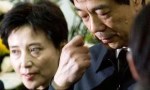
Reuters: “China’s Communist Party has banished the country’s brashest and most controversial politician from its top ranks and detained his wife in connection with the murder of a British businessman, the most tumultuous upheaval in the nation’s leadership in decades.

The decision to cast out Bo Xilai from the party’s Central Committee and its Politburo effectively ends the career of the former high-flyer, widely seen as pressing for a top post in China’s next leadership to be decided later this year.

The official Xinhua news agency confirmed a Reuters report several hours earlier on Tuesday that Bo had been suspended from his party posts, and separately reported that his wife, Gu Kailai, was suspected in the murder of Briton Neil Heywood.

“Comrade Bo Xilai is suspected of being involved in serious disciplinary violations,” said Xinhua, citing a decision by the central party leadership to banish Bo from its top ranks.

“Police set up a team to reinvestigate the case of the British national Neil Heywood who was found dead in Chongqing,” the news agency said, referring to the sprawling southwestern municipality where Bo was party chief until he was dismissed in March as a scandal surrounding him unfolded.

It was the most dramatic convulsion in China’s secretive leadership since 1989, when Jiang Zemin was plucked from obscurity to head the Communist Party after the bloody crackdown on democracy protests in Beijing.

Jiang replaced Zhao Ziyang, who was toppled by hardliners for supporting the student movement centered on Tiananmen Square that was crushed by the army with heavy loss of life.

Xinhua said evidence indicated Heywood’s death was a homicide and Gu Kailai and Zhang Xiaojun, an assistant in Bo’s household, were “highly suspected.” It cited a dispute over unspecified “economic interests” between Gu and Heywood that “constantly intensified”.

Gu and Zhang had been “handed over to the judicial authorities”, it said – meaning they have been detained.”

via China ejects Bo from elite ranks, wife suspected of murder | Reuters.

06/04/2012

* China’s import tariffs cut praised by WTO

China Daily: “China’s decision to cut import tariffs, against the backdrop of lurking protectionism in “too many” countries, has been hailed by the World Trade Organization.”

At a time when too many governments are reverting to trade restrictive measures, news of China’s market-opening initiative is most welcome,” WTO spokesman Keith Rockwell said in an interview with China Daily in Brussels. Rockwell was speaking after China announced a package of measures cutting import tariffs last week. The measures will see duty reduced on “some energy products, raw materials, consumer goods closely related to peoples lives, and key items that China does not produce”. And Beijing will encourage more purchases from countries and regions that have signed free trade agreements with China. Boosting imports will entail a more open market for a range of goods, Rockwell said.  The Ministry of Commerce will announce details of the measures soon.”

via Chinas import tariffs cut praised|Economy|chinadaily.com.cn.

Related page: 

06/04/2012

* Indian jewellers meet Sonia, demand duty roll back

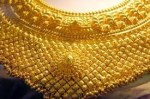
The Hindu: “Agitating jewellers and bullion traders on Friday called on Congress president Sonia Gandhito press for their demand forSonia Gandhi in 2009.

removal of excise duty on unbranded jewellery. “We today met Sonia Gandhi and requested her to tell the government to roll back excise duty on unbranded jewellery, reduce customs duty and lower TDS on sale of jewellery,” All India Swarankar Sangh President Madhukar Chachad told reporters after the meeting. Ms. Gandhi, he said, “has assured us that she will forward our demands to Finance Minister Pranab Mukherjee for further action”.

Ahead of the meeting of jewellers with Ms. Gandhi, the Congress had asked the government to look into the demands of jewellers, who have been agitating for more than a fortnight. “Congress has asked the government to consider the demand of jewellers sympathetically,” AICC General Secretary and media department chief Janardhan Dwivedi said. Bullion traders and jewellers are protesting since the presentation of the Budget which had imposed excise duty on unbranded jewellery, raised customs duty on gold and proposed TDS requirement on sale of  on sale of jewellery.”

via The Hindu : News / National : Jewellers meet Sonia, demand duty roll back.

The purpose of the excise duty is to try and divert Indians from investing in ‘economically inactive’ gold into ‘proactive investiments’ such as stocks and shares or even property. If this works, India will stop being the world’s number 1 importer of gold and China will become number 1.

05/04/2012

# Deciphering Chinese names

Chiang Kaishek with Muslim General Ma Fushou a...

There are around 100 common Chinese surnames and, apart from possibly Ma (), there is no religious or regional clustering. The colloquial for ‘the public’ is lao bai xing, which literally means “old hundred surnames”. The surname Ma, more often than not, is used by Muslim Chinese; and is thought to be derived from the Prophet Mohammed.

Traditionally, for many centuries, most Chinese families followed the standard practice of using three mono-syllabic words for their names, such as Sun Yatsen, father of modern China.
Maybe surprisingly, Dr Sun is revered in both the Peoples’ Republic and Taiwan. Both have huge memorials to him. The photo courtesy –
http://hcyip.wordpress.com/tag/nanjing-massacre/ – is of the mainland memorial.

The first, Sun (), is the family or clan name. After all what is most important, your antecedents, of course rather than you yourself – back to the collective mindset of Chinese.

The second, Yat, is the ‘generation name’. It is given by the parents to each of the siblings. So, all of Yatsen’s brothers and sisters would have Yat plus another word as their name. And, indeed, all his paternal first cousins. In some families, the boys and girls may have variants of this name.

If the family is conforming to old traditions, then the middle name (the generation name) is taken from a poem specially composed for the family, with each generation taking a successive word from the poem. Typically, the poem will be about something noble and aspirational, such as: “World peace, national unity; Social harmony, family prosperity”. So, the first generation’s middle name will be world, the next peace and so forth. Of course, in most families, long before they reach the eighth generation, some successor would have thought to create his own couplet to be more modern and so the cycle restarts.

The third, sen, is the personal name and can be any word in the Chinese vocabulary. Having said that, some words are regarded as more masculine and others more feminine.

Just to confuse everyone, some families use the second name as the personal name and third as the generation name. So, for example, Sun Yatsen’s wife Madam Sun was named Soong Chingling and her two sisters were Soong Ailing and Soong Meiling. Although Sun and Soong sound similar, Soong is a differnt name altogether () incidentally, Meiling was Chiang Kaishek‘s wife, Madame Chiang.

Despite being a feudal society until recent times, women kept their names after marriage. So the wife of the disgraced leader Bo


Xilai is Gu Kailai; rarely – but confusingly – called Bogu Kailai.
In places like Singapore and Hong Kong sometimes married women, esp business women, would keep their maiden name along with the husband’s surname, making it four names. Sort of like the British ‘double-

barrelled‘ surnames such as the actress Helene Bonham Carter.

Most Chinese who live in Hong Kong, Singapore, Taiwan and other enclaves of Chinese emigrees tend to keep to the traditional way of naming.

Her Excellency Wu Yi, Vice Premier of the Peop...

But since the revolution in 1949 and especially since the Cultural Revolution in the 70s, many mainland Chinese have stopped using the generation name and use just one name after the surname such as Madame Wu Yi, retired senior leader who led China into the WTO and who managed the SARS crisis of early 2000s.

This causes huge problems for the authorities as, it is not uncommon, at roll call in school, several kids would raise their hands– for example – to Wang Ta (= Wang senior). The authorities are encouraging parents to revert to a middle name when naming their children.

04/04/2012

* Premier Wen Appeals to Shake Up Bank System

Wall Street Journal: “Chinese Premier Wen Jiabao told a national audience on Tuesday that Chinas state-controlled banks are a “monopoly” that must be broken up, in a blunt appeal for a shake-up of the creaky financial system of the worlds No. 2 economy.

温家宝

温家宝 (Photo credit: Wikipedia)

In an evening broadcast on state-run China National Radio, Mr. Wen told an audience of business leaders that Chinas tightly controlled banking system needs to change. “Let me be frank. Our banks earn profit too easily. Why? Because a small number of large banks have a monopoly,” said Mr. Wen, according to the transcript of the program on the broadcasters website. “To break the monopoly, we must allow private capital to flow into the finance sector.

Mr. Wen’s comments tap into a rich vein of popular anger against Chinas biggest banks that has been building in recent months online and in the media. The backlash was initially prompted by frustration at what has been perceived as banks’ payments of low interest rates on deposits and indiscriminate levying of fees. It has worsened in recent weeks as lenders posted record profits, even as the economy slows and some companies struggle to access credit.”

via Wen Appeals to Shake Up Bank System – WSJ.com.

So it’s not only Western, capitalist banks that are in people’s bad books!

03/04/2012

* Insight: Bullish China shops in industrial Germany

Reuters: “German businessman Norbert Scheuch was bowled over by his red-carpet treatment on a visit to China late last year and by how fast the country’s largest construction firm sealed the deal to buy his company. The head of Sany Heavy Industry, which is controlled by China’s richest man, Liang Wengen, personally gave Scheuch a tour of their plant and then had a top manager drive him to the airport and wait with him for his flight home. “Nobody would ever do that in Europe,” said Scheuch, CEO of concrete pump maker Putzmeister.

“The Chinese made it very clear from the beginning they wanted the company immediately,” he added. Barely a month later, Sany’s top negotiator Xiang Wenbo was in the offices of law firm Shearman Sterling in Frankfurt at 3 am to sign the deal to buy Putzmeister for 360 million euros ($472 million) after a nine-hour session with the notary.

The purchase, which gives Sany a technological edge over its rivals, illustrates how Chinese investors are becoming more savvy about foreign takeovers, not just to gain access to raw materials or patents but as an engine for growth. By keeping the German management in place after its acquisition and announcing that Putzmeister would become its new international distribution hub outside China for concrete machinery, Sany also defied the clichés about Chinese practices and assuaged local anxiety among employees. “I had to promise the Chinese solemnly that our management would stay on board,” Scheuch said.

Germany, Europe’s largest economy and home to many small and medium-sized companies famed for their technological know-how and exporting prowess, is especially attractive for cash-rich Chinese businesses looking to build a global profile. Some German and other European companies also look cheap to Chinese buyers after the euro zones sovereign debt crisis.”

Rest of long article is equally interesting.

via Insight: Bullish China shops in industrial Germany | Reuters.

Related articles:

03/04/2012

# Does a country’s national games mimic its mindset?

Chess Set (Shatranj in Iranian), glazed fritwa...

Chess Set (Shatranj in Iranian), glazed fritware, 12th century. New York Metropolitan Museum of Art. (Photo credit: Wikipedia)

I have a hypothesis that a country’s mindset mimics its national sports and games.

For instance, the Chinese and Japanese are keen on chess and Go. These are games of strategy and take a long-term view. Indians say they invented chess. In any case they do play it well. Perhaps not as good as the Russians. Wonder why the Russians lost the ‘cold war’?

The British play soccer – a very dynamic game, but also cricket which is one of strategy and patience. These games may explain the divergent behaviour of the British – colonial conqueror and commonwealth sustainer?

Americans love their football and baseball. Both are what I call start and stop games. You play a set of tactics and then regroup. I wonder if that explains the lack of clear success in wars like Iraq and Afghanistan?

The Middle East used to play a game from which polo was derived. Their game involved riding on horses and trying to capture and throw the head of a goat (or in medieval times, the head of a defeated enemy) into the opponents’ goal. Individual courage and devil-may-care ruled the tactics. Perhaps that means the West will never ‘win’ in Iraq and Afghanistan.

Don’t forget that Iran has both Middle East roots and also claim to have invented chess. The term ‘check mate’ comes from ‘shah mat‘ meaning the king is dead in Farsi.

What do you think of my hypothesis? What are India’s national games? Kabaddi? Hockey? Cricket? How do these explain the Indian mindset?

See also: 


Law of Unintended Consequences

continuously updated blog about China & India

ChiaHou's Book Reviews

continuously updated blog about China & India

What's wrong with the world; and its economy

continuously updated blog about China & India