Archive for March, 2014

07/03/2014

China, ASEAN to have talks on South China Sea – Xinhua | English.news.cn

China is willing to work with the Association of Southeast Asian Nations (ASEAN) to formulate a code of conduct (COC) for the South China Sea, Foreign Ministry spokesman Qin Gang said on Friday.

Flag of ASEAN

Flag of ASEAN (Photo credit: Wikipedia)

Qin’s comment came ahead of the 10th joint working group meeting between China and ASEAN on the implementation of the declaration on the conduct (DOC) of parties in the South China Sea. The meeting will be held on March 18 in Singapore.

“China is ready to work with ASEAN for comprehensive and effective implementation of DOC and steadily push forward consultations on COC,” Qin said.

Practical maritime cooperation will also be touched upon during the meeting, Qin said.

Qin called for favorable conditions for the implementation of DOC and formulation of COC to maintain peace and stability on the South China Sea.

China and ASEAN officials met last September in Suzhou, in east China’s Jiangsu Province, for the 6th China-ASEAN senior officials’ meeting and the 9th joint working group meeting on the implementation of DOC.

via China, ASEAN to have talks on South China Sea – Xinhua | English.news.cn.

Enhanced by Zemanta
07/03/2014

China’s restless West: The burden of empire | The Economist

After a brutal attack in China, the Communist Party needs to change its policies towards minorities

A GROUP of knife-wielding assailants, apparently Muslims from western China, caused mayhem and murder on March 1st in the south-western Chinese city of Kunming, stabbing 29 people to death at the railway station and injuring 140 others. The attack has shocked China. The crime against innocents is monstrous and unjustifiable, and has been rightly condemned by the Chinese government and by America. But as well as rounding up the culprits, the Communist Party must face up to an uncomfortable truth. Its policy for integrating the country’s restless western regions—a policy that mixes repression, development and Han-Chinese migration—is failing to persuade non-Han groups of the merits of Chinese rule.

The party says the attackers were “Xinjiang extremists”, by implication ethnic Uighurs, a Turkic people with ties to Central Asia who once formed the majority in the region of Xinjiang. The killers may have been radicalised abroad with notions of global jihad. Whatever the truth, there is no doubt that Uighurs are committing ever more desperate acts. Scarcely a week passes in Xinjiang without anti-government violence.

The party claims that Xinjiang has been part of China for 2,000 years. Yet for most of that time, the region has been on the fringe of China’s empire, or outside it altogether. An attempt to incorporate these lands began only with the Qing dynasty’s conquests in the mid-18th century. (The name Xinjiang, “new frontier”, was bestowed only in the 1880s.) During the chaos of the 1940s, Uighurs declared a short-lived independent state of East Turkestan. But from 1949 the Communists began integrating Xinjiang into China by force. Demobbed Chinese soldiers were sent to colonise arid lands, the state repression of Uighurs drawing heavily on the Soviet tactics for handling “nationalities”. Uighur resentment of the Han runs deep. The feeling is mutual. Many Chinese are openly racist towards Uighurs, and the government thinks them ungrateful. In 2009 hundreds of people were killed during street fighting between Uighurs and Han, who now make up two-fifths of Xinjiang’s population and control a disproportionate share of its wealth.

Identity crisis

The Kunming killers’ motives may never be known. But fears of militant Islamism arriving at the heart of China must not obscure the broader problem of Chinese oppression in Xinjiang. Recent crackdowns hit at the heart of Uighur identity: students are banned from fasting during Ramadan, religious teaching for children is restricted, and Uighur-language education is limited. Many Uighurs, like their neighbours in Tibet, fear that their culture will be extinguished. Xinjiang and Tibet (and Inner Mongolia) are still China’s colonies, their pacification under the Communist Party a continued imperial project. Were it not for the Dalai Lama’s restraining influence, violence in Tibet might be as bad as it is in Xinjiang. As it is, over 100 Tibetans have burned themselves to death in protest at Chinese rule.

There is a large military presence in China’s west. The government seems to believe that unless Uighurs and Tibetans are held in check by force, the western regions could break away. That is always a danger. But suppression, which leads to explosions of anger, may increase the risk, not mitigate it.

The only way forward is to show Uighurs (and Tibetans) how they can live peacefully and prosperously together within China. The first step is for the party to lift the bans on religious and cultural practices, give Uighurs and Tibetans more space to be themselves, and strive against prejudice in Chinese society. Economic development needs to be aimed at Uighur and Tibetan communities. Otherwise, there will be more violence and instability.

via China’s restless West: The burden of empire | The Economist.

Enhanced by Zemanta
07/03/2014

India’s anti-graft party takes aim at Modi’s economic model | Reuters

Indian opposition politician Narendra Modi, who leads opinion polls ahead of next month’s general election, faces pressure from a small anti-graft party attacking his economic model on his home turf, the thriving state of Gujarat.

Arvind Kejriwal and friends

Arvind Kejriwal and friends (Photo credit: vm2827)

The pro-business leader has presided over rapid economic growth during more than 12 years as the chief minister of the coastal state, and slashed red tape to attract companies such as Ford, Maruti Suzuki and Tata Motors.

Now, Modi promises to replicate his state’s development model nationwide if he becomes prime minister.

But Arvind Kejriwal, the leader of the Aam Aadmi Party, on Friday said small businessesin the state were being shuttered, public schools and health services were in poor shape and claims of regular supplies of electricity were not true.

“What is your development model?” Kejriwal asked as he tore into the heart of Modi’s campaign, saying that 400,000 of the state’s farmers who had applied for electricity connections years ago had yet to receive them.

“If you haven’t even given a connection, how will you give them electricity?”

India’s western state of Gujarat has been hailed for rapid measures to develop infrastructure and provide stable power supply, but critics often say it lags behind other states in social development.

“What we’ve seen in the last two days is quite shocking,” Kejriwal told reporters at a meeting on the edge of the state’s commercial capital of Ahmedabad.

Kejriwal, who was denied an audience with Modi, questioned the Gujarat chief minister’s claims on farm growth, job creation and clean governance, and suggested he was too close to big business.

He was on a tour to study conditions in Gujarat, as part of his party’s first national campaign since bursting onto the political scene with a stunning victory in Delhi’s local election in December.

via India’s anti-graft party takes aim at Modi’s economic model | Reuters.

Enhanced by Zemanta
07/03/2014

U.S. engine maker backed by Bill Gates forms second China venture | Reuters

The FAW subsidiary, First Auto Works Jingye Engine Company, is investing more than $200 million in the venture, BEM (Shanxi) Co, which aims to begin building an advanced engine designed by EcoMotors in 2015 in China’s Shanxi province.

Image representing EcoMotors as depicted in Cr...

Image via CrunchBase

FAW’s manufacturing partners in China include Volkswagen AG (VOWG_p.DE), Toyota Motor Corp (7203.T) and General Motors Co (GM.N).

It is the second China venture for EcoMotors, a suburban Detroit startup, which announced a similar deal last April with China’s Zhongding Power. The privately held Chinese firm plans to ramp up production this year in Anhui province, supplying engines for use in commercial and off-road vehicles.

Both China ventures will build EcoMotors’ OPOC engine, which is more compact than conventional gas and diesel engines of similar power. It is also said to be cheaper and to deliver higher fuel economy and fewer emissions.

via U.S. engine maker backed by Bill Gates forms second China venture | Reuters.

Enhanced by Zemanta
07/03/2014

BBC News – Chaori Solar in landmark Chinese bond default

Solar panel maker Shanghai Chaori Solar Energy Science & Technology has defaulted on interest payments owed on its bond, say media reports quoting the firm.

Solar panels

It is the first Chinese firm ever to default on its onshore corporate bonds.

On Tuesday, the firm warned it would be unable to make a 89.8 million yuan ($14.6m; £8.7m) interest payment on a one billion yuan bond issued in 2012.

The default is seen as a test case for the Chinese government.

Investors have assumed in the past that the Chinese government would bail out any Chinese corporation in danger of defaulting.

The move to allow Chaori to default signals a new stance.

“There’s never been a corporate bond default, [so] investors have been conditioned that there is no such thing as risk in China,” Leland Miller, president of research firm China Beige Book, told the BBC.

“The Chinese leadership is trying to break down this misunderstanding that everything is backstopped.”

Chaori Solar said it planned to pay 4 million yuan ($654,000) of the interest payment due on the billion yuan bond, which was taken out two years ago.

via BBC News – Chaori Solar in landmark Chinese bond default.

Enhanced by Zemanta
07/03/2014

Scientists discover world’s oldest cheese buried on mummies – People – News – The Independent

Scientists believe they may have found the world’s oldest cheese discovered among mummified bodies in China’s Taklamakan Desert, dating back as far as 1615 BC.

Embedded image permalink

Blocks of the cheese were found around the neck and chest of the Beauty of Xiaohe. Researchers believe the cheese may have been buried with the mummies so they could enjoy it in the afterlife.

The Xiaohe tomb complex was first discovered by Swedish archaeologist Folke Bergman in 1934. Full archaeological excavations were finally undertaken between 2002 and 2004 by the Cultural Relics and Archaeology Institute.

The Taklamakan Desert’s hot dry sand and arid land provides excellent conditions for mummification. The burial conditions also may have created a vacuum- like environment that would have helped to preserve the cheese, researchers said.

Researchers from the Max Planck Institute of Molecular Cell Biology and Genetics collected 13 samples of organic matter from ten tombs and mummies, including the Beauty of Xiaohe, in the Small River Cemetery Number 5.

Protein analysis performed in Dresden showed the organic material was a cheese made by robust, easily scalable kefir fermentation. Researcher Andrej Shevchenko told USA Today the team collected evidence to suggest skimmed ruminant milk was combined with bacteria and yeast used to make a kefir cheese.

“We not only identified the product as the earliest-known cheese, but we also have direct evidence of ancient technology,” he said.

“It’s the earliest known dairy practice that persists until present times in an almost unchanged way,” University of Chinese Academy of Sciences archaeologist Yimin Yang told Discovery News.

“The discovery moves the mysterious history of kefir as far as to the second millennium BC, making it the oldest known dairy fermentation method.”

via Scientists discover world’s oldest cheese buried on mummies – People – News – The Independent.

See also: http://www.curledup.com/geniusch.htm

Enhanced by Zemanta
06/03/2014

20 Clever Inventions Given to Us by the Incredible Indians!

annetbell's avatarTalesAlongTheWay

20 Clever Inventions You Probably Didn’t Know Were Made By Indians

FOLLOW @STORYPICKER

FEBRUARY 20, 2014

indian-inventions-cover
Indian inventions and discoveries have been instrumental in shaping the face of the current modern world. We picked up 20 such interesting findings out of a whole bunch that will make you go, “I didn’t know that”.

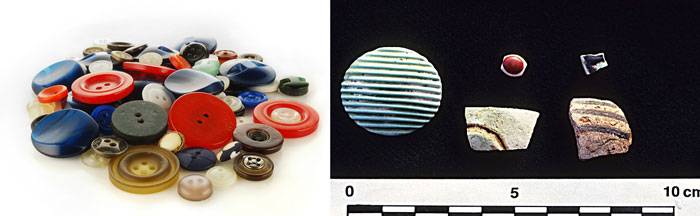
1. Buttons

buttons

image sources 12

Buttons were first used in Mohenjo-daro for ornamental purpose rather than for fastening. They were first used in the Indus Valley Civilization by 2000 BCE.

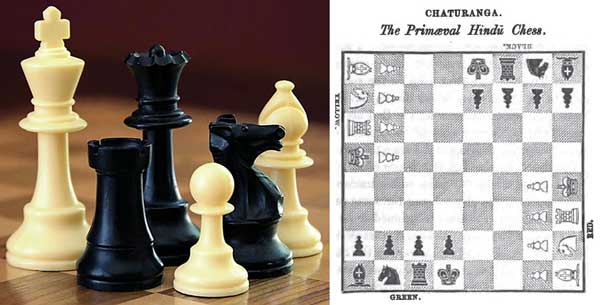
2. Chess

chess

image sources 12

Chess developed out of Chaturanga, which is an ancient strategy board game developed during the Gupta Empire in India around the 6th century AD. Now you know why Vishwanathan Anand is…

View original post 825 more words

06/03/2014

Refiners Eye Better Oil Deal Terms on U.S. Boom: Corporate India – Businessweek

India, Asia’s second-biggest energy user, is in talks with Saudi Arabia and Kuwait for better terms on oil contracts as surging U.S. output frees up supplies.

Hindustan Petroleum Gas Cylinder

Hindustan Petroleum Corp. (HPCL), India’s third-largest state refiner, is seeking to at least double the interest-free credit period for crude purchases from Saudi Arabia and Kuwait to 60 days, B.K. Namdeo, the company’s refineries director, said in Mumbai. Mangalore Refinery & Petrochemicals Ltd. (MRPL) wants price discounts for agreeing to contracts that are more than 10 years long, according to Managing Director P.P. Upadhya.

“Discussions are going on, and we expect the extended credit period to be reflected in the new contracts from April 1,” Namdeo said. “There is a surplus in the market, and India should take full advantage of the situation.”

via Refiners Eye Better Oil Deal Terms on U.S. Boom: Corporate India – Businessweek.

Enhanced by Zemanta
06/03/2014

Stock Market Cheers Potential End of Congress Reign – India Real Time – WSJ

Here’s a recipe to make Indian stocks investors happy: tie the hands of the ruling Congress-led government and hint that the opposition Bharatiya Janata Party will be forming the next government.

India’s benchmark 30-share S&P BSE Sensex hit a record high Thursday of 21513.87 points, marking the third straight session of gains.

As India heads towards national elections, investors have been following the twists and turns of the political world more closely in recent months. The next election will likely have a big impact on whether, when and by how much Asia’s third largest economy will rebound.

The country announced this week that the national polls will begin April 7 and be done by May 16 which has some optimists hoping that uncertainty about who will be leading the world’s largest democracy will be over in a little more than two months.

Some investors have become frustrated by the ruling Congress party because they believe it has stalled reforms and delayed important investments in the close to ten years it has been in power. Instead, critics say, the Congress-party led coalition has focused on populist measures, including a bill to provide almost free food to around two thirds of the population.

One good thing about election season, investors say, is that Congress will not be able to announce any new perks for the poor. The Election Commission of India prohibits parties from launching welfare programs during the election process.

“The uncertainty is now over,” said Sharmila Joshi, an independent research analyst in Mumbai. “The market is (optimistic) that there won’t be any more populist measures.”

via Stock Market Cheers Potential End of Congress Reign – India Real Time – WSJ.

Enhanced by Zemanta
06/03/2014

India’s SAIL-led group hopes to buy coal assets in Poland-chairman | Reuters

A consortium led by India’s Steel Authority of India Ltd, the country’s second-biggest steelmaker, hopes to buy coal assets in Poland in the next few months, Chairman C. S. Verma said on Thursday.

Steel Authority of India Limited

Steel Authority of India Limited (Photo credit: Wikipedia)

Most steel producers in India, the world’s third-largest coal importer, depend on overseas coal shipments and are trying to buy mines in Africa and Europe.

SAIL-led International Coal Ventures Private Ltd (ICVL), whose five participating firms are all state-owned or state-controlled, has been scouting for mines since 2009.

Verma said they had already invested in due diligence for the Polish assets.

JSW Steel Ltd, India’s third-largest steel maker, has already bought U.S. mines that produce the coal used in steel making.

India’s coal imports rose 21 percent to 152 million tonnes last year, with most of that being thermal coal used to generate power, according to Delhi-based research firm OreTeam. (Reporting by Krishna N Das; Editing by Jo Winterbottom)

via India’s SAIL-led group hopes to buy coal assets in Poland-chairman | Reuters.

Enhanced by Zemanta
Law of Unintended Consequences

continuously updated blog about China & India

ChiaHou's Book Reviews

continuously updated blog about China & India

What's wrong with the world; and its economy

continuously updated blog about China & India