Archive for September, 2014

03/09/2014

Jaitley’s biggest tasks lie ahead: big-bang reforms and restructuring the Finance Ministry

The finance minister has had to tackle inflation, India’s stance in the WTO and easing regulatory hurdles. That was the easy part.

Even before the general election ended in May, it was clear that if the Narendra Modi-led Bharatiya Janata Party formed the government, Arun Jaitley would head one of the important ministries on Raisina Hill, the area of Lutyen’s Delhi that houses some of the most important government buildings.
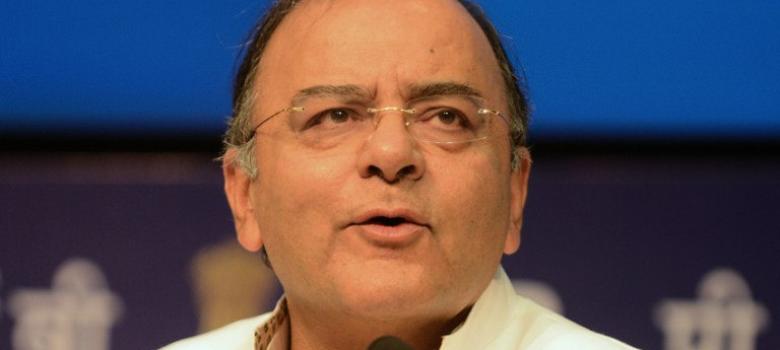
But Jaitley’s move to North Block, the part of the Hill housing the finance ministry, was not easy. Contesting his first Lok Sabha election, he lost the race in Amritsar to the Congress candidate by nearly one lakh votes, raising questions within the party about his eligibility to be granted a key ministry. Jaitley, who has also been given charge of the defence ministry, is a man with as many detractors as admirers in New Delhi and within his own party.

Often teased in Delhi circles as the only Congresswala in the BJP, Jaitley was seen by many as an obvious choice for the crucial portfolio of finance. He got the job because he has a shrewd strategic mind and knows how to work Delhi. In addition, the BJP needed someone who had the nerves to handle a ministry that was practically in the ICU despite valiant, though sometimes questionable, efforts by his predecessor and friend, the Congress’s P Chidambaram.

Both Prime Minister Narendra Modi and Jaitley had only a few days to present their first budget to a Parliament and nation that had been promised big-bang economic reforms. As Jaitley presented the Modi government’s first budget on July 12, many who had expected major reforms were left disappointed even though some praised it for pointing in the right direction.

As a member of the Federation of Indian Chambers of Commerce and Industry said, this was a “benefit of the doubt” budget because of the short period in which Jaitley and his team had to think things over. The real test will come in 2015.

Huge challenges

A change in government is not the only factor that drives ministerial reform. The bureaucracy also needs to endorse the new policies. In getting the bureaucracy on board, Jaitley’s team in North Block has faced plenty of challenges, such as the minister’s inability to address the thorny issue of retrospective taxation.

Other things that kept Jaitley busy as soon as he took over were controlling inflation, India’s stance on subsidies at the WTO and making it easier to do business by removing regulatory hurdles. But the enormity of reforms needed to transform the Indian economy and pushing its growth rate to more than 6% require willpower and the stomach to take politically unpopular measures, especially in sectors such as power.

“There are three or four sectors where we just cannot continue doing business as usual,” said Pratap Bhanu Mehta, president of the New Delhi-based Centre for Policy Research. “In areas such as energy we are too dependent on imports and on carbon-intensive energy sources. If we are not on an alternative energy path soon, which means low carbon and technologically efficient [forms], we could be out of the development game in 15 to 20 years.”

It is the support system for business that requires key changes. Foreign industry remains bullish on India but has made its displeasure known over the slow progress on issues such as foreign direct investment, land acquisition and retrospective taxation.

On the domestic front, many industrialists have asked for a revitalised subsidy regime, one in which the government gives subsidies wherever required instead of using them as a populist measure to get votes. At the same time, as a vital component of the global economy, India could find it increasingly difficult to persist with its subsidy regime even if it makes sense on the domestic front.

Back to the drawing board

Globalisation and climate change will become central to India’s economic story. The Asian Developmental Bank concluded in a recent report that South Asian economies such as India could lose 1.8% of their GDP by 2050 and 8.8% of their GDP by the end of the century to climate change.

via Scroll.in – News. Politics. Culture..

03/09/2014

Six ways in which Narendra Modi has changed Delhi

From: http://scroll.in/article/677239/Six-ways-in-which-Narendra-Modi-has-changed-Delhi

He’s undermined the hierarchy of the BJP, but bureaucrats are reporting to work on time.

Narendra Modi’s first hundred days in power may not have brought big bang economic reforms or sweeping social initiatives, but the shift in dynamics across political, bureaucratic and corporate circles has been huge. Except for the period of the Emergency four decades ago, which turned everything upside down, never have the customary power equations of Lutyens Delhi become so redundant.

1. The Bharatiya Janata Party
The biggest impact of Modi’s arrival at the seat of power has been on his own party. The Bharatiya Janata Party today is looking like a punctured balloon. This was one of the few remaining political outfits in the country that still routinely practiced internal debate. After Modi’s victory, the hush among the BJP leadership has been deafening. The party is under Modi’s thumb and is now feeling the pressure of Amit Shah’s palm as well. Apart from the overwhelming presence of these two leaders, no one is quite sure about the hierarchy in the party. Party members don’t know whom to approach for what, since everybody else seems so powerless. There is surprisingly little triumphalism or celebratory swagger among BJP leaders in the aftermath of such an astounding electoral victory.

2. The council of ministers
In the beginning there was some envy about those who got plum ministerial positions. But a few of them, such as power minister Piyush Goel, and environment and information minister Prakash Javdekar, were reported to have been ticked off like schoolboys. As a result, a ministerial post does not look so inviting anymore. Individual ministers have never before been so devoid of the powers to dispense favours. In the past, some politicians were able to wrangle such favours even if they were in opposition. The ministers are instead driven to work relentlessly from early in the morning to late in the night, driving teams of sleepless bureaucrats, some of whom appear to have more direct access to the prime minister’s office than their political superiors. The word out is that Big Brother is watching and any sign of laxity will not go unpunished.

3. Parliament
There also appears to a conscious decision by the new prime minister to bypass conventional parliamentary processes for policymaking. Standing committees are yet to be set up. Such is the apathy to parliament that even seat allotments to different parties in the new Lok Sabha are yet to begin. Clearly, Modi does not have much inclination for parliamentary debate and review to make policies.

4. The bureaucracy
Significant changes in the corridors of power are also evident. The bureaucracy, from top to bottom, is still struggling to cope with the drastic departure from the slow pace of government. Office hours are not only being imposed in terms of punctuality, but can also get extended indefinitely.

5. India Inc
The relationship between corporate groups and the Modi government in the first hundred days has belied fears, particularly of liberal-left opinion makers, that it would be a willing instrument for crony capitalists. So far this has not been the case. It has become increasingly clear that the country’s largest industrial magnate Mukesh Ambani, who was supposed to be one of the main moneybags to bankroll the Modi campaign, is not calling the shots. Even Gautam Adani, known to have been personally close to Modi when he was Gujarat chief minister, has not been patronised. Power minister Piyush Goel was said to have been pulled up for publicly hobnobbing with the industrialist whose power company was also slapped with a clear energy cess in the budget.

This is not to suggest that the new prime minister has turned his back on industrialists. He has had individual meetings with a number of them including Cyrus Mistry of the Tata group, Anil Agarwal of Vedanta and Anil Ambani, although mysteriously not the latter’s elder brother, Mukesh. The message so far has been clear. The new government was ready to consider all proposals as long as they fit into the regime’s scheme of things, but would not be manipulated through fear or inducement on specific projects or policies. Ever since the new government came to power, the vast army of corporate lobbyists in Lutyens Delhi have been sitting idle.

6. Sycophants and cheerleaders
Finally, the most striking difference between the Modi regime and previous ones, is the way the new prime minister has spurned a long queue of sycophants and cheerleaders who had expected to be rewarded for their services to the Modi campaign. Quite a few of them are in the media, or experts who are hoping to be accommodated in think tanks now that they have been overlooked for plum government posts. The impression, however, is that the prime minister is adamant about horses for courses, and will only elevate someone he feels will be able to do the job.

Those close to Modi have assiduously cultivated the image of a prime minister who has his party leaders by the scruff of its neck, the bureaucracy on tenterhooks and business magnates at an arms distance – “a tough guy who does not dance”.

01/09/2014

China imposes harsher punishment to ensure workplace safety – Xinhua | English.news.cn

China’s top legislature on Sunday adopted a revision to the Workplace Safety Law which imposes harsher punishment on offenders.

Members of the Standing Committee of the National People’s Congress adopted the revision through a vote at the bi-monthly legislative session held from Monday to Sunday.

The amendment further increased fines for enterprises involved in serious workplace accidents from the maximum of 5 million yuan (810,000 U.S. dollars) proposed in its original draft to 20 million yuan.

The quadrupled fine cap is stated in an added article which stipulates fines ranging from 200,000 yuan to 20 million yuan, depending on the losses incurred in the accident.

Under the old Workplace Safety Law, fines for enterprises violating the law were no more than 100,000 yuan or below five times the income earned from illegal operation.

Managers in charge of such enterprises who are found to have failed in their duty to ensure safety will also now be fined between 30 and 80 percent of their annual income corresponding to losses in the accidents.

This is a massive raise compared with the former law, under which managers faced fines between 20,000 yuan and 200,000 yuan.

The revised law states that managers responsible for “serious” and “extremely serious” accidents will be banned from serving as principals in enterprises in the same industry.

The regulation on work safety issued by the State Council in 2007 defines “serious accidents” as those causing 10 to 30 deaths, 50 to 100 serious injuries, or direct economic losses of between 50 and 100 million yuan.

via China imposes harsher punishment to ensure workplace safety – Xinhua | English.news.cn.

01/09/2014

State-owned enterprises: Fixing China Inc | The Economist

JIN JIANG is one of the world’s biggest hotel groups, managing five-star properties across China, a budget motel chain and a travel agency. It is also a state-owned enterprise (SOE), controlled by the Shanghai government. It has seen better days. The company’s best hotels played host to hundreds of foreign leaders in the past century, including Richard Nixon in 1972, when America and China began their historic rapprochement. But in recent years visiting dignitaries have opted for newer hotels over Jin Jiang’s musty rooms and tired furnishings.

When people think of Chinese state companies, they often have its giant banks or oil companies in mind. But most of the 155,000 enterprises still owned by the central and local governments are more akin to Jin Jiang: they are businesses that have little to do with the country’s economic or political priorities, and they have had a run of bad years, losing ground to private-sector rivals. That may be about to change. China is in the midst of the biggest attempt in more than a decade to fix the country’s brand of state capitalism, attempting to breathe new life into Jin Jiang and dozens, if not hundreds or even thousands, more like it.

There are two main problems with China’s SOEs today. First, they have failed to comply with the government’s order to focus on what are deemed to be “strategic sectors” such as aviation, power and telecommunications. These are industries that the Communist Party believes it must dominate in order to maintain control of an increasingly complex economy. But fewer than half of state companies occupy these commanding heights. Some 80,000 are instead in the economic lowlands: they run hotels, build property developments, manage restaurants and operate shopping malls. The temptations to branch out have been too great: relative to their private-sector peers, they have benefited from cheaper financing from state-owned banks, favouritism from local governments in land sales and a lighter touch from regulators.

Second, despite these advantages, SOEs have given progressively less bang for their buck. Faced with mounting losses in the 1990s, China undertook a first round of drastic reforms of its state-owned companies. There were mass closures of the weakest firms, tens of millions of lay-offs and stockmarket listings for many of the biggest which made them run a little more like private companies. That initially paid dividends. SOEs’ return on assets, a gauge of their productivity, rose from barely higher than zero in 1998 to nearly 7% a decade later, just shy of the private-sector average. But over the past five years, their fortunes have ebbed. Profitability of state companies has fallen, even as private firms have grown in strength. SOE returns are now about half those of their non-state peers. For an economy that, inevitably, is slowing as it matures, inefficient state companies are a dangerous extra drag. Jian Chang of Barclays says that putting SOEs right is “the most critical reform area for China in the coming decade”.

Until recently, however, few analysts thought that China had the desire or the ability to get back into the muck of SOE reform. Companies under the central government, such as PetroChina, the country’s biggest oil producer, were believed to be strong enough to resist the changes that would erode their privileges. At the provincial and municipal levels, local officials were thought bound to government-owned companies by ties of power, patronage and money. China was not expected to sit entirely still: gradual deregulation of interest rates and energy pricing was placing indirect pressure on state companies to operate more efficiently. But a direct, frontal assault on them of the kind waged by Zhu Rongji, then prime minister, in the 1990s seemed out of the question. Even when the party unveiled a much-ballyhooed reform plan last November and vowed to target SOEs, there were doubts about how far Xi Jinping, China’s president, could go. People close to the State-owned Assets Supervision and Administration Commission (SASAC), the agency that oversees China’s biggest SOEs, say that it was still dragging its feet at the start of this year.

But a flurry of announcements in the past few months shows that reforms are getting on track. There is no one-size-fits-all approach. Sinopec, Asia’s biggest refiner, is close to selling a $16 billion stake in its retail unit, a potentially lucrative opening for private investors. CITIC Group, China’s biggest conglomerate, is poised to become a publicly traded company by injecting its assets into a subsidiary on the Hong Kong stock exchange, for $37 billion. After its initial reluctance, SASAC announced reforms at six companies. They are to experiment with larger private stakes and greater independence for directors.

via State-owned enterprises: Fixing China Inc | The Economist.

01/09/2014

India Outpacing China’s Oil Demand – India Real Time – WSJ

India’s oil demand has grown faster than China’s so far this year, highlighting slowing energy demand in the world’s most populous country and fueling expectations that India may pick up the slack over the medium-to-long term. The pace of India’s demand also reflects optimism about India’s economic growth under Prime Minister Narendra Modi.

In absolute terms China is Asia’s largest oil consumer, having burned 10.76 million barrels a day of oil and accounting for 12.1% of global oil consumption in 2013, according to BP PLC. The second-largest oil consumer in Asia is Japan, though its oil consumption has been declining as its economy has matured.

India ranks third at 3.7 million barrels a day and accounted for about 4.2% of global oil consumption in 2013.

India’s oil demand has shown steady growth through July at an average of 3%, or 101,000 barrels a day. China’s oil demand has declined at an average of 0.6%, or 62,000 barrel a day, in the same period, Barclays PLC analyst Miswin Mahesh said.

Indian oil demand growth has “organic, domestic, economic activity-linked factors still driving it,” he said. Mr. Mahesh expects the south Asian country’s oil demand to accelerate to 210,000 barrels a day next year, spurred by healthy construction activity, government-financed industrial projects and strong growth in car purchases.

China’s oil-demand growth, on the other hand, remains uncertain, with a large portion of its imports this year going into strategic stockpiling instead of consumption. Its oil demand fell into negative territory in July and its oil imports declined for the first time this year.

“This surprise drop in crude imports further supported our view that [China’s] full-year oil demand could be weaker than current market expectations,” Thomas C. Hilboldt, head of Asia Pacific oil research at HSBC Holdings PLC said last week.

The disparity of the demand drivers in India and China is also telling.

The bulk of oil demand in both countries is for diesel, the most widely consumed liquid fuel in Asia. China’s diesel consumption has shown a sharp decline because of its industrial slowdown, while India’s diesel demand rose sharply in the last few months because of power shortages and delayed monsoon rains.

Despite this, the extent to which Indian energy demand can compensate for China’s decline remains doubtful.

Markets are looking for the next emerging-market economy to take over as China moves into its post-industrial phase. Yet India has a fundamentally different economic structure and growth model, Janet Kong, head of market analysis at BP Singapore’s trading division pointed out last week.

“It’s very much a service-oriented economy…not relying on a lot of infrastructure investments or manufacturing,” she said.

The manufacturing sector in India has underperformed for many years, contributing to about 15% of gross domestic product and 12% of employment, compared with 25% or more of GDP in countries like China, Malaysia, Thailand and Vietnam, according to the Asian Development Bank’s 2014 report. Meanwhile, China is transitioning from an industrial economy dependent on exports to focus more on domestic consumption.

via India Outpacing China’s Oil Demand – India Real Time – WSJ.

01/09/2014

Japan and India vow to boost strategic ties during summit | Reuters

Japan and India agreed on Monday to strengthen strategic ties as Asia’s second and third biggest economies keep a wary eye on a rising China, and said they would accelerate talks on the possible sale of an amphibious aircraft to India’s navy.

India's Prime Minister Narendra Modi (R) and Japan's Prime Minister Shinzo Abe shake hands before their talks at the state guest house in Tokyo September 1, 2014. REUTERS/Toru Hanai/Files

Japanese Prime Minister Shinzo Abe and his Indian counterpart Narendra Modi also agreed to speed up talks on a so-far elusive deal on nuclear energy cooperation, welcoming what they called “significant progress” in the negotiations.

“The two prime ministers reaffirmed the importance of defense relations between Japan and India in their strategic partnership and decided to upgrade and strengthen them,” Abe and Modi said in a statement after a summit in Tokyo.

Modi, on his first major foreign visit since a landslide election win in May, arrived on Saturday for a five-day trip aimed at capitalizing on a personal affinity with Abe to bolster security and business ties in the face of an assertive China.

In a sign of their warm ties, the two leaders greeted each other with a bear hug when they met on Saturday in Japan’s ancient capital of Kyoto for an informal dinner. Modi is one of three people that Abe follows on Twitter, while the Indian leader admires Abe’s brand of nationalist politics.

“The 21st century belongs to Asia … but how the 21st century will be depends on how strong and progressive India-Japan ties are,” Modi told Japanese and Indian business executives earlier in the day.

“The 18th century situation of expansionism is now visible,” Modi said, referring to incidents such as encroachment of others countries’ territories and intruding in other countries’ seas, in a veiled reference to China, with which India shares a long disputed border.

“Such expansionism would never benefit humanity in the 21st century,” he said.

Sino-Japanese ties have also been chilled by a row over disputed isles, feuds over the wartime past, and mutual mistrust over defense policies as China seeks a bigger regional role and Abe loosens the constraints of Japan’s post-war pacificism.

Abe is keen to expand Japan’s network of security partnerships with countries such as India and Australia to cope with the challenge presented by China.

via Japan and India vow to boost strategic ties during summit | Reuters.

01/09/2014

Independence for Intelligence Bureau, tackling Maoism are Home Ministry’s biggest challenges

The Home Ministry is possibly the most crucial cabinet portfolio after the prime minister’s seat. Under Narendra Modi‘s leadership, veteran Bharatiya Janata Party stalwart Rajnath Singh bagged the coveted spot on Raisina Hill, an appointment that was widely predicted during post-poll speculation in the capital, New Delhi.

Singh played the part of Modi’s right-hand man for much of the former Gujarat chief minister’s gruelling campaign. But Singh did much more than help with Modi’s election trail; he was effectively Team Modi’s chief executive, managing the power games and personality clashes erupting in the party and, above all, placating the old guard’s resentment toward Modi’s popularity and apprehension about their status.

For many days after the BJP-led National Democratic Front swept the election, Singh said that he would be glad to continue as the party president and was not angling for a cabinet berth. Yet he got possibly the most important cabinet position, besides the prime minister’s, and accepted it with great alacrity.

But many people did advise him against moving to Raisina Hill’s North Block, where the ministry is located, and to stay on as the party president, a position they said was more powerful than a cabinet berth. But Singh has his own political ambitions and the cabinet berth certainly has greater national prestige.

Today, it’s unclear why exactly Modi’s right-hand man is in the government, especially after Singh’s outburst last week following reports that his son had been upbraided by the prime minister for allegedly accepting bribes in exchange for arranging police postings. The battle for that primacy is between Singh and Arun Jaitley, the finance minister who is doubling up as defence minister, both wily politicians who know how to navigate the BJP and its various spheres of influence.

via Scroll.in – News. Politics. Culture..

Law of Unintended Consequences

continuously updated blog about China & India

ChiaHou's Book Reviews

continuously updated blog about China & India

What's wrong with the world; and its economy

continuously updated blog about China & India