Archive for December, 2015

10/12/2015

Aging population could shrink workforce by 10% in China|Society|chinadaily.com.cn

The graying of the population could shrink the number of working-age adults by more than 10 percent in China by 2040, a report from the World Bank said on Wednesday. It means a net loss of 90 million workers in the country until that time, according to the report named “Live Long and Prosper: Aging in East Asia and Pacific”.

“Developing middle-income countries in East Asia, such as China, are already aging quickly and face some of the most pressing challenges in managing aging,” it said. East Asia, as the Word Bank’s research showed, is aging faster than any other region in history. Nearly 36 percent of the world’s population aged 65 and over, or 211 million people, live in this region, which is the largest share among all regions in the world.

The bank warned that the rapid pace and sheer scale of aging in East Asia raises policy challenges, economic and fiscal pressure, as well as social risks. “Without reforms, for example, pension spending in the region is projected to increase by eight to 10 percent of GDP by 2070.”

Axel van Trotsenburg, regional vice-president of the World Bank‘s East Asia and Pacific Region, said on Wednesday that “East Asia Pacific has undergone the most dramatic demographic transition we have ever seen, and all developing countries in the region risk getting old before getting rich.” He suggested a comprehensive policy approach across the life cycle to enhance labor-force participation and encourage healthy lifestyle through structural reforms in childcare, education, healthcare, pensions, long-term care and more.

The report also recommends a range of pressing reforms in China, including removing incentives in pension systems that have encouraged some workers, especially urban women, to retire too early. Developing countries in the region can take steps to reform their existing pension schemes, including considering gradual increase in retirement age, it said.

Source: Aging population could shrink workforce by 10% in China|Society|chinadaily.com.cn

10/12/2015

Why Delhi Doesn’t Have a Beijing-Style Response to Pollution – China Real Time Report – WSJ

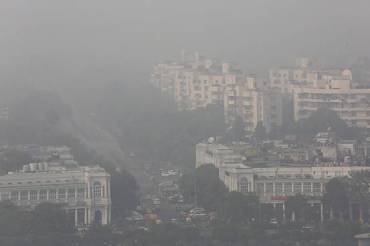
The cities of Delhi and Beijing share a dubious honor as the world’s most-polluted capitals. But their response to dangerous levels of air pollution separates them.

Earlier this week, Beijing for the first time issued a red-alert for pollution, triggered when authorities forecast air-quality levels above 300 for at least three consecutive days.

On China’s government index, a measure of overall air quality, the maximum reading of 500, is described by the government as “severely polluted.” The Chinese administration immediately sent cars off the roads, shut factories and urged schools to close.

In Delhi, where air was similarly dirty, life went on as normal. The starkly different responses prompted some in the Indian capital to question why their government wasn’t taking Beijing-style measures to combat the smog. For sure, plans are underway in India to tackle the capital’s filthy air.

On Friday, Delhi’s government announced it would impose restrictions on the number of cars on its roads from Jan.1. Residents in the Indian city can look up air-pollution data on the website of The System of Air Quality and Weather Forecasting and Research, known as Safar, which uses data collected at 10 locations in the city. On that index, air quality in the city regularly hits “very poor” conditions when levels of PM 2.5 — insidious particles in the air including dirt, soot, smoke and liquid droplets — spike.

These tiny particles are thought to be particularly dangerous because they can lodge deeply in the lungs and cause inflammation, infection and lead to diseases including cancer. Readings on the Safar monitor are calibrated from “good” to “severe.” The Delhi Pollution Control Committee also publishes raw pollution data but doesn’t give qualitative readings alongside.

The U.S. Embassy, which measures pollution on monitors at its compound in the capital and around the country, warns the very young and elderly to remain indoors whenever air quality becomes what it calls hazardous. But none of the readings currently trigger alerts, or responsive action, by Delhi’s government. That’s because India is a democracy, said Ashwani Kumar, chairman of the Delhi Pollution Control Committee, an arm of the state government.

China, of course, is a one-party state. The idea that alerts should tell people to stay indoors when smog hits was  “absurd,” Mr. Kumar added, and people “should decide for themselves what to do with the pollution information.” However, he said the Delhi Pollution Control Committee does plan to introduce an app so that information is available to residents with smartphones. Less than 10% of Indians own a smartphone. It also proposes to install around 70 big screens in strategic locations around the city advising residents what they can do to reduce pollution, Mr. Kumar added. The idea of an environmental alert system is not alien to India.

Source: Why Delhi Doesn’t Have a Beijing-Style Response to Pollution – China Real Time Report – WSJ

10/12/2015

Raise the green lanterns | The Economist

WHEN world leaders gathered in Paris to discuss cutting planet-heating emissions, a pall of smog hung over Beijing. In parts of the capital levels of fine particulate matter reached 30 times the limit deemed safe.
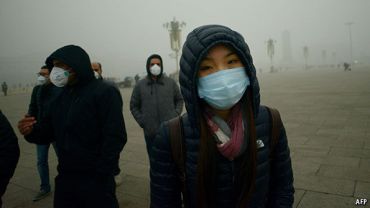
Though air pollution and climate change are different things, Chinese citydwellers think of them in the same, poisoned breath. The murky skies seemed irreconcilable with the bright intentions promised in France.

Yet a marked change has taken place in China’s official thinking. Where once China viewed international climate talks as a conspiracy to constrain its economy, it now sees a global agreement as helpful to its own development.

China accounts for two-thirds of the world’s increase in the carbon dioxide emitted since 2000. It has come a long way in recognising the problem. When China first joined international climate talks, the environment was just a minor branch of foreign policy. The ministry for environmental protection had no policymaking powers until 2008. Only in 2012 did public pressure force cities to publish air-pollution data.

Yet today China pledges to cap carbon emissions by 2030 (reversing its former position that, as a developing power, it should not be bound to an absolute reduction); and it says it will cut its carbon intensity (that is, emissions per unit of GDP) by a fifth, as well as increase by the same amount the electricity generated from sources other than fossil fuels. The latest five-year plan, a blueprint for the Communist Party’s intentions that was unveiled last month, contains clear policy prescriptions for making economic development more environmentally friendly.

There’s more

Right after the Paris summit, however it ends, China is expected to make more promises in a new document, co-written by international experts, that presents a far-reaching programme of how China should clean up its act. It is based on models that account for both economic and political viability. On top of existing plans, such as launching a national emissions-trading scheme in 2017, the government may even outline proposals for a carbon tax, something that has eluded many prosperous countries in the West.

The big question is why China is now so serious about climate change. The answer is not that Communist leaders are newly converted econuts. Rather, they want to use environmental concerns to rally domestic support for difficult reforms that would sustain growth in the coming decades. Since a global slowdown in 2008 it has become clear that to continue growing, China must move its economy away from construction and energy-intensive industry towards services. At the same time, China faces an energy crunch. For instance, in recent years China has been a net importer of coal, which generates two-thirds of China’s electricity. It all argues for growth plans that involve less carbon.

This is where signing international accords, such as the one hoped for in Paris, come in, for they will help the government fight entrenched interests at home. Observers see a parallel with China’s joining the World Trade Organisation in 2001. It allowed leaders to push through internal economic reform against fierce domestic opposition. In the same way, a global climate treaty should help it take tough measures for restructuring the economy.

It will not be easy. Provincial party bosses and state-owned enterprises hate to shut factories, particularly in those parts of the country, such as Shanxi and Inner Mongolia in the north, where coal is a big employer. Cutting demand for energy is even harder. Even if the amount of electricity used by state industry falls, that used by private firms and households is bound to increase. What is more, environmental regulations and laws laid down by the centre are routinely flouted.

But cleaning up China’s act has, for the central government, become a political necessity too. Environmental issues have been major public concerns for over a decade, says Anthony Saich of Harvard University, which has conducted polls. True, rural people fret most (and with good reason) about water pollution. But those in the cities gripe about their toxic air. Both represent a reproach to the government over its neglect of people’s lives and health.

That is why national economic goals, political goals, public opinion and international pressure all point towards trying to cut emissions, pollutants included. In particular, says Zhang Zhongxiang of Tianjin University, now that dealing with climate change is a pillar of China’s diplomacy, the government must show it can keep its promises. It has some tools at its disposal. Across the country, the environmental record of government officials has become a crucial part of their evaluation by the Communist Party; and cadres will be held account

Source: Raise the green lanterns | The Economist

04/12/2015

China’s Tech Industry Is as Male-Dominated as Silicon Valley – China Real Time Report – WSJ

When Chinese President Xi Jinping met with top U.S. and Chinese technology executives in Seattle two months ago, they posed for a now-famous group photo. But one thing was missing: women from China.

As WSJ’s Li Yuan writes in her “China Circuit” column: This defies the conventional wisdom in China that compared with Silicon Valley, China’s tech industry has less of a gender-inequality problem. True, women accounted for nine out of 30 Alibaba partners when it went public in 2014. Both Alibaba and Baidu’s chief financial officers are women. Some of China’s most prominent venture capitalists are women, too.

But the group photo attests to what is really happening behind the success stories: China’s tech industry is as male-dominated as that of Silicon Valley. And unlike the debate and discussions taking place in Silicon Valley about gender inequality, China’s tech industry has yet to acknowledge the problem. With the​tech sector becoming the brightest spot in a sluggish economy, women risk losing out in the competition for the best-paying jobs and the best opportunities to start their own businesses.

Source: China’s Tech Industry Is as Male-Dominated as Silicon Valley – China Real Time Report – WSJ

04/12/2015

Selective Equality? China Retirement Age Plan Sparks Backlash Among Women – China Real Time Report – WSJ

China’s policy makers have long accepted the need for workers to delay retirement to ease social and fiscal pressures from a rapidly aging population. Few, however, could agree on how to do it.

This week, state-backed researchers fueled fresh debate on the issue with a new proposal on how to coax more productive years out of China’s silver-haired generation. They called for gradually extending the country’s statutory retirement thresholds over the next three decades, culminating in a flat retirement age of 65 years. But their plan is proving unpopular. It is particularly striking a nerve among some women, who in China can retire between five and ten years earlier than men. The statutory retirement age for men is set at 60 years.

On social media, many female users mocked what they perceived as selective pursuit of gender equality. “In 2045, would there be equal pay between men and women? Would men be able to give birth?” a user, who identified as female, wrote on the popular Weibo microblogging service. “Chinese society, in reality, is rife with gender inequality; why bring about gender equality in retirement age?” another user wrote.

In an online survey, the state-run China National Radio found nearly 80% of respondents objected to setting a flat retirement age for men and women. “Delaying retirement is understandable, but setting the same retirement age for men and women isn’t compatible with our country’s conditions,” CNR quoted a Weibo user as saying. “Men would only have to work five more years, while women would have to work ten years longer. And women still have to face family pressures, so it’s clearly unsuitable.”

The proposal from the Chinese Academy of Social Sciences comes amid a longstanding debate in government and academic circles on how to implement a much-needed but deeply unpopular policy. Beijing has said it will gradually raise retirement thresholds starting in 2022, though the policy would only be finalized in 2017. Under rules unchanged since the 1950s, China allows most female workers to retire when they turn 50, while women in public-sector jobs can do so at 55 years of age. To change this, the CASS researchers proposed that the government could in 2017 set a flat retirement age for women at 55 years, eliminating the distinction between private and public-sector workers. Authorities could begin extending retirement thresholds—for men and women—at a fixed pace, starting in 2018.

CASS researchers suggest adding a year to the female retirement age every three years, while doing so for men every six years. Beijing could also allow flexibility for workers to bring forward or delay their retirement by up to five years, on the condition that their pension payouts would be adjusted accordingly, CASS said.

Source: Selective Equality? China Retirement Age Plan Sparks Backlash Among Women – China Real Time Report – WSJ

02/12/2015

Hacking of U.S. government was criminal, not state-sponsored: China | Reuters

China’s official Xinhua news agency said on Wednesday that an investigation into a massive U.S. computer breach last year that affected more than 22 million federal workers found the hacking attack was criminal, not state-sponsored.

An illustration picture shows a projection of binary code on a man holding a laptop computer, in an office in Warsaw June 24, 2013. REUTERS/Kacper Pempel

In an article about a meeting between top U.S. and Chinese officials on cyber security issues held in Washington, Xinhua said the breach at the United States Office of Personnel Management (OPM) was among the cases discussed.

The report did not give details of who conducted the investigation, or whether U.S. and Chinese officials both agreed with the conclusion.

The U.S. Embassy in Beijing referred Reuters to the Department of Justice and Department of Homeland Security in Washington for comment on the talks.

The Cyberspace Administration of China, the country’s Internet regulator, did not immediately reply to a Reuters request for comment.

OPM has been under scrutiny from lawmakers and the public ever since it disclosed earlier this year that it had fallen victim to two cyber attacks, which officials have privately linked to Chinese hackers.

The intrusions exposed sensitive personal information, including names, Social Security numbers and addresses of more than 22 million current and former federal employees and contractors, in addition to 5.6 million fingerprints.

Top U.S. and Chinese officials convened this week in Washington for the first round of cyber security talks following the signing of a bilateral anti-hacking accord in September.

The talks on Tuesday and Wednesday are seen as potentially significant in establishing acceptable norms for cyber espionage.

China and the U.S. reached a broad agreement on the joint fight against cyber crimes, and will set up a hotline for these issues, according to Xinhua and CCTV, China’s state-operated national broadcaster.

CCTV said a spokesperson for the Department of Homeland Security declined to comment on any agreement. The next meeting is scheduled for next June, Xinhua said.

Source: Hacking of U.S. government was criminal, not state-sponsored: China | Reuters

02/12/2015

China Road Rage Cases Top 17 Million So Far in 2015 – China Real Time Report – WSJ

Chinese police attributed 80,200 traffic accidents in 2013 to road rage, and the number rose by 2.4% in 2014. Men account for 97% of road rage incidents, official data show.

No Caption Available.

China is a notoriously dangerous place for driving in general. The World Health Organization has estimated that 261,000 people died on China’s roads in 2013. Chinese government data show that last year 1,895 people died in traffic accidents when crossing roads, and 4,180 people died between 2011 and 2014 on public buses that were speeding or overloaded.

Yet when it comes to the surge in road rage, experts point to a range of possible explanations. One is that the rapid development of China’s car market has led the country’s roads to become increasingly crowded, creating frustration and anger on the streets. Sociologists also link road rage to general anxiety and fickleness, one of the side products of China’s rapid economic growth — and its accompanying social pressure — over the past three decades.

In China, the total number of vehicles has increased by more than 18 million cars for each of the past five years. As of the end of October, China had 169 million autos, according to Ministry of Public Security statistics, next only to the U.S.’s 240 million. The number of license-holders has risen even more quickly; since 2010, China has added more than 20 million new drivers each year. Now one in five Chinese has a license.

The country’s infrastructure has struggled to keep up. Data from the Ministry of Public Security show that 35 Chinese cities now have more than one million automobiles. Ten of those cities — including Beijing, Chengdu and Shenzhen – each have more than two million cars on the road. But while the number of China’s motor vehicles and drivers has each risen more than 20-fold since 1987, the country’s road capacity has increased only 3.4 times over the same period.

The rash of new drivers is also posing safety hazards. The official Xinhua News Agency cited a spokesman from the Ministry of Public Security as saying that drivers with less than one year of experience play a large role in traffic accidents. To be sure, China has some safety regulations in place. For example, drivers and front-seat passengers are required to wear seatbelts, and the use of mobile phones while driving is prohibited. But these laws are often ignored in practice. Distracted driving – operating a vehicle while texting, talking on the phone, watching videos, eating or reading – contributed to more than a third of fatal traffic accidents in 2014, causing 21,570 deaths, the Ministry of Public Security said.

Chinese authorities are working to counter the trend. In the past month, the Ministry of Public Security launched a public education campaign on road etiquette after several high-profile cases of road rage violence this year. It advocated against dangerous driving behaviors including street racing, drunk driving, aggressive driving and blocking emergency lanes.

Source: China Road Rage Cases Top 17 Million So Far in 2015 – China Real Time Report – WSJ

01/12/2015

Boost for China as it joins IMF elite – FT.com

The IMF on Monday gave a major vote of confidence to China and its reform efforts, giving the renminbi greater weighting than the yen or pound as it included the currency in its elite basket of reserve currencies.

Chinese one-hundred yuan banknotes are stacked for a photograph at the Korea Exchange Bank headquarters in Seoul, South Korea, on Thursday, Feb. 27, 2014. Photographer: SeongJoon Cho/Bloomberg

The vote by the board to make the renminbi the fifth currency in the basket used to value the IMF’s own de facto currency followed months of deliberation at the fund and years of lobbying by a Beijing eager for the recognition.

“The Rmb’s elevation to the club of elite global reserve currencies is a big step for China and a significant one for the international monetary system,” said Eswar Prasad, professor of economics at Cornell University and a former IMF China mission chief.

The renminbi will become the third biggest currency in the “special drawing rights” basket when it takes effect on October 1. The move is largely symbolic but Christine Lagarde, IMF managing director, called it a “milestone” in China’s economic reform “journey” and its integration into the global financial system.

Following the move the currency slipped 0.19 per cent to Rmb6.4374 against the dollar in offshore trading in Hong Kong.

The People’s Bank of China set its daily “fix” — the onshore rate around which the currency can trade 2 per cent either side — at Rmb6.3973 per dollar, its fourth consecutive slightly weaker rate.

Investors generally expect China to allow its currency to weaken gradually but few see much likelihood of a repeat of its 3 per cent August devaluation, which sent shockwaves through global markets.

Source: Boost for China as it joins IMF elite – FT.com

Law of Unintended Consequences

continuously updated blog about China & India

ChiaHou's Book Reviews

continuously updated blog about China & India

What's wrong with the world; and its economy

continuously updated blog about China & India