Archive for November, 2016

09/11/2016

Watching Trump Inch Towards Victory, With Cheers, in China – China Real Time Report – WSJ

As vote tallies came in late Tuesday night, it was Wednesday morning in China and inside the U.S. Embassy in Beijing, many Chinese watchers were celebrating the increasingly likely prospect of a Donald Trump win.

The event, intended to give Chinese locals the opportunity to experience a U.S. election, featured a mock vote and the opportunity for locals to pose with large cut-out photos of Mr. Trump and Democratic candidate Hillary Clinton, as well as remarks from U.S. Ambassador Max Baucus.

As he stood and watched the results roll in on a large overhead screen, Tian Junwu, a professor at the Beihang University School of Foreign Languages, said he was rooting for Mr. Trump’s victory.

“I’m a man. I don’t like a woman to be too strong,” said Mr. Tian. “She is too overbearing, like my wife. I think Trump is funny.”

Though the Republican candidate has threatened to slap a 45% tariff on Chinese goods, Mr. Tian said such a prospect wasn’t too alarming. “We [Chinese people] know now that candidates say one thing when they are running, but becoming a president is a different thing.”

Zhong Shaoliang, the Beijing representative of the industry group World Steel Association, said that the candidates seemed similar to him, but that he preferred Mr. Trump because he seemed more authentic. “He’s more American that way,” he said.

Still, he said that if he was American himself, he would see some perhaps worrying aspects at the prospect of a Trump win. “Hillary would be better for overall harmony. Trump will likely continue to further divide America up.”

As Florida was called for Mr. Trump, a pair of second-year college students studying English at the Beijing Language and Culture University said they were pleased.

“Clinton gives me kind of a sinister feeling, I’m kind of scared of her,” said Xu Xiayan, 19, who said she and her friends were paying more attention to the election this year, mostly for its entertainment value. “She’s good at pretending. Like when Trump is saying things and making her angry, she still maintains a slight smile.” Her friend agreed.Kang Xiaoguang, a professor at Renmin University’s China Institute for Philosophy and Social Innovation, said many of his friends were also cheering for Mr. Trump. “He’s saying things that people in America in their hearts might really feel — like about immigrants, about Muslims — but don’t dare say.” And from a foreign-policy perspective, he said, he thought Mr. Trump would be more likely to pull back on a global stage, including in places such as the South China Sea. “That way, China won’t have so much pressure on it,” he said.

“Also, some people feel the U.S. makes too much trouble for China, so if there’s a person making trouble in the U.S., they think Trump becoming president is a good thing,” he added.

Given the chance, he said, he might have cast his ballot for Mrs. Clinton, who he sees as steadier and easier to predict. A recent Pew survey found that Chinese respondents have a poor image of both presidential candidates, but viewed Mrs. Clinton slightly more favorably than her opponent.

Still, no matter what he does in office, Mr. Kang said he didn’t think that Trump’s impact would necessarily be too great. “America is a very mature system,” he said. It won’t be easily rocked by one person.”

Source: Watching Trump Inch Towards Victory, With Cheers, in China – China Real Time Report – WSJ
07/11/2016

China and Taiwan struggle over Sun Yat-sen’s legacy | The Economist

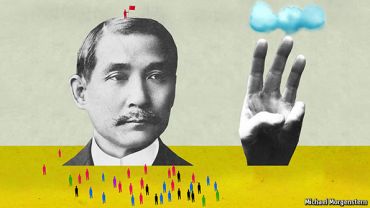
FOR decades Taiwan’s rulers have paid their respects from afar to Sun Yat-sen, also known as Sun Zhongshan: “father of the nation”, founder of the Kuomintang (KMT) or Nationalist Party, and first president of the Republic of China.

In a ritual called yaoji, they face towards Sun’s mausoleum in Nanjing, 800km (500 miles) to the north-west in China, and offer fruit, burn incense and recite prayers.

Now that links across the Taiwan Strait are better, Sun-worshippers may make the pilgrimage in person. On October 31st it was the turn of the KMT’s chairwoman, Hung Hsiu-chu. But not only do some Taiwanese adore Sun. Museums in his honour also exist in Hong Kong, Macau, Singapore and Penang. He has a memorial park in Hawaii, where the great republican spent his teenage years, and a plaque in London, where he lived in exile from 1896-97. Most striking of all, he is admired by the Chinese Communists, who “liberated” China in 1949 from KMT rule.

In the Communist telling, Sun is the “forerunner of the democratic revolution”. As one visitor to his mausoleum put it this week: just as one sun and one moon hang in the sky, “there is only one father of the country.” There may be more Zhongshan Streets in China’s cities than Liberation Avenues. To mark this month’s anniversary of Sun’s birth 150 years ago, the state is minting a set of commemorative coins, including 300m five-yuan (75-cent) pieces that will go into circulation. It is a signal honour for a non-Communist. The party views Sun as a proto-revolutionary.

He makes an unlikely hero. Sun spent much of his life not in the thick of action but abroad. Half-a-dozen revolts that he helped organise against an ossified Qing dynasty were failures. As for the Wuchang uprising of October 1911, the catalyst for the end of three centuries of Manchu domination, he learnt of it from a Denver newspaper. He was back at the head of China’s first republican government early the following year, but merely as “provisional” president. Lacking the military strength to pull a fractured country together, he said he was the place-warmer for a strongman, Yuan Shikai. The nascent republic soon shattered and Yuan crowned himself emperor. Pressure from Western powers and Japan exacerbated China’s bleak situation. By 1916 Sun was back in exile again, in Japan.

For all that, Sun had brought down a rotten empire. For years he had raised the alarm over China’s direction, denouncing the Manchus and the rapaciousness of external powers. All his life, Sun had strived for a new republican order to turn a stricken China into a modern nation-state.

His ideas were hardly systematic, but he never deviated from the priorities of fostering national unity among Chinese, promoting democracy and improving people’s livelihoods—his “Three Principles of the People”. While railing against foreign depredations, he called for Chinese to embrace Western freedoms and rights (Sun’s messianic drive may have derived from his version of Christianity). His was an astonishingly more cosmopolitan world-view than that displayed by today’s Chinese leaders.Yet the longest-lasting impact of Sun on Chinese political life derives from something different. In the early 1920s he listened to advisers from the Soviet Union, which had won his admiration by renouncing territorial claims in China. He reorganised the KMT along Leninist lines, giving himself almost dictatorial powers (in Leninspeak: “democratic centralism”). The immediate effects were striking: an alliance between the KMT and the young Communist Party and a northward military advance in 1926 under Chiang Kai-shek, Sun’s heir, that toppled the warlords who were then wreaking havoc. Sun had died of liver failure the year before. He did not live to experience the brief national unity that Chiang imposed, nor the parties’ fatal split and descent into bloodshed, nor their struggle over Sun’s mantle.

Follow the Sun

And his legacy today? Consider that among his three principles, the two 20th-century dictators, Mao Zedong in mainland China and Chiang Kai-shek on Taiwan, gave a damn only about the first, national unity, on which, by their standards, they must be judged poorly. Sun’s Leninist party organisation—never one of his hallowed principles—had a far more profound impact on the two autocrats, and still does on China’s rulers today.

In Taiwan dictatorial KMT rule began crumbling a few years after Chiang’s death in 1975. Democratic development since then, including within the KMT, and the growth of a prosperous civil society, seem in line with Sun’s second and third principles relating to democracy and prosperity. But as for the first, a Chinese nationalism: forget it. Sun’s portrait still hangs in schools and government offices, and looks serenely down on the frequent fisticuffs in Taiwan’s parliament. But after resounding defeat in elections early this year, the KMT struggles for relevance on an island that is proud of its separateness from China. If there is any echo of Sun’s idealism, it is in the student “Sunflower Movement”, which wants to keep China at bay. For many Taiwanese, the Republic of China, Taiwan’s official name, is a figleaf for independence; Sun is an old ineffectual ghost. The current president, Tsai Ing-wen of the pro-independence Democratic Progressive Party, performed no yaoji this year.

And China? Democratic centralism still prevails—exemplified by the party’s monopoly on power, Xi Jinping’s autocratic rule and the suppression of dissent. Were Sun to speak from his tomb, he might remind Mr Xi how, under the Communist Party, national unity, real democracy and even broad-based prosperity remain elusive. He might point out, too, that when Sun adopted Leninism it was to advance rather than trump his beloved principles. In his final will, Sun wrote: “The work of the revolution is not done yet.” “Blimey,” he might now say: “Couldn’t you think of trying something different?”

Source: China and Taiwan struggle over Sun Yat-sen’s legacy | The Economist

07/11/2016

Theresa May Says U.K. May Improve Visa System for Indians – India Real Time – WSJ

British Prime Minister Theresa May on Monday said the U.K. may make improvements to its visa system for Indians, as she sought to lay the foundations for a future trade deal once Britain leaves the European Union.

On a two-day trip to India focused on trade, Mrs. May, speaking alongside Indian Prime Minister Narendra Modi, said the partnership between the U.K. and India was natural, since the countries have shared values and culture. But a key sticking point in U.K.-India relations has been Britain’s reluctance to loosen restrictions for Indians wanting to work or study in the U.K., and this will likely be a difficult point to settle in any free-trade negotiations.

“The U.K. will consider further improvements to our visa offer if at the same time we can step up the speed and volume of returns of Indians with no right to remain in the U.K.,” she said.

Mrs. May is unlikely to implement any changes that would result in big increases of Indians entering the U.K. She has said the June vote to leave the EU was underpinned by frustrations about rising levels of immigration and has pledged to reduce numbers.The U.K. is seeking to go beyond its traditional trading partners in Europe as it prepares to leave the European Union. While it can’t finalize trade deals while still a member of the EU, Britain is in preliminary discussions on trade with countries including Australia and India, the world’s fastest-growing major economy. Any deal is likely to take years to complete.

Source: Theresa May Says U.K. May Improve Visa System for Indians – India Real Time – WSJ

04/11/2016

The Economist explains: Why Britain is wooing India | The Economist

WHEN Britain eventually leaves the European Union it will prosper by trading farther afield. So argues Theresa May, Britain’s prime minister, ahead of her first big bilateral trip abroad, a three-day visit to India, which begins on Sunday, November 6th. She talks of forging a “new global role” with this trade mission, hobnobbing with Indian leaders and championing free trade in general. The idea is to promote ties between small and medium businesses in the two countries. Yet creating a stronger economic relationship with India will prove much tougher than Mrs May and her colleagues expect.

On the face of it, the signs are good. India has nearly 1.3bn people. Many are emerging as middle-class consumers for the first time. The country is creating a single market for goods and services, reducing internal and external barriers to trade and tackling some corruption and bureaucracy. Its economy, worth over $2trn, is the fastest-growing large one in the world. It is likely to rattle along quickly for many years to come; by 2030, India could rank as the world’s third-largest. The prime minister, Narendra Modi, wants to make it less difficult for businesses to operate there, and to win more foreign investment and trade deals. British firms are already among the biggest investors. Now India is opening up for foreign activity in sectors that might suit British firms especially: notably in insurance, defence, railways and some retail. At the same time, large Indian firms—such as Tata, which owns Jaguar Land Rover, as well as Tata Steel—are in Britain. London has also become a base for Indian firms, for example in business consulting, that tap the wider EU market. A common language, shared cultural, historic, legal and sporting ties, plus the influence of the Indian diaspora in Britain, bode well for closer ties.

Mrs May is thus right to reach out. But anyone expecting quick gains will be disappointed. One of India’s priorities, for example, is avoiding complications over a long-stalled free trade agreement with the EU, which has been under negotiation since June 2007. After 12 rounds of talks, some consensus has been found on issues including trade in rice, sugar, textiles and pharmaceuticals. It is not clear that India’s overstretched trade negotiators will see much benefit in being diverted to work on a deal with Britain alone, especially if that makes it harder to complete one with the bigger EU market. Even if they do decide to talk biltaterally, among the sticking points has been India’s 150% tariff on imports of whisky from Scotland. Future British negotiators would struggle to be more effective than their European counterparts at getting that scrapped. The biggest concern, however, is about Britain’s ever colder shoulder towards Indians who want to travel and study there. Under the Conservatives, Britain has in the past six years become less welcoming to foreigners, notably from South Asia, who hope to attend university and then work. Eye-wateringly expensive visas, increasingly hostile rules to get them, official talk of cracking down on foreign students in Britain, and graduates who lose the right to work after finishing a degree in Britain all leave Indians feeling unwelcome. Anecdotes abound of bright Indian students who win places at the best British universities but are refused visas to travel. Perceptions of generally rising xenophobia in Britain are discouraging to Indians too.

For Mrs May to win a warm welcome in India she needs to offer a message that is not only about investment and trade, but also sets out that Britain—in particular its universities—will again become more open to Indian visitors, migrants, students and their families. America is proving far more successful at attracting the highest-skilled migrants, especially software and other engineers. Other countries, including some in Europe, are rolling out policies to attract more Indian students to their universities. Yet Britain appears more hostile to migrants than it has in many decades. Within a few years, it is worth remembering, India’s economy will be bigger than Britain’s. Welcoming more exchanges of people, as well as encouraging higher levels of trade and investment, would make sense for both sides.

Source: The Economist explains: Why Britain is wooing India | The Economist

04/11/2016

Xi Jinping gets a new title | The Economist

COMMUNIST leaders relish weird and wonderful titles. Kim Jong Il, the late father of North Korea’s current “Great Leader”, was, on special occasions, “Dear Leader who is a perfect incarnation of the appearance that a leader should have” (it doesn’t sound much better in Korean). China’s rulers like a more prosaic, mysterious epithet: hexin, meaning “the core”.

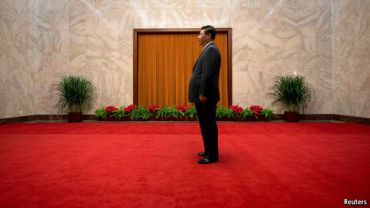
Xi Jinping—China’s president, commander-in-chief, Communist Party boss and so forth—is now also officially “the core”, having been called that in a report issued by the party’s Central Committee after a recent annual meeting.

The term was made up in 1989 by Deng Xiaoping, apparently to give his anointed successor, Jiang Zemin, greater credibility after the bloody suppression of the Tiananmen Square protests. Just as Mao had been the core of the first generation of party leaders and Deng himself of the second, so Mr Jiang was of the third. (Hu Jintao, Mr Xi’s predecessor, was supposedly offered the title of fourth-generation core but modestly turned it down.)

Being core confers no extra powers. Mr Xi has little need of those; he is chairman of everything anyway. Status, though, is what really matters in China (Deng ruled the country for a while with no other title than honorary chairman of the China Bridge Association). And Mr Xi seems to be finding that all his formal power does not convey enough. Early this year, in what looked like a testing of the waters, a succession of provincial party leaders kowtowed verbally to Xi-the-core. But the term soon disappeared from public discourse. Its revival makes it look as if Mr Xi has won a struggle to claim it.

That may augur well for him in his forthcoming battles over the appointment of a new generation of lesser officials (the peel?) at a party congress next year. Mr Xi wants to replace some of the 350-odd members of the central committee with his own people, while keeping as many of his allies as he can. In a sign that he might be able to do that, officials have started dismissing as “folklore” an unwritten rule that members of the Politburo have to retire at 68. The rule is commonly known as “seven up, eight down” (qi shang, ba xia), meaning 67 is fine, 68 is over the hill. Getting rid of it would seem to open the way to the non-retirement of several of Mr Xi’s close allies, notably 68-year-old Wang Qishan, who is in charge of fighting graft. It might even pave the way for Mr Xi’s own refusal to collect his pension when his second (and supposedly final) term as party chief is up in 2022, and he will be 69.

There is another parallel between political language now and in 1989. The recent meeting eschewed the party’s usual practice of tying current events to the triumphs of earlier Communist history and instead set the scene by referring mostly to the congress in 2012, when Mr Xi became leader. Another time when the party ignored history in this way was after the Tiananmen killings, when it wanted to draw a veil over what had just occurred and signal a fresh, dictatorial start. Mr Xi seems to be saying, implicitly, that a new era has begun with him, core among equals.

Source: Xi Jinping gets a new title | The Economist

02/11/2016

China’s Alibaba in ‘flying pig’ controversy – BBC News

A Chinese Muslim‘s call for e-commerce giant Alibaba to rename one of its services because it uses the word “pig” has sparked a backlash in China.

It all began when Alibaba changed the name of its popular travel booking app from Alitrip to one that means “Flying Pig” in Chinese. Its English name is Fliggy.

Over the weekend, Uighur businessman Adil Memettur criticised this decision on popular microblogging network Sina Weibo, where he has hundreds of thousands of followers.

He noted that the app is popular among minorities because it lets people whose names have unusual spellings make bookings.

“But now that Alitrip has changed its name to Flying Pig, I can only uninstall it, and maybe all my Muslim friends too, because the word “pig” is taboo to Muslims all over the world. Alibaba is an international corporation, could it take Muslim taboos into consideration?” he said.

Image copyrightSINA WEIBO / ADIL MEMETTUR. Mr Memettur is an Uighur Chinese who runs a cake business

His post quickly sparked condemnation and ridicule from other Chinese online, with some asking if this meant China had to expunge all references to pigs in popular culture and literature.

“We each have our own way of life; we do not force you to live according to our rules, but you cannot force us to change the law,” said Weibo user Fireflyinred.

Mr Memettur quickly took down the post and on Sunday night he posted an apology.

Alibaba told the BBC that they decided to rebrand the app to appeal to a younger demographic. “We embrace diversity and respect all creeds and religions. The name change is meant to reflect the demographic’s aspirations to pursue dreams, sit back and enjoy life,” said the spokesman.

The visceral pushback stems from the fact that the pig occupies an important place in Chinese culture.

Pork is not only a staple of Chinese cuisine – the government keeps a national reserve of pork in case of market shortages – but the pig is also celebrated in folklore and the Chinese zodiac.

Online, the reaction to Mr Memettur has been intense, often descending into derogatory comments and insulting jokes about Muslims and Uighur culture.

It has also highlighted how gaps in understanding between Muslim minorities and the Han Chinese majority can arise.

Image copyrightAFP/GETTY IMAGES – The Uighurs are one of China’s biggest Muslim minorities

Because of their relatively small numbers, concentrated mostly in the West, Muslims still do not figure largely in Chinese public discourse.

China’s 21 million Muslims, comprising minority ethnic groups such as the Huis and Uighurs, make up only 1.6% of the population, with the rest from the Han ethnic majority and they have mostly co-existed peacefully.

The western province of Xinjiang, home to many Chinese Uighurs, has seen unrest with residents saying they have been economically and culturally displaced by a growing influx of Han migrants. Violence there has been attributed by the authorities to Islamist militants and separatists – rights groups point to increasingly tight control by Beijing.

Image copyrightGETTY IMAGES- Xinjiang cities like Kashgar are home to Muslim minorities such as the Uighurs

In this instance some online, like blogger Han Dongyan, have called for respect and calm.”Don’t extend this to all Muslims… (Mr Memettur) has made a mistake and he can be criticised, but don’t respond to an extreme with another extreme and tar them all with the same brush, this is wrong too!” he wrote in one popular post.

Source: China’s Alibaba in ‘flying pig’ controversy – BBC News

02/11/2016

India to launch clean energy equity fund of up to $2 billion – sources | Reuters

The Indian government and three state-run firms will jointly set up an equity fund of up to $2 billion for renewable energy companies to tap into to help New Delhi meet its clean energy goals, two government sources told Reuters on Wednesday.

Private and public companies will be able to dip into an initial amount of more than $1 billion starting next fiscal year, said the sources with direct knowledge of the decision taken after a meeting of government officials more than a month ago. India’s government hopes the Clean Energy Equity Fund (CEEF) will attract pension and insurance funds from Canada and Europe.

Around $600 million of the initial pool will come from the National Investment and Infrastructure Fund, under the finance ministry, and the rest from state entities NTPC Ltd, Rural Electrification Corp and the Indian Renewable Energy Development Agency, according to one of the sources.

The sources declined to be named as they are not authorised to talk to the media. Officials at the finance ministry, new and renewable energy ministry, NTPC, Rural Electrification, and Indian Renewable Energy Development Agency did not immediately respond to requests for comment.

Prime Minister Narendra Modi has set a target of raising India’s renewable energy target to 175 gigawatts by 2022, more than five times current usage, as part of the fight against climate change by the world’s third-biggest greenhouse gas emitter and to supply power to all of the country’s 1.3 billion people.

The program will depend on getting as much as $175 billion in funding with 70 percent of that likely in bank loans and the rest as equity, the sources said.

The government reckons loans are not a problem but providing equity to investors may be difficult due to uncertainties over returns, one of the sources said.

“As we expand our clean energy capacity, there may be a shortage of equity next year,” said the source. “Private equity is seen as risky in India but if the government itself creates a fund, that gives a lot of confidence.”

India’s clean energy push was set back earlier this year when U.S. solar company SunEdison filed for bankruptcy. The company is now looking to secure partners to see through its planned India projects.

Nevertheless, companies are still keen to invest in clean energy.

Japan’s Softbank Corp, Taiwan’s Foxconn and India’s Bharti Enterprises have pledged to invest about $20 billion in India’s renewable sector. Global solar giants like First Solar Inc, Trina Solar Ltd and Fortum are also expanding their presence.

Source: India to launch clean energy equity fund of up to $2 billion – sources | Reuters

01/11/2016

For China’s Leaders, Age Cap Is but a Moving Number – China Real Time Report – WSJ
The past three turnovers in the inner circle of China’s Communist Party leadership have come with an age guideline for retirement: Those 67 years old or younger could stay; those 68 or older had to go.

Now, comments from a senior party functionary are adding fuel to speculation that President Xi Jinping may break with the norm at a once-every-five-years party congress late next year.Speaking to reporters Monday, Deng Maosheng, a director at the party’s Central Policy Research Office, dismissed the qishang baxia (“seven up, eight down”) retirement convention as a “popular saying” that “isn’t trustworthy.”

“The strict boundaries of ‘seven up, eight down’ don’t exist,” said Mr. Deng, whose office is headed by one of Mr. Xi’s top policy advisers. Rather, he said, retirement rules are “flexible” and subject to revision as circumstances require.

His comments were the most public expression to date of what some party insiders have been saying privately for months. The age norm is a burden to Mr. Xi as he works to sideline rivals and hold on to allies in the next leadership lineup in the party’s Politburo and its standing committee, the inner sanctum of Chinese political power.

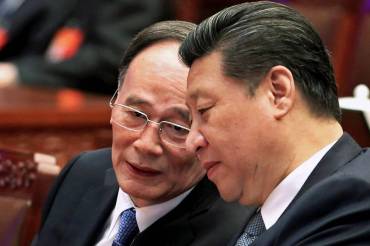
Political observers say one of those allies is 68-year-old Wang Qishan, who has directed the president’s withering crackdown on graft and, increasingly, political disloyalty. Under the qishang baxia norm, Mr. Wang is among five members of the Politburo Standing Committee, which currently numbers seven, due to retire at the next party congress.Party insiders have also speculated that the 63-year-old Mr. Xi may try to defy another recent convention, by not promoting a potential successor to the Standing Committee next year. That could set him up to remain in power after the expiration in 2022 of his second—and by recent custom, final—term. He would be 69 by then.Mr. Deng’s comments send “a clear signal that Xi will be a ‘rule modifier’ rather than a strict rule follower,” said Jude Blanchette, a Beijing-based researcher who is writing a book on Mao Zedong’s legacy. The rules are merely norms, and not well settled, he said.

As for the age norm, China politics experts say it was introduced by Jiang Zemin, then the outgoing party chief, to push a rival into retirement at the 2002 congress. According to Mr. Blanchette, that episode showed that Chinese leaders have “readjusted” malleable party norms “to fit political exigencies.”Or, as Mr. Deng put it in a news briefing in Beijing, the “strict organizational procedures and sufficient democratic processes” used in selecting top party leaders are “subject to adjustments in accordance with practical conditions.”

Mr. Xi’s growing clout may represent just such a practical condition. A top-level party conclave last week designated him as the party leadership’s “core,” an arcane title that political observers say signified his pre-eminent status. It was previously applied to Mao Zedong, Deng Xiaoping and Mr. Jiang but not Mr. Xi’s predecessor, Hu Jintao.

At Monday’s briefing, Mr. Deng of the party’s policy research office said the designation reflects Mr. Xi’s unanimous support within the party and broad public acclaim, but doesn’t threaten a return of a Mao-style “cult of personality”—which the party has explicitly banned—or contradict the party’s principles of collective leadership. Rather, the title was necessary to help the party and the country overcome new economic and political challenges, he said.

Mr. Hu, according to Mr. Deng, repeatedly declined to be designated as a “core” leader.“That time had its own circumstances,” he said. “The present has its own needs.”

Source: For China’s Leaders, Age Cap Is but a Moving Number – China Real Time Report – WSJ

Law of Unintended Consequences

continuously updated blog about China & India

ChiaHou's Book Reviews

continuously updated blog about China & India

What's wrong with the world; and its economy

continuously updated blog about China & India