Archive for February, 2017

03/02/2017

In Punjab, jobless youth take a chance with anti-establishment party AAP | Reuters

Twenty seven-year-old Rupinder Kaur Ruby is a political novice but her message is clear: jobs for young people.

Grabbing the microphone, the law student tells a few hundred supporters in a dusty village square in the northwest Indian state of Punjab that the ruling parties have failed them.

“Punjab is not in a good place. And the youth are the most affected. They want to fight back,” she said, raising her fist to cheers, as the crowd covered her in garlands before heading off to canvass for votes in a state election on Saturday.

Ruby is one of several inexperienced candidates her Aam Aadmi (Common Man) Party is fielding to tap anger among an increasingly aspirational but frustrated youth, and to challenge Prime Minister Narendra Modi as his party heads into five state polls over the next month starting with Punjab.

A strong showing by AAP, which won a handful of seats in Punjab in the 2014 general election and governs the city-state of Delhi, would serve as a mid-term warning for the still-popular Modi as the economy fails to fulfil expectations.

The young in Punjab have been hit hardest by factory shutdowns, amid allegations that corruption has hastened the economic decline of a relatively rich state of 28 million people bordering Pakistan.

Unemployment tops voter concerns there, according to a recent poll, and young people are less and less willing to work their parents’ fields in the state known as India’s “bread basket”.

GENERATIONAL SHIFT

Most recent opinion polls show Congress, India’s main opposition party, in the lead in Punjab, ahead of AAP which has been criticised by rivals for failing to flesh out how it would boost employment were it to come to power.

But Ruby’s party is most popular among the young, reflecting a generational shift in India that poses a problem for Modi as newer parties seek to capitalise on the lack of jobs.

Nearly two-thirds of India’s 1.3 billion people are under 35 – a demographic “bulge” that will create the world’s largest working-age population before 2050.

Despite average annual economic growth of 6.5 percent between 1991 and 2013, India added less than half the jobs needed to absorb new entrants into the workforce.

The incumbent Shiromani Akali Dal (SAD) party that rules Punjab alongside Modi’s Bharatiya Janata Party, and Congress, have governed the state alternately for decades with a focus on Sikhism, the state’s dominant religion, and farm subsidies.

Those priorities resonate less among the young, and now all the main parties are promising free smartphones and 2,500 rupees ($37) a month for the unemployed.

“The other parties are all the same,” said 30-year-old Jaskaran Sharma, who works as a truck driver in the Middle East and was helping with Ruby’s campaign in between jobs.

“She is energetic, and young people understand the system,” he told Reuters in the village of Teona.

Punjab’s official unemployment rate in 2015/16, at 6 percent, was above the national average of 5 percent, according to the Labour Bureau, although economists say the figures do not reflect the true picture.

Levels of underemployment are higher; only 17 percent of Punjab’s population earns a regular wage.

VOLUNTEERSAAP, which scored surprise wins in local elections in Delhi in 2013 and 2015 on a broad anti-corruption platform, is led by 48-year-old Arvind Kejriwal, a former tax inspector who hopes to expand into other regions by channelling anger over unemployment.

AAP workers like Ruby, daughter of a local government retiree, have built young teams to fan out across villages and campaign door-to-door.

“We depend on our volunteers. This is a ground-up campaign,” she told Reuters over tea and biscuits, while young men snapped photos with her.

Ruby has the lowest declared wealth, at 175,000 rupees ($2,600), of any candidate in the state, according to reports. The 10 poorest candidates are from AAP, although the party has also chosen several well-off politicians as candidates.

“The youth are looking for change, and for that they are going to take a risk with AAP,” said Ashutosh Kumar, a professor of political science at Panjab University.

The ruling party, led by the wealthy Badal family, still commands support among older generations and better-off farmers, while Congress is attracting voters who see AAP as inexperienced.

Sitting outside the office of his SAD party in the Badal heartland of Lambi, landlord farmer Bagga Singh said Kejriwal was a “traitor” who had fooled people.

The protest vote boosting AAP would peter out, he predicted, because the Badals had established skill centres, curbed corruption and job creation would soon pick up.

Still, he acknowledged more needed to be done.

“Young people don’t want to work in agriculture. The margins are down and they don’t want the hard work,” the bearded 70-year-old said, wearing a pink Sikh turban. “They want to sit in an air conditioned office.”

($1 = 67.4900 Indian rupees)

Source: In Punjab, jobless youth take a chance with anti-establishment party AAP | Reuters
Tags:
03/02/2017

Apple Is Set to Make in India, State Official Says – India Real Time – WSJ

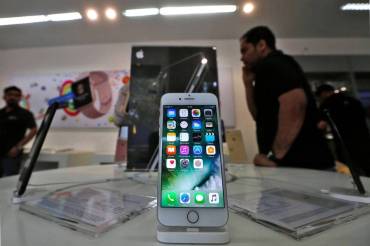
In a potential boost to Prime Minister Narendra Modi’s “Make in India” initiative, tech giant Apple Inc. is nearing a deal with Taiwanese contract manufacturer Wistron Corp. to start making products in the southern state of Karnataka, a senior state official said.

“The contractual agreement between the two companies is on the verge of being signed,” the Karnataka government official who has direct knowledge of the matter said.

The first phase of assembling iPhones will likely start as early as the end of March, and further expansion is expected over the next two to six months, the official said.An Apple spokeswoman said the company has nothing to share beyond a statement it made last week, which said: “We appreciate the constructive and open dialogue we’ve had with [the] government about further expanding our local operations.”

A Wistron spokeswoman declined to comment. The company has a factory in the southern Indian city of Bangalore where it makes smartphone components, and has sought permission from the state authorities to expand the facility with additional power supply and fire-fighting facilities, the official said.

“What we are given to understand is that Apple is awaiting a final word from the government of India regarding tax and tariff concessions sought by the company, before signing up the contractual agreement,” the official said.

Making goods such as the iPhone locally may help the Cupertino, Calif., company to open its own stores in India, in turn building its brand in a country where it has less than a 5% share of a booming smartphone market.

Karnataka’s Information and Technology minister, Priyank Kharge, welcomed Apple’s proposal to consider Bangalore, also known as Bengaluru, as the location for potential manufacturing.

“Apple’s intentions to manufacture in Bengaluru will foster cutting edge technology ecosystem and supply chain development in the state, which are critical for India to compete globally,” Mr. Kharge said in a statement Thursday.Apple is looking to ramp up revenues in India as sales stagnate in China, long an engine of growth. India should soon overtake the U.S. as the world’s second-largest smartphone market after China. Smartphone shipments in India grew 18% last year, compared with just 3% globally, according to Counterpoint Research.

Apple Chief Executive Tim Cook in a call with analysts this week confirmed the company is “in discussions” to open retail stores in the country, and said Apple intends to “invest significantly in the country and believe it’s a great place to be.” (http://blogs.wsj.com/indiarealtime/2017/02/01/what-tim-cook-said-about-apples-big-plans-for-india/)

Last week, a team of executives led by Priya Balasubramaniam, an Apple vice president, met with senior Indian government officials in New Delhi as well as state officials in Karnataka to discuss the firm’s proposals. (https://www.wsj.com/articles/apple-nears-deal-to-manufacture-products-in-india-1485340934)

Under Mr. Modi, India has been eager to attract foreign investment and create the manufacturing facilities and jobs the country needs to sustain long-term growth.

Source: Apple Is Set to Make in India, State Official Says – India Real Time – WSJ

Tags:
03/02/2017

Something to Crow About: Ivanka Trump Visits Chinese New Year Party – China Real Time Report – WSJ

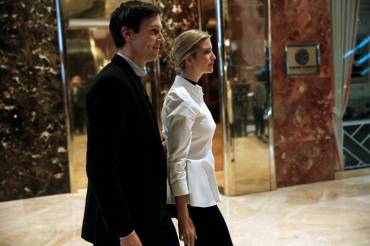
Chinese social media lit up Thursday over an appearance by Ivanka Trump and her daughter at a Lunar New Year celebration at Beijing’s embassy in Washington.

Photos and video went viral, showing Ms. Trump and 5-year-old Arabella being hosted at the Wednesday night event by China’s ambassador to the U.S., Cui Tiankai. On the Chinese microblogging site Weibo, the term #Trump’sDaughterVisitsChina’sEmbassy in Chinese quickly zoomed up to become the seventh most-searched item on Thursday.

Just as remarked, however, was the lack so far of Year of the Rooster wishes from President Trump.

“Trump’s daughter visits China’s embassy and wishes China a happy New Year! The daughter understands more than the father,” one Weibo user said.

The Lunar New Year — the most important holiday in China — is celebrated in several countries across Asia and by Chinese around the world. It has become an occasion for global leaders to offer up well wishes. In 2015, British royal Prince William wished China a happy Year of the Sheep in Mandarin in a video televised across the nation. When they were presidents, George W. Bush and Barack Obama issued Lunar New Year messages.

As the start of the Year of the Rooster officially came and went over the weekend, Chinese media noted the conspicuous absence of a similar tribute from Mr. Trump.

“Her father, the new U.S. president, has broken the tradition of sending New Year greetings to people of Chinese origin in the U.S. during their most important festival,” a China Daily slideshow of photos featuring Ms. Trump noted.

The White House didn’t immediately respond to a request for comment.

Some social media posts gave Mr. Trump the benefit of the doubt, saying the lack of new year’s greetings may not have been a deliberate snub, but the work of his advisers. Mr. Trump has vowed to get tough with China over its trade and currency policies, and his advisers have called for countering Chinese actions in the South China Sea with a naval blockade.

“To be honest, I think that Trump really maybe just forgot. He’s surrounded by anti-China people. There wouldn’t be anyone to remind him,” wrote another Weibo user. “Now it’s already too late, and to wish happy New Year under pressure from the media would mean losing face, right? So he just lets his daughter make an appearance.”

Video from the Chinese Embassy function featured Arabella and her mother being shown rooster paper cutouts and art made from melted sugar, as well as posing with costumed Chinese opera performers.

Arabella has previously endeared herself to the Chinese public after a video of her reciting Chinese poetry was widely circulated last year. On Thursday, social media users further amused themselves by analyzing her less-than-enthusiastic facial expressions captured at the embassy’s event. “She looks like I do when I don’t want to visit my relatives,” ran one.

“It looks like she’s angling for yasuiqian,” wrote another, referring to the red envelopes tucked with cash traditionally handed out to children over the holiday.

While Mr. Trump may have yet to formally extend his well wishes for the holiday Year of the Rooster, he has in other ways inspired the Year of the Rooster in China. A shopping mall in the central city of Taiyuan put up a large rooster sculpture with a Trump-like hairstyle in central China, inspiring balloons of similar design.

Source: Something to Crow About: Ivanka Trump Visits Chinese New Year Party – China Real Time Report – WSJ

01/02/2017

The Economist explains: What is India’s “Cold Start” military doctrine? | The Economist

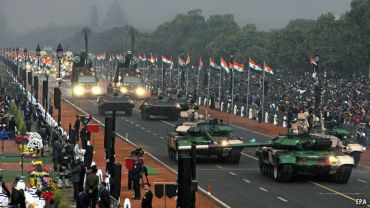
LAST week India celebrated its 68th Republic Day, the highlight of which is an elaborate parade to show off India’s military might (pictured).

Soldiers goose-stepped and tanks rolled down Rajpath, New Delhi’s main ceremonial thoroughfare, as India’s president, Pranab Mukherjee, and this year’s guest of honour, Abu Dhabi’s Crown Prince Sheikh Mohammed bin Zayed al Nahyan, looked on. Fighter jets screeched overhead. The annual display was particularly pointed this year, coming barely three weeks after Bipin Rawat, India’s new army chief, acknowledged in an interview the existence of the country’s “Cold Start” military doctrine. What is Cold Start and why did General Rawat, who took office on December 31st, mention it in public?

Cold Start is the name given to a limited-war strategy designed to seize Pakistani territory swiftly without, in theory, risking a nuclear conflict. It has its roots in an attack on India’s parliament in 2001, which was carried out by terrorist groups allegedly used as proxies by Pakistan’s powerful intelligence services (ISI). India’s response to the onslaught was a flop: by the time its lumbering Strike Corps were mobilised and positioned on the frontier, Pakistan had already bulked up its defences, raising both the costs of incursion and the risk that it would escalate into a nuclear conflict. Cold Start is an attempt to draw lessons from this: having nimbler, integrated units stationed closer to the border would allow India to inflict significant harm before international powers demanded a ceasefire; by pursuing narrow aims, it would also deny Pakistan a justification for triggering a nuclear strike. Yet India has refused to own up to the existence of the doctrine since it was first publicly discussed in 2004. Nor was its rumoured existence enough to stop Pakistani terrorists from launching devastating attacks in Mumbai in 2008, killing 164 people.

One reason for India to keep its cards close to its chest is that it may not be capable of acting on Cold Start. Indeed, India’s army chief admitted to civilian leaders after the 2008 attacks that his battalions were “not ready for war” with Pakistan. It probably did not help that India’s political leaders never signed off on it either, as a leaked diplomatic cable from 2010 suggested. Yet things have taken a different turn since an assault last September on the Indian garrison of Uri in Kashmir, which left 19 dead. In a departure from India’s traditionally defensive posture, the government responded by authorising “surgical strikes” along the frontier, targeted at “terrorist launchpads” and “those protecting them”. By acknowledging the doctrine, which would demand a more potent retaliation than these commando operations, the army seems keen to signal that it has a range of strategic options, introducing an element of unpredictability in the seriousness of its response. Political leaders may have also come closer to embracing it. The government of Narendra Modi has shown keen interest in national-security matters, moving India into the world’s top-five defence spenders, addressing servicemen’s grievances and mulling a wholesale revamp of the armed forces’ structure.

Whether the strategy will prove effective remains to be seen. By pursuing Cold Start, the army may have reaped “the worst of both worlds”, says Walter Ladwig, a scholar at King’s College London. Should it come after a terrorist attack prepared with the ISI’s knowledge, India’s response would lack the element of surprise. That makes Cold Start a dubious deterrent. And Mr Rawat’s recognition of the doctrine’s existence provides further reason for Pakistan to develop “tactical” nukes—tiny warheads that could easily end up in inexpert or malevolent hands. The risk of overreaction on Pakistan’s side is heightened by India’s continued obfuscation about what exactly the concept means, making the whole premise seem misguided. Indeed, Pakistani officials have already threatened to use nuclear weapons, should India put Cold Start into action. In conventional war, confusing an enemy can lead to victory; when two nuclear powers are involved it is a surer step towards a disastrous draw.

Source: The Economist explains: What is India’s “Cold Start” military doctrine? | The Economist

Tags:
01/02/2017

India Budget 2017: Promise to boost rural spending – BBC News

India’s government has unveiled its annual budget, with promises to boost rural spending and pull more people out of poverty.

It comes months after the controversial withdrawal of high value banknotes which caused chaos in the economy, hurting farmers and the poor most.

Finance Minister Arun Jaitley allocated funds to bring more irrigation, roads, electricity and sanitation to villages.

Farmers would also have more access to credit, he said.

The government also plans to spend a record $7.09bn (£5.69bn) on a scheme which guarantees every rural household 100 days of work each year.

Overall rural and farm spending would be increased by 24% as part of the government’s plan to double farm incomes over five years, Mr Jaitley added.

Tax plan

The finance minister also revealed plans to halve income tax rates for people earning between 250,000 rupees to 500,000 rupees ($3700; £2945 to $7,400; £5888) annually, which Mr Jaitley said should also encourage more people to pay tax.

“The present burden of taxation is mainly on the taxpayer and the salaried employees who are showing their income correctly,” he told parliament.

“Therefore post-demonetisation, there is a legitimate expectation of this class of people to reduce their burden of taxation. Also an argument is made that if nominal rate of taxation is kept at a lower slab, more people will prefer to come in the tax rate.”It is not clear how many people the move would impact, but India has a long-running problem of collecting income tax.

In 2013, the latest year for which data is available, only 2% of Indians completed a tax return and only 1% paid tax.

Other proposals announced in the budget speech included:Cutting tax rates on small and medium-sized companies

Banning cash transactions for sums above 300,000 rupees ($4440; £3533)

Political funding reforms including a cap on the cash donated to a political party by a single source

Nothing for foreign investors: Analysis by Shilpa Kannan, BBC News, Delhi

Arun Jaitley had to do a balancing act between the need to stimulate India’s growth and ensuring that the country’s spending is under control.

But I’ve been at an event run by one of India’s biggest business groups, the CII, and the mood is one of general disappointment.

The finance minister had promised to gradually bring down corporation tax from 30% to 25% – but he didn’t do it last year and it didn’t happen this year either.

Many here are saying there was nothing in for foreign or domestic investors. They fear a flee of money from India.

‘Bright spot’

India’s economy is expected to grow by 6.5% in the year to March 2017, down from 7.6% the previous financial year, a key economic report revealed ahead of the budget.

However, the country was a “bright spot” in the world economy, Mr Jaitley said, adding that the impact on growth from the government’s cash crackdown would wear off soon.

He said the currency ban was a “a bold and decisive measure” and would leaded to larger GDP, more tax revenues and a cleaner economy.

The dramatic move to scrap 500 ($7.60) and 1,000 rupee notes was intended to crack down on corruption and so-called black money or illegal cash holdings.

But the Economic Survey, released on Tuesday and written by the government’s chief economic adviser, admitted the rupee withdrawal had been bad for economy. in the short term.

Source: India Budget 2017: Promise to boost rural spending – BBC News

Law of Unintended Consequences

continuously updated blog about China & India

ChiaHou's Book Reviews

continuously updated blog about China & India

What's wrong with the world; and its economy

continuously updated blog about China & India