Archive for December, 2018

30/12/2018

China’s rich saddle up as horse riding enjoys a boom

  • Rising incomes prompt growing numbers to take up the sport, pushing country to second place behind US for number of riders

PUBLISHED : Sunday, 30 December, 2018, 5:37pm
UPDATED : Sunday, 30 December, 2018, 5:37pm

Leather riding boots are neatly lined up on a carpet, a picture shows bloodthirsty hounds on a fox hunt and a fountain spews water from the mouths of stone horses.

It may have the trappings of upper-class Britain, but this is in fact suburban Shanghai and the County Down Club, the self-styled first exclusive membership club in China for horsemanship and fox-hunting.

The club, which takes its name from a county in Northern Ireland, was founded three years ago and owner Steven Sun says equestrian sport “has developed rapidly in China during the past five to 10 years”.

“I think it’s a change in awareness,” said the 32-year-old, whose interest in horses was triggered while studying in Britain.
Rising numbers of Chinese are taking up sports such as horse riding as the country’s growing economy – now the second biggest after the United States – gives people more disposable income to pursue leisure activities.

County Down has a dozen horses and Sun wants it to be at the forefront of promoting equestrian sports in China.

The club, which also features an indoor swimming pool, gym and sparkling white piano, is just as much about networking as it is about horse riding, Sun says.

County Down has about 80 members and annual membership is 58,000 yuan (US$8,400), but prospective newcomers will need more than just deep pockets.

“We hope our members have good qualities and manners or are highly educated elites,” said Sun, in polo shirt and riding trousers.

“That can ensure communication between our members will be at the same level.

“One of the benefits is that our members can meet using this platform and push each other forward.”

Sun says he has forged links outside China, too, taking members on fox hunts with European nobility. He also has four racing horses in France.

Zoe Quin recently founded WonderHorse, which provides products and services relating to horses.

The industry is “booming” for two main reasons, said Shanghai-based Quin.

“Chinese parents consider horse riding an elite education to make their kids more outstanding in this highly competitive Chinese society,” said Quin, formerly chief representative in China for LeCheval, which promotes the French horse industry.

“As for adults, they can extend their participation in equestrian sports beyond riding into broader aspects such as ownership, investment, travel, leisure and social activities.

“More than a sport, it is a new experience for Chinese.”

The governmental Chinese Equestrian Association declined to give numbers, but according to the respected Horsemanship magazine’s annual report, there were 1,802 equestrian clubs in China to July 2018.

That is double the number in 2016, with the majority in northern and eastern China, notably Beijing and Shanghai, according to the magazine’s findings.

With the Chinese government stating in 2014 that equestrian sports were to be “strongly supported”, the trend looks set to continue.

Underlining the point, in January 2018, French President Emmanuel Macron arrived in China bearing the gift of a French Republican Guard horse for his Chinese counterpart Xi Jinping.

However, Horsemanship identified areas of concern, primarily the lack of media coverage and a shortage of experts such as trainers and veterinary surgeons.

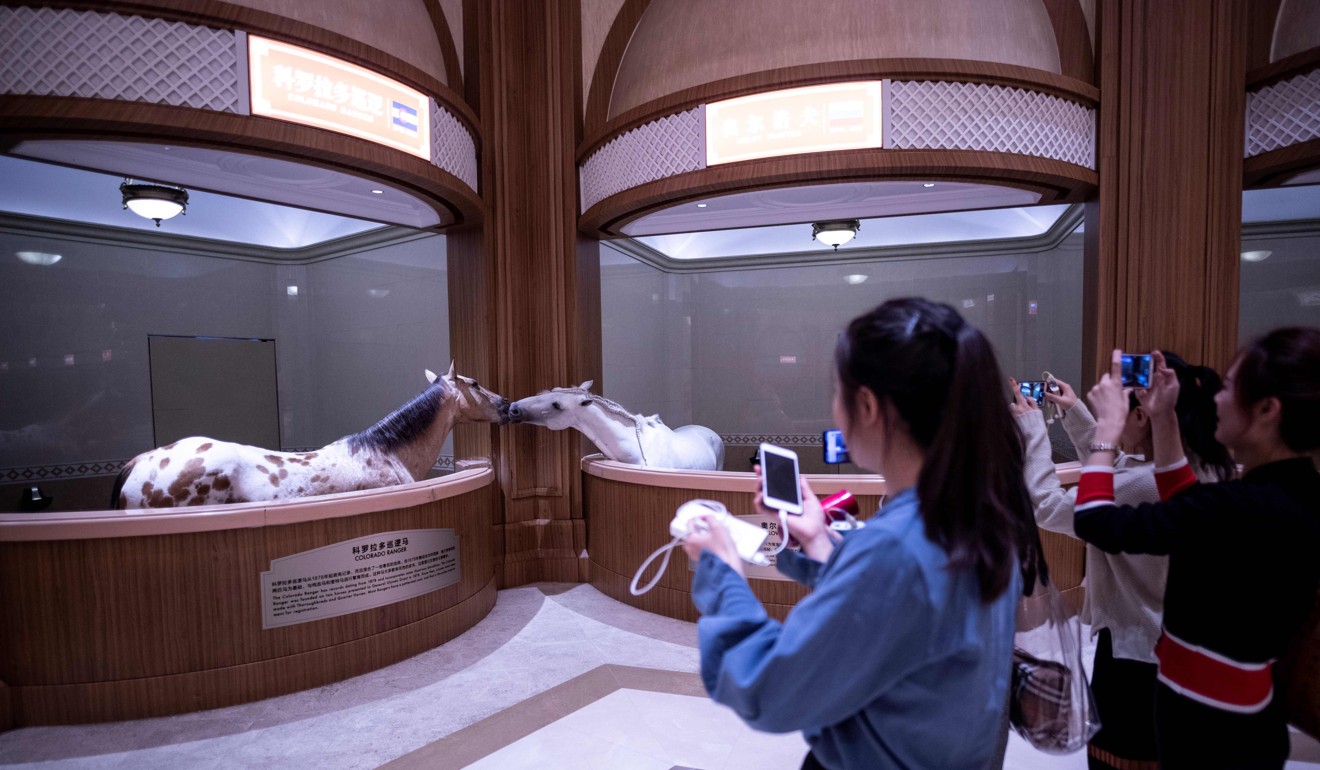
A two-hour drive from Shanghai is the horse-themed “Pegasus Water Town” complete with hotels, art gallery, a mall with Venice-style gondolas, an equestrian club and “Horse Culture Museum”.

There are more than 400 horses of dozens of breeds imported from around the world and visitors form long queues for horse-drawn carriage tours of the resort in Jiangsu, the province west of Shanghai.

Once a week, pristine horses are paraded and perform crowd-pleasing tricks in an opulent arena designed in what the official website calls “Austro-Hungarian Empire style”.

A giant portrait of Napoleon on horseback overlooks the performance.

At one point in the show, women horse riders in white gowns and sparkling tiaras convey white carriages that would not look out of place at a British royal wedding.

It is all a far cry from 40 years ago, when China’s ruling Communist Party launched wide-ranging reforms that lifted hundreds of millions of people out of poverty.

“Forty years ago China was very poor, there was no possibility of doing such a high-end sport,” said Shen Houfeng, general manager of Heilan International Equestrian Club, one of the jewels of the resort.

“But you see 40 years after reform and opening, China has seen big changes. It’s gone from a country people didn’t pay attention to, to one that everyone cares about.”

30/12/2018

Xi, Trump have telephone conversation, agree to implement consensus in Argentina meeting

BEIJING, Dec. 30 (Xinhua) — Chinese President Xi Jinping and U.S. President Donald Trump on Saturday held a telephone conversation, expressing their willingness to push for implementation of their agreements reached during the G-20 summit in Argentina.

Trump wished Xi and the Chinese people a happy new year, saying that the U.S.-China relations are very important and closely followed by the whole world.

He said he values the great relations with Xi, adding that he is pleased to see the teams of both countries are working hard to implement the important consensus reached between him and Xi during their meeting in Argentina.

Trump said relevant talks and coordination are producing positive progress. He hopes results will be reached to the benefit of both U.S. and Chinese peoples as well as people of all nations.

Xi, for his part, extended best wishes to Trump and the U.S. people upon the arrival of the new year.

Xi said both he and Trump hope to push for a stable progress of the China-U.S. relations, adding that the bilateral ties are now in a vital stage.

The Chinese president said he and Trump had a very successful meeting early this month and reached important consensus in Argentina.

The teams from both countries have since been actively working to implement such consensus, he said, expressing hopes that both teams can meet each other halfway and reach an agreement beneficial to both countries and the world as early as possible.

Xi said next year marks the 40th anniversary of the establishment of diplomatic ties between the United States and China, adding that China attaches great importance to the development of bilateral relations and appreciates the willingness of the U.S. side to develop cooperative and constructive bilateral relations.

China is willing to work with the United States to summarize the experience of 40 years of the development of China-U.S. relations, and strengthen exchanges and cooperation in fields of economy and trade, military, law enforcement, anti-drug operations, local issues and culture, Xi said.

Xi added that China is also willing to work with the United States to maintain communication and coordination on major international and regional issues, respect each other’s important interests, promote China-U.S. relations based on coordination, cooperation and stability, and let the development of bilateral relations better benefit the two peoples and people around the world.

The two heads of state also exchanged views on international and regional issues of common concern such as the situation on the Korean Peninsula. Xi reiterated that China encourages and supports further talks between the United States and the Democratic People’s Republic of Korea, and hopes for positive results.

30/12/2018

Chinese leaders watch traditional operas for new year


BEIJING, Dec. 29 (Xinhua) — Top Chinese leaders watched a New Year gala featuring traditional operas on Saturday evening in Beijing.

Leaders of the Communist Party of China (CPC) and the state Xi Jinping, Li Keqiang, Li Zhanshu, Wang Yang, Wang Huning, Zhao Leji, Han Zheng and Wang Qishan, joined an audience of nearly a thousand at the National Center for the Performing Arts.

The program included classic opera excerpts featuring historical stories, martial heroes and love stories, as well as modern excerpts featuring stalwart CPC members, life on a small island, the Long March, among others.

An opera piece named “Towards the Future” expressed the strong faith of the Chinese people under the leadership of the CPC Central Committee with Xi Jinping at the core, to fight for a decisive victory in finishing the building of a moderately prosperous society in all respects and for the realization of the Chinese dream of the rejuvenation of the Chinese nation.

The show featured various forms of traditional operas, including Peking Opera, Kunqu opera and Cantonese Opera.

29/12/2018

Cop killed by stone-pelting mob in Ghazipur; second UP policeman to die in mob violence this month

A Uttar Pradesh police constable was killed and some others injured as crowd of people waiting for local party leader in Uttar Pradesh’s Ghazipur district went out of control and started to pelt stones. The incident was not connected to Prime Minister Modi’s rally earlier in the eastern district.

INDIA Updated: Dec 29, 2018 22:44 IST

HT Correspondent
HT Correspondent
Hindustan Times, New Delhi
mob violence,India news,UP mob violence
Visuals of the violence and stone pelting in Uttar Pradesh’s Ghazipur district in which a police constable was killed. (ANI/Twitter)

A police constable was killed and some other people injured in mob violence by Nishad Party workers in Uttar Pradesh’s Ghazipur district, barely 15 kilometres from the venue of Prime Minister Narendra Modi’s rally on Saturday. The rioters also pelted stones on vehicles of local BJP leaders and workers returning from the rally.

Police have arrested 13 people and detained 10 others for interrogation.

Taking serious note of the incident, chief minister Yogi Adityanath, who himself was present in the rally, directed the district magistrate and superintendent of police to take strict action against the unruly elements and make immediate arrests. He condoled the death and announced Rs 40 lakh and an extraordinary pension for the constable’s wife, Rs 10 lakh for his parents, and a job for one of his dependents.

The deceased constable, as per the chief minister’s office, was identified as Surendra Vats, 45. He is the second policeman killed in mob violence this month after police inspector Subodh Kumar Singh was shot dead in Bulandshahr.

Embedded video

ANI UP

@ANINewsUP

One constable dead & two locals from the area injured in stone pelting allegedly by Nishad Party workers near Atwa Mor police station in Naunera area, earlier today.

142 people are talking about this

UP director general of police OP Singh said the incident had no connection with the PM’s rally and the violence was a result of Nishad Party workers’ protest for release of their four workers arrested for blocking the road earlier in the morning. He said constable Vats was fatally hit by a stone on the head when the police force was trying to disperse the mob.

Police constable Surendra Vats, who was killed in mob violence in Uttar Pradesh’s Ghazipur district as he was returning from duty at Prime Minister Narendra Modi’s rally there earlier in the day. (HT)

Additional director general, Varanasi zone PV Ramasastry had been rushed to the spot with extra police force while inspector general , Varanasi range, Vijay Singh Meena was already camping in Ghazipur to examine the situation and ensure immediate arrest of the rioters

Meena said the incident happened at the Atwa turning under Nonhara police station when the protestors suddenly turned violent at around 5.30 pm.

He said the Nishad Party workers had blocked the road in the morning over some demand related to reservation, but they were immediately dispersed and four arrested for causing nuisance. However, later around 60-70 party workers, including a group of women, again gathered at the Atwa turning demanding immediate release of the arrested people.

He said the deceased constable was posted at Karimudeen police station of Ghazipur and was returning after his duty in the PM’s rally. Another sub-inspector accompanying him on motorcycle was also hit but remained unhurt as he was wearing a helmet. He said some other police personnel and passers-by were also injured in the incident.

Police were identifying people involved in inciting the mob through video footage, Meena added.

29/12/2018

Trump says ‘big progress’ on possible China trade deal

WASHINGTON/BEIJING (Reuters) – U.S. President Donald Trump said on Twitter on Saturday that he had a “long and very good call” with Chinese President Xi Jinping and that a possible trade deal between the United States and China was progressing well.

As a partial shutdown of the U.S. government entered its eighth day, with no quick end in sight, the Republican president was in Washington, sending out tweets attacking Democrats and talking up possibly improved relations with China.

The two nations have been in a trade war for much of 2018, shaking world financial markets as the flow of hundreds of billions of dollars worth of goods between the world’s two largest economies has been disrupted by tariffs.

Trump and Xi agreed to a ceasefire in the trade war, deciding to hold off on imposing more tariffs for 90 days starting Dec. 1 while they negotiate a deal to end the dispute following months of escalating tensions.

“Just had a long and very good call with President Xi of China,” Trump wrote. “Deal is moving along very well. If made, it will be very comprehensive, covering all subjects, areas and points of dispute. Big progress being made!”

Chinese state media also said Xi and Trump spoke on Saturday, and quoted Xi as saying that teams from both countries have been working to implement a consensus reached with Trump.

“I hope that the two teams will meet each other half way, work hard, and strive to reach an agreement that is mutually beneficial and beneficial to the world as soon as possible,” Xi said, according to the state-run Xinhua news agency.

Having cancelled his plans to travel to his estate in Florida for the holidays because of the government shutdown that started on Dec. 22, Trump tweeted, “I am in the White House waiting for the Democrats to come on over and make a deal.”

The Republican-controlled Congress was closed for the weekend and few lawmakers were in the capital.

The shutdown, affecting about one-quarter of the federal government including 800,000 or so workers, began when funding for several agencies expired.

Congress must pass legislation to restore that funding, but has not done so due to a dispute over Trump’s demand that the bill include $5 billion in taxpayer money to help pay for a wall he wants to build along the U.S.-Mexico border.

The wall was a major 2016 campaign promise of Trump’s, who promised then that it would be paid for by Mexico, which has steadfastly refused to do so. Trump has since demanded that U.S. taxpayers pay for it at an estimated total cost of $23 billion.

He sees the wall as vital to stemming illegal immigration, while Democrats and some Republicans see it as an impractical and costly project. The standoff over Trump’s demand for funding will be a test for Congress when it returns next week.

Trump tweeted on Saturday that the deaths of two migrant children this month who had been taken into U.S. custody after trying to cross the southern border were “strictly the fault of the Democrats and their pathetic immigration policies.”

It was unclear exactly which policies Trump was referring to, but his aides have referred to U.S. laws and court rulings – including laws passed with bipartisan support – that govern the conditions under which children and families can be detained as “loopholes” that encourage illegal immigration.

On Friday, Secretary of Homeland Security Kirstjen Nielsen visited Border Patrol stations in Texas after her agency instituted expanded medical checks of migrant children following the two deaths. She is also due to visit Yuma, Arizona, the Department of Homeland Security said in a statement on Saturday.

In the interim, thousands of employees of federal agencies such as the Homeland Security, Justice, Commerce, Interior, Transportation, Agriculture and other departments were staying at home on furlough or soon to be working without pay.

For instance, members of the U.S. Coast Guard will receive their final paychecks of the year on Monday, the service said in a statement on its website on Friday after previously warning that payments would be delayed due to the shutdown.

“The administration, the Department of Homeland Security [DHS], and the Coast Guard have identified a way to pay our military workforce on Dec. 31, 2018,” the service website read.

That paycheck will be their last until the government reopens.

The Federal Emergency Management Agency also said on Friday that it would resume issuing new flood insurance policies during the shutdown, reversing an earlier decision.

Reporting by Yeganeh Torbati and Katanga Johnson in Washington; additional reporting by Lusha Zhang, Ben Blanchard and Ryan Woo in Beijing; Editing by Kevin Drawbaugh, Daniel Wallis and Diane Craft

29/12/2018

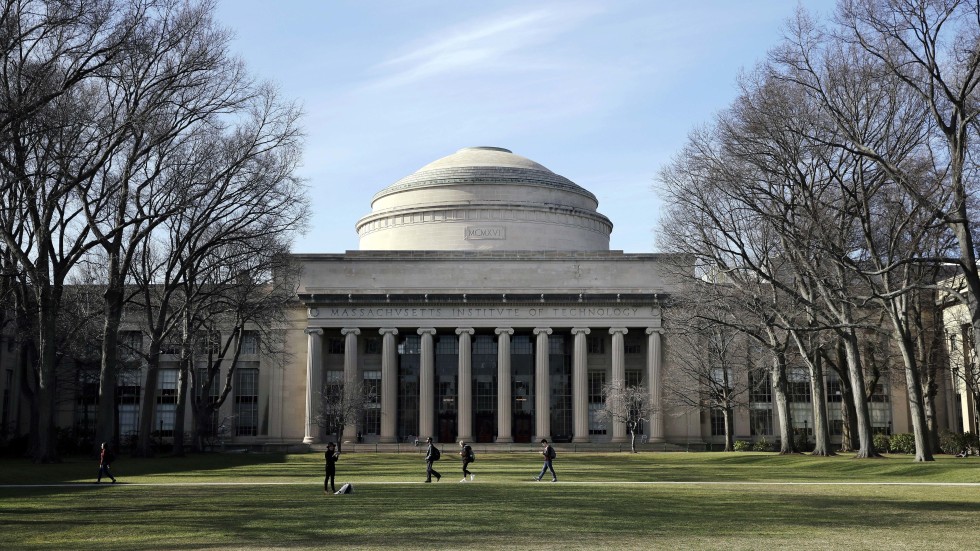
Chinese students miss out on early places at MIT but what’s to blame for the change in fortune?

  • The prestigious college offered early admission to more than 700 students from around the world but none came from Chinese schools
  • Some analysts say Washington’s fears about espionage are to blame, while others put it down to China’s failure to prepare fully rounded youngsters
PUBLISHED : Sunday, 30 December, 2018, 12:00am
UPDATED : Sunday, 30 December, 2018, 12:00am

Unlike in the past, when at least a handful of students from Chinese schools made it through the early admission system, according to official results released by the college earlier this month this year there were none.

The news epitomised the falling success rate of mainland Chinese students seeking places at top US colleges in recent years amid growing uncertainty about immigration and visa policies, and the increased importance placed on applicants’ soft skills, some industry insiders have said.

The MIT offered early admission to more than 700 students chosen from 9,600 applicants from around the world. While five of them were Chinese nationals, they all graduated from US high schools.

“This is in line with the overall trend,” said Sun Rui, founder of Insight Education, a company based in the south China city of Shenzhen that helps Chinese students apply for undergraduate programmes in the United States.

“We feel that it’s harder each year to apply for top universities,” she said.

The number of students from Shenzhen who secured a place at one of the top four colleges in the US had been falling year by year, she said.

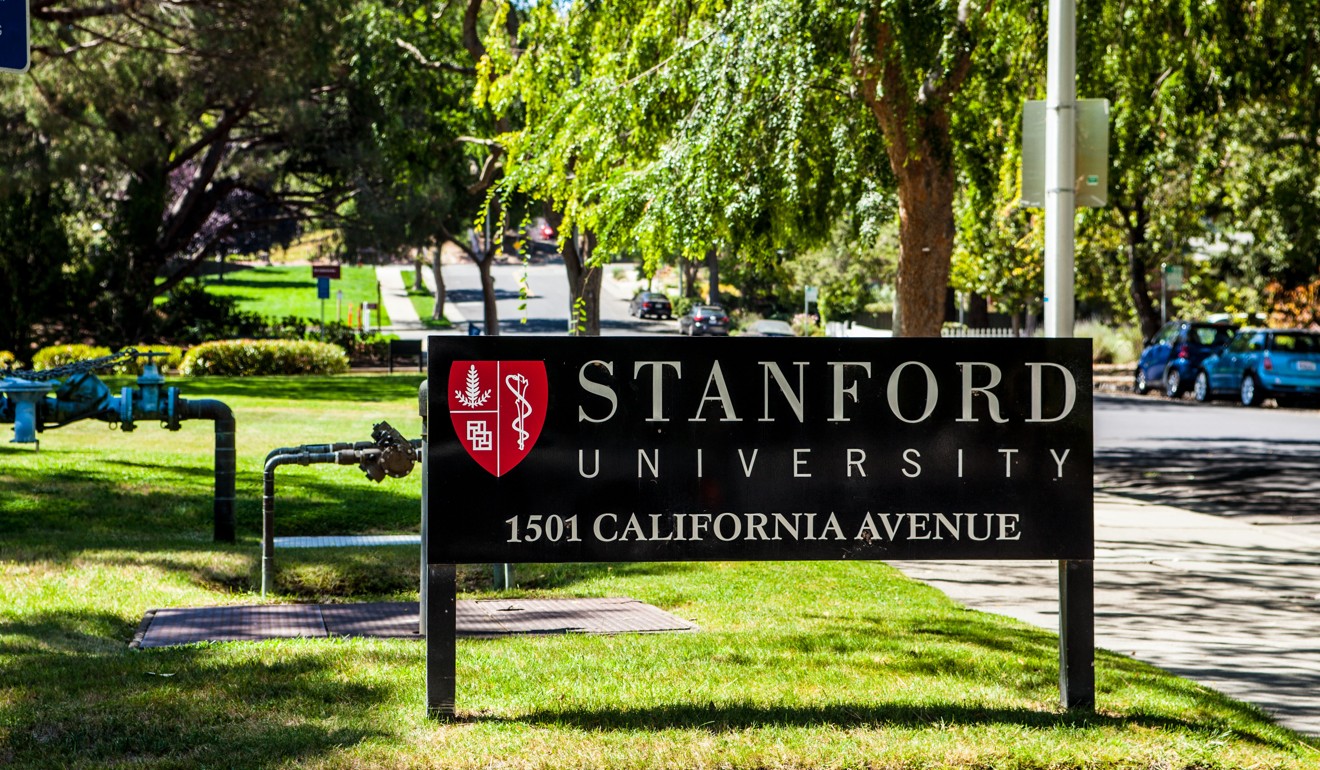
“Last year, a couple of students from Shenzhen made it to Stanford. This year it was none.”

While Chinese students had a reputation for getting high exam scores, Sun said they were often at a disadvantage when it came to soft skills, such as leadership and citizenship.

Chinese schools did not care about the latter, but American schools valued them greatly, she said.

As more Chinese children were being sent abroad to study at a younger age, those who went to US high schools were replacing those from Chinese schools when it came to undergraduate admissions, she said.

Li Li, whose daughter is at high school in Shanghai, said she had always wanted her child to apply for a top 20 US university but was now reconsidering.

“Given the current circumstances, your know, all the curbs on immigration and visa policy, I think I will consider another country, say Australia,” she said.

With richer parents eyeing better education abroad, Chinese students now account for about a third of all international students in US universities, according to official figures.

But potential applicants are being frightened away as Washington, under the administration of President Donald Trump, tightens it policies on Chinese students out of concerns about them being potential spies. The Financial Times reported recently that the White House had actually debated a proposal to stop all Chinese nationals from studying at US universities over such concerns.

New restrictions and requirements were introduced earlier this year for Chinese postgraduates majoring in science and engineering, as Trump accused China of stealing technology and intellectual property from US companies.

Sun said that an unpredictable admission policy was another reason for the drop off in Chinese students’ success in applying for top American schools.

“For example, unlike before, some top schools now require writing samples from international students, which to some extent shows they have worries about the applicants’ actual skills,” she said.

29/12/2018

China holds key meeting to outline roadmap for 2019 rural work

BEIJING, Dec. 29 (Xinhua) — The central rural work conference was held in Beijing from Dec. 28 to Dec. 29, mapping out plans for the country’s rural and agricultural work in 2019.

The meeting summarized and exchanged local experiences on the implementation of rural vitalization strategy, outlined major tasks related to agriculture, rural areas and rural people in the next two years and mapped out plans for rural and agricultural work in 2019, according to a statement released Saturday after the central rural work conference.

President Xi Jinping, also general secretary of the Communist Party of China Central Committee and chairman of the Central Military Commission, made important instructions on work related to agriculture, rural areas and rural people.

Xi stressed that new achievements were made in the rural and agricultural development in 2018, grain output reaped a good harvest and rural vitalization was off to a good start.

The year 2019 is the key year to secure a decisive victory in achieving the country’s first centenary goal of building a moderately prosperous society in all respects. Solid work related to agriculture, rural areas and rural people will play a significant role in effectively handling various risks and challenges, ensuring a steady and healthy economic development and social stability, said Xi.

29/12/2018

China’s first double-decked road-rail truss bridge reopens to road traffic

29/12/2018

China issues yellow alert for blizzard

BEIJING, Dec. 29 (Xinhua) — China’s meteorological authorities issued a yellow alert for a heavy snowstorm on Saturday morning.

The National Meteorological Center (NMC) said snowstorms would hit parts of Guizhou, Hunan and Jiangxi provinces, with up to 15 centimeters of new snow expected.

The observatory warned that the snow would affect transport during rush hours, and asked local authorities to be prepared for possible damage to crops, plants and livestock.

On Saturday morning, the NMC also issued a yellow alert for a cold wave as the cold front will bring down temperatures by 10 degrees Celsius in the next three days in most parts of China.

China has a four-tier color-coded weather warning system, with red representing the most severe, followed by orange, yellow and blue.

29/12/2018

The Mumbai ‘toxic hell’ where poor are forced to live

  • 29 December 2018
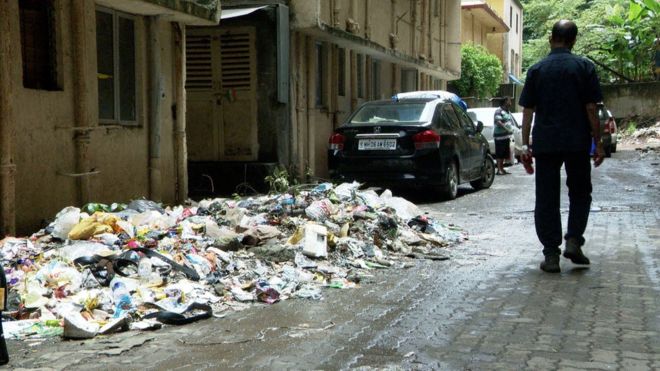
A pile of rubbish alongside houses in Mahul
Image captionPiles of garbage are a common sight in Mahul

Tens of thousands of people are fighting to leave Mahul, a heavily industrialised neighbourhood in the western Indian city of Mumbai, saying the toxic pollution there is adversely impacting their health. BBC Marathi’s Mayuresh Konnur and Janhavee Moole report on the residents’ battle to be relocated.

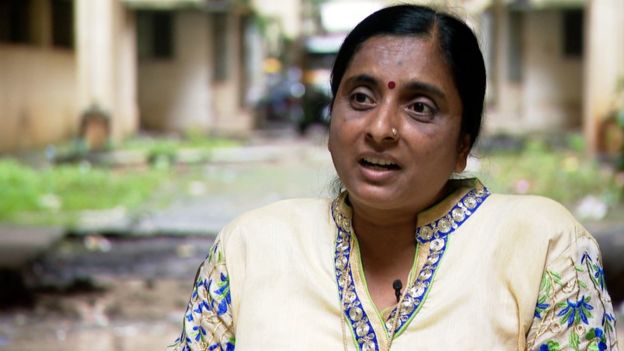
Anita Dhole, 38, was forced to move to a “transit camp” set up by the civic authorities in Mahul in May 2017 after the illegal slum she was living in was demolished. Since then, she says, she has been suffering.

“I have breathing trouble and high blood pressure, and the pollution has also affected my eyesight,” she says.

Hers was one of more than 5,000 families – estimated to be between 30,000 and 50,000 people – that lost their homes in the demolition drive and were offered temporary housing in Mahul. They were told they would be given homes in another Mumbai suburb later but, residents say, Mahul is not fit for living, even for a short time.

Anita Dhole
Image captionMs Dhole has been living here since May 2017

A former fishing village, it’s now close to oil and petroleum refineries, chemical factories and fertiliser plants.

A report in 2013 by the King Edward Memorial Hospital said that around 67% of people living in Mahul complained of breathlessness several times a month and around 84% of them complained of eye-irritation. In 2015, India’s environment court National Green Tribunal said there was “a perceptible threat to [the] health of residents” in Mahul because of the “prevailing air quality in the area”.

But local municipal authorities say three different surveys by the Maharashtra Pollution Control Board show “that the pollution levels in Mahul are not different from other areas of Mumbai”.

Yet residents blame breathing issues, asthma, skin diseases, tuberculosis and blood pressure-related problems on poor local conditions.

Ms Dhole says her parents fell so sick in Mahul that they soon left for their village.

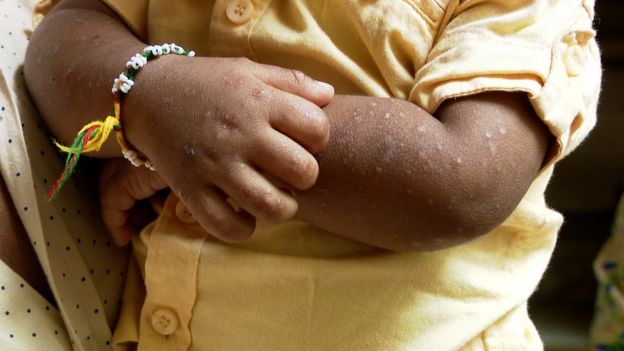
A child scratches a rash on his arms
Image captionSkin infections are common among residents

Shamdas Salve, who also moved to Mahul last year, says his two-year-old son has had a persistent skin infection for the past five months.

“He doesn’t sleep the whole night and keeps scratching. I’ve consulted several skin specialists and changed his medication but he has had no relief. He cries and keeps scratching. He now has marks on his face too.”

His words are echoed by many of his neighbours – 10-year-old Sahil suffers from TB and so does 17-month-old Anshul Tusambad; Maya Goswami, 55, struggles with asthma; and 18-year-old Kavita Subramanyan has low BP and breathing problems.

Besides pollution, residents say they have no access to clean water and sewage facilities and that electricity supply is far from regular. There are also no hospitals or schools nearby. The area is poorly connected with other parts of the city and, as a result, many women have been forced to quit their jobs and stay home.

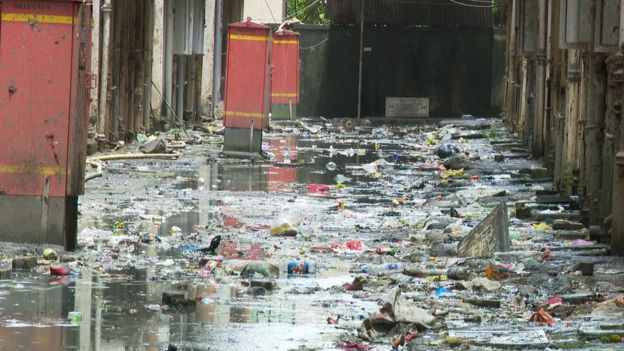
An overflowing sewer between homes in Mahul
Image captionOverflowing sewage in Mahul’s transit camp

The transit camp where Ms Dhole lives is actually a block of apartments that goes by the official name of Eversmile layout.

It has dozens of buildings and each is home to 300 congested one-room apartments. The complex is filthy – sewage pipes are broken, gutters are overflowing; electric wires are dangling everywhere; the air is stuffy, mosquitoes abound and rats scurry past us as we walk around the neighbourhood.

Most of these low-cost homes are meant for families who have been relocated because of demolition of unauthorised slums.

Every year, tens of thousands migrate from rural India to Mumbai in search of livelihood and most end up living in illegal shanty towns that often encroach on roads or other city infrastructure.

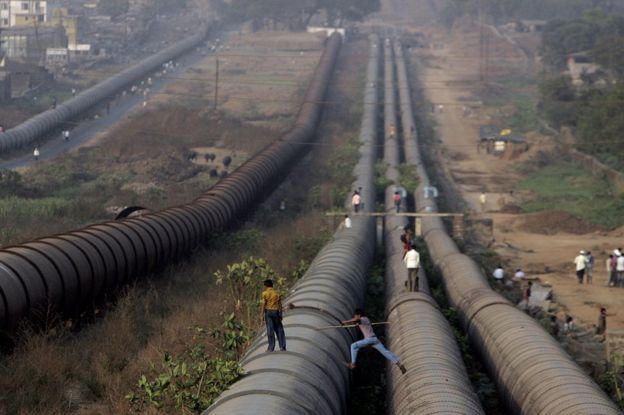
Locals walk on the Tansa water pipelineImage copyrightGETTY IMAGES
Image captionThousands were relocated to build the Tansa water pipeline

Most of those who were relocated to Mahul, including Ms Dhole, used to live in a slum along the Tansa pipeline – the 160km (99 miles) long water pipeline that runs through Mumbai, carrying water from Lake Tansa. It’s a major source of water for the city.

Just over half of the pipeline is overground and, over the years, unauthorised houses came up alongside it and, in some places, on top of it.

In 2006, a petition was filed in the high court in Mumbai asking the court to order the government to relocate those living in the slums to “ensure that the water, which is used by the citizens of Mumbai, is safe, and that these pipelines do not become a target for persons to attack the citizens of Mumbai”.

Presentational grey line

Read more stories about pollution and the environment:

Presentational grey line

In 2009, the court ruled that there must be a 10-metre gap between the pipeline and the nearest home, which meant that thousands of families had to move out. Their homes were subsequently demolished and they were told to relocate to Mahul.

Many initially refused because of the pollution, but were forced to move as the demolitions continued.

The fight to leave

Ms Dhole has started an online petition demanding that they be moved out of Mahul. She and other residents have also petitioned the high court.

In August, the court said the civic authorities could not force people to move to Mahul and that they must find alternative housing for them or pay rent for those families that did move out.

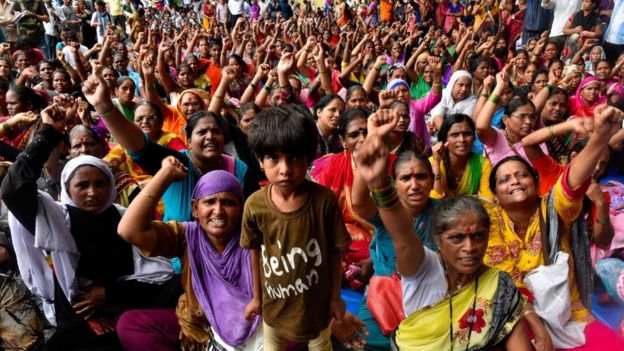
Mahul residents participate in a protest in June 2018Image copyrightGETTY IMAGES
Image captionResidents have been protesting for months to be moved elsewhere

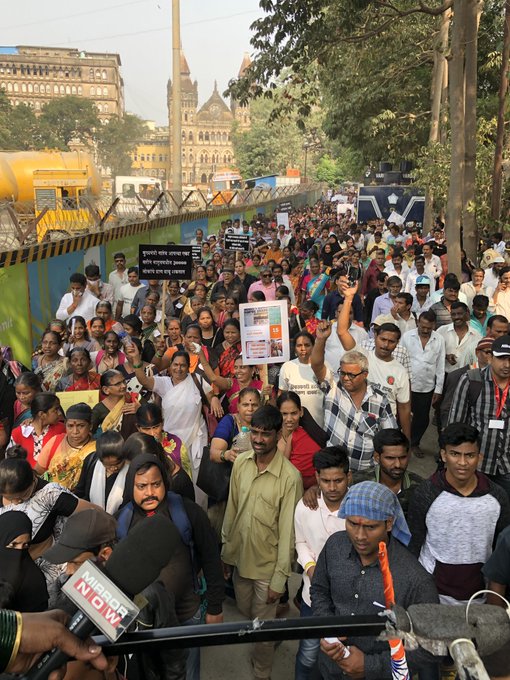
The protests have intensified in the past two months with many residents of Mahul’s transit camp demonstrating at the site where their homes once stood.

They have also launched a campaign on social media with the hashtag and Twitter handle MumbaisToxicHell – demanding that they are relocated again, this time to a safer and healthier environment.

Presentational white space
Law of Unintended Consequences

continuously updated blog about China & India

ChiaHou's Book Reviews

continuously updated blog about China & India

What's wrong with the world; and its economy

continuously updated blog about China & India