

-
20 December 2018
28/12/2018
Big data, AI help manage traffic in east China city
JINAN, Dec. 27 (Xinhua) — Chinese ride-hailing giant DiDi Chuxing has partnered with traffic police and Shandong University in the city of Jinan to use big data and artificial intelligence to ease traffic.
An intelligent traffic management system named JTBrain was officially launched Wednesday, equipping the capital of east China’s Shandong Province with a self-adaptive traffic-light control system.
The system can serve as a decision-making platform to increase traffic efficiency, according to Liu Xianghong, chief scientist of DiDi Chuxing’s intelligent transport department.
JTBrain was designed to “learn and evolve” by modeling core algorithms and realize real-time control under different traffic conditions, according to Zou Nan, director of Transportation Study Center of Shandong University.
Zou added that the brain-like system, which now covers 36 streets and 450 crossroads, uses AI, big data and cloud-computing to search for optimal traffic solutions.
“JTBrain makes decisions by crunching data gathered from video footage on streets, and provides live recommendations through mobile phone apps and outdoor LED screens,” said Li Yong, deputy director of the Intelligent Traffic System Office of Jinan Traffic Police.
In tests lasting over six-months, JTBrain helped cut the average morning and evening commute time by 10.7 percent and 10.9 percent, respectively, according to local traffic police.
21/12/2018
India man held for rape of British woman in Goa
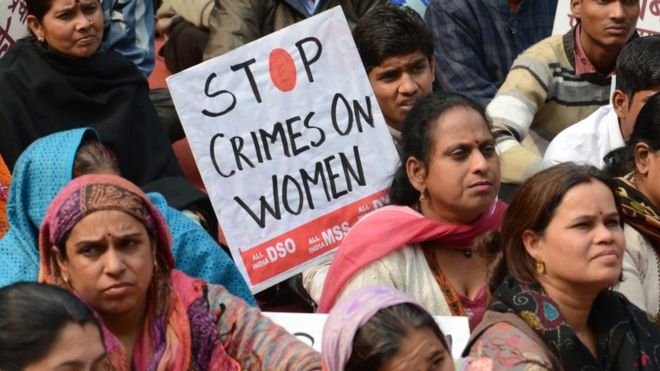 Image copyrightAFP
An Indian man has been arrested for allegedly raping and robbing a British tourist in the western state of Goa.
The woman, 48, was attacked around 4:00 local time (22:30 GMT) on Thursday as she was walking to her hotel from a railway station, police told PTI news.
The accused is a man from the southern state of Tamil Nadu. He fled after also taking three of her bags.
Goa is one of India’s top tourist destinations and its beaches attract thousands of foreigners every year.
The woman is a regular visitor to the state. Police said she had been going there every year for the last 10 years.
Police were able to track down the suspect with the help of CCTV footage from the railway station as well as the area where the crime occurred, according to the NDTV news website.
This is one of several crimes against foreigners in the state.
An Irish woman, Danielle McLaughlin, was raped and murdered while on holiday in Goa in 2017. Vikhat Bhagat, 24, was arrested soon after her murder and his trial, which began in April, is still under way.
 Image copyrightFAMILY PHOTOGRAPH
In 2008, Scarlett Keeling, a 15-year-old British teenager was raped and killedwhile on a trip in Goa. Her killers are yet to be caught. Two men who had faced charges of culpable homicide and grievous sexual assault were both cleared in 2016.
Public outrage over sexual violence in India rose dramatically after the 2012 gang rape and murder of a student on a Delhi bus.
This year has seen the issue become a political flashpoint again, after a string of high-profile attacks against children.
However incidents of rape and violence against women continue to be reported from across the country.
21/12/2018
Sacred and political: world’s largest religious festival to kick off in India
NEW DELHI (Reuters) – Spirituality, politics and tourism: welcome to the Kumbh Mela, the world’s largest gathering of humanity, that begins next month in India.
Labourers work on an under-construction pontoon bridge spanning the river Ganga ahead of the “Kumbh Mela”, or the Pitcher Festival, in Allahabad, India, November 20, 2018. REUTERS/Jitendra Prakash
During the Kumbh Mela, to be held in Prayagraj in Uttar Pradesh, millions of pilgrims including naked, ash-smeared ascetics, will bathe at the confluence of the Ganges, the Yamuna, and a mythical third river, the Saraswati.
Devout Hindus believe that bathing in the waters of the Ganges absolves people of sins and bathing at the time of the Kumbh brings salvation from the cycle of life and death.
The government says about 100 million to 150 million people, including one million foreign tourists, are expected to attend over the eight-week festival period beginning on January 15, and the scale of the efforts to feed and house the pilgrims is immense.
Organisers are erecting temporary bridges, 600 mass kitchens, more than 100,000 portable toilets, and vast tents, each sleeping thousands of pilgrims at a time, in a pop-up city on the banks of the two rivers.
And yet, based on tradition, there shouldn’t be quite such a giant event next year – which is where politics and tourism promotion comes in.
The Kumbh Mela is traditionally held every three years in one of four cities along India’s sacred rivers, with one of the largest of those in Prayagraj. The next Kumbh Mela, meaning “festival of the pot”, was due to be held in the city in 2025.
But with a general election due by May in which the ruling Hindu nationalist Bharatiya Janata Party (BJP) faces a tough contest, the northern state of Uttar Pradesh has transformed a smaller Ardh, or “half” Kumbh Mela, into a full version of the festival.
The BJP controls both the federal and the Uttar Pradesh governments.
And this “half Kumbh” may by some measures end up being one of the biggest Kumbhs yet because of the state’s massive promotional efforts, especially as Prayagraj – which until recently was known as Allahabad – is seen as the holiest of the four sites.
Besides the upcoming election, the promotion coincides with an international charm offensive to improve the image of Uttar Pradesh, India’s most populous state of more than 220 million people with a reputation for poverty and violence.
But the state’s chief minister Yogi Adityanath, a Hindu monk who is close to Prime Minister Narendra Modi and has an eye for publicity, has also been driving support for any event that celebrates the dominance of Hindu culture in India, and marginalises the nation’s Muslim minority.
PLACE OF SACRIFICE
It was Adityanath who in October renamed Allahabad, a city of six million where there are nearly 800,000 Muslims, as Prayagraj, from its ancient name of Prayag meaning “place of sacrifice” in Sanskrit.
Allahabad is a Muslim name given to the city by a Mughal emperor in 1575.
“It is part of a Hindu nationalist agenda and is very worrying to us,” said Zafaryab Jilani, a senior member of the All-India Muslim Personal Law Board, that liaises with the government on Muslim affairs.
“There is no justification for changing these names.”
Neither side is expecting tensions to lead to violence during the festival, although a stampede at the last Kumbh Mela held in Allahabad in 2013, as it was then known, killed 42.
“Muslims have always respected the Kumbh. We will not challenge it in public,” Jilani said.
Officials do not expect clashes either, but have boosted the number of police on duty compared with previous events.
“People who are not involved will not come,” said a state official involved in the preparations. “This is not a problem for us.”
But he added: “To ensure security and safety, there will be five times the number of police officers compared to the previous Kumbh.”
Officials say the festival won’t be a “half” event by any means.
“This is the way we are taking it forward. There is nothing which is half,” said Awanish Kumar Awasthi, a senior official in charge of tourism in the Uttar Pradesh government.
The state government has promoted the Kumbh Mela at several tourism expositions in Europe, and has invited representatives of every country in the world to attend. Last Saturday, foreign diplomats visited Prayagraj to witness the set-up.
The festival has its roots in a Hindu tradition that says the god Vishnu wrested a golden pot containing the nectar of immortality from demons. In a 12-day fight for possession, four drops fell to earth, in the cities of Prayagraj, Haridwar, Ujjain and Nasik, who share the Kumbhs as a result.
21/12/2018
Crude refusal: China shuns U.S. oil despite trade war truce
SINGAPORE (Reuters) – China, the world’s top oil importer, is set to start 2019 buying little or no crude from the United States despite a three-month truce in a trade scrap between the two nations, with relatively high freight costs and political uncertainty choking demand.
That muted appetite means the United States, which became the world’s top oil producer this year as its shale output hit record levels, will continue to hold only a sliver of China’s market even as a wave of new refining capacity starts up there.
It also suggests that China is unlikely to use crude purchases to help plug a widening trade gap with the United States, which remains a core source of tensions between the world’s top two economies.
The U.S. trade deficit with Beijing hit a record $43 billion in October as its firms stockpiled inventory from China to avoid higher tariffs that may kick in next year.
“Chinese companies have little incentive to buy U.S. crude due to the wide availability of crude supplies today from Iran and Russia,” said Seng Yick Tee, an analyst at Beijing-based consultancy SIA Energy.
“Even though the trade tension between China and the U.S. had been defused recently, the executives from the national oil companies hesitate to procure U.S. crude unless they are told to do so.”
China stopped U.S. oil imports in October and November after the trade war intensified. It resumed some imports in December, but purchased just 1 million barrels, a minute portion of the more than 300 million barrels of total imports, Refinitiv data showed.
Chinese refineries that used to purchase U.S. oil regularly said they had not resumed buying due to uncertainty over the outlook for trade relations between Washington and Beijing, as well as rising freight costs and poor profit-margins for refining in the region.
Costs for shipping U.S. crude to Asia on a supertanker are triple those for Middle eastern oil, data on Refinitiv Eikon showed.
(GRAPHIC: China’s appetite for U.S. crude muted by high freight costs, competitive Mid East supplies – tmsnrt.rs/2GyFnJI)
A senior official with a state oil refinery said his plant had stopped buying U.S. oil from October and had not booked any cargoes for delivery in the first quarter.
“Because of the great policy uncertainty earlier on, plants have actually readjusted back to using alternatives to U.S. oil … they just widened our supply options,” he said.
He added that his plant had shifted to replacements such as North Sea Forties crude, Australian condensate and oil from Russia.
“Maybe teapots will take some cargoes, but the volume will be very limited,” said a second Chinese oil executive, referring to independent refiners. The sources declined to be named because of company policy.
A sharp souring in Asian benchmark refining margins has also curbed overall demand for crude in recent months, sources said.
(GRAPHIC: Singapore refining margins slump 50 pct in 3 ths amid demand growth concerns – tmsnrt.rs/2RhnHXv)
Despite the impasse on U.S. crude purchases, China’s crude imports could top a record 45 million tonnes (10.6 million barrels per day) in December from all regions, said Refinitiv senior oil analyst Mark Tay.
Russia is set to remain the biggest supplier at 7 million tonnes in December, with Saudi Arabia second at 5.7-6.7 million tonnes, he said.
China’s Iranian oil imports are set to rebound in December after two state-owned refiners began using the nation’s waiver from U.S. sanctions on Tehran.
21/12/2018
US charges ‘China government hackers’
 Image copyrightFBI
The US justice department has indicted two Chinese men accused of hacking into the computer networks of companies and government agencies in Western countries.
The pair are allegedly part of a “hacking group” known as Advanced Persistent Threat 10, affiliated with China’s main intelligence service.
They have not been arrested.
The US and UK have accused China of violating an agreement relating to commercial espionage.
Zhu Hua and Zhang Shilong worked for a company called Huaying Haitai and in association with the Chinese Ministry of State Security, the US court filing says.
The Federal Bureau of Investigation (FBI) said that from at least 2006 until 2018, the two extensively hacked into computer systems with the aim of stealing intellectual property and confidential business and technological information from:
- at least 45 commercial and defence technology companies in at least 12 US states
- managed service providers (MSPs) and their government and commercial clients in at least 12 countries, including the UK, Brazil, Canada, Finland, France, Germany, India, Japan, Sweden, Switzerland, and the UAE, as well as the US
- US government agencies
The FBI said they had also hacked into US Navy computer systems and stolen the personal information of more than 100,000 personnel.
FBI director Christopher Wray said the two men were at present “beyond US jurisdiction”.
‘Economic aggression’
Announcing the unsealing of the indictments, US Deputy Attorney General Rod Rosenstein said China had violated a 2015 agreement under which it had pledged to not engage in commercial cyber-spying.
Mr Rosenstein said his department’s move had been co-ordinated with US allies in Europe and Asia to rebuff “China’s economic aggression”.
He added: “We want China to cease its illegal cyber activities.”
The UK government said it was joining allies in holding the Chinese government responsible for a global campaign targeting commercial secrets.
UK Foreign Secretary Jeremy Hunt said: “This campaign is one of the most significant and widespread cyber intrusions against the UK and allies uncovered to date, targeting trade secrets and economies around the world.
“These activities must stop. They go against the commitments made to the UK in 2015, and, as part of the G20, not to conduct or support cyber-enabled theft of intellectual property or trade secrets.”
Australia and New Zealand said they too held China responsible for the global hacking campaign and joined their “like-minded partners” in condemning the activity.
‘Chinese hackers return’
By Gordon Corera, security correspondent
This is the latest salvo in Washington’s attempt to pressure Beijing on a range of issues, with economic espionage one of the most high-profile.
US and UK officials are reluctant to name the companies that have been hit but they say the economic damage has been significant.
The hackers, officials say, work under the direction of China’s Ministry of State Security – one of the country’s intelligence organisations.
“It is organised more like a corporation than a gang,” one UK official says, adding that British intelligence has the highest level of confidence in their assessment of who was responsible.
The UK and US believe China is breaking a 2015 agreement not to steal commercial data to help its companies. There was a dip in activity after the deal was signed (which followed a period of pressure by Washington, including the indictment of Chinese military hackers and the threat of sanctions).
But US and UK sources both say that recently they have seen Chinese hackers return, now operating more stealthily, whereas in the past they were easier to spot.
Where the US has been vocal in recent months, this is the first time the UK has spoken out – perhaps because it has been concerned about risking trade ties and getting pulled into the Trump administration’s broader confrontation with Beijing.
UK officials say they have raised the matter privately a number of times with Beijing over the last two years, including during the prime minister’s visit earlier this year, and officials are keen to stress that they think the relationship with China is strong enough to allow them to address these issues without causing wider problems.
21/12/2018
China, Russia to boost military cooperation
BEIJING, Dec. 20 (Xinhua) — Chinese State Councilor and Minister of National Defense Wei Fenghe met with Deputy Defense Minister of the Russian Federation and Chief of Main Directorate for Political-Military Affairs of the Russian Armed Forces Andrey Kartapolov in Beijing Thursday.
Wei spoke highly of recent exchanges and cooperation between the two militaries.
“China is willing to work jointly with Russia, taking the opportunity of the 70th anniversary of diplomatic ties between the two countries next year to resolutely implement the consensus reached by the two heads of states and promote the two sides’ military cooperation to continuously score new achievements,” Wei said.
Kartapolov said Russia would strengthen cooperation with China in the military and other fields, and keep pushing the relationship between the two countries and their militaries to a new level.
21/12/2018
China, Germany should jointly safeguard free trade: FM spokesperson
BEIJING, Dec. 20 (Xinhua) — A Chinese foreign ministry spokesperson said Thursday that China and Germany have the responsibility to jointly safeguard free trade and multilateralism and avoid sending a negative signal that could affect investment environment and market confidence.
Foreign Ministry Spokesperson Hua Chunying made the remarks after Germany tightened rules on foreign investment in some sectors on Wednesday, adjusting the threshold for starting state security reviews of share purchases by non-EU investors to 10 percent of company shares in sectors such as critical infrastructures as well as defense-relevant and high-tech companies.
“While it is understandable to conduct necessary security scrutiny, it should not become a tool for advancing protectionism and creating new invisible barriers,” Hua said at a daily press briefing, also expressing opposition to discriminatory practices.
She called on the two countries to expand two-way opening-up so as to inject positive energy into bilateral high-level cooperation of mutual benefits and safeguard an open world economy.
20/12/2018
China says ‘resolutely opposes’ new U.S. law on Tibet
BEIJING (Reuters) – China denounced the United States on Thursday for passing a new law on restive Tibet, saying it was “resolutely opposed” to the U.S. legislation on what China considers an internal affair, and it risked causing “serious harm” to their
relations.
U.S. President Donald Trump on Wednesday signed into law the Reciprocal Access to Tibet Act.
The law seeks to promote access to Tibet for U.S. diplomats and other officials, journalists and other citizens by denying U.S. entry for Chinese officials deemed responsible for restricting access to Tibet.
Beijing sent troops into remote, mountainous Tibet in 1950 in what it officially terms a peaceful liberation and has ruled there with an iron fist ever since.
Chinese foreign ministry spokeswoman Hua Chunying told a daily briefing that the law “sent seriously wrong signals to Tibetan separatist elements”, as well as threatening to worsen bilateral ties strained by trade tension and other issues.
“If the United States implements this law, it will cause serious harm to China-U.S. relations and to the cooperation in important areas between the two countries,” Hua said.
The United States should be fully aware of the high sensitivity of the Tibet issue and should stop its interference, otherwise the United States would have to accept responsibility for the consequences, she added, without elaborating.
Rights groups say the situation for ethnic Tibetans inside what China calls the Tibet Autonomous Region remains extremely difficult. The U.N. High Commissioner for Human Rights said in June conditions were “fast deteriorating” in Tibet.
All foreigners need special permission to enter Tibet, which is generally granted to tourists, who are allowed to go on often tightly monitored tours, but very infrequently to foreign diplomats and journalists.
Hua said Tibet was open to foreign visitors, as shown by the 40,000 American visitors to the region since 2015.
At the same time, she said it was “absolutely necessary and understandable” that the government administered controls on the entry of foreigners given “local geographic and climate reasons”.
Tibetan rights groups have welcomed the U.S. legislation.
The International Campaign for Tibet said the “impactful and innovative” law marked a “new era of American support” and was a challenge to China’s policies in Tibet.
“The U.S. let Beijing know that its officials will face real consequences for discriminating against Americans and Tibetans and has blazed a path for other countries to follow,” the group’s president, Matteo Mecacci, said in a statement.
Next year marks the sensitive 60th anniversary of the flight into exile in India of the Dalai Lama, the highest figure in Tibetan Buddhism, after a failed uprising against Chinese rule.
China routinely denounces him as a dangerous separatist, although the Dalai Lama says he merely wants genuine autonomy for his homeland.
20/12/2018
Looking for China’s spies
The US has launched a crackdown on Chinese attempts to steal secrets.
American officials say the Chinese state is boosting its own companies.
But in the UK there’s no equivalent crackdown.

 CHINDIA ALERT: You'll be living in their world, very soon