Archive for December, 2018

17/12/2018

Macao holds int’l parade to mark 19th anniversary of return to motherland

CHINA-MACAO-PARADE (CN)

Performers attend the Macao International Parade, which is held to celebrate the 19th anniversary of Macao’s return to the motherland, in Macao, south China, Dec. 16, 2018. (Xinhua/Cheong Kam Ka)

MACAO, Dec. 16 (Xinhua) — The government of China’s Macao Special Administrative Region (SAR) held an international parade Sunday afternoon to mark the 19th anniversary of Macao’s return to the motherland.

The parade attracted more than 70 groups from the Chinese mainland, the Macao SAR and the Hong Kong SAR, as well as those from foreign countries including Japan, Brazil, Spain, Italy, Portugal, France, Mozambique, Malaysia, among others.

The parade featured performances such as folk dances, acrobatics, stilt walking, Chinese martial arts and puppet shows.

The parade started from the renowned Ruins of St. Paul’s and ended at Sai Van Lake Square, where the groups took to the stage one by one.

The parade, one of the major cultural events in Macao since 2011, was organized by Macao’s Cultural Affairs Bureau and the Macao Government Tourism Office.

17/12/2018

China, Myanmar vow to strengthen ties, cooperation

LAOS-CHINA-WANG YI-MYANMAR-U KYAW TIN-MEETING

Chinese State Councilor and Foreign Minister Wang Yi (R) meets with Union Minister for International Cooperation of Myanmar U Kyaw Tin in Luang Prabang, Laos, on Dec. 16, 2018. Both Wang and U Kyaw Tin are here to attend the fourth Lancang-Mekong Cooperation (LMC) foreign ministers’ meeting to be held on Monday. (Xinhua/Li Gang)

LUANG PRABANG, Laos, Dec. 16 (Xinhua) — Chinese State Councilor and Foreign Minister Wang Yi met with Union Minister for International Cooperation of Myanmar U Kyaw Tin here Sunday, with both sides agreeing to strengthen bilateral ties and cooperation at all sectors.

Both Wang and U Kyaw Tin are here to attend the fourth Lancang-Mekong Cooperation (LMC) foreign ministers’ meeting to be held on Monday.

China is ready to be Myanmar’s reliable partner of cooperation, promote high-level exchanges, strengthen cooperation on the Belt and Road Initiative and enrich the content of China-Myanmar comprehensive strategic partnership of cooperation, said Wang.

Both sides should actively implement the recently-signed memorandum of understanding (MoU) to jointly build the China-Myanmar Economic Corridor, improve related plans and push forward major projects, Wang noted.

China will also support Myanmar to properly solve the northern Myanmar issue following the “Panglong spirit,” said Wang.

On the Rakhine issue, China hopes that Myanmar and Bangladesh will maintain communication and cooperation and realize repatriation of the first batch of displaced persons from Bangladesh at an early date. To this end, China will provide necessary assistance and related organizations of the United Nations should also play a constructive role, he added.

For his part, U Kyaw Tin said his country is satisfied with the development of the Myanmar-China comprehensive strategic cooperative partnership and the relations of the two countries have entered the best period in history.

State Counselor of Myanmar Aung San Suu Kyi is expected to attend the second Belt and Road Forum for International cooperation, the union minister said, adding that Myanmar has formed a steering committee to push forward cooperation programs within the framework of the Belt and Road Initiative.

The LMC mechanism has brought benefits to peoples in the region and Myanmar is looking forward to deepening communication and coordination with China under the mechanism, he said.

17/12/2018

CPC issues regulation on punishment of Party members

BEIJING, Dec. 16 (Xinhua) — The General Office of the Communist Party of China (CPC) Central Committee has issued a trial regulation on how leading Party members groups discuss and decide the punishment of Party members.

According to the regulation, leading Party members groups should fulfil the main responsibility of ensuring the strict and full governance over the Party. Discipline inspection groups, sent by the CPC Central Commission for Discipline Inspection and the National Supervisory Commission, have the responsibility of supervision.

A discipline inspection group stationed at a department is responsible for filing and investigating cases of discipline violations committed by city-level officials of the department, the regulation said.

The discipline inspection group propose a preliminary suggestion for punishment and discuss the suggestion with the department’s leading Party members group. The case is then transferred to central discipline inspection and supervision authorities for a trial after the two groups reach a consensus, it said.

Cases of discipline violations by county-level officials of a department can be investigated and tried by the Party committee and the discipline inspection commission of the department.

The punishment should be discussed and decided by the department’s leading Party members group, and advised by the discipline inspection group stationed at the department, according to the regulation.

The regulation will go into effect on Jan. 1, 2019.

17/12/2018

China, Thailand pledge to deepen cooperation

LAOS-CHINA-WANG YI-THAILAND-FM-MEETING

Chinese State Councilor and Foreign Minister Wang Yi (R) meets with Thai Foreign Minister Don Pramudwinai at the sidelines of the 4th Lancang-Mekong Cooperation (LMC) foreign ministers’ meeting in Luang Prabang, Laos, on Dec. 16, 2018. (Xinhua/Li Gang)

LUANG PRABANG, Laos, Dec. 16 (Xinhua) — China and Thailand on Sunday pledged to deepen bilateral cooperation and move forward the construction of the China-Thailand railway.

The pledges were made as Chinese State Councilor and Foreign Minister Wang Yi met with Thai Foreign Minister Don Pramudwinai at the sidelines of the 4th Lancang-Mekong Cooperation (LMC) foreign ministers’ meeting.

Wang said the China-Thailand ties are enjoying sound development, with frequent high-level exchanges and close cooperation in various fields, bringing tangible benefits to peoples of the two countries.

China is willing to work with Thailand to enhance communication, do proper planing for deepened cooperation, speed up the construction of China-Thailand railway in a bid to achieve early connection of China-Laos-Thailand railway, and actively explore third-party cooperation, he said.

China would support Thailand’s work as the Association of Southeast Asian Nations (ASEAN) rotating chair and steadily move forward the consultation on the Code of Conduct (COC) in the South China Sea with ASEAN members, said Wang.

China would also push for the early conclusion of the Regional Comprehensive Economic Partnership (RCEP) negotiations, speed up East Asian economic integration, and jointly guard against unilateralism and trade protectionism, Wang added.

For his part, Don said Thailand would work with China to maintain high-level exchanges, deepen trade and economic cooperation, actively move forward the construction of Thailand-China railway, and explore different kinds of third-party cooperation under the framework of the Belt and Road Initiative.

As ASEAN’s rotating chair in 2019, Thailand would play a constructive role in promoting the development of ASEAN and ASEAN-China relations, said Don.

Thailand is committed to concluding RCEP negotiations within its term of chairmanship, and would work towards regional peace, stability, prosperity and development.

Chinese State Councilor and Foreign Minister Wang Yi (R) meets with Thai Foreign Minister Don Pramudwinai at the sidelines of the 4th Lancang-Mekong Cooperation (LMC) foreign ministers’ meeting in Luang Prabang, Laos, on Dec. 16, 2018. (Xinhua/Li Gang)

LUANG PRABANG, Laos, Dec. 16 (Xinhua) — China and Thailand on Sunday pledged to deepen bilateral cooperation and move forward the construction of the China-Thailand railway.

The pledges were made as Chinese State Councilor and Foreign Minister Wang Yi met with Thai Foreign Minister Don Pramudwinai at the sidelines of the 4th Lancang-Mekong Cooperation (LMC) foreign ministers’ meeting.

Wang said the China-Thailand ties are enjoying sound development, with frequent high-level exchanges and close cooperation in various fields, bringing tangible benefits to peoples of the two countries.

China is willing to work with Thailand to enhance communication, do proper planing for deepened cooperation, speed up the construction of China-Thailand railway in a bid to achieve early connection of China-Laos-Thailand railway, and actively explore third-party cooperation, he said.

China would support Thailand’s work as the Association of Southeast Asian Nations (ASEAN) rotating chair and steadily move forward the consultation on the Code of Conduct (COC) in the South China Sea with ASEAN members, said Wang.

China would also push for the early conclusion of the Regional Comprehensive Economic Partnership (RCEP) negotiations, speed up East Asian economic integration, and jointly guard against unilateralism and trade protectionism, Wang added.

For his part, Don said Thailand would work with China to maintain high-level exchanges, deepen trade and economic cooperation, actively move forward the construction of Thailand-China railway, and explore different kinds of third-party cooperation under the framework of the Belt and Road Initiative.

As ASEAN’s rotating chair in 2019, Thailand would play a constructive role in promoting the development of ASEAN and ASEAN-China relations, said Don.

Thailand is committed to concluding RCEP negotiations within its term of chairmanship, and would work towards regional peace, stability, prosperity and development.

Chinese State Councilor and Foreign Minister Wang Yi (R) meets with Thai Foreign Minister Don Pramudwinai at the sidelines of the 4th Lancang-Mekong Cooperation (LMC) foreign ministers’ meeting in Luang Prabang, Laos, on Dec. 16, 2018. (Xinhua/Li Gang)

LUANG PRABANG, Laos, Dec. 16 (Xinhua) — China and Thailand on Sunday pledged to deepen bilateral cooperation and move forward the construction of the China-Thailand railway.

The pledges were made as Chinese State Councilor and Foreign Minister Wang Yi met with Thai Foreign Minister Don Pramudwinai at the sidelines of the 4th Lancang-Mekong Cooperation (LMC) foreign ministers’ meeting.

Wang said the China-Thailand ties are enjoying sound development, with frequent high-level exchanges and close cooperation in various fields, bringing tangible benefits to peoples of the two countries.

China is willing to work with Thailand to enhance communication, do proper planing for deepened cooperation, speed up the construction of China-Thailand railway in a bid to achieve early connection of China-Laos-Thailand railway, and actively explore third-party cooperation, he said.

China would support Thailand’s work as the Association of Southeast Asian Nations (ASEAN) rotating chair and steadily move forward the consultation on the Code of Conduct (COC) in the South China Sea with ASEAN members, said Wang.

China would also push for the early conclusion of the Regional Comprehensive Economic Partnership (RCEP) negotiations, speed up East Asian economic integration, and jointly guard against unilateralism and trade protectionism, Wang added.

For his part, Don said Thailand would work with China to maintain high-level exchanges, deepen trade and economic cooperation, actively move forward the construction of Thailand-China railway, and explore different kinds of third-party cooperation under the framework of the Belt and Road Initiative.

As ASEAN’s rotating chair in 2019, Thailand would play a constructive role in promoting the development of ASEAN and ASEAN-China relations, said Don.

Thailand is committed to concluding RCEP negotiations within its term of chairmanship, and would work towards regional peace, stability, prosperity and development.

16/12/2018

Deep in the red – Chinese county pays price for vanity-project binge

RUCHENG COUNTY, China (Reuters) – In the heart of an impoverished village in southern China, a life-sized statue of Mao Zedong sits on a platform adorned with intricate stonework, flanked by a diorama of Red Army soldiers and traditional brick-and-tile homes with curved roofs.

Shu Zhang Officials have spent a small fortune on the project that has transformed the village of Shazhou, in Hunan province, into an open-air museum dedicated to the Chinese Communist Party. But few tourists have come to peer at the inscription at the foot of Mao’s statue, or take selfies in front of the heroes of the revolution.


The “red tourism” project was the brainchild of the former Communist Party chief of the local county, Rucheng, and cost 300 million yuan (). But it has yet to produce a profit, just like the string of public gardens, town squares and office buildings that the county has built in recent years.

Now the clock is ticking as Rucheng, among China’s poorest counties, and with a population of just 420,400 people, is under pressure to resolve $1 billion in debt, following a decade of credit-fuelled vanity projects, three local officials told Reuters. They requested anonymity due to the sensitivity of the matter.

To raise funds and conserve cash, Rucheng – which doesn’t have a train station or an airport – has been slashing public investment in infrastructure projects and increasing government land sales to generate revenue, the officials said.

Rucheng is not alone – hundreds of other indebted counties in China are in the same boat. In a recent financial stability report, the central bank said that much of China’s hidden debt risk is held at lower-tier levels, meaning prefectures and counties like Rucheng.

As China prepares this month to celebrate the 40th anniversary of the economic reforms that transformed it into the world’s second-largest economy, fears over local government debt are growing.

China’s local governments had 18.4 trillion yuan of outstanding debt at the end of October, and were estimated by S&P Global Ratings to have up to 40 trillion yuan in off-budget borrowing.

Of particular concern to the authorities as they tackle risks in the financial system are those governments with tiny revenue streams relative to their debt. Their over-reliance on income from land sales is also driving asset bubbles in China.

Rucheng’s free-spending ways came onto Beijing’s radar this year when visiting anti-corruption inspectors were shocked by the contrast between the county’s newly built but deserted municipal district and cramped older areas where residents drink polluted water from ageing pipes.

When the inspectors were in town, numerous anonymous complaints arrived in the mail.

Since 2008, Rucheng has spent billions on 10 office buildings, 11 public gardens and squares and 26 urban roads, the anti-corruption inspectors found. But less than 6 percent of government spending went on investing in industry.

Vanity investments helped drive Rucheng’s debt ratio – or borrowing relative to fiscal revenue – to 336 percent last year from 286 percent in 2016, and 274 percent in 2015.

“We must rectify the problem according to what is required of us, otherwise the local people will not trust our government officials anymore,” said one of the officials.

The head of Rucheng’s Communist Party was sacked for profligate spending and “ignoring the livelihood of the local people”.

Hunan province also placed Rucheng on a “top-level government debt warning list” of counties with debt ratios over 100 percent, the Rucheng officials said.

Local governments on the list face restrictions on taking on new debt, launching new projects, hiring employees and travelling overseas, they said.

RUCHENG CUTS BACK

Since the anti-corruption inspection, Rucheng has suspended, cancelled and scaled back 79 government projects, cutting investment by 2.1 billion yuan, the officials said.

All Rucheng officials have been working seven days a week and meeting regularly with local residents, the three officials said. One official died from overwork, they added.

More than 30 million yuan is also being spent on renovating old water pipes in the area.

To resolve the debt problem, Rucheng has to repay 400 million yuan a year in principle and interest to reduce its outstanding government debt, which was around 9 billion yuan at the end of 2017, an official at Rucheng’s finance and debt department told Reuters.

Slideshow (19 Images)

Rucheng’s debt ratio has since dropped to about 60.6 percent, said the official at its finance department. On Dec. 5, the provincial government lowered Rucheng’s government debt warning level from “first-level” to “second-level”, the officials said.

At the same time, Rucheng officials are under pressure to produce economic growth.

“The higher authorities require us to have zero additional debt but deliver high-quality economic growth,” said a Rucheng official in charge of the economy.

WASHING VEGETABLES, BOILING EGGS

But the legacy of the vanity spending remains.

A mineral bath tourism spot in Rucheng was deserted during a recent visit by Reuters.

Local residents washing vegetables and boiling eggs in the hot springs said the tourism spot, which had cost about 400 million yuan to build, had done little to improve livelihoods.

In nearby Shazhou, which has a population of 500, residents said they had been pressured to sell land at bargain prices to the government for the red tourism project while getting paid only 100 yuan a day as construction workers at the site.

White elephant projects built by local governments proliferated across China after the central government pumped trillions of yuan into the economy during the 2008-2009 global financial crisis.

Beijing has since tried to curtail direct borrowing by local governments for such projects, but officials have found ways around the curbs. One widespread method has been the establishment of shell companies known as local government financing vehicles to obtain funds for infrastructure and real estate projects, from which local officials often can profit.

Rucheng had nine such financing vehicles until recently, said the Rucheng finance official, adding that the number had now been cut to two. More than 1 billion yuan in debt was disposed of in that restructuring, he said.

Rucheng still has another 1.4 billion yuan of “mid- to long-term payment obligations”, which will take Rucheng 10 years to repay, the official said.

Despite Rucheng’s large debts, the officials said the county’s 5.36 billion yuan in government bonds presented “no default risk” because they would keep issuing so-called refinancing bonds to roll over the debt.

WOBBLY ECONOMY

The crackdown by Beijing in Rucheng was not only painful for local officials, but it also threatened a fragile local economy that is comprised of agriculture, green industries and eco-tourism.

Like other places in China, Rucheng needs to develop its private sector and new industries to counter a slowing regional economy at a time when government investment is severely constrained, the officials told Reuters.

There are signs that some private capital is entering Rucheng.

In September, the Dongguan Electronic Industry Association in Guangdong signed a 10 billion yuan investment plan to create an industrial park in Rucheng, attracted by cheaper land and labour costs.

That would bring in at least 20 mid-sized electronic firms and create 10,000 local jobs, Guo Peng, manager of the association, told Reuters.

But for Rucheng officials, the fear of being punished for increasing government debt risks has extinguished much of their desire to chase higher economic growth.

Rucheng indicated in August that its growth target for the region would be cut to 8 percent from 10.5 percent.

“We are not taking on any new debt illicitly for construction,” said an official at the county’s Communist Party. “If a local administration raises debt in violation of central government policy, local officials will be held responsible for their entire life.”

16/12/2018

Wanda inks $1.7 billion ‘red tourism’ site in China’s Communist heartland

BEIJING (Reuters) – China’s Wanda group has signed a deal to build a sprawling complex for patriotic tourists to visit a site where the ruling Communist Party’s traces its revolutionary roots in northwestern Shaanxi province.

At a ceremony in Beijing on Thursday, China Wanda Group and the Yanan city government agreed to start work on a 12 billion yuan (1.38 billion pounds) “red tourism” project next year, the company said in a statement.

It was unclear from the announcement what portion of the money would be invested by Wanda.

“Wanda Group, in line with historical mission and social responsibility, promote the Yanan spirit and make the Yanan Wanda City a new national red tourism trademark,” Wanda’s billionaire chairman Wang Jianlin said in the statement.

Work on the site will begin next year and it should be open to the public by 2021, in time to take part in celebrations for the 100th anniversary of the Chinese Communist Party’s founding.

The complex will include sections dedicated to revolutionary spirit, military entertainment, intangible cultural heritage and the early days of the party, as well as five squares themed on different stages of Yanan’s history.

The communists based themselves in Yanan from 1935, where they had retreated from Nationalist troops, before winning the Chinese civil war and establishing the People’s Republic of China in 1949.

The city, known as the cradle of the Communist revolution in party mythology, is a popular site for patriotic tourists.

16/12/2018

African swine fever hits two more Chinese provinces

  • Total number of provinces affected now 22 just weeks ahead of peak demand at Lunar New Year
  • Government says there will be plenty of pork to celebrate the arrival of the Year of the Pig
PUBLISHED : Sunday, 16 December, 2018, 5:50pm
UPDATED : Sunday, 16 December, 2018, 6:09pm
15 Dec 2018

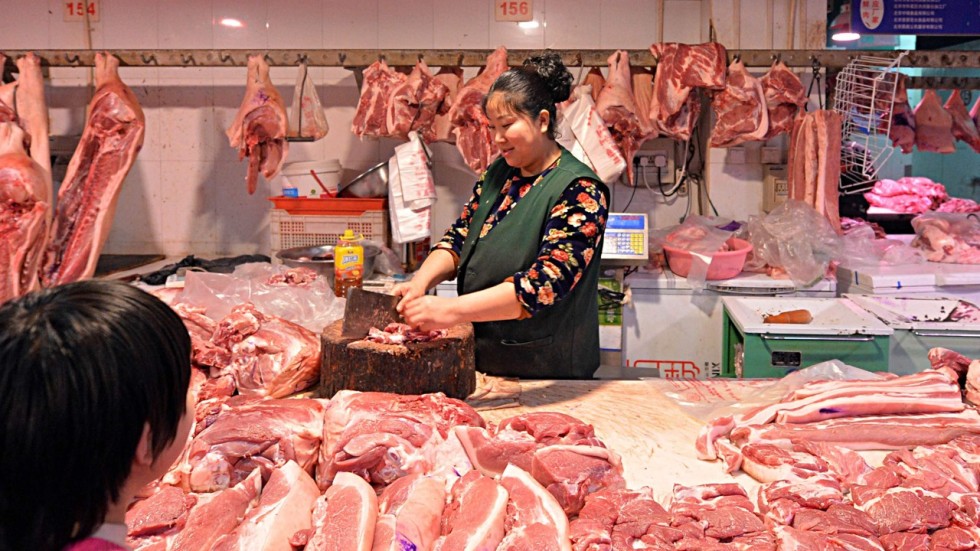
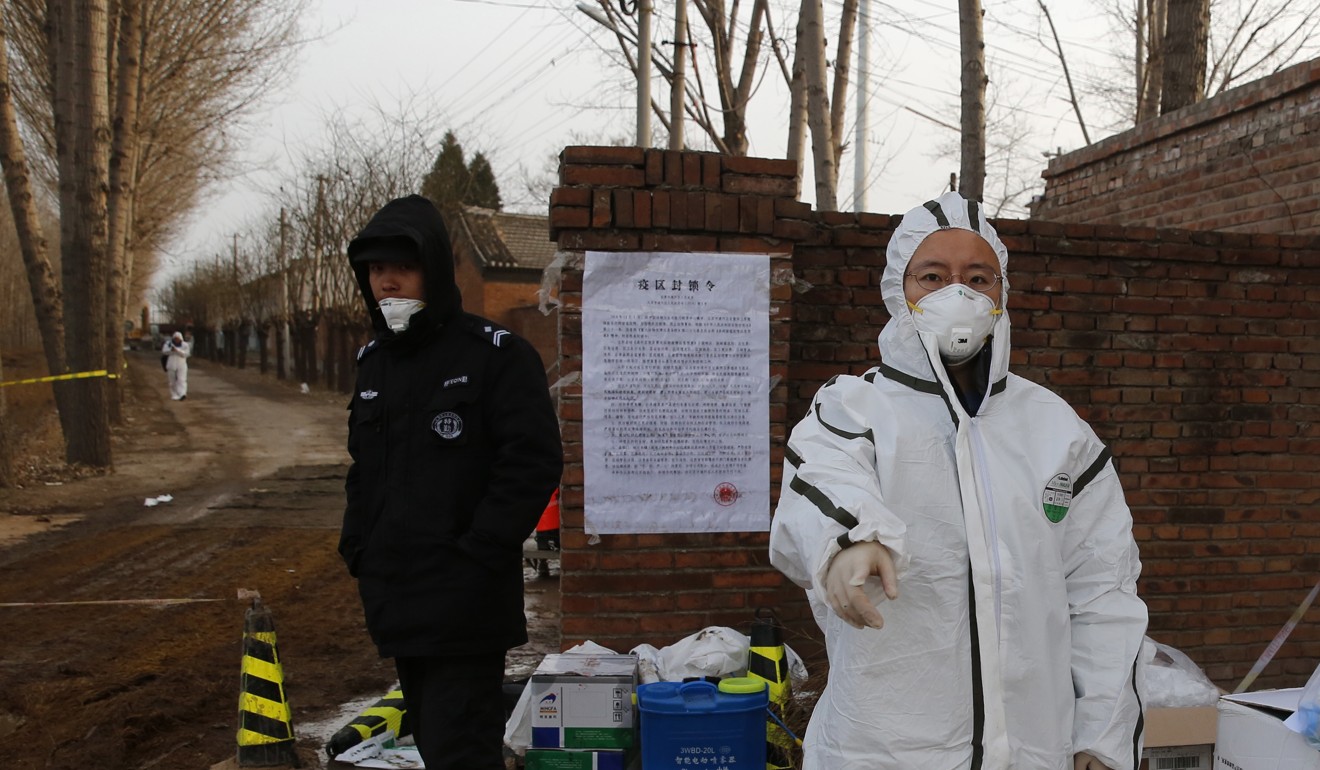
The deadly African swine fever virus is continuing to spread through China, with the total number of affected provinces rising to 22, but fears that pork will be in short supply when the country welcomes the Year of the Pig in February are being downplayed.

As of Friday, two more provinces had been affected, according to a report by state broadcaster CCTV, on top of the 20 which had reported virus outbreaks as of three weeks ago.


The report did not name the two new provinces, but one of them has been confirmed as Qinghai.

According to the Ministry of Agriculture and Rural Affairs on Wednesday, there have been recent outbreaks in Sichuan in the southwest – which has previously been affected – and Qinghai in northwestern China.

The Qinghai outbreak affected 69 pigs and is believed to be the first case in the high-altitude province, according to the United Nations.

“The current African swine fever outbreak in the country is being found in scattered spots, it is not pandemic. The epidemic is generally under control,” said Feng Zhongwu, from the ministry’s animal husbandry and veterinary department.

The epidemic of the highly contagious disease, which cannot yet be transmitted to humans, was classified as “generally under control” by the ministry in September, when the outbreak was confined to only five provinces.

Yet the virus has continued to spread, even to major cities including Beijing and Shanghai.

The ministry banned the feeding of pigs with kitchen waste at the end of August, when the first case was found in Liaoning province in northeastern China. Other efforts to contain the outbreak include culling more than half a million animals and banning the transport of live pigs from affected areas.

Despite that effort, a total of 87 outbreaks have been reported on farms and two outbreaks have been reported among wild boars in 22 provinces across the nation.

The latest discovery comes less than three months ahead of the Lunar New Year celebrations in early February – which this year will welcome the Year of the Pig – that marks China’s peak demand period for pork, but Feng sought to ease public concerns.

“Our national production of pig is 680 million, therefore, there will be no impact on the supply for the two festivals [January 1 and Lunar New Year],” he said.

There is no cure and no vaccine for the disease, and the virus can survive for weeks in pork and animal feed. The only known control method is to cull animals.

Swine fever has already caused a spike in pork prices in China and fuelled growing fears of a major and prolonged impact on the world’s largest pork producer.

The UN Food and Agriculture Organisation warned in August that the disease could spread to other parts of Asia.

While African swine fever is not harmful to humans it causes deadly haemorrhagic fever in domesticated pigs and wild boars.

16/12/2018

China launches food safety campaign in rural areas

BEIJING, Dec. 16 (Xinhua) — Chinese authorities, including the Ministry of Agriculture and Rural Affairs, have launched a nationwide campaign to crack down on substandard and counterfeit food products in rural areas.

The operation aims to effectively address six types of major crime before the Chinese Lunar New Year, which falls on Feb. 5, 2019.

Law enforcement agencies will target instant food, snacks, alcohol, condiments as well as dairy and meat products, consumption of which is large in rural areas, while fake label information, knock-offs and substandard products are high on the campaign agenda.

“We will leave no stones unturned in tracking useful tips to bust as many illegal factories and workshops as possible,” said Han Changfu, Minister of Agriculture and Rural Affairs. “Those found responsible of related crimes will receive industry access bans and be transferred to the police if needed.”

15/12/2018

The women in India building a road to a new life

Three years ago, many journeys through villages in India’s Sundarbans Delta were treacherous. Women suffered miscarriages and children’s education was suffering because it was hard for them to get to hospitals and schools.

But then, a group of women decided to take matters into their own hands, by building their own road.

15/12/2018

Is Delhi’s air causing lung cancer?

Air pollution levels in the Indian capital have been rising alarmingly in recent years. Today, in some parts of the city, breathing in the open air equals smoking 20 cigarettes a day.

Go to next video: Hair-raising drive through Delhi smog

Law of Unintended Consequences

continuously updated blog about China & India

ChiaHou's Book Reviews

continuously updated blog about China & India

What's wrong with the world; and its economy

continuously updated blog about China & India