Archive for January, 2019

20/01/2019

PM Modi calls ‘grand alliance’ a coalition of dynasts, corruption

n a video address to Bharatiya Janata Party (BJP) booth level workers in Goa, the PM slammed the ‘mahagathbandhan’ and said that it is a “coalition of dynasts, corruption, inefficiency and inequality”.

SNS Web | New Delhi | 

Prime Minister Narendra Modi on Sunday targeted the opposition parties who attended the so called ‘United India’ rally in Kolkata a day before. In a video address to Bharatiya Janata Party (BJP) booth level workers in Goa, the PM slammed the ‘mahagathbandhan’ and said that it is a “coalition of dynasts, corruption, inefficiency and inequality”.

Ye mahagathbandhan ek anokha bandhan hai. Ye bandhan to naamdaaro ka bandhan hai. Ye bandhan to bhai-bhativaaj ka, bhrashtachaar ka, ghotalon ka, nakaaratmakta ka, asthirta ka, asamaanta ka bandhan hai. Ye ek adbhut sangam hai (This mahagathbandhan is a strange association. This tie-up is an association of dynasts. This association is a coming together of corruption, scams, inefficiency, uncertainty and inequality. This is a strange confluence),” the PM said.

During the interaction, the PM said that while the parties who attended the so called ‘United India’ rally had formed an alliance with each other, the BJP has allied with the people of the country.

“They’ve formed alliances with each other. We’ve formed alliance with 125 crore countrymen. Which alliance do you think is stronger?” he said expressing confidence in the victory of his party in the 2019 Lok Sabha elections to be held in a few months.

The PM said that the leaders present at the rally were either the sons of influential people or were trying to propel their own children.

“They’ve ‘dhanshakti’ (power of wealth), we’ve ‘janshakti’ (power of the people),” he said.

Accusing the Congress of indulging in corruption, the PM said that “truth cannot be hidden for long” referring to the goof up made by Loktantrik Janata Dal (LJD) leader Sharad Yadav who termed Bofors as a scam instead of Rafale while attacking the BJP.

Jis manch se ye log desh aur loktantra ko bachane ki baat keh rahe the, usi manch par ek neta ne Bofors ghotale ki yaad dila di. (From the platform where they were talking about saving the country and democracy, one leader reminded the people of the Bofors scam),” Modi said.

Aakhir sacchai kab tak chupti hai. Kabhi na kabhi to sach bahar aa hi jaata hai, jo kal Kolkata mein hua (After all, how can truth remain hidden. The truth always comes out, which happened in Kolkata),” Modi said.

Slamming the leaders who demanded that the Electronic Voting Machines (EVMs) should not be used in the upcoming general elections, the PM said that the parties had already started making excuses for their defeat.

“EVM is being made a villain. It’s natural that every political party wants to win the polls, but it’s worrisome when some parties take public for granted. They consider public stupid and so keep changing colours,” the PM lashed out.

National Conference (NC) chairman Farooq Abdullah had during the rally called the EVM a “chor machine” claiming that it steals votes. He had urged other political heavyweights at the rally to collectively approach the Election Commission and the President of India to call for the replacement of the EVM with ballot paper system for the sake of transparency.

Read More | United India rally: Opposition leaders collectively call for ouster of BJP, PM Modi at Brigade Ground

Later in the day at a press conference, West Bengal Chief Minister Mamata Banerjee, who organised the massive anti-BJP opposition rally, announced that a committee comprising Abhishek Manu Singhvi (Congress), Akhilesh Yadav (Samajwadi Party), Satish Mishra (Bahujan Samaj Party) and Arvind Kejriwal (Aam Aadmi Party) will submit its recommendations regarding the use of EVMs to the EC.

Source: The Statesman
20/01/2019

China’s slowdown and what it means for the UK

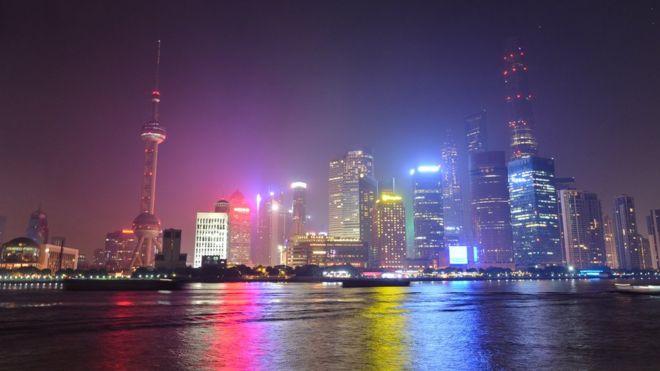
Shanghai at nightImage copyrightGETTY IMAGES
Image captionExporters and investors will be looking at China’s GDP figures closely

Monday sees the release of China’s GDP figures, and they’ll be even more closely watched than usual.

Apple’s CEO, Tim Cook, blamed cautious Chinese consumers in part for his company’s failure to sell as many iPhones as he hoped, sending share prices down around the globe.

Car sales in the country, meanwhile, have dropped for the first time in two decades.

On the back of such evidence, investors and policymakers are becoming increasingly jittery about the state of such a crucial engine of world growth.

How concerned should they be?

Measuring an economy’s output is never easy but China’s data comes with a bigger health warning than most.

Rather than 6.5%, independent economists say the GDP figure may actually be closer to 5% – or even lower.

Xiang Songzuo, a finance professor and former chief economist of China Agriculture Bank, has claimed that 2018 growth may have been as low as 1.7%.

His online video has since been censored by authorities.

The unreliability of the official figures is one reason why other indicators such as Apple’s sales have the power to send shockwaves around global stock markets.

It may be hard to confirm the scale of the slowdown in China but it’s clear that growth has shifted down a gear.

It’s recently been revealed that activity in factories and workshops stalled for the first time in two years in November.

The month after, exports dropped 4.4% compared to a year previously. Chinese households are clearly feeling the squeeze: retail sales are growing their slowest rate in 15 years.

Is the slowdown intentional?

In part, possibly. After establishing itself as the world’s workshop over the last forty years, China’s found itself losing its competitive edge to the likes of the Philippines and Vietnam, where labour is even cheaper.

The government decided to switch focus away from exports to growing domestic demand.

However, concerns then arose about the size of China’s debt pile – and the risk of bad loans.

Between them, the country’s households, government and corporations have debts totalling almost three times the size of GDP.

A tightening of credit appears to have weighed on spending and investment. And then there’s the trade war with the US.

While there was an initial flurry of orders brought forward to evade tariffs, those latest export figures suggest those measures are now hurting Chinese producers.

While the government has introduced measures to support the economy, most economists expect China’s growth to slow further.

How much does this matter to the UK?

In terms of our exports, China’s is the UK’s 6th largest trading partner. We sold them over £22bn worth of our goods in 2017 – with cars, medicines and oil-based products forming the major part.

Politicians’ have pinned their hopes on a closer trading relationship with China in the post-Brexit era.

But demand might not be quite as strong as they’re anticipating .

Then there’s the billions of pounds Chinese companies and entrepreneurs invest in the UK every year – £20bn in 2017 alone.

Thames Water, Pizza Express and West Bromwich Albion FC are among the many which enjoy Chinese backing. That kind of investment is notoriously volatile.

A West Bromwich Albion Football Club playerImage copyrightGETTY IMAGES
Image captionWest Bromwich Albion FC is one of many British organisations which has Chinese backers

And let’s not forget the concerns about bad loans. There’s a good reason why the Bank of England’s Governor Mark Carney cites China as one of the biggest risks to global financial stability.

Several large banks, not least HSBC and Standard Chartered have significant exposure to that market.

What of China’s longer-term prospects?

Since 1980, growth (if the official figures are to be believed) has averaged over 10% per year, meaning the size of the economy has surged 42-fold over that time.

China’s time in the sun, its superhuman growth spurt, may be over.

By 2030, economists say growth will have settled down to about a third of its current figure.

But even that would be enough to ensure it overtakes the US to take pole position as the world’s largest economy.

Source: The BBC

20/01/2019

China set to report slowest economic growth for 28 years

  • Figures to be released on Monday could show 2018 GDP growth slowed to 6.6 per cent
  • Beijing’s promise of more support only likely to be enough to stop slide getting worse, analysts say
PUBLISHED : Sunday, 20 January, 2019, 5:15pm
UPDATED : Sunday, 20 January, 2019, 5:52pm

China is expected to report on Monday that economic growth cooled to its slowest in 28 years in 2018 amid weakening domestic demand and bruising US tariffs, adding pressure on Beijing to roll out more support measures.

Growing signs of weakness in China, which has generated nearly a third of global growth in the past decade, are stoking worries about risks to the world economy and are weighing on profits for firms ranging from Apple to big carmakers.

Policymakers in Beijing have pledged more support for the economy this year to reduce the risk of massive job losses, but have ruled out a “flood” of stimuli like that unleashed in the past, which boosted growth rates but left a mountain of debt.

Analysts polled by Reuters expect the world’s second-largest economy to have grown 6.4 per cent year on year in the final quarter of 2018, slowing from 6.5 per cent in the previous three months and matching levels last seen in early 2009 during the global financial crisis.

That could pull gross domestic product growth to 6.6 per cent for the year, its lowest since 1990 and down from a revised 6.8 per cent in 2017.

With stimulus measures expected to take some time to kick in, most analysts believe conditions in China are likely to get worse before they get better, and see a further slowdown to 6.3 per cent this year. Some have said real growth levels are already much weaker than official data suggest.

Even if Beijing and Washington agree on a trade deal, which is a tall order, analysts said it would be no panacea for China’s sputtering economy unless Beijing can galvanise weak investment and consumer demand.

Chen Xingdong, chief China economist at BNP Paribas, said investors should not expect the latest round of stimulus to produce similar results as during the 2008-09 global crisis, when Beijing’s massive spending quickly boosted growth.

“What China can really do this year is to prevent deflation, prevent a recession and a hard landing in the economy,” he said.

On a quarterly basis, growth likely eased to 1.5 per cent in the final three months of 2018, from 1.6 per cent in the previous period.

China will release its fourth-quarter and full-year figures on Monday, along with December factory output, retail sales and fixed-asset investment.

Since China’s quarterly GDP readings tend to be unusually steady, most investors prefer to focus on recent trends.

Surprising contractions in December trade data and factory activity gauges in recent weeks have suggested the economy cooled more quickly than expected at the end of 2018, leaving it on shakier footing at the start of the new year.

Sources have told Reuters that Beijing was planning to lower its growth target to 6-6.5 per cent this year from about 6.5 per cent in 2018.

Tepid expansion in industrial output and weaker consumer spending is squeezing companies’ profit margins, discouraging fresh investment and raising the risk of higher job losses.

Some factories in Guangdong province – China’s export hub – have shut earlier than usual ahead of the long Lunar New Year holiday as the tariff war with the United States curtails orders. Others are suspending production lines and cutting back on workers’ hours.

If the trade war drags on, some migrant workers may not have jobs to return to.

Trade negotiators are facing an early March deadline and Washington has threatened to sharply hike tariffs if there are no substantial signs of progress.

So far, Chinese policymakers have fast-tracked construction projects and cut taxes and some import duties to spur demand.

To free up more funds for lending, particularly to more vulnerable smaller firms, the central bank has cut the amount of reserves that banks need to set aside five times over the past year, and guided borrowing costs lower.

Further reserve ratio reductions are expected in the coming quarters, but most analysts do not see a cut in benchmark interest rates just yet, as policymakers wait to see if earlier steps begin to stabilise conditions. More forceful easing could pressure the yuan and aggravate high debt levels, with money going into less efficient or speculative investments.

The government may unveil more fiscal stimulus measures during the annual parliament meeting in March, including bigger tax cuts and more spending on infrastructure projects, analysts said.

Some China watchers believe the government could deliver 2 trillion yuan (US$293.9 billion) worth of cuts in taxes and fees this year, and allow local governments to issue another 2 trillion yuan in special bonds largely used to fund key projects.

Still, some analysts do not expect the economy to bottom out convincingly until summer.

Source: SCMP
20/01/2019

China’s tech hub Shenzhen misses growth target but leapfrogs Hong Kong into Asia’s top 5, mayor says

  • Gross domestic product up 7.5 per cent in 2018 to US$350 billion, mayor Chen Rugui says
  • But claim city’s economy now among Asia’s biggest may be premature as Hong Kong has yet to show its hand
PUBLISHED : Sunday, 20 January, 2019, 6:04pm
UPDATED : Sunday, 20 January, 2019, 6:04pm

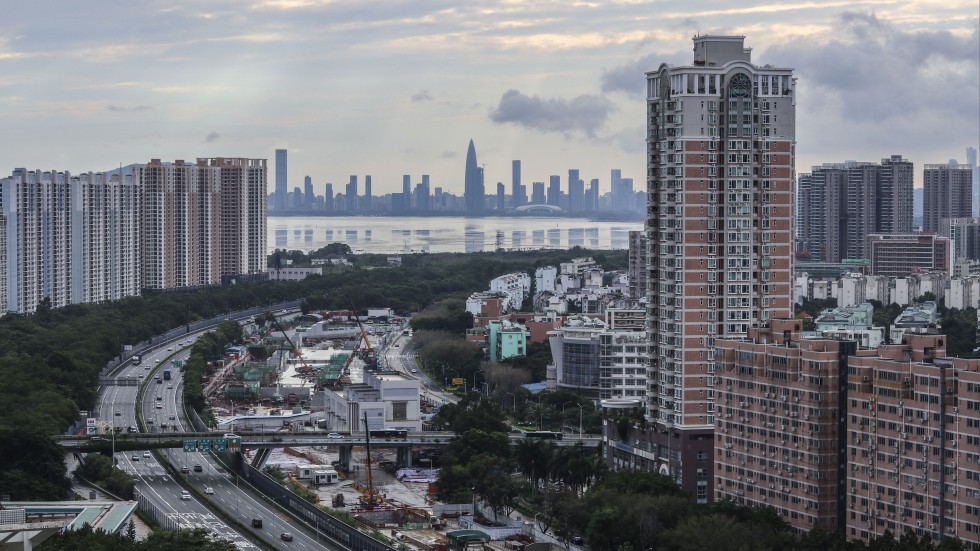
Shenzhen failed to meet its economic growth target last year due to worse than expected results in key technology sectors but its mayor remains confident it did enough to overtake Hong Kong and join the ranks of the five biggest city economies in Asia for the first time in its history.

The south China boom town has been steadily making ground on Hong Kong in recent years, but its nominal gross domestic product in 2017 fell about US$3.4 billion short of a place among the giants of Tokyo, Seoul, Shanghai, Beijing and Hong Kong.

In 2018, Shenzhen’s GDP increased by 7.5 per cent to about 2.4 trillion yuan (US$352.71 billion), mayor Chen Rugui said at the opening of the annual municipal people’s congress on Friday. Its growth target was 8 per cent.

“The economic size [of Shenzhen] is among Asia’s top five cities,” he said.

Despite Chen’s confidence, Hong Kong’s 2018 figures, which will not be released until next month, are expected to show GDP growth of about 3.2 per cent to HK$2.86 trillion (US$364.6 billion), which would see it edging out its mainland neighbour once again.

The gap between the two cities’ economies is now so small that fluctuations in exchange rates and methods of calculation can sway the result, although both have sought to play down the rivalry.

Early last year, Shenzhen’s statistics agency even issued a clarification of the city’s nominal GDP figure for 2017, confirming it was still smaller than Hong Kong’s.

Shenzhen is known as China’s hi-tech hub and is home to many of the country’s biggest technology names, including Huawei and Tencent.

While its strategic emerging industries – which includes such fields as information technology, biotechnology and new materials – contributed 37 per cent of the 2018 GDP figure, the ratio was down from about 40 per cent in each of the previous two years. The result was also disappointing in terms of Shenzhen’s broader goals, having set itself a target to grow the sector to 42 per cent of GDP by the end of its current five-year plan period in 2020.

The combined GDP growth among strategic emerging industries slowed to 8.5 per cent in 2018, from 13.6 per cent the year before, although the city still managed to attract 3,000 new hi-tech firms, taking the total to about 14,000.

Shenzhen spent about 100 billion yuan, or 4.16 per cent of its GDP, on research and development last year – a slight increase from 4.13 per cent in 2017 – and this is targeted to rise to 4.25 per cent in 2020.

Its foreign trade in 2018 grew by 7 per cent year on year to about 3 trillion yuan – as output from firms with annual revenue of at least 20 million yuan gained 8.8 per cent – while retail sales increased by 2.5 per cent to 616.3 billion yuan.

As China continues to fight a trade war with the United States, Shenzhen, like most other cities and provinces in the world’s most populous nation, has cut its economic growth target for 2019, to 7 per cent. It has also lowered it new jobs target for the year to 80,000, from nearly 109,000 in 2018.

Chen said that the economic downturn had put a huge strain on the city’s growth prospects, while a lack of available talent in the field of research and development was stifling innovation and doing nothing to ease its over-reliance on imports for many core components and equipment.

He said the city remained committed to supporting the development of the Greater Bay Area by speeding up the Qianhai-Shenzhen-Hong Kong cooperation zone – part of the Guangdong free-trade zone – and the Lau Ma Chau Loop – a new innovation and technology park. It would also support the expansion of the Qianhai Cooperation Zone, he said, but did not elaborate.

Wang Hailong, a deputy to the Shenzhen People’s Congress and boss of a local telecommunication equipment company, said he was not surprised by the slower growth in emerging sectors.

“It’s essential to invest in innovation through research if Shenzhen wants to maintain its remarkable expansion,” he said. “But in the current climate, it’s not easy to attract top global talent.”

Guo Wanda, vice-president of the Shenzhen-based think tank China Development Institute, warned of a possible “hollowing out” of the local economy if the city government failed to support hi-tech companies during this difficult period as they may be lured away.

Source: SCMP

20/01/2019

China-U.S. relations contribute to world peace, prosperity

SAN FRANCISCO, Jan. 18 (Xinhua) — China-U.S. relations have achieved remarkable development over the past 40 years, delivering huge benefits to the two peoples and making significant contributions to world peace and prosperity, a senior Chinese diplomat said here Friday.

Addressing an event marking the 40th anniversary of the establishment of diplomatic relations between China and the United States, Chinese Consul General Wang Donghua said the older generation of Chinese and U.S. leaders broke the ice of isolation between the two countries “with extraordinary strategic vision and political wisdom” to establish bilateral diplomatic ties.

“The establishment of China-U.S. diplomatic relations has had a huge and profound impact on the development of our bilateral relations and the maintenance of world peace,” Wang said.

San Francisco Mayor London Breed said at the event that the 40 years of China-U.S. relations have been “a time of growing exchanges and understanding.”

“We have realized the great possibilities of cooperation between our two nations, and this anniversary is a chance to remember that we have an enormous stake in each other’s success,” she said.

“In an interconnected world, countries would be more prosperous when we work together as one,” said Breed.

Heidi Kuhn, founder and CEO of Roots of Peace, a California-based humanitarian NGO dedicated to the removal of landmines and rebuilding of war-torn regions, said her family has maintained very close relations with China and the Chinese people for 150 years.

“I look forward to the next 150 years ahead. I’m so proud of the formal diplomatic relations between the United States and China,” Kuhn said.

Johannes Hoech, a San Francisco-based businessman who travels to China two to three times a year, said he has very close relations with China and made many Chinese friends.

“The prospect for the two countries is very positive. There’s a lot of mutual interest. There is a lot of curiosity about each other’s cultures and each other’s backgrounds,” he said.

“Since both countries’ interests are much larger than their differences, I am sure they will find a way to work out a solution to those disputes,” Hoech said.

Source: Xinhua

20/01/2019

Spotlight: Two-year mark of global community towards a shared future

BEIJING, Jan. 19 (Xinhua) — Two years ago, Chinese President Xi Jinping delivered a speech at the United Nations (UN) Office at Geneva, calling for joint efforts to build a community with a shared future for mankind.

Two years on, the appeal, which represents a vision of common development and progress, has gained wide support and helped form synergy among the international community in pursuing a better shared future.

IN HARMONY WITH ALL

“China has been a strong pillar of multilateralism,” said UN Secretary-General Antonio Guterres, highlighting that the aim of multilateralism is to build a community with a shared future for mankind.

Over the past two years, the appeal by the Chinese leader has been incorporated into various documents, including UN Security Council resolutions, UN Human Rights Council resolutions, the Qingdao Declaration of the Council of Heads of Member States of the Shanghai Cooperation Organization, Forum on China-Africa Cooperation Beijing Action Plan (2019-2021).

The Chinese proposal, with its foresight and wisdom, has witnessed tremendous changes across the globe and resonated with people’s longing for peace and development.

As China hosted a number of significant diplomatic events at home and Chinese leaders paid visits to other countries, the idea of building a community with a shared future has been increasingly accepted worldwide.

“It is a common ideal for mankind to build a world without conflicts, one with equal development opportunities and every people in it blessed with happiness,” said Yasuo Fukuda, former Japanese prime minister.

ACTIONS

In 2018, China launched the China International Import Expo in Shanghai which attracted over 3,600 companies from around the world and more than 400,000 Chinese and foreign buyers. Deals for intended one-year purchases of goods and services worth a total of 57.83 billion U.S. dollars were reached at the six-day event.

The China-initiated Asian Infrastructure Investment Bank (AIIB) celebrated its third anniversary in December. Over the past three years, the investment bank has approved financing worth 7 billion U.S. dollars for development projects in Asia and Africa, with the aim to promote sustainable economic development through investment in infrastructure.

In July 2018, the China-Maldives Friendship Bridge, the first ever cross-sea bridge in Maldives, was completed. The bridge is deemed one of the landmark projects of the China-proposed Belt and Road Initiative (BRI).

In fact, nearly 170 countries and international organizations have signed BRI-related cooperation documents with China.

The BRI is a manifestation of China’s vision of a community with a shared future for mankind, said John W. Allen, former vice chairman of the UN Business Council.

FUTURE OF HOPE

China’s General Administration of Customs said recently the country’s foreign trade rose 9.7 percent year on year to a record high of 30.51 trillion yuan (about 4.5 trillion U.S. dollars) in 2018.

Official data also show China’s FDI hit a record 885.61 billion yuan (134.97 billion dollars) last year.

The numbers have demonstrated China’s resilience after 40 years of reform and opening up, even at a time when unilateralism and protectionism are on the rise.

In April 2018, Xi announced a series of new measures for expanding China’s reform and opening up, demonstrating China’s willingness to work with the outside world.

The new initiatives include easing foreign shareholding restrictions in the industries of automobile, ship and aircraft, and implementing the management system based on pre-establishment national treatment and negative list.

Over the past two years, China has been promoting innovation and improving inclusive development amid external uncertainties. On such issues as the Korean Peninsula situation, the Syrian crisis and UN peacekeeping operations, China is committed to safeguarding peace and stability.

According to Gai Lin, secretary-general of the EU-China Friendship Group of the European Parliament, the future of mankind will surely involve bringing together nations for a world of cooperation. Building a community with a shared future is undoubtedly the best option for safeguarding world peace and promoting development.

Source: Xinhua

20/01/2019

Bullet trains maintained in China’s Guiyang to ensure safety for Spring Festival travel rush

CHINA-GUIYANG-SPRING FESTIVAL-TRAVEL (CN)

Mechanics check a bullet train at a maintenance station to ensure safety for the upcoming Spring Festival travel rush in Guiyang, capital of southwest China’s Guizhou Province, Jan. 19, 2019. (Xinhua/Ou Dongqu)

Source: Xinhua

19/01/2019

Modi govt past its expiry date, says Mamata Banerjee, hosts mega opposition rally

“Oust Modi,” was the leitmotif of speeches at the rally, held ahead of the Lok Sabha elections this year. “The country is waiting for a new Prime Minister,” said Akhilesh Yadav as he arrived at the venue.

LOK SABHA ELECTIONS Updated: Jan 19, 2019 16:41 IST

HT Correspondent
HT Correspondent
Hindustan Times
Opposition rally,Mamata rally,Mamata Banerjee
Mamata ended her speech with “BJP hatao, desh bachao and Jai Hindh, Vande mataram” chant.(Twitter/@AITCofficial)

Delhi chief minister Arvind Kejriwal of the Aam Aadmi Party said the BJP must be “defeated at any cost in 2019,” while the Congress’s Abhishek Manu Singhvi warned against allowing a division of votes, also saying, “A rainbow of 22 parties is replacing dark clouds.”

“Send Modi home, save the country,” said 12th speaker M K Stalin of the DMK, speaking in Tamil. “Modi has realised that defeat is certain,” he said, also adding that he has “no personal animosity against Modi, but oppose his policies.” Stalin accused PM Modi of converting “the country into a private limited company of which he is the MD.”

Stalin invoked poet Rabindra Nath Tagore; Hardik Patel talked about Subhash Chandra Bose. In the audience are singers, poets and personalities from the Bengali film and television industry.

Read: ‘Testing times for democracy’: Opposition slams NDA govt at Mamata rally

Among other leaders on stage are former prime minister and Janata Dal-Secular (JDS) chief H D Deve Gowda and is son and Karnataka Chief Minister HD Kumarasway, former Maharashtra CM and ex-Union minister Sharad Pawar and former Arunachal Pradesh CM Gegong Apang and Omar Abdullah of the National Conference Party and his father Farooq Abdullah.

Mamata Banerjee is using the show of strength to emphasise her position as an important leader as opposition parties attempt to build a united front to take on the ruling BJP in the general election this year, when PM Modi will seek a second term.

Read: At Mamata’s rally ‘Shotgun’ Sinha stops short of endorsing her as PM

As the BJP swept the parliament elections in 2014, reducing the Congress to its lowest ever tally of 44 seats, Mamata Banerjees party had bagged 34 of Bengal’s 42 Lok Sabha seats, emerging as the third largest party. This year, Mamata Banerjee has set her eyes on winning all of Bengal’s seats to ensure hers is the largest team in Parliament among all regional parties.

“Who is their leader? This is just an anti-Modi exercise and the people of the country can see through it,” said the BJP’s Rajiv Pratap Rudy said at a press conference in Delhi, asserting, “People have seen the performance of the Narendra Modi government … We will form the next government with full majority.”

Source: Hindustan Times

19/01/2019

United Opposition Rally in Kolkata: Who said what

Leaders from at least 20 Opposition parties are addressing Mamata Banerjee’s United Opposition Rally; here are some of the top quotes from the mega event in Kolkata

SNS Web | Kolkata | 

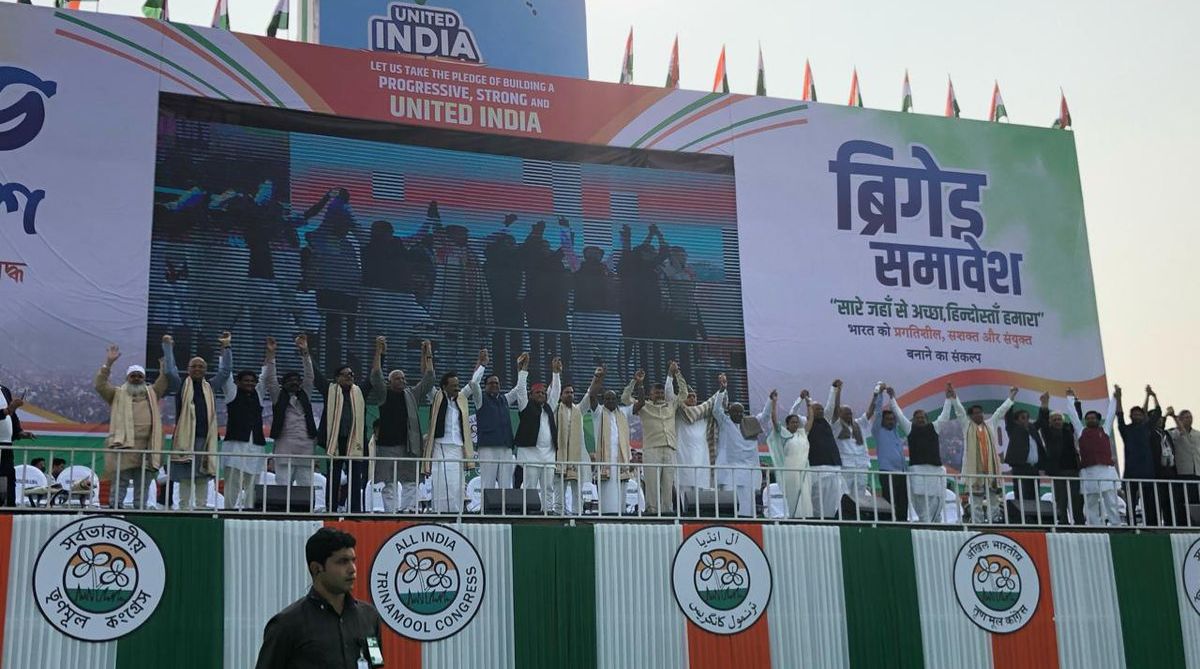
Tens of thousands of workers and supporters converged on the Brigade Parade ground in Kolkata on Saturday to attend West Bengal Chief Minister and Trinamool Congress chief Mamata Banerjee’s mega anti-BJP rally organised to raise voices against the Narendra Modi-led NDA government. Leaders from at least 20 Opposition parties are present at the United Opposition Rally.

Mamata Banerjee reached the venue almost an hour before the rally was scheduled to begin.

Here is what some of the speakers at the rally.

Gegong Apang, former Arunachal Pradesh CM: “The people in Delhi are diving the country, especially the Northeast. The Citizenship Amendment Bill is an example how a political party is dividing the country.

“I have been fortunate enough to work under Indira Gandhi, Rajiv Gandhi, P.V. Narsimha Rao, H.D. Deve Gowdaji, who is present here, Atal Bihari Vajpayee. All those people believed in federal democracy. But the last four years have been testing time for Indian democracy.

Source: The Statesman

19/01/2019

China offers to ramp up U.S. imports – Bloomberg

(Reuters) – China has offered to go on a six-year buying spree to ramp up imports from the United States in order to reconfigure the relation between the two countries, Bloomberg reported on Friday, citing people familiar with the matter.

By raising annual goods imports from the United States by a combined value of more than $1 trillion (£776 billion), China would seek to reduce its trade surplus, which last year stood at $323 billion, to zero by 2024, one of the people told Bloomberg. bloom.bg/2RBsiEL

It was unclear how the offer differed from what China pledged when U.S. President Donald Trump and Chinese President Xi Jinping met in Buones Aires in December. At that meeting, China offered more than $1.2 trillion in additional commitments on trade, Treasury Secretary Steve Mnuchin said.

Reuters reported on Jan. 9 that U.S. officials used three days of trade talks with Chinese counterparts in Beijing to demand more details on China’s pledge to make big purchases of American goods. China offered similar commitments, albeit on a smaller scale, during talks in Washington last May.

The Bloomberg report on Friday helped drive a rally on Wall Street where main stock indexes were on track for their fourth week of gains, in part on hopes the United States and China would strike a deal to end a trade war between the world’s two biggest economies. The two sides have imposed tit-for-tat tariffs that have disrupted hundreds of billions of dollars of commerce.

While increased purchases of U.S. goods have been part of the talks, American negotiators have also focused on issues that would require structural change in China. Those include finding ways to end the misappropriation of intellectual property from U.S. companies and halting industrial subsidies.

Halfway through a 90-day truce in the U.S.-China trade war agreed to on Dec. 1 when Trump and Xi met during the G20 summit in Argentina, there have been few details provided of any progress made. On Tuesday, a Republican senator said U.S. Trade Representative Robert Lighthizer had told him he had seen no progress on structural issues.

Data on Monday showed China’s exports unexpectedly fell the most in two years in December and imports also contracted, pointing to further weakness in the world’s second-largest economy in 2019 and deteriorating global demand.

The Wall Street Journal reported on Thursday that U.S. Treasury Secretary Steven Mnuchin discussed lifting some or all tariffs imposed on Chinese imports and suggested offering a tariff rollback during trade discussions scheduled for Jan. 30.

Lighthizer has resisted the idea, and the proposal had not yet been introduced to Trump, according to the Journal.

Chinese Vice Premier Liu He will visit the United States on Jan. 30 and 31 for the latest round of trade talks aimed at resolving the bitter trade dispute. The Trump administration is scheduled to increase tariffs on $200 billion worth of Chinese goods to 25 percent on March 2 from 10 percent.

The Trump administration has urged China to take steps to protect U.S. intellectual property, end policies that force American companies to turn over technology to a Chinese partner, allow more market access for U.S. businesses and reduce other non-tariff barriers to American products.

China has repeatedly played down complaints about intellectual property abuses, and has rejected accusations that foreign companies face forced technology transfers.

Reporting by Rishika Chatterjee in Bengaluru; Writing by Nick Zieminski in New York; Editing by Chizu Nomiyama and Jonathan Oatis

Source: Reuters

Law of Unintended Consequences

continuously updated blog about China & India

ChiaHou's Book Reviews

continuously updated blog about China & India

What's wrong with the world; and its economy

continuously updated blog about China & India