Archive for February, 2019

07/02/2019

As good as gold for some brides in India as election nears

NEW DELHI (Reuters) – An India state will give gold worth about $530 to every bride from a poor family, the latest budget giveaway ahead of a general election that must be held by May.

The northeastern state of Assam is run by Prime Minister Narendra Modi’s Hindu nationalist Bharatiya Janata Party (BJP), which is facing a battle for re-election because of low farm incomes and a lack of jobs that have turned off some of those who backed it in the last polls, in 2014.

The federal government announced cash handouts to farmers and tax cuts for the lower middle class last week.

On Thursday, the Reserve Bank of India (RBI) cut interest rates for the first time since 2017, in line with a government demand as it attempts to stimulate the economy.

The opposition Congress party has also been forgiving farmers’ loans and announcing it would provide the unemployed with cash handouts in some of the states it controls.

But handing out gold to brides is new.

The tea-growing state’s finance minister, Himanta Biswa Sarma, allocated 3 billion rupees ($42 million) for the next fiscal year, from April 1, for the gold programme.

That would buy 875 kg of gold, enough for about 80,000 brides.

“A customary ritual which has been part of Assamese society for centuries is to gift a set of gold ornaments to one’s daughter as a blessing as she leaves her father’s home to start a new life,” Sarma said in his budget speech on Wednesday.

He said the programme should stop families falling into debt to pay for daughters’ weddings.

“I feel that it’s my solemn responsibility to stand with those fathers who cannot afford to gift a set of gold ornaments,” he said.

The Assam government would buy the gold from the RBI and give it to the beneficiaries directly, Sarma told Reuters on Thursday.

The programme would be limited to two women from each family with an income of less than 500,000 rupees (£5,422) a year. Each bride would get a “tola”, or 11.66 grams, of gold.

Indian brides traditionally get gold, which helps make the country the world’s second-biggest buyer of the metal after China. The World Gold Council expects India to consume 750-850 tonnes of gold this year.

The Assam government hasn’t stopped at gold.

Sarma said the state would also give electric bikes to girls who score at least 60 percent in school-leaving exams, for getting to places of higher studies.

He rejected opposition accusations he was making “fake promises” to win votes.

Political parties and candidates find different ways to give presents to voters.

In the past, gifts have included electric fans, laptops, pressure cookers and televisions.

Under the election law, the gift-giving has to stop once an election date is set.

Source: Reuters

07/02/2019

Chinese blood plasma ‘cleared’ as authorities give mixed messages on HIV contamination

  • Batch that health commission said was contaminated is cleared by drug watchdog whose officials are being investigated over last year’s rabies vaccine scandal
  • Shanghai regulator says it has recalled the batch and halted production at the company that produced it
PUBLISHED : Thursday, 07 February, 2019, 2:38pm
UPDATED : Thursday, 07 February, 2019, 3:15pm

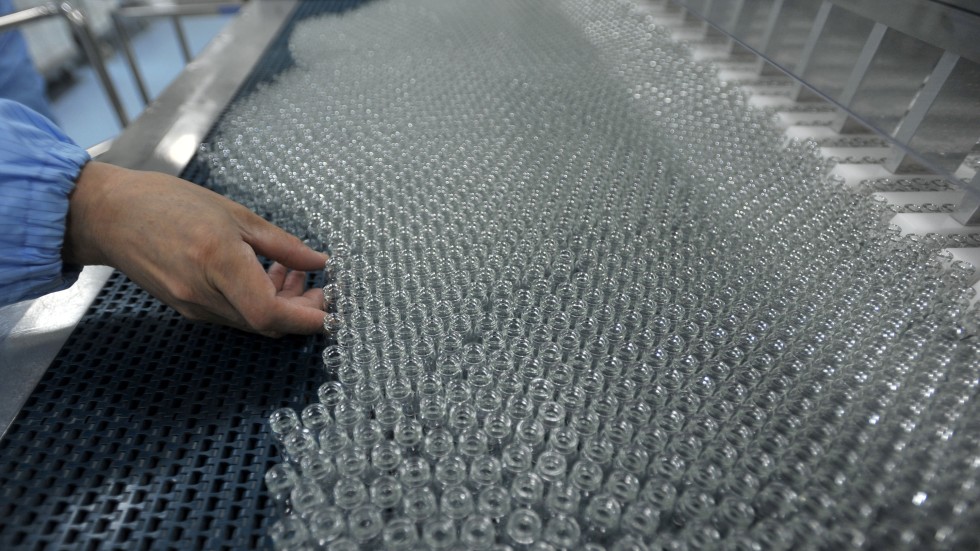
Inspectors from the National Medical Products Administration (NMPA) said on Wednesday that samples they had examined from a batch of 12,229 bottles of intravenous immunoglobulin were free of HIV and hepatitis B and C.

The administration’s clearance of the batch, produced by state-owned Shanghai Xinxing Pharmaceutical Company, contradicted a notice from the National Health Commission on Tuesday announcing its contamination and warning hospitals to immediately suspend use of the treatments.

The provincial health commission and disease control centre in eastern China’s Jiangxi province had detected traces of HIV in the batch, although the disease control centre told The Beijing News on Wednesday that it had not yet discovered any cases of patients having contracted HIV.

The batch of 50ml bottles are due to expire in June 2021, a source from the state food and drug regulator told the China Business Journal.

Immunoglobulins are antibodies produced by white blood cells that are used to treat immune deficiencies caused by illnesses such as leukaemia, hepatitis and rabies.

The NMPA – which was at the centre of a major rabies vaccine scandal last July – immediately told regulators in Shanghai to conduct on-site inspections at the pharmaceutical company and sent officials to Jiangxi, it said on Wednesday.

Meanwhile, the Shanghai regulator said in a separate statement that it had halted production at the company, recalled all affected treatments and sent samples for inspection.

This latest blow to confidence in China’s health services comes less than a month after it was revealed that 145 children in the eastern Jiangsu province were treated with expired polio vaccines, sparking widespread protests from parents and the investigation of 17 local officials.

Last July, 252,600 faulty rabies vaccines made by Changchun Changsheng Bio-technology, one of China’s biggest vaccine firms, were found to have been administered to thousands of toddlers.

In the 1990s, thousands of cash-strapped villagers in China’s central Henan province contracted HIV after being persuaded to sell their blood illegally on the black market.

Rapid spread of blood-borne diseases such as HIV and hepatitis B was caused by reuse of needles, lack of screening for diseases, false health records, and mixing of blood before re-injecting the separated red blood cells back into the donors.

A study of 280,000 villagers in Henan who had sold their blood found that more than 36,000, about one in eight, had HIV or Aids.

The NMPA’s apparent clearance of the blood plasma treatments on Wednesday came four days after Wu Zhen, the former deputy head of the China Food and Drug Administration (CFDA) – which oversees the NMPA – was handed over to the judiciary system for investigation by the Communist Party’s anti-corruption watchdog in relation to the rabies vaccine scandal. Wu, one of four CFDA officials being investigated, was in charge of China’s vaccine regulation at the time.

State-run news agency Xinhua said the allegations against Wu included nepotism and taking bribes.

Changchun Changsheng Bio-technology was handed a 9.1 billion yuan (US$1.3 billion) fine in October after it was found to have fabricated records. The authorities had failed to act immediately after finding inconsistencies in the company’s records in late 2017.

Source: SCMP

07/02/2019

China Focus: 2022 Olympics preparation warms up winter sports, economy

BEIJING, Feb. 6 (Xinhua) — Although winter vacation has come, 11-year-old Wang Aoyun still goes to school every day, for skating.

As school athletes, Wang and 20-plus teammates practice speed skating on a cornfield-turned ice rink at Taipingzhuang central school in Beijing’s Yanqing District.

In three years, the 2022 Winter Olympics will be held in Beijing and Zhangjiakou, Hebei Province.

While construction of stadiums and infrastructure projects has been accelerated, winter sports and the related economy at the venues have also been heating up.

With its ice rink built in 2016, Taipingzhuang school is the first that had an ice rink in Yanqing District, where competitions of alpine skiing, bobsled, skeleton, and luge will be held in 2022.

Teachers take shifts to water the ice rink every night in winter, said Ding Jianpei, principal of the school.

“Most of our students may not be engaged in winter sports in the future, but we think it’s worth it if they feel the happiness in the sports,” Ding said.

Winter sports used to be a luxury 20 years ago in Beijing. People had to travel hundreds of miles to find a ski slope. The first large ski resort in the Chinese capital, Shijinglong, was not open until the late 1990s, in Yanqing.

Local villager Guo Junhua, 35, was among the first batch of ski lovers. Last year, she quit her job as a ski coach in southwest China and opened a ski training school in Yanqing District. To date, she has trained 50 children.

The district government also encourages local people to learn winter sports.

“Influenced by the atmosphere of the Winter Olympics, more and more residents show up on ice rinks and ski fields,” said Ma Zhiyong, sports bureau deputy chief of Yanqing District, adding that more ice rinks and ski training bases are mushrooming.

This winter, Shijinglong resort received 60,000 visitors, up 10 percent year on year.

Five km away from the 2022 alpine skiing competition venue, local resident Zhang Haichao has rented and decorated 10 households, with more being constructed.

Zhang, general manager of a homestay brand company, is confident about the prospective of homestay market near his hometown.

“My friends and I love skiing, but bringing heavy snowboards to hotels is very inconvenient,” Zhang said. “Now that the Winter Olympics are coming, more visitors will come to ski, a golden opportunity for homestay business.”

He is also consulting some ski gear companies, planning to offer ski gear renting service at his homestay houses.

The district has attracted over 120 homestay brands, with the reservation rate of some brands reaching 90 percent for the Lunar New Year, said Zheng Aijuan, deputy director of Yanqing’s tourism commission.

Song Haitian, deputy director of Winter Olympics preparation office of Yanqing District, said the 2022 Winter Olympics would have a profound impact on Yanqing’s development.

“We hope the global sports event not only stimulates the sustainable development of Yanqing, especially the winter economy, but also helps upgrade the quality of both people’s health and civil society,” Song said.

Source: Xinhua

07/02/2019

Hong Kong holds fireworks show to celebrate Lunar New Year

CHINA-HONG KONG-SPRING FESTIVAL-FIREWORKS (CN)


Fireworks illuminate the sky over the Victoria Harbour in Hong Kong, south China, Feb. 6, 2019, to celebrate the Spring Festival. (Xinhua/Li Gang)

HONG KONG, Feb. 6 (Xinhua) — Spectacular flower patterns of fireworks roared above Victoria Harbor, followed by patterns of green “8” and yellow golden ingots, sending traditional blessings to locals.

It was the opening scene of the fireworks show in China’s Hong Kong Special Administrative Region. The show started at 8:00 p.m. local time Wednesday, the second day of the first month of the Chinese lunar calendar.

A total of 23,888 fireworks lightened up the sky during the 23-minute show.

In one scene, a lot of fireworks went across the harbor with a racing speed effect, as if playing hide-and-seek.

“The scene symbolizes that we should set our goals for the new year and work hard towards goals with faith. Eventually, we will achieve the targets,” said Wilson Mao, CEO of a multi-media production company which designed the firework show.

Another scene echoed the approaching Valentine’s day. It displayed miscellaneous shades of strobes and waterfall-like movements to create heart-thumping effects and send blessings of everlasting love bond.

In the last scene, dazzling fireworks filled the sky with high intensity and lasted for 25 seconds, bringing the show to an end.

A Hong Kong resident surnamed Lo said he enjoyed the show, especially the powerful sounds of the fireworks.

Sharing his wishes for the lunar new year, Lo said he hoped “Hong Kong continues to prosper, and people have good jobs and stay healthy.”

Source: Xinhua

07/02/2019

Spotlight: Cross-border infrastructure helps promote tourism in Hong Kong and Greater Bay Area

HONG KONG, Feb. 6 (Xinhua) — Benefiting from the Hong Kong section of the Guangzhou-Shenzhen-Hong Kong Express Rail Link and the Hong Kong-Zhuhai-Macao Bridge, China’s Hong Kong Special Administrative Region (SAR) witnessed a record high of tourist arrivals last year.

Data released by the Hong Kong Tourism Board showed that the overall tourist arrivals soared to around 65.1 million in 2018, up 11.4 percent from that of 2017. Among the overall growth, visitor arrivals from the mainland saw a rise of 14.8 percent to 51 million.

As the cross-border infrastructure further ties up the Hong Kong SAR and the mainland, Hong Kong will further promote tourism in the Guangdong-Hong Kong-Macao Greater Bay Area (Greater Bay Area), said tourism industry insiders.

“From the latter half of 2017, Hong Kong began to see an upturn in tourism, and witnessed a continuous increase in the number of tourists in 2018,” said Yiu Si-wing, member of the Legislative Council of the HKSAR.

“Since the operation of the Express Rail Link and the bridge, we see an apparent growth in visitor arrivals to Hong Kong.” Yiu pointed out.

He viewed tourists from the mainland as the driving force to push Hong Kong’s visitor arrivals to a new high. “It takes less time and fewer procedures for those visitors to Hong Kong via the Express Rail Link than before when they need to transfer to Hong Kong after first arriving at Shenzhen,” said Yiu.

Cross-border infrastructure has facilitated the transportation between the mainland and Hong Kong by integrating the SAR into the national high-speed railway network.

An increasing number of tourists traveled by the Express Rail Link to Hong Kong, and to meet their demand for in-depth tour, new routes featuring natural and cultural characteristics have been introduced, said Ng Hi-on from China Travel Service.

The Hong Kong Tourism Board has promoted “Old Town Central” and “Hong Kong Neighborhoods” as tailored tours for travelers to experience Hong Kong.

Besides, tourists can enjoy festivals and events in Hong Kong, such as night parade, horse racing and flower markets.

Cruise tour is another product the Hong Kong Tourism board has promoted. After the launch of the Express Rail Link in September 2018, the Dream Cruises company introduced a “rail cruise” route in November, welcoming more than 1,000 tourists from Hubei and Yunnan provinces and Guangxi Zhuang Autonomous Region to Hong Kong for a land-sea trip.

Tourism in the Greater Bay Area has huge potential, as cities in the area can work with one another to develop multi-destination travel with cross-border infrastructure, according to Anthony Lau, the executive director of the Hong Kong Tourism Board.

Yiu said that travelers can travel through cities in the Greater Bay Area via transport links and the tour pattern enriches their trip.

He called for more efforts by Guangdong Province, and the Hong Kong and Macao SARs to forge closer bonds so as to build the Greater Bay Area into a tourism brand.

Source: Xinhua

07/02/2019

Railway trips up on short-distance travel demand

BEIJING, Feb. 6 (Xinhua) — The national railway operator has predicted the number of passengers to continue to grow during the Spring Festival holiday due to rising short-distance travel demand.

The China Railway Corporation said it will add 208 trains on Wednesday to handle a total of 7.67 million railway trips expected, up 8.5 percent year on year.

Local railway bureaus have increased services in remote towns and villages, worked to help passengers transfer to buses and subways, offered better Wifi access and allowed fast security checks for the elderly and disabled.

Around 4.22 million railway trips were made Tuesday, up 9.6 percent year on year.

Hundreds of millions of Chinese go back to their hometowns to celebrate the Chinese Lunar New Year each year, creating an annual travel rush around the festival that often puts the transport system to the test.

This year’s Spring Festival travel rush started from Jan. 21 and will last till March 1, with railway trips expected to hit 413 million in total, up 8.3 percent.

Source: Xinhua
07/02/2019

Xinhua Headlines: Made-in-China diamonds poised to shape global market

Xinhua Headlines: Made-in-China diamonds poised to shape global market

A worker checks a man-made diamond at Zhengzhou Sino-Crystal Diamond Co., Ltd. in Zhengzhou, central China’s Henan Province, Jan. 30, 2019. (Xinhua/Feng Dapeng)

by Xinhua writers Wang Zichen, Shi Linjing

ZHENGZHOU/BRUSSELS, Feb. 6 (Xinhua) — A diamond is forever but its chemical composition is just carbon, the fourth most abundant element in the universe.

Before being cut and polished to what may cost over 2,000 U.S. dollars per carat — one-fifth of a gram, or the weight of two grains of rice, diamonds have traditionally been mined from earth where they were forged in extreme pressure and heat over millennia.

But companies in China and elsewhere have mastered the technologies to manufacture them en masse in a matter of weeks or days, with the products practically indistinguishable from those mined from earth.

China, long a major consumer of mined diamonds, now has a realistic chance to become a supplier of man-made ones and shape the industry, analysts said, but the scenario for substitution — when consumers become indifferent to provenance — is far from certain and depends on public perception.

OVER ONE MILLION CARATS, FROM ONE FACTORY

By Chinese industry estimates, the country has been producing well over 10 billion carats of diamond annually for almost a decade, but most of the products have gone to industrial use such as in abrasives.

Before foraying into consumer use, Chinese manufacturers provided them for aeronautics, oil rigs and electronic chips and honed their craft, said Hu Junheng, head of gemstone business at Henan Huanghe Whirlwind, which calls itself the world’s largest synthetic diamond manufacturer with an annual production of 1.2 billion carats, mostly for industrial use.

As competition intensified and technology matured, these companies, mainly based in central China’s Henan Province, have ventured from abrasives to jewelry.

The English-language “product list” of Henan Huanghe Whirlwind now starts with “superhard materials” and ends with “Lab-Grown Diamond (Gem Quality)”.

Liu Yongqi, general manager of Sino-Crystal, another Henan-based company, said it now produces between 2 million and 3 million carats a year, over half of which are for jewelry.

“We began our transformation in 2014 to expand to gem-grade diamonds,” said Liu, citing over-competition for industry use and a “blue sea” consumer market.

“It is important to understand that even if synthetic diamond production is initially lower quality, the diamonds can be ‘enhanced’ with processes that turn lower quality goods into higher-quality,” Paul Zimnisky, an independent diamond analyst in New York, told Xinhua.

If even a fraction of Chinese production is upgraded to jewelry-quality diamonds, it would have a very significant impact on the global supply which is only in the low-millions-of-carats, Zimnisky said.

“China, and by extension Asia, is the main producer of synthetic diamonds,” Margaux Donckier, spokeswoman for Antwerp World Diamond Center, told Xinhua. “Synthetic goods only represent about 3-5 percent of the [consumer] market, but the share is growing rapidly.”

ICE IN A FRIDGE, ICE IN A RIVER

A major boost to man-made diamonds, Chinese manufacturers said, came from De Beers, the dominant giant that popularized the saying, “a diamond is forever.”

Reversing its previous position of shunning the man-made sector, De Beers took a U-turn in 2018 by selling man-made diamonds through its Lightbox Jewelry brand.

“Since De Beers embraced man-made diamonds, the market has been developing rapidly,” said Liu, citing expanding sales in Japan and recent visits to his company from major jewelry brands.

Man-made diamonds’ growing prospects are their increasing quality at decreasing cost. It is now impossible to tell a man-made diamond from a mined one with the naked eye, despite the latter’s exorbitant price.

Experts with professional equipments can distinguish the two, but that distinction is so irrelevant to the Federal Trade Commission of the United States, that the previously specified “natural” origin within the FTC’s definition of a diamond was removed in 2018.

In its Guides for the Jewelry, Precious Metals, and Pewter Industries, the FTC ruled “based on changes in the market, the final Guides eliminate the word ‘natural’ from the definition of diamond…because lab-created products that have essentially the same optical, physical and chemical properties as mined diamonds are also diamonds.”

Zang Chuangyi, a scholar at Henan Polytechnic University, believes a diamond is a diamond no matter how it was formed — grown in a lab or mined out of the ground.

“It’s like comparing ice in a fridge at your home, with ice in a river,” Zang said.

ONLY AS FASHION JEWELRY?

But in the view of De Beers and others with ties to the established diamond profession, there are still insurmountable differences between man-made diamonds and mined ones.

“Our research consistently shows that people see synthetic diamonds as a different product category from natural diamonds, just as they see synthetic rubies, emeralds and sapphires as different product categories from their natural counterparts,” the company told Xinhua in a statement.

It is with convictions like this that De Beers decided to wade into men-made diamonds, intending to grab a growing sub-market and in the process solidifying the perception that man-made diamonds are inferior to mined ones, which will also safeguard its original business, experts said.

The Antwerp World Diamond Center largely follows the prevailing rationale in this regard, spokesperson Donckier said. “Diamonds and synthetic diamonds should be seen as two different products. They are certainly not interchangeable.”

Current regulations in China and elsewhere require that man-made and natural diamonds are clearly labeled so that consumers know what they are buying.

Man-made diamond jewelry will fall into the category of “fashion jewelry” while natural diamonds will remain “fine jewelry,” Zimnisky said.

But there are also outliers who say a diamond should not be forever even from the beginning, and consumers, many of whom are increasingly budget conscious, already have too many bills to pay excluding an overhyped and overpriced stone.

Yonden Lhatoo, the chief news editor at the Hong Kong-based South China Morning Post, wrote in a scathing column: “Anyone with a basic education should know by now that the ridiculous tradition of men having to buy diamond engagement rings for women before marriage was wholly concocted.”

Diamonds are such a waste of money, he wrote: “If you must buy a diamond, it makes much more sense to go for a lab-manufactured one.”

HUGE POTENTIAL AHEAD

The man-made diamond jewelry market will grow 22 percent annually from 1.9 billion U.S. dollars to 5.2 billion by 2023, Zimnisky said.

Liu, of Sino-Crystal, said that man-made diamonds might not cannibalize sales of mined diamonds, but that market alone boded well for Chinese manufacturers.

“Could they compete with De Beers? Yes, they certainly could. It just concerns technology that almost anyone can obtain these days, so why could a Chinese manufacturer not make the same product as well as anyone else?” Donckier said.

“The quality of Chinese synthetic diamond production appears to be advancing quite rapidly from what I am seeing. I have seen some Chinese product that rivals that of Lightbox,” Zimnisky said.

Source: Xinhua

06/02/2019

Hindu right-winger arrested for re-enacting Gandhi assassination

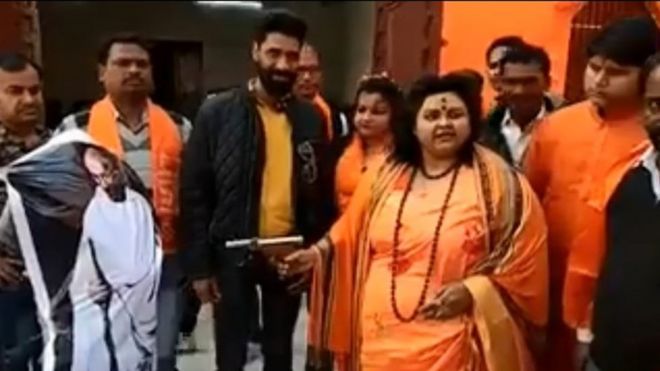
Pooja Pandey, leader of the Hindu Mahasabha, shooting at an effigy of Gandhi with an air pistolImage copyrightSCREENGRAB
Image captionPooja Pandey, leader of the Hindu Mahasabha, shooting an effigy of Gandhi with an air pistol

A leader of a fringe Hindu right-wing group in India has been arrested after a video of her shooting an effigy of Mahatma Gandhi went viral.

The Hindu Mahasabha had organised an event to “celebrate” the 71st anniversary of Gandhi’s assassination.

In the video, Pooja Pandey shoots the effigy with an air pistol after garlanding a picture of Nathuram Godse, who shot the independence leader.

Gandhi has long been seen as too moderate by some right-wing Hindus.

Police had been seeking Ms Pandey’s arrest since the video, believed to have been released by her group, emerged last week.

Two police teams were deployed to track her and her husband, who also features prominently in the footage.

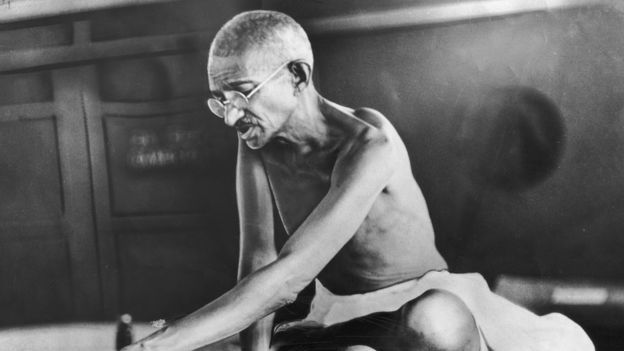
Circa 1935: Indian spiritual and political leader Mahatma Gandhi (1869 - 1948)Image copyrightGETTY IMAGES
Image captionNathuram Godse shot Mahatma Gandhi on 30 January 1948

They had already made several other arrests in connection with the video which was shot on 30 January – the day Gandhi was killed.

“We arrested nine people within a week and are searching for two more suspects in the case,” police officer Neeraj Jadaun told the BBC.

Godse, who shot Gandhi in the chest three times at point-blank range on 30 January 1948, was an activist with nationalist right-wing groups, including the Hindu Mahasabha.

Hindu hardliners in India accuse Gandhi of having betrayed Hindus by being too pro-Muslim, and even for the division of India and the bloodshed that marked Partition, which saw India and Pakistan created after independence from Britain in 1947.

This is not the first time the controversial fringe group has tried to glorify Godse and celebrate Gandhi’s assassination.

In 2015, the group announced plans to install statues of Godse across six districts in the southern state of Karnataka, sparking protests across the state.

Source: The BBC

06/02/2019

Stray cows add to Modi’s farmer woes as Indian election looms

KAKRIPUR/MAHABAN, India (Reuters) – As night fell on the bucolic northern Indian hamlet of Mahaban, Gopi Chand Yadav gathered blankets and a flashlight to spend the night sitting on a wooden platform in his field. His task: to use bamboo sticks to ward off stray cattle from intruding and eating a maturing mustard crop.

Like Yadav, many thousands of farmers stay awake to guard their farms over a cold winter or face losing their crops to the cattle – a double whammy for growers already reeling from a plunge in Indian crop prices.

While stray cows ambling around towns and villages have always been a feature of life in rural India, farmers say their number has increased sharply in recent years to the extent that they have become a menace, and blame the policies of Prime Minister Narendra Modi’s Hindu nationalist government.

Protecting cows – considered sacred to Hindus – was one of the measures meant to shore up support in the heavily populated, Hindi-speaking belt across northern India that has been a heartland of the ruling Bharatiya Janata Party’s (BJP). Instead, it is creating a backlash, even among Hindu farmers.

“We already had enough problems and now the government has created one more,” said octogenarian farmer Baburao Saini from Kakripur village, about 85 kilometres (50 miles) from New Delhi. “For the first time, we’ve been forced to stay in the fields to protect our crops.”

More than 50 farmers Reuters spoke to in Mahaban and nine other villages in Uttar Pradesh state said they would think twice before voting for Modi’s BJP in the next general election, due by May. The cattle issue and low farm prices are major reasons behind their disillusionment with a party that most say they voted for in the last election in 2014.

Modi swept Uttar Pradesh at that poll, winning 73 of 80 seats in India’s most populous state, with rural voters swayed by a promise of higher crop prices, and as Hindu farmers supported the BJP amid tensions with the minority Muslim community.

COW PROTECTION

Modi is trying hard to claw back support among India’s 263 million farmers and their many millions of dependents after the BJP lost power in December to the opposition Congress in three big northern states where agriculture is a mainstay.

Indian farmers keep cows to produce milk, cheese and butter, but to harm or kill a cow, especially for food, is considered taboo by most Hindus.

Most states in India have long outlawed cow slaughter, but after coming to power in 2014 the BJP ratcheted up its distaste for trade in cattle, launching a crackdown on unlicensed abattoirs in Uttar Pradesh and on cattle smuggling nationwide.

At the same time, a wave of attacks on trucks carrying cattle by Hindu vigilante groups has scared away traders, most of whom are Muslims, bringing to a halt the trade even in bullocks, which are not considered sacred. Rising sales of tractors and increasing mechanisation mean that more animals are redundant for use in farming.

The farmers Reuters spoke to said they revered cows as most devout Hindus would, but a sudden halt in the trade of cattle had hit the rural economy. In their view, the government should come up with more cow shelters and let cattle traders deal in other animals without fear of attack.

“The government has only enforced the laws by closing down unlicensed abattoirs and cracking down on cattle smuggling,” said BJP spokesman Gopal Krishna Agarwal, who added that he runs a cow shelter of 1,300 cattle. “We’re not trying to hurt either any community or the rural economy.”

CROP TRAMPLED

Fodder prices have gone up by more than a third in the past year and most farmers cannot afford to keep cows after they stop producing milk, said farmer Rajesh Pahalwan as he smoked a hookah pipe in the village of Manoharpur. Six farmers sitting with him mainly nodded in agreement.

In India, the world’s biggest milk producer, about 3 million cattle become unproductive every year. In the past, Hindu farmers would sell unproductive cows to Muslim traders and about 2 million of these would end up smuggled to Bangladesh for meat and leather. But that trade has now been throttled by the government crackdown, trade and industry officials say.

That has led to many unproductive cattle being abandoned, farmers said, but governments – both state and federal – have failed to construct new shelters, leaving rising numbers of stray cattle that are feeding on crops, or even garbage.

“The government clearly did not think of alternatives before putting these curbs in place,” said farmer Deepak Chaudhary, who grows wheat on the outskirts of Mathura, considered to be the birthplace of the Hindu God Krishna. “As Hindus, we treat cows as sacred but these unwarranted measures have upended the economics of farming.”

The government did provide some relief in its interim budget last week as it announced a cow welfare programme costing 7.50 billion rupees (80.79 million pounds) in the year beginning April.

But there are hardly any “adequate measures to rehabilitate” cattle, said Fauzan Alvi, vice-president of the All India Meat and Livestock Exporters Association.

“Forget about cows, we cannot sell even a single animal to even our relatives thanks to cow vigilante groups which are aided and abetted by the BJP,” said the wheat farmer Chaudhary.

Modi has in the past condemned violence by cow vigilantes, but critics and opposition politicians say some of the right-wing Hindu groups involved have links to his party, a charge the BJP denies.

Nearly 85 percent of India’s farmers own less than 2 hectares (5 acres) of land, so even a relatively small area damaged has a big impact on their livelihood.

Only two weeks ago, some cattle ravaged an acre of wheat grown by farmer Chandra Pal in the Mathura district of Uttar Pradesh.

“My investment went down the drain after some stray cattle trampled and ate up the crop,” he said.

Many farmers in Uttar Pradesh are now using barbed wire to stop animals from entering their farms, but that is expensive.

“We have been at the receiving end of anti-farmer policies of the government and the problem of stray cattle is just another blow to us,” said farmer Amar Chand, from Maholi village who voted for Modi in 2014. “Unlike the previous general election, farmers are not solidly behind Modi, who’s on shaky ground this time round.”

Source: Reuters

06/02/2019

Robert Vadra reaches Enforcement Directorate office for questioning, wife Priyanka drops him off

This is the first time Robert Vadra is appearing before any probe central agency in connection with allegations of dubious financial dealings and comes days after Priyanka Gandhi was formally inducted into the Congress party.

INDIA Updated: Feb 06, 2019 16:31 IST

HT Correspondent
HT Correspondent
Hindustan Times, New Delhi
Robert vadra,Priyanka Gandhi vadra,Rahul Gandhi
Robert Vadra was dropped off at the ED office by his wife Priyanka Gandhi Vadra. (HT PHOTO/Burhaan Kinu)

Robert Vadra, brother-in-law of Congress president Rahul Gandhi, reached the Enforcement Directorate office in Delhi on Thursday after the agency summoned him in a money laundering case. Robert Vadra was dropped off at the office by his wife and Priyanka Gandhi Vadra.

This is the first time Robert Vadra is appearing before any probe central agency in connection with allegations of dubious financial dealings and comes days after Priyanka Gandhi was formally inducted into the Congress party. She has been tasked with reviving the party in eastern Uttar Pradesh.

Robert Vadra arrived at the ED’s office located in central Delhi’s Jamnagar House at 3.45 pm. He has been told to cooperate with the ED investigation by a Delhi court that he had approached for anticipatory bail.

The case relates to allegations of money laundering in the purchase of a London-based property at 12, Bryanston Square. Robert Vadra has denied the allegations on several occasions in the past, called termed them a political witch hunt and accused the BJP-led national coalition of attempting to distract attention from its failures.

Read more:‘Tomorrow it can be PM Modi’: Congress leader on ED summons to Robert Vadra

The Enforcement Directorate had told the court that it has received information about various new properties in London which belongs to Vadra, including two houses of five and four million each, six other flats and more properties.

The ED had carried out raids in this case in December last year and questioned Robert Vadra’s aide Manoj Arora, an employee of a firm linked to Vadra, Skylight Hospitality LLP.

Vadra has also been directed by the Rajasthan High Court to appear before the ED on February 12 in connection with another money laundering case being probed by the agency.

Read more: Priyanka Gandhi gets room next to brother Rahul Gandhi at Congress headquarters

First Published: Feb 06, 2019 16:00 IST

Source: Hindustan Times

Law of Unintended Consequences

continuously updated blog about China & India

ChiaHou's Book Reviews

continuously updated blog about China & India

What's wrong with the world; and its economy

continuously updated blog about China & India