Archive for April, 2019

01/04/2019

Central China’s Wuhan to run for int’l wetland city

CHINA-WETLAND-PROTECTION (CN)

Aerial photo taken on June 23, 2018 shows a wetland of the Yellow River Delta national nature reserve in Dongying, east China’s Shandong Province. The city of Wuhan in central China’s Hubei Province will apply for the 2021 Wetland City Accreditation of the Ramsar Convention, the municipal forestry bureau announced. The announcement was made as the city joined the global “Earth Hour” campaign Saturday night by turning off lights on major landmarks. Wuhan, which sits at the confluence of the Yangtze River and its longest tributary Han River, boasts about 1,624 square km of wetlands, accounting for 18.9 percent of the city’s total area. The bureau said Wuhan’s wetlands are home to more than 400 wild animal species and over 400 plant species. A total of 18 cities from seven countries were honored as international wetland cities in 2018. Six Chinese cities were among the list, namely Haikou, Harbin, Changde, Changshu, Dongying and Yinchuan. (Xinhua/Guo Xulei)

WUHAN, March 31 (Xinhua) — The city of Wuhan in central China’s Hubei Province will apply for the 2021 Wetland City Accreditation of the Ramsar Convention, the municipal forestry bureau announced.

The announcement was made as the city joined the global “Earth Hour” campaign Saturday night by turning off lights on major landmarks.

Wuhan, which sits at the confluence of the Yangtze River and its longest tributary Han River, boasts about 1,624 square km of wetlands, accounting for 18.9 percent of the city’s total area.

The bureau said Wuhan’s wetlands are home to more than 400 wild animal species and over 400 plant species.

“Wuhan is a competitive applicant not only because of its abundant wetland resources, but also due to its pioneering wetland protection mechanism,” said Lei Gang, an expert with World Wildlife Fund (WWF) China’s freshwater program.

“Wuhan was the first Chinese city to implement an ecological compensation mechanism for wetlands and to carry out the strictest lake management regulations,” Lei added.

The Ramsar Convention, or the Convention on Wetlands, is an inter-governmental environmental treaty adopted in 1971. It provides the framework for national actions and international cooperation regarding the conservation and wise use of wetlands and their resources.

The Ramsar Convention introduced the Wetland City Accreditation scheme in 2015, aiming to recognize cities that make exceptional efforts to safeguard their urban wetlands.

A total of 18 cities from seven countries were honored as international wetland cities in 2018. Six Chinese cities were among the list, namely Haikou, Harbin, Changde, Changshu, Dongying and Yinchuan.

01/04/2019

China launches new data relay satellite

CHINA-XICHANG-NEW DATA RELAY SATELLITE-LAUNCH (CN)

The Tianlian II-01 satellite is launched by a Long March-3B carrier rocket at the Xichang Satellite Launch Center in southwest China’s Sichuan Province, on March 31, 2019. China sent the new data relay satellite into orbit from the Xichang Satellite Launch Center late Sunday night. The Tianlian II-01 satellite was launched at 11:51 p.m. Beijing Time by a Long March-3B carrier rocket. As the first satellite to constitute China’s second-generation data relay satellite network, the Tianlian II-01 will provide data relay, measurement and control, transmission services for manned spacecraft, satellites, carrier rockets and other non-spacecraft users. (Xinhua/Guo Wenbin)

BEIJING, April 1 (Xinhua) — China sent a new data relay satellite into orbit from the Xichang Satellite Launch Center in southwest China’s Sichuan Province late Sunday night.

The Tianlian II-01 satellite was launched at 11:51 p.m. Beijing Time by a Long March-3B carrier rocket.

As the first satellite to constitute China’s second-generation data relay satellite network, the Tianlian II-01 will provide data relay, measurement and control, transmission services for manned spacecraft, satellites, carrier rockets and other non-spacecraft users.

The Tianlian II network will be markedly more advanced in mission planning, system management and operations than the first-generation network composed of Tianlian I satellites.

The new network, with faster data transfer and higher multi-objective service capability, will play an important role in improving the transmission promptness, in-orbit security and mission flexibility for medium- and low-Earth orbiting satellites and manned spacecraft.

The satellite is developed by the China Academy of Space Technology under the China Aerospace Science and Technology Corporation.

The launch marks the 301st mission of the Long March carrier rocket series.

Source: Xinhua

01/04/2019

Chinese man critically ill after being hit by shared bike falling from building

  • Police investigating after 78-year-old sustains bleeding in the brain and multiple broken bones
  • Incident is latest mishap to hit China’s shared bike industry
Yang had been taking a stroll when he was struck by the falling bike. Photo: Weibo

A 78-year-old man in eastern China is in critical condition after being hit by a shared bicycle that fell from a tall building on Friday, mainland media reported.

The man, surnamed Yang, was standing by a ground-floor gate of the building where he lives in Nanchang, Jiangxi province, when a bicycle owned by bike-sharing company Ofo fell from one of the windows above, Jiangxi Television’s City Channel reported.

He was being treated in hospital for bleeding in the brain and several broken bones.

Yang’s daughter-in-law, surnamed Li, told the broadcaster Yang had been resting beside the gate while taking a walk on Friday afternoon when the bike hit him, knocking him to the ground.

Yang was hit as he paused by a gate to the building where he lives. Photo: Weibo
Source: SCMP
01/04/2019

Huawei sales top $100bn despite US-led pressure

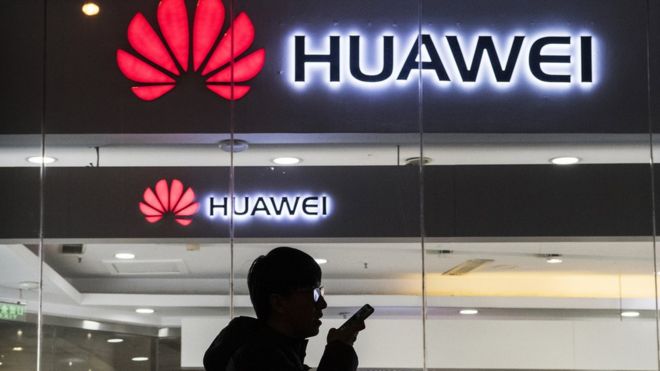
Person stands in front of Huawei logoImage copyrightGETTY IMAGES

Chinese telecoms giant Huawei said revenues topped $100bn in 2018 despite a US-led campaign against the business on fears it poses a security threat.

The firm said revenue for 2018 hit 721.2bn yuan ($107bn), while net profit jumped 25% to 59.3bn yuan.

The US and others have restricted the company over concerns that its ties to Beijing represent a security threat.

Huawei says it is independent and strongly denies its products pose a security risk.

The Shenzhen-based firm said global revenue surged 19.5% in 2018, its fastest pace of growth in two years. The result was supported by strong sales of smartphones in China.

At the same time its carrier business, which sells telecoms infrastructure to countries around the world, eased 1.3%.

Huawei is the world’s largest maker of telecoms equipment. It faces a growing backlash from Western countries on concerns over the security of its products used in next-generation 5G mobile networks.

The US, Australia and New Zealand have all blocked local firms from using Huawei to provide the technology for their 5G networks.

Several European telecoms operators are considering removing Huawei equipment from their networks, and a report by UK cyber authorities out this week strongly criticised the tech firm.

The report, issued by the National Cyber Security Centre, said it can provide “only limited assurance that the long-term security risks can be managed in the Huawei equipment currently deployed in the UK”.

Huawei has begun pushing back. It has launched a more aggressive strategy in recent months to counter what it sees as an American “smear” campaign.

Earlier this month, it filed a lawsuit against the US government over a ban that restricts federal agencies from using its products, arguing it is “unconstitutional.”

01/04/2019

China manufacturing returns to growth in March: Caixin PMI

BEIJING (Reuters) – China’s manufacturing sector unexpectedly returned to growth for the first time in four months in March, in a sign that government stimulus measures may be slowly gaining traction, a private business survey showed on Monday.

But growth in new domestic and exports orders was marginal, suggesting the economy will remain under pressure in coming months and will likely require more policy support before it can convincingly stabilize.

The Caixin/Markit Manufacturing Purchasing Managers’ Index (PMI) expanded at the strongest pace in eight months in March, rising to 50.8 from 49.9 in February, above the neutral 50-mark dividing expansion from contraction on a monthly basis and the highest level seen since July 2018.

Economists polled by Reuters had forecast the reading for March would stay unchanged at 49.9. The surprise expansion seen in the Caixin survey echoed that seen in the official PMI released on Sunday, which also showed factory activity defying expectations for another contraction in March.

“With a more relaxed financing environment, government efforts to bail out the private sector and positive progress in Sino-U.S. trade talks, the situation across the manufacturing sector recovered in March,” Zhengsheng Zhong, director of macroeconomic analysis at CEBM Group, said in a commentary accompanying the data release.

China has made proposals in talks with the United States on a range of issues that go further than it has before, including on forced technology transfer, as the two sides work to overcome obstacles to a deal to end their protracted trade war, U.S. officials told Reuters on Wednesday.

But sources close to the talks have stressed that a deal is by no means certain, and tit-for-tat tariffs on both sides have remained in place.

Zhang noted the employment situation improved significantly in March, a trend that may ease some government and investor concerns after the unemployment rate in urban areas for February rose to the highest since early 2017.

Caixin’s findings showed factories added headcount in March for the first time in 65 months, arresting a relentless spell of job shedding since October 2013. Some firms were hiring to support higher production and new business development, the release said.

New orders — an indicator of future activity — increased for the second month running, though the pace of growth was marginal. Output also grew for the second straight month.

New export orders expanded after contracting in the previous month. Though the rate of increase was fractional, Caixin said the broad trend appeared to have steadied in the first quarter.

Chinese manufacturers also signaled an improvement in pricing power in March, which could ease pressure on profit margins. Output charges edged up into expansionary territory and outpaced growth in input prices, reflecting reduced pressure from raw material costs.

“The producer price index might have risen faster year-on-year in March, and increased month-on-month, compared with a monthly decline in February,” Zhong added.

Optimism among businesses edged up to a 10-month high partly on expectations that market conditions, both at home and abroad, will improve, the statement said.

But purchasing activity declined for the third straight month, suggesting some firms remain cautious.
Economists at Nomura have forecast that China’s industrial production growth will moderate again in April and May after a brief rebound in March mainly due to last year’s low base.
Source: Reuters
Law of Unintended Consequences

continuously updated blog about China & India

ChiaHou's Book Reviews

continuously updated blog about China & India

What's wrong with the world; and its economy

continuously updated blog about China & India