Chindia Alert: You’ll be Living in their World Very Soon
aims to alert you to the threats and opportunities that China and India present. China and India require serious attention; case of ‘hidden dragon and crouching tiger’.
Without this attention, governments, businesses and, indeed, individuals may find themselves at a great disadvantage sooner rather than later.
The POSTs (front webpages) are mainly 'cuttings' from reliable sources, updated continuously.
The PAGEs (see Tabs, above) attempt to make the information more meaningful by putting some structure to the information we have researched and assembled since 2006.
Chinese State Councilor and Minister of Public Security Zhao Kezhi holds talks with Bangladeshi Minister of Home Affairs Asaduzzaman Khan in Beijing, capital of China, April 16, 2019. (Xinhua/Yin Bogu)
BEIJING, April 16 (Xinhua) — Chinese State Councilor and Minister of Public Security Zhao Kezhi met with Bangladeshi Minister of Home Affairs Asaduzzaman Khan in Beijing Tuesday.
Zhao said the two countries should improve the cooperation mechanism in security affairs concerning the Belt and Road Initiative, and effectively protect the safety of each other’s people, projects and institutions.
He also called on the two countries to advance cooperation in combating transborder crimes, drug control and anti-terrorism, to benefit mutual development and the two peoples.
Asaduzzaman Khan expressed willingness to strengthen law enforcement cooperation with China and promote the continuous development of bilateral relations.
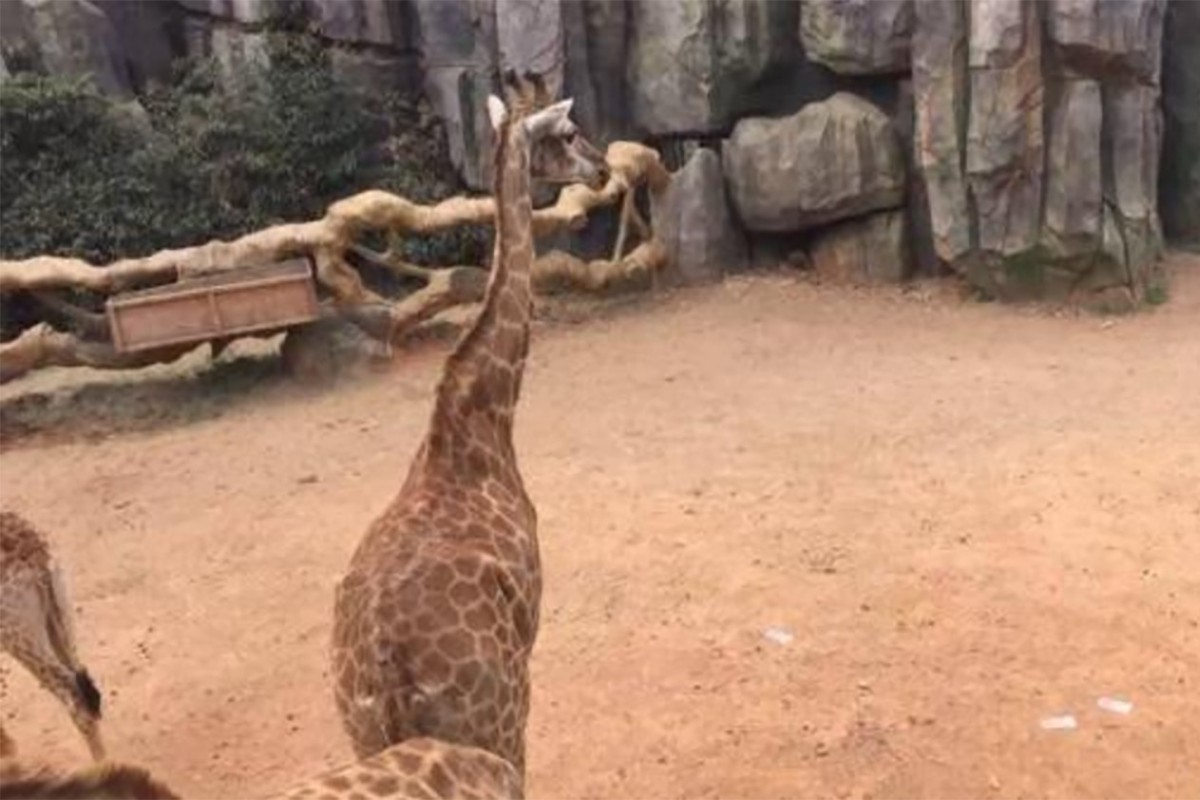
Wildlife park in southwest of country issues warning after tourist throws 10,000 yuan worth of banknotes into enclosure
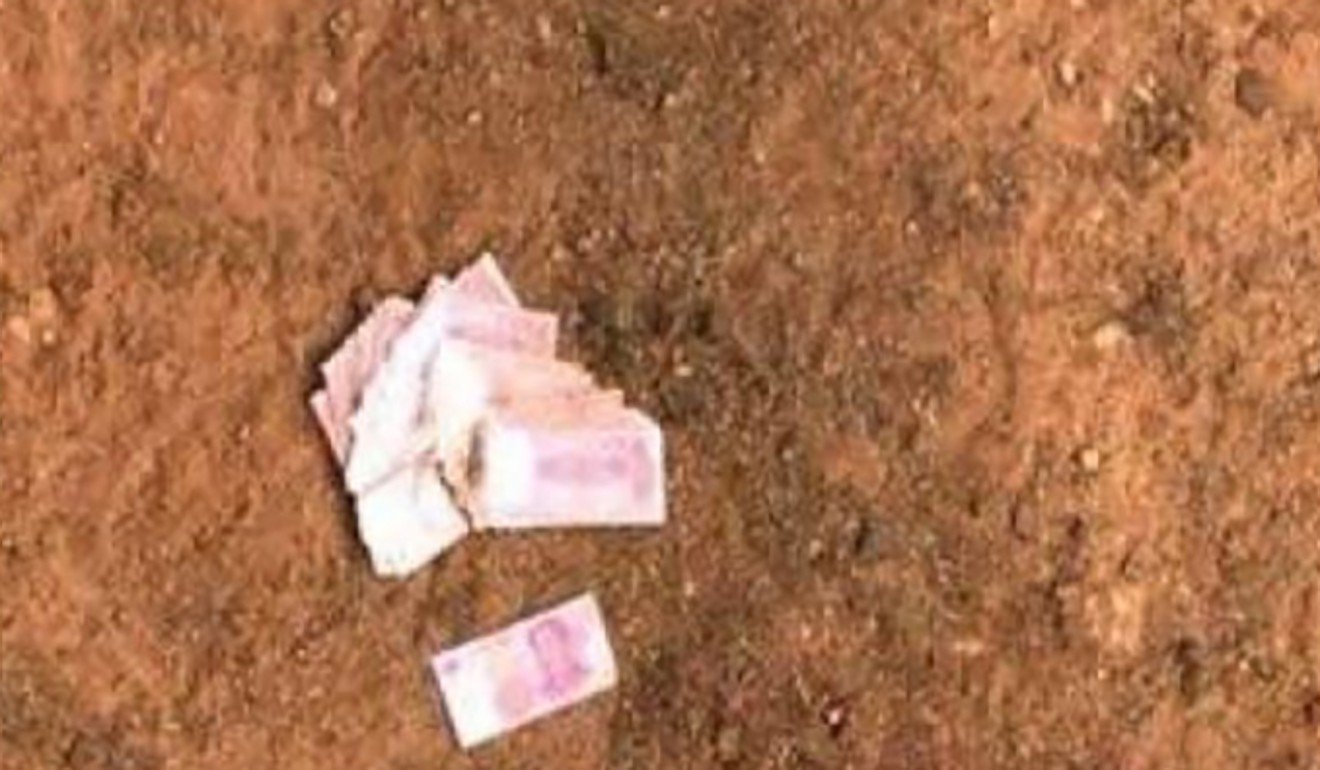
The money was thrown into the giraffe enclosure on Tuesday. Photo: Toutiao
A wildlife park in southwestern China is looking for a visitor who tried to feed its giraffes almost US$1,500 worth of cash.
Staff at the Yunnan Wildlife Park discovered on Tuesday that someone had thrown 10,000 yuan in banknotes into the giraffe enclosure and then disappeared, the park said later that day.
“Some tourists love to feed animals food when visiting zoos, but have you seen people who feed them renminbi?” the park said in a notice issued on WeChat, China’s most popular social media platform.
The banknotes landed in the giraffe enclosure just before noon and staff had to distract the animals with food while they picked up the money, it said.
Nearly 10,000 yuan, mostly in 100 yuan notes, was retrieved. Staff then questioned visitors in the area but they all denied any knowledge of the incident, it said.
Surveillance camera footage showed that the money was thrown from a blind spot, it added.
“So far no one has come to claim ownership of the money. The police are also helping us look for the owner,” a worker from the tourists’ service centre told the South China Morning Post on Wednesday.
Staff had to remind visitors that strange objects could harm the animals. Photo: toutiao
“As we search for the owner, may we also kindly advise tourists not to drop litter or feed animals ‘strange things’?” the notice said.
“Taking different food provided by tourists can give the animals nutritional disorders, and as a result influence their growth and reproduction. And if they eat objects that are indigestible, such as plastic bags, they can die or suffer life-threatening injuries.”
The wildlife park said it was hoping to return the cash to its owner if he or she can be traced.
Seven classrooms, eight other buildings crushed as part of former factory topples over dividing wall
School has 400 pupils but incident happened on Sunday when they were all at home
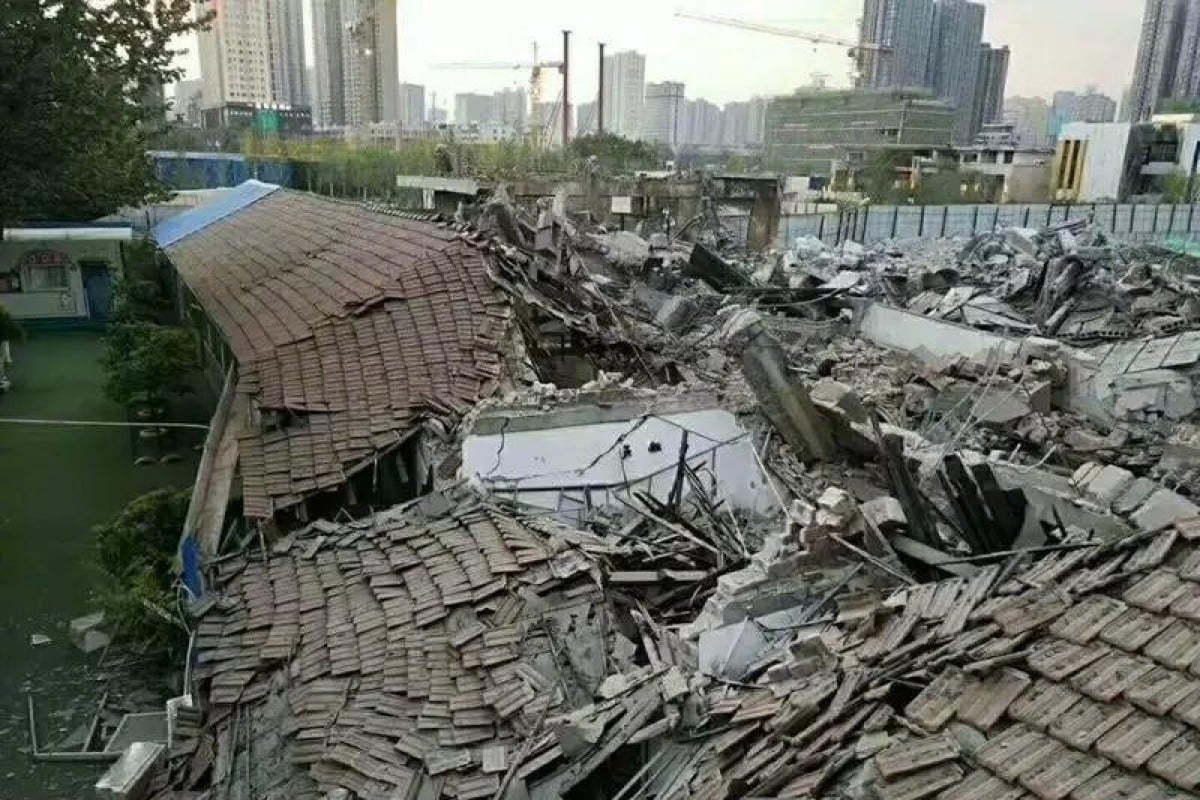
Seven classrooms, four toilet blocks, three kitchens and a first aid room were levelled. Photo: Weibo
A kindergarten in northwest China has been forced to close temporarily after several of its classrooms and other buildings were flattened by falling debris from an adjacent building site, according to a local media report.
The incident, in Xianyang, Shaanxi province, happened on Sunday so there were no children in any of the rooms at the time, and there were no reports of any injuries.
Staff at the privately owned Xintou Kindergarten contacted the parents of its 400 pupils later the same day to tell them classes had been suspended, Shaanxi Transportation Radio reported.
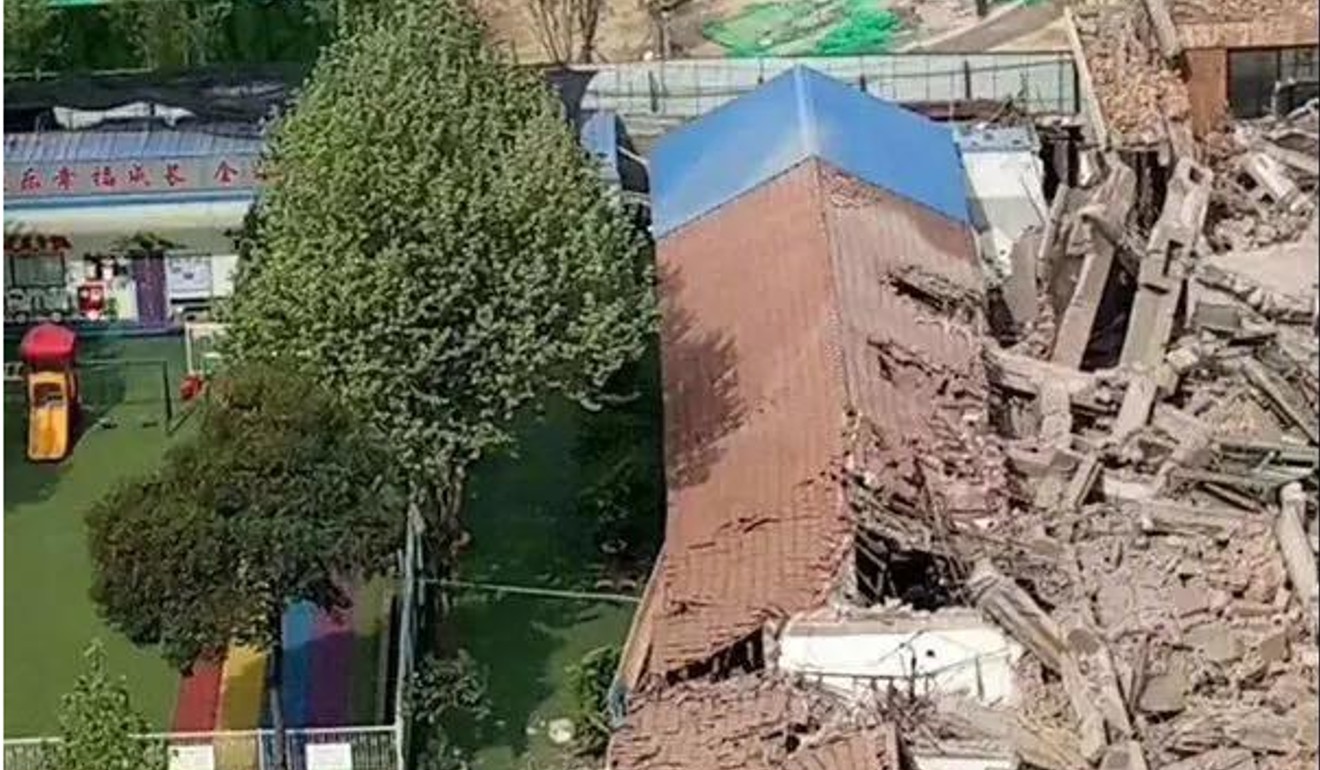
The school is next to the site of a former textile factory which is being demolished to make room for a new housing project by Country Garden, China’s largest residential property developer.
The kindergarten is next to a former factory that is being redeveloped by Country Garden. Photo: Weibo
The report said that one of the buildings being demolished toppled over a wall separating the school from the factory, crushing seven classrooms, four toilet blocks, three kitchens and a first aid room.
After an investigation by the emergency services and local authorities, the developer agreed to compensate the school’s owners for the damage caused and plans are being drawn up to restore the property to its original state.
Two children stabbed to death outside primary school
Several parents gathered at the site to inquire about when it would reopen. The report did not give a precise date but said it was likely to be early next week.
According to figures from the local land resources authority, Country Garden bought the former factory site for a city record price of 1.99 billion yuan (US$297 million) last year.
The school was closed at the time of the accident and there were no reports of anyone being injured. Photo: Weibo
China’s economy grew slightly faster than expected in the three months to March, official figures released Wednesday showed.
The economy expanded at 6.4% in the first quarter from a year earlier, ahead of a Reuters forecast of 6.3%.
Beijing has taken steps to boost its slowing economy, including tax cuts, while trying not to inflate debt.
The world’s second-largest economy also faces softer global demand for its products and a trade war with the US.
China’s rate of growth is closely-watched for the potential knock-on effect on the global economy.
The latest growth figures were in line with the 6.4% rate posted in the last three months of 2018.
The result follow a sharp pick-up in factory output, with industrial production jumping to 8.5% in March.
Other data out Wednesday also showed improvement. Retail sales for March rose 8.7% on a year earlier, and fixed asset investment expanded to 6.3% from a year earlier.
While China watchers advise caution with Beijing’s official GDP numbers, the data is seen as a useful indicator of the country’s growth trajectory.
“There is no denying that China’s economy ended the first quarter on a stronger note,” Capital Economics China economist Julian Evans-Pritchard said.
TAIPEI (Reuters) – Terry Gou, chairman of Apple supplier Foxconn, said on Wednesday he will contest Taiwan’s 2020 presidential election, shaking up the political landscape at a time of heightened tension between the self-ruled island and Beijing.
Gou, Taiwan’s richest person with a net worth of $7.6 billion according to Forbes, said he would join the already competitive race, and take part in the opposition, China-friendly Kuomintang (KMT) primaries.
His decision capped a flurry of news this week that began when Gou told Reuters on Monday he planned to step down from the world’s largest contract manufacturer to pave the way for younger talent to move up the company’s ranks.
He later announced he was considering a presidential bid and hinted he was close to a decision, and then told more than 100 people packed into a temple he would follow the instruction of a sea goddess who had told him to run for president.
RELATED COVERAGE
Foxconn’s Gou announces bid to run in Taiwan’s 2020 presidential race
The sea goddess Mazu is a popular deity in Taiwan and is believed to hold sway over one’s safety and fortune.
“Peace, stability, economy, future, are my core values,” Gou said later at the KMT’s headquarters in Taipei.
He urged the party to rediscover its spirit, the honor of its members and the lost support of the youth, and to establish a fair and transparent system for the primary race.
The KMT’s primary was already highly competitive, with contenders including a former KMT chairman, Eric Chu, and a former head of the island’s parliament, Wang Jin-pyng.
The KMT has not agreed how the race should be run or how candidates will be decided.
Gou’s bid, which requires KMT approval, comes at a delicate time for cross-strait relations and delivers a blow to the ruling pro-independence Democratic Progressive Party, which is struggling in opinion polls.
China-Taiwan relations have deteriorated since the island’s president, Tsai Ing-wen, of the independence-leaning DPP, swept to power in 2016.
China suspects Tsai is pushing for the island’s formal independence. That is a red line for China, which has never renounced the use of force to bring Taiwan under its control.
Tsai says she wants to maintain the status quo with China but will defend Taiwan’s security and democracy.
‘VERY PRO-CHINA’
A senior adviser to Tsai told Reuters he thought Gou’s bid could create problems, given his extensive business ties with China.
“This is problematic to Taiwan’s national security,” the adviser, Yao Chia-wen, said.
“He’s very pro-China and he represents the class of the wealthy people. Will that gain support from Taiwanese?” Yao said, adding he believed Gou would face a tough battle in the KMT primary.
Tension between Taipei and Beijing escalated again on Monday, as Chinese bombers and warships conducted drills around the island, prompting Taiwan to scramble jets and ships to monitor the Chinese forces.
A senior U.S. official denounced Beijing’s military maneuvers as “coercion” and a threat to stability in the region.
Gou has questioned Taiwan’s ties with the United States and said this week the island should stop buying U.S. weapons. He said peace was the best the defense.
William Stanton, professor at National Taiwan University and former head of the de facto U.S. embassy in Taipei, said he would have concerns if Gou were to become president.
“I’d be concerned about how he would behave. He did not have a positive attitude toward the U.S.,” Stanton said.
The KMT, which once ruled China before fleeing to Taiwan at the end of a civil war with the Communists in 1949, said in February it could sign a peace treaty with Beijing if it won the presidential election.
Zhang Baohui, a regional security analyst at Hong Kong’s Lingnan University, said Gou’s run could mark the start of the most unusual election in Taiwan history.
This is something entirely fresh for Taiwan politics – here is a candidate who sees everything through the pragmatic angle of a businessman rather than raw politics or ideology,” Zhang told Reuters.
“He has no baggage and that will be a fascinating scenario.”
Gou’s news comes as Tsai is grappling with a series of unpopular domestic reform initiatives, from a pension scheme to labor law, which have come under intense voter scrutiny.
The KMT said this week Gou had been a party member for more than 50 years and had given it an interest-free loan of T$45 million ($1.5 million) in 2016 under the name of his mother, which had signaled his loyalty to the party.
Foxconn said on Tuesday Gou would remain chairman, though he planned to withdraw from daily operations.
It was not immediately clear when he planned to pull back or if his presidential bid would require him to step down from Foxconn. There were no regulations related to a company executive running for the presidency, the island’s stock exchange said.
Foxconn’s shares closed up 2.1 percent at T$91.80 ahead of Gou’s formal declaration, the highest in six months. His Hong Kong-listed FIH Mobile closed up 28 percent, tracking the strength in parent Foxconn.
NEW DELHI (Reuters) – India’s Supreme Court agreed on Tuesday to consider a petition from a Muslim couple to allow women into mosques, seeking to overturn a centuries-old practice that largely bars women from the places of worship.
Women are not allowed inside most mosques in India although a few have separate entrances for women to go into segregated areas.
The petitioners, Yasmeen Peerzade and her husband Zuber Peerzade, said that women were allowed to enter mosques during the time of the Prophet Mohammad.
“Like men, women also have the constitutional rights to offer worship according to their belief,” they said in their petition.
“There should not be any gender discrimination and allow Muslim women to pray in all mosques,” they said.
The court last year lifted a ban on the entry of women of menstrual age at a Hindu temple in southern India saying it was a violation of their right to worship.
The Muslim couple referred to the temple ruling, which angered conservative Hindus, as a precedent to support their call for women to be allowed to pray at mosques.
A representative of a prominent organisation of Islamic scholars, the Jamiat Ulema-e-Hind, was not immediately available for comment.
The petition comes at a sensitive time for relations been minority Muslims and the majority Hindu community.
Some members of Prime Minister Narendra Modi’s Hindu nationalist ruling party have been accused of stirring communal animosity as the party seeks a second term in a staggered general election now underway.
Supreme Court judge S.A. Bobde said the court will examine the couple’s request at length.
The court in 2017 ruled as unconstitutional a law which allows Muslim men to divorce their wives simply by uttering the word “talaq”, which means divorce in Arabic, three times.
This year, the government issued an executive order making instant divorce an offence punishable with up to three years in jail.
Beijing also rejected the report that the US, the UK and France asked China to lift the technical hold on Azhar by April 23, failing which they will move a formal resolution for discussion, vote and passage at the UN Security Council (UNSC).
WORLDUpdated: Apr 17, 2019 15:31 IST
Indo Asian News Service
Beijing
China on Wednesday said the issue of blacklisting Pakistan-based terrorist Masood Azhar at the UN panel was heading towards a settlement and asked the US not to force through its own resolution on the matter.(AP)
China on Wednesday said the issue of blacklisting Pakistan-based terrorist Masood Azhar at the UN panel was heading towards a settlement and asked the US not to force through its own resolution on the matter.
Beijing also rejected the report that the US, the UK and France asked China to lift the technical hold on Azhar by April 23, failing which they will move a formal resolution for discussion, vote and passage at the UN Security Council (UNSC).
“On the issue of the listing of Masood Azhar, China’s position remains unchanged. We are also having communication with relevant parties and the matter is moving towards the direction of settlement,” Chinese Foreign Ministry spokesperson Lu Kang said here.
Asked to elaborate further, Lu did not answer clearly.
“The matter is now moving in the direction of settlement. As to the specifics for the discussion in the 1267 committee, there are clear procedures and regulations regarding UNSC and its subsidiary bodies. We think members should follow and abide by such procedures.”
He was responding to a question whether anything was achieved after China claimed “positive progress” on the issue of declaring Azhar a terrorist.
China in the past has put four technical holds on the resolutions by India, the US, the UK and France to ban Azhar at the UN 1267 sanctions committee.
Beijing’s latest technical hold came last month after Azhar’s outfit claimed responsibility for the deadly attack in Jammu and Kashmir that killed 40 Indian military personnel in February.
This prompted the US to draft a new resolution and take it directly to the Security Council for an informal discussion. Beijing slammed the move, saying this will complicate matters when some progress has already been achieved.
Lu again reiterated it when asked if China will support such a resolution in the Security Council.
“Regarding what you said relevant parties are forcing a new resolution through the Security Council. We firmly oppose that. In relevant discussions, most members expressed that this issue should be discussed within the 1267 committee and they don’t hope to bypass the 1267 committee to handle the issue.
“We hope the relevant country can respect the opinions of most members of the Security Council to act in a cooperative manner and to help resolve this issue properly within the framework of the 1267 committee,” he added.
Asked if Beijing has been set a deadline of April 23 to lift the technical hold on resolution banning Azhar at the 1267 committee, Lu said: “I don’t know from where you get such information, but the Security Council and it’s subsidiary bodies like the 1267 committee, they have clear rules of procedures and you have to seek clarification from those sources.”
“China’s position is very clear. This issue should be resolved through cooperation and we don’t believe that any efforts without the consensus of most members will achieve satisfying results.”
BEIJING, April 15 (Xinhua) — The Communist Party of China (CPC) Central Committee has published regulations on the work of leading Party members groups.
The 45-article regulations were updated from a trial version issued in June 2015.
The CPC Central Committee has also issued a circular demanding the implementation of the regulations.
The revisions fully embody the theoretical, practical and institutional innovations in the work of leading Party members groups in recent years, the circular said, adding that the revisions were made in accordance with the new situations, tasks and requirements of their work.
It demanded strict implementation of the regulations to make sure that leading Party members groups uphold General Secretary Xi Jinping’s core status, as well as the authority of the CPC Central Committee and its centralized, unified leadership.
The circular said leading Party members groups should take the implementation of the decisions and deployments of the CPC Central Committee as the prerequisite in carrying out work.
A leading Party members group is a leading body set up by the Party in the leadership of the central and local state organs, people’s organizations, economic and cultural institutions, as well as other non-Party organizations.
The regulations have eight chapters including the general provisions, the establishment, duties and organizational principles of leading Party members groups, as well as the rules of their decision-making and supervision.
In a press release, an official with the General Office of the CPC Central Committee spoke of the importance and necessity of the revised regulations.
The official said the regulations reflect new requirements on Party building in the new era and are key to addressing prominent issues in the work of the leading Party members groups and strengthen the institutional guarantees for their work.
There are over 102,000 leading Party members groups from central to county levels nationwide, the official said.
The regulations will help ensure that the CPC always remains a strong leadership core in the cause of socialism with Chinese characteristics, the official added.
An editorial to be published by the People’s Daily on Tuesday hailed the issuance of the regulations, saying the establishment of leading Party members groups is an arrangement based on Chinese reality and fully demonstrates the unique political, organizational and institutional strength of the Party.
BEIJING, April 15 (Xinhua) — Premier Li Keqiang has signed a revised regulation on the disclosure of government information to better respond to public concerns.
The revision, based on the 2008 version, is aimed at increasing the openness of government affairs and resolving prominent problems in government information disclosure.
It also represents the headway and achievements made in this field over the past years and clarified the scope of government information disclosure, calling for constantly expanding information disclosure.
Stressing the need to improve the legal rights and interests of the applicants and related parties when applying for information disclosure in accordance with procedures, the revision also made necessary stipulations on the improper exercise of application rights by a small number of applicants affecting the normal conduct of government information disclosure.
Efforts should be made to improve the effectiveness of government information disclosure by using information technology, to enable government information to play its due role in serving the people, it added.
The regulation will go into effect on May 15.
The Communist Party of China Central Committee and the State Council have attached great importance to the disclosure of government information, and the new conditions and problems that emerged in the implementation of the 2008 version made it necessary to revise the regulation, an official with the Ministry of Justice told the media.
For instance, while the people’s enthusiasm in participating in public policy-making and protecting their own rights has grown, the information disclosed by some administrative organs was not comprehensive, accurate or specific enough, according to the official.
The official said that some would also file repetitive or excessive applications for information disclosure to administrative organs, taking up too many administrative resources.
Moreover, the 2008 version of the regulation was issued when the disclosure of government information in China was still in the early stages, which occasionally led to disputes during its implementation, the official added.
BEIJING, April 15 (Xinhua) — China on Monday urged U.S. Secretary of State Mike Pompeo to stop stirring up troubles between China and Latin America.
Pompeo has reportedly made unfriendly remarks on China and China-Latin America relations during a visit to Chile and other Latin American countries.
“It’s utterly irresponsible and unreasonable for U.S. Secretary of State (Mike) Pompeo to recklessly slander China and wilfully stir up troubles over China-Latin America relations. We are strongly opposed to this,” Foreign Ministry Spokesperson Lu Kang told a press briefing.
Cooperation between China and Latin American countries, guided by principles of mutual respect, equality, mutual benefit and win-win outcomes, focuses on common development and has made significant contributions to the economic growth and improvement of people’s well-being in Latin American countries, Lu said.
For a long time, the United States has regarded Latin America as its own “backyard” and has frequently pressured, threatened and even overthrown other regimes, he added. “We believe Latin American countries will make the correct judgment about who is a real friend and who is a fake one, and about who disregards rules and spreads disorder.”
The spokesperson also pointed out that for a long time, a number of U.S. politicians had maligned China, fanning up flames worldwide and driving a wedge between China and other countries.
Calling such actions “disgraceful,” Lu stressed that lies will always be lies and that “Mr. Pompeo should stop making them.”






 CHINDIA ALERT: You'll be living in their world, very soon