

- Fears of trade war impact also appear to be affecting willingness to spend and prompting moves to safeguard wealth in foreign currencies and gold
- Rising food prices and unemployment levels adding to concerns despite state and social media urging nation to stand strong in face of adversity
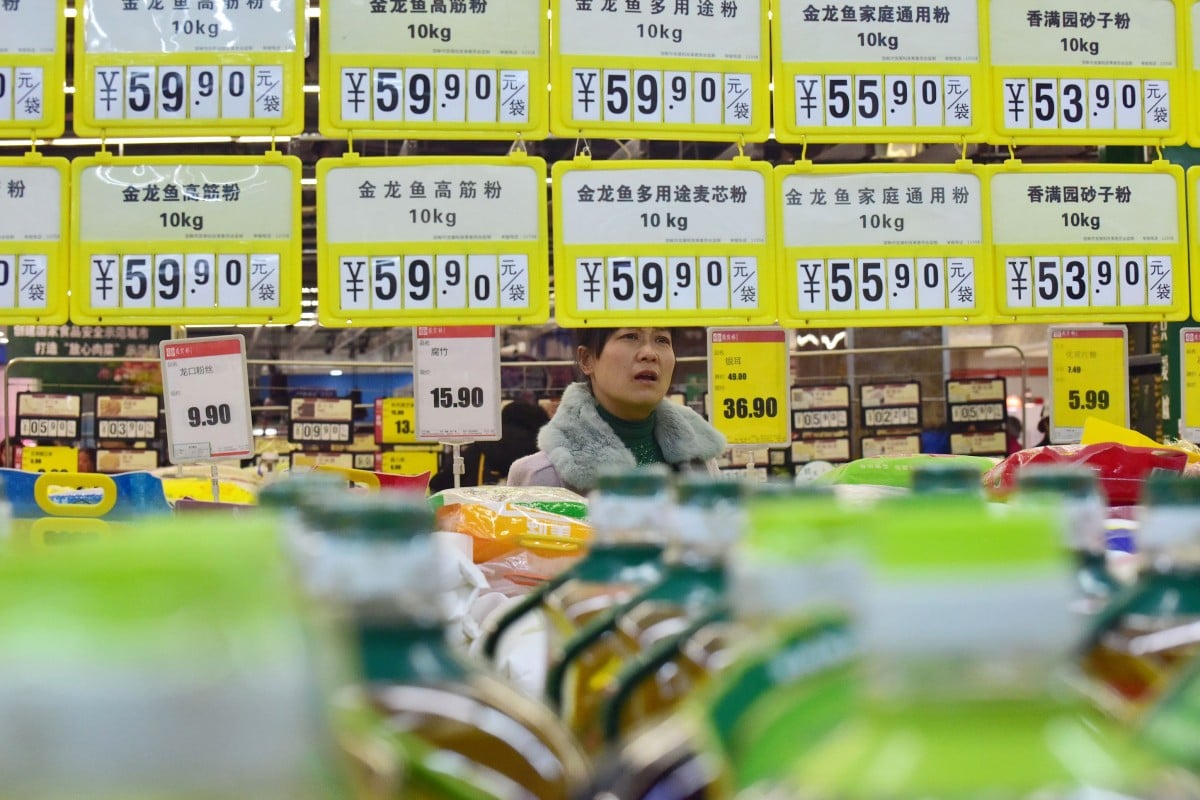
For China’s urban middle class, who have benefited from the country’s economic boom in the last few decades and may have taken it for granted that life would be better, the intensified rivalry between China and the US is bringing a strong sense of uncertainty about their future, pushing citizens to scramble for any information about the trade war away from the official propaganda rhetoric.
“Please tell me the proper understanding of what the impact of the trade war will be on the lives of ordinary people like us. Thanks!” wrote Su Gengsheng, a popular online writer and blogger with more than 300,000 followers on China’s largest social media platform Weibo, four days after the
on US$200 million of Chinese imports.
The post was unusual for Su’s extremely non-political account after she rose to popularity with cosmetics recommendations and make-up tips. However, the trade war question seemed to speak to the heart of the concerns shared by many of Su’s followers, and rapidly attracted thousands of replies and likes as well as more than 10,000 shares. Comments on the post were soon blocked because they “violated relevant laws and regulations”, although the original post was still visible.
Despite a lack of access to uncensored news, the adverse effects of the trade war have started to be felt and are rapidly becoming known throughout Chinese society. This is especially true for those who now have things to lose, including the value of their stocks and real estate, the chances of sending their children to study in the US, or even just being able to watch the final season of Game of Thrones on television.
The government’s nationalistic rallying cry, asking people to tighten their belts and to prepare for prolonged hardships, has further amplified concerns among those citizens who have worked hard to earn a comfortable lifestyle.
We used to think [a trade war] used to be absolutely impossible. Now I start to fear there will be a devaluation of the [yuan] in the near future, and even a more horrible situation ahead
increases accelerating to 14.4 per cent from 5.1 per cent in March. Last week, Beijing set up a
the State Council Employment Work Leading Group, to monitor the country’s employment situation, underscoring the government’s increasing concern over unemployment due to the continuing escalation of the trade war with the US and in the wake of recent high-profile lay-offs by the likes of Sony Mobile, Cisco Systems and Oracle.
The exchange rate with the US dollar hovered around 6.9 last week, but Li Yue, a veteran Shenzhen-based electronics engineer, has been converting some of his yuan savings at exchange rates of around 6.3, 6.5, and 6.7.
“It was very difficult to search for foreign technical information via the internet in the 1990s, and now I look longingly to that time. As a technologist, I have a full understanding that if Sino-US relations continue to deteriorate, or if China loses more orders from Western countries, many of the industrial supply chains developed in the past will soon be scrapped,” said Li Yue.
Other Chinese citizens are taking steps to safeguard their wealth due to fears of the effects of the trade war.
Mai, 35, spends most of his monthly salary, about 15,000 yuan (US$2,200), on his mortgage, while the family uses his wife’s income for daily expenses. At the beginning of last year, Mai felt that his career was stagnant and that his expenses were greater than his income. Therefore, he borrowed 300,000 yuan (US$43,400) from a local bank, with an average interest rate of over 5 per cent, and used the money to invest in a friend’s travel agency.
“The business is not profitable yet. I just pray that the trade war will end as soon as possible,” Mai said. “But on the other hand, I think it will be far from a happy ending.”
Source: SCMP

 CHINDIA ALERT: You'll be living in their world, very soon
Leave a comment