Chindia Alert: You’ll be Living in their World Very Soon
aims to alert you to the threats and opportunities that China and India present. China and India require serious attention; case of ‘hidden dragon and crouching tiger’.
Without this attention, governments, businesses and, indeed, individuals may find themselves at a great disadvantage sooner rather than later.
The POSTs (front webpages) are mainly 'cuttings' from reliable sources, updated continuously.
The PAGEs (see Tabs, above) attempt to make the information more meaningful by putting some structure to the information we have researched and assembled since 2006.
Leader will arrive on Thursday, ahead of G20 summit in Osaka, foreign ministry says
He is expected to hold talks with Donald Trump on sidelines of meeting
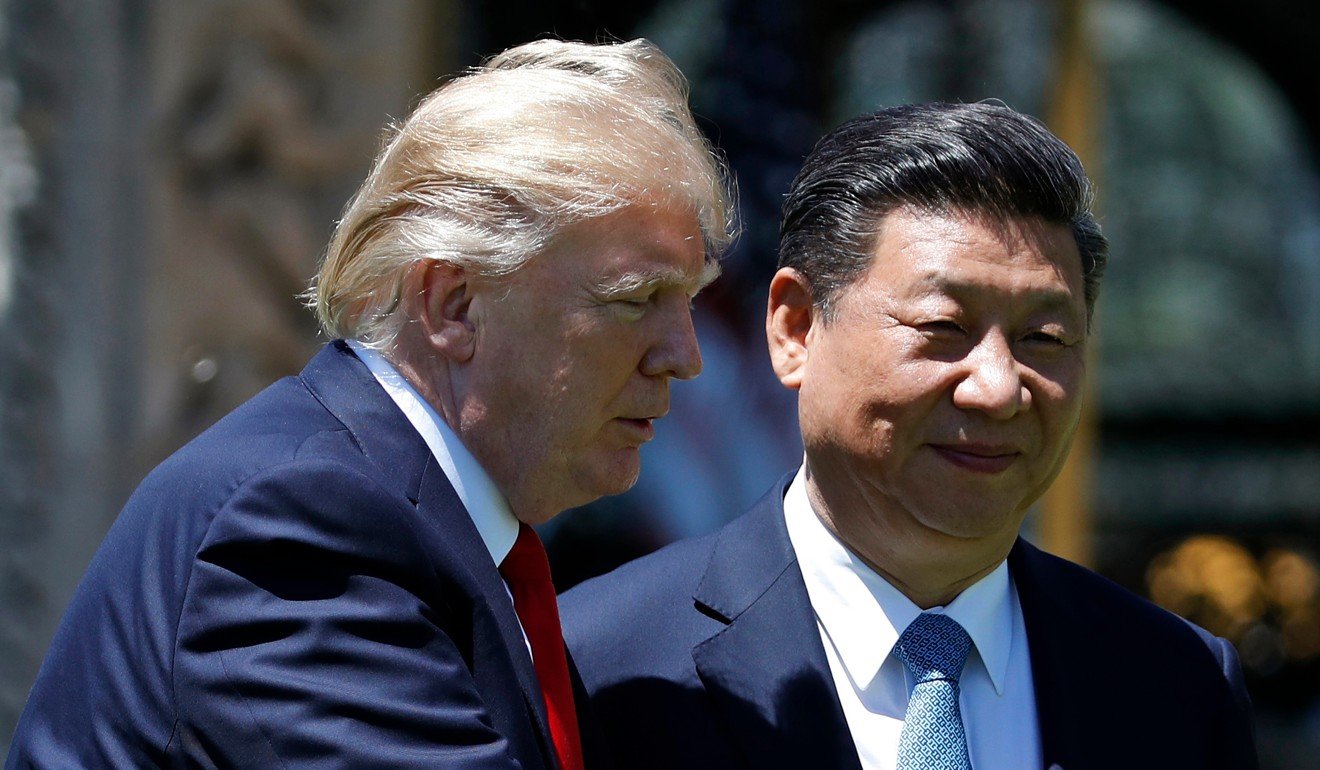
China has confirmed that President Xi Jinping will travel to japan this week. Photo: AFP
China on Sunday confirmed that President Xi Jinping will attend the G20 summit in Osaka this week.
Xi will spend three days in Japan – his first visit to the country since coming to power in 2013 – the foreign ministry said.
He will travel to Japan on Thursday and is expected to meet his US counterpart Donald Trump on the sidelines of the meeting of leading and emerging economies, which runs from Friday to Saturday, it said.
It is possible the pair will hold formal negotiations over dinner, as they did in Argentina in December at the last G20 summit.
Presidents Xi and Trump are expected to hold talks over dinner, as they did in Argentina in December. Photo: Kyodo
On Saturday, People’s Daily, the mouthpiece of China’s Communist Party said in a commentary that the trade war between China and the US could be resolved only through “equal conversation”.
“For the talks to resume … the key is to address the primary concern of the other side. The tariffs already in place must be revoked,” it said.
Trade deal ‘within reach if Xi and Trump show courage’
Meanwhile, state broadcaster CCTV on Friday criticised Washington’s decision to add five Chinese companies to its list of entities considered a threat to national security.
“The US made this move to put more pressure China ahead of the trade talks,” it said, adding that it might produce a result opposite to the one desired by Washington.
The report came after the US commerce department said it had added five Chinese firms that manufacture supercomputers and their components to the entity list, restricting their ability to do business with the US.
The blacklist effectively bars American firms from selling technology to the Chinese organisations without government approval. Last month, the commerce ministry added telecoms giant
Xi told Trump on Tuesday he was willing to meet in Japan. Photo: AP
In a telephone conversation on Tuesday, Xi told Trump he was willing to meet in Japan and said he “agreed that the two countries’ trade delegations should keep communications going to solve their differences”, CCTV reported.
Kong Xuanyou, China’s new envoy to Japan, said on Friday that he hoped Xi would make an official visit to the country soon, ideally during the cherry blossom season next spring. The foreign ministry statement made no mention of such a visit.
BANGKOK (Reuters) – Southeast Asian leaders agreed on Sunday to work together on regional economy and security to strengthen their positions amid growing U.S.-China tensions, as they wrapped up this year’s first summit in Bangkok.
The 10-member Association of Southeast Asian Nations (ASEAN) will need its collective economic strength for bargaining power globally, especially amid the trade tensions between the world’s top two economies, Thai Prime MinisterPrayuth Chan-ocha told a news conference, as chairman of the 34th ASEAN Summit.
Prayuth urged ASEAN nations to complete negotiations this year for the China-initiated Regional Comprehensive Economic Partnership (RCEP) pact that includes 16 countries.
“This will help ASEAN handle the changes and uncertainty that will happen in the region going forward, particularly the impacts of trade tension between ASEAN’s important trade partners.”
Negotiations began in 2012 on RCEP, which envisions the creation of a free trade zone encompassing 45% of the world’s population and more than a third of its GDP, but does not involve the United States.
First proposed by China, RCEP’s 16 signatories include the 10 ASEAN member states and six Asia-Pacific countries, including major economies China, India, Japan and South Korea. ASEAN has existing free-trade agreements with all six countries.
“If we can do this, we will have the bargaining power and base for negotiation. Because when combined, we are 650 million people, the largest regional bloc in the world,” the Thai prime minister said.
Four ASEAN countries – Thailand, Indonesia, Singapore and Vietnam – will discuss the trade war in next week’s G20 summit, which assembles 20 major economies, in Tokyo, Prayuth said.
ASEAN countries also agreed on a common approach on a U.S.-led Indo-Pacific initiative, at a time when U.S.-China tensions were rising and forcing ASEAN countries to take sides.
Prayuth hailed the bloc’s agreement on the ASEAN Outlook on the Indo-Pacific as a “significant step” for the region.
The endorsed outlook document, seen by Reuters, acknowledges “maritime issues such as unresolved maritime disputes that have the potential for open conflict” as existing and emerging geopolitical challenges.
It outlines maritime cooperation “for peaceful settlement of disputes”. It also aims for connectivity in the Indo-Pacific region.
Guo Shengkun (R), a member of the Political Bureau of the Communist Party of China (CPC) Central Committee and head of the Commission for Political and Legal Affairs of the CPC Central Committee, meets with acting Portuguese Prime Minister and Minister of Foreign Affairs Augusto Santos Silva in Lisbon, Portugal, on June 21, 2019. (Xinhua)
LISBON, June 21 (Xinhua) — Senior Chinese official Guo Shengkun on Friday stressed the importance of raising the level of cooperation on law enforcement and security with Portugal.
Guo is a member of the Political Bureau of the Communist Party of China (CPC) Central Committee and head of the Commission for Political and Legal Affairs of the CPC Central Committee.
In meeting with acting Portuguese Prime Minister and Minister of Foreign Affairs Augusto Santos Silva, Guo said that the exchange of visits by leaders of the two countries within half a year reflects the high level of China-Portugal relations and injects new impetus into the development of bilateral ties.
This year marks the 40th anniversary of the diplomatic relations between the two countries. China is willing to take the opportunity to work together with Portugal to implement the important consensus reached by the leaders of the two countries, Guo said.
China, Guo said, is also ready to deepen cooperation in economy and trade, education, science and technology as well as the joint building of the Belt and Road Initiative.
Guo said the two sides should strengthen communication and coordination under the framework of China-European Union (EU) cooperation and multilateral institutions to promote the long-term healthy and stable development of China-EU relations, and jointly safeguard multilateralism and free trade.
Guo also said that the cooperation on law enforcement and security is an important part of the relationship between the two countries, stressing the need to establish a normalized cooperation mechanism to continuously promote the level of cooperation on the law enforcement, security and anti-terrorism to meet the demand of increasing trade and personnel exchanges, so as to make contributions to the development of China-Portugal comprehensive strategic partnership.
As acting prime minister, Silva welcomed Guo’s visit and highly praised the fruitful results of the exchanges and cooperation between Portugal and China in various fields.
Silva said Portugal is willing to work together with China to continue to tap the potential for pragmatic cooperation in the fields of economy and trade, law enforcement and security, strengthen coordination in international affairs, and promote the continuous development of Europe-China and Portugal-China relations
Silva also said that his country supports and is willing to actively participate in the joint building of the Belt and Road Initiative.
During the visit, Guo also held talks with head of the Portuguese law enforcement and security departments.
LONDON, June 21 (Xinhua) — Chinese Ambassador to the United Kingdom Liu Xiaoming on Friday said he trusted that Britain will make its decision independently, in the UK’s national interest and in the interest of Sino-UK cooperation.
Liu said in an exclusive interview with Sky News that even though there have always been differences between China and Britain, these differences have not prevented the countries from working for the common good.
Liu said Huawei is a good company and it has made its contribution to the telecom industry in the country.
The Ambassador said Huawei is the leader in 5G technology. “I do hope that the UK will keep Huawei for the benefit,” he said.
Beijing-based hi-tech firm says its technology keeps real-time tabs on firearms and is already in use in the military
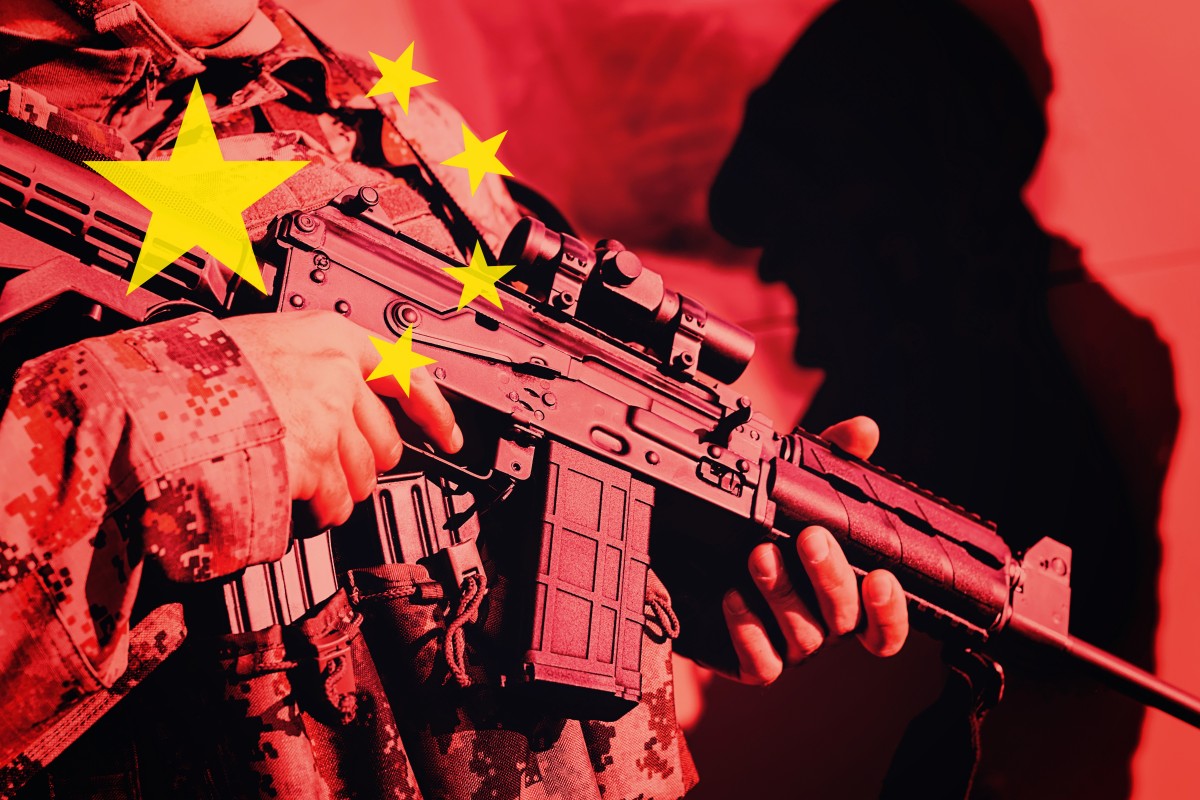
A Chinese company has developed a chip to track the location of firearms. Photo: Shutterstock
China has developed a satellite positioning chip to pinpoint the location of firearms and trigger an alert when guns are taken out of designated areas, according to a Chinese hi-tech firm.
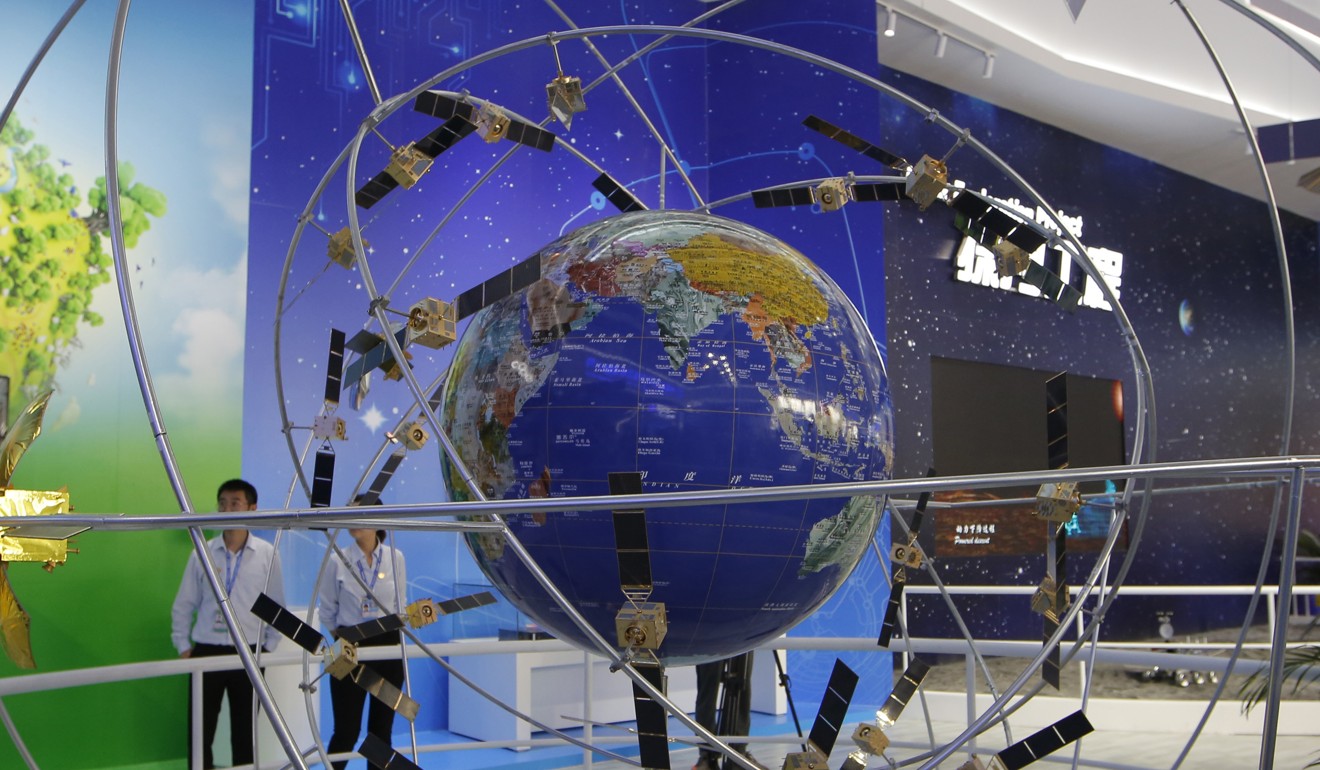
Beijing Bailineng Technology, the developer of the technology, said in Beijing that the chips used China’s BeiDou Navigation Satellite System to send real-time location data back to a control centre.
Authorised handlers of the weapons would also be issued with BeiDou watches to send alerts if they are separated from their firearm, with the aim of stopping the weapons falling into the hands of criminals.
“At the moment the accuracy of positioning is about 3 metres,” Ge Chunsheng, a company spokesman, said at a defence equipment fair which ended on Thursday.
“The chips are built in inside, can’t be seen from the outside and very difficult to remove … without damaging the gun.”
The chips use the BeiDou Navigation Satellite System to relay real-time data to a control centre. Photo: AP
China has strict gun control regulations banning civilians from owning firearms. Only the military, police and some specific personnel such as armed transport crews can legally possess firearms.
Previous gun-tracking systems relied on the US-owned and operated Global Positioning System (GPS). But China hopes the BeiDou system, set to be completed in 2020, will be able to replace GPS in China and compete with it globally.
China adds new satellite to its Beidou network that aims to rival US global positioning system
BeiDou was developed for military use but also has civilian applications. It began to cover parts of China in 2000, and launched a basic global service in December 2018.
The Chinese government has ordered all of its buses, heavy trucks and fishing boats to install BeiDou technology for real-time monitoring and tracking. As of 2017, 22 million vehicles and 50,000 vessels had been equipped with BeiDou terminals.
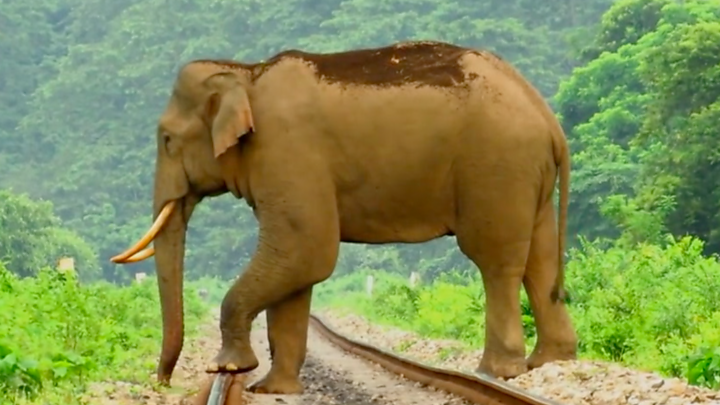
Image copyright AFPImage caption Decorated elephants lead the procession at the Jagannath temple’s annual festival in Ahmedabad
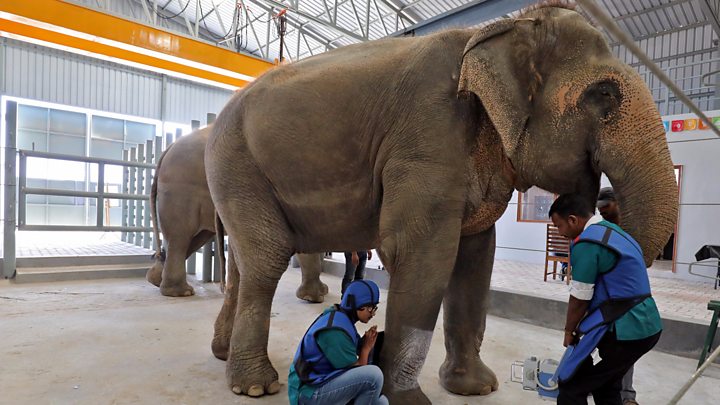
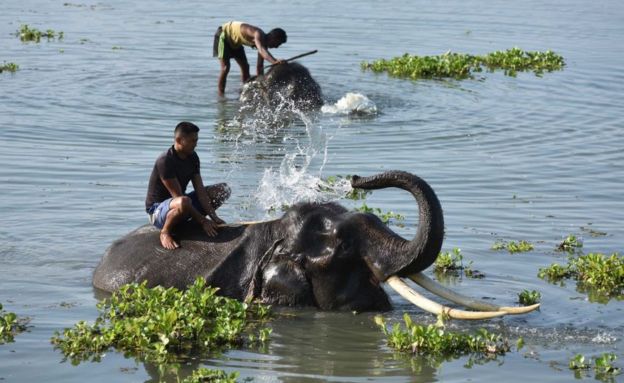
Animal rights activists in India have criticised a plan by the Assam state government to send four elephants on a perilous train journey of more than 3,100km (1,926 miles) to participate in a temple ritual. They say the long journey could be dangerous for the animals and may even kill them, writes the BBC’s Geeta Pandey in Delhi.
The elephants are to be moved from Tinsukia town in the north-eastern state of Assam to the extreme west of the country – Ahmedabad city in Gujarat state.
Reports say the railway authorities in Assam, who have been asked to make travel arrangements for the elephants, are looking for a coach to transport them.
No date is set for their departure yet, but they are expected to reach Ahmedabad before 4 July to participate in the annual Rath Yatra (chariot procession) at the Jagannath temple. The train journey is expected to take three to four days.
In previous years, Prime Minister Narendra Modi, who hails from Gujarat, has participated in the festival and the elephant procession, although temple officials say he’s not expected to attend this year.
Temple trustee Mahendra Jha told BBC Gujarati that they decided to “borrow” the animals from Assam “for two months” because three of their own elephants died from old age last year.
But activists and conservationists say the plan to move the elephants is “cruel and completely inhuman”, especially since temperatures are more than 40C (104F) in many places along the northern Indian route these elephants are expected to take.
Media caption Human-elephant conflict destroying lives in India
“Most of north-western India is reeling under a heatwave. There have been reports of people dying from heat during train journeys,” Kaushik Barua, a wildlife conservationist based in the Assam state capital, Guwahati, told the BBC.
“The wagon in which the elephants will be transported is not climate-controlled. It will be hitched to a passenger train which will be travelling at a speed of 100km/h (62mph), so can you imagine the plight of the animals?”
Mr Barua warns the journey may prove “dangerous” for the animals.
“They can suffer from heatstroke, from shock, and even die.”
Under the law, he says, there’s no problem moving these elephants since all the paperwork is in order, “but where’s the animal welfare?”
Also weighing in on the debate is the opposition Congress party MP from Assam, Gaurav Gogoi, who’s petitioned India’s Environment Minister Prakash Javadekar to intervene.
“Roughly half of the country is struggling through its worst drought in six decades…. These are extreme conditions for the elephants to travel… The elephants may suffer from acute skin infection and dehydration,” Mr Gogoi wrote in his letter on Thursday.
Media caption India’s first elephant hospital is run by the charity Wildlife SOS
“Therefore, I request the central government to intervene and instruct the state government to withdraw the decision as soon as possible.”
Elephants – both wild and captive – are a protected species in India and there are strict guidelines for their transportation, wildlife biologist Dr Bibhuti Prasad Lahkar told the BBC.
According to the rules, no elephant can be made to walk for more than 30km (18 miles) at a stretch or transported for more than six hours in one go.
The state’s wildlife officials, who’ve issued transit permits for the elephants, have so far refused to comment on the controversy. But after protests from activists and conservationists, “they have gone into a huddle, discussing a plan B,” according to a wildlife expert.
Image copyright GETTY IMAGESImage caption Elephants are a protected species in India
“There’s some suggestion that the pachyderms may be moved in trucks to allow them the flexibility to stop if needed and that they could be accompanied by a forest department veterinarian to look after them,” he said.
Mr Barua, however, is blunt.
“Gujarat doesn’t need these elephants,” he says. “Wildlife laws prevent [the] display and exhibition of elephants. Laws ban performances by elephants in circuses, zoos are not allowed to exhibit them, so why should temples be allowed to use them in rituals or processions? Don’t elephants have rights?
“We worship Ganesha, the Elephant God. Why are the Gods then being put through such cruelty by a temple?”
NEW DELHI (Reuters) – India’s federal think-tank has asked scooter and motorbike manufacturers to draw up a plan to switch to electric vehicles, days after they publicly opposed the government’s proposals saying they would disrupt the sector, two sources told Reuters.
Niti Aayog officials met with executives from companies including Bajaj Auto, Hero MotoCorp and TVS late on Friday, giving them two weeks to come up with the plan, according to one of the executives.
The think-tank, which is chaired by Prime Minister Narendra Modi and plays a key role in policymaking, had recommended that only electric models of scooters and motorbikes with engine capacity of more than 150cc must be sold from 2025, sources have told Reuters.
Automakers opposed the proposal and warned that a sudden transition, at a time when auto sales have slumped to a two-decade low, would cause market disruption and job losses.
India is one of the world’s largest two wheeler markets with sales of more than 20 million scooters and motorbikes last year.
During Friday’s meeting government officials argued that switching to EVs is of national importance so India does not miss out on the global drive towards environmentally cleaner vehicles, one of sources said.
But industry executives responded that a premature switch with no established supply chain, charging infrastructure or skilled labour in India, could result in India losing its leadership position in scooters and motorbikes, the second source said.
“There were clearly drawn out positions,” said the source, adding there were “strong opinions” at the meeting.
Bajaj, Hero and Niti Aayog did not respond to a request for comment, while TVS declined to comment.
ELECTRIFICATION
Niti Aayog is working with several other ministries on the recommendations, which are part of an electrification effort to help India reduce its fuel import bill and curb pollution.
The proposal also includes incentives for local production of batteries, an increase ownership cost of gasoline cars and forming a policy to scrap old vehicles, according to records of government meetings seen by Reuters.
The panel has also suggested measures such as directing taxi aggregators like Uber and Ola to convert 40% of their fleets to electric by April 2026, Reuters has reported.
Executives from EV start-up Ather Energy, ride-sharing firm Ola and officials from the Society of Indian Automobile Manufacturers (SIAM), an industry trade body, also attended the meeting, the sources said.
The proposals are India’s second attempt for a switch to EVs. In 2017 it proposed an ambitious plan mainly for electric cars but rowed back after facing resistance from car makers.
The current push could disrupt the market order for two-wheelers and open up avenues for local start-ups, analysts say.
Scooter and bike start-ups like Ather, 22Motors and Okinawa are already making in-roads in India.
“It is extremely critical that we make the transition to electric quickly lest we get wiped out by another global wave,” Tarun Mehta, CEO and co-founder at Ather said.
Inadequate infrastructure and industry standards are holding the country back in the battle to save the environment, new study finds
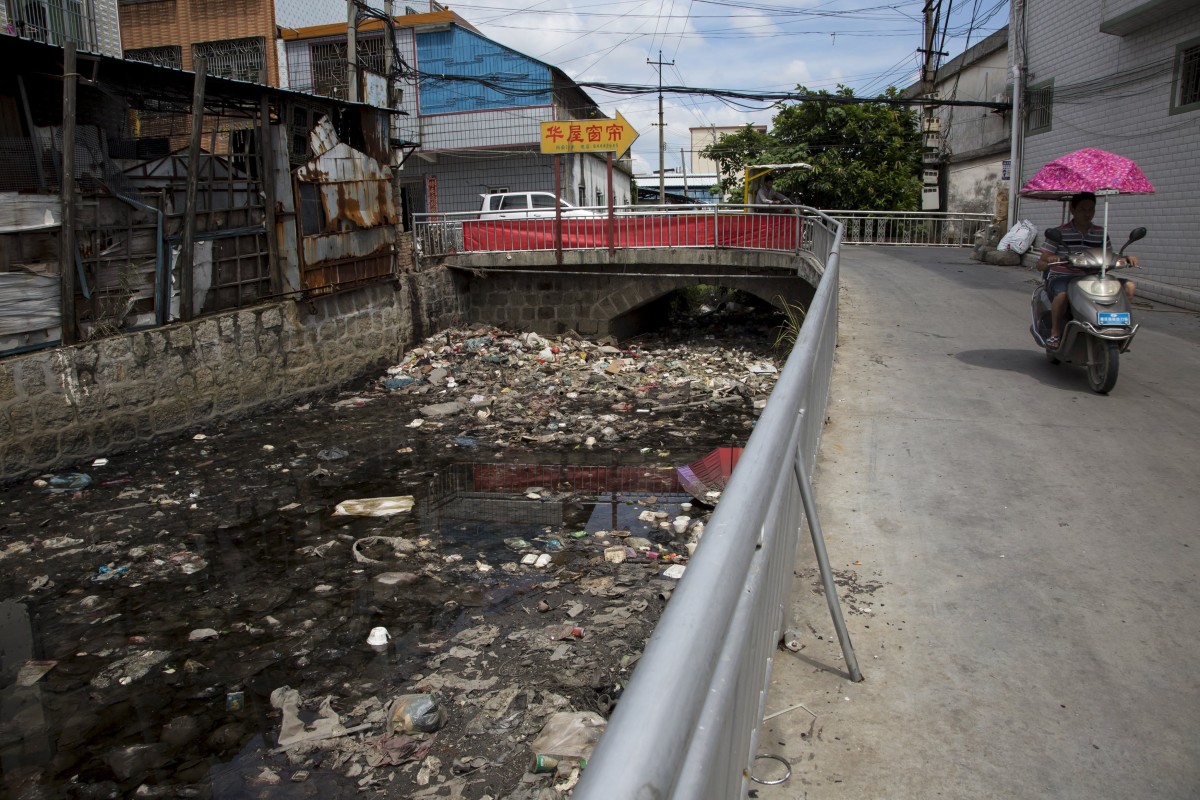
In some extreme cases, incomplete pipework meant factories in industrial parks discharged directly into waterways. Photo: Reuters
A shortage of waste water pipelines, lax local government oversight and a lack of industry standards are holding back efforts to cut industrial water pollution in China, according to a new joint study.
The research by Greenpeace and Nanjing University also found that many of the country’s waste water treatment plants were among its biggest polluters singled out by authorities.
Researchers made the assessment by examining data and reports released by the Ministry of Ecology and Environment last year. According to the reports, 243 – or 56 per cent – of the 436 major polluters fined in 2018 for excessive discharges were waste water treatment plants.
That is despite Beijing claiming to be one of the biggest processors of industrial and household waste water by volume in the world.
Fighting water pollution is part of Beijing’s pledge to fix the country’s depleted environment by 2020, one of the priorities President Xi Jinping identified at the start of his second five-year term in late 2017.
Dong Zhanfeng, deputy director of the Environmental Policy Department at the Chinese Academy for Environmental Planning, said waste water treatment was an important part of the fight against pollution.
“It’s called a ‘critical battle’ because the work is really tough,” Dong said.
China says progress made on water pollution, but battle remains
To try to curb contamination from industry, the central government has urged provincial authorities to concentrate factories in industrial parks, where infrastructure must be built to treat waste water.
The Greenpeace-Nanjing University researchers found that by the end of the third quarter last year, 97 per cent of 2,411 industrial waste water treatment plants needed for industrial parks around the country had been constructed. But not all of the completed plants were in full use because of insufficient pipes connecting factories and the treatment plants.
In extreme examples cited by the report, incomplete pipework meant two treatment plants in Hubei laid dormant for two years, forcing factories in the industrial parks to discharge directly into waterways.
In other cases, factories not linked to industrial waste water treatment plants discharged into the general sewage system, with the effluent ending up at household waste water treatment plants that could only filter part of the industrial waste.
This was the case in the southwest province of Guizhou, where a lack of pipework meant 89 of the 128 industrial parks relied on city sewage systems to treat polluted water.
Deng Tingting, a Beijing-based campaigner with Greenpeace East Asia, said conditions were a mess.
“Brand new waste water treatment plants sit unused while waste pumps into streams and rivers.
The current state of affairs is a mess, and it keeps companies from entering the growing market for waste water treatment. The decision not to shepherd this growing industry is a risky one,” Deng said.
China admits patchy progress tackling soil, water pollution, with some rivers worsening
The Ministry of Ecology and Environment estimated last year that in all China needed 400,000km (248,550 miles) of waste water pipework, costing around 1 trillion yuan (US$145 billion). The ministry did not say how much remained to be built.
Another major problem identified by the study was the lack of treatment standards for industrial waste water plants, with many plants relying on quality standards for household waste water treatment.
In addition, the researchers highlighted the problem of local governments and industrial park administrators shirking their responsibility to enforce standards.
The study called for clear demarcation of regulatory and oversight responsibilities among local environmental watchdogs, industry, industrial parks and water treatment plants.
After two decades of inaction, Chinese President Xi Jinping has set a deadline for the nation
Small, local successes show education is the key
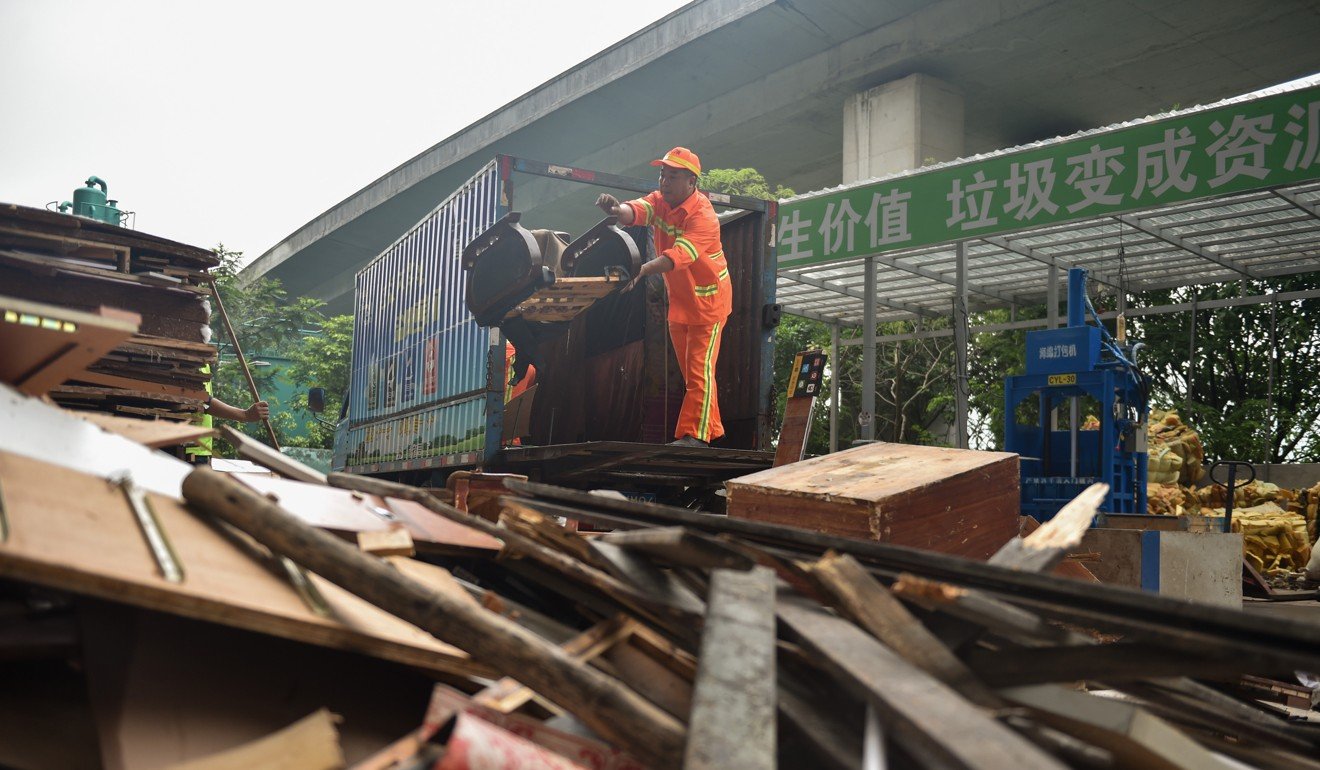
The sorting of household waste is more of a novelty than the norm in China. Photo: Xinhua
As 60-year-old Xu Mingan hurried to the rubbish bins on her Beijing estate, she saw an abandoned aluminium clothes rack.
Standing in front of several bins labelled “recyclables”, “kitchen waste” and “other waste”, she tore apart the rack, packed the aluminium parts together for selling to the recycling men who drop by occasionally, and threw the remaining plastics randomly into the bins.
“People don’t sort their waste here. We can’t even tell the difference between these bins,” she said.
But unlike other residents of the estate, Xu likes to rummage through the bins, picking up recyclables and selling them, as well as sharing discarded clothes, shoes, quilts and blankets that are still in good condition to the janitors.
The concept of sorting waste is still new in China. Photo: Xinhua
Xu, who has lived in Beijing for 10 years, admitted her family never sorted its household waste, despite two decades of encouragement from the government to do so. Her attitude may be about to change.
As part of the three major tasks Chinese President Xi Jinping has set the nation to achieve by 2020, China has adopted a new plan which aims to build a standard waste sorting system.
China must heed Xi’s call on tackling waste
In 2000, the government chose eight cities, including Beijing, Shanghai and Guangzhou, as pilots for the waste sorting plan, but the slogans fell on deaf ears and there have been few signs of progress.
But Xi appears to have given the grass-roots environmental policy his attention once more, delivering a long statement on June 3 about how the country needs to do better on sorting its waste.
“[We should have] extensive education and guidance, to let people realise the importance and necessity of waste sorting; through effective supervision and guidance, [we should] let more people take action and form a good habit on waste sorting,” he said.
In 2000 the Chinese government chose eight cities to pilot a waste sorting plan but it made little progress. Photo: Xinhua
In March 2017, the government set out a plan to formalise a standard system and regulations for rubbish sorting by 2020, with a target for 46 major cities – including Beijing – to recycle 35 per cent of their waste by that year. Three months later, the housing ministry published a notice requiring the cities to classify their waste and build a basic sorting system.
The recent attention from the top leaders has seen a spike in activity among local officials. Shanghai’s Communist Party chief Li Qiang was among the first to release local plans to implement household waste sorting in February, going in front of television cameras to demonstrate how to recycle plastic bottles.
“Waste sorting is a now a political task for local officials, and they might lose their jobs if they can’t do the job well,” said Zhang Yi, an expert with the ministry, which has primary responsibility for waste management.
G20 set to agree on ways to reduce problem of plastics in oceans
But the political will still needs time to translate into actual sorting and recycling, with environmental activists pointing out that little has been done in the two years since the plan was published.
“The vast majority of cities are still at the same level they were two years ago. They just change one bin into two or three bins in the community, but in the end, they are emptied into a single garbage truck,” said Chen Liwen, co-founder of Zero-Waste Villages, a non-government environmental organisation.
Waste classification should be done systematically, she said, with residents, government and sorting companies working together, “but we don’t have that at all”.
“The government should do a vast amount of work on education in the early stages, as well as change the sorting system in the later stage,” she said.
The recent attention from the top leaders has seen a spike in activity among local officials. Photo: Handout
Build the system
There are four main processes in the sorting of waste: dumping, collection, transport and treatment, Chen said. But currently, “not even one city has got the first step, trash sorting, sorted out”.
On May 31, China’s environment ministry published a report into its citizens’ thoughts on green issues and found a large gap between people’s recognition of the problem and their actions.
According to the study, 92 per cent of respondents believe rubbish sorting is important for environmental protection, but only 30 per cent said they were doing it “very well” or “fairly well”.
More than half gave their reasons for not sorting waste as “no classification bins in the community” and “no classification for the garbage truck, so no need to sort in the dumping process”. More than 30 per cent said they did not know how to classify their rubbish.
A government report found a large gap between people’s recognition of environmental problems and their actions. Photo: Handout
Wang Xi, a 29-year-old Beijing resident, said she did not know the standards for “recyclables” and “non-recyclables” so had never sorted her household waste. She only began to understand when she spent some time in Japan.
The difference there, she said, was that there was a guide in every home that showed how to sort waste into the different types – kitchen waste, plastic, paper – and designated collection days for each kind.
“If you mix the garbage, like put plastic in with the kitchen waste, the garbage company will send it back to you,” she said.
“But in China, all the bins are emptied into one garbage truck, so I don’t know what the point is for us to sort it in the first place.”
I don’t know what the point is for us to sort it in the first place – Beijing resident Wang Xi
Chen said the government needed to take the lead in waste sorting as a matter of public interest instead of only paying lip service to the issue.
Zhang said waste classification was a social issue but local officials had so far not paid enough attention to it. Most of the targeted 46 cities now had a plan on paper and had established offices with specific targets but, at the moment, waste sorting remained on paper too, he said.
How China’s ban on plastic waste imports threw recycling efforts into turmoil
Pilot projects in rural areas
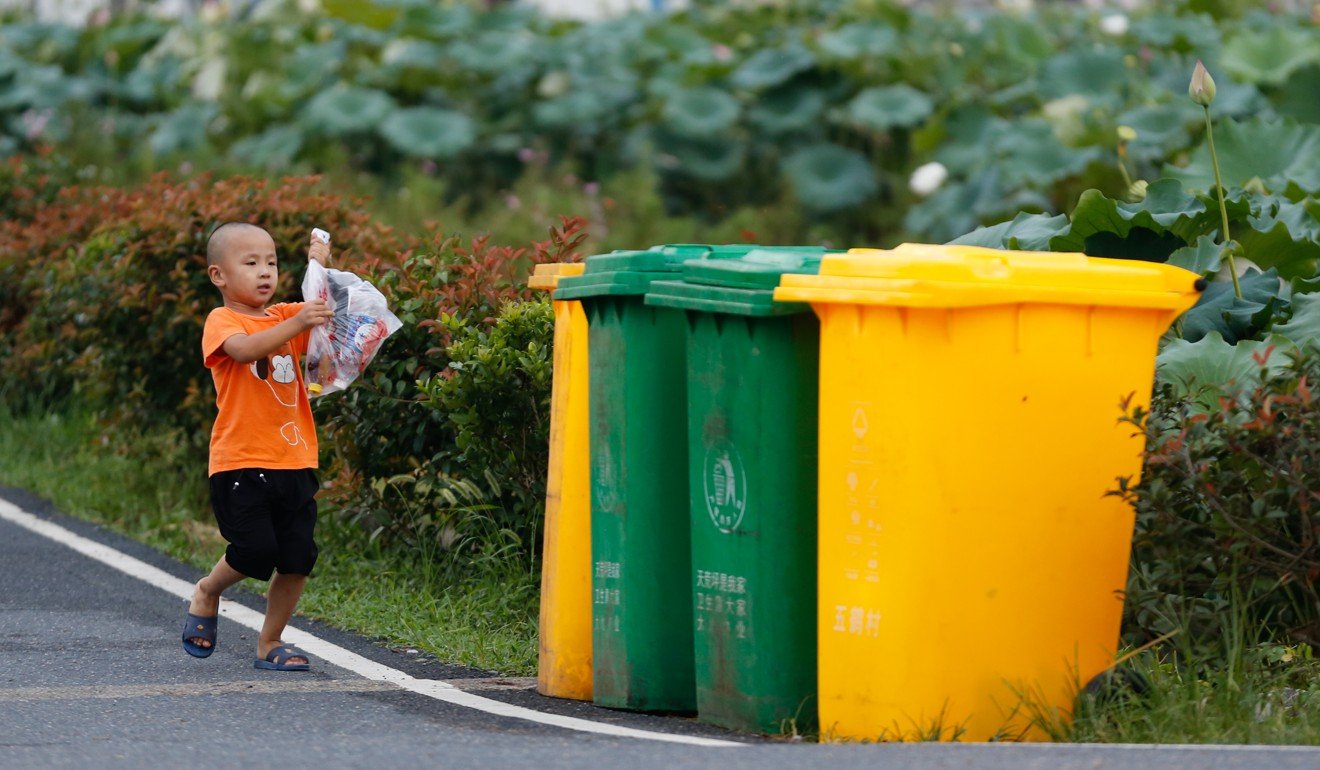
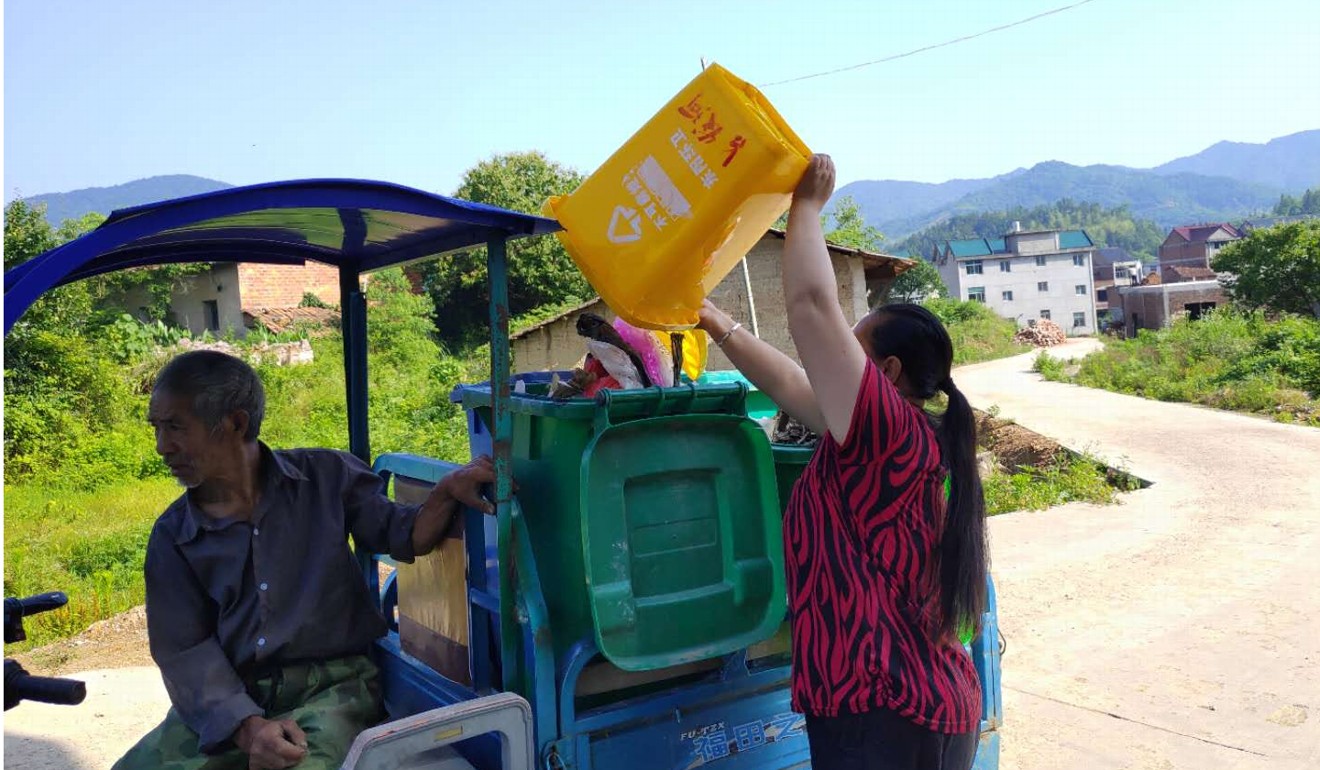
Despite the challenges ahead, some projects have shown promising results. Chen has been classifying waste in rural areas since 2017 and today her pilot projects have been replicated across more than 20 villages.
The greatest success has been in Jiangxi province, where 12 villages have been sorting their rubbish since December.
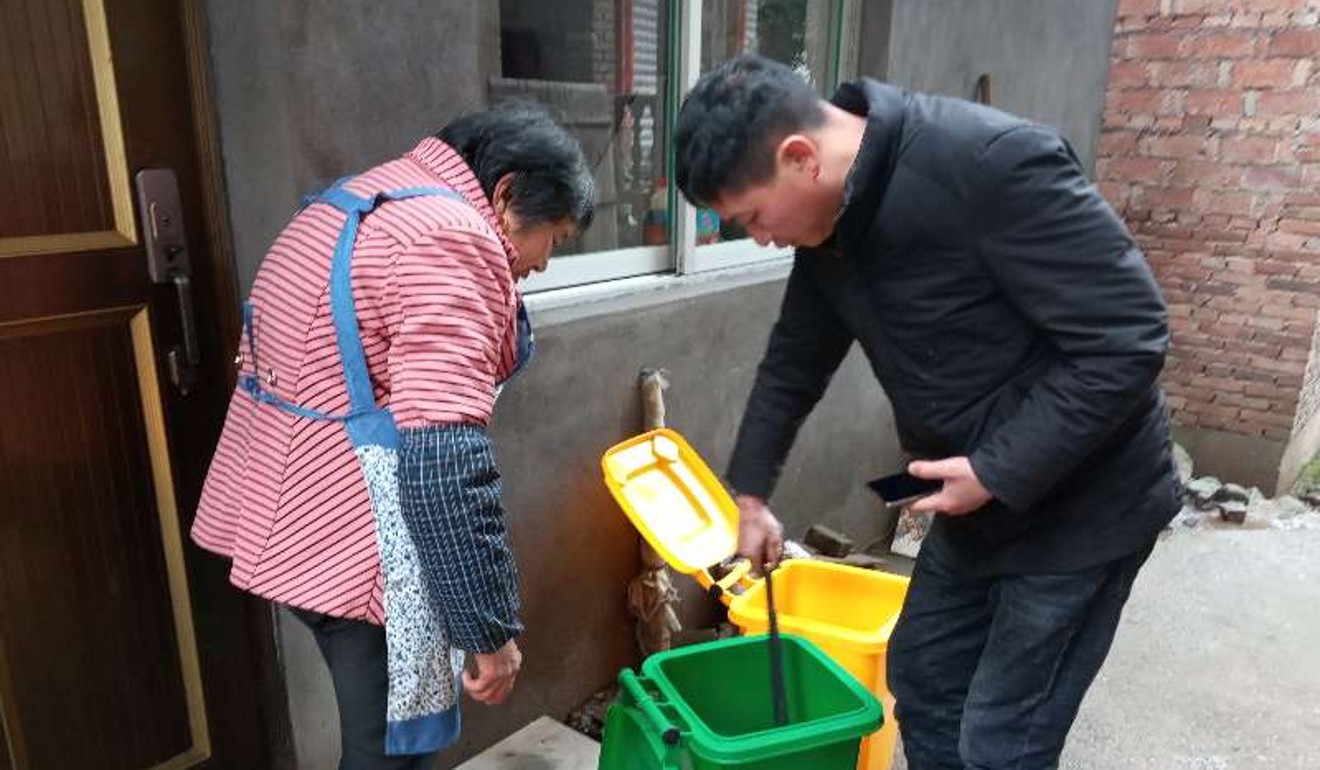
A government official in Dongyang county checks if a woman has correctly sorted her rubbish. Photo: Handout
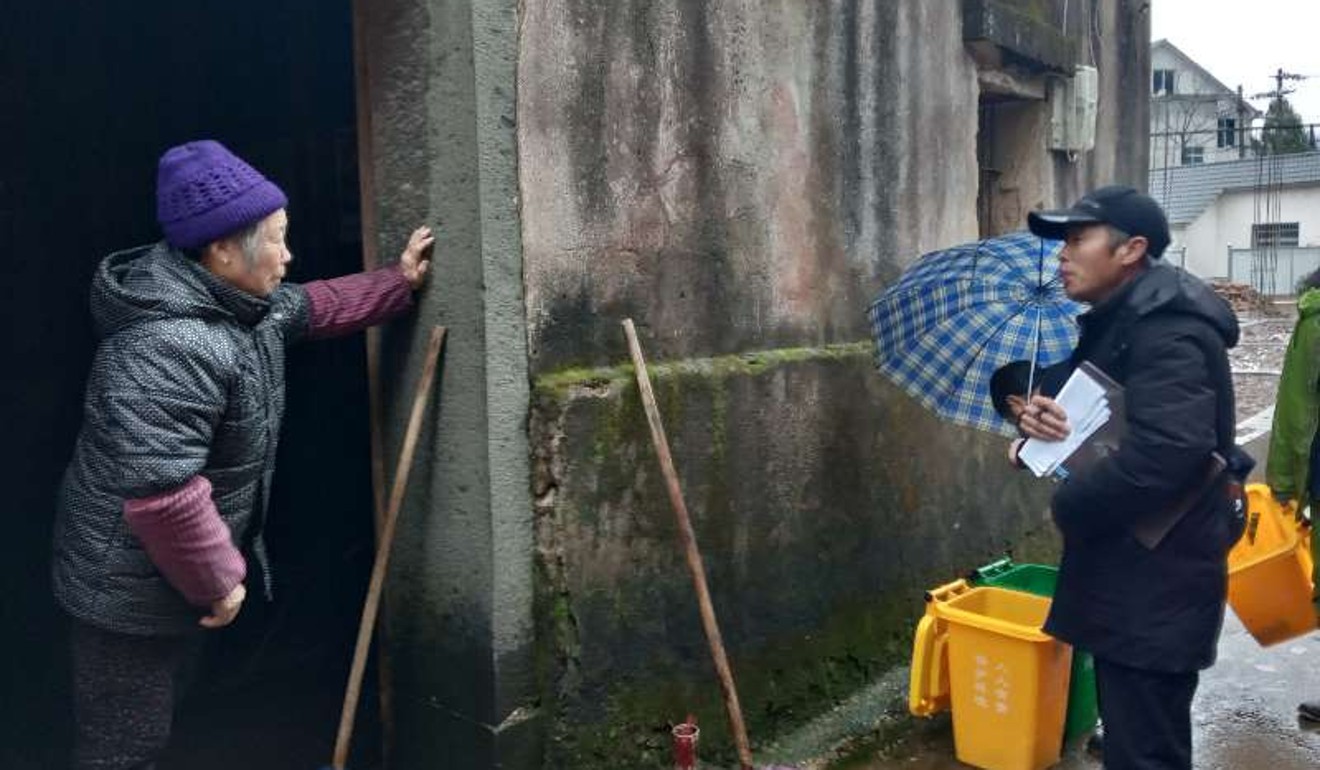
Wang Qinghai, party chief of Dongyang county in the northeastern part of the province, said preparation work began last June.
“We investigated the scale of household residents in our county, and the number of hotels, restaurants and schools, to estimate the garbage production per capita and how much we could reduce after sorting,” he said.
The hardest part was educating the public, he said. “We organised training and meetings and sent materials, we also guided people when they dumped their garbage.”
Wang said the effect had been very good and people’s understanding of environmental protection and their cooperation with the government had been beyond his expectations.
Beijing struggling to contain its growing garbage problem
According to his estimates, after the introduction of classification system the amount of waste had decreased by 50 per cent. Now, the amount of waste being classified correctly in Dongyang county was over 99 per cent.
A successful waste programme needed the government’s lead and the cooperation of the relevant departments, Wang said. In Dongyang, the agricultural, water resources and urban-rural development departments had all taken part.
As for investment, Zhang estimated China needed to double its financing to introduce sorting facilities and build treatment systems but, speaking from his experience, Wang said waste sorting had not required any extra money.
Zhang remains optimistic that the 46 cities named in the latest waste management plan can achieve their goal by 2020.
“Waste sorting was a big problem in China that hadn’t been solved for nearly two decades, but as our ‘big boss’ pays attention to this, it will be solved,” he said.
BANGKOK (Reuters) – Southeast Asian leaders opened a two-day summit in Bangkok on Saturday, though it was unclear what progress their 10-country group could make on disputes in the South China Sea and the plight of ethnic Rohingya fleeing Myanmar.
Formed more than half a century ago, the Association of Southeast Asian Nations (ASEAN) has historically struggled with challenges facing the region because it works only by consensus and is reluctant to become involved in any matter regarded as internal to a member state.
Thai Prime Minister Prayuth Chan-ocha was making his debut as a civilian leader representing current chair Thailand, after a general election in March that opposition parties say was designed to ensure his victory five years after the former army chief seized power in a 2014 coup.
Officials are expected to discuss a Code of Conduct (COC) for negotiations over the South China Sea, one of the world’s busiest waterways and a potential flashpoint, as it is claimed by several ASEAN members as well as China.
However, it was unlikely much progress would be made, though member nations might discuss the June 9 collision of a Philippine boat and a Chinese fishing vessel.
“It is encouraging to see that the ASEAN-China talks on the COC have continued,” said Marty Natalegawa, former foreign minister of Indonesia.
“However, there is real risk that developments on the ground – or more precisely at sea – are far outpacing the COC’s progress thereby possibly rendering it irrelevant.”
Philippine President Rodrigo Duterte has accepted China’s proposal to jointly investigate allegations that a Chinese fishing vessel abandoned 22 Filipinos after it sank their boat in the South China Sea, his spokesman said on Saturday.
Rights groups have also called on ASEAN leaders to rethink support for plans to repatriate Rohingya Muslims who have fled member state Myanmar, where activists say returnees could face discrimination and persecution.
More than 700,000 Rohingya crossed into Bangladesh in 2017, according to U.N. agencies, after a crackdown by Myanmar’s military sparked by Rohingya insurgent attacks on the security forces.
However, it is unlikely that there will be any criticism of Myanmar at the summit over the Rohingya, said Prapat Thepchatree, a political science professor at Thailand’s Thammasat University said.
“This issue has been a very sensitive one for ASEAN,” he said.
Host country Thailand deployed about 10,000 security forces around Bangkok for the summit, mindful of a decade ago when Thailand last hosted an ASEAN summit and dozens of protesters loyal to military-ousted former premier Thaksin Shinawatra forced their way into the meeting venue.
But on Saturday morning, only a small group of people had planned to stage a protest to call Prayuth’s election the product of a rigged system.
The group, called Citizens Wanting Elections, was stopped by police before it could reach a meeting point near the summit venue. The group later released a statement welcoming visiting leaders but criticising Prayuth.
“The individual who serves as President of ASEAN, who welcomes everyone today, did not come from a clean and fair election,” the letter said.






 CHINDIA ALERT: You'll be living in their world, very soon