Archive for July, 2019

06/07/2019

China Focus: Peacebuilders in China-Japan friendship

TIANJIN/BEIJING, July 6 (Xinhua) — Even at the age of 100, Yang Enze, one of the founders of China’s optical communication, does not stop his research and teaching as a professor at Tianjin University.

Besides his pioneering achievements as the chief engineer of China’s first optical communication project for practical use in the 1970s, Yang is also known as a survivor and a witness of the war of Japanese aggression against China.

“I was admitted to Wuhan University in 1937, the year when Japanese troops attacked the Lugou Bridge, also known as Marco Polo Bridge, on the outskirts of Beijing, on July 7,” said the senior recalling the start of his academic study.

The incident marked the beginning of Japan’s full-scale war against China during World War II and triggered China’s full-scale resistance against the invasion.

Ahead of the 82nd anniversary of the incident that falls on Sunday, Yang said because of the war, his university in central China’s Hubei Province was relocated to southwestern province of Sichuan to avoid the enemy forces. “Even in Sichuan, there were a lot of Japanese bombings, but none of the students missed any of the classes as long as there was no air-raid siren,” he recalled.

It was at that time he and many of his peers cemented the belief that the country needed advanced science and technology for reconstruction and revival.

“I have always kept in mind late chairman Mao Zedong’s words that it was Japanese militarists’ crime that was to blame for the war, not Japanese civilians, ” Yang said, noting that he still gets in touch with many Japanese scholars.

He established the first optical communication laboratory in Tianjin in 1985, when he was invited to teach at Tianjin University. In Yang’s career, he has made friends with several leading experts from Japan at international conferences and even kept friendship with some of them.

Also in Tianjin, Morita Naomi, a Japanese language teacher in Nankai University, works as a consultant to the school’s research institute of Zhou Enlai-Daisaku Ikeda.

“By involving in the research of the friendship between the late Chinese premier and the Japanese philosopher, I want to search for the core factors that help consolidate the friendship between the two peoples,” said Naomi.

She came to Nankai to pursue a master-degree study in Modern Chinese and Chinese Literature in 2010 and has stayed ever since.

When she first arrived, she had troubles even in learning Chinese phonics. Now she can read and speak Chinese fluently, write beautiful Chinese characters, and study ancient Chinese literature independently.

As a teacher, she feels frustrated that most of her Chinese students are more likely to be attracted by Japanese animation and games rather than Japanese literature.

According to the school’s statistics, nearly half of the undergraduates in the 2019 class of Japanese major chose to work in Japanese-funded enterprises or Japanese-related enterprises after graduation.

Naomi said Japanese visitors to China are more likely to choose destinations like Beijing, Shanghai and Guangzhou. Peking University in Beijing impresses young Japanese most.

According to a report released by the China Tourism Academy, China received 2.69 million Japanese visitors in 2018, making Japan China’s fourth largest source of foreign tourists. In the same year, Chinese made 9.06 million outbound visits to Japan as a direct destination.

The academy released the report at the 2019 China-Japan Tourism Forum Dalian held on May 26, which focused on promoting win-win cooperation on cultural exchanges and tourism between the two countries.

China and Japan agreed to push forward bilateral relations along the right track of peace, friendship and cooperation, at the summit of the Group of 20 (G20) major economies held in Osaka, Japan, in June.

This year marks the 70th anniversary of the founding of the People’s Republic of China, and Japan has also entered the Era of Reiwa. It is also the China-Japan Youth Exchange Promotion Year, for promoting friendship and cooperation in a wide range of areas between the two peoples.

“We keep the wartime memory not because we bear the hatred, but because we want the younger generations to cherish what they own today and move towards a better future,” said 70-year-old Zhen Dong, who on Friday visited an exhibition on Beijing’s past, held in Beijing Municipal Archives.

Zhao Hongwei, a professor with Tokyo-based Hosei University, said when it comes to the bilateral relations between China and Japan, it is very important to promote the free trade agreement and expand the markets of both sides.

Source: Xinhua

06/07/2019

China claims 55 of UNESCO world heritages with elected new sit

AZERBAIJAN-BAKU-CHINA-LIANGZHU-WORLD HERITAGE

The Chinese delegation celebrate during the 43rd session of the UNESCO World Heritage Committee in Baku, Azerbaijan, July 6, 2019. The United Nations Educational, Scientific and Cultural Organization (UNESCO) World Heritage Committee inscribed China’s Archaeological Ruins of Liangzhu City on the World Heritage List as a cultural site here on Saturday, bringing the total number of World Heritage Sites in China to 55, the highest in the world. (Xinhua/Tofik Babayev)

BAKU, July 6 (Xinhua) — China’s Archaeological Ruins of Liangzhu City was on Saturday inscribed to the UNESCO World Heritage List as a cultural site, bringing the total number of the Asian country’s sites on the list to 55.

The decision to add the Chinese cultural site, located in the eastern Chinese city of Hangzhou, to the United Nations Educational, Scientific and Cultural Organization’s (UNESCO) World Heritage List was approved by the World Heritage Committee at its ongoing 43rd session in the Azerbaijani capital of Baku.

“It is considered to be a supreme achievement of prehistoric rice-cultivating civilization of China and East Asia over 5,000 years ago and an outstanding example of early urban civilization,” said a report by the International Council on Monuments and Sites (ICOMOS), the committee’s official advisory body.

Sitting on a plain crossed by river networks in the Yangtze River Basin, the nominated property of Archaeological Ruins of Liangzhu City includes the archaeological remains of Liangzhu City (3300 BC-2300 BC), which was once the center of power and belief of an early regional state in the lower reaches of the Yangtze River during the Late Neolithic China period.

The property testifies to the existence of a regional state with a unified belief system and supported by a rice-cultivating agriculture in late Neolithic China. It also represents an early urban civilization with complex functions and structures.

“Archaeological Ruins of Liangzhu City is a major archaeological discovery of China in the 20th century and an important cultural site that witnessed the 5,000-year civilization of the country,” said Liu Yuzhu, head of China’s National Cultural Heritage Administration, at the committee session.

“We are proud that after 25 years of preparation, our efforts have finally led to the successful inscription of this exceptionally important property, which is the most concrete testimony of 5,000 years of Chinese civilization,” said Shen Yang, ambassador and permanent delegate of China to the UNESCO, following the announcement of the decision.

“We are keenly aware that the inscription also entails an enormous responsibility for conserving this heritage of humanity,” he added.

Zhou Jiangyong, Hangzhou’s municipal committee secretary of the Communist Party of China, said the Chinese city will spare no effort to “protect and make proper use of the enormous cultural heritage before passing it on to the the future generations.”

The Chinese side also pledged continued efforts and strengthened international cooperation in the protection and management of the world heritages in China.

The 43rd convention of the World Heritage Committee, held from June 30 to July 10, started on Friday to examine world heritage nominations. According to its agenda, it will also review the state of conservation of 166 sites on the World Heritage List, 54 of which are also on the List of World Heritage in Danger.

On Friday, China’s Migratory Bird Sanctuaries along the Coast of the Yellow Sea-Bohai Gulf (Phase I) was inscribed to the World Heritage List as a natural site.

At present, China has 55 world heritage sites, including 37 cultural sites, 14 natural sites, and 4 cultural and natural heritages.

Source: Xinhua

06/07/2019

Chinese state councilor to visit Poland, Slovakia, and Hungary

BEIJING, July 6 (Xinhua) — Chinese State Councilor and Foreign Minister Wang Yi will visit Poland, Slovakia and Hungary from July 7 to 13, at the invitation of Polish Foreign Minister Jacek Czaputowicz, Slovak Foreign Minister Miroslav Lajcak, and Hungarian Foreign Minister Peter Szijjarto respectively.

He will also co-host the second plenary session of China-Poland Intergovernmental Cooperation Committee with Czaputowicz and the second China-Hungary “Belt and Road” working group meeting with Szijjarto during the visit, foreign ministry spokesperson Geng Shuang said Saturday in Beijing.

Source: Xinhua

06/07/2019

New Delhi and Beijing cannot let differences turn into disputes: India’s ambassador to China

  • Ambassador Vikram Misri has called on China to balance its US$60 billion trade deficit with India ‘before the issue becomes politically sensitive’
  • He also says India will not take sides over its use of US-blacklisted Huawei, as ‘any decision taken over this will only be taken in our national interest’
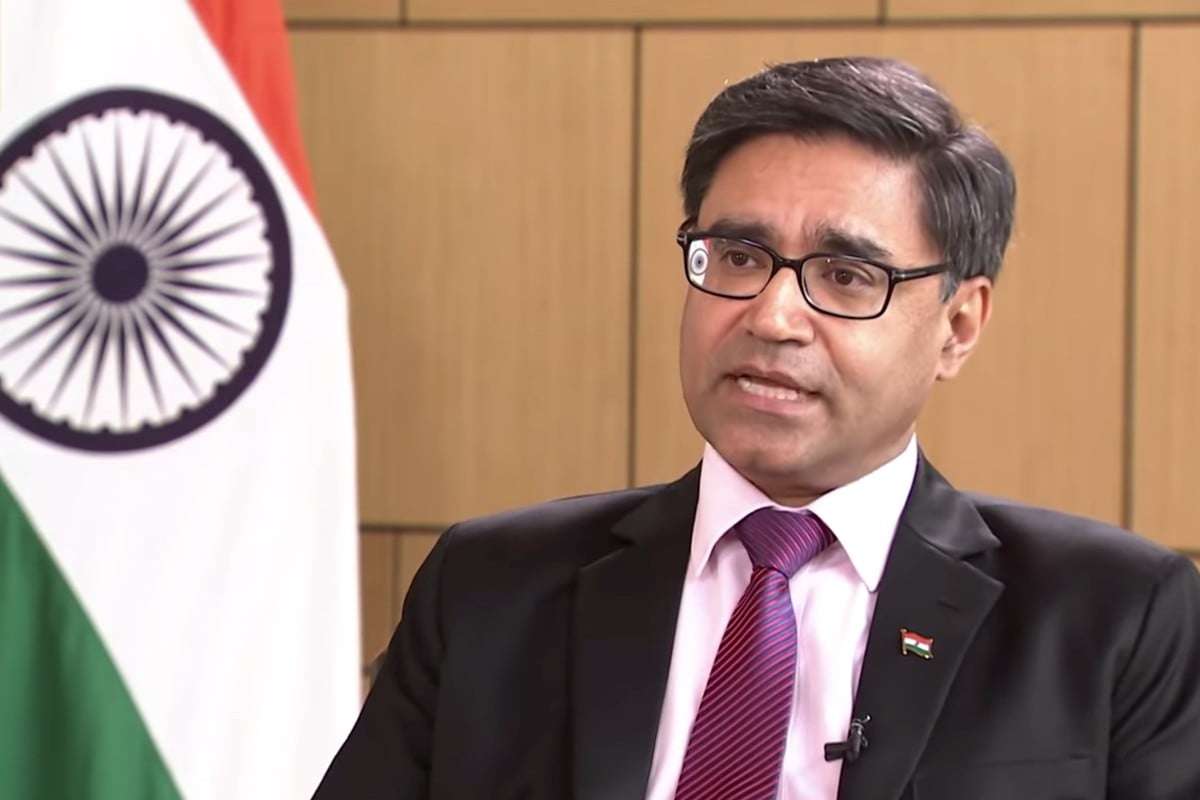
Indian ambassador to China Vikram Misri says that while the countries’ differences will not derail ties, there are still thorny issues to grapple with. Photo: CGTN
India and China must actively manage their differences

so they do not get in the way of the Asian superpowers working together for global stability, India’s top diplomat in China said on Friday.

To emphasise his point, Ambassador Vikram Misri listed eight long-standing and new bilateral issues that required attention, including 
India

’s almost US$60 billion trade deficit with China, cooperation on counterterrorism and a

peaceful resolution to their border dispute

.

“This trade imbalance is not economically sustainable in the long run,” said Misri at an Asia Society event in Hong Kong. “It is in our mutual interest to find workable solutions before the markets react in unpredictable ways and the issue becomes politically sensitive.”
Frosty ties between two of the world’s largest economies have thawed in the past year following a 73-day 
military stand-off in the Himalayas

in 2017, with Beijing seeking to forge closer ties with New Delhi amid its ongoing trade and tech war with the United States.

Ivanka Trump, the unlikely messenger of India-US relations
In May, Beijing dropped its long-held objections towards United Nations sanctions on

Masood Azhar

, the founder and leader of terrorist group Jaish-e-Mohammed, which was behind the suicide bombing of Indian soldiers that brought India and Pakistan to the brink of war earlier this year.

Analysts said this would pave the way for a better relationship between India and China.
Misri said both countries enjoyed a “full-spectrum relationship” of economic, commercial and people-to-people ties, and this was reinforced by the “strong personal bond” Indian Prime Minister

Narendra Modi

and Chinese President

Xi Jinping

had, despite the “elements of competition”.

The leaders of the two nations met four times last year and twice in 2019, with Xi set to visit India later this year. Both men share an understanding that “our rise can be mutually reinforcing” and a mutual interest in “preventing differences from turning into disputes”, the ambassador added.

But while Misri, a career diplomat posted to Beijing at the start of this year, stressed that differences would not derail ties, he made no bones about the thorny issues both sides are grappling with.

Will Modi’s snub of Xi’s belt and road derail China-India ties?
Both nations are still engaged in the second of a three-stage process to settle their border dispute – the world’s largest in terms of area, he said.
The first stage was an agreement on the political parameters for a boundary settlement in 2005. The current stage involves agreeing on a framework for a boundary settlement, which Misri said would be translated “into a delineated and demarcated boundary” in the final stage.
Communication over water and shared rivers has also been a key area of cooperation for the two nations.
Indian ambassador to China Vikram Misri speaking at the Asia Society in Hong Kong. Photo: Asia Society

They have established channels for information sharing on cross-frontier rivers, which last year enabled the Chinese side to warn the relevant Indian authorities of a landslide which would send a large amount of water to India. While in this instance the two sides were able to avert a loss of life, they can do more to broaden cooperation, Misri said.

He alluded to how China and India are vying for influence in the Indian Ocean, saying it was an area where both had “contiguous zones of maritime interest”.

The two sides need to work together to preserve peace and stability in the Indo-Pacific region – which stretches from the Indian Ocean to the central Pacific Ocean – and ensure transparent economic and commercial cooperation, infrastructure and connectivity, he said.

As China, India and Russia draw close, has Trump overplayed his hand?

Misri, who served as the private secretary to Modi as well as former prime ministers Manmohan Singh and I.K. Gujral, said there were three areas of mutual interest for India and China.

Besides a “peaceful periphery”, they should cooperate to ensure there are open international systems regarding trade and technology, and that global governance is reformed so the voices of nations such as theirs can be heard.

The Russia-India-China trilateral meeting on the sidelines of last month’s 

G20

summit in Osaka, where leaders discussed issues ranging from energy security to climate change, was an opportunity to discuss alternative viewpoints on changing international issues.

This was crucial amid the economic instability caused by 
US-China trade tensions

, that were causing “generalised damage” to the global economy, Misri said.

In the question and answer session with the event’s 112 attendees, Misri was asked if India was feeling the pressure to choose in the face of US efforts to get its allies to reconsider using or ban Chinese tech firm 
Huawei

from their superfast 5G networks.

Washington says Huawei equipment could be used by Beijing for spying and the US Commerce Department has placed the company on its entity list, effectively banning US companies from selling equipment and components to it.
When US President 
Donald Trump

and Xi met at the G20 summit, Trump announced American companies could resume sales to Huawei as long as the products involved did not threaten national security.

Misri referred to this, and said: “Let’s see how it shapes up.”
He added the issue was far from decided for India as it had only achieved 4G connectivity recently and was not yet ready to build out its 
5G

infrastructure.

Still, he said, “there’s no question on taking sides over this”. “Our leadership is very clear that any decision taken over this will only be taken in our national interest.”
Source: SCMP
06/07/2019

Can China win the soccer World Cup with a handful of naturalised players? Probably not

  • President Xi Jinping has made no secret of his desire for China to one day host and maybe even win football’s greatest prize
  • But a few passport-switching foreigners are unlikely to be enough to make his dreams come true
China’s soccer team has high hopes, but it still has a long way to go before it can even dream of competing on the world stage. Photo: Reuters
As China targets a place at the 2022 World Cup, England-born 
Nico Yennaris

recently became the first foreign player to join the men’s national soccer team as a naturalised citizen.

On his identity card he is listed as ethnic Han.
Several foreign soccer players and other sportspeople have become Chinese citizens in recent years, many of them drawn by the huge financial rewards on offer.
Naturalisation has a long history in many countries, but it is a new concept in China, whose football association only publicly announced it would use it to boost its talent pool late last year. President Xi Jinping’s passion for the game and ambitions for China to host and maybe one day win the World Cup has been public knowledge since before he became leader.
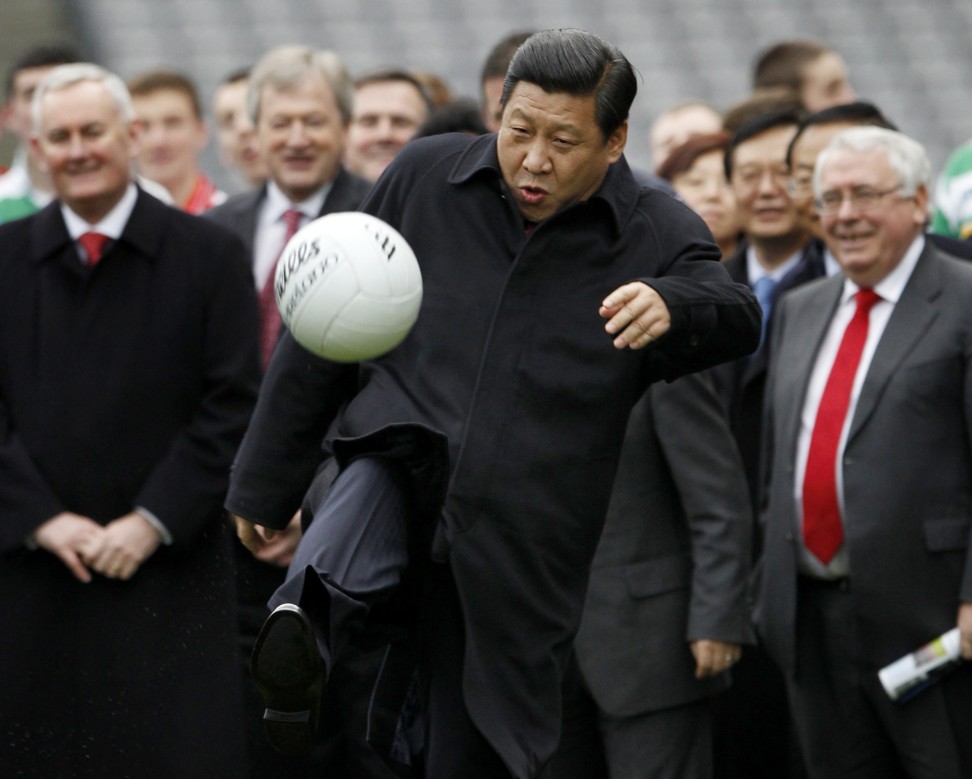
Chinese President Xi Jinping, pictured on a 2012 visit to Croke Park in Dublin while still vice-president, has big dreams for China’s soccer team. Photo: Reuters

John Hou Saeter, who was born to a Norwegian father and Chinese mother, in February became the first professional footballer to switch to Chinese citizenship. The 21-year-old, now known as Hou Yongyong, plays for Beijing Sinobo Guoan, one of the top teams in the Chinese Super League.

Another English player, Tyias Browning, recently joined Guangzhou Evergrande Taobao and is set to complete the process of applying for Chinese citizenship soon, Reuters reported last month.

Yennaris’ naturalisation may help bring China into 21st century
At a work conference in December, Du Zhaocai, the Communist Party secretary of the

Chinese Football Association

(CFA), promised to introduce new policies on naturalisation to help clubs attract players from overseas to join the Super League.

Professor Chen Xiyao from Shanghai University of Sport said such a move would have been unthinkable in the past.

“This is something new in China,” he said. “In the past we only saw our own athletes becoming naturalised citizens of other countries, but not foreign players coming to play for us.”

While the trend was undoubtedly prompted by Xi’s ambitions, Chen said it was also linked to the country’s growing economic prowess and wealth.

“China’s economic growth means it has become better known internationally. Everybody thinks China has money and sports clubs are spending huge sums to attract top players,” he said.

Former Everton player Tyias Browning now plays for Guangzhou Evergrande Taobao. Photo: Reuters

Mark Dreyer, founder of the China Sports Insider website, said naturalised players were motivated not only by money, but also the chance to increase their exposure and possibly play in a major tournament, which they would otherwise not get the chance to do.

“The rewards for the players are fairly clear: more money, more exposure and a shot at playing in the biggest tournaments in the world with China, which they wouldn’t have got if they’d stayed with their original countries,” he said.

“For athletes of Chinese descent, there will also be varying degrees of patriotism built into this as well.”

It is not just soccer players who are making the move top China. It is also happening in other sports, like ice hockey and figure skating.

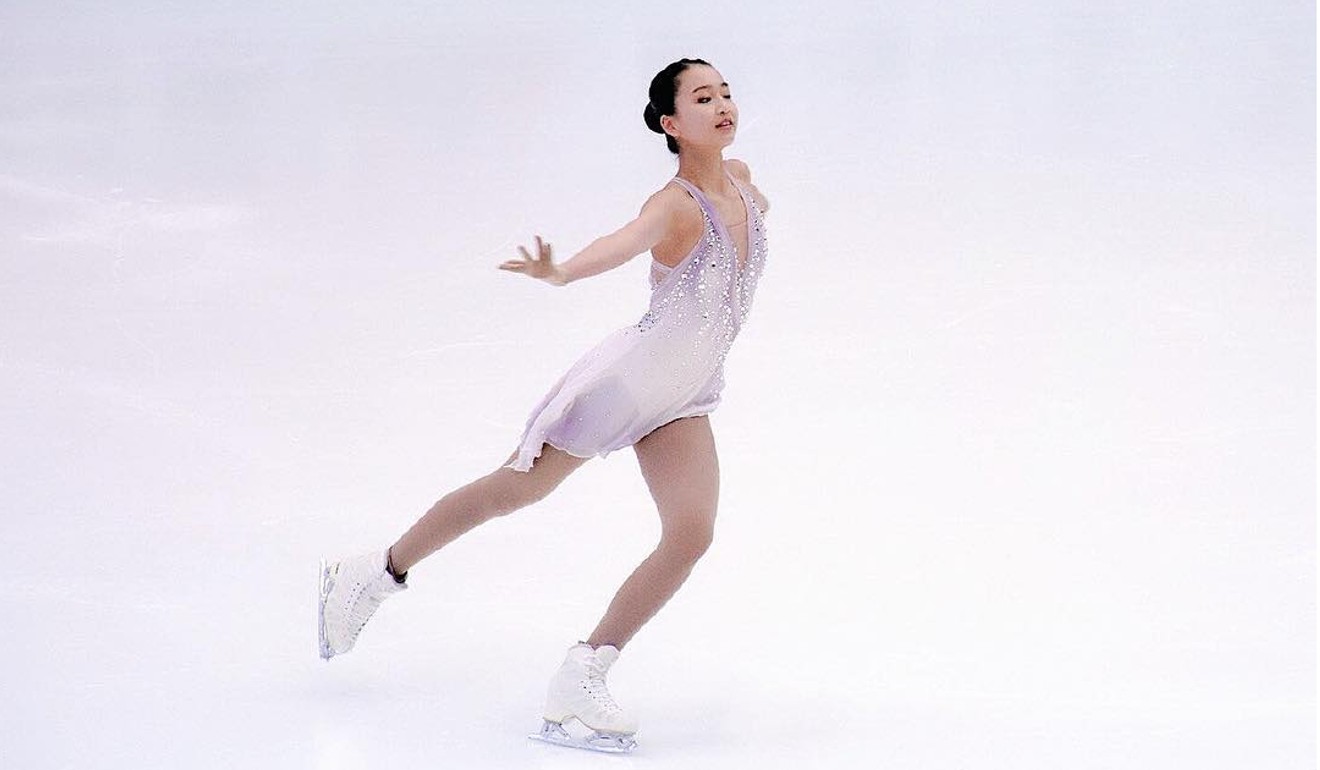
US-born Beverly Zhu, who won the 2018 US Figure Skating Championships, triggered a heated discussion in China after she joined the Chinese team last year, which means she can compete for the host nation at the Beijing 2022 Winter Olympics.

In ice hockey, a number of overseas players have also been naturalised, including Zach Yuen from Canada, who may also represent China in Beijing in 2022.

Beverly Zhu, who won the 2018 US Figure Skating Championships, joined the Chinese team last year. Photo: Instagram

Roy Chu, a lawyer with Links Law Offices in Shanghai who specialises in the sports industry, said that as China does not recognise dual nationality, foreigners have to give up their citizenship if they want to get a Chinese passport and apply for naturalisation.

“Therefore, the players to be naturalised have to be willing to represent China on the one hand, and on the other have a Chinese family background so as to simplify the legal procedures,” Chu said.

Browning’ grandfather and Yennaris’s mother are Chinese.

Dreyer said: “The players who choose to swap clearly think that the rewards outweigh the negatives of trading in their passport for a Chinese one.”

Under Chinese law, only foreigners with Chinese ancestry or those who have lived in China for at least five years can apply for Chinese citizenship. All but one of the sportsmen and women who have so far made the switch have Chinese ancestry.

The exception is Pedro Delgado, who was born and raised in Portugal but now plays for Shandong Luneng. He gained his Chinese citizenship last month and, according to the club, is the first foreign player without Chinese ancestry to become naturalised.

John Hou Saeter, who was born to a Norwegian father and Chinese mother, in February became the first professional footballer to switch to Chinese citizenship. Photo: Instagram

The naturalisation process is the same for sportspeople as it is for anyone else.

“The list of paperwork required by the Ministry of Public Security is quite short, but it doesn’t specify how long it takes to finish each step. So in that sense there is quite a lot of uncertainty,” Chu said.

“Those with Chinese ancestry will become the top targets for naturalisation in the short term so clubs can improve their talent pool, while those without may need more policy support,” he said.

London-born Nico Yennaris recently became the first foreign player to join China’s national soccer team as a naturalised citizen. Photo: AFP

Naturalised players also faced many challenges in China, especially if they did not speak the language or knew little about the culture, he said.

“Aside from settling into a completely different environment, they may also face resentment from their teammates, especially if those players lose their places in the team to the new arrivals,” Dreyer said.

“If the national team has several naturalised players, cliques could develop. We saw this in the US football team, when several German-born Americans were drafted in to play for the national team, causing internal rifts.”

And if the “foreign” players did not perform to the highest standards, the fans might also turn on them, he said.

Xi Jinping has made no secret of his desire to improve China’s and supports events at the school level. Photo: EPA
Under a

CFA directive

issued in March, footballers who become Chinese citizens must be also be educated to be patriotic and learn about the Communist Party. Clubs must also issue monthly reports on how the new players are settling in.

Grass-roots organisations within the Communist Party of China would be “in charge of educating such footballers on the history and basic theory of the party”, it said.
Dreyer said that while the naturalisation process might help China’s ice hockey team to perform slightly better at the 2022 Olympics than it had in the past, it was unlikely to have much of an impact on China’s international soccer ranking. China’s national team has only once qualified for the World Cup, in 2002.
“There is a reason they [naturalised players] didn’t play internationally for their original countries – they weren’t considered good enough,” he said.
“So they are not suddenly going to turn into world-beaters simply by pulling on a Chinese jersey.”
Chen agreed.
“I think it is just a short-term measure that will not truly change China’s overall performance in football or other sports,” he said. “After all, it’s an 11-person team game.”
Source: SCMP
05/07/2019

Joint law enforcement on environment in Beijing-Tianjin-Hebei region

SHIJIAZHUANG, July 4 (Xinhua) — Authorities in Beijing, Tianjin and Hebei will conduct joint law enforcement in environment-related areas from 2019 to 2020.

That was learned from a working meeting, held Wednesday in Langfang of Hebei Province, on joint law enforcement involving ecology and environment in Beijing, Tianjin and Hebei.

The campaign is aimed at handling cases of cross-region environmental pollution and related violations.

The authorities will inspect industries, with priority going to polluters such as printing, furniture-making, medicine and pesticide, and rubber products. They will also inspect water resources in regional border areas.

China pledged to coordinate its efforts on environmental protection and economic development in 2019. It promised to push for better air quality with better regional coordination and heavy-polluter revamps, according to the Ministry of Ecology and Environment.

Source: Xinhua

05/07/2019

Chinese president appoints new ambassadors

BEIJING, July 4 (Xinhua) — Chinese President Xi Jinping has appointed six new ambassadors in accordance with a decision by the Standing Committee of the National People’s Congress, according to a statement from the national legislature Thursday.

Chen Hai was appointed ambassador to Myanmar, replacing Hong Liang.

Chang Hua was appointed ambassador to Iran, replacing Pang Sen.

Liao Liqiang was appointed ambassador to Egypt, replacing Song Aiguo.

Xu Erwen was appointed ambassador to Croatia, replacing Hu Zhaoming.

Yi Xianliang was appointed ambassador to Norway, replacing Wang Min.

Chen Xu was appointed China’s permanent representative and ambassador to the United Nations Office at Geneva and other international organizations in Switzerland, replacing Yu Jianhua.

Source: Xinhua

05/07/2019

Chinese premier meets UNGA president-elect

CHINA-BEIJING-LI KEQIANG-UN GENERAL ASSEMBLY-PRESIDENT-ELECT-MEETING (CN)

Chinese Premier Li Keqiang (R) meets with Tijjani Muhammad-Bande, president-elect of the 74th session of the United Nations General Assembly, at the Great Hall of the People in Beijing, capital of China, July 4, 2019. (Xinhua/Pang Xinglei)

BEIJING, July 4 (Xinhua) — Chinese Premier Li Keqiang on Thursday met with Tijjani Muhammad-Bande, the president-elect of the 74th session of the United Nations (UN) General Assembly, pledging to continue firmly safeguarding the international system with the UN as the core.

The UN has played an irreplaceable role in maintaining world peace and stability, advancing global development and promoting international cooperation since it was founded over 70 years ago, Li said.

Next year marks the 75th anniversary of the founding of the United Nations.

“China supports the UN General Assembly in preparing relevant commemorative activities, as this is of special significance to safeguard the principles of multilateralism, equality of sovereignty, and solving problems through peaceful means that are represented by the UN,” Li said.

As a founding member of the UN, a permanent member of the UN Security Council, and the biggest developing country in the world, China will continue to firmly safeguard the international system with the UN as the core, uphold the purposes and principles of the UN Charter, and work with other countries to deepen international cooperation, safeguard international fairness and justice, and jointly cope with challenges so as to build a community with a shared future for humanity, Li said.

He also congratulated Muhammad-Bande for being elected as the president of the 74th session of the UN General Assembly.

Muhammad-Bande expressed gratitude to China’s strong support to the UN and pledged to firmly support multilateralism, safeguard the purposes and principles of the UN Charter, and support UN member states to solve problems through consultation.

He also vowed to maintain an objective and unbiased attitude in carrying out his work and strengthen communication and coordination with China.

Yang Jiechi, a member of the Political Bureau of the Central Committee of the Communist Party of China (CPC) and director of the Office of the Foreign Affairs Commission of the CPC Central Committee, and Chinese State Councilor and Foreign Minister Wang Yi also met with Muhammad-Bande on Thursday.

Source: Xinhua

05/07/2019

Chinese woman drops in on work colleagues to deliver lunch – from a height of 300 metres

  • Mountain park worker Wan Tiandi started making the near-1,000ft bungee jump every day as the most efficient way of delivering a hot meal to her colleagues
  • She says it would take more than half an hour to drive down the mountain, but this way means she can get the food there within minutes
Wan Tiandi makes the 300-metre leap every lunchtime. Photo: Weibo
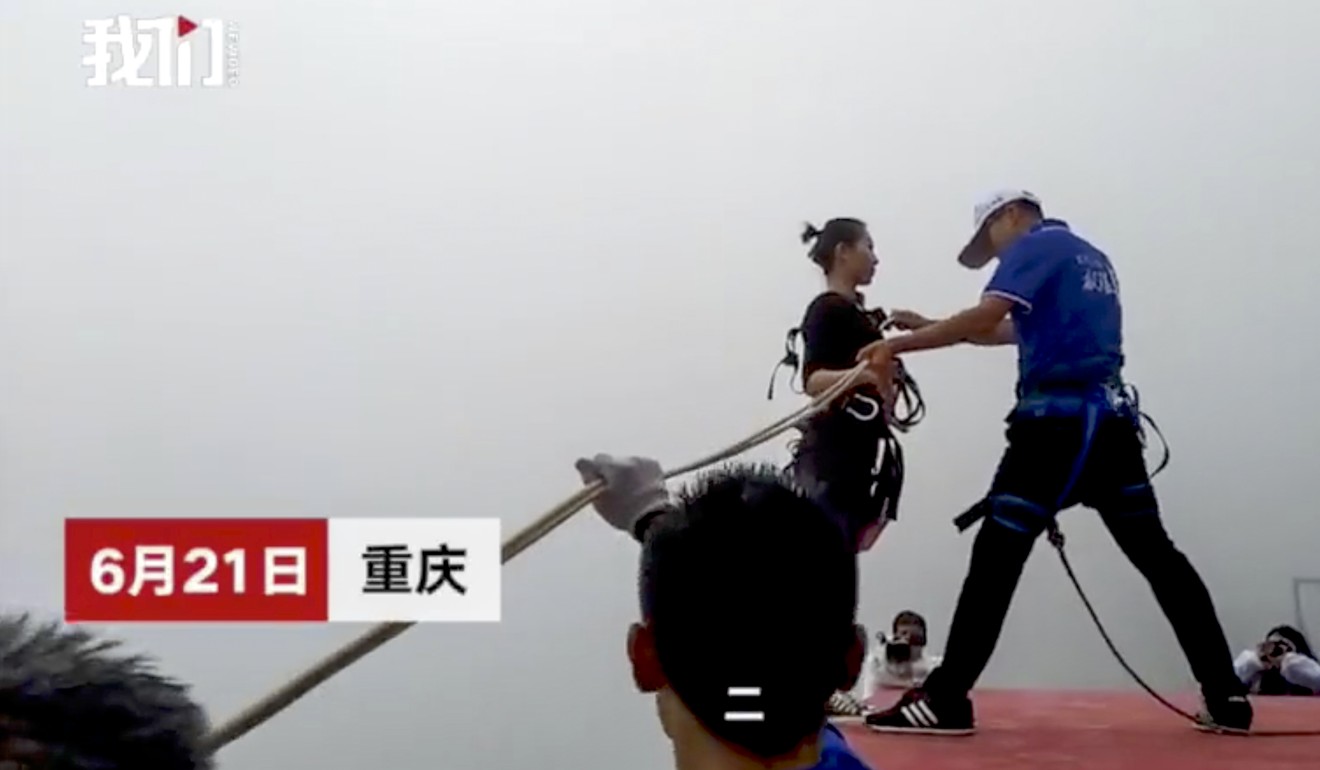
A woman working at a mountainous beauty spot in southwest China has started delivering hot meals to her colleagues by bungee jumping 300 metres (985ft) every lunchtime.
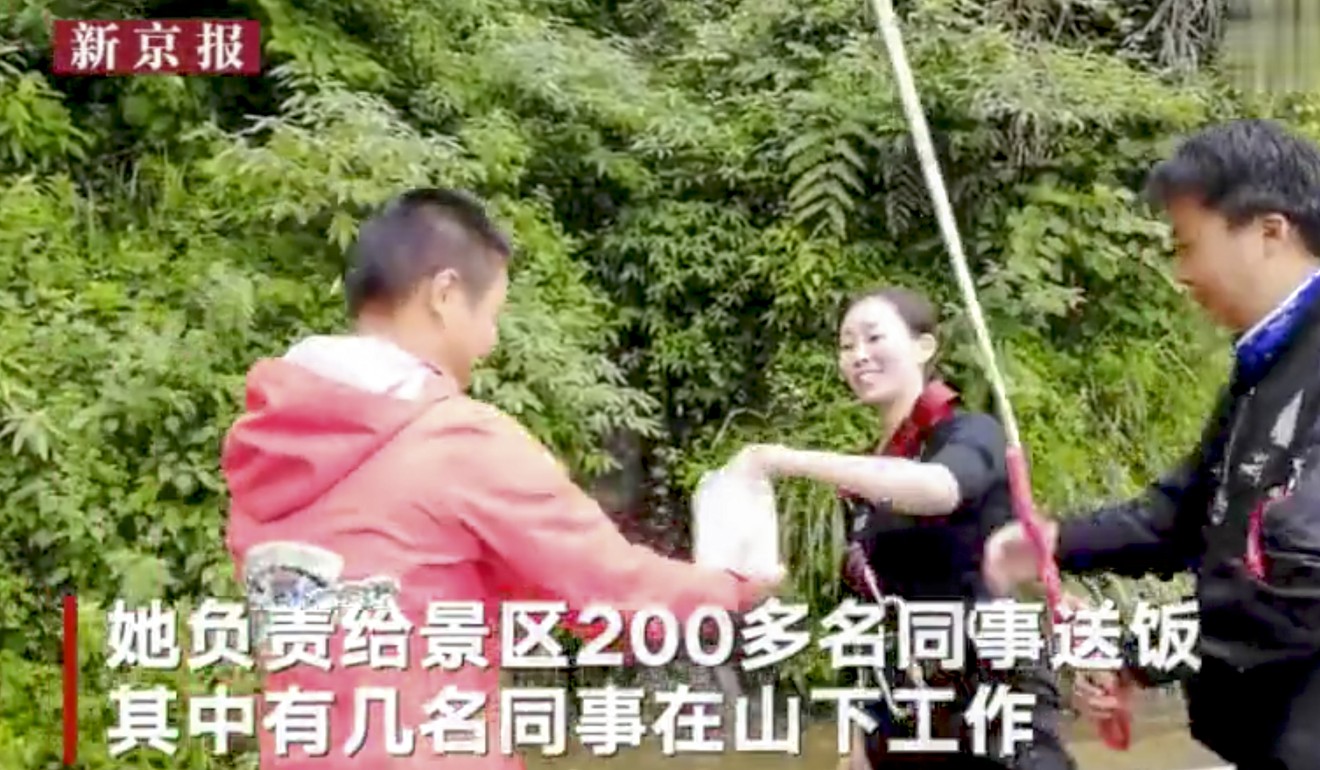
Wan Tiandi works at Dream Ordovician Park in Chongqing, where her duties include delivering lunches to more than 200 employees who are not allowed to leave their posts during their lunch hour, The Beijing News reported.
Because of the park’s geography it would take over half an hour to drive down the mountain to their work station.
To save time, she has now started bungee-jumping down the cliff to deliver the lunchboxes to her colleagues.
“Our park is huge. It will take me more than half an hour’s drive to send lunches to them, while this bungee jump takes only two minutes,” Wan was quoted as saying.
Wan Tiandi prepares to make the jump. Photo: Weibo

She said that in the past when her colleagues received the lunches, they were already cold.

She said she and her colleagues had discussed the problem and developed their unorthodox food delivery method.

“My colleagues need us to send them food but transport on the mountain is not easy. Some of them work at places where there are no roads except narrow mountainous paths,” Wan said.

Wan Tiandi bungee jumps off the cliff every lunchtime. Photo: Weibo

After she jumps from the cliff, Wan’s colleagues collect their lunchboxes that she carries in bags strapped to her waist.

Wan added that she enjoyed the thrill of bungee jumping and the sports enthusiast then jogged back to her office at the top of the mountain.

Her colleagues praised her for working hard to deliver hot food. “It is not easy. Her delivery is fast, steady and always on time,” one of her colleagues was quoted as saying.

Wan hands over the hot meals at the bottom of the cliff. Photo: Weibo
Source: SCMP
05/07/2019

Chinese eco park forced to stay shut after tourists strip away all its lotus flowers

  • Sichuan attraction was due to reopen for the summer but managers decided there was no point after it was stripped bare of its most celebrated feature
Visitors have been filmed breaking into the park in Sichuan to pick its lotus flowers. Photo: Red Star News
An ecological park in southwest China has been forced to close for the rest of the year because hundreds of tourists have stripped it of its celebrated lotus flowers.
Longqiao Cultural and Ecological Park in Sichuan province’s Lu county has been closed since late March for watercourse construction and was due to reopen soon.
Chinese university creates cherry blossom filter to save trees from tourists
The park is well known for its sprawling fields of lotus flowers that cover around 250,000 square metres (62 acres) – an area larger than New York’s Grand Central Terminal.
But since the start of the summer blossom season last month, hundreds of people have been breaking into the park to pick the flowers, forcing managers to keep it closed for the rest of the year.
The flower-pickers have prompted widespread condemnation. Photo: Red Star News

“We cannot control the tourists. We can just guarantee we’ve done our job well. We’ve put notes on the park gate and near the flower field and we have security personnel on patrol as well,” a member of staff surnamed Zhou said.

Zhou added that the construction work in the park was almost finished but that there was no point in reopening because there were virtually no flowers left.

Badly behaved Chinese tourists are back in Boracay
Around 200 to 300 people a day are still believed to be breaking into the park, and have forced management to increase the number of security patrols.

Videos and photos of people picking lotus flowers have been circulated widely online and drawn criticism.

Visitors pictured climbing the fence to break into the park. Photo: Thepaper.cn

“Even the highest fence cannot stop those without manners. It’s like you can never wake up a person that pretends to sleep,” one Weibo user commented.

“Only penalties can stop these greedy people,” said another.

Source: SCMP

Law of Unintended Consequences

continuously updated blog about China & India

ChiaHou's Book Reviews

continuously updated blog about China & India

What's wrong with the world; and its economy

continuously updated blog about China & India