Chindia Alert: You’ll be Living in their World Very Soon
aims to alert you to the threats and opportunities that China and India present. China and India require serious attention; case of ‘hidden dragon and crouching tiger’.
Without this attention, governments, businesses and, indeed, individuals may find themselves at a great disadvantage sooner rather than later.
The POSTs (front webpages) are mainly 'cuttings' from reliable sources, updated continuously.
The PAGEs (see Tabs, above) attempt to make the information more meaningful by putting some structure to the information we have researched and assembled since 2006.
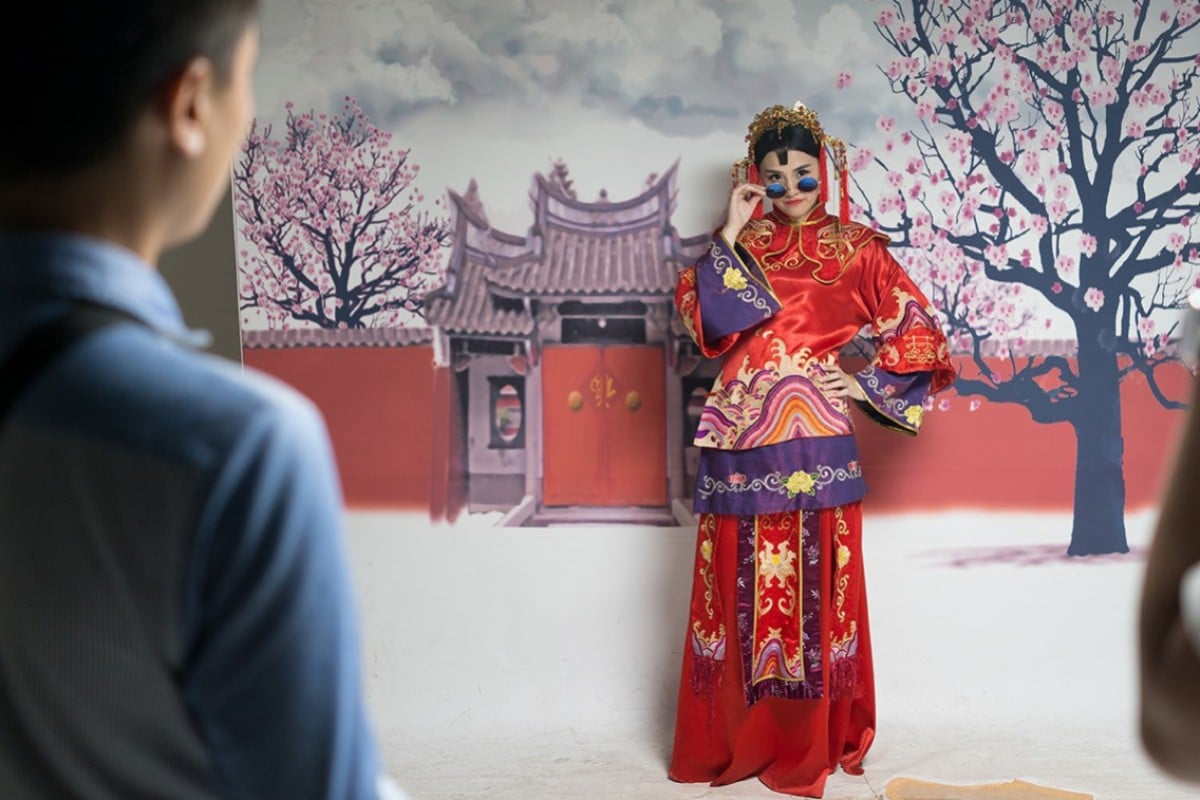
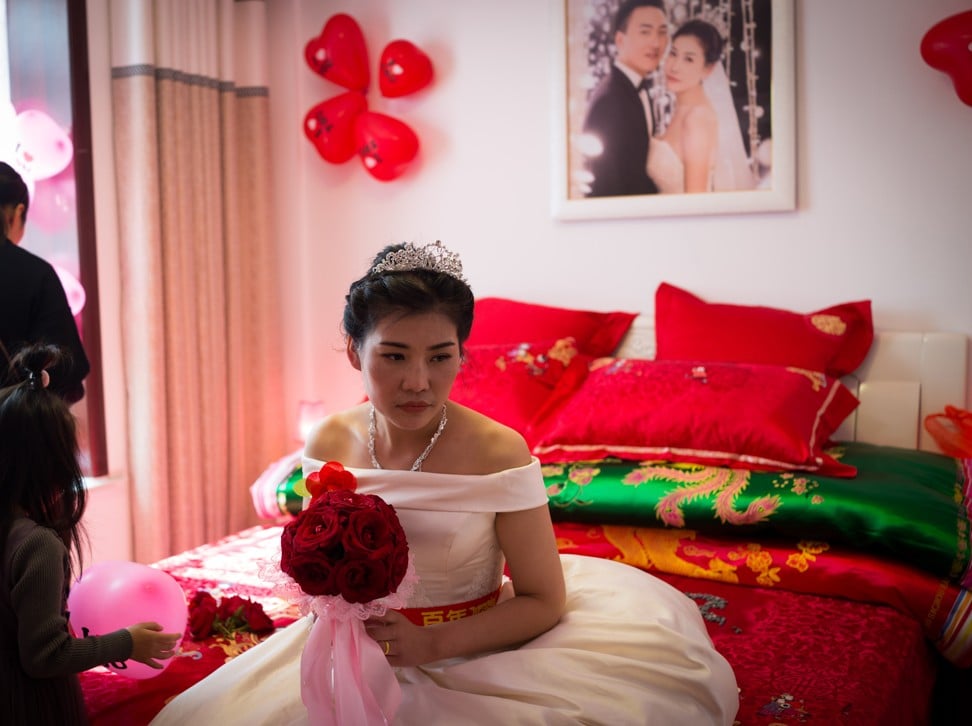
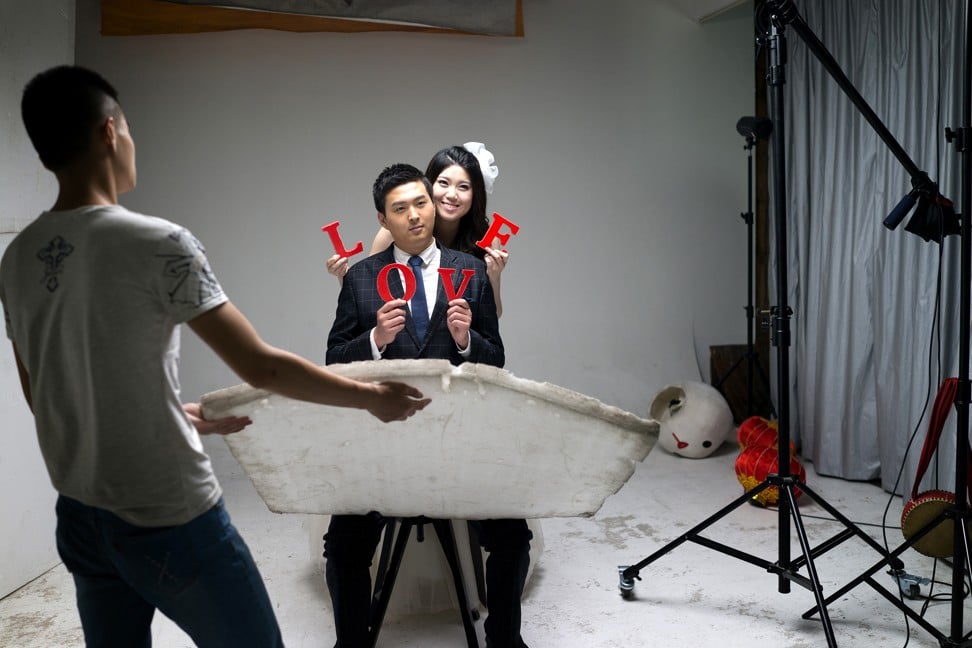
Documentary looks at the fantasy photo shoots of couples, including some who married decades ago when only drab clothing was allowed
It looks beyond the colourful clothes to consider issues of freedom, status, money and the new ‘China dream’
A still from China Love, a documentary by Olivia Martin-McGuire.
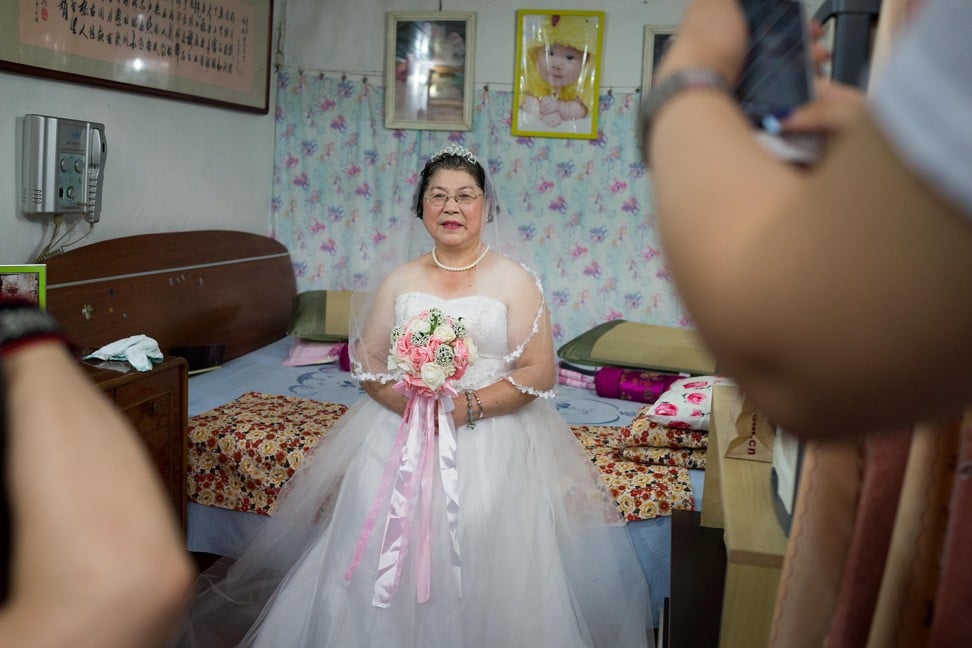
Pei-Pei and Xuezhong live in Shanghai’s French Concession. They married in 1968 and, as was typical for the time, have just one small black-and-white wedding photo.
“Pre-wedding photography could never have happened in 1968 because of the Cultural Revolution,” says Xuezhong, referring to the upheaval that took place under Mao Zedong, from 1966 to 1976. “Colourful clothing was not allowed. We had no choice.”
They did choose, however, to create new memories by having the wedding photos of their dreams taken decades later in a modern setting.
Their story is one of five featured in the documentary
, which explores relationships in contemporary China through the lens of the booming pre-wedding photo industry. It follows couples as they navigate love and family in the lead-up to the most important ritual in Chinese society: marriage.
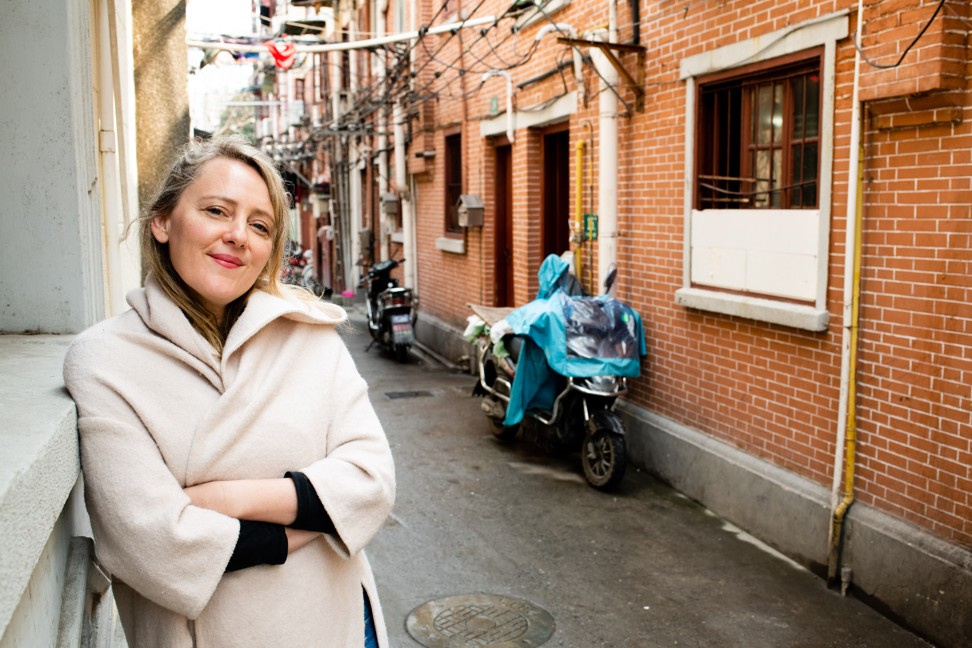
The documentary debuts in Hong Kong this week, with a special screening on Thursday at the Asia Society, in Admiralty. Attending the screening will be the film’s Australian director, Olivia Martin-McGuire, who spent four years in Shanghai, where a series of photographs taken on the city’s streets developed into a fascination with matters of the heart.
“It started when I saw all these couples in amazingly colourful costumes – some hitching up their dresses to reveal trainers – having [pre-wedding] photos taken near The Bund,” she says.
But Martin-McGuire says the film is more than a commentary on the pre-wedding photography business. It delves into issues of freedom, status, money and the new “China dream”.
“Just over 40 years ago, marriage in China was arranged by the state. Romantic love was seen as a capitalist concept,” she says.
China Love director Olivia Martin-McGuire. Photo: Gráinne Quinlan
Fast forward a generation and the picture couldn’t be more different, with China’s wedding industry today worth a staggering US$80 billion, according to Martin-McGuire.
A big part of that goes on the pre-wedding photos, with some couples spending up to US$500,000 for shoots in exotic locations.
Shoots usually involve several costume and backdrop changes, and can see couples transform into characters from a fantasy. Take Jenny Cheng, born in Urumqi, capital of the Xinjiang Uygur autonomous region, and Australian-born David Shaw. The couple, who are featured in the film and will attend the screening in Hong Kong, had their wedding photos taken under water.
“I wanted the film to feel youthful, fun, and represent the sense of possibility that is infectious in China,” says Martin-McGuire.
China Love will be screened on Thursday, at 6.30pm, at the Asia Society, 9 Justice Drive, Admiralty, followed by a panel discussion. Visit
Civil affairs ministry reaffirms plan to eradicate names that ‘violate the core values of socialism, damage national confidence’
One man says it reminds him of the dark days of the Cultural Revolution
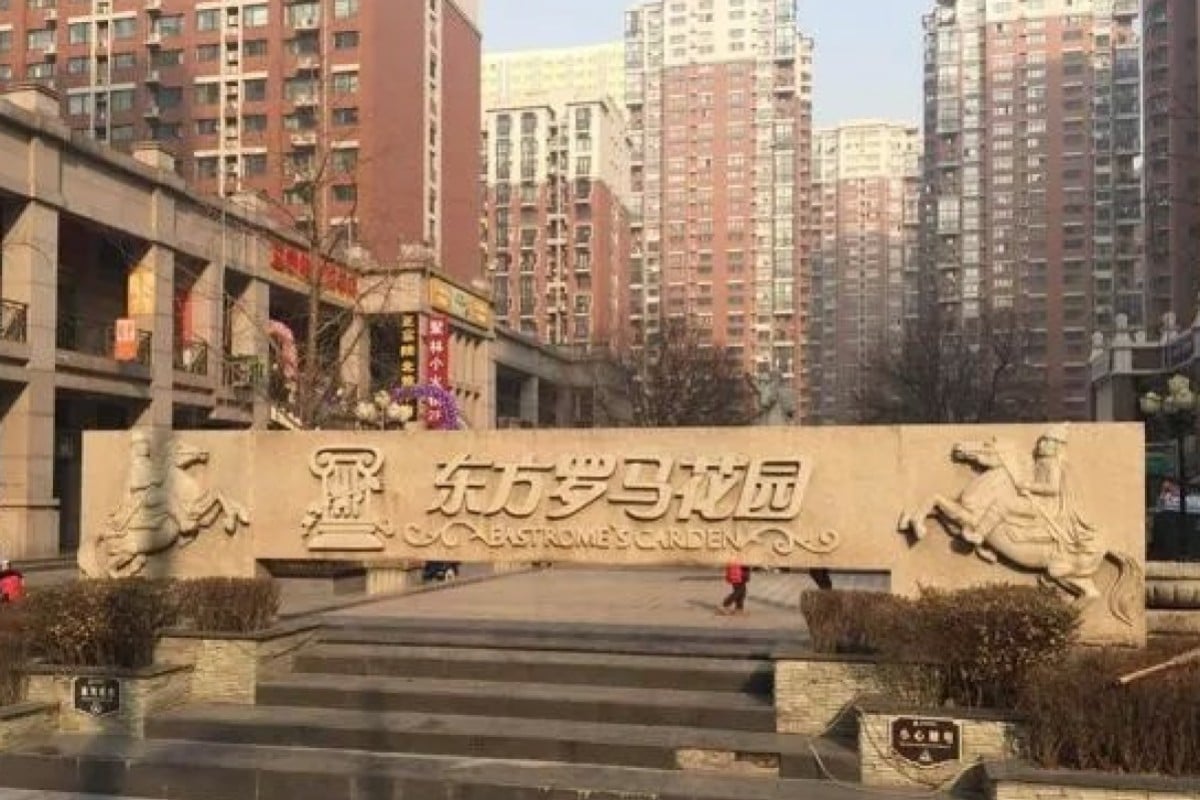
Beijing wants to eradicate place and property names, like “East Rome’s Garden”, that are influenced by foreign or “weird” words. Photo: Weibo
Beijing has reiterated its commitment to rid Chinese cities of “big, foreign and weird” property and place names, sparking a backlash from the public.
The campaign began last year when six government departments introduced a joint policy requiring provincial and county authorities to identify all such properties within their jurisdictions and rename them by the end of March.
On Friday, the Ministry of Civil Affairs reaffirmed its support for the plan, but reminded local governments to implement it “prudently and appropriately”.
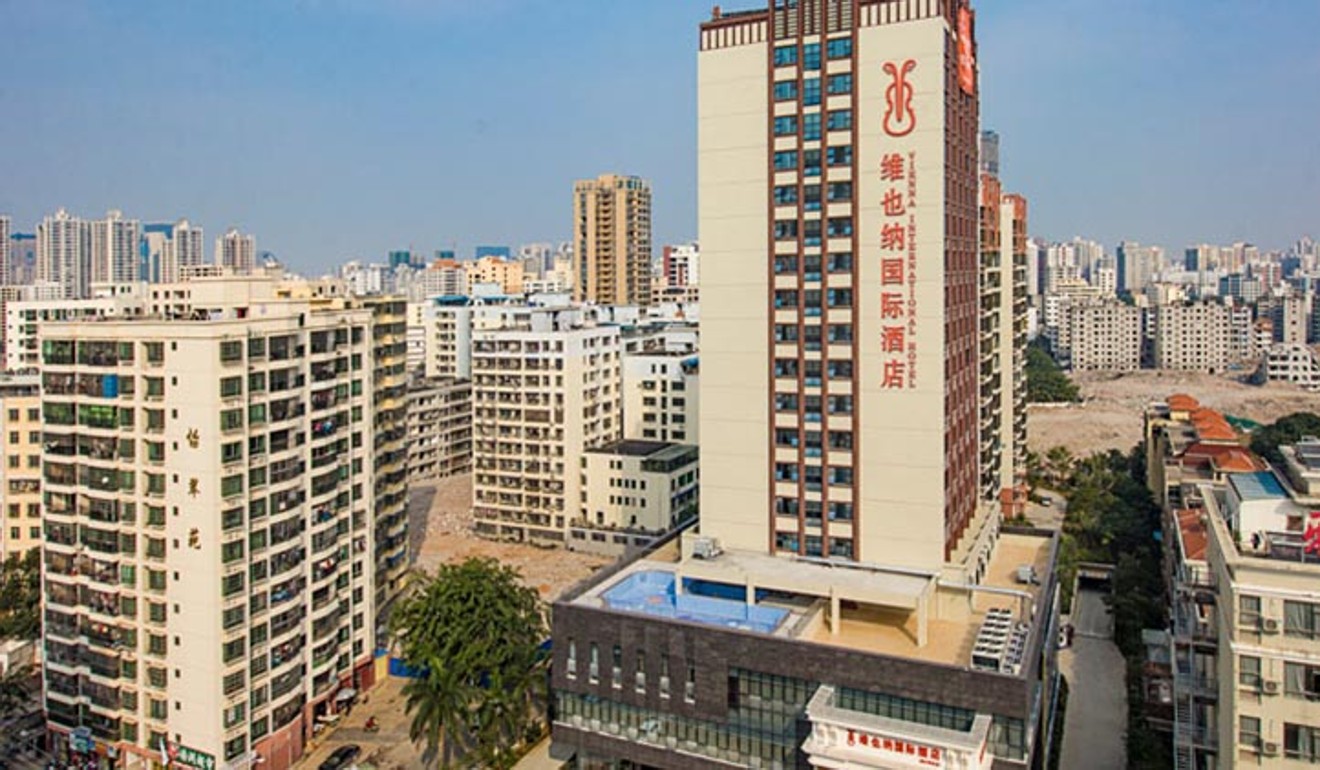
Many Chinese properties, especially hotels and apartment buildings, incorporate famous foreign places, like Manhattan, California or Paris, into their names, but under the new rule they all have to go. According to a report by local newspaper Sanqin Metropolis Daily, in one city in Xian, the capital of Shaanxi province, at least 98 apartment projects, hotels, townships, communities and office towers need to be rebranded.
Many Chinese properties, like the Vienna International Hotel, incorporate famous foreign places into their names. Photo: Weibo
But for some people, the plan is nothing more than a waste of time and money.
“If projects are forced to change their names, what about the name on the property certificate, the enterprise licence and tax registration? Do they have to be changed too?” asked Zhu Yun, a woman who lives in Guangzhou, the capital of south China’s Guangdong province.
Hospital’s plan for ‘lucky’ Harvard babies gets poor marks
“And what’s the standard for the new names, and who’s going to do the renaming? It’s just a waste of people’s energy and money, and will do nothing for the national culture or confidence.”
Zhu Min, an octogenarian who also lives in Guangdong, said the scheme had echoes of a darker time in China’s history.
“It reminds me of the bad times of the Cultural Revolution,” he said. “At that time, a great number of streets, roads and stores were forced to rename, because they contained elements of old customs and old culture.”
The debate has also been raging online, with tens of thousands of people airing their views on social media.
“Cultural and national confidence is about respect for multiculturalism,” one person wrote on Weibo, China’s Twitter-like platform.
Tsinghua University sues kindergartens for using its name
Despite the outcry, the civil affairs ministry said the implementation of the scheme was “an important measure … to carry forward the national and local culture”, Xinhua reported.
“The relevant regulations and guidelines of the campaign should be strictly observed to prevent the campaign from being expanded in an arbitrary manner,” it said.
The plan announced last year stated that “big, foreign, weird” place names and those based on homonyms “violate the core values of socialism, damage national confidence, and affect the production and lives of the people, and must be rectified and cleaned up”.
The city’s ambitious waste and recycling rules took effect on Monday, aiming to emulate successes of comparable policies in Japan, Taiwan and California
President Xi Jinping has urged China – the world’s second-biggest waste producer after the United States – to sort rubbish better
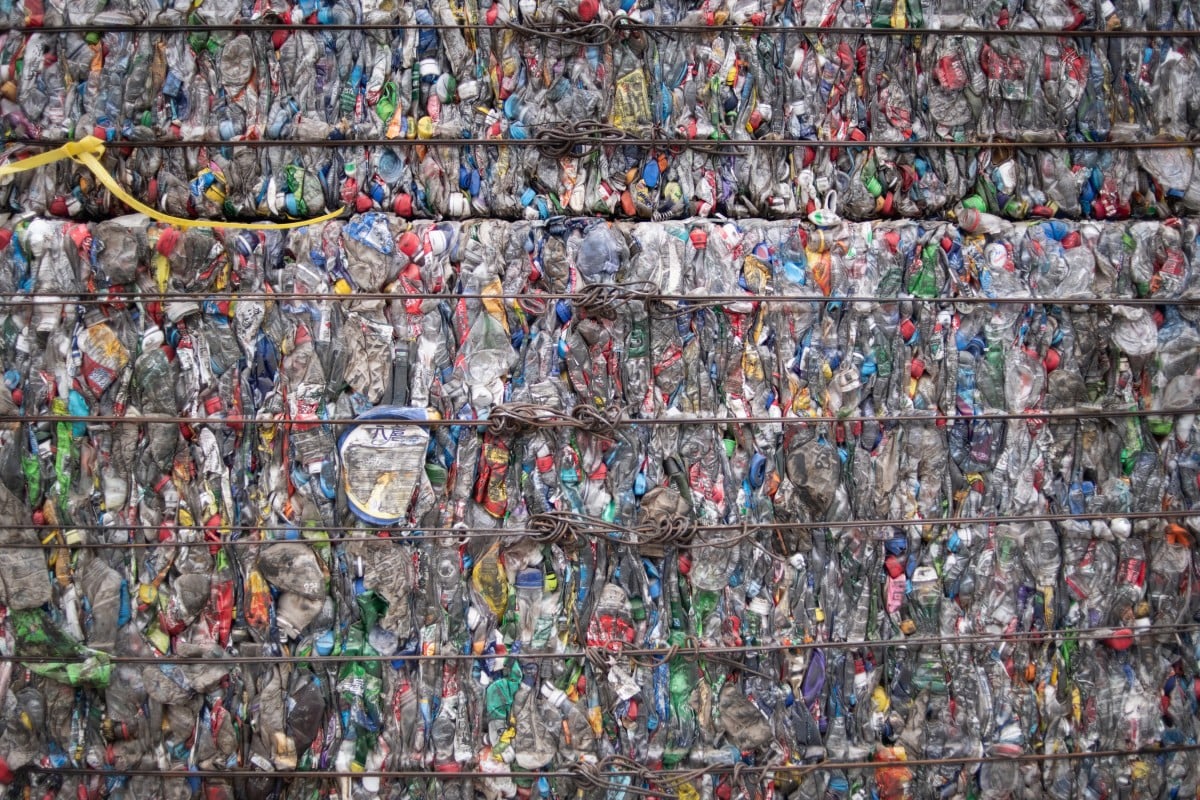
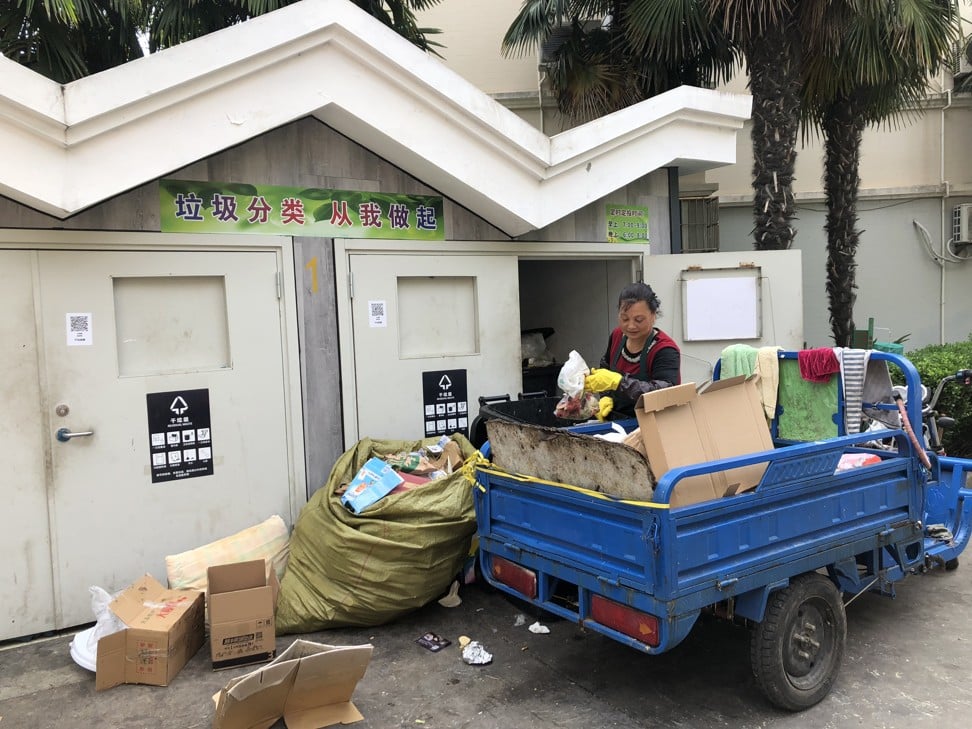
Recyclables such as plastic must be separated from wet garbage, dry garbage and hazardous waste under the new rules in Shanghai. Photo: AFP
At 9pm, Li Zhigang was sitting in front of his fruit shop on a bustling street in central Shanghai’s Xujiahui area, peeling the thin layers of plastic from rotten pears and mangoes.
“This is so much trouble!” he mumbled to himself while throwing the plastic into one trash can and the fruit into another.
In the past, Li simply threw away what could not be sold with the packaging on, but from July 1 he could be fined up to 200 yuan (about US$30) for doing so.
Like Li, many of the tens of millions of residents in the eastern Chinese city have been complaining in recent weeks that the introduction of compulsory
is making life difficult, but at the same time have been having to learn to do it.
Calls for garbage sorting have brought little progress in China in the past decade, but Shanghai is leading a fresh start for the world’s second-largest waste producer with its new municipal solid waste (MSW) regime, observers have said.
China generated 210 million tonnes of MSW in 2017, 48 million tonnes less than the United States, according to the World Bank’s What a Waste database.
“If we say China is now classifying its waste, then it’s Shanghai that is really doing it,” said Chen Liwen, a veteran environmentalist who has worked for non-governmental organisations devoted to waste classification for the past decade.
“It’s starting late, comparing with the US, Japan or Taiwan, but if it’s successful in such a megacity with such a huge population, it will mean a lot for the world,” she said.
A cleaner re-sorts household waste left at a residential facility in Shanghai. Photo: Alice Yan
Household waste in the city is now required to be sorted into four categories: wet garbage (household food), dry garbage (residual waste), recyclable waste and hazardous waste.
General rubbish bins that had previously taken all types of household waste were removed from buildings. Instead, residents were told to visit designated trash collection stations to dispose of different types of waste during designated periods of the day.
Companies and organisations flouting the new rules could be fined 50,000-500,000 yuan (US$7,000-70,000), while individual offenders risked a fine of 50-200 yuan.
The city’s urban management officers will be mainly responsible for identifying those who breach the rules.
Huang Rong, the municipal government’s deputy secretary general, said on Friday that nearly 14,000 inspections had been carried out around the city and more than 13,000 people had been warned on the issue since the regulations were announced at the start of the year.
As July 1’s enforcement of the rules approached, it became a much-discussed topic among Shanghainese people. A hashtag meaning “Shanghai residents almost driven crazy by garbage classification” was one of the most popular on China’s Twitter-like Weibo platform.
“My daughter took a box of expired medicine from her workplace to the trash collection station near our home yesterday because she couldn’t find the local bin for hazardous waste,” Li said.
While the measures force a change of habits for most people, they bring opportunities for some.
Du Huanzheng, director of the Recycling Economy Institute at Tongji University, said waste sorting was crucial for China’s recycling industry.
“Without proper classification, a lot of garbage that can be recycled is burned, and that’s a pity,” he said. “After being classified, items suitable to be stored and transported can now be recycled.”
G20 set to agree on ways to reduce plastics in oceans
Shanghai’s refuse treatment plants deal with 19,300 tonnes of residual waste and 5,050 tonnes of kitchen waste every day, according to the municipal government. By contrast, only 3,300 tonnes of recyclables per day are collected at present.
Nationwide, the parcel delivery industry used more than 13 billion polypropylene woven bags, plastic bags and paper boxes as well as 330 million rolls of tape in 2016, but less than 20 per cent of this was recycled, according to a report by the State Post Bureau.
Prices of small sortable rubbish bins for home use have surged on e-commerce platforms, while bin makers are also developing smart models in response to new needs.
Some communities are deploying bins that people are required to sign in with their house number to use, and are equipped with a “big data analysis system”. The system records households have “actively participated” and which have not, so that neighbourhood management can publicise their addresses and make house visits, according to a report by Thepaper.cn.
In a residential community in Songjiang district, grocery store owner Nie Chuanguo has found something new to sell: a rubbish throwing service.
He has offered to visit homes, collect waste and throw it into the right bin at a designated time. He charges 30 yuan a month for those living on the ground and first floors, 40 yuan for those on the second and third, and 50 yuan for the fourth and fifth.
“This service will start from July 1. Many people have come to inquire about it,” he said.
According to Du, waste classification is not only about environmental impact or business opportunities. “Garbage sorting is an important part of a country’s soft power,” he said.
For China, it was an opportunity to improve its international reputation, he said. “In the past, Chinese people were rich and travelled abroad, but they threw rubbish wilfully, making foreigners not admit we are a respected powerhouse.”
He added: “It’s also related to 1.3 billion people’s health, since the current waste treatment methods – burying and burning – are not friendly to the environment.”
Shanghai’s part in tackling waste comes amid President Xi Jinping’s repeated calls for the country to sort waste better.
“For local officials, it is a political task,” said Chen, who heads a waste management programme in rural China called Zero Waste Villages.
Huang said the president had asked Shanghai in particular to set a good example in waste classification.
In March 2017, the central government set out plans for a standardised system and regulations for
, with a target for 46 major cities, including Shanghai, to recycle 35 per cent of their waste by then.
In early June, Xi issued a long statement calling for more action from local governments.
However, it was a long process that required input from individuals, government and enterprises, Du said.
“Japan took one generation to move to doing its waste sorting effectively, so we shouldn’t have the expectation that our initiative will succeed in several years,” Du said.
How China’s ban on plastic waste imports caused turmoil
“The lessons we can learn from Japan include carrying out campaigns again and again, and paying close attention to educating young pupils about rubbish classification.”
Chen echoed that Shanghai’s waste sorting frenzy now was only a beginning.
“What we can see now is that people are being pushed to sort waste by regulators, but what’s next? How shall we keep up the enthusiasm?” she asked.
She suggested that how well officials worked on garbage sorting should be included in their job appraisal, and that ultimately people should pay for waste disposal.
“The key to waste classification, going by international experience, is making polluters pay,” Chen said.
Most of Hong Kong and Taiwan’s dumped plastic bottles come from mainland
There is plenty of experience for Shanghai to learn from in California, where unrecyclable waste is charged for at twice the price of recyclables, and Taiwan, where people are charged only for disposal of residual waste, according to Chen.
Taiwan has one of the world’s most impressive recycling rates, with nearly 60 per cent of its waste between January and October last year having been recycled, according to the Taipei government.
The daily amount of garbage produced per person during that period was about 0.41kg – down substantially from 1.14kg in 1997 – the government said.
Hong Kong has tried to copy the Taipei model over the years but failed, with a recycling rate of MSW slightly above 30 per cent in recent years, according to official data.
until late 2020 at the earliest. Under its plan, 80 per cent of household waste will have to go into designated bags and will be priced at an average of 11 HK cents (1 US cent) per litre.
On Friday, Shanghai officials admitted that there were plenty of challenges involved in
sorting and transport.
Zhang Lixin, deputy chief of the municipal housing administration, said: “Many property management companies fear the difficulties brought by garbage sorting or are reluctant to implement the new rules.”
The administration trained the heads of more than 200 companies across the city in April, he said.
“We do find that some cleaners and rubbish trucks mix the waste, despite residents being asked to throw different types in different bins,” said Deng Jianping, head of the city’s landscaping and city appearance administration – the government department spearheading the initiative.
In the interests of curbing such practices, they could face fines of up to 50,000 yuan or even have their licences revoked, he said.
Riot police deployed after week of unrest over proposed plant next to residential areas – echoing recent years’ protests against incinerators elsewhere in the country
District government urges people to ignore rumours and says plant’s location has yet to be finalised
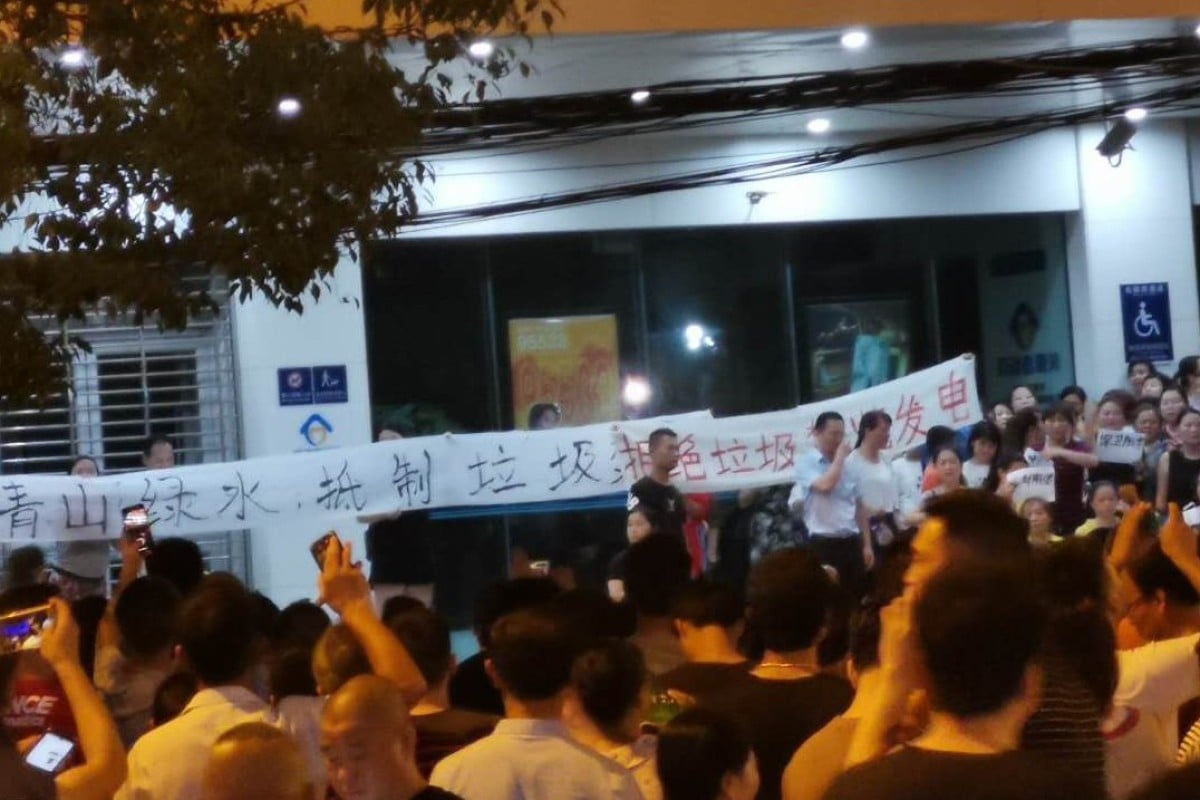
People in Yangluo protest against the proposed incineration plant on Thursday night. Photo: Handout
Thousands of people took to the streets in central China on Thursday night in a seventh day of protests against the construction of a waste incineration plant.
Protesters carried banners and chanted as they marched against a waste-to-energy plant that could be built next to residential areas in Yangluo, near Wuhan, the capital of Hubei province.
Residents were angered by plans to build the plant on a garbage landfill site that had been expected to be turned into a public park.
They shouted slogans such as “Return us the green mountain and clear waters” and “Garbage burning plant get lost from Yangluo”.
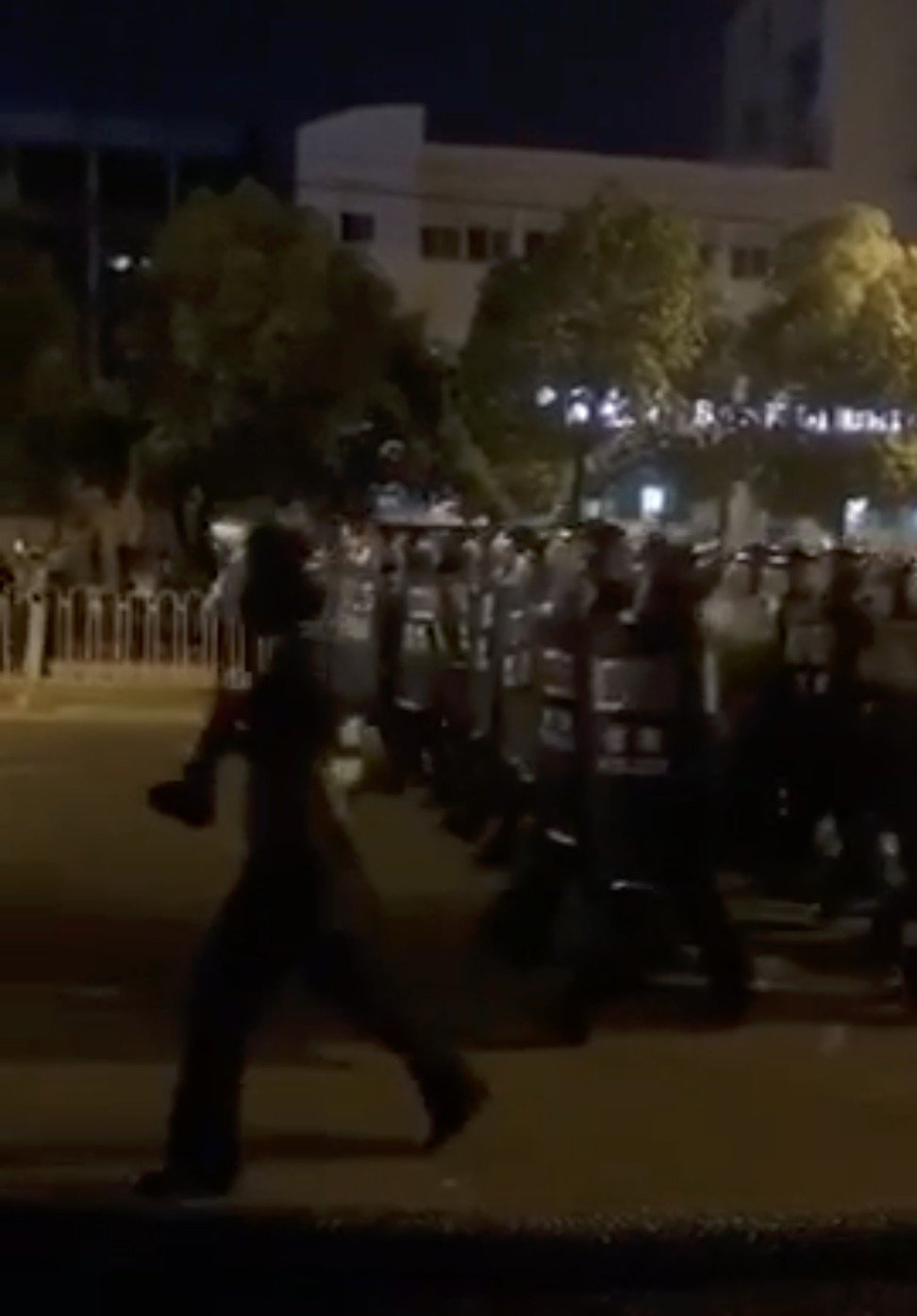
Riot police move in as protests continue in Yangluo on Thursday. Photo: Handout
A letter to the public by the Xinzhou district government on Wednesday had urged people “not to listen to or spread rumours”, and said that a location had yet to be finalised for the plant.
“What is rumoured online to be the garbage burning project that has already started is in fact demolition work for a railway construction project,” the letter said.
Converting waste to energy by burning it has been adopted in China as an alternative to burying rubbish in landfill sites – which causes pollution and requires a lot of land – but it has been widely resisted because of fears that it is a health hazard. Large protests against incinerators have been held in recent years in Zhejiang, Jiangsu, Hubei, Beijing and Guangdong.
“We understand the need to dispose of garbage in an environmentally friendly way, but does it have to be that close to our homes? Two universities and more than 10 residential areas are within a 3km (1.86 miles) radius,” said the man, referring to the Wuhan University of Bioengineering and Wuhan Engineering Institute.
Yangluo, designated as an economic and technology development area, is 30km northeast of downtown Wuhan and has a population of 300,000. The incineration plant would handle 2,000 tonnes of waste per day, the Wuhan urban management committee said last month.
Residents asked about the progress of the project in early June and were told that the authorities were still choosing a site.
Protests broke out last Friday after rumours spread that the project had already started – forcing the district government to say on Saturday that it would “not start without approval from the public”.
Nonetheless, thousands of protesters – about 10,000, according to one source – marched on Saturday and Sunday, leading to some arrests, although those detained at the weekend had since been released, protesters said.
After minor protests on Monday and Tuesday, residents gathered in greater numbers in Yangluo on Wednesday and Thursday nights, met by a heavy police presence.
Videos seen by the South China Morning Post show hundreds of riot police marching through the streets, equipped with helmets, shields and batons
The crowd dispersed at about 10pm as police began to round up some protesters. They were taken aboard a coach and two men were handled roughly, the videos showed.
Chinese town residents clash with riot police over incinerator
An official from the Xinzhou district government’s publicity department stressed to the Post that the project would not begin without public approval and its location had not yet been chosen.
China is deliberately separating Muslim children from their families, faith and language in its far western region of Xinjiang, according to new research.
At the same time as hundreds of thousands of adults are being detained in giant camps, a rapid, large-scale campaign to build boarding schools is under way.
Based on publicly available documents, and backed up by dozens of interviews with family members overseas, the BBC has gathered some of the most comprehensive evidence to date about what is happening to children in the region.
Records show that in one township alone more than 400 children have lost not just one but both parents to some form of internment, either in the camps or in prison.
Formal assessments are carried out to determine whether the children are in need of “centralised care”.
Alongside the efforts to transform the identity of Xinjiang’s adults, the evidence points to a parallel campaign to systematically remove children from their roots.
Image caption The Hotan Kindness Kindergarten, like many others, is a high security facility
China’s tight surveillance and control in Xinjiang, where foreign journalists are followed 24 hours a day, make it impossible to gather testimony there. But it can be found in Turkey.
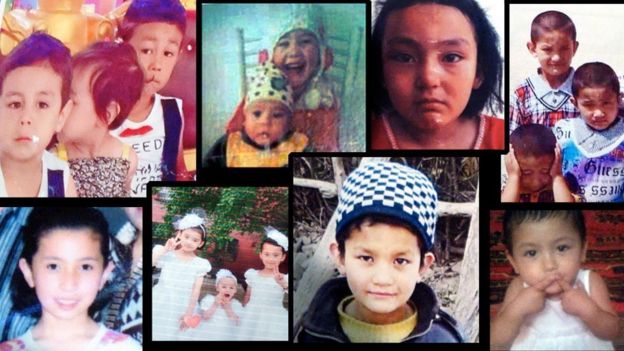
In a large hall in Istanbul, dozens of people queue to tell their stories, many of them clutching photographs of children, all now missing back home in Xinjiang.
“I don’t know who is looking after them,” one mother says, pointing to a picture of her three young daughters, “there is no contact at all.”
Another mother, holding a photo of three sons and a daughter, wipes away her tears. “I heard that they’ve been taken to an orphanage,” she says.
In 60 separate interviews, in wave after wave of anxious, grief-ridden testimony, parents and other relatives give details of the disappearance in Xinjiang of more than 100 children.
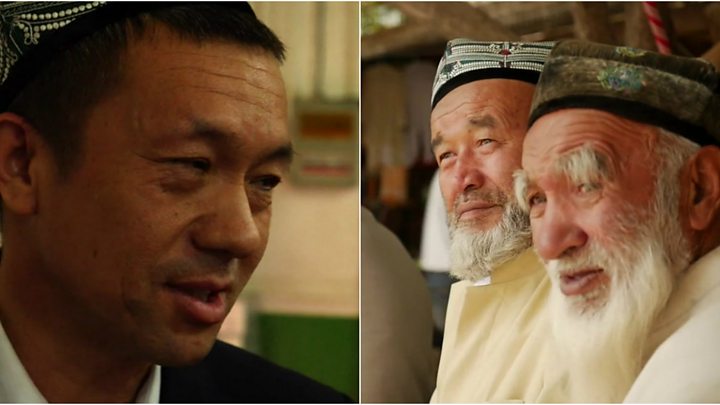
They are all Uighurs – members of Xinjiang’s largest, predominantly Muslim ethnic group that has long had ties of language and faith to Turkey. Thousands have come to study or to do business, to visit family, or to escape China’s birth control limits and the increasing religious repression.
But over the past three years, they have found themselves trapped after China began detaining hundreds of thousands of Uighurs and other minorities in giant camps.
The Chinese authorities say the Uighurs are being educated in “vocational training centres” in order to combat violent religious extremism. But evidence shows that many are being detained for simply expressing their faith – praying or wearing a veil – or for having overseas connections to places like Turkey.
For these Uighurs, going back means almost certain detention. Phone contact has been severed – even speaking to relatives overseas is now too dangerous for those in Xinjiang.
With his wife detained back home, one father tells me he fears some of his eight children may now be in the care of the Chinese state.
“I think they’ve been taken to child education camps,” he says.
New research commissioned by the BBC sheds light on what is really happening to these children and many thousands of others.
Dr Adrian Zenz is a German researcher widely credited with exposing the full extent of China’s mass detentions of adult Muslims in Xinjiang. Based on publicly available official documents, his report paints a picture of an unprecedented school expansion drive in Xinjiang.
Campuses have been enlarged, new dormitories built and capacity increased on a massive scale. Significantly, the state has been growing its ability to care full-time for large numbers of children at precisely the same time as it has been building the detention camps.
And it appears to be targeted at precisely the same ethnic groups.
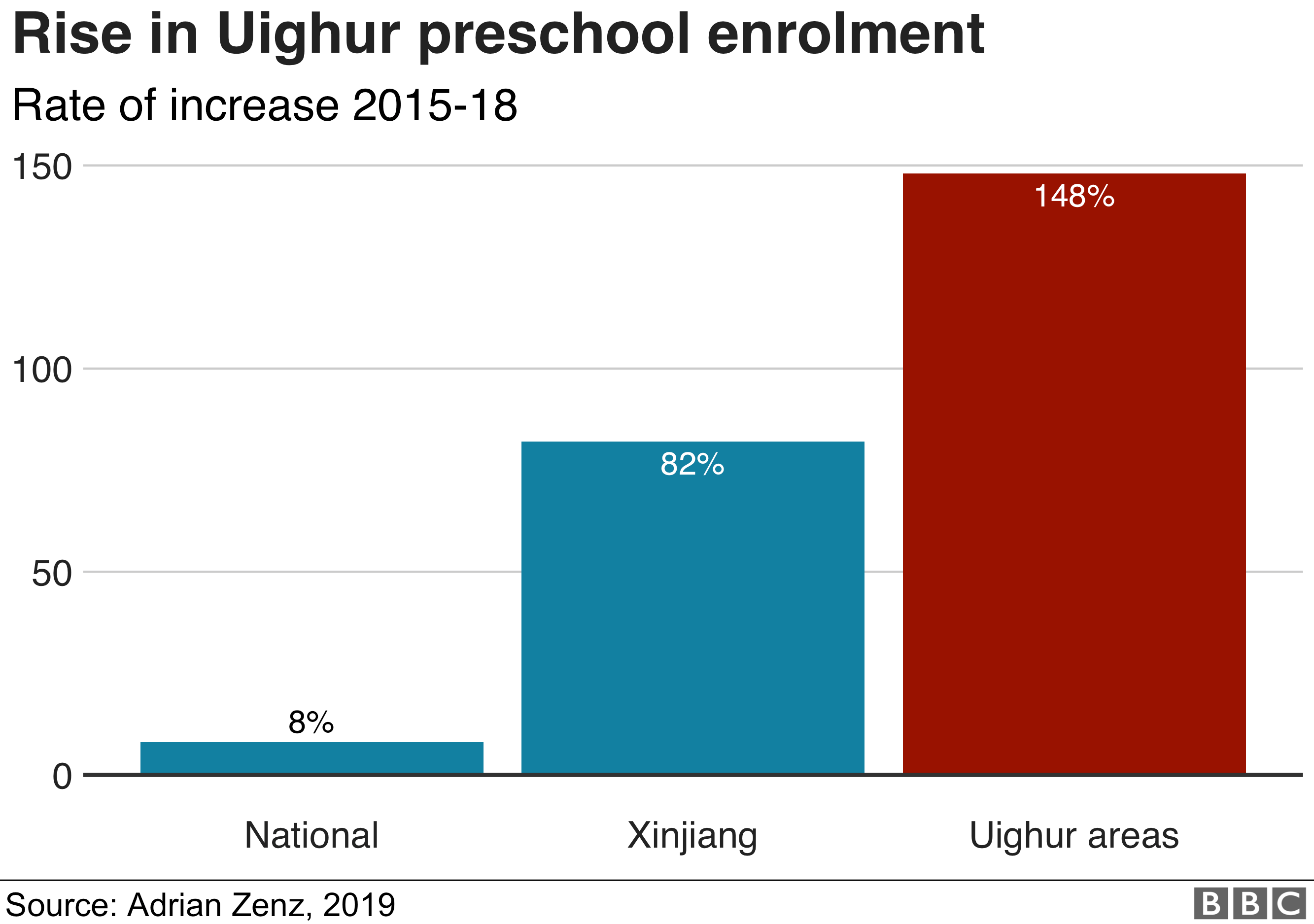
In just one year, 2017, the total number of children enrolled in kindergartens in Xinjiang increased by more than half a million. And Uighur and other Muslim minority children, government figures show, made up more than 90% of that increase.
As a result, Xinjiang’s pre-school enrolment level has gone from below the national average to the highest in China by far.
In the south of Xinjiang alone, an area with the highest concentration of Uighur populations, the authorities have spent an eye watering $1.2bn on the building and upgrading of kindergartens.
Mr Zenz’s analysis suggests that this construction boom has included the addition of large amounts of dormitory space.
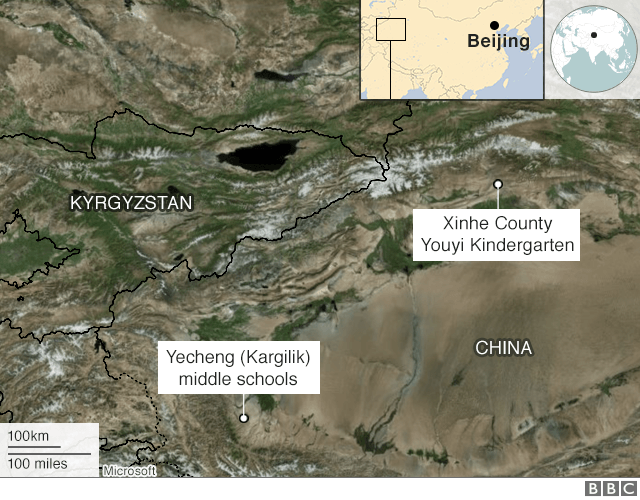
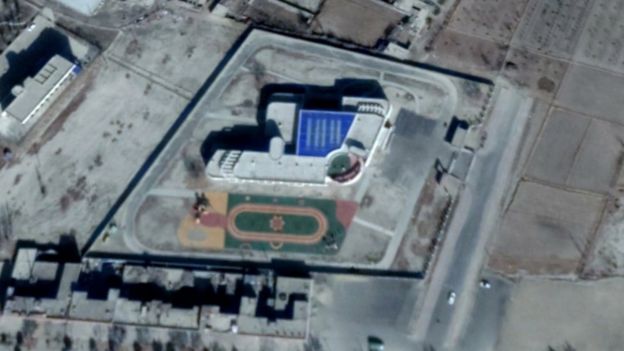
Image caption Xinhe County Youyi Kindergarten has space for 700 children, 80% of whom are from Xinjiang’s minority groups
Xinjiang’s education expansion is driven, it appears, by the same ethos as underlies the mass incarceration of adults. And it is clearly affecting almost all Uighur and other minority children, whether their parents are in the camps or not.
In April last year, the county authorities relocated 2,000 children from the surrounding villages into yet another giant boarding middle school, Yecheng County Number 4.
INTERACTIVE Use the slider button to see how the school has developed
May 2019
April 2018
Yecheng County Middle Schools 10 and 11
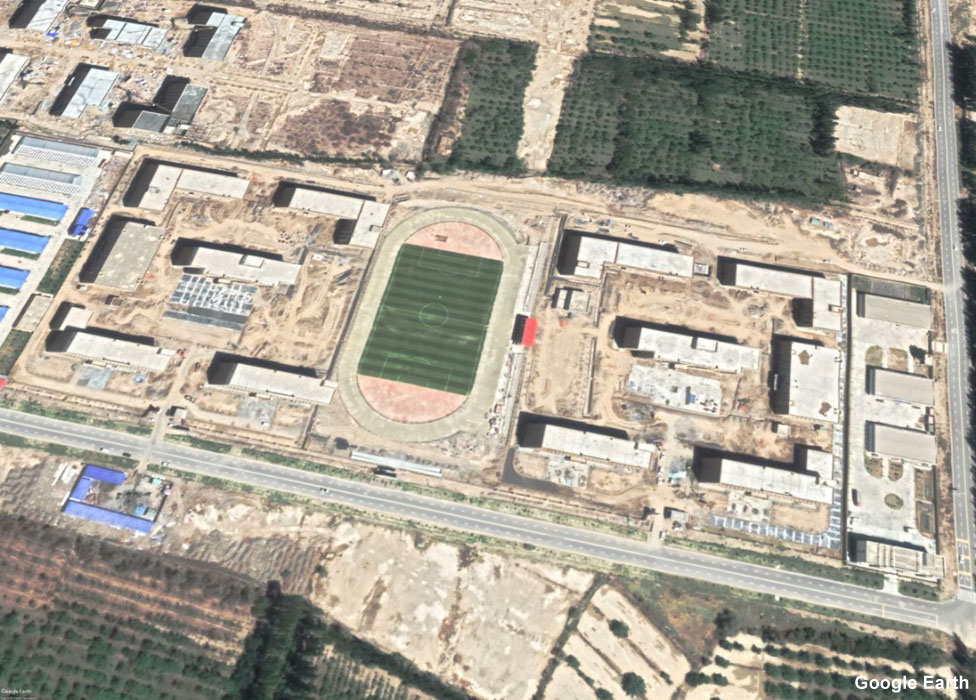
The image above shows a site being prepared for two new boarding schools in Xinjiang’s southern city of Yecheng (or Kargilik in Uighur).
Dragging the slider reveals the pace of construction – the two middle schools, separated by a shared sports field, are each three times larger than the national average and were built in little more than a year.
Government propaganda extols the virtues of boarding schools as helping to “maintain social stability and peace” with the “school taking the place of the parents.” And Mr Zenz suggests there is a deeper purpose.
“Boarding schools provide the ideal context for a sustained cultural re-engineering of minority societies,” he argues.
Just as with the camps, his research shows that there is now a concerted drive to all but eliminate the use of Uighur and other local languages from school premises. Individual school regulations outline strict, points-based punishments for both students and teachers if they speak anything other than Chinese while in school.
And this aligns with other official statements claiming that Xinjiang has already achieved full Chinese language teaching in all of its schools.
Media caption The BBC visits the camps where China’s Muslims have their “thoughts transformed”
Speaking to the BBC, Xu Guixiang, a senior official with Xinjiang’s Propaganda Department, denies that the state is having to care for large numbers of children left parentless as a result.
“If all family members have been sent to vocational training then that family must have a severe problem,” he says, laughing. “I’ve never seen such a case.”
But perhaps the most significant part of Mr Zenz’s work is his evidence that shows that the children of detainees are indeed being channelled into the boarding school system in large numbers.
There are the detailed forms used by local authorities to log the situations of children with parents in vocational training or in prison, and to determine whether they need centralised care.
Mr Zenz found one government document that details various subsidies available to “needy groups”, including those families where “both a husband and a wife are in vocational training”. And a directive issued to education bureaus by the city of Kashgar that mandates them to look after the needs of students with parents in the camps as a matter of urgency.
Schools should “strengthen psychological counselling”, the directive says, and “strengthen students’ thought education” – a phrase that finds echoes in the camps holding their parents.
It is clear that the effect of the mass internments on children is now viewed as a significant societal issue, and that some effort is going into dealing with it, although it is not something the authorities are keen to publicise.
Media caption The BBC has found new evidence of the increasing control and suppression of Islam in China
Some of the relevant government documents appear to have been deliberately hidden from search engines by using obscure symbols in place of the term “vocational training”. That said, in some instances the adult detention camps have kindergartens built close by, and, when visiting, Chinese state media reporters have extolled their virtues.
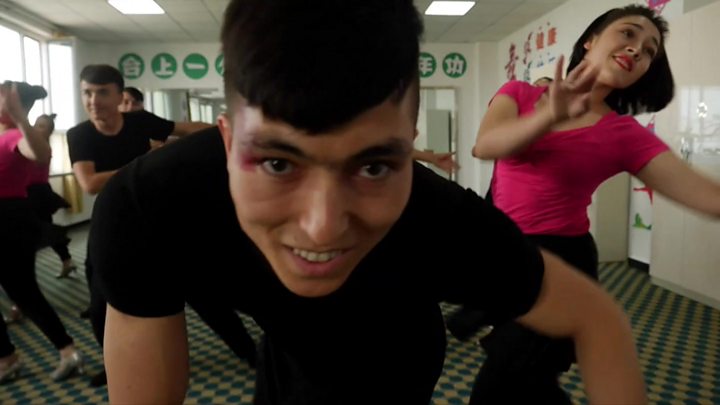
These boarding schools, they say, allow minority children to learn “better life habits” and better personal hygiene than they would at home. Some children have begun referring to their teachers as “mummy”.
We telephoned a number of local Education Bureaus in Xinjiang to try to find out about the official policy in such cases. Most refused to speak to us, but some gave brief insights into the system.
We asked one official what happens to the children of those parents who have been taken to the camps.
“They’re in boarding schools,” she replied. “We provide accommodation, food and clothes… and we’ve been told by the senior level that we must look after them well.”
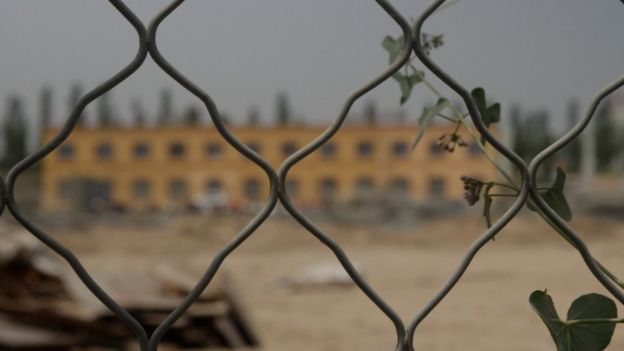
Image caption Hotan Sunshine Kindergarten, seen through a wire fence
In the hall in Istanbul, as the stories of broken families come tumbling out, there is raw despair and deep resentment too.
“Thousands of innocent children are being separated from their parents and we are giving our testimonies constantly,” one mother tells me. “Why does the world keep silent when knowing these facts?”
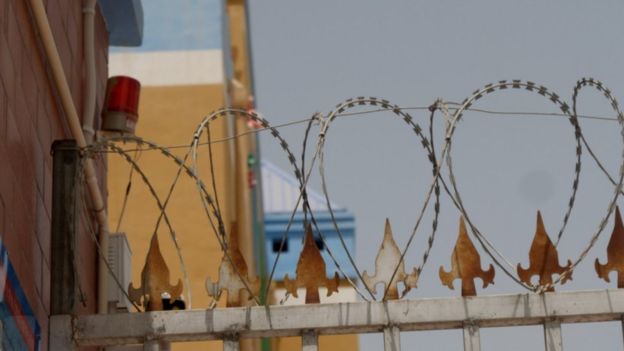
Back in Xinjiang, the research shows that all children now find themselves in schools that are secured with “hard isolation closed management measures.” Many of the schools bristle with full-coverage surveillance systems, perimeter alarms and 10,000 Volt electric fences, with some school security spending surpassing that of the camps.
The policy was issued in early 2017, at a time when the detentions began to be dramatically stepped up. Was the state, Mr Zenz wonders, seeking to pre-empt any possibility on the part of Uighur parents to forcibly recover their children?
“I think the evidence for systematically keeping parents and children apart is a clear indication that Xinjiang’s government is attempting to raise a new generation cut off from original roots, religious beliefs and their own language,” he tells me.
“I believe the evidence points to what we must call cultural genocide.”
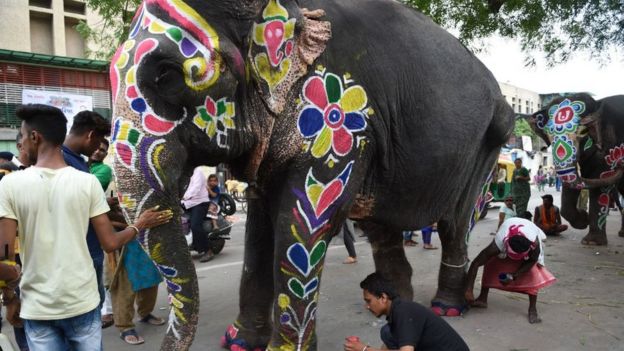
Image copyright GETTY IMAGESImage caption This journey is documented in undated Hindu sacred texts known as the Puranas written a few thousand years ago
One of India’s biggest religious festivals, the Jagannath Puri Rath Yatra, gets under way on Thursday. The festival is unique in that three Hindu gods are taken out of their temples in a colourful procession to meet their devotees. The BBC’s Priyanka Pathak explains the legend behind the festival and its significance.
The biggest of these processions takes place in Puri in the eastern state of Orissa, while the other takes place in the western state of Gujarat.
Believed to be the oldest Rath Yatra or chariot procession in the world, this festival marks the annual ceremonial procession of Lord Jagannath, his elder brother Balabhadra and younger sister Subhadra, from their home temple to another temple, located in what is believed to be their aunt’s home.
This journey is documented in undated Hindu sacred texts known as the Puranas which are believed to have been written a few thousand years ago.
What makes it so interesting?
This is the only festival in the world where deities are taken out of temples to travel to devotees, and it is also the largest chariot procession in the world.
Millions of people come to watch as a “king” sweeps the road with a golden mop and three massive 18-wheeled chariots bearing the sibling deities make their way through massive crowds. Their chariots, which are mini architectural marvels, are constructed over 42 days from over 4,000 pieces of wood by the only family that has the hereditary rights to make them.
Image copyright AFP
Legend says it always rains on the day of the procession. For a whole week before, the temple doors are shut and no one is allowed inside, because it is believed that the sibling deities have a fever after bathing in the sun with 108 pitchers of water. The breaking of their fever calls for a change of scene, which is why they go to their aunt’s home for a few days.
The size, pomp and splendour of this procession has even contributed a word to the English dictionary: Juggernaut.
What is the legend of the sibling deities?
Unlike the ornate, carefully crafted metal idols everywhere else, these three deities are fashioned from wood, cloth and resin. They are malformed with large heads and no arms: reminders of the legend of an impatient King.
The legend begins in different ways.
One speaks of an arrogant Indrayumna, King of Puri in the east, who tried to steal the Hindu god Krishna’s heart. It had been immersed in the legendary Dwarka sea after his cremation and had reappeared to the tribes people of the place as an idol. When Indrayumna tried to claim its possession, the idol disappeared. The repentant king sought absolution from Krishna by sanctifying him in another form.
Image copyright GETTY IMAGESImage caption Unlike the ornate, carefully crafted metal idols everywhere else, these three deities are fashioned from wood, cloth and resin
Another speaks of how Krishna’s grief-stuck siblings – his elder brother Balabhadra and younger sister Subhadra- rushed into the Dwarka sea carrying his half-cremated body. At the same moment, King Indrayumna dreamed that Krishna’s body had floated back up on his shores as a log.
The two legends merge here: Indrayumna decided to build a temple to house the log. His next task was to find someone to craft the idols from it. Legends say that Vishwakarma, God’s own architect, arrived as an old carpenter. He agreed to carve the idols, but on the condition that he was not to be disturbed. However, when he did not emerge from his workshop for weeks, going without food, water or rest, a worried and impatient King threw the door open.
At the time the images were only half-finished, but the carpenter disappeared. Still, believing the idols to be made from the very body of God, the King sanctified them and and placed them in the temple.
When the deities disintegrate, they are remade in the same half-done image with new wood every 12 years. They were last remade in 2015.
Why are there two rath yatras and how are they connected?
Dwarka in Gujarat – where Krishna’s half-cremated body is believed to have been immersed into the ocean – is located on the west coast of India and Puri in Orissa- where it is said to have re-emerged as a log – is located in the east.
About 500 hundred years ago, a travelling Hindu saint and temple priest of a Hanuman temple in Gujarat, Shree Sarangdasji, arrived in Puri to offer prayers at the historic Jagannathan temple.
Image copyright GETTY IMAGES
While sleeping at the temple guest house, it is believed that he received visionary instruction from Lord Jagannathan to go back to Ahmedabad in Gujarat and install three idols of Jagannathan, Balbhadra and Subhadra there. Carrying out the instructions received in his dream, he founded the Ahmedabad Jagannathan Temple.
By doing so, he sanctified the two locations – one where Krishna’s mortal remains began their journey from the west, to their transformation as Puri’s Lord Jagannathan in the east.
About 142 years ago, one of the founder’s disciples, Shree Narsinhdasji Maharaj, began the Ahmedabad Rath Yatra. The deities on chariots, pulled by elephants and humans, replicate their own journey in Puri, completing a set of rituals that sanctify the two places where Krishna’s mortal remains are believed to have come to rest.
What happens to the chariots and elephants after the journey?
At the end of the festival, the chariots are dismantled and their wood is used as fuel in the temple kitchens – believed to be the largest in the world that cook 56 things every day and feed anywhere between 2,000 to nearly 200,000 people.
The elephants are returned to the lands managed by the temple trusts to roam free – until the procession the following year.
This year’s festival was, however, marred by controversy over the elephants.
Following the death of some of the temple elephants in Gujarat, there was massive outcry over plans to replace them with elephants from the north-eastern state of Assam.
The four elephants would have had to make a perilous train journey of more than 3,100km (1,926 miles) in heatwave conditions to participate in the festival.
Chinese President Xi Jinping (2nd R) and his wife Peng Liyuan (1st R) pose for photos with Bulgarian President Rumen Radev (2nd L) and his wife in Beijing, capital of China, July 3, 2019. Chinese President Xi Jinping held talks with Bulgarian President Rumen Radev here Wednesday. (Xinhua/Huang Jingwen)
BEIJING, July 3 (Xinhua) — Chinese President Xi Jinping on Wednesday held talks with Bulgarian President Rumen Radev in the Great Hall of the People in Beijing, and they decided to lift state-to-state ties to a strategic partnership.
Bulgaria was one of the first countries to establish diplomatic relations with New China, Xi noted, hoping that the two countries take the strategic partnership as a new starting point, work together to cope with the test of international changes and inject new impetus into bilateral cooperation.
Xi stressed that the two sides should respect and trust each other and strengthen exchanges between the two governments, legislative bodies and political parties while maintaining mutual support on issues involving each other’s core interests and major concerns.
“The two countries share many of the same or similar views on the international situation and should jointly safeguard the international system based on multilateralism and the international law,” said Xi.
Bulgaria is also one of the first Central and Eastern European countries to sign intergovernmental cooperation documents with China on the Belt and Road Initiative. Xi said China is willing to strengthen the synergy between the two countries’ development strategies, promote infrastructure connectivity, expand trade and investment and cement people-to-people exchanges.
Xi reiterated China’s firm support for the European integration process, EU’s unity and growth and Europe’s more important role in international affairs, saying that China’s upholding such stances is not an expedient measure.
“It is hoped that the new EU institutions will maintain the stability and continuity of their China policy,” said Xi, who also expected the new EU institutions to work with China to promote the building of partnership on the basis of mutual respect, fairness and justice, cooperation and win-win result.
“Bulgaria is a good friend and partner of China in the EU and an important participant and advocate of the cooperation between China and the Central and Eastern European countries. It is hoped that the Bulgarian side will continue to play a constructive role in this regard,” said Xi.
Radev said he was very happy to visit China on the occasion of celebrating the 70th anniversary of the establishment of bilateral diplomatic ties.
Lifting the bilateral ties to a strategic partnership will further strengthen the foundation of bilateral relations, said Radev.
Radev said the Bulgarian side is ready to deeply participate in the Belt and Road Initiative by giving full play to its advantages of location in the region and trying to become a gateway and hub connecting Europe and Asia.
The Bulgarian side is willing to expand cooperation with the Chinese side in such areas as trade, transportation, aviation, logistics, finance, innovation, local areas and people-people exchanges, and welcomes Chinese enterprises to increase investment in Bulgaria, said Radev.
While expressing Bulgaria’s support for multilateralism and the World Trade Organization, the Bulgarian president said his country stands ready to step up communication and work for advancing Europe-China relations and cooperation between the Central and Eastern European countries and China.
China’s talent is turning away from multinationals and towards domestic tech champions in the search for a more fulfilling career
Change in sentiment comes amid raging US-China tech war and perceptions of ‘bamboo ceiling’ in the West
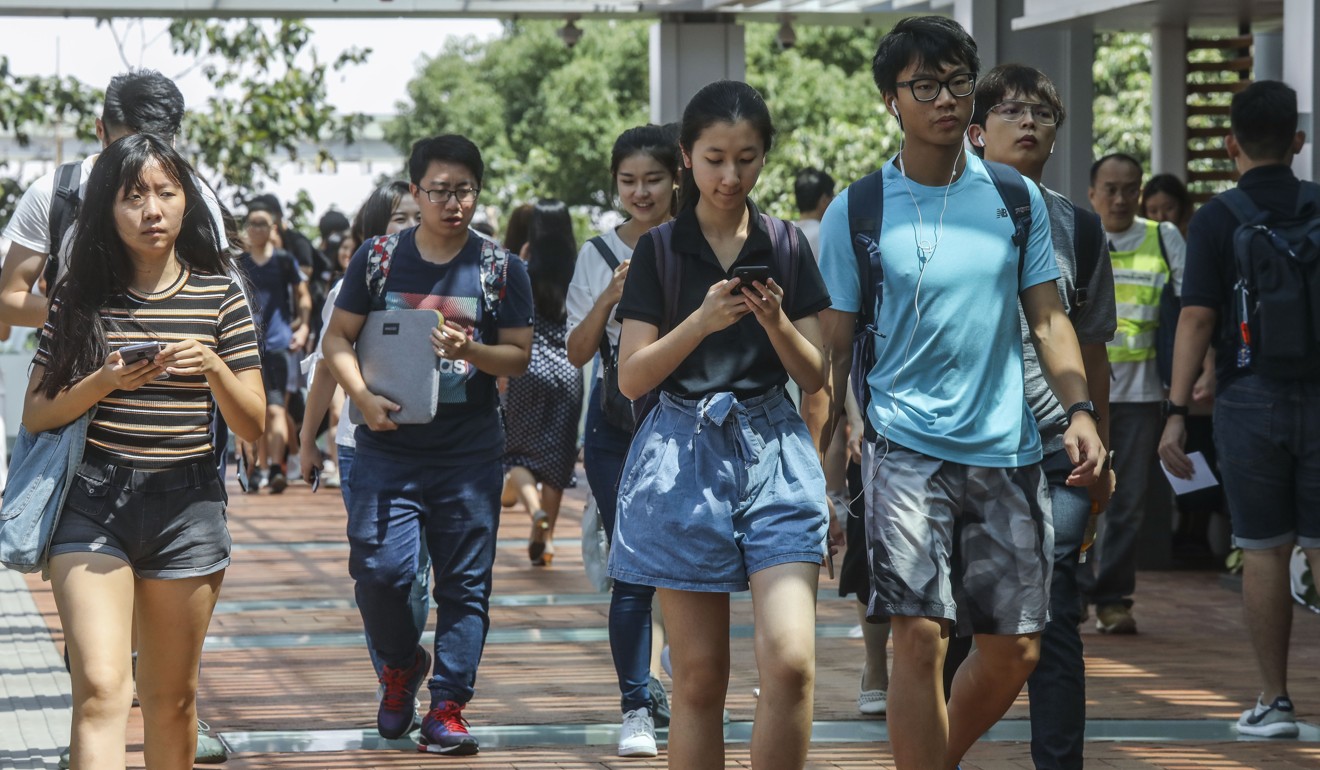
An increasing number of Chinese jobseekers are looking towards domestic tech firms. Image: SCMP
Molly Liu left her hometown Beijing to pursue a master’s degree in the United States in the 1990s.
After graduation, she fought hard to win an entry-level position at a US-based consultancy and after a period was later sent back to China to help the company’s expansion.
In the land of opportunity, the ambitious US firm showered her with avenues to pursue her career and she ended up working in Hong Kong as well as being one of the first people on the ground for the consultancy in Shanghai, Beijing, Taipei and Singapore.
Times have changed, though. Recently, her only son, Ben Zhang, turned down a hard-to-get job offer from a Boeing subsidiary in the US after gaining a master’s degree in computer science from Carnegie Mellon University in Pittsburgh, Pennsylvania.
Chinese students educated in the US are now looking more at jobs in China. Photo: SCMP
He decided to return to Beijing in 2018 and now works as a product manager at Chinese smartphone maker Xiaomi. He is convinced that the start-up turned tech major can offer him the same sort of opportunities today that the US tech consultancy offered his mother in the 1990s.
This family story about the career choices of two different generations of US-educated Chinese students reflects a wider trend. Once upon a time, US corporations could cherry-pick top Chinese talent from American universities with the promise of large salaries, generous benefits and the chance to work at market-leading organisations.
Today, China’s cutting-edge technology companies – often referred to as China Tech Corporation (CTC) – are the most sought-after employers among many Chinese students, who want more than just a cushy life.
This marks another blow for multinational corporations (MNCs) already struggling to do business in China amid a myriad of restrictions and growing hostility towards them as the US-China trade and tech war gathers pace.
“What I look for in a job is not money. My parents are not counting on me to support them,” says 28-year-old Zhang, whose team in Xiaomi is working on a wide array of connected devices, from televisions to lamps to smart locks. “What I care about most is personal improvement and access to the best resources a company can offer.”
“In Boeing, I could probably work on a new product once every two to three years. But at Xiaomi, every three months, we can roll out a new product,” he added. “You can bring so many things into people’s everyday lives in China, like using your voice to control a TV or an air conditioner – things you can only imagine in the US.”
Zhang is not alone and many Chinese today perceive a “bamboo ceiling” in the US, where they are more often seen as engineers rather than executives.
One Chinese executive who now oversees the technology unit of a listed finance and insurance firm in China said that he used to lead a team of 20 engineers at one of the world’s most valuable tech companies in Silicon Valley.
“My job was to keep optimising the performance of a product [in Silicon Valley],” he said.
“But within three years in China, I was promoted to the chief scientist of our entire company, leading a team of 1,000,” said the man, who asked to remain anonymous as some of his family still reside in the US.
How Trump’s assault on Huawei is forcing the world to contemplate a digital iron curtain
According to an April survey by professional networking site LinkedIn, an increasing number of Chinese jobseekers share Zhang’s outlook. LinkedIn compiled a list of the top 25 most desired employers in China, and about 60 per cent were local Chinese companies, with 13 of them internet firms.
CTC bagged four of the top five spots, with e-commerce giant Alibaba, search giant operator Baidu and Bytedance – which operates short video hit TikTok – taking the lead.
Tesla ranked sixth behind its Chinese challenger Nio. Amazon, the only other foreign company in the top ten, ranked eighth.
Alibaba is the owner of the South China Morning Post.
Li Qiang, executive vice-president of Zhaopin, one of China’s largest online recruiters, described the rising status of CTC among jobseekers as “the dawning of a new era”.
“Nowadays, there is nothing a multinational can offer that a domestic firm cannot, be it a compensation package or the chance to be part of international expansion,” said Beijing-based Li.
“Jobseekers are not particularly looking for domestic firms or multinational firms. They are after good firms and most of the good firms in China these days happen to be domestic tech firms,” said Li.
Li’s comments reflect the wider opportunities within the domestic economy for Chinese jobseekers today, after the rise of many successful private-sector companies and a thriving start-up scene over the past 10 years, meaning it’s not just a one-way street to a state-owned enterprise (SOE) any longer.
A survey by Zhaopin in late 2018 found that 28 per cent of Chinese university students said MNCs were their employer of choice, down from 33.6 per cent in 2017.
Even on pay and benefits, CTC is catching up with multinationals. Zhang said Xiaomi matched the offer from the Boeing unit in the US and many leading tech firms offer benefits such as gym memberships and childcare facilities.
And the rags-to-riches stories of many leading China tech entrepreneurs, some of whom have become billionaires, continue to grab media attention and inspire the younger generation.
To be sure, Chinese students would still rather work for an MNC than an SOE – but the rise of CTC can be seen in company rankings and in the total number of CTC companies in the top employer list, according to Zhaopin.
For a growing number of Chinese students, the doors to America are closing
William Wu, China country manager of global employer brand consultancy Universum, said that the one element Chinese jobseekers pay most attention to these days is whether or not a job can be “a good reference point for a future career”. And a growing number of private Chinese companies now have global brand recognition.
A recent survey by Universum shows that Apple and Siemens were the only two Western names in the top 10 ideal employers for Chinese students in the engineering sector this year, while there were four foreign firms in the top 10 list in 2017.
Huawei Technologies, the Chinese telecoms giant that has been put on a US trade blacklist after the Trump administration said it was a national security risk, ranked top in the Universum list. Xiaomi, the smartphone maker Ben Zhang works for, ranked second while Apple, one of the most valuable tech firms in the US, ranked seventh.
It seems that China’s rising clout in the world is now an attractive factor for jobseekers.
“Every engineer would like to see the technology they’ve worked on have the potential to change the world one day,” said Li Yan, head of multimedia understanding at Chinese short video major Kuaishou. “In the old times Chinese companies were at the bottom of the global value chain, now they are climbing up, providing more opportunities for talent to create world-changing products.”
At Beijing-based Kuaishou, Li’s 100-strong artificial intelligence algorithm team – many of whom joined from Microsoft Asia Research – is working to make machines understand content better than humans by studying the millions of user-generated videos on the company’s platform every day.
CTC companies do have a strong home advantage, with big Western firms having to navigate a myriad of restrictions.
For example, the “Great Firewall” lets Chinese authorities control the content and information reaching the country’s 800 million-plus internet population. Western firms also face other forms of red tape, such as having to form joint ventures with local partners.
Amazon earlier this year announced the close of its China marketplace, giving up the brutal fight with Chinese online shopping giants such as Alibaba to capture domestic e-commerce market share. Oracle China reportedly laid off 900 people in March as it winds down its research and development center in the country.
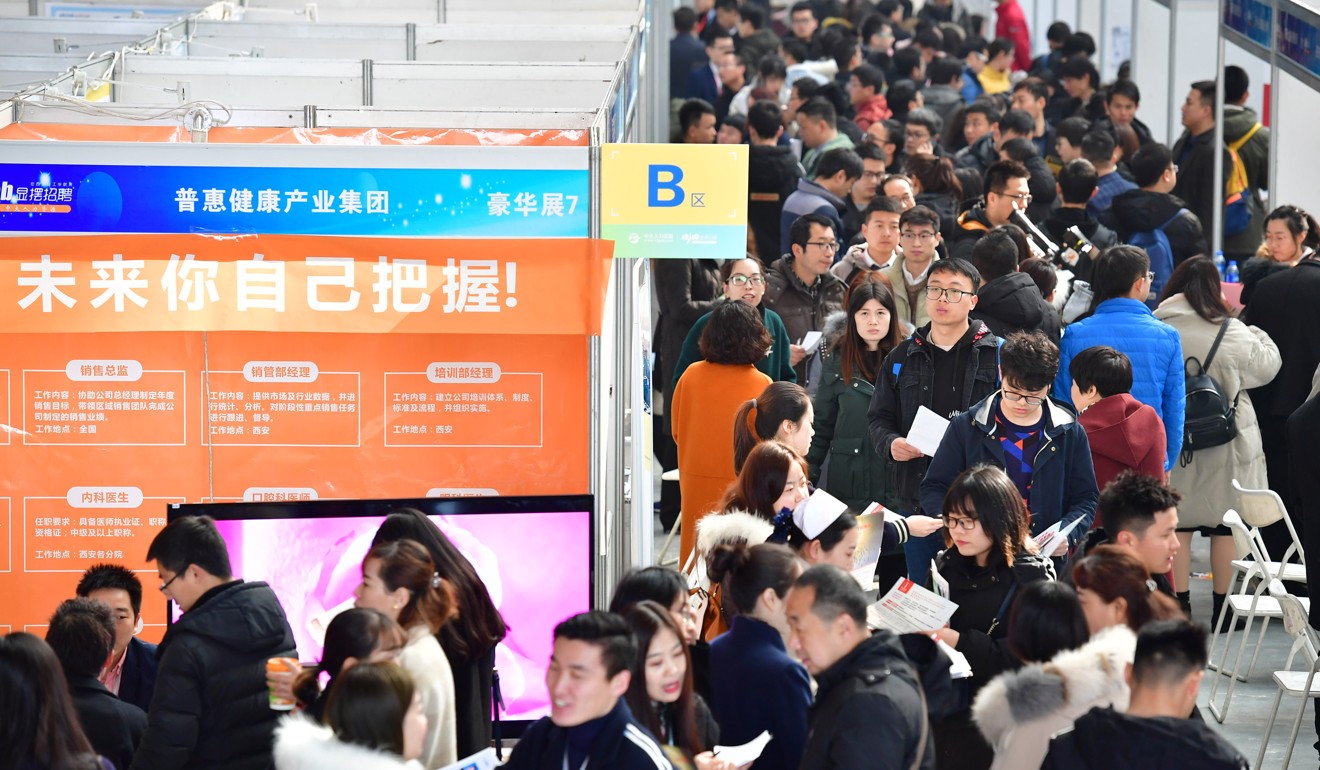
Job applicants visit a provincial job fair at Qujiang International Conference and Exhibition Center in Xian, northwest China’s Shaanxi Province in February. Photo: Xinhua
Oracle has never confirmed the number of lay-offs but said the job cuts formed part of an overall global strategy transformation.
However, there has been little sympathy for those losing their jobs in China, judging by social media posts.
Some people posted that those working for big US tech firms are not “wolf” enough compared with counterparts who work for local tech firms, referring to the long work-hours culture of the domestic tech scene.
A viral story titled “Why there should be no pity for the sacked Oracle China employees” said the company was Beijing’s biggest nursery because of the flexible “work from home” culture and generous compensation package offered to employees.
Oracle said to begin mass lay-offs in China as part of global move to cloud services
“They had every chance to join rising domestic internet firms. But they settled for high salary and low work pressure, which eventually made them frogs in boiling water. Why pity them?” said the article, adding that the earlier people give up on the “glory” of working for MNCs, the quicker they will benefit.
Not all Chinese workers would agree, and there has been a recent backlash against the “996” culture within China’s tech sector, where people routinely work from 9am to 9pm, six days a week.
With geopolitical uncertainty growing day by day, though, many Chinese are asking why leave the family behind for an uncertain fate overseas?
A survey done by consultancy BCG and The Network in 2018 showed that only one in three China residents was willing to move abroad for work, down from 61 per cent in 2014. The country is also the 20th most popular destination worldwide to relocate for a job, compared with 29th in the 2014.
“One of my graduate classmates in the US just gave up a six-digit package at Oracle and joined drone maker DJI in Shenzhen,” said Ben Zhang. “I asked what prompted his return to China. He sent me the viral article and asked, ‘who wants a life that one can see the end of from the very beginning?’”
‘There’s no need for a confrontation in technology because science has no borders,’ says the founder of CloudMinds
Huang has watched from up close as the US gradually descended from its telecoms supremacy and China caught up
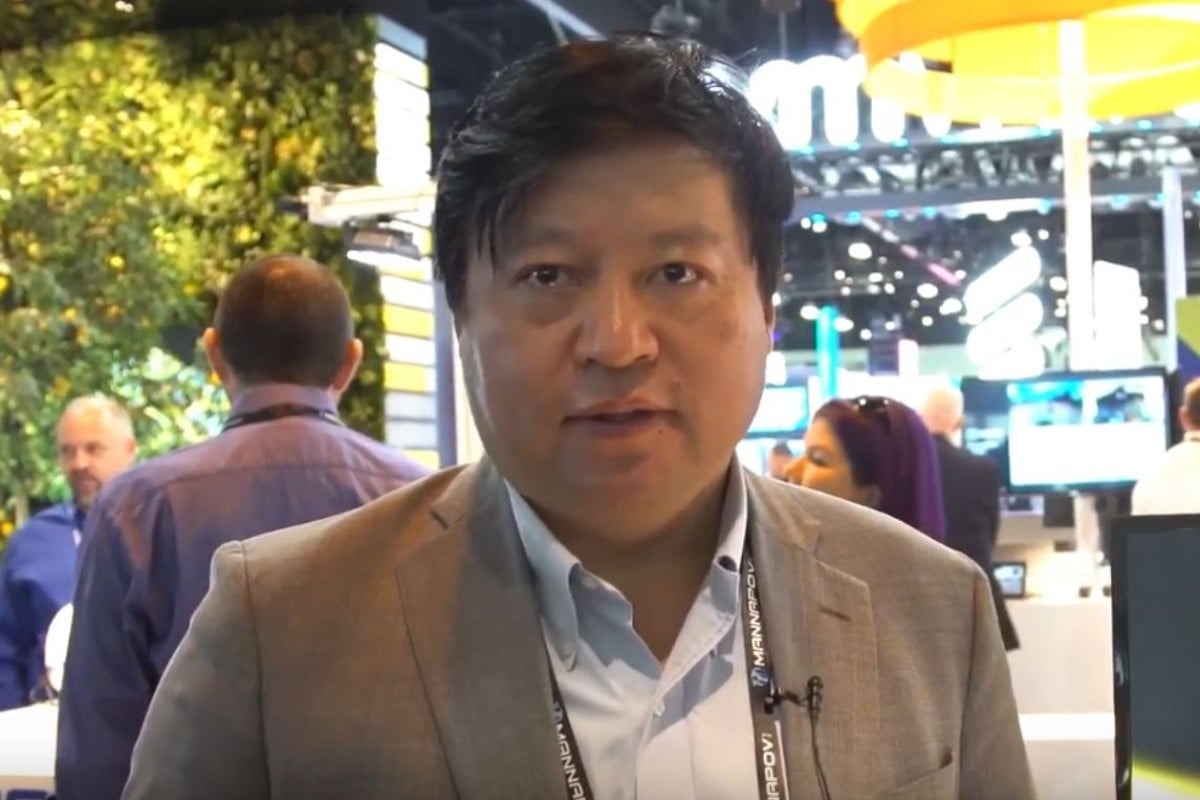
Bill Huang in 2018. Photo: YouTube
Bill Huang, a Chinese-American telecoms industry veteran, used to target China and its vast, untapped market with the technological know-how he had learned in the US.
But over the past few years, the tables have turned. In his latest business endeavour, the engineer turned entrepreneur is relying on China for a key technology that would transform mobile communication for the next decade – and it is a technology the US has fallen behind on.
As one of the first young mainland Chinese to attend graduate school in the US after diplomatic relations were resumed 40 years ago, and as one of the early participants in Beijing’s global recruitment programme to attract top talent in science and technology, Huang has a unique perspective on the current bilateral stand-off that centres on technology.
CloudMinds Technology, a privately held robotics sector company he founded in 2015, needs the superfast 5G network to support its cloud-based platforms for operating intelligent robots. The next-generation wireless technology has become a flash point in the escalating US-China tech rivalry, and Huang is at the forefront of it all.
“It’s kind of like a one-sided rivalry. Because the US doesn’t have the [5G] technology,” Huang said on the sidelines of a recent conference on China in Philadelphia.
For months, the US government has waged a campaign to block the Chinese telecoms giant Huawei from dominating global 5G networks, lobbying allies to shun the company for what it says are risks of espionage or sabotage by Beijing.
Huawei is already ahead of its European rivals in market share thanks in part to its lower prices. But so far no companies in the US – which has long led the telecoms industry – can make the equipment needed to build the next generation of networks.
Huang, 57, who spent three decades in the mobile communication sector, has watched from up close as the US gradually descended from its telecoms supremacy and China quietly caught up.
Technology is not like martial arts, or Shakespeare’s book, it’s not like everything is copyrighted Bill Huang, CEO of CloudMinds Technology
In its heyday, US giants like AT&T sold network equipment to countries around the world. Huang himself once worked at AT&T’s research hub Bell Labs, a dominant leader in telecoms innovation known as “the idea factory” and arguably the most innovative scientific institution for a long stretch of the 20th century.
“In the last 20 years, the US went from [being] No 1 in the telecommunications industry to now almost exiting telecommunications equipment manufacturing,” Huang said, citing the acquisition of Lucent and Motorola by European counterparts.
It was a decline Huang witnessed with an initial sense of sadness. As a veteran of Bell Labs, he said, he had felt extremely proud of the company’s contribution not only to America, but to telecoms technology worldwide.
“But secondly I also felt a level of pride for China,” he said, “because it went from nothing in telecommunications to lead the world in telecommunications in less than 30 years.”
Huawei was under secret US surveillance, US fraud hearing told
Glenn O’Donnell, an analyst at Forrester Research, said the decline of major US telecoms providers had little to do with politics, but was a function of inadequate interest in innovatation because of their dominance in the field.
“The long lease cycles and until recently the relative maturity of the market really didn’t lend itself well for real innovation,” he said.
“And that’s now changing, and all of those players that decided not to play in telecommunications are now wishing they had a stake because there’s a lucrative new market.”
Also drastically different today is the state of relations between China and the US. As they fight their costly trade war, tensions and acrimony have spilled into other aspects of bilateral relations, from technology, defence and geopolitics to ideology. There are even warnings of “decoupling” – something almost unimaginable to Huang, whose personal trajectory has been shaped by the intertwined ties between his homeland and his adopted country.
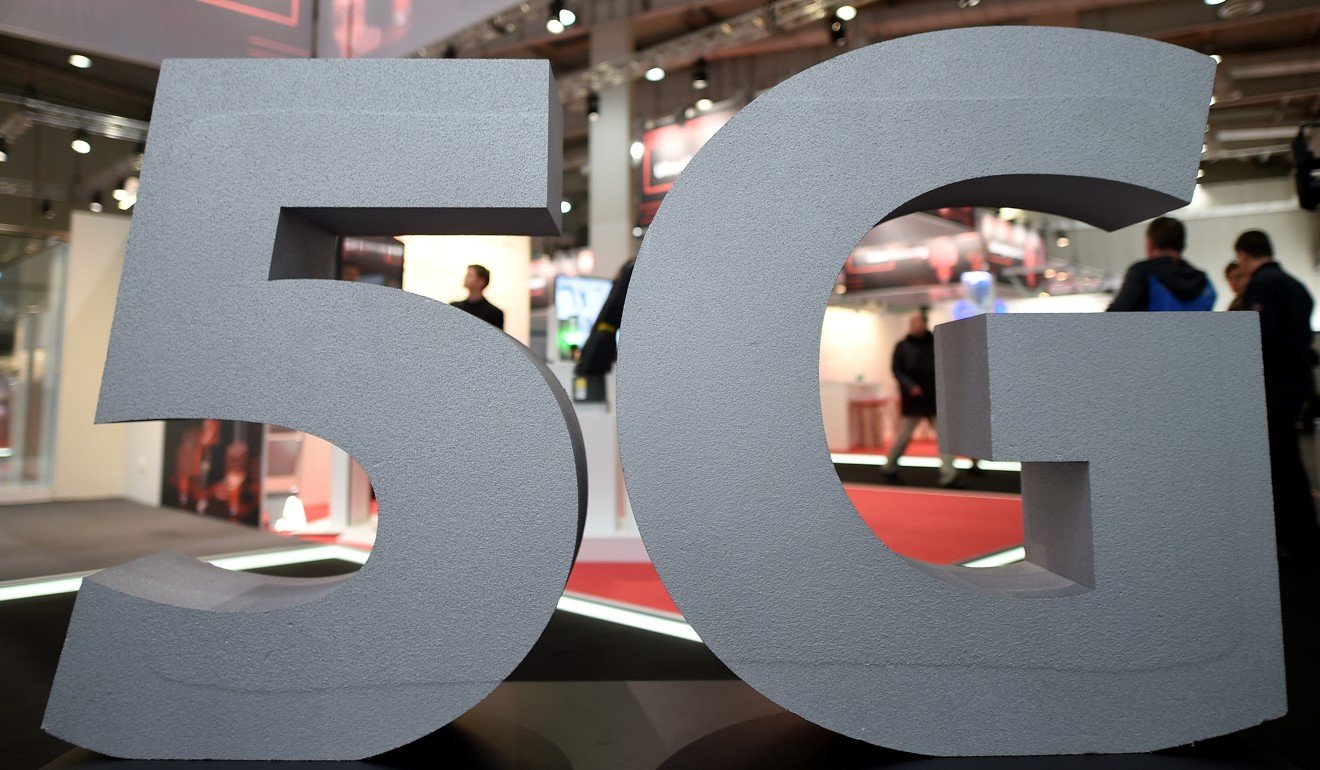
Fifth-generation mobile telecommunications technology, or 5G, enables data to be transferred at a speed that is 20 times faster than current standards. Photo: Reuters
He calls himself “a product of China-US relations”. Such was his proud conviction that he gave his son the middle name “Nixon”, after the president who put relations with China back on track in 1972 with a historic trip to Beijing that ended over two decades of antagonism and isolation since the Chinese Communist Party took power.
The visit by Richard Nixon – who died in 1994, the same year Huang’s son was born – not only mended bilateral relations, but created an opportunity for Huang and many others like him: to learn the most advanced science and technology from the world’s leading innovation powerhouse.
Born in 1962 into an intellectual family in southwestern China, Huang spent most of his childhood in the turmoil of the Cultural Revolution.
“As professors, my parents had a very difficult time during the Cultural Revolution. But they insisted that we spend time to study,” he said.
Huang recalled being a “wild kid”, going to school to “have fun”. But when the time came to study, he was able to pick up the pace, which he attributed to the academic minds that run in his family.
Hailed as a “child prodigy”, he passed the country’s first university entrance exam in a decade at the age of 15. A year later, in 1978, he was in the first batch of students to enter university after the disruptions of the decade-long upheaval. He chose to major in electrical engineering, following in his father’s footsteps.
In his sophomore year at the Huazhong Institute of Technology, his parents told him to apply for graduate programmes in the US.
“They think the US has the best technology in the world, and they wanted me to come here to study,” he said. “I read everything about the US … and I was very eager to come.”
Arriving at the University of Illinois’ Chicago campus in 1982, at age 20, Huang was one of the first new Chinese graduates to further their studies in the US after the re-establishment of diplomatic relations in 1979. He did not speak English (although he could read it), and had to enrol in a three-month language training program before he could attend lectures.
He studied computer science in addition to electrical engineering, working day and night on projects in the lab – a time he looks back on with fondness.
“It was some of the most intense time in my life, I suppose,” Huang said. “But I was young and relentless, and I could go on for three days without sleep. … I thoroughly enjoyed it.”
US to speed up 5G development plans as race with China accelerates
Despite their vastly different cultural backgrounds, Huang made friends with his American classmates and fellow foreign students, some of whom were from India and what was then the Soviet Union.
“I experienced zero racial prejudice,” he said. “That was Chicago in the 1980s. I don’t know what happened today, [but back then] it was thoroughly what I thought was the ‘melting pot’.”
In his computer science classes, Huang learned Unix – a state-of-the-art operating system developed by Bell Labs – from adjunct professors who had helped create the program.
Little did he know he would later become a researcher at Bell Labs. “That was the holy ground of telecommunications,” he said, still beaming with pride when speaking of his former employer, which invented, among other things, the communications satellite and the cellular telephone system.
Bill Huang as a graduate student in Chicago in the early 1980s. Photo: CCTV
In 1994, Huang joined 10 other former Bell Labs engineers at a California-based telecoms infrastructure provider that targeted the vast and underserved Chinese market. A year later, the company merged with a telecoms software company to become UTStarcom, with Huang as its co-founder and chief technology officer.
UTStarcom tapped into the fast-growing Chinese telecoms market with a low-cost, limited-range wireless service known as the Personal Access System (PAS). It went public on the Nasdaq exchange five years later. In 2001, China passed the US as having the most mobile phone customers. The rapidly expanding market propelled UTStarcom’s growth; its revenues increased tenfold between its IPO and 2003, when it controlled 60 per cent of China’s PAS market.
In 2007, having lived in the US for longer than he did in China and having become an American citizen, Huang moved from Silicon Valley to Beijing with his wife and son. China Mobile, the country’s largest telecoms operator, had asked him to help build a “Bell Labs for China” – a request he readily accepted.
“It was not only a simple job, but a responsibility, a challenge I thought I should accept no matter what,” he told Chinese state broadcaster CCTV in 2017.
Smartphone screen with resolution million times higher than iPhone: Chinese researchers make technology breakthrough
As the head of the China Mobile Research Institute, Huang led the carrier’s leap from 3G to 4G, and he was also at the centre of 5G research. “We put a lot of effort into researching what standards are required for the future network,” he said.
His return to China preceded the “Thousand Talents Plan”, a state-backed recruitment drive to lure the world’s brightest scientists and experts – especially those with roots in China – with lavish grants. But when the plan was set up in 2008, Huang was among the first batch of researchers to be enlisted.
“I express my heartfelt thanks to the state and the people for giving me such a good opportunity and condition to return home and serve the country,” Huang was quoted as saying at a forum for recipients of Thousand Talents awards hosted by People’s Daily in 2010.
“I worked for over 20 years abroad, and all my work was in the field of technology. I hope to bring the whole set of things I know back to China,” he added.
The recruitment scheme, much celebrated at the time, has become a sensitive subject today as tensions between the US and China escalate. It has drawn growing scrutiny and suspicion from the US, where investigators are looking for any connection to theft of American intellectual property. In response, China hushed up or deleted references to the programme in universities, companies and cyberspace.
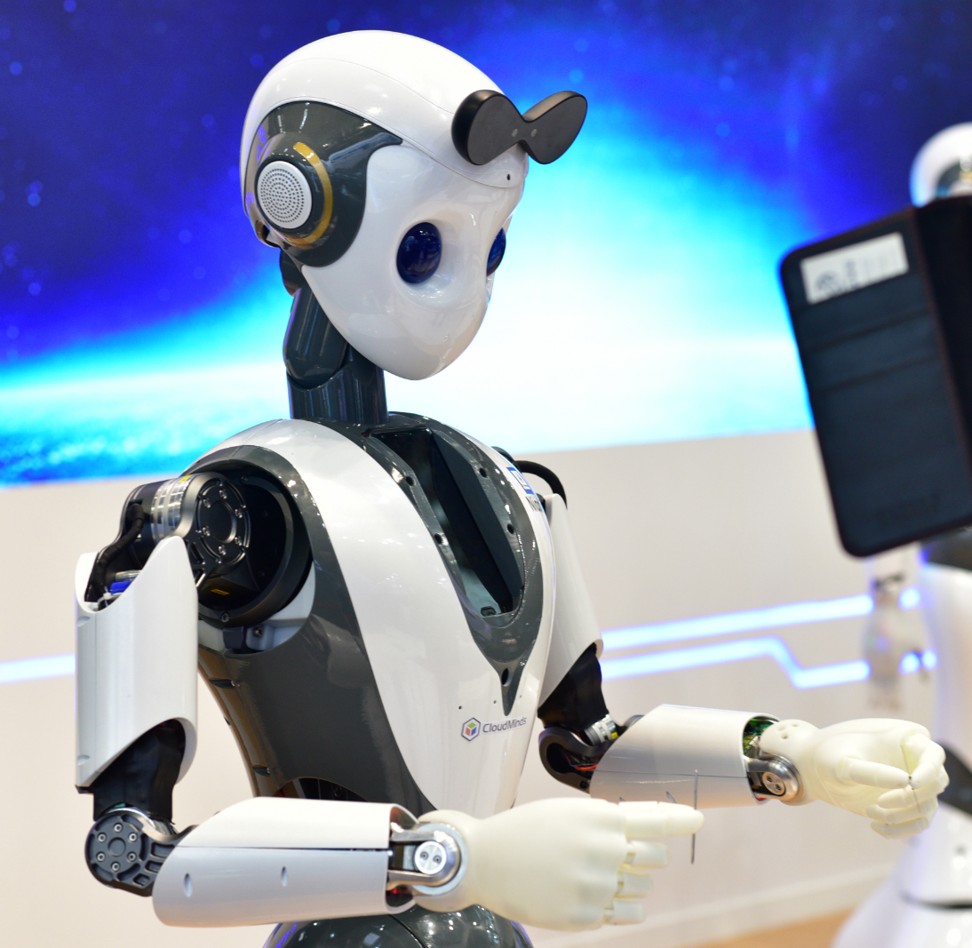
A robot made by CloudMinds Technology showcased at the Mobile World Congress Barcelona in February. Photo: Handout
When asked about US complaints regarding China’s alleged technology theft, Huang gave a vehement defence of China.
“I think these are just basically blatant accusations with no ground,” he said. “Ninety-nine per cent [of the technologies] are not stolen. There are industrial espionage cases … but they’re not systematic cases, and they’re not [the result of the] rivalry between China and the US – they’re the result of competition.”
Huang also dismissed accusations that Chinese scientists and experts have “stolen” US technology.
“Technology is not like martial arts, or Shakespeare’s book, it’s not like everything is copyrighted,” he said.
“Everyone in Silicon Valley in the last 50 years started from somewhere, and then they become an entrepreneur and they move [on] to start their own companies. So in the early days, everyone took a little bit from what they have worked on.”
“It was customary, and then it became very litigious. Then people started saying: wait a minute, you can do that? So there were many exemplary cases, then it became more and more refined in what you can take and what you cannot take; what is protected and what is not protected. All of these things are happening industry-wide, it’s not a single US and China issue.”
Can China meet US demands over IP theft and forced technology transfer?
But intellectual property theft is not the only American grievance. Many US companies have accused China of forced technology transfers, with foreign businesses required to hand over technology to their Chinese partners in exchange for access to the market.
Huang said that complaint “has been there since day one”.
“Chinese companies will always complain about American companies. American companies will always complain about Chinese companies. The reason is very simple: every company would want to use regulations and law to their advantage,” he said.
A trained engineer, Huang holds a “globalist” view of technology – at odds with the national security perspective that has become prevalent in Washington.
“There’s no need for a confrontation in technology because science has no borders,” he said.
“In Huawei labs, there are many American engineers. In Intel and Qualcomm’s labs, I can assure you there are many Chinese engineers, and there are many German, French, Swedish engineers in all of these organisations. The fact they’re sold by a Chinese company or they’re sold by an American company has no meaning because behind the technologies is an international effort.”
To make his point, Huang calls the technology created by CloudMinds a “US and China technology”.
“I mean, how do you categorise it? Is it created by China or the US? It’s created by both. Because we have engineers in Silicon Valley, and we have engineers in Beijing.”
Protecting IP in China is hard, but awareness is rising, thanks to Trump
The company has dual headquarters, with its global operation based in Santa Clara, California, and its China operation based in Beijing – a structure Huang says now “makes perfect sense”.
“That was by design, by our lawyers. They kind of foresaw, if there [are] going to be trade tensions, this would be the right way to do it.”
But Huang questions if these tensions – a large part of which he said had been “politicised” – are so deeply embedded in every corner of society.
“I come to the United States very often, and I talk to the industry. I still feel it is the same America.”
“I encountered no scrutiny, no warning, and everyone is encouraging us, both from the US and from China, to continue our practice,” he said, adding that he only felt the tension when speaking to lawyers and government officials.
“But I am worried by all these stories. I think that’s why I said earlier: in the media it all looks very scary, but in practice, it’s all business as usual.”
Lotte, Kia and Hyundai are also gradually winding down their China business due to political risks, tariffs and losing market share
Western companies fleeing Donald Trump’s tariffs may not have luxury of a managed exit, but should look at the South Korean case studies closely, experts say
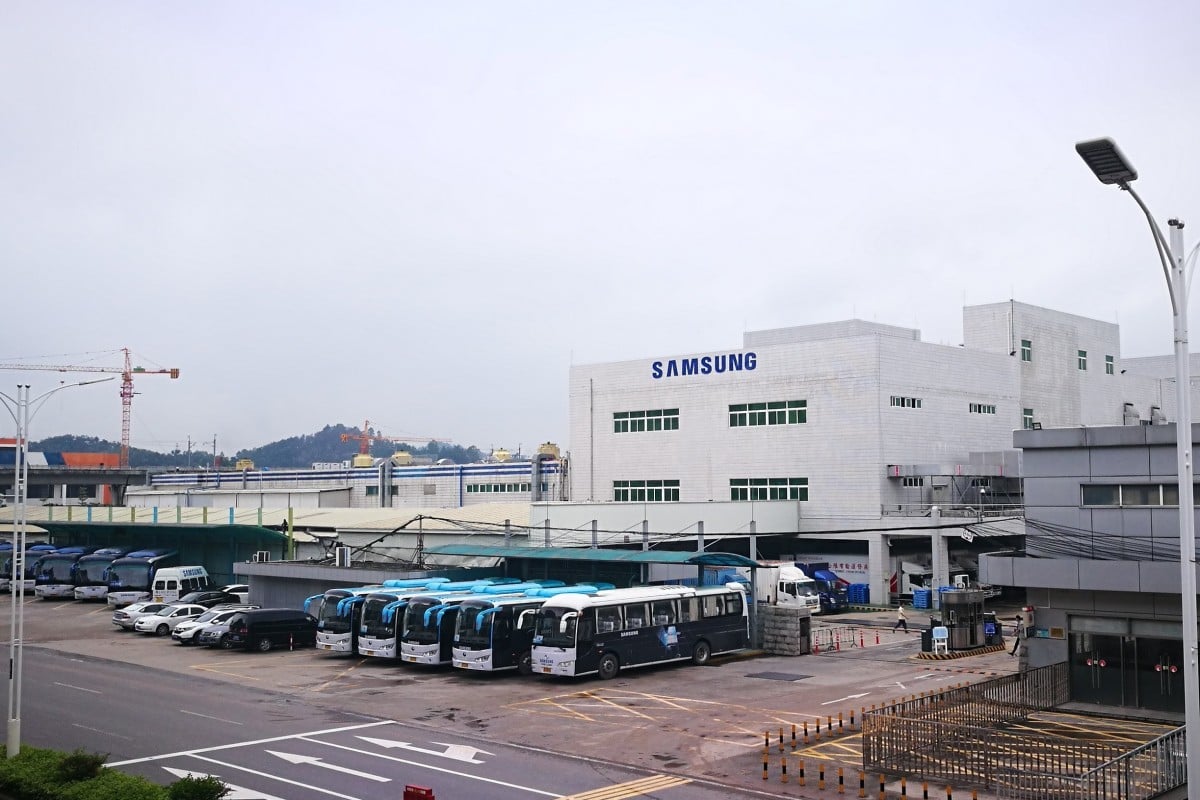
Samsung’s last mobile phone production line remaining in China in Huizhou is winding down, implementing a voluntary retirement programme. Photo: He Huifeng
Upon landing in Australia in 2017 to attend a seminar, a senior politician with South Korea’s parliamentary defence committee was greeted by Julie Bishop, then Australia’s foreign minister, who had a burning question: “How are you dealing with the China threat?”
Bishop was referring to the treatment of South Korean firms in China, which escalated after Seoul agreed in 2016 to a long-standing request from the United States to allow the deployment of the Terminal High Altitude Area Defence system (THAAD) on South Korean soil.
Lotte Corporation, one of Korea’s chaebol conglomerates that dominate its economy, had sold a plot of land in Seongju county to the South Korean government, on which the system’s radar and interceptor missiles were set up. While both Washington and Seoul said it was meant to counter threats from North Korea, Beijing viewed THAAD as a security risk, since its radar had the range to monitor China’s nearby military facilities.
After it was deployed in 2017, THAAD triggered widespread boycotts of Lotte’s retail operations in China, with the state-owned media acting as aggressive cheerleaders. The company was sanctioned by Beijing, with its expansion plans in China grinding to a halt on the orders of the Chinese government.
The Terminal High Altitude Area Defence (THAAD) arrived in Seongju in September 2017. Photo: Reuters
Australia – like South Korea – is heavily dependent on trade with China, but is also closely bound to the US in defence and political terms, and Bishop feared that should Australia fall out of favour with Beijing, Australian companies could face similar risks, and so she sought the counsel of the politician, who asked not to be named.
The case of Canadian canola and meat exports being banned from China, reportedly in retaliation for the arrest of Huawei chief financial officer Meng Wanzhou, also known as Sabrina Meng and Cathy Meng, is an example of how third nations can be drawn into the modern day superpower rivalry.
Many analysts say the efforts of South Korean firms in China should be essential study material for Western governments and businesses about the political risks of doing business in the mainland, which are growing as the US-China trade war threatens to draw in other nations and expand into a broader geopolitical struggle.
But large South Korean firms have been gradually withdrawing from China for a number of years – even before the THAAD crisis – and have been able to leave on a managed basis. They are leaving to avoid a repeat of the political crisis that ruined Lotte’s China business, and to avoid tariffs on exports of their China-made products to the US.
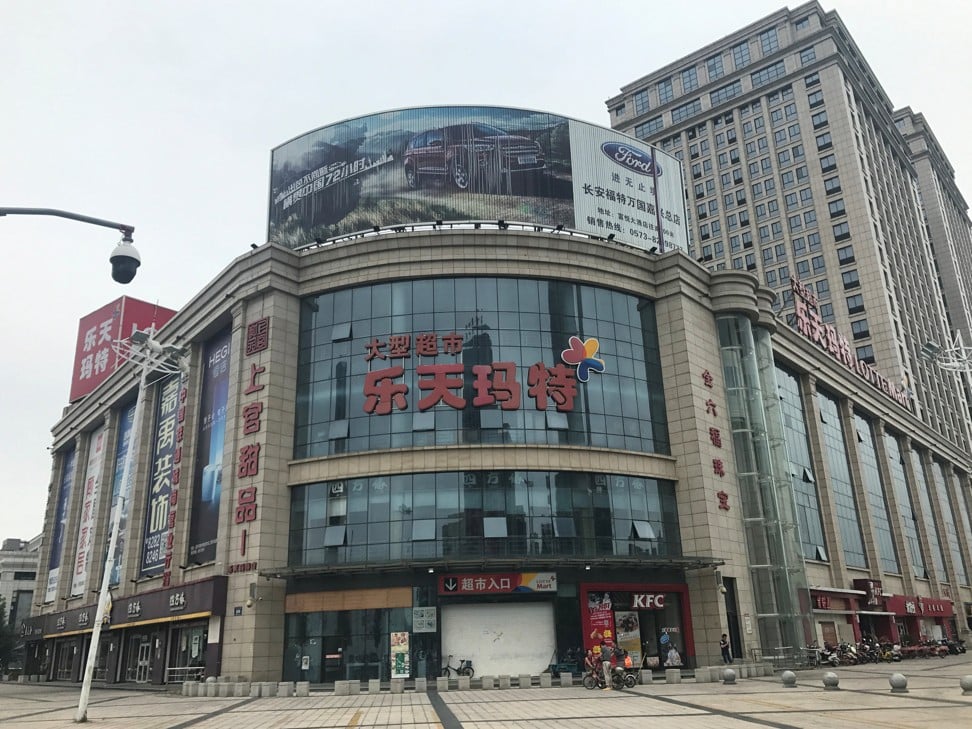
Lotte have been forced to close retail operations in China. Photo: Reuters
Share:
But they are also leaving because Chinese firms have become much more competitive in the domestic market that South Korean companies had found so fruitful for more than a decade – a fate that could easily befall Western companies that are eyeing China’s burgeoning middle-class consumer market. Now, while American firms are considering exiting China and setting up in nations that have lower tariff access to the US, South
Korean competitors have had a few years’ head start.
“In a way, all the problems that some South Korean companies had since 2017 might be a blessing in disguise. It meant that they started all of this [supply chain shift] two years before all the other companies,” said Andrew Gilholm, Seoul-based director of analysis for China and Korea at political risk advisory, Control Risks.
Another chaebol, Samsung Electronics, opened its first plant in Vietnam in 2008 and this long-term presence has enabled it to build a supply chain of South Korean companies, which in turn makes it easier for other South Korean firms to establish a base in the Southeast Asian nation.
We have experienced some of the worst situations in China over the past few years and learnt that the political risk there wouldn’t just simply go away overnight Ex-Lotte Shopping manager
As a result, South Korean investment into Vietnam climbed to US$1.97 billion in the first half of 2018, exceeding the country’s investment in China of US$1.6 billion over the same period for the first time, according to the Export-Import Bank of Korea.
Overall in 2018, South Korea’s total investment to the Southeast Asian country totalled US$3.2 billion. Its exports to Vietnam also increased to US$48.6 billion, 121 times that of 1992, when the two countries established diplomatic relations, and the trend is expected to continue.
“We have experienced some of the worst situations in China over the past few years and learnt that the political risk there wouldn’t just simply go away overnight,” said a former manager of Lotte Shopping, the chaebol’s retail arm, who spoke on condition of anonymity.
“China may pass all the legislation ensuring the safety of foreign investments and the rights of multinational companies, but the chance of it swinging away again when there is another political confrontation is just too high … we cannot afford to take any more risk.”
China eventually lifted its economic sanctions on Lotte in April, and the municipal government of Shenyang, the capital of Liaoning province in Northeastern China, gave the company permission in May to resume work on the US$2.6 billion Lotte Town shopping and leisure development.
But according to a person close to the project, Lotte is considering selling the complex after its completion, as it does not wish to continue its retail business in China. A Lotte spokesman declined to comment, saying the situation is “complicated”.
On one hand, its eagerness to leave China reflects the volatility in the market, but on the other, its decision to complete the construction of project before leaving suggests an unwillingness to burn bridges in the process, analysts said.
Samsung is another South Korean giant downsizing its Chinese manufacturing presence after it closed its Shenzhen production line in May 2018, followed by its Tianjin factory in December.
Samsung has been very aware of the potential issues around those closuresJason Wright
Its last remaining mobile phone production line in
implementing a voluntary retirement programme. Samsung is also considering moving some television manufacturing from China to Vietnam, according to a company insider.
However, it too, is carefully managing its exit strategy, said Jason Wright, founder of Hong Kong-based intelligence firm Argo Associates, who is advising a growing number of South Korean companies seeking to leave China. Samsung is still a large supplier of microchips to Chinese companies like Huawei, and to exit on negative terms could disrupt its ongoing business.
“Samsung has been quite generous in the packages that have been offered [to workers in the factories that it has closed],” Wright said. “Samsung has been very aware of the potential issues around those closures.”
As well as the political risks and tariffs, Samsung has seen its mainland market share in several product queues shrink dramatically due to competition from Chinese rivals. Its share of China’s smartphone market, for example, fell from 20 per cent in 2013 to just 0.8 per cent last year, according to Strategy Analytics, a market research firm.
Over the same period, it has been moving its supply chain out of China in a “subtle and imperceptible” way, according to Julien Chaisse, a professor of trade law at City University of Hong Kong who has advised, among others, Lotte on its plans to relocate to Vietnam.
Samsung Electronics opened its first plant in Vietnam in 2008. Photo: Cissy Zhou
As stories emerged in June that Apple was considering a partial exit of China, it was impossible not to see parallels. iPhone sales in China fell 30 per cent in the first quarter of 2019, according to research firm Canalys, while smartphones will be among those facing a potential tariff of up to 25 per cent, although this has been at least delayed after the trade war truce agreed by
Meanwhile, South Korean car companies Kia and Hyundai’s combined market share in China fell to 2.7 per cent last year, from about 10 per cent at the beginning of the decade. Both companies, which have shared ownership, are downsizing their Chinese operations.
“In the past, China was just a great market, but for Korea, now China has become a competitor. So that is really a change in the dynamic over the last five years. China was not really able to compete with Korea in most areas,” said Wright from Argo Associates.
City University of Hong Kong professor Chaisse traces the exodus of South Korean firms back to 2014, before THAAD and before the trade war, and highlighted an arcane arbitration case at the United Nations’ dispute settlement courts as a turning point. After that case, South Korean companies in China faced an increasingly hostile environment.
Filed in 2014 and settled in 2017, the case emerged after South Korean company Ansung Housing had been forced to sell a golf resort it was developing in Eastern China after a change in the country’s real estate legislation.
Ansung took the case to an arbitration panel, claiming it breached a Sino-Korean investment treaty. The company won – only the second defeat for China in two decades of participation in the court, but this ushered in a “change in atmosphere” for South Korean firms.
“My take is that while the Korean case is unique for a number of reasons, it highlights what is going to happen to many other foreign companies operating in China,” Chaisse said.
“I think very soon even European companies will be reconsidering their businesses in China. Every time it will be a different story: different countries, different companies, in different economic sectors will have different reaction times and the magnitude of their withdrawal may vary.”
But for those now fleeing trade war tariffs, they may not have the luxury of long-term planning that companies like Samsung and Lotte have had, said Gilholm from Control Risks.
“Long term, I think the Korean firms that are moving out of China have had it easier because they haven’t had to do it under quite such pressured and scrutinised circumstances as a company which starts to move things now,” he said.














 CHINDIA ALERT: You'll be living in their world, very soon