25/08/2019
Photo taken on Aug. 25, 2019 shows the view of Xinqiao Village in Qianji Town in Shuyang County, east China’s Jiangsu Province. Qianji Town had implemented a rural housing condition upgrade project since 2017. Over 900 local families in the country have settled in new residences up to now. (Xinhua/Ren Pengfei)
Source: Xinhua
Posted in Families settle in, housing upgrade project, jiangsu province, new residences, Qianji Town, Shuyang County, Uncategorized, Xinqiao Village |
Leave a Comment »
25/08/2019
- The traditional view that the man of the house must be the breadwinner may be crumbling, according to a recent survey
Just over half of the men questioned said they were in favour of stay-at-home fathers. Photo:Shutterstock
More Chinese husbands are open to the idea of becoming stay-at-home fathers in a shift away from traditional mores, according to a recent survey.
The idea that the man of the house should be the breadwinner, while child care and domestic duties are the woman’s duties, is deep-rooted in Chinese culture.
But the survey, jointly conducted by the state-run China Youth Daily and questionnaire website wenjuan.com earlier this month, found that 52.4 per cent of male respondents supported the idea of men being a full-time carer.
The number in favour was lower among women, just 45.8 per cent of whom supported the idea.
But however keen men may be about the idea, there may also be practical difficulties.
Yu Xiang, a middle schoolteacher in Shanghai who has a six-month-old daughter, said he was willing to be a stay-at-home father but in reality it was not practical to do that because his wife, who is also a teacher, did not earn enough to support the family.
He also said his wife was not happy leaving him to do the housework, adding that she often scolded him for doing it badly. “She also said he would not feel comfortable letting me take care of our daughter,” he said. “She says I am too careless.”
Chinese father decides to drop in on daughter’s school … via helicopter
Robin Ge, a financial manager from Shanghai, admitted he took a more old-fashioned view of household duties.
The father of a five-year-old boy said he would not accept the idea of becoming a stay-at-home father even if his wife, an office worker, started earning more than him.
“Perhaps I am a traditional Chinese man,” he said. “I believe men should earn more than women. I remember my father told me years ago that a man’s status in his family is determined by his economic status. Compared with stay-at-home mothers, the acceptance rate for stay-at-home fathers among the public is very low.
“I agree that a father caring for the kids has benefits, such as helping the kid to be brave and responsible. However, that doesn’t mean a man needs to be full-time father. What he should do is to spend much of his spare time caring for and playing with his kid.”
The survey questioned 1,987 married people, some 89.2 per cent of whom were parents. Sixty per cent of the respondents agreed that the stereotypical view of the husband being the breadwinner put fathers off staying at home to look after the children.
However, the number of women who said they were opposed to the idea of stay-at-home fathers, 30.9 per cent, was slightly higher than the 28 per cent of men who did not support the notion.
But women whose husbands have given up their jobs to look after the children generally appreciated what they had done.
“I don’t think a man who stays at home is a failure in life. His sacrifice helps me so much and I really am grateful for his support,” a woman wrote on China’s leading parental website ci123.com, adding that this kind of family is more stable and the relationship between husband and wife is more harmonious.
Chinese father takes daughter, 10, to top school’s open day despite her being on an IV drip
Zhang Baoyi, a sociology professor at the Tianjin Academy of Social Sciences, said he believed attitudes would change as society evolved.
“To embrace this practice, we need to recognise the contribution and value of homemakers,” Zhang told China Youth Daily.
“The fact that dads are willing to be more involved in their children’s lives shows that the traditional mentality of ‘career husband and domestic wife’ is changing.”
Zhang also said that more parents in general were willing to stay at home to provide full-time child care because they were attaching increasing importance to their children’s education.
“The number of stay-at-home fathers or mothers is increasing,” he said.
“Couples should adjust the [family] model … according to their economic conditions and abilities to educate the children.”
Source: SCMP
Posted in breadwinner, child care and domestic duties, China Youth Daily, Chinese culture, Chinese men, crumbling, economic conditions, housework, man of the house, questionnaire website, schoolteacher, Shanghai, society, sociology professor, stay-at-home fathers, teacher, Tianjin Academy of Social Sciences, traditional view, Uncategorized, wenjuan.com |
Leave a Comment »
25/08/2019
- A recent joint exercise in Tajikistan is the latest example of Beijing’s growing security and economic interests in the former Soviet republic
- Analysts say Moscow may not be happy about China’s growing reach in the lawless, mountainous area and will be keeping an eye on the situation
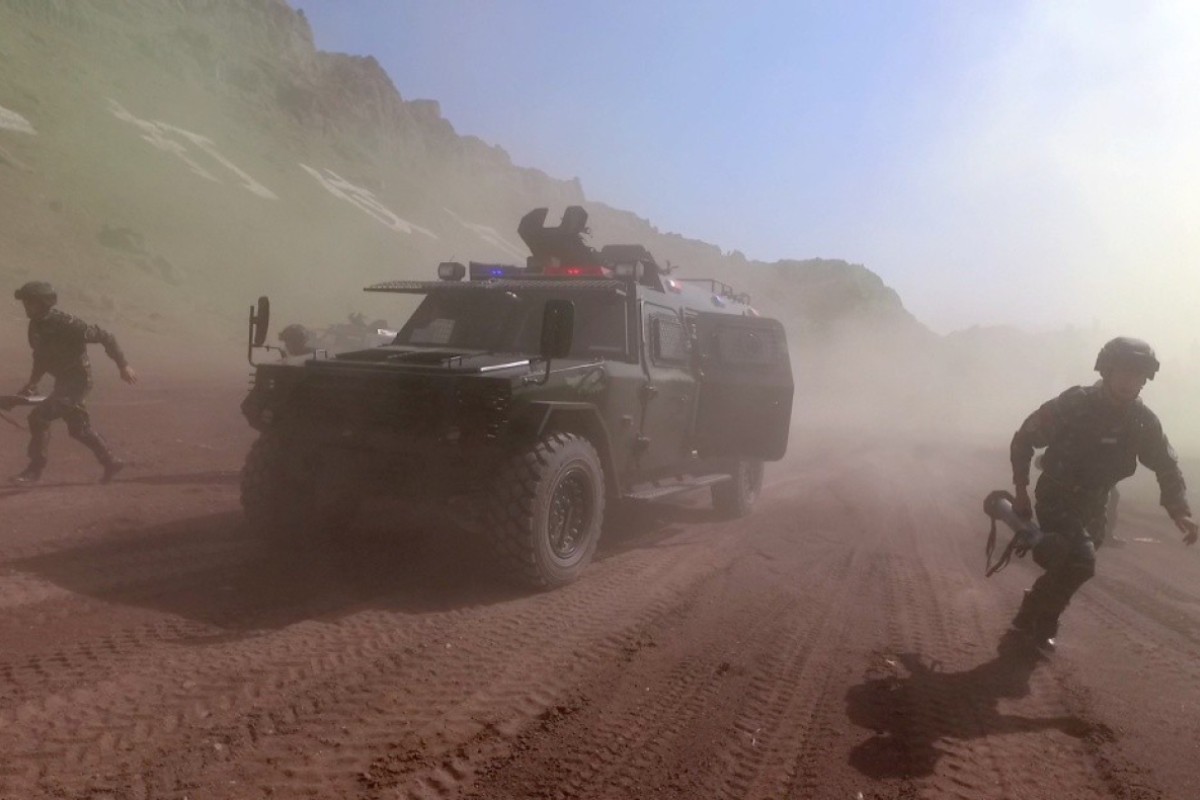
Chinese and Tajik troops completed a joint exercise earlier this month in the mountainous region of Gorno-Badakhshan. Photo: Xinhua
China is increasing its military and economic presence in parts of central Asia that Russia has traditionally considered its sphere of influence – a development some analysts believe could cause concern in Moscow.
While Russia’s influence remains strong in many former Soviet republics, China is steadily building up its military and economic influence in Tajikistan, particularly in the remote, mountainous areas on its western borders where central government authority is weak.
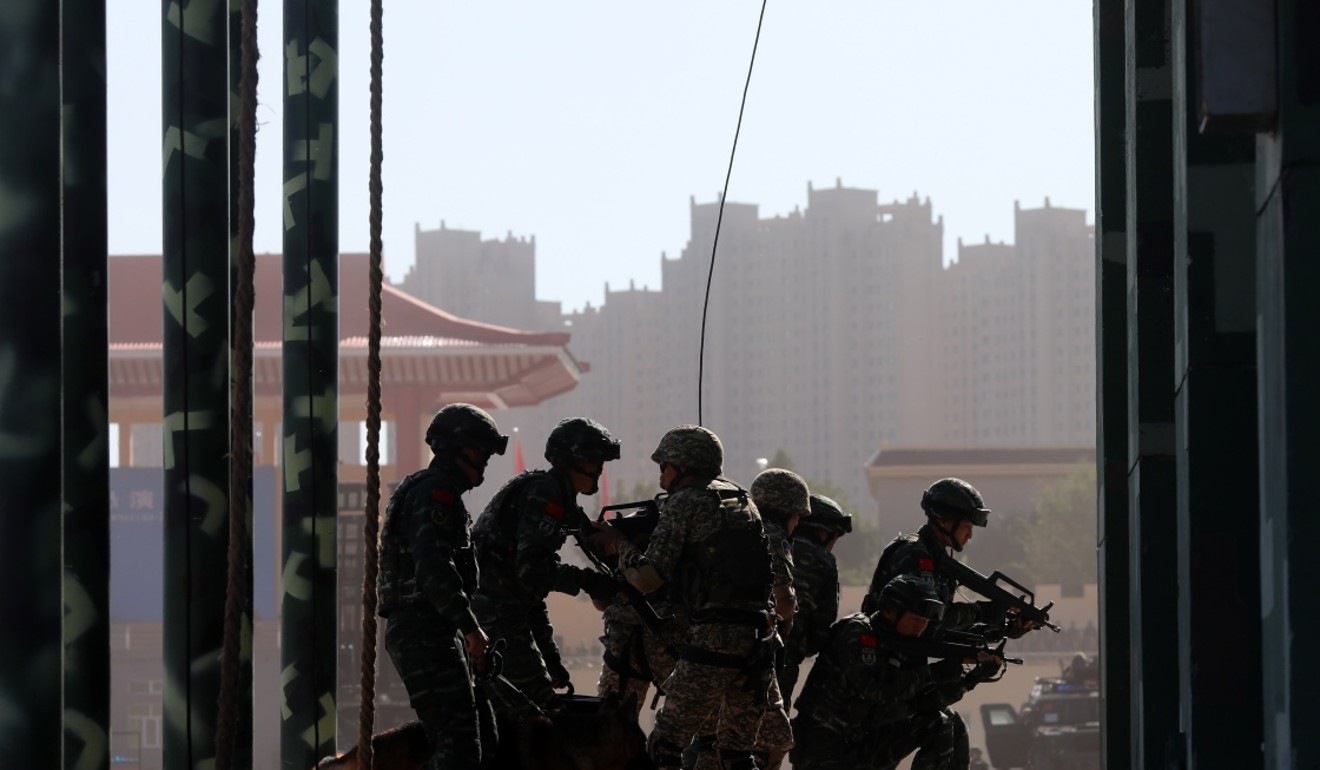
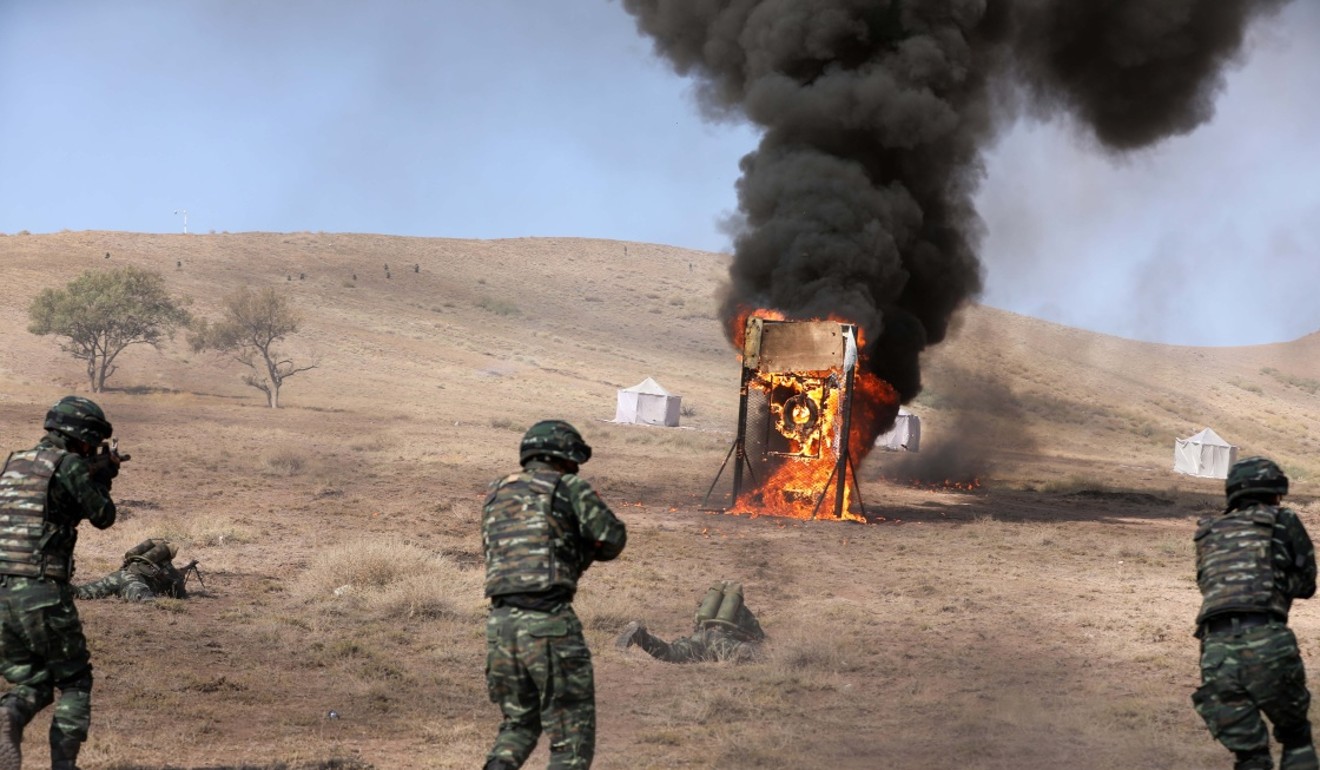
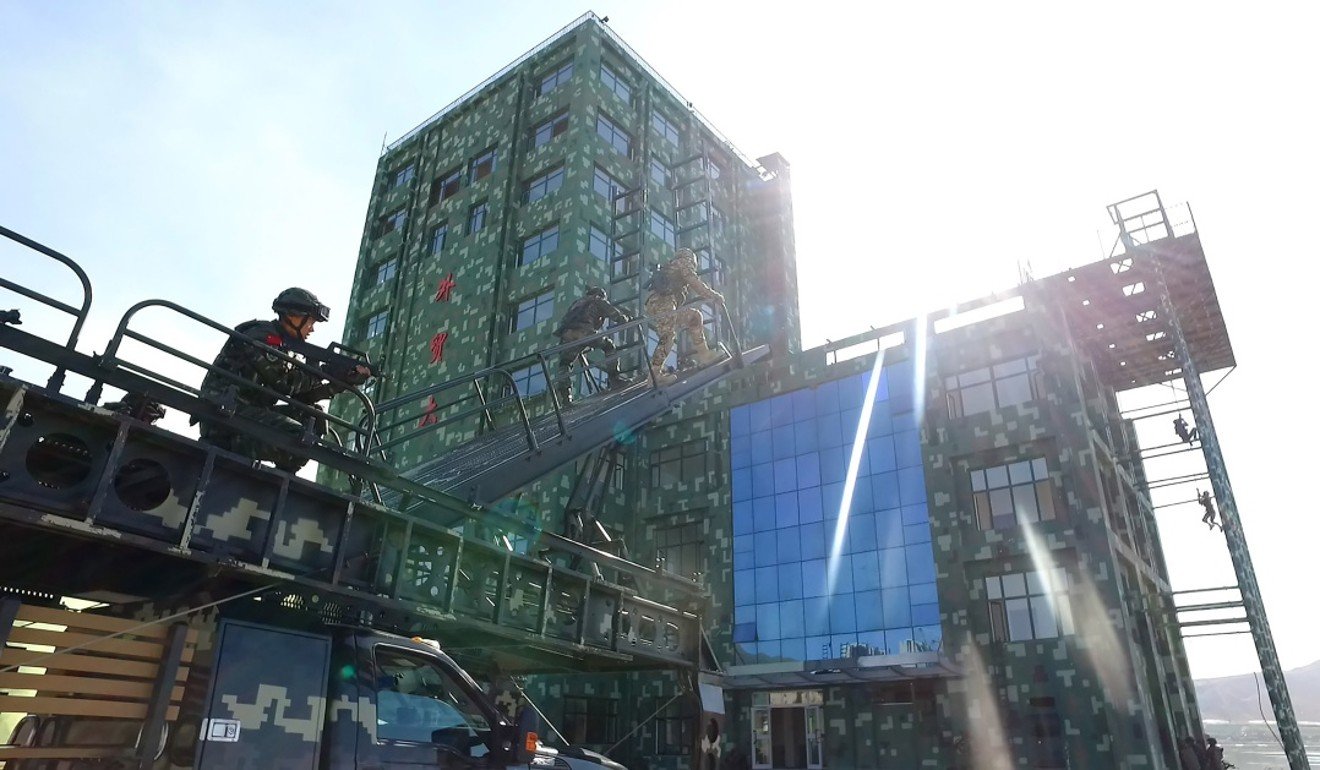
Chinese troops recently concluded a joint drill in eastern Tajikistan involving 1,200 troops from both countries.
The eight-day exercise that finished on August 13 was conducted in the autonomous Gorno-Badakhshan autonomous region, a sparsely populated territory in the high Pamir mountains, which borders China’s Xinjiang region and Afghanistan.
China has been increasing its security presence in the strategically sensitive region. Photo: Xinhua
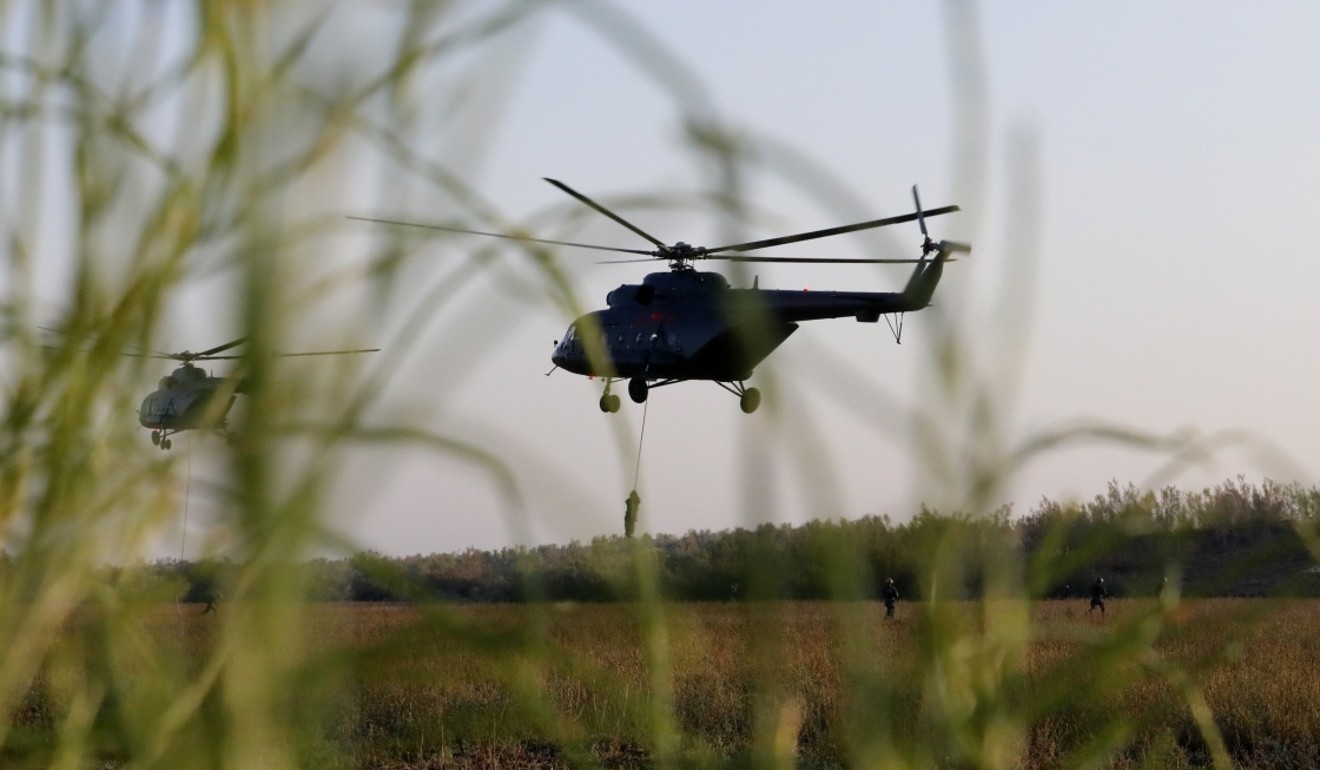
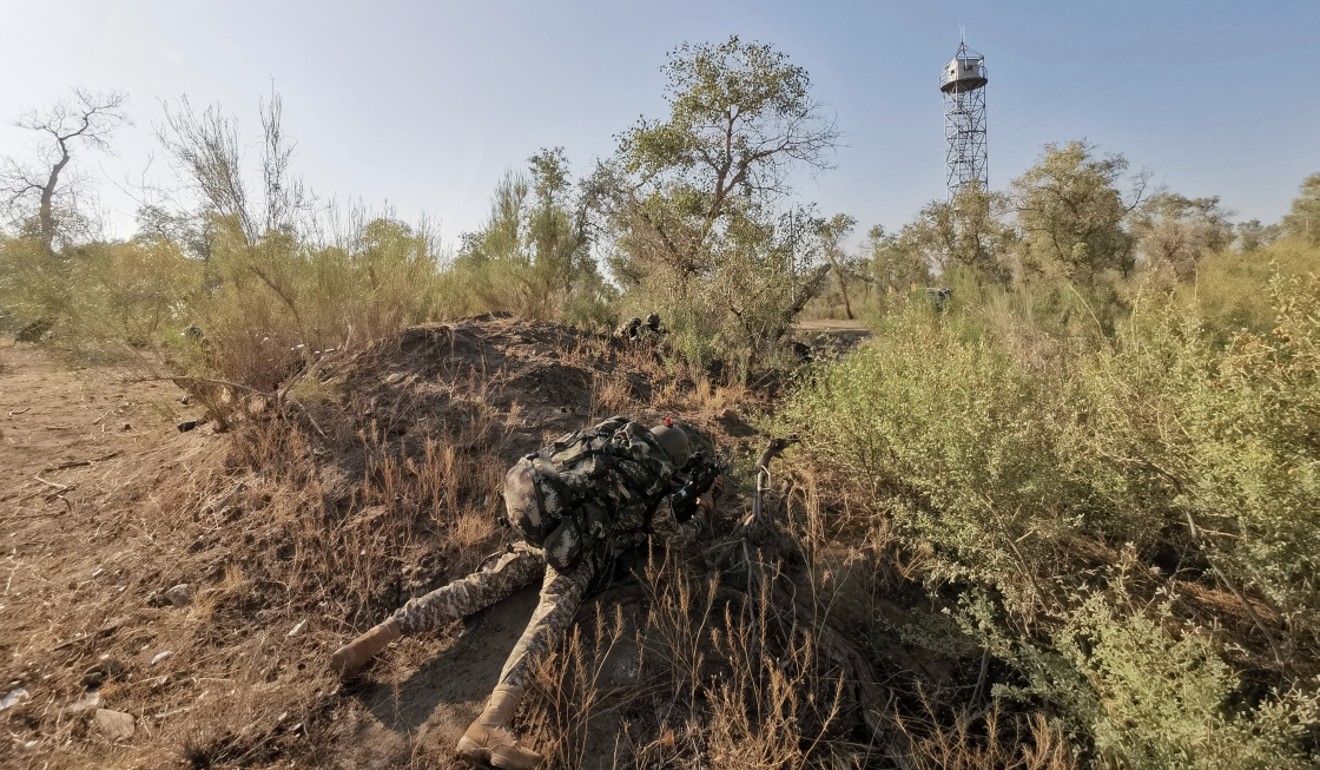
Although this year’s exercise involved fewer troops than the 10,000 involved in a previous drill three years ago, it tested the use of advanced aerial vehicles and ground reconnaissance technology to monitor the area.
The landlocked country is strategically important for China, which is worried that the porous borders will serve as an entry point for drugs and Islamic militants into Xinjiang, where its deradicalisation strategy has led to the detention of a million Muslim minorities in reeducation camps.
It also sits along the trade routes China hopes to develop under the Belt and Road Initiative – Beijing’s flagship plan to expand its global influence through infrastructure, trade and investment – but the area has long been plagued by lawlessness and outbreaks of violence.
The recent exercise tested aerial surveillance techniques. Photo: Xinhua
Artyom Lukin, a professor of international politics at Far Eastern Federal University in Vladivostok, said Russia was not happy about the deployment of Chinese forces in Tajikistan.
“Russia has traditionally considered Central Asia, including Tajikistan, as its sphere of political-military influence,” he said.
Observers said other Central Asian republics – such as Kazakhstan, Uzbekistan and Kyrgyzstan – are likely to stay within Moscow’s orbit, but China is steadily building closer security ties with Tajikistan.
In February, China’s defence ministry denied that it was building a base and stationing troops in the country, but defended its closer military cooperation with Tajikistan.
The recent training exercise was conducted in an area Russia has long seen as part of its sphere of influence. Photo: Xinhua
China has long-standing security interests in the country and in 2016 it agreed to finance 11 border outposts and a training centre for guards along the Afghan border.
This was part of a deal Beijing made through the Quadrilateral Cooperation and Coordination Mechanism – which also involves Pakistan, Afghanistan and Tajikistan – to strengthen cooperation in combating terrorism and improving security.
China has also overtaken Russia economically, becoming the largest foreign investor in Tajikistan in 2016, accounting for 30 per cent of Tajikistan’s total direct accumulated investments, state news agency Xinhua reported.
Banned Muslim political party blamed for deadly attack on tourists in Tajikistan
China’s direct investment in Tajikistan was worth US$95 million in 2017, according to the latest available figures. China has also grown to become the country’s third largest trading partner with bilateral trade reaching around US$1.5 billion in 2018.
A recent opinion piece published by the Russian state-owned news agency Sputnik suggested China may be “getting carried away” by its investments in the region.
The article suggested that China’s growing presence in the country could lead to a “partial loss” of Tajikistan’s sovereignty and argued that Beijing may want to take control of the border with Afghanistan.
China also has economic interests to protect. Photo: Xinhua
But Lukin said even though this growing involvement may be an irritant for Russia, the strategic partnership between China and Russia will remain strong.
The two countries remain the key players in the Shanghai Cooperation Organisation, an economic and security alliance that includes the Central Asian republics and India and Pakistan.
The two are also keen to cooperate more closely due to their tense relationship with the United States. This year Russian and Chinese armed forces have stepped up their cooperation, and last week used a UN Security Council debate to criticise the US for pulling out of the Intermediate-Range Nuclear Forces Treaty. Washington defended the move as necessary response to Beijing and Moscow’s build up of arms.
Why Chinese investors are struggling to gain a foothold in Tajikistan
Lukin said: “Moscow no doubt understands that in terms of security, Tajikistan’s border, adjacent to China’s Xinjiang and Afghanistan, is truly a vital concern for Beijing.
“The presence of Chinese troops could actually benefit Russia, because it will be China bearing the costs of policing Tajikistan’s mountainous border areas.”
Stephen Blank, a former professor at the US Army War College and a specialist in Eurasian security, said that while Russia has mostly stayed silent about China’s presence in Tajikistan, it was closely watching the situation.
“What happens in the long run depends on how far China goes to extend its military presence in Central Asia. And if it keeps extending, it may well provoke some expression of concern in Russia beyond the silence that has hitherto been the case,” Blank said.
Chinese troops could play an increasing role in policing the area in future. Photo: Xinhua
“[The recent drills] look like conventional war-fighting exercises as much as anti-terrorist operations and suggest that China may have bigger contingencies than anti-terrorism in mind.”
Mathieu Duchatel, director of the Asia programme at the Institut Montaigne, a French think tank, said both Russia and China share similar concerns about terrorism and drug trafficking in Central Asia.
He said Russia had not objected to the security pact with Pakistan, Afghanistan and Tajikistan because there are more important strategic priorities in China-Russia relations.
“Overall, Russia’s acceptance of a security role for China in Central Asia shows how Russia realistically adjusts to the changing balance of power with China, and is able to avoid a zero-sum game on issues where parallel efforts by China and Russia can serve Russian security interests,” he said.
Source: SCMP
Posted in aerial surveillance techniques, aerial vehicles, Afghan border, Afghanistan, backyard, Beijing, Belt and Road Initiative, Belt and Road Initiative (BRI), Central Asia, Central Asian, Central Asian republics, China alert, China-Russia relations, Chinese armed forces, combating terrorism, drug trafficking, former, French think tank, Gorno-Badakhshan, ground reconnaissance technology, improving security, increases, India alert, Infrastructure, Institut Montaigne, Intermediate-Range Nuclear Forces Treaty, Investment, Islamic militants, Kazakhstan, Kyrgyzstan, lawlessness, Moscow, Muslim minorities, outbreaks of violence, Pakistan, Pamir Mountains, presence, Quadrilateral Cooperation and Coordination Mechanism, reeducation camps, Russia, Russian armed forces, security and economic interests, Shanghai Cooperation Organisation (SCO), Soviet republic, Tajikistan, terrorism, Trade, UN Security Council debate, Uncategorized, United States, US Army War College, Uzbekistan, Washington, Xinjiang, zero-sum game |
Leave a Comment »
24/08/2019
Chinese Vice Premier Hu Chunhua (2nd R, front), also a member of the Political Bureau of the Communist Party of China Central Committee, inspects an exhibition area during the 12th China-Northeast Asia Expo held in Changchun, northeast China’s Jilin Province, Aug. 23, 2019. The 12th China-Northeast Asia Expo and the 10th High-level Forum on Northeast Asia Cooperation opened Friday in Changchun, capital city of northeast China’s Jilin Province. Hu attended the opening ceremony and read the congratulatory letter of Chinese President Xi Jinping. (Xinhua/Xu Chang)
CHANGCHUN, Aug. 23 (Xinhua) — The 12th China-Northeast Asia Expo and the 10th High-level Forum on Northeast Asia Cooperation opened Friday in Changchun, capital city of northeast China’s Jilin Province.
Vice Premier Hu Chunhua attended the opening ceremony and read the congratulatory letter of Chinese President Xi Jinping.
Hu, also a member of the Political Bureau of the Communist Party of China (CPC) Central Committee, said that the letter highly affirmed the development vitality of Northeast Asia, and pointed out major Belt and Road opportunities for expanding and deepening regional cooperation.
Northeast Asia is one of the most dynamic and potential regions in Asia and even in the world, which brings favorable conditions and rare opportunities for strengthening regional cooperation, Hu said.
China is ready to work with other Northeast Asian countries to further expand trade and investment, deepen industrial chain cooperation, and raise the level of infrastructural connectivity, he said.
“A more open and prosperous China will surely create more business opportunities for enterprises in northeast Asia and the world at large. We expect more cooperation to be achieved at the expo, which is a platform for in-depth communication and exchanges,” he said.
Source: Xinhua
Posted in 10th High-level Forum, 12th China-Northeast Asia Expo, Belt and Road opportunities, Changchun, Chinese President Xi Jinping, Chinese Vice Premier, Jilin, jilin province, member of the Political Bureau of the Communist Party of China (CPC) Central Committee, Northeast Asia, Northeast Asia Cooperation, Uncategorized, Vice Premier Hu Chunhua |
Leave a Comment »
24/08/2019
Chinese President Xi Jinping, also general secretary of the Communist Party of China Central Committee and chairman of the Central Military Commission, inspects an air force base in northwest China’s Gansu Province, Aug. 22. 2019. (Xinhua/Li Gang)
LANZHOU, Aug. 23 (Xinhua) — Chinese President Xi Jinping has called on the air force to enhance its capability to win and greet the 70th anniversary of the founding of the People’s Republic of China (PRC) with great achievements.
Xi, also general secretary of the Communist Party of China Central Committee and chairman of the Central Military Commission, made the remarks Thursday when inspecting an air force base in northwest China’s Gansu Province.
At the combat command center, Xi used a tele-conferencing facility to inspect the troops including personnel at a radar station on a plateau over 3,600 meters above sea level and a transport and rescue regiment.
After listening to the work report of the base, Xi stressed the great significance of carrying out the Party education campaign themed “staying true to our founding mission” as the nation marks the 70th anniversary of the founding of the PRC.
Demanding a stronger sense of responsibility, Xi asked for persistent efforts in improving military preparedness to ensure that the air force can fight and emerge victorious when called upon.
The combat forces and support forces should be developed through military training under real combat conditions and joint operations, Xi said.
He also stressed the need to govern the military with strict discipline in every respect and make sure that the armed forces are highly centralized, unified, pure and solid, and that they stay secure and stable.
Source: Xinhua
Posted in 70th anniversary, air force, air force base, Chairman of the Central Military Commission, Chinese President Xi Jinping, founding of the People's Republic of China (PRC), Gansu Province, general secretary of the Communist Party of China Central Committee, Party education campaign, radar station, tele-conferencing facility, transport and rescue regiment, Uncategorized |
Leave a Comment »
24/08/2019
HANOI (Reuters) – A Chinese survey vessel on Saturday extended its activities to an area closer to Vietnam’s coastline, ship tracking data showed, after the United States and Australia expressed concern about China’s actions in the disputed waterways.
The Haiyang Dizhi 8 vessel first entered Vietnam’s exclusive economic zone (EEZ) early last month where it began a weeks-long seismic survey, triggering a tense standoff between military and coastguard vessels from Vietnam and China.
The Chinese vessel continued to survey Vietnam’s EEZ on Saturday under escort from at least four ships and was around 102 kilometres (63 miles) southeast of Vietnam’s Phu Quy island and 185 kilometres (115 miles) from the beaches of the southern city of Phan Thiet, according to data from Marine Traffic, a website that tracks vessel movements.
The Chinese vessel group was followed by at least two Vietnamese naval vessels, according to the data.
Vietnam’s foreign ministry did not immediately respond to a request from Reuters for comment.
A country’s EEZ typically extends up to 200 nautical miles (370 kilometres or 230 miles) from its coastline, according to an international UN treaty. That country has sovereign rights to exploit any natural resources within that area, according to the agreement.
Vietnam and China have for years been embroiled in a dispute over the potentially energy-rich stretch of waters and a busy shipping lane in the South China Sea.
China’s unilaterally declared “nine-dash line” marks a vast, U-shaped, expanse of the South China Sea that it claims, including large swathes of Vietnam’s continental shelf where it has awarded oil concessions.
On Friday, Vietnamese Prime Minister Nguyen Xuan Phuc and his Australian counterpart expressed their concern about China’s activities in the South China Sea, known in Vietnam as the East Sea.
Earlier in the week, the United States said it was deeply concerned about China’s interference in oil and gas activities in waters claimed by Vietnam, and that the deployment of the vessels was “an escalation by Beijing in its efforts to intimidate other claimants out of developing resources in the South China Sea”
Chinese Foreign Ministry spokesman Geng Shuang, in response to the U.S. statement, said Washington was “sowing division and had ulterior motives”.
“The aim is to bring chaos to the situation in the South China Sea and damage regional peace and stability. China is resolutely opposed to this,” Geng told a daily news briefing on Friday.
Source: Reuters
Posted in Australia, Beijing, China alert, Chinese ship, coastguard vessels, East Sea, exclusive economic zone (EEZ), Haiyang Dizhi 8, inches closer, international UN treaty, Marine Traffic, military vessels, Nguyen Xuan Phuc, Phan Thiet, Phu Quy island, seismic survey, South China Sea, standoff, survey vessel, tensions, triggering, Uncategorized, United States, Vietnam, Vietnam coastline, Vietnamese Prime Minister, Washington |
Leave a Comment »
23/08/2019
Chinese Premier Li Keqiang meets with Foreign Minister of the Republic of Korea (ROK) Kang Kyung-wha and Japanese Foreign Minister Taro Kono, who are here to attend the ninth meeting of foreign ministers of China, Japan and the ROK, in Beijing, capital of China, Aug. 22, 2019. (Xinhua/Shen Hong)
BEIJING, Aug. 22 (Xinhua) — China attaches great importance to cooperation with the Republic of Korea (ROK) and Japan and is ready to make joint efforts to pursue a higher level of trilateral cooperation with its two neighbors, Premier Li Keqiang said Thursday.
Premier Li made the remarks when meeting with ROK Foreign Minister Kang Kyung-wha and Japanese Foreign Minister Taro Kono, who are here to attend the ninth meeting of the three countries’ foreign ministers held Wednesday.
While congratulating the successful holding of the meeting, Premier Li said that China, the ROK and Japan, being geographically close to each other and enjoying cultural affinity, have highly complementary economies and great potential for cooperation.
He said amid the increasing instability and uncertainty of the global economy and the growing downward pressure on the global economy and trade, cooperation among the three countries not only benefits their own development, but also works as a stabilizer and engine of the regional and global economy.
Li called on the three countries to safeguard the rules-based multilateral trading system with the WTO at its core, and work on reaching a comprehensive and high-level free trade agreement at an early date to promote the liberalization and facilitation of trade and investment.
The Chinese premier also called on the three countries to jointly promote technological innovation to share development opportunities and innovative achievements, work together to advance development and prosperity to push forward East Asian cooperation, and jointly maintain regional peace and stability to contribute to a political resolution to the Korean Peninsula issue, so as to achieve denuclearization and lasting peace on the peninsula.
Li also called for increased people-to-people exchanges to improve mutual understanding of the three peoples and cement foundation for trilateral cooperation.
Kang Kyung-wha commended the progress of the meeting and wished the meeting among leaders of the three countries, which is due to be held in China later this year, a success. The ROK is confident of the prospects for cooperation with China, she added.
Taro Kono said Japan is ready to closely work with China and the ROK to guarantee the success of the leaders’ meeting and his country is willing to work with China to promote a lasting, healthy and stable development of bilateral relations.
Source: Xinhua
Posted in foreign minister, Japan, Premier Li Keqiang, Republic of Korea (ROK), Uncategorized |
Leave a Comment »
22/08/2019
Chinese President Xi Jinping, also general secretary of the Communist Party of China Central Committee and chairman of the Central Military Commission, inspects the Babusha Forest Farm, an afforestation program in a desert area of Gansu, where he learns about the latest developments in desertification control and environmental protection, in Gulang County of Wuwei City, northwest China’s Gansu Province, Aug. 21, 2019. (Xinhua/Xie Huanchi)
LANZHOU, Aug. 21 (Xinhua) — Xi Jinping, general secretary of the Communist Party of China Central Committee, visited a rural community and an afforestation area in northwest China’s Gansu Province Wednesday.
Xi visited a new community in Gulang County, which is home to rural residents relocated out of ecological concerns, and inquired about their livelihoods and progress on poverty relief.
He also inspected an afforestation program in a desert area of Gansu, where he learned about the latest developments in desertification control and environmental protection.
Source: Xinhua
Posted in afforestation area, Chinese President Xi Jinping, desertification control, Environmental protection, Gansu Province, general secretary of the Communist Party of China Central Committee, Gulang County,, inspects, rural community, Uncategorized, Village, visited |
Leave a Comment »
22/08/2019
Chinese President Xi Jinping, also general secretary of the Communist Party of China Central Committee and chairman of the Central Military Commission, visits a Yellow River management point to learn about the management, protection and flood control project construction of the Yellow River in Lanzhou, northwest China’s Gansu Province, Aug. 21, 2019. (Xinhua/Wang Ye)
Source: Xinhua
Posted in Chairman of the Central Military Commission, Chinese President Xi Jinping, flood control, Gansu Province, general secretary of the Communist Party of China Central Committee, Lanzhou, Management, project construction, protection, Uncategorized, visits, Yellow River, Yellow River management point |
Leave a Comment »
22/08/2019
- State media says presence is part of preparations for major drill, but analyst calls it a ‘psychological warfare tactic’
- Fears that the armed presence was a show of power to Hong Kong
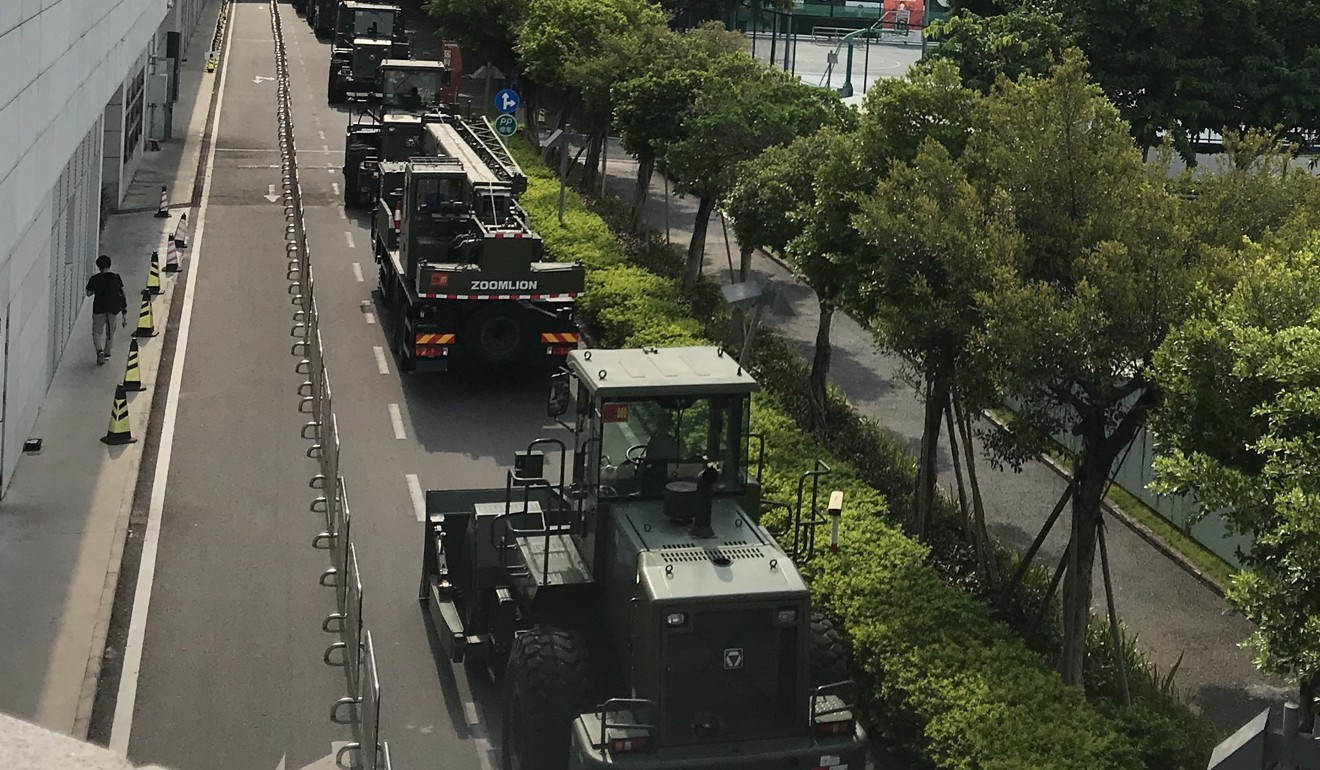
Dozens of trucks line a street next to the entrance of the Shenzhen Bay Sports Centre in Shenzhen on Monday. Photo: SCMP
A convoy of armed police trucks has been stationed at a sports centre in a mainland Chinese city bordering Hong Kong, adding to speculation online that Beijing could be preparing to intervene directly in the protests roiling the special administrative region.
But a Beijing-based military expert said the movements were part of regular exercises and not cause for concern.
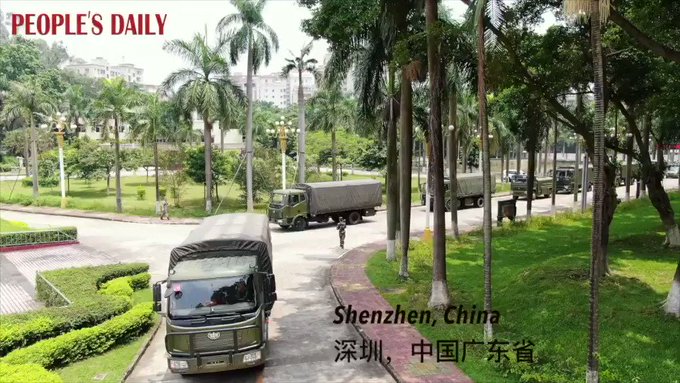
Footage of the trucks rolling into Shenzhen in the southern province of Guangdong began circulating online on Saturday.
On Monday, Communist Party mouthpiece People’s Daily and Global Times posted videos of the convoy in the city, saying the police were there to prepare for large-scale drills.
Dozens of the trucks as well as excavators lined a pavement next to the entrance of the Shenzhen Bay Sports Centre in Nanshan district on Monday, across the harbour from Hong Kong.
Personnel in camouflage uniforms stood at the entrances of the sports centre, but did not block access to civilians.
Asked whether they were in Shenzhen for a drill and what time they had arrived, the personnel shook their heads and said nothing.
Also on Monday, the Hong Kong and Macau Affairs Office released a stern statement, calling attacks on police “signs of terrorism”.
Online, internet users speculated that the armed presence was a show of power to Hong Kong.
Excavators are among the heavy equipment stationed near the entrance of the Shenzhen Bay Sports Centre on Monday. Photo: SCMP
“They are just waiting for an order before they’ll drive to Hong Kong to calm the riots. We hope the armed forces can enter Hong Kong and beat the hell out of these idiotic youth,” one commenter said on Weibo, China’s Twitter-like social media platform.
Beijing-based military specialist Zhou Chenming said that the armed police were taking part in regular drills and that people should not feel nervous.
“The central government has repeatedly stated it will only interfere if there are large-scale riots and the Hong Kong government has applied voluntarily for support,” Zhou said.
Hong Kong policeman filmed aiming gun at protesters hailed as a hero by Chinese state media
“If the situation does not reach that point, then this is only a deterrence measure, to deter these [small group of people] from stepping over the line.”
Dixon Sing Ming, a political-science professor at the Hong Kong University of Science and Technology, said the move was a “psychological warfare tactic”.
“The drill is part and parcel of a well-coordinated attempt by Beijing to pressure the protesters and the general public to give up their five demands, including the one for universal suffrage immediately,” Sing said.
Hong Kong has been engulfed in protests since early June, at first to oppose the now-shelved extradition bill that would have allowed Hong Kong to send suspects to other jurisdictions, including mainland China.
Chinese police mass 12,000 anti-riot officers in Shenzhen for drill
But protesters now have five demands, including a complete withdrawal of the extradition bill and an independent investigation into the police’s use of force in handling the protests.
As the confrontations have escalated, public opinion in the mainland has grown steadily tougher, with many calling for more stern measures to restore order.
On August 6, 12,000 police officers gathered in Shenzhen for a drill, which included anti-riot measures similar to those seen on the streets of Hong Kong.
Although the police said the drill was part of security preparations for the 70th anniversary of the People’s Republic on October 1, internet users saw it as a show of power and warning to Hong Kong.
Source: SCMP
Posted in 70th anniversary, anti-riot officers, armed police, Beijing, camouflage uniforms, Central government, Chinese armed police, excavators, Global Times, guangdong province, harbour, Hong Kong, Hong Kong and Macau Affairs Office, Hong Kong University of Science and Technology, large-scale drills, mainland Chinese city, Nanshan district, October 1 1949, People’s Daily, People’s Republic, Police, protests, psychological warfare tactic, regular drills, Shenzhen, Shenzhen Bay Sports Centre, signs of terrorism, Special administrative region, truck convoy, Uncategorized, videos, Weibo |
Leave a Comment »






 CHINDIA ALERT: You'll be living in their world, very soon