Archive for December, 2019

22/12/2019

Economic Watch: Smart economy fledging in China as AI empowers industries, individuals

BEIJING, Dec. 21 (Xinhua) — Ask the silver-haired residents of the elderly care community Yinheyuan in central Beijing what they know about artificial intelligence (AI), and they will probably throw the question to the smart speakers within their reach.

These smart speakers, capable of interacting with users with voice-recognition technologies, are also part of the answer. Via voice command, senior residents can control lights, TVs and other home appliances, order food or ask for help.

AI is no longer a technical term used exclusively by professionals in China. Both young and old are enjoying the benefits of the growing smart economy.

After personal computers (PC), PC internet and mobile internet, the growth focus of China’s digital economy is shifting to smart technologies like AI, said Baidu Chairman and CEO Robin Li at the World Internet Conference in October.

In the smart economy era, Li predicted a declining reliance on cellphones and a rising popularity of other smart devices. AI chips, cloud computing services, among others, would become the new digital infrastructure, while innovative businesses will flourish as transport, health, education and other sectors go smart.

Wearable devices, smart home appliances, autonomous driving and smart cities are among the fastest-growing fields in the smart economy.

China is the largest smart speaker market in the world, accounting for 36 percent of global shipments in the third quarter of 2019, according to global market firm Strategy Analytics. It found in a July and August survey that 63 percent of Chinese people without a smart speaker planned to buy one within the following year. Another 22 percent planned to make a purchase later on.

Chinese firms are stepping up investment in 5G, AI and the Internet of Things to gain a foothold in the emerging field. By end-June, China had over 1,200 AI-related enterprises, according to the Ministry of Industry and Information Technology.

Baidu launched its autonomous driving open platform ApollBo in 2017 to coordinate cross-sector efforts in this field. It has launched several L4 autonomous driving vehicles in partnership with leading automobile companies, and a fleet of Apollo-powered robotaxis are now taking test runs in central China’s Changsha.

Nurturing a smart economy is also on the government agenda. China has passed a guideline to boost the integration of AI and the real economy this year, and plans to build some 20 national AI innovative development pilot zones by 2023.

The country’s AI sector is forecast to be worth more than 160 billion yuan (about 22.83 billion U.S. dollars) in 2020, spurring related sectors to exceed 1 trillion yuan, said Lin Nianxiu, deputy director with the National Development and Reform Commission, citing industrial data.

Lin said China would focus on 100 firms dedicated to AI technologies and relevant applications, improve the industrial ecosystem, facilitate the deep integration of AI and the real economy, and intensify its international collaboration on AI technology, standards, industries, laws and regulations and ethics.

Source: Xinhua

22/12/2019

China, India agree to enhance mutual political trust to properly handle border issues

INDIA-NEW DELHI-CHINA-BORDER ISSUES-22ND MEETING

Visiting Chinese special representative, State Councilor and Foreign Minister Wang Yi (L) shakes hands with Indian special representative and National Security Advisor Ajit Doval at the 22nd meeting between Chinese and Indian special representatives on boundary issues in New Delhi, India, Dec. 21, 2019. (Xinhua/Javed Dar)

NEW DELHI, Dec. 21 (Xinhua) — China and India agreed here Saturday to enhance mutual political trust so as to properly handle border issues and jointly safeguard peace and tranquility in the border areas.

At the 22nd meeting between Chinese and Indian special representatives on boundary issues, visiting Chinese special representative, State Councilor and Foreign Minister Wang Yi said the annual meeting serves as a main channel for the two countries to discuss border issues, and it is also an important platform for the two sides to carry out strategic communication.

China and India should positively press forward the talks on border issues in accordance with the important instructions made by the leaders of the two countries, and work out the framework of the negotiation roadmap in a bid to reach a final solution which is fair, reasonable and accepted by both sides, Wang said.

In addition, both sides should also advance consultations which can yield early results, promote mutual trust and enhance cooperation in the border areas so as to jointly safeguard peace and tranquility in the border areas, Wang said.

The two countries should further strengthen communication and coordination, and jointly safeguard multilateralism, fairness and justice, Wang added.

Indian special representative and National Security Advisor Ajit Doval said Chinese and Indian leaders have provided a new vision and strategic guidance for the development of bilateral ties and the solution of boundary issues.

Both sides should comprehensively implement the important consensus reached by the two leaders, strengthen strategic communication, enhance political mutual trust, deepen mutually beneficial cooperation, solve the China-India boundary issues at an early date through dialogue and negotiation, so as to promote India-China relationship to gain further development.

The two sides exchanged views on the early harvest of boundary negotiations, reached consensus on strengthening trust measures, and agreed to make regulations on safeguarding peace and tranquility in border areas, enhance communication and exchanges between the border troops of the two countries, as well as expand border trade and personnel exchanges.

The two sides also agreed to hold the 23nd Special Representatives’ Meeting on the China-India Boundary Question next year in China.

Source: Xinhua

22/12/2019

NE China port sees record-high cross-border tourists

HARBIN, Dec. 21 (Xinhua) — The port city of Heihe in northeast China’s Heilongjiang Province had received over 1 million cross-border tourists in 2019 as of Friday, according to local authorities.

This year’s record number of annual tourists exceeded the previous record set in 2013, the authorities said.

Located on the China-Russia border, Heihe is only 100 meters from Blagoveshchensk, capital of the Amur region in the Russian Far East.

A series of measures have been taken including setting up information platforms for travel agencies and foreign trade enterprises to provide convenience for tourists, said Li Zhiqiang, an official with the city’s border inspection station.

Source: Xinhua

22/12/2019

Tesco suspends Chinese supplier of Christmas cards over prison labour claims

  • British supermarket is investigating after newspaper report that six-year-old girl found message in card saying it was packed by Shanghai prisoners
Britain’s biggest retailer Tesco said it was “shocked by these allegations”. Photo: AFP

British supermarket giant Tesco suspended a Chinese supplier of Christmas cards on Sunday after a press report said a customer found a message written inside a card saying it had been packed by foreign prisoners who were victims of forced labour.

“We abhor the use of prison labour and would never allow it in our supply chain,” a Tesco spokesman said on Sunday.

“We were shocked by these allegations and immediately suspended the factory where these cards are produced and launched an investigation.”

Tesco

donates £300,000 (US$390,000) a year from the sale of the cards to the charities British Heart Foundation, Cancer Research UK and Diabetes UK.

The Sunday Times said the message inside the card read: “We are foreign prisoners in Shanghai Qingpu Prison China. Forced to work against our will. Please help us and notify human rights organisation.
“Use the link to contact Mr Peter Humphrey.”
Peter Humphrey is a British former journalist and corporate fraud investigator.
Humphrey and his American wife Yu Yingzeng were both sentenced in China in 2014
for illegally obtaining private records of Chinese citizens and selling the information to clients including drug maker GlaxoSmithKline. The couple were deported from China in June 2015 after their jail terms were reduced.

The message inside the card was found by a six-year-old girl, Florence Widdicombe, in London, The Sunday Times said. Her father contacted Humphrey via the LinkedIn social network.

Writing in The Sunday Times, Humphrey said he did not know the identities or the nationalities of the prisoners who put the note into the card, but he “had no doubt they are Qingpu prisoners who knew me before my release in June 2015 from the suburban prison where I spent 23 months”.

Tesco, Britain’s biggest retailer, said it had a comprehensive auditing process in place.

“This supplier was independently audited as recently as last month and no evidence was found to suggest they had broken our rule banning the use of prison labour,” the spokesman said.

“If a supplier breaches these rules, we will immediately and permanently delist them.”

Sky News said the cards were produced at the Zheijiang Yunguang Printing factory, which is about 100km (60 miles) from Shanghai Qingpu prison.

The company, which prints cards and books for food and pharmaceutical companies, says on its website it supplies Tesco.

Two phone calls and one emailed request for comment to the company went unanswered after usual business hours on Sunday.

Humphrey and his wife said in their trial they had not thought they were doing anything illegal in their activities in China.

Source: SCMP

22/12/2019

North Korea threat looms as China, Japan, South Korea leaders meet

BEIJING (Reuters) – The spectre of new confrontation between Pyongyang and Washington hangs over meetings between China, Japan and South Korea this week, with growing risks North Korean actions could end an uneasy detente and upend recent diplomatic efforts.

South Korean President Moon Jae-in and Japanese Prime Minister Shinzo Abe are expected to meet Chinese President Xi Jinping separately on Monday. They will then travel to the southwestern city of Chengdu for a trilateral meeting with Chinese Premier Li Keqiang. Though they are expected to discuss various economic matters, North Korea appears likely to dominate the agenda.

Pyongyang has grown increasingly frustrated that its halt of nuclear and long-range missile tests has not ended the crippling economic sanctions against it. It set a Dec. 31 deadline for the United States to make concessions, but Washington has been unmoved.

Some experts believe North Korea may be readying to test an intercontinental ballistic missile launch soon, which would likely end the 2018 agreement struck by its leader, Kim Jong Un, and U.S. President Donald Trump.

“Safeguarding the stability and peace of the Korean Peninsula and pushing for a political solution to the Korean Peninsula issue are in the interests of China, Japan and South Korea,” Chinese Vice Foreign Minister Luo Zhaohui told reporters on Thursday at a briefing on the trilateral meetings.

U.S. special envoy for North Korea Stephen Biegun met with two senior Chinese diplomats during his two-day visit to Beijing this week, following similar meeting in South Korea and Japan days earlier, as diplomats make last-ditch attempts to prevent new confrontation.

North Korea has not responded to his public call to resume dialogue, however.

“The silence, even after Biegun’s speech in Seoul, makes me concerned,” Jenny Town, managing editor at the North Korea monitoring website 38 North, said on Twitter.

Beijing, jointly with Russia, proposed on Monday that the United Nations Security Council lift some sanctions in what it calls an attempt to break the current deadlock and seeks to build support. But it’s unclear whether Beijing can convince Seoul and Tokyo to break ranks from Washington, which has made its opposition clear and can veto any resolution.

Though South Korea sees China as instrumental in reviving negotiations, it has so far sidestepped questions on whether it supports the new proposal by Beijing and Moscow. Japan, which has historically been a staunch supporter of sanctions against North Korea, has also refrained from commenting on the proposal.

“With the (2020 Tokyo) Olympics coming up, North Korea going wild would pose a problem for Japan,” said Narushige Michishita, professor at Japan’s National Graduate Institute for Policy Studies.

“But bilateral talks with North Korea, for example, will probably be a better approach for Japan than easing UN sanctions.”

Source: Reuters

20/12/2019

China welcomes Sri Lankan president’s remarks over Hambantota Port

COLOMBO, Dec. 20 (Xinhua) — China highly appreciates the remarks made by Sri Lankan President Gotabaya Rajapaksa over the Hambantota Port agreement, said a statement released by the Chinese Embassy in Colombo on Friday.

China is willing to guide related enterprises to work with the Sri Lankan side to expedite implementing the established agreement and further promote the prosperity and development of Hambantota Port, according to the statement.

China highly respects the sovereignty and territorial integrity of Sri Lanka and the security and control of Hambantota Port was entirely in the hands of the Sri Lankan government and navy, which is no difference from any other port in Sri Lanka, said the statement.

President Rajapaksa, in a meeting with Colombo based foreign correspondents on Thursday said he would not renegotiate the Hambantota Port agreement with China and would look to ensure that the security of the port lied with the Sri Lankan side.

Rajapaksa said he would not renegotiate the commercial agreement of the project as that had already been signed, and he was studying to see if the entire security of the port was under Sri Lanka’s control.

Rajapaksa said if additional clauses are needed to be inserted to reassure the security deal, then the government would go ahead with it.

The president further said that he would not renegotiate the 99-year lease agreement of the port, as this was purely commercial and he did not want to convey a message to investors that commercial agreements would change every time a new government was elected to power.

Source: Xinhua

20/12/2019

China, Brazil deepen aerospace cooperation

TAIYUAN, Dec. 20 (Xinhua) — China and Brazil will continue to develop more satellites together and deepen aerospace cooperation, said Chinese and Brazilian officials after a new satellite jointly produced by the two countries was sent into space on Friday.

The launch of the China-Brazil Earth Resource Satellite-4A (CBERS-4A) also marks the 45th anniversary of the establishment of diplomatic relations between China and Brazil.

The two countries will expand the application of the CBERS satellite data in their own countries and those participating in the Belt and Road Initiative, said Wu Yanhua, deputy director of the China National Space Administration (CNSA).

China and Brazil have devised a 10-year plan to collaborate in developing remote-sensing, meteorological and communication satellites. The cooperation could also be expanded to deep space exploration, lunar exploration, manned space and aerospace education, said Wu.

In 1988, the two countries signed an agreement to start the China-Brazil earth resource satellite program. They shared the costs and separately developed its systems. Both sides brought different advantages to the table and were highly complementary.

In 1999, the first China-Brazil earth resource satellite was successfully launched, giving each country their first transmission-type remote-sensing satellite. It was rated one of the top 10 scientific and technological advances of the year in China.

It was also the first satellite jointly developed by China and another country, and was a model for space technology cooperation among developing countries.

The partnership has lasted more than 30 years. The two countries have sent six satellites into space, and the resolution of the images has gradually improved.

The China-Brazil earth resource satellites have provided more than 6 million images to users in the two countries, and the data have been widely used in agriculture, forestry, water conservation, land and resources, environmental protection, and disaster prevention and mitigation, helping the Brazilian government monitor the Amazon rainforest and the country’s environmental changes, according to the CNSA.

The remote-sensing data are also provided to developing countries for free, and have helped monitor disasters such as forest fires in Australia, floods in Pakistan, and an earthquake and tsunami in Japan.

China has also helped train Brazilian personnel, and scientists and technologists of the two countries have conducted many exchanges over the past 30 years.

“The space cooperation between China and Brazil has been very successful, and sets a good example for space cooperation among developing countries,” Wu said.

Brazilian Minister of Science, Technology, Innovation and Communication Marcos Cesar Pontes said the cooperation has contributed to international economic and social development.

Source: Xinhua

20/12/2019

Senior Chinese official meets Republic of Congo president

REPUBLIC OF THE CONGO-BRAZZAVILLE-YANG JIECHI-VISIT

Yang Jiechi (L), a member of the Political Bureau of the Communist Party of China (CPC) Central Committee and director of the Office of the Foreign Affairs Commission of the CPC Central Committee, meets with President of the Republic of the Congo Denis Sassou Nguesso in Brazzaville, capital of the Republic of the Congo, Dec. 19, 2019. (Xinhua/Wang Songyu)

BRAZZAVILLE, Dec. 19 (Xinhua) — Yang Jiechi, a member of the Political Bureau of the Communist Party of China (CPC) Central Committee, met with President of the Republic of the Congo Denis Sassou Nguesso here on Thursday.

Yang, also director of the Office of the Foreign Affairs Commission of the CPC Central Committee, said the two countries are good friends, good partners and good brothers.

In recent years, the two countries’ heads of state have met many times to steer the development of bilateral ties, he said.

Political mutual trust between the two countries continues to deepen, and their practical cooperation has yielded remarkable results, said the Chinese official, adding that financial and aviation cooperation has become a new growth point, and progress has been made in key projects such as the construction of the Pointe Noire special economic zone.

China has always supported the Republic of the Congo in developing its economy, improving people’s livelihood, and adhering to a development path that suits its national realities, Yang said.

He urged the two sides to keep the momentum of high-level exchanges, and to continue to firmly support each other on issues concerning their respective core interests and concerns.

Under the framework of the Belt and Road Initiative (BRI) and the Forum on China-Africa Cooperation, the two sides should expand their cooperation in various fields, strengthen communication and coordination, safeguard the common interests of the two countries and those of developing countries as a whole, so as to demonstrate the high level of the comprehensive strategic cooperative partnership between the two countries.

For his part, Sassou said the Congolese side treasures its friendship with China. The Congolese side highly appreciated that Chinese President Xi Jinping chose the country as one of the destinations of his first foreign trip in 2013 after taking office, Sassou said.

The Congolese people appreciate valuable long-term support from China, particularly recent flood relief assistance and supplies, he said.

Sassou added that the Congolese side will continue its active participation in the BRI, and is looking forward to further strengthening mutual cooperation in key areas, including agriculture, infrastructure and industrial facilities.

Yang also met with Foreign Minister of the Republic of the Congo Jean-Claude Gakosso on the same day.

Source: Xinhua

20/12/2019

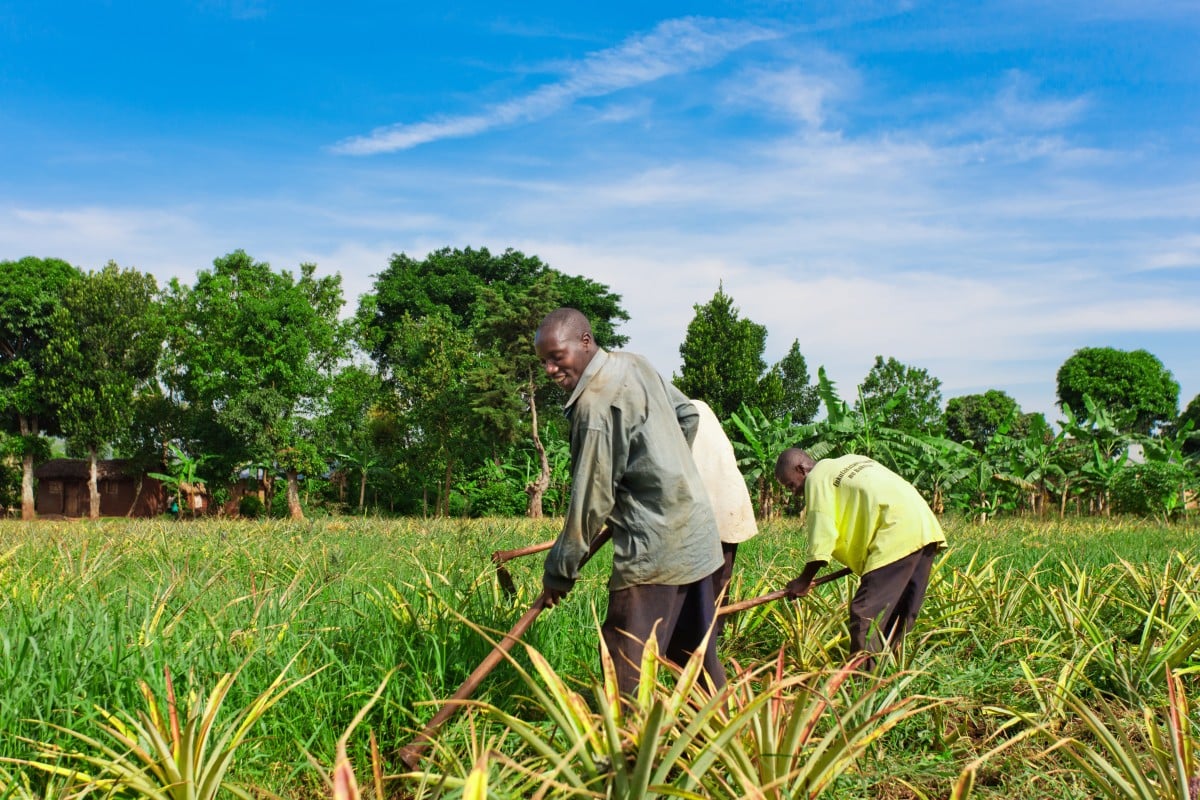
Uganda asks China to buy African agricultural products to cut trade deficit

  • President Yoweri Museveni tells Chinese diplomat Yang Jiechi trade between African nations is unsustainable
  • China is the continent’s largest trading partner and lender, but imports mostly its oil and minerals
Africa has a surplus of agricultural products, Uganda’s leader says. Photo: Shutterstock
African countries want China to open up its markets to the continent’s agricultural products, Uganda’s President Yoweri Museveni told top Chinese diplomat Yang Jiechi after Beijing vowed to boost agricultural trade with the United States.
In a meeting with Yang in Uganda, Museveni said an increasing number of African
 countries wanted to sell to the lucrative Chinese market.
He said Africa had a surplus of agricultural products despite exporting to Europe and the US, partly because trade between African countries remained low.
“Africa’s 54 countries have come together through market integration in blocs such as Comesa [Common Market for Eastern and Southern Africa] that are not sustainable,” Museveni said. “The surplus of production needs another intercontinental market and an external market like China to come in.”

China is Africa’s largest trading partner, having surpassed the US in 2009. Africa’s trade with China was worth US$204 billion last year, according to figures from China’s Ministry of Commerce.

China is also the continent’s largest lender, having advanced more than US$143 billion between 2000 and 2017 to African countries for building motorways, power dams and railways, according to figures from the China Africa Research Initiative at the Johns Hopkins School of Advanced International Studies in Washington.
Museveni said China was interested in importing some aquatic products from Uganda, such as the Nile perch fish, which he said had high demand globally.
China pledges another US$60b to Africa as leaders meet in Beijing
4 Sep 2018

With China exporting far more to the continent than it imports from it, African nations are aiming to restructure the trading relationship to narrow their trade deficit by working out what Chinese consumers want and how to get it to them.

China’s imports of African goods are dominated by natural resources such as crude oil, copper, cobalt, iron ore, diamonds, gold and titanium, which it buys to meet its industrial and manufacturing needs. In return, Africa imports machinery, electronics and manufactured consumer goods.

The call from Museveni came after China and the US reached an interim deal to resolve aspects of their protracted trade war. US Trade Representative Robert Lighthizer has said that, under the deal, China had agreed to buy US$80 billion in American agricultural products over two years.
China has not confirmed the figure, but the deal is being watched closely by China’s other trading partners. Since the dispute with the US began in July last year, Beijing has diversified its agricultural product suppliers to include Argentina, Australia, Brazil, Germany, New Zealand and Spain.
China’s agricultural trade with Africa increased from US$650 million in 2000 to US$6.92 billion in 2018, Chinese Minister of Agriculture Han Changfu said this month. Han said he hoped that the figure would reach US$10 billion in the next decade.

Museveni said in the meeting with Yang that Beijing had “supported the continent’s prosperity through trade”, and that the memorandum of understanding he had signed last year with Chinese President Xi Jinping had “intensified the relationship” between their countries. A pipeline being constructed to Tanzania, to connect Uganda’s oil fields to the Indian Ocean, is being funded partly by Chinese investment, along with new industrial parks.

Yang said China would work with Uganda to implement the agreements reached by their respective heads of state and the outcomes of the Beijing Summit of the Forum on China-Africa Cooperation.

Beijing set to pledge further billions to Africa despite lending fears 2 Sep 2018

He said China would help Uganda to grow its economy, increase trade between the two countries, and build industrial parks and infrastructure. Beijing would continue to fund projects through the Belt and Road Initiative, its transcontinental infrastructure investment strategy, and through Uganda’s development plan Uganda Vision 2040, without providing details.
After Uganda, Yang will continue his African tour by visiting Congo-Brazzaville. The tiny oil-dependent central African nation recently fell into debt distress when global oil prices dropped, forcing Beijing to restructure its loans to unlock a bailout by the International Monetary Fund.
Xi denies China is spending money on African ‘vanity projects’
3 Sep 2018

Yang will then visit the West African nation of Senegal, where Beijing is funding large infrastructure projects.

Several other leading Chinese diplomats have made trips to Africa this year, including Foreign Minister Wang Yi, who visited South Africa in October. Last week, Ji Bingxuan, vice-chairman of the Standing Committee of the National People’s Congress – the permanent body of China’s legislature – led a group of officials visiting Congo-Brazzaville.

Source: SCMP

20/12/2019

Fishermen cry foul as China bids to fix drought-hit lake

WUCHENG, China (Reuters) – After wading through mudflats, Fan Xinde, a 36-year-old fisherman, sifts old copper coins from the debris scooped from the bed of a dwindling river that feeds China’s biggest freshwater lake, the Poyang.

As residents fled invading Japanese troops 80 years ago, the coins were packed into boxes and sent down the river on rafts, with many sinking without trace. They are now being unearthed as the water in the Poyang recedes to its lowest level in decades, providing a small income for fishermen like Fan facing an uncertain future.

On Jan. 1 2020, China will ban fishing in environmentally sensitive regions along the Yangtze, China’s longest river, and by the start of 2021, fishing throughout the Poyang itself will be prohibited for at least 10 years.

Fan, who has worked half his life on the lake, said he and as many as 100,000 other fishermen were being unfairly blamed for mounting local environmental problems and must now find other ways to make a living.

“Our sources of income have been cut off. We don’t have anything else,” he said. “To be honest, we shouldn’t be collecting the coins at all because they are owned by the state, but it is only a tiny amount.”

The government says excessive fishing has brought stocks down to perilously low levels and put endangered species under threat, including China’s last surviving river mammal, the Yangtze finless porpoise.

But the Poyang, described by President Xi Jinping as a vital “kidney” filtering the water supplies of 40% of China’s population, has also been hurt by intensive sand mining, untreated wastewater and the impact of the giant Three Gorges Dam some 560km (350 miles) upstream.

Water in the Poyang, which spills off from the middle reaches of the Yangtze River in Jiangxi province, routinely declines in winter. But the lake is now at its lowest in 60 years. With little rain since July, hundreds of shriveled anchovies and tiny shellfish have been baked into the exposed shoreline flats.

DAMS AND QUARRIES

Residents blame the Three Gorges Project for the problems facing the lake, with its vast 660km-long (410 mile-long) reservoir storing huge volumes of water behind a giant dam for power generation.

“The Three Gorges is blocking off all the water,” said Zhang Yingsheng, a 59-year old fisherman picking clams from the edge of the lake. “Every winter is like this now, but this year is especially low because of the drought.”

With the 181-metre (600-foot) dam reducing the Yangtze’s flow in winter, water from the Poyang drains quickly and easily back into the river.

But the primary cause of problems is the two decades of intensive sand mining in the Poyang, said David Shankman, professor at the University of Alabama, who studies the lake.

“Sand mining has made the drainage channel (in the northern part of the lake) deeper and wider” accelerating the draining, he said.

Zhang said quarrying by giant dredgers had hit fishing hard, with deeper lake beds making it harder for fishermen to deploy their nets. The sand industry had also damaged the lake’s ecosystem, he said.

According to policy plans seen by Reuters, the local government is already working to reduce mining activity in the Poyang after banning it in the Yangtze River two decades ago.

Annual sand production will be limited to 39.9 million tonnes from 2019-2024, down 26.9% compared to the 2014-2018 period. Dredgers will be permitted to mine 65 square km (25 square miles) of the lake area, a quarter of the previous level.

The new policy was a sign officials had recognized sand mining had become a serious environmental liability, Shankman said, but simply stopping the activity wouldn’t automatically solve the problems.

“It depends not only on the extent of the mining, and not on the total area of the mining, but where they are mining,” he said.

IRREVERSIBLE

China is in the middle of a campaign aimed at ending big and “destructive” development along the Yangtze. President Xi said restoring the Poyang was a crucial element of the plan to revitalize regions along the river’s banks.

But experts say many of the devastating changes to the lake are irreversible.

Even before the Three Gorges Dam and the sand mining boom, the lake had already shrunk considerably as a result of an earlier campaign to reclaim farmland and curb floods through the use of dykes and diversions.

“Everything in the lake has been dramatically altered by landscape change, dams and sand mining,” said Shankman. “The amount of water in the lake, in the Yangtze River, the sediment going in and going out – everything is affected by human activity.”

Source: Reuters

Law of Unintended Consequences

continuously updated blog about China & India

ChiaHou's Book Reviews

continuously updated blog about China & India

What's wrong with the world; and its economy

continuously updated blog about China & India