

- Despite PMI data showing a return to growth in both the manufacturing and non-manufacturing sectors, China’s economic activity is still far from normal
- Headwinds include the threat of global recession, a second wave of coronavirus infections and a property slump, analysts warn
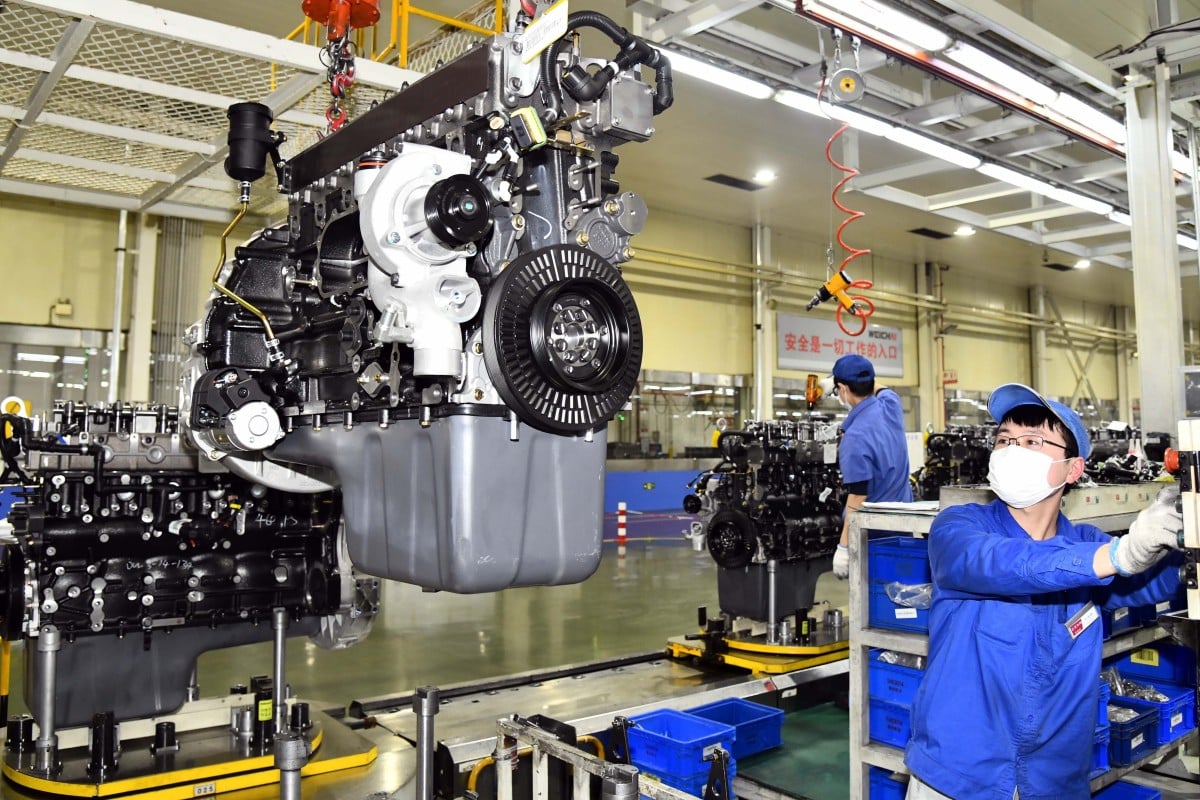
China’s economy showed signs of a recovery in March after a nationwide lockdown paralysed business in February, but analysts warned that it is not yet out of the woods.
While the lowest point is behind us, it’s not the time to celebrate
The manufacturing PMI, a survey of sentiment among factory owners, bounced back to 52.0 in March from 35.7 in February, which was an all-time low by some distance.
China’s non-manufacturing PMI – including both the services and construction sectors – was even weaker in February at 29.6, but its recovery to 52.3 was more marked.
Both indices were significantly higher than expected and produced the V-shaped recovery in sentiment that policymakers had been so desperately pursuing.
“We view the jump in both the manufacturing and non-manufacturing PMIs in March as one-off gains from the very low comparison bases in February.”
The dramatic collapse of the economy in the second month of the year meant March’s economic data was always likely to show a positive spike, with PMIs highly sensitive to short-term fluctuations in business conditions due to the way they are collated. Researchers simply ask respondents if things are better or worse than they were the previous month.
“This does not mean output is now back to its pre-virus trend,” said Julian Evans-Pritchard, senior China economist at Capital Economics, in a note. “Instead, it simply suggests that economic activity improved modestly relative to February’s dismal showing, but remains well below pre-virus levels. This is consistent with what the daily activity indicators show.”
It simply suggests that economic activity improved modestly relative to February’s dismal showing, but remains well below pre-virus levels
“We cannot say China’s economy has fully returned to normal levels based on a single month. We need to continue observing changes in the following months,” said a National Bureau of Statistics spokesman, adding that 96.6 per cent of large and medium-sized businesses were back to work as of March 25.
The official PMI survey, which is produced by the National Bureau of Statistics, is weighted more towards larger companies, including state-owned firms that have been the focus of government efforts to review production.
The Caixin-Markit manufacturing PMI data set to be published on Wednesday is weighted more towards smaller, private-sector firms and could show a less buoyant result given their struggles to resume operations.
. At a press conference in the capital on Monday, vice-minister of industry and information technology Xin Guobin said that small businesses and exporters might “struggle to survive” in the months ahead, due to global economic turbulence.

 CHINDIA ALERT: You'll be living in their world, very soon
Leave a comment