Archive for March, 2020

06/03/2020

Cathay Pacific fined £500,000 over customer data protection failure

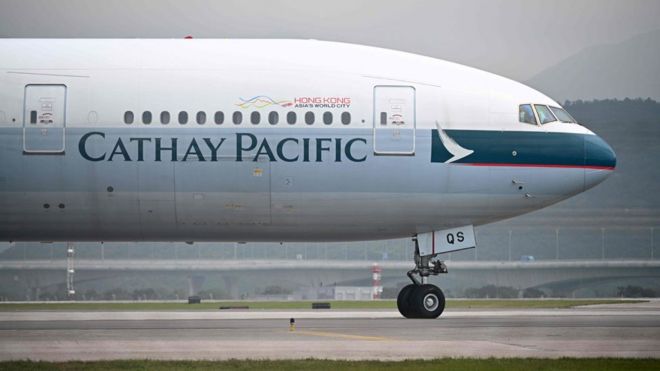
A Cathay Pacific plane lands on the tarmacImage copyright AFP

The Information Commissioner’s Office (ICO) has fined Cathay Pacific Airways £500,000 for failing to protect customers’ personal data.

The UK watchdog said the airline’s computer systems had exposed details of 111,578 UK residents and a further 9.4 million people from other countries.

These included names, passport details, dates of birth, phone numbers, addresses and travel history.

“Appropriate security” was not in place between October 2014 and May 2018.

The ICO said Cathay Pacific became aware of a problem in March 2018, when it suffered a “brute force” password-guessing attack.

The Hong Kong-based firm reported this to the ICO. The regulator said it subsequently uncovered “a catalogue of errors” during a follow-up investigation, including:

  • back-up files that were not password protected
  • internet-facing servers without the latest patches
  • operating systems that were no longer supported by the developer
  • inadequate anti-virus protection

At least one attack involved a server with a known vulnerability – but the fix was never applied, despite having been public knowledge for more than 10 years.

Steve Eckersley, the ICO’s director of investigations, said there were “a number of basic security inadequacies across Cathay Pacific’s system, which gave easy access to the hackers”.

The airline failed four out of five of the basic cyber-essentials guidance from the National Cyber Security Centre, he added.

Presentational grey line

Analysis: A wake-up call for others

By Joe Tidy, Cyber-security reporter

I’m told investigators were extremely concerned by the failures they found. It paints a picture of a company that did not take security of personal data seriously, and today’s fine will be a wake-up call to them and other firms. It is, however, only a pittance compared to what it could have been if the hack had occurred more recently.

New GDPR rules have increased the potential maximum fine, and it’s clear the failures here would have warranted a far more severe punishment.

Instead of a £500k penalty, Cathay Pacific could have been hit with a share-holder sickening £470m fine – 4% of its annual global turnover.

Presentational grey line

The £500,000 fine Cathay Pacific is facing is the maximum possible under the Data Protection Act 1998, which was used instead of the newer GDPR “due to the timing of the incidents in this investigation”.

In July 2019, the ICO announced it would fine British Airways £183m for a breach of its systems, and the Marriott hotel group £99.2m. But both fines were delayed until later this year.

The ICO said that Cathay Pacific had acted promptly once it became aware, and sought expert help from a top cyber-security firm, and had also contacted affected customers.

The report also noted there were no confirmed cases of the personal data being misused – but that it was very likely it would be in future.

In a statement about the fine, Cathay Pacific said it “would once again like to express its regret, and to sincerely apologise for this incident”.

It said “substantial amounts” of money had been spent on security in the past three years.

“However, we are aware that in today’s world, as the sophistication of cyber-attackers continues to increase, we need to and will continue to invest in and evolve our IT security systems.”

Source: The BBC

06/03/2020

China’s Hubei reports no new coronavirus cases outside city of Wuhan

BEIJING (Reuters) – China’s central province of Hubei, excluding the provincial capital Wuhan, has reported zero new cases of coronavirus over 24 hours for the first time in the outbreak, as authorities seek to stem imported infections in other areas.

Wuhan, the centre of the epidemic, reported 126 new confirmed cases on Thursday but there were no new infections elsewhere in the province, the National Health Commission said on Friday.

Elsewhere in China, schools in provinces reporting no new cases for a number of days started to set reopening dates.

Qinghai, a northwesterly that had reported no new infections for 29 days as of March 5, said it would stagger the start date of different schools between March 11 and March 20, according to a notice posted on an official website.

The southwesterly province of Guizhou has said its schools will start reopening from March 16.

Outside of Hubei, there were 17 new confirmed cases, bringing the total new infections in mainland China to 143 on Thursday, up from 139 cases a day earlier.

Of the 17 new cases, 16 were imported from outside of China – 11 in Gansu province, four in Beijing and one in Shanghai.

A total of 311 passengers arriving at Gansu’s provincial capital Lanzhou from Iran were quarantined, state television reported late on Thursday.

Beijing’s four new cases had come from Italy. On Friday, one of the city’s government officials described its epidemic control campaign as being at its most challenging period, adding that roughly 827,000 people who had returned to the capital from outside – most of them from extended Lunar New Year holidays – were currently undergoing home observation.

Last month, Gansu became the first province to lower its emergency response measures from level I to level III, reflecting the lack of new infections.

Tibet became the latest region to lower its emergency response level on Friday, announcing on an official website that some areas had eased to level II and others to level III.

OPTIMISM FOR WUHAN

Health authorities in Shanghai said that the city had recorded three new cases in the first 12 hours of Friday. All were Chinese nationals who had studied in Iran, state media reported. [B9N28E04N]

All three had been transferred by Shanghai customs to quarantine on March 3, a spokeswoman for the city’s health commission told a news briefing.

Despite the fresh cases in Wuhan, senior Chinese government officials expressed optimism about its situation as the city shut its second makeshift hospital on Friday afternoon, state radio reported.

“As the situation in Wuhan and Hubei improves, relevant authorities, with approvals, will make timely adjustments according to China’s Infectious Diseases Law and public health emergency regulations,” Ding Xiangyang, vice secretary general at the State Council, told a news briefing.

“When I went out in the morning, the cherry blossoms were blooming in front of my door, telling us that winter has passed and spring has come. I think the day everyone has been looking forward to is not far away,” he said.

As new cases dwindle in China, attention has turned to potential infections arriving from overseas.

Authorities in Beijing, Shanghai and Guangdong have all vowed to quarantine travellers from countries hit the hardest by the coronavirus, which Beijing identified as South Korea, Japan, Iran and Italy.

The overall accumulated number of confirmed cases in mainland China stood at 80,552 as of Thursday.

The death toll from the outbreak in mainland China was 3,042 as of the end of Thursday, up by 30 from the previous day.

Hubei reported 29 new deaths, while in Wuhan, 23 people died.

Source: Reuters

06/03/2020

Manmohan Singh: Former PM says India situation ‘grim and morose’

Manmohan SinghImage copyright GETTY IMAGES
Image caption Manmohan Singh was India’s PM from 2004 to 2014

Former Indian prime minister Manmohan Singh has warned of “social disharmony, economic slowdown and a global health epidemic” facing the country.

“The current situation is very grim and morose,” he wrote in a sharply critical op-ed in The Hindu newspaper.

The article comes in the wake of the most violent riots to take place in capital, Delhi, in decades.

Mr Singh also referred to slowing growth and the possibility of a coronavirus outbreak.

More than 50 Indians have died in recent religious riots sparked by clashes over a controversial citizenship law in Delhi.

“The India that we know and cherish is slipping away fast. Wilfully stoked communal tensions, gross economic mismanagement and an external health shock are threatening to derail India’s progress and standing,” Mr Singh wrote.

He said he worried deeply that “this potent combination of risks may not only rupture the soul of India but also diminish our global standing as an economic and democratic power in the world”.

Mr Singh, who belongs to the main opposition Congress party, was the prime minister from 2004 to 2014.

Mr Singh said it was “well accepted” that a lack of new investment from the private sector only highlighted a “floundering” economy.

“Social harmony, the bedrock of economic development, is now under peril. No amount of tweaking of tax rates, showering of corporate incentives or goading will propel Indian or foreign businesses to invest, when the risk of eruption of sudden violence in one’s neighbourhood looms large.”

India’s growth slumped to 4.7% last month – the slowest pace in years as drop in manufacturing affected overall economic health.

The former prime minister said a lack of investment meant fewer jobs and lower incomes, leading to diminished demand in the economy.

“A lack of demand will only further suppress private investments. This is the vicious cycle that our economy is stuck in.”

Media caption GDP: Why India’s growth rate is shrinking rapidly

Mr Singh also addressed the threat of coronavirus in India, saying the country needs a “full-scale operation” to deal with the health crisis. He warned that an outbreak would have a significant impact on Indian business.

“India’s economic growth was already tepid and this external health shock is bound to make things much worse.”

Mr Singh concluded his article with some advice to the ruling Hindu nationalist Bharatiya Janata Party (BJP) government, saying they must “reassure” the country.

He said the government should embark on a “three-point plan”: containing the coronavirus threat, withdrawing or amending the citizenship law and a fiscal stimulus to boost demand and revive the economy.

Source: The BBC

05/03/2020

Direct shipping route links China’s Tianjin port with northern Europe

TIANJIN, March 4 (Xinhua) — German shipping giant Hapag-Lloyd AG launched a direct freight route Wednesday linking north China’s Tianjin port with northern Europe, according to the company’s local branch.

The route is expected to further increase the shipment exported from Tianjin to European ports and European goods will also arrive in Tianjin through the direct route, said Tian Liqiang, with Hapag-Lloyd’s Tianjin branch.

The port of Tianjin, a major link in the Beijing-Tianjin-Hebei region, saw its container throughput rise 8.1 percent year on year in 2019, according to the Tianjin Port Group Co. Ltd.

Headquartered in Hamburg, Hapag-Lloyd AG is a leading global liner shipping company that reaches 600 ports worldwide.

Source: Xinhua

05/03/2020

Special Report – Before coronavirus, China bungled swine epidemic with secrecy

(Reuters) – When the deadly virus was first discovered in China, authorities told the people in the know to keep quiet or else. Fearing reprisal from Beijing, local officials failed to order tests to confirm outbreaks and didn’t properly warn the public as the pathogen spread death around the country.

All this happened long before China’s coronavirus outbreak, which has claimed more than 3,000 lives worldwide in less than three months. For the past 19 months, secrecy has hobbled the nation’s response to African swine fever, an epidemic that has killed millions of pigs. A Reuters examination has found that swine fever’s swift spread was made possible by China’s systemic under-reporting of outbreaks. And even today, bureaucratic secrecy and perverse policy incentives continue undermining Chinese efforts to defeat one of the worst livestock epidemics in modern history.

Beijing’s secretive early handling of the coronavirus epidemic has troubling similarities to its missteps in containing African swine fever, but with the far higher stakes of a human infection. After the coronavirus was found in December 2019 in Wuhan, the capital of Hubei province, local and national officials were slow to sound the alarm and take actions disease experts say are needed to contain deadly outbreaks. Beijing continues to gag negative news and online postings about the disease, along with criticism of the government’s response.

With swine fever, Beijing set a tone of furtiveness across government and industry by denying or downplaying the severity of a disease that the meat industry estimates has shrunk China’s 440-million-hog herd by more than half. The epidemic has taken a quarter of the world’s hogs off the market, hurt livelihoods, caused meat prices to spike globally and pushed food inflation to an eight-year high. (For a graphic on soaring China pork prices, click here)

Cover-ups across China – coupled with underfinancing of relief for devastated pig farmers and weak enforcement of restrictions on pork transport and slaughter – have enabled the spread of the livestock virus to the point where it now threatens pig farmers worldwide, according to veterinarians, industry analysts and hog producers. Since the China outbreak, African swine fever has broken out in 10 countries in Asia.

The vacuum of credible information has made it impossible for farmers, industry and government to tell how and why the disease spread so quickly, making preventive measures difficult, said Wayne Johnson, a Beijing-based veterinarian who runs Enable Ag-Tech Consulting.

“To get it under control, you have to know where it is,” Johnson said.

China’s Ministry of Agriculture and Rural Affairs said in a statement to Reuters that it has repeatedly communicated to all regions the importance of timely and accurate reporting of African swine fever outbreaks and had zero tolerance for hiding and delaying the reporting of cases.

Interviews with farmers, industry analysts and major suppliers to China’s pork sector indicate otherwise. More than a dozen Chinese farmers told Reuters they reported disease outbreaks to local authorities that never made it into Beijing’s official statistics. Those infections are going unreported to central authorities in part because counties lack the cash to follow a separate requirement from Beijing to compensate farmers for pigs killed to control the disease.

Local officials have also avoided reporting outbreaks out of fear of the political consequences. And they have routinely refused to test pigs for the virus when mass deaths are reported, according to interviews with farmers and executives at corporate producers.

A farmer surnamed Zhao, who raises a herd in Henan province, said local officials told him as much when they resisted recording the outbreak he reported on his farm, which wiped out his herd.

“‘We haven’t had a single case of African swine fever. If I report it, we have a case,’” Zhao recalled an official telling him. The local officials could not be reached for comment and a fax seeking comment went unanswered.

When the coronavirus hit, Chinese authorities reacted with a push to reassure the public that all was well. The first reported death from the virus, also known as SARS-CoV-2, came on Jan. 9 – a 61-year-old man in Wuhan. In the following days, Chinese authorities said that the virus was under control and not widely transmissible.

The assurances came despite a lack of reliable data and testing capacity in Wuhan. Testing kits for the disease were not distributed to some of Wuhan’s hospitals until about Jan. 20, an official at the Hubei Provincial Centre for Disease Control and Prevention (Hubei CDC) told Reuters. Before then, samples had to be sent to a laboratory in Beijing for testing, a process that took three to five days to get results, according to Wuhan health authorities.

During that gap, city hospitals reduced the number of people under medical observation from 739 to 82, according to data from Wuhan health authorities compiled by Reuters, and no new cases were reported inside China.

China’s top leadership has dramatically ramped up the public-health response since its early missteps. Beijing built new hospitals in days to treat the sick and launched an unprecedented blockade of the disease epicentre on Jan. 23, first quarantining Wuhan’s 11 million residents at home, then suspending transport in all major cities of Hubei province, home to about 60 million people.

Still, the initial attempts to tightly control information left many people unaware of the risks and unable to take precautions that might have prevented infection – and the suppressing of news and commentary continues today. Wuhan authorities reprimanded eight people they accused of spreading “illegal and false” information about the disease. One of them, 34-year-old doctor Li Wenliang, later died from coronavirus, triggering an angry backlash on social media.

Some critical posts were allowed during a brief and unusual period of online openness in late January. But Beijing’s censors – the Cyberspace Administration of China (CAC) – have since cracked down on posts about Li and other information that authorities deem negative, according to CAC censorship orders sent to online news outlets and seen by Reuters. One CAC notice ordered online outlets to guard against “harmful information.” Another ordered them not to “push any negative story.”

The CAC did not respond to a request for comment sent by fax.

UNREPORTED OUTBREAKS

Beijing had years to prepare for African swine fever. Veterinarians have frequently warned Chinese authorities of the risks since the disease started spreading through the Caucasus region in 2007.

Pigs infected by the virus initially suffer high fever, loss of appetite and diarrhoea. Then their skin turns red as internal haemorrhaging starts and their organs swell, leading to death in as little as a week.

With no vaccine or cure available for the disease, experts recommend that infected pigs and others housed in the same barn are culled, with the carcasses either burned or buried to prevent further infection. Farms, equipment and vehicles that could be contaminated need to be thoroughly cleaned and disinfected.

The first case in China was discovered on Aug. 1, 2018, on a farm near Shenyang, in the northeastern province of Liaoning. Just two weeks later, the virus was found more than 1,000 kilometres to the south in pigs bought by the country’s top pork processor, WH Group(0288.HK), from another northeastern province, Heilongjiang. It took Beijing another two weeks to block pig exports from the whole region, and that and other transport restrictions were poorly enforced, said Johnson and other industry experts. WH Group declined to comment.

One factor behind the epidemic: Chinese consumers prefer fresh pork – straight from the slaughterhouse, rather than chilled. This means hundreds of thousands of live pigs are moved long distances every day to supply processors in major cities. That mass movement spread the disease relentlessly.

Over the first four months of the outbreak, Beijing reported swine-fever cases almost daily as the virus spread from the northeast down through central China, west into Sichuan, and to the huge province of Guangdong by year-end. Veterinarians believe the virus spread quickly because it can survive for weeks on dirty farm equipment or livestock trucks.

And yet gaps in counting and tracking the pig disease have been routine across China. Reuters found a striking absence of reported outbreaks in some of the nation’s most productive pork regions.

For instance, almost none of the reported outbreaks have come from the major hog-raising provinces of Hebei, Shandong and Henan. The three contiguous northern provinces were the source of some 20% of the 700 million pigs China slaughtered in 2017. Many came from backyard farms, which make up a large part of China’s industry and have proven fertile breeding grounds for the disease. Yet each of the three provinces has reported just a single case of African swine fever, despite widespread anecdotal reports of outbreaks there that industry sources believe killed millions of pigs.

Neither Shandong nor Henan authorities responded to requests for comment. Hebei’s department of agriculture said it had “strictly reported and verified the epidemic” and that the disease situation was currently “stable.”

Six Henan farmers told Reuters they reported outbreaks during late 2018 and the first half of 2019. In some cases, local authorities helped deal with dead pigs, they said, but never tested for the virus.

That’s what happened when Wang Shuxi, a farmer in Henan’s Gushi County, lost more than 400 pigs in March 2019. Wang said he had no doubt that his pigs had African swine fever, even though authorities never tested them – and he couldn’t test them himself, because Beijing did not permit the commercial sale of disease test kits at the time.

His pigs showed telltale symptoms of the disease.

“The whole body went red,” he said. He injected the animals with an anti-fever medication to no avail. “At the start, they didn’t eat, and even after injections, it kept returning,” he said. “If you can’t cure it, you know it’s swine fever.”

Provincial and county governments had strong incentives to avoid verifying and reporting outbreaks because of Beijing’s rules on compensating farmers, said Huang Yanzhong, specialist in health governance with the Council on Foreign Relations in New York.

Under an African swine fever contingency plan drawn up in 2015, Beijing ordered the culling of all pigs on farms where the disease is found and on every farm within a three-kilometre radius. The central government raised compensation from 800 yuan ($115) to 1,200 yuan for every pig culled in 2018. Beijing typically promised to provide between 40% and 80% of the money, depending on the province. Localities would fund the rest.

In April 2019, the national agriculture ministry said the central government had allocated 630 million yuan to cull 1.01 million pigs to contain the disease. But that money either wasn’t sufficient or regularly did not get paid out, farmers told Reuters. None of about a dozen farmers who told Reuters they tried to report outbreaks said they had received the promised 1,200 yuan for each pig.

Many got nothing. Wang, the Gushi County farmer, said that almost a year after his pigs died, he has received no recompense. Gushi County officials could not be reached for comment.

Many farmers, eager to salvage value from their herds, have resorted to sending their pigs to slaughter at the first sign of illness – thereby thrusting the virus into the human food supply. The swine fever virus does not threaten people. But its presence in meat – where it can survive for weeks – creates a cycle of infection because many backyard farmers feed pigs with restaurant scraps that include pork.

Garbage feeding caused 23 outbreaks in 2018, Huang Baoxu, deputy director of the China Animal Health and Epidemiology Center, told reporters at a briefing in November that year. His remarks were a rare instance where the central government revealed findings about the spread of the hog virus. The centre declined to comment for this story.

Farmers visiting slaughterhouses dealing in sick pigs also likely picked up the virus on their trucks or equipment, spreading it back to their farms, Johnson said.

In the southern province of Guangxi, the disease raged through the spring of 2019 and early summer, several farmers told Reuters last year. Bobai County was hit hard.

A Bobai farmer surnamed Huang said she lost almost 500 pigs during April and May. She said she tried to report the diseased pigs to the local government but was ignored. The official she spoke to by phone never came to her farm. He told Huang that her pigs could not be saved – but that they didn’t have African swine fever. His advice, she said: “hurry and sell the pigs while they could be sold.”

Huang said she sold more than 30 pigs that she believed had the virus. They looked healthy when she sold them, she said. Others sold obviously sick pigs at very low prices. “Traders took all the pigs, including the sick ones – as long as they could walk to the trucks,” she said.

Huang buried her dead pigs daily for weeks on a relative’s land. Others simply dumped their dead pigs on the roadside or in the mountains, she said. The government provided no help.

Eventually, in late May, Bobai County reported one pig dead from the disease, official statistics show.

Authorities in Guangxi did not respond to a request for comment, and officials in Bobai county’s agriculture bureau could not be reached.

Beijing’s agriculture ministry said in a statement that it had issued an August 2019 order requiring punishments in situations where localities failed to report outbreaks. The ministry said it meted out unspecified discipline to more than 600 local personnel for what it called failures to manage the disease that were uncovered in its investigations of problem areas.

The practice of processing infected hogs has persisted despite new rules from Beijing in July that required slaughterhouses to test all batches of pigs for the virus. The agriculture ministry said in January that 5% of the more than 2,000 samples taken from slaughterhouses in November tested positive for the disease.

An Australian study in September found 48% of meat products confiscated from Asian travellers arriving at its ports and airports contained the virus.

“It showed there’s an awful lot of unrevealed infection not being reported to the authorities,” said Trevor Drew, director of the Australian Animal Health Laboratory.

One such information gap is at the top of the industry – China’s large corporate pig producers. They have also been hit hard by the disease, despite taking more extensive measures than backyard farms to disinfect trucks and require workers to change clothes and shower before and after shifts.

None of China’s top publicly traded producers have publicly announced any swine fever outbreak, but executives of major hog producers acknowledged in interviews with Reuters that their herds were hit by the disease.

Thai conglomerate C.P. Pokphand(0043.HK), one of China’s leading pig producers, has had swine-fever outbreaks on farms in Liaoning, Shandong, Henan and Jiangsu provinces, Bai Shanlin, chief executive of China operations, told Reuters in a rare admission by a listed firm. Executives at three other listed companies, also among China’s top pig producers, acknowledged outbreaks at several farms but declined to be identified.

None of the outbreaks that these large companies have confirmed to Reuters were reported by Beijing, according to a Reuters review of the agriculture ministry’s data on outbreaks.

By August 2019, a year after the first case was found in China, pork prices had passed a record set back in 2016. And they were still climbing rapidly. With a crucial national celebration approaching in October – the 70th anniversary of the founding of the People’s Republic – China’s top leaders took note. Pork is a staple of Chinese cuisine, and rising meat production has been among the many signature achievements in the Communist Party’s decades-long drive to bring prosperity to China.

In a video conference that month with officials from all 34 provinces and regions, Vice Premier Hu Chunhua issued a warning: Sufficient pork was vital to people’s lives and the country’s stability. He called for the urgent recovery of the herd as a key “political task.”

A raft of new production policies and incentives emerged from Beijing. And as the provinces rallied to replenish the nation’s herd, reports of African swine fever grew even more rare. Disease outbreaks reported by the agriculture ministry have tailed off since August. In January, Agriculture Minister Han Changfu said the situation has stabilized.

The government’s statistics are rife with contradictions, however. The ministry has reported 163 outbreaks of African swine fever since August 2018 and said 1.19 million pigs have been culled, a fraction of 1% of China’s total herd. Separate ministry data tracking the herd monthly show that, by September 2019, the herd had shrunk by 41% from the prior year. (For a graphic on the decline in China’s pig herd, click tmsnrt.rs/38lkOcx )

These official estimates of the decline are far too low, three major industry suppliers told Reuters.

“It’s at least 60%,” said Johan de Schepper, managing director of Dutch feed ingredients firm Agrifirm International. His assessment, based on sales to about 100 large pig producers, echoed those of others in the industry.

The virus is still killing pigs nationwide and the herd may still be shrinking, say farmers and industry suppliers. “Half of the herd was gone before this winter, and I think half of the rest will be gone by the end of the season,” said Johnson, the veterinarian, citing conversations with clients from across China.

The problem: Some areas were hit with a second wave of the disease.

Henan province is among them, farmers told Reuters. Last year, about 60% of Henan’s herd was wiped out, mainly in the densely farmed areas in the south and west of the province, analysts at Guotai Junan Securities wrote in an internal memo seen by Reuters. Recently, the memo noted, the virus has moved through east Henan, taking out another 20%.

The vicious disease ruined Zhao, the farmer in central China’s Henan province. The virus struck in October, causing high fever, internal bleeding, vomiting and diarrhoea in his pigs. Just two survived. The other 196 died in a week.

When Zhao tried to report the outbreak to the county veterinary authority, he said, officials strongly encouraged him to keep quiet. A local official reminded him of the national mandate to cull all pigs within three kilometres of an infected farm. That could spell disaster for his neighbours if Zhao spoke up.

“If it’s found to be African swine fever, people nearby will have to stop raising pigs,” Zhao recalled a local official telling him. Zhao decided against filing a report to protect his neighbours, he told Reuters on a recent visit to his farm.

Further up the political hierarchy, the deputy governor of Henan province was quoted by the provincial agriculture bureau as saying in December that Henan had been free of the disease for 14 months, after a single reported case in September 2018. The provincial government did not respond to requests for comment.

The disinformation game continues. Zhao says that when county officials came by his farm in January, they recorded that he still had 180 pigs. In fact, he said, he had just the two hogs that survived the October outbreak.

“The country is being kept in the dark,” he said.

Source: Reuters

04/03/2020

China’s Hubei to close temporary hospitals as situation improves

WUHAN, March 3 (Xinhua) — Central China’s Hubei Province, the center of the outbreak of novel coronavirus disease (COVID-19), is expected to gradually shut down temporary hospitals and cut the number of hospitals designated for the disease, local authorities said Tuesday.

The province will classify areas based on different risks of infection for management as more cities have seen zero growth in newly confirmed cases, according to Tu Yuanchao, deputy head of the provincial health commission.

The province will gradually resume normal medical order while maintaining strict prevention and control measures, Tu said.

In Wuhan, the provincial capital and the epicenter of COVID-19, which is classified as high-risk, the commission has designated hospitals for treating patients in critical and severe conditions and those with emergency medical needs, Tu said.

As of Friday, Wuhan had over 5,000 spare beds in its 16 temporary hospitals, which were converted from gyms, exhibition centers and other facilities.

Hubei reported 114 newly confirmed cases of novel coronavirus infection Monday.

Source: Xinhua

04/03/2020

China to optimize network services for online education amid epidemic

BEIJING, March 3 (Xinhua) — China will provide better internet services for online education amid the fight against the novel coronavirus, according to the Ministry of Industry and Information Technology (MIIT).

Because of the epidemic, online education has become more necessary and popular in the country.

The ministry urged local communication departments and basic telecom operators to strengthen network coverage and provide discounts on internet charges.

Local administrations and enterprises should also pledge efforts to promote the construction of networks and base stations to enhance network conditions of schools, while online education platforms should continuously optimize their online services, the MIIT said.

The MIIT will carry out monitoring toward performances of the platforms at all levels such as download speeds and provide them to the public.

In the meantime, the ministry encouraged telecom operators to implement preferential measures for impoverished students to ease their pressure of internet charges.

Source: Xinhua

04/03/2020

Xinhua Headlines: Guitars, roads and red tours: former revolutionary base casts off poverty

Zunyi, a former revolutionary base of the Communist Party of China in southwest China’s Guizhou Province, has cast off poverty.

Thanks to burgeoning industries, improving infrastructure and distinctive cultural tours, more than eight million people in Zunyi are living better lives.

By Xinhua writers Zhong Qun, Wang Li, Li Jingya and Liu Zhiqiang

GUIYANG, March 3 (Xinhua) — Riding on the fast development of industries, improving infrastructure and distinctive cultural tours, a former revolutionary site of the Communist Party of China (CPC) has formally cast off poverty in China’s southwestern mountains.

On Tuesday, the government of Guizhou Province announced that Zheng’an County in the province has shaken off poverty. The county is under the jurisdiction of the city of Zunyi, where the CPC conducted its early revolutionary activities. The announcement means that more than 8 million people in the entire city of Zunyi have officially bid farewell to poverty.

A view of Huamao Village of Fengxiang Township in Zunyi City, southwest China’s Guizhou Province, Feb. 28, 2020. (Xinhua/Tao Liang)

Over the years, Zunyi has taken a variety of measures in answer to China’s campaign to eradicate absolute poverty in 2020.

Major industries such as guitar-making and tea plantations powered Zunyi’s economic growth, while roads, water projects and the revolution-themed tourism also put the city, once mired in grinding poverty, on a fast track toward modernization.

GUITARS STRIKE A CHORD IN REVOLUTIONARY HEARTLAND

When Zheng Chuanjiu decided to build a guitar-making factory in Zunyi’s Zheng’an County in 2013, he was a little nervous.

“There were no raw materials, and transportation was bad,” said Zheng, 42. “But the county had advantages in land and labor and there was government support.”

Zheng, a native of the county, had found success in the guitar industry in Guangzhou, capital of south China’s Guangdong Province. He and his brother established the Guangzhou Shenqu Musical Instruments, a Guangzhou-based guitar-making company, after years of hard work in the southern metropolis.

“The county government of my hometown wanted to develop the guitar-making industry after they found many local migrant workers were working in the industry in Guangzhou,” Zheng said. “They established an industrial park and we were the first to join.”

An employee works at the workshop of Guangzhou Shenqu Musical Instruments, a Guangzhou-based guitar-making company, in Zheng’an County of Zunyi City, southwest China’s Guizhou Province, March 28, 2017. (Xinhua/Tao Liang)

The government put forward a variety of preferential policies in rents, financing and taxes, to support guitar-making companies like Zheng’s and allow the sector to prosper.

Today, Zheng’s company in the county has grown into one with an annual production value of more than 30 million U.S. dollars. One of the country’s top five guitar makers, it employs more than 500 local farmers and more than 100 poverty-stricken residents.

Zheng’s company is part of a bigger picture. The company’s success has led many to jump on the bandwagon. After years of growth, the county is now home to 64 companies specializing in guitar-related fields, churning out about 7 million guitars a year to more than 30 countries and regions across the world and employing more than 15,000 locals.

The guitar industry forms part of the government’s efforts to develop local industries. Thanks to geological advantages, the county also saw the emergence of tea gardens and traditional Chinese medicine plantations. All these sectors drove local economic growth.

A group of children trying tea-picking at Hetaoba Village in Meitan County of Zunyi City, southwest China’s Guizhou Province, April 1, 2018. (Xinhua/Yang Wenbin)

BETTER INFRASTRUCTURE, BETTER LIVES

Given the mountainous landscape in Guizhou, authorities in Zunyi knew the importance of improving infrastructure projects if they wanted to bring the local economy to the next level. So they started building new roads to facilitate transportation.

Last year, Guizhou built 8,116 km of roadways. The Guizhou provincial government spent 29.34 billion yuan (4.2 billion U.S. dollars) building the roadways, including 7,386 km in rural areas, according to the provincial highway bureau. The province also upgraded many old roadways.

The construction site of Tuanjie Grand Bridge of Renhuai-Zunyi Highway, which has resumed construction amid strict prevention measures against the novel coronavirus, in southwest China’s Guizhou Province, Feb. 27, 2020. (Xinhua/Tao Liang)

In the county of Zheng’an, for example, several major highways not only enhanced logistics to bring specialties out of town but also allowed outside investment to flow to the county tucked in the lush green mountains.

“Thanks to improved transportation conditions, our guitars can easily reach many areas in the country and around the world,” said Zheng Chuanjiu.

In Huanglian Village, rural family inns have mushroomed, as more visitors come as more roads were built. Many tourists come to enjoy the countryside scenes during the holidays.

In addition, water projects also began, bringing safe drinking water to local households.

“We used to depend on the weather for water,” said Zunyi resident Zeng Fanyun. “Now we have clean water from the taps.”

For areas deemed inhabitable, authorities moved people out.

Statistics show that Guizhou relocated 1.88 million people from inhospitable areas in 2019.

RED TOURS, GOLDEN OPPORTUNITIES

As many cities in China scramble to modernize and adopt the latest technology to power growth, Zunyi seems to have found a new way to develop itself by looking to the past.

In January 1935, an enlarged meeting of the Political Bureau of the CPC Central Committee took place in Zunyi during the Long March.

The meeting focused on rectifying the left-leaning errors in military and organizational affairs and established the correct leadership of the new Central Committee, as represented by Mao Zedong.

The Zunyi Meeting is regarded as a crucial turning point of the Long March, leading to the ultimate success of the Chinese revolution.

Since then, Zunyi has become a sacred place for generations of CPC members, and the footprints of the Red Army are forever imprinted on the city’s culture and spirit.

Today, local authorities are promoting “red tours” in the locality, aiming to bolster the tourism sector as part of economic growth.

Tourists are seen at the Memorial of Zunyi Meeting in Zunyi, southwest China’s Guizhou Province, Oct. 16, 2018. (Xinhua/Tao Liang)

Yang Zhirong started a family homestay in the county of Tongzi in Zunyi. The homestay is called “The Red Army Road Inn,” because it is close to the command center of a famous battle during the 1930s.

“During the summer holidays, there are barely enough rooms to accommodate all the tourists,” Yang said. “Because the Red Army used to walk near here, the visitors feel they could sense history by staying here.”

Last year, Zunyi received more than 46 million visitors for red tours, generating a revenue of about 35.5 billion yuan, up 24.1 percent year on year, according to official figures.

The red tours also prompted sales of local cultural products, such as handmade soap, wallets and fragrances, all featuring Red Army themes. Forums, hiking and even marathons feature red themes as well in Zunyi.

“Zunyi serves as a good example of the CPC’s ability and responsibility to help people live prosperous lives,” said Zheng Dongsheng, a professor with the Party School of the Guizhou Provincial Committee of the CPC. “Zunyi’s success to cast off poverty highlights the Long March spirit in the modern era.”

Source: Xinhua

04/03/2020

Sanitisers get priority over South Korea’s soju drink in virus crisis

SEOUL (Reuters) – Makers of soju, South Korea’s national drink and one of the world’s best selling spirits, are jumping into the fight on the largest outbreak of coronavirus outside China by sharing their stockpiles of alcohol with makers of sanitisers.

Disinfectants, such as hand sanitisers, are flying off the shelves, along with medical-grade masks, as infections in South Korea have surged past 5,000 in just over a month since its first patient was diagnosed.

South Korean soju makers have responded to soaring ethanol demand for sanitisers by donating the alcohol that goes into the drink, a distilled spirit with 17% to 20% alcohol by volume traditionally based on rice, but now often wheat or potatoes.

“Ethanol demand for disinfection has grown while supply is limited…we have decided to provide it,” an official of Daesun Distilling, based in the southeastern city of Busan, told Reuters.

To banish the virus, the company has pledged to donate 32 tonnes of ethanol for use in disinfecting buildings and public places in Busan and southeastern Daegu, the city at the centre of South Korea’s outbreak.

“We plan to keep donating until the coronavirus outbreak is stabilised and to donate 50 tonnes more,” added the official, who sought anonymity as he was not authorised to speak to media.

South Koreans drink an average of about 12 shots of soju each week, media say, citing industry figures. Ethanol for alcoholic drinks can be produced by fermentation or distillation, typically from grains and plants.

The chemical can also be made from petrochemical feedstock.

Whether used for liquor or disinfection, both have the same chemical structure and can break apart the virus particle, said Lee Duckhwan, a chemistry professor at Sogang University in Seoul, the capital.

“If there’s any difference, that is the liquor tax imposed on ethanol produced by liquor makers,” Lee said.

The virus fears boosted February sales of soaps and hand sanitisers, including those with an alcohol base, to four times the level a year ago, data from a major retailer Lotte Mart shows. Shares of ethanol producers also jumped.

Following Daesun Distilling, Hallasan Soju, based on the resort island of Jeju, also provided 5 tonnes of ethanol to authorities on Tuesday, a company official said.

Source: Reuters

04/03/2020

Indian PM Narendra Modi ‘scares’ millions of social followers

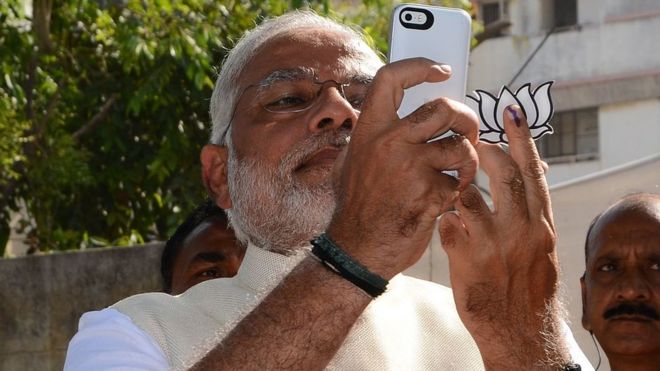
Indian Prime Minister Narendra Modi takes a 'selfie' after casting his vote at a polling station in AhmedabadImage copyright STRDEL
Image caption Prime Minister Modi is the third most followed leader on Twitter after Donald Trump

The world’s second most popular leader – when it comes to social media, at least – sent shockwaves through the internet on Monday, after announcing he was considering leaving the platforms.

After all, Indian Prime Minister Narendra Modi is the only politician to even come close to challenging US President Donald Trump’s online dominance.

And so it was somewhat unsurprising that the hashtag #ModiQuitsSocialMedia began trending in India, with users quick to share a heady cocktail of conspiracy theories, memes and desperate pleas.

However, Mr Modi, who has 54 million followers on Twitter, 35.2 million followers on picture sharing platform Instagram and 44 million followers on Facebook, soon revealed the true reason behind his abandonment of social media.

On Tuesday, he said that he would “give away my social media accounts to women whose life & work inspire us”.

But the “big reveal” came only after his first tweet generated an absolute social media storm.

Some theories suggested he was quitting social media platforms as they were being controlled by his opponents. Others speculated that he would launch an indigenous social platform, to match Twitter and Facebook, something similar to social media platforms like WeChat and Weibo in China.

“Expect SM companies stock to crash,” wrote one confident user.

Apart from the theories, there were desperate pleas from his fans. One wrote: “Please Sir, You can’t leave social media now for the sake of your fans!” Another added: “Modi Ji if you leave social media , they will use it against you and nation interest.”

“For me he is not only PM of India but also emotion. You’re king of social media. Don’t go sir.”

Some users suggested that his account had been hacked.

Soon, #Iwillalsoleavetwitter started trending.

Arun Yadav, the head of Haryana state IT and social media for BJP, tweeted asking the PM to not quit the platform as it was one way Indians could communicate with him.

But there were also jokes.

“Spare a thought for Twitter, Facebook & their stocks. PM Modi is all set to demonetise social media,” wrote one user, referring to the overnight decision to ban high value currency notes in November.

One user suggested that the prime minister was quitting all other platforms in order to make his TikTok debut.

“Modi ji is a typical Indian boyfriend after breakup,” quipped one Twitter user.

“Modiji should be awarded Nobel Peace Prize for bringing peace in the digital world,” said another.

#NoModiNoTwitter is at the top of India twitter trends after PM Modi's tweet
Image caption #NoModiNoTwitter was a India trend on Twitter after PM Modi’s tweet yesterday

There were political reactions too.

In a cheeky response, Rahul Gandhi, former president of the main opposition Congress party, tweeted: “Give up hatred, not social media accounts.”

Congress leader and MP Shashi Tharoor followed suit, writing: “The PM’s abrupt announcement has led many to worry whether it’s a prelude to banning these services throughout the country too.”

Mr Modi’s eventual tweet which clarified matters was seen by some as an anti-climax.

But for the millions who were pleading with him to reconsider, this is surely a big relief.

Source: The BBC

Law of Unintended Consequences

continuously updated blog about China & India

ChiaHou's Book Reviews

continuously updated blog about China & India

What's wrong with the world; and its economy

continuously updated blog about China & India