Chindia Alert: You’ll be Living in their World Very Soon
aims to alert you to the threats and opportunities that China and India present. China and India require serious attention; case of ‘hidden dragon and crouching tiger’.
Without this attention, governments, businesses and, indeed, individuals may find themselves at a great disadvantage sooner rather than later.
The POSTs (front webpages) are mainly 'cuttings' from reliable sources, updated continuously.
The PAGEs (see Tabs, above) attempt to make the information more meaningful by putting some structure to the information we have researched and assembled since 2006.
NEW DELHI/SYDNEY (Reuters) – India and Australia sealed an accord on Thursday to grant access to each other’s military bases in order to facilitate mutual defence exchanges and exercises.FILE PHOTO: Australian Prime Minister Scott Morrison speaks during a joint press conference held with New Zealand Prime Minister Jacinda Ardern at Admiralty House in Sydney, Australia, February 28, 2020. REUTERS/Loren Elliott
The agreement – known as the Mutual Logistics Support Agreement – was reached during a virtual summit between Indian Prime Minister Narendra Modi and Australia’s premier Scott Morrison.
“We share democratic values, the rule of law, freedoms, and respect for international institutions. When these are being challenged, we need to strengthen our cooperation,” India’s Modi said in opening remarks.
“It is time for our relationship to grow broader and deeper,” Morrison told Modi.
The accord allows military ships and aircraft to refuel and access maintenance facilities, and is widely seen as being part of a broader strategy by democracies in the region to counter communist-led China’s military and economic weight.
Indian troops are locked in a standoff with Chinese troops on their disputed border high in the Himalayas.
Though no shots have been fired, the confrontation on the frontier is the most serious in years, and comes at a time when India is increasingly concerned by its huge trade deficit with China, and Beijing’s rapidly expanding footprint in South Asia through its Belt and Road initiative.
Although China is the biggest buyer of Australia’s exports, there have been trade frictions between the two recently. And Australia also raised China’s hackles by pushing for an international review into the origins and spread of the novel coronavirus, which first emerged in the central Chinese city of Wuhan late last year.
Morrison was forced to cancel a visit to India in January due to the bushfires crisis at home, and with the ongoing pandemic the two leaders opted to hold a virtual summit instead.
Accords were also struck to enhance cooperation on cyber and related technologies.
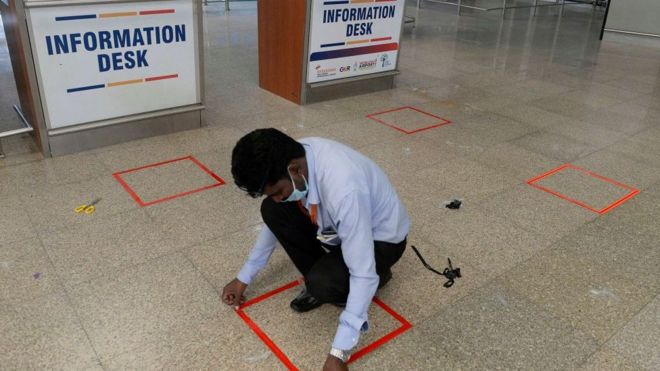
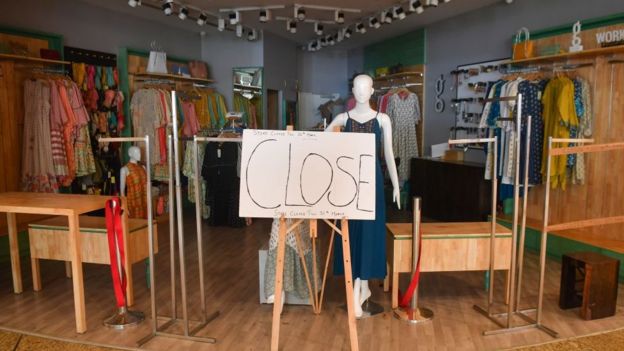
Image caption Shopping malls, places of worship, restaurants and offices reopen in India on 8 June.
Indian is reopening shopping malls, places of worship, restaurants and offices from 8 June as it eases its lockdown restrictions.
The guidelines include staggered work hours, no edible offering at temples and air conditioning at 24C (75.2F).
However, these places will remain closed in containment zones, with only essential services allowed.
People with comorbidities, pregnant women and elderly people have been asked to stay home.
The health ministry has asked all establishments to ensure hand sanitisers are placed at entrances and to adhere to strict social distancing measures.
Religious places of worship have been allowed to reopen but with stringent guidelines – no distribution of edible religious offerings, no sprinkling of holy water, idols and holy books cannot be touched, and large gatherings are prohibited.
Furthermore, to curb the spread of coronavirus, “recorded devotional music and songs may be played and choir or singing groups should not be allowed”, the ministry said.
According to the standard operating procedures for restaurants and hotels, food packets cannot be handed over directly to customers. Takeaway is encouraged and only 50% of the seating capacity in restaurants to be allowed.
Home delivery staff and chefs are to be thermally screened, the guidelines say.
Image caption Stringent social distancing measures have been announced by India’s Health Ministry as malls reopen
In the new guidelines for offices, authorities have stipulated staggered work hours and lunch breaks. All cafeterias and shops will need to follow strict social distancing measures both within the office and outside. The number of people in lifts will now be limited.
The ministry has further restricted the temperature settings on all air conditioning devices to be set between 24C to 30C with a humidity level between 40% to 70%.
Shopping malls have been asked to close gaming areas, cinema halls and play areas.
NEW DELHI (Reuters) – The sparkle has returned to the Yamuna river flowing through India’s capital of New Delhi, residents say, after decades of filthy and stinking waters, matted with garbage and polluted with toxic effluent from industry.
In a feat that eluded years of government cleanliness efforts, a nationwide lockdown against the coronavirus has brought about the transformation of a river many Hindus consider holy, with a halt in industrial activity since late in March.
Sanjay Gir, a 55-year-old Hindu monk who spends his time on the riverbank, said he could not remember when he had last seen the river so clean.
“Ever since the lockdown, we can take Mother Yamuna’s water in our hands and offer it for prayer, as well as drink it,” said the beared Gir, clad in traditional white dhoti.
“Because everything is closed right now – all the factories, industries are shut…their waste is not coming into the river.”
From its source among Himalayan peaks, the river meanders 1,376 km (855 miles) through a clutch of northern states to join the river Ganges in the city of Allahabad, where Hindu tradition says the two merge with a third, the mythical Saraswati.
One of the world’s toughest lockdowns against the coronavirus, which has caused nearly 217,000 infections and more than 6,000 deaths in India, kept out most of the industrial waste that normally clogs the Yamuna.
That was the key reason for the better water quality, said Anshuman Jaiswal of city research body the Energy and Resources Institute.
“The industrial discharge which was going into the Yamuna actually stopped and that, for sure, has reduced the pollution load,” he added.
But the waters will deteriorate again, Jaiswal warned, as the lockdown lifts and industries re-open.A stuffed toy is seen lying in the waters of the Yamuna river ahead of World Environment Day, in the old quarters of Delhi, India, June 4, 2020. REUTERS/Anushree Fadnavis
Nevertheless, while it lasts, a clean, revitalised Yamuna also augurs well for the environmental condition of the Taj Mahal, India’s famed monument to love that stands on the riverbank in the northern city of Agra.
NEW DELHI/SYDNEY (Reuters) – India and Australia sealed an accord on Thursday to grant access to each other’s military bases in order to facilitate mutual defence exchanges and exercises.FILE PHOTO: Australian Prime Minister Scott Morrison speaks during a joint press conference held with New Zealand Prime Minister Jacinda Ardern at Admiralty House in Sydney, Australia, February 28, 2020. REUTERS/Loren Elliott
The agreement – known as the Mutual Logistics Support Agreement – was reached during a virtual summit between Indian Prime Minister Narendra Modi and Australia’s premier Scott Morrison.
“We share democratic values, the rule of law, freedoms, and respect for international institutions. When these are being challenged, we need to strengthen our cooperation,” India’s Modi said in opening remarks.
“It is time for our relationship to grow broader and deeper,” Morrison told Modi.
The accord allows military ships and aircraft to refuel and access maintenance facilities, and is widely seen as being part of a broader strategy by democracies in the region to counter communist-led China’s military and economic weight.
Indian troops are locked in a standoff with Chinese troops on their disputed border high in the Himalayas.
Though no shots have been fired, the confrontation on the frontier is the most serious in years, and comes at a time when India is increasingly concerned by its huge trade deficit with China, and Beijing’s rapidly expanding footprint in South Asia through its Belt and Road initiative.
Although China is the biggest buyer of Australia’s exports, there have been trade frictions between the two recently. And Australia also raised China’s hackles by pushing for an international review into the origins and spread of the novel coronavirus, which first emerged in the central Chinese city of Wuhan late last year.
Morrison was forced to cancel a visit to India in January due to the bushfires crisis at home, and with the ongoing pandemic the two leaders opted to hold a virtual summit instead.
Accords were also struck to enhance cooperation on cyber and related technologies.
London should ‘abandon its Cold War and colonialist mentality’, foreign ministry says
Britain has ‘recklessly commented on Hong Kong and made groundless accusations to interfere’ in its affairs
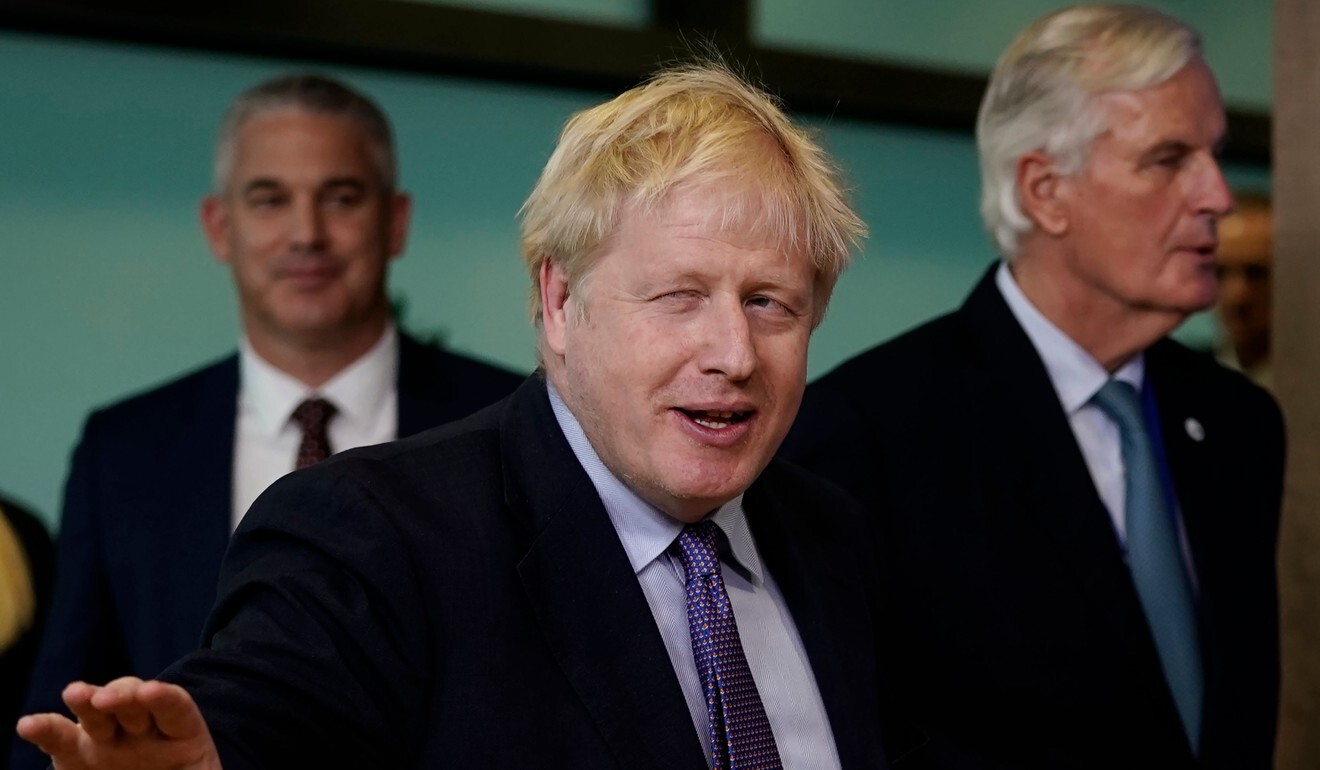
Beijing was angered by British Prime Minister Boris Johnson’s pledge to make it easier for Hong Kong citizens to live and work in Britain. Photo: Winson WongBritain should relinquish its colonial and Cold War mentality, China said on Wednesday after British Prime Minister Boris Johnson promised to overhaul his country’s visa system for Hongkongers if Beijing pushes ahead with plans for a national security law for the city.
“The UK has recklessly commented on Hong Kong and made groundless accusations to interfere in Hong Kong affairs,” foreign ministry spokesman Zhao Lijian said.
“China expresses its strong dissatisfaction and opposition, and has lodged stern representations with the UK.”His comments came after Johnson said in an opinion piece published in the South China Morning Post and The Times of London on Wednesday that many Hong Kong citizens feared their way of life was under threat after the National People’s Congress (NPC) – Beijing’s rubber-stamp legislature – endorsed a resolution to enact a national security law at its annual session last month.
“If China proceeds to justify their fears, then Britain could not in good conscience shrug our shoulders and walk away; instead we will honour our obligations and provide an alternative,” he said.
“Britain would then have no choice but to uphold our profound ties of history and friendship with the people of Hong Kong.”
Beijing was swift to condemn the prime minister’s comments.
“We urge the UK side to pull back before it’s too late, abandon its Cold War and colonialist mentality, and understand and respect the fact that Hong Kong has returned to Chinese rule as a special administrative region,” Zhao said.
Boris Johnson says Britain will uphold its “profound ties of history and friendship with the people of Hong Kong”. Photo: AFPCritics of the NPC decision say Beijing’s move contravenes the terms of the Sino-British Joint Declaration signed in 1984 ahead of the city’s return to China in 1997. That document states that a “one country, two systems” framework guaranteeing a high degree of autonomy, Hong Kong people ruling Hong Kong, and a capitalist way of life should remain unchanged until 2047.
London regards the declaration as an international treaty, but Beijing has said repeatedly that it no longer has meaning and does not give Britain the right to interfere in Hong Kong affairs.
Zhao said it was neither a Chinese commitment to Britain nor an international obligation.
“Since the handover, the legal grounds for China’s governance of Hong Kong has been based on the constitution of the People’s Republic of China and the Basic Law of Hong Kong, rather than the Sino-British Joint Declaration,” he said.
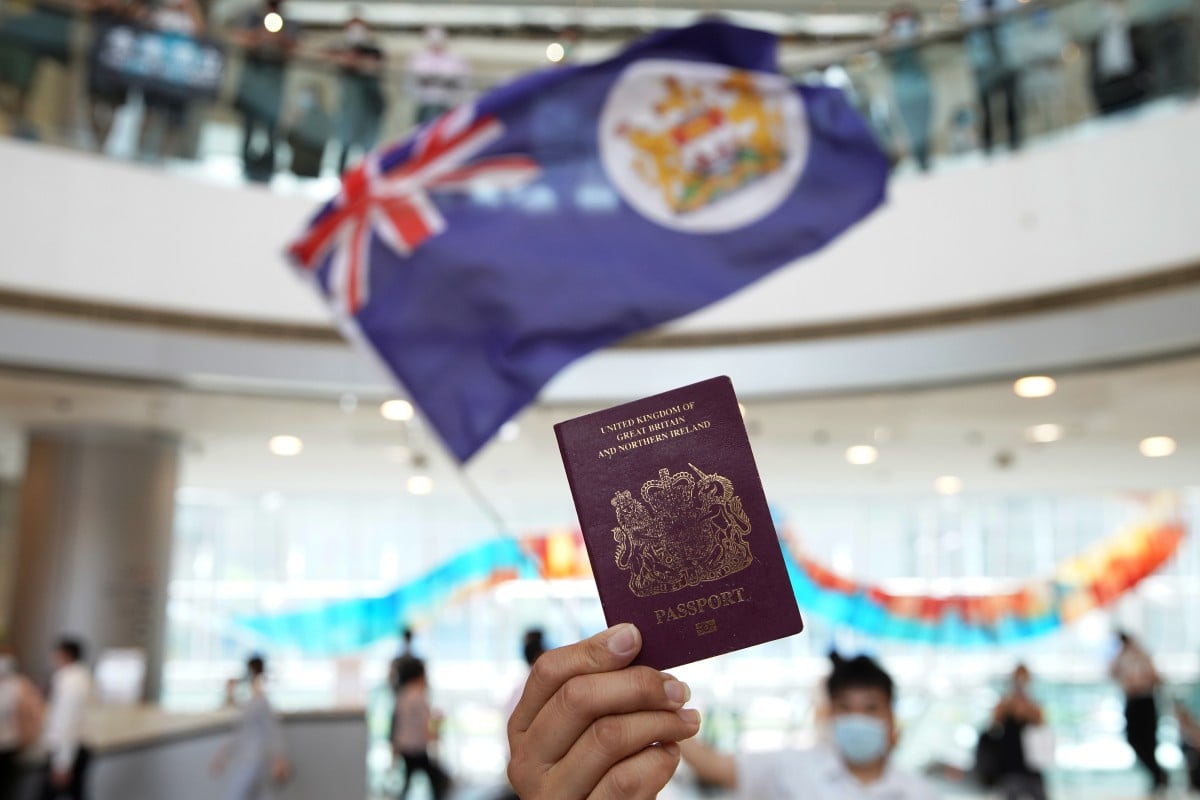
In his article, Johnson promised to implement “one of the biggest changes in our visa system in British history” if the law was enacted. It would allow 3 million Hongkongers who qualify for a British National (Overseas) passport and their dependents to work or study in Britain for extended periods of 12 months, creating a path to citizenship.
The opinion piece came after British Foreign Secretary Dominic Raab said Britain had been discussing “burden sharing” with the United States, Australia, Canada and New Zealand to handle a possible exodus of Hongkongers.
He said he hoped Beijing would change its mind on the national security law, but said London would not turn away from its historical and moral duty.
The NPC resolution on the legislation came after almost a year of anti-government protests in Hong Kong. Beijing has accused foreign agents of influencing the disruption and accused those involved of engaging in acts of terrorism, claims they have rejected.
Critics said that by circumventing Hong Kong’s legislature, Beijing was jeopardising the city’s liberties under one country, two systems, but government supporters said the move was necessary after a previous attempt to introduce a national security law in 2003, based on Article 23 of the Basic Law, failed amid widespread public opposition.Get the China AI Report 2020, brought to you by SCMP Research. Learn about the AI ambitions of Alibaba, Baidu & JD.com through our in-depth case studies, and explore new applications of AI across industries. The report also includes exclusive access to webinars to interact with C-level executives from leading China AI companies (via live Q&A sessions).
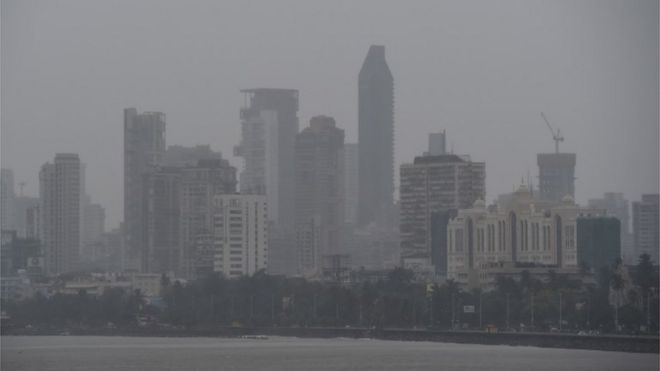
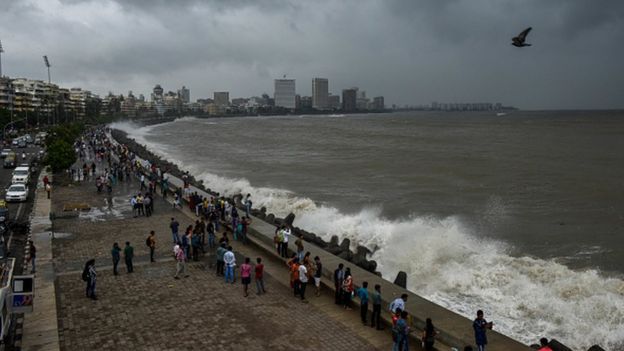
Image caption Mumbai is witnessing its worst storm in decades
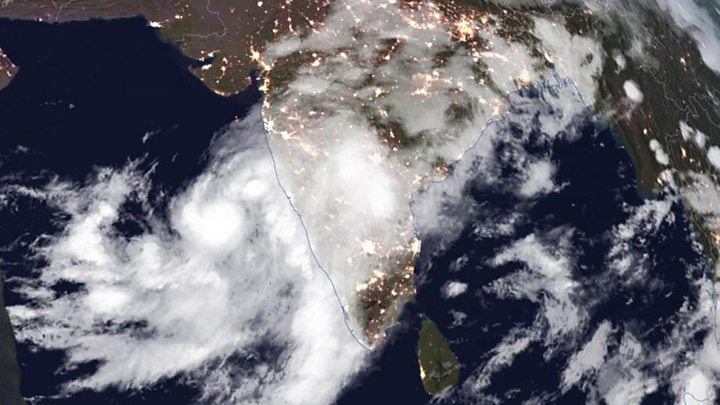
A cyclone racing in from the Arabian Sea has struck India’s west coast after intensifying on its approach to the densely populated city of Mumbai.
Cyclone Nisarga began making landfall about 100km (60 miles) south of Mumbai. Tens of thousands of people along the coast have been moved to higher ground.
It’s the first major cyclone in decades to threaten the financial capital.
With 20 million people, Mumbai is India’s most populous city and has been badly hit by the coronavirus pandemic.
The cyclone began making landfall at about 13:00 local time (07:30GMT), packing winds of more than 100km/h.
It hit the coast around Alibaug, a favourite weekend destination for many, and often touted as “the Hamptons” of Mumbai, the capital of Maharashtra state. Gujarat to the north is also in Nisarga’s path.
Image caption Residents have been told to stay indoors, and some moved to higher ground
BBC Marathi’s Janhavee Moole says it has been raining since Tuesday and the skies are ominously dark in Mumbai.
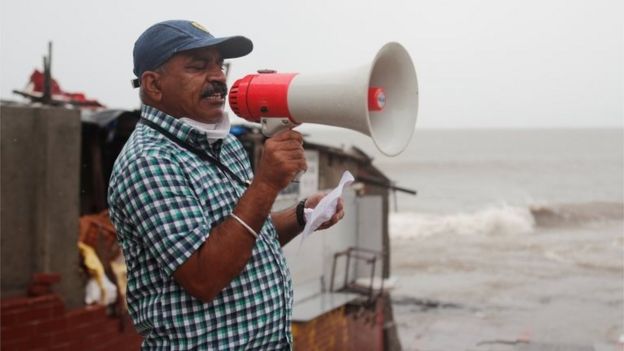
“I can see the trees shaking violently. All beaches in the city are closed to the public and a police patrol van is making announcements, asking people to stay indoors. All safety precautions possible are being taken, but I do feel worried because the city is also in the grip of a pandemic,” our correspondent adds.
On Wednesday, the Indian Meteorological Department said the cyclone had intensified into a “severe cyclonic storm”. They later said the cyclone had speeded up, and was moving at around 13km/h.Skip Facebook post by India Meteorological Department
End of Facebook post by India Meteorological Department
With more than 40,000 confirmed virus cases, and almost 1,400 deaths, Mumbai is the city worst-affected by coronavirus in India.
The tens of thousands of people evacuated before the cyclone included 150 patients from a recently-built Covid-19 field hospital.
The local government said people living in flimsy homes near the shore were being moved. The coast guard said it had taken 109 fishermen in 18 boats to safety.
The government urged people to secure their homes, prepare an emergency kit, and keep documents and valuables in water-proof containers.
Unlike India’s eastern coast, cyclones are unusual on the country’s western shore. Nisarga comes barely two weeks after Cyclone Amphan struck, devastating parts of Kolkata (formerly Calcutta) on the east coast.
More than 100 people were killed in the Indian states of West Bengal and Orissa, as well as neighbouring Bangladesh.
NEW DELHI (Reuters) – India’s Prime Minister Narendra Modi has received an invitation from U.S. President Donald Trump to attend the next Group of Seven summit, India’s Foreign Affairs Ministry said on Tuesday.FILE PHOTO: India’s Prime Minister Narendra Modi speaks to the media inside the parliament premises on the first day of the winter session in New Delhi, India, November 18, 2019. REUTERS/Altaf Hussain/File Photo
In a telephone call, Modi told Trump New Delhi would be happy to work with the United States and other countries to ensure the success of the next G7 summit, the ministry said in a statement.
Trump said on Saturday he was postponing until September the summit that had been scheduled for late June at Camp David, the U.S. president’s country retreat, and that he wanted to invite Australia, Russia, South Korea and India to the meeting.
Trump conveyed his desire to expand participation beyond the members of the group of the world’s most advanced economies.
“In this context, he extended an invitation to Prime Minister Modi to attend the next G7 Summit to be held in USA,” the ministry said.
The leaders exchanged views on the COVID-19 situation in the two countries, the India-China standoff at the border, and the need for reforms in the World Health Organization, it added.
A White House statement said Trump and Modi discussed the G7 meeting, the response to the coronavirus pandemic and regional security issues.
Trump told Modi the United States would ship the first tranche of 100 donated ventilators to India next week, the White House said.
U.S. Secretary of State Mike Pompeo and a senior congressional leader have reprimanded China for bullying behaviour towards India during a military standoff on their disputed border.
During the call, Trump recalled his visit to India in February. Modi said the historic visit had added new dynamism to the bilateral relationship.
Image captionMumbai usually experiences heavy monsoon rains
“The sea was brought into the city by the wind; the waves roared fearfully; the tops of the churches were blown off and the immense stones were driven to vast distances; two thousand persons were killed.”
This was how a Portuguese historian described one of the earliest recorded powerful storms in Mumbai in May 1618. In the 17th and 19th Century, the western Indian city was hit by deadly storms and cyclones. Mumbai experienced severe floods in 2005, and more recently in 2017 and 2019, but none of them were due to cyclones.
The heaving city of 20 million people, which is India’s financial and entertainment capital, has been spared of cyclones in modern history. Mumbai hasn’t “experienced a serious cyclone landfall since 1891”, Adam Sobel, a professor of atmospheric science at Columbia University, told me.
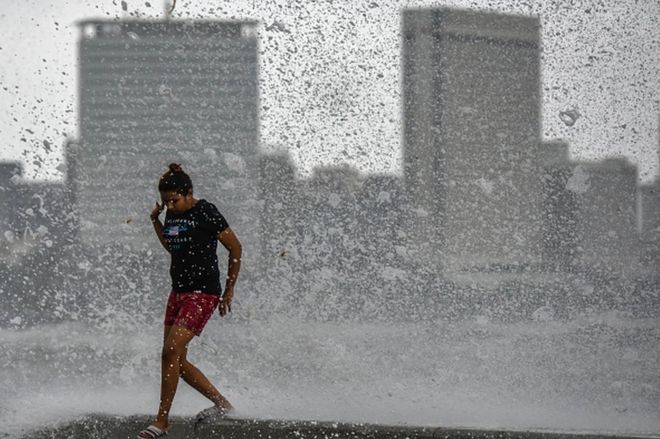
All that could change on Wednesday when a severe cyclonic storm with wind speeds from 100 to 120 kmph (60 to 75 mph) could hit the city and India’s western coast. India’s meteorological department is predicting heavy rainfall, squally winds, very rough seas and storm surges inundating low lying areas of the city. It is monitoring whether it will be as intense as Cyclone Amphan which devastated parts of West Bengal and took more than 90 lives last fortnight.
On Monday evening, Prof Sobel, who has researched Mumbai’s cyclone preparedness, told me that the latest track of what is likely to be named Cyclone Nisarga “takes it right over Mumbai as a severe cyclonic storm with maximum wind speeds of 110 kmph”. In the US system, he says, this would be “a strong tropical storm, not quite a hurricane”. (Tropical storms in North Atlantic Ocean and Northeast Pacific are called hurricanes.)
“The track forecast is bad for Mumbai, but the intensity forecast is good relative to what it was 12 hours ago when some models were predicting it could become much more powerful,” he said.
Image captionMumbai is a low lying, sea facing city
“So the chance of a worst case scenario is now greatly reduced. However, a severe cyclonic storm can still be dangerous, so people should be prepared. And there is still time for things to change, so everyone in the area should monitor the forecast completely,” he added. Mumbai has been put on “orange” alert with the “possibility of extremely heavy rain to a very heavy rainfall at a few places”.
What makes Mumbai vulnerable, say experts, is that it is a densely packed, low lying city completely exposed to the sea. The low lying areas can easily experience flooding in the event of a bad storm surge or very heavy rains. This time, the city is also battling a Covid-19 outbreak – the state of Maharashtra, of which Mumbai is the capital, accounts for more than a third of India’s reported infections.
Amitav Ghosh, a leading novelist who has written extensively on climate change, says there has been an increase in cyclonic activity in the Arabian sea in the last couple of decades. A 2012 paper predicts a 46% increase in tropical cyclones in the Arabian Sea by the end of the century. And between 1998 and 2001, three cyclones hit the subcontinent north of Mumbai, claiming over 17,000 lives, he notes.
In his book The Great Derangement: Climate Change and the Unthinkable, Ghosh wonders what would happen if a Category 4 or 5 storm, with wind speeds 240 kmph or higher, barrels into Mumbai?
“Mumbai’s previous encounters with powerful cyclones occurred at a time when the city had considerably less than a million inhabitants. Today, it is the second-largest municipality in the world with a population of over 20 million,” he writes.
“With the growth of the city, its built environment has also changed so that weather, that is by no means exceptional, often has severe effects: monsoon downpours, for instance, often lead to flooding nowadays.
“With an exceptional event, the results can be catastrophic.”
It has already happened once, and the city didn’t even experience a cyclone.
Image captionMumbai is home to 20 million people
In July 2005, Mumbai received one of the highest rainfall totals ever recorded in a single day anywhere in the world – 94.4 cm in 14 hours.
The deluge submerged roads, shut down communication networks and electricity, stranded a couple of million people, and knocked out public transport. More than 500 people were killed, washed away, buried in landslides, electrocuted or simply suffocated in their drowning cars. Residents will be praying that the nightmare doesn’t return.
Children from Hejiazhuang primary school paint in Hejiazhuang Village of Wangba Township in Kangxian County, northwest China’s Gansu Province, May 30, 2020. (Xinhua/Chen Bin)
BEIJING, May 31 (Xinhua) — Chinese President Xi Jinping has greeted children of all ethnic groups across the country on International Children’s Day, which falls on June 1.
Xi, also general secretary of the Communist Party of China Central Committee and chairman of the Central Military Commission, called on children to study hard, firm up their ideals and convictions and develop strong bodies and minds to prepare for realizing the Chinese Dream of national rejuvenation.
Xi noted that children nationwide have experienced a special period during the country’s fight against COVID-19 as all Chinese people stand united.
Children paint elephants at the Chimelong Safari Park in Guangzhou, south China’s Guangdong Province, May 27, 2020. Two female Asian elephants gave birth to two babies respectively on April 30 and May 12 in the Chimelong Safari Park in Guangzhou, adding the total number of the Asian elephants here to 27. (Xinhua/Liu Dawei)
Witnessing the great feats of Chinese people working together and rising to challenges, the children have followed the call of the Party and the government to support the anti-epidemic battle with their concrete actions, demonstrating the fine spirit of the country’s children, Xi said.
He stressed that China’s children today are not only undergoing and witnessing the realization of the country’s first centenary goal, they are also a new force for achieving the second centenary goal and building China into a great modern socialist country.
Xi urged Party committees and governments at all levels as well as the society to care for children and create favorable conditions for their growth.
Students attend a class at a primary school in Dahua Yao Autonomous County, south China’s Guangxi Zhuang Autonomous Region, May 29, 2020. Guangxi, one of the major battlefields in China’s poverty alleviation campaign, has been making painstaking efforts to improve education for poverty-stricken children, as schooling is believed to be the best way to empower the youngsters to lift their families out of poverty. The region has taken various measures in this regard, including granting students stipends, improving school facilities and nutritional conditions of rural students, and helping more students from rural and impoverished areas have access to higher education. As many households from inhospitable areas have moved into relocation sites built for poverty alleviation in the county seats, relocated children can study in schools in and near resettlements, instead of trekking hours back and forth in mountains for schooling. The faculty is a key to education. The regional government has called in capable teachers to help schools in rural areas, and has been committed to guaranteeing payment to teachers and filling vacancies of teachers in rural areas through special programs. Reducing poverty must begin with reducing ignorance. Therefore, giving rural children a good education is an important task in poverty relief, and also a crucial means to stop poverty being passed on through generations.





 CHINDIA ALERT: You'll be living in their world, very soon