Chindia Alert: You’ll be Living in their World Very Soon
aims to alert you to the threats and opportunities that China and India present. China and India require serious attention; case of ‘hidden dragon and crouching tiger’.
Without this attention, governments, businesses and, indeed, individuals may find themselves at a great disadvantage sooner rather than later.
The POSTs (front webpages) are mainly 'cuttings' from reliable sources, updated continuously.
The PAGEs (see Tabs, above) attempt to make the information more meaningful by putting some structure to the information we have researched and assembled since 2006.
SRINAGAR, India (Reuters) – Indian police have released a pigeon belonging to a Pakistani fisherman after a probe found that the bird, which had flown across the contentious border between the nuclear-armed nations, was not a spy, two officials said on Friday.
“The pigeon was set free yesterday (May 28) after nothing suspicious was found,” said Shailendra Mishra, a senior police official in Indian-administered Kashmir. It was unclear where the bird was released and whether it flew back to its owner.
The Pakistani owner of the pigeon had urged India to return his bird, which Indian villagers turned over to police after discovering it.
“It’s just an innocent bird,” Habibullah, the owner of the bird, who goes by just one name, told Reuters on Friday.
He rejected allegations that the numbers inscribed on a ring on the pigeon’s leg were codes meant for militant groups operating in the disputed region of Kashmir.
Habibullah, who lives in a village near the Kashmir border, one of the most militarised zones in the world, said the bird had participated in a pigeon racing contest and the digits on the bird’s leg were his mobile phone number.
The sport is especially popular in the border villages, said Yasir Khalid of the Shakar Garh Pigeon Club, adding such races are held in India too, and it is not unusual to lose a bird on either side. Owners identify their birds with stamps on the wings, paint and rings on the feet.
“We had to take the bird into our custody to probe if it was being using for spying,” a senior Indian border security officer said requesting anonymity, while explaining this was part of the drill given border sensitivities.
In 2016, a pigeon was taken into Indian custody after it was found with a note threatening Indian Prime Minister Narendra Modi.
BEIJING, May 29 (Xinhua) — President Xi Jinping on Friday encouraged scientific and technological workers across China to make new and greater contributions to building China into a global power in science and technology.
Xi, also general secretary of the Communist Party of China Central Committee and chairman of the Central Military Commission, made the remarks in replying to a letter by 25 representatives of sci-tech workers. He also called for efforts to achieve breakthroughs in key and core technologies.
Xi extended greetings to sci-tech workers across the country ahead of China’s fourth national sci-tech workers’ day, which falls on May 30.
A vast number of sci-tech workers have dedicated themselves to serving the country through their innovative thinking and practices, Xi noted.
He pointed out that innovation is the primary driving force for development, and science and technologies are powerful tools to overcome difficulties.
Facing the sudden COVID-19 outbreak, sci-tech workers have risen up to challenges and worked day and night on the clinical treatment, vaccine research and development, material support as well as big data application, providing sci-tech support against the epidemic, Xi said.
Xi hoped that sci-tech workers across the country strive to resolve problems with key and core technologies, promote the in-depth integration of application, education and scientific research, reach the peak of science and technology and make new and greater contributions to building China into a global power in science and technology.
In November 2016, the State Council, China’s cabinet, set down May 30 as the national sci-tech workers’ day.
Recently, 25 representatives of sci-tech workers, including agronomist Yuan Longping, respiratory specialist Zhong Nanshan and space expert Ye Peijian, wrote to Xi to express their determination to make contributions in the new era of innovation and entrepreneurship.
The closing meeting of the third session of the 13th National People’s Congress (NPC) is held at the Great Hall of the People in Beijing, capital of China, May 28, 2020. Leaders of the Communist Party of China and the state Xi Jinping, Li Keqiang, Wang Yang, Wang Huning, Zhao Leji, Han Zheng and Wang Qishan attended the meeting, and Li Zhanshu presided over the closing meeting and delivered a speech. (Xinhua/Ju Peng)
BEIJING, May 28 (Xinhua) — Eradicating absolute poverty, upholding people-centered philosophy and seeking new opportunities from challenges, Chinese President Xi Jinping brought reassuring messages at times of uncertainty and difficulty.
Xi spoke on a wide range of topics at this year’s “two sessions,” which closed on Thursday.
The two sessions are the country’s annual meetings of the National People’s Congress (NPC) and the National Committee of the Chinese People’s Political Consultative Conference (CPPCC).
Xi, also general secretary of the Communist Party of China (CPC) Central Committee and chairman of the Central Military Commission, participated in deliberations with national legislators and joined in discussions with political advisors.
Chinese President Xi Jinping, also general secretary of the Communist Party of China Central Committee and chairman of the Central Military Commission, takes part in a deliberation with his fellow deputies from the delegation of Inner Mongolia Autonomous Region at the third session of the 13th National People’s Congress (NPC) in Beijing, capital of China, May 22, 2020. (Xinhua/Ju Peng)
PEOPLE FIRST
An NPC deputy himself, Xi joined deliberations with lawmakers from north China’s Inner Mongolia Autonomous Region on May 22, the first day of the annual session of the national legislature.
“People first” was the keyword in the discussions. Xi referred to the recovery of an 87-year-old COVID-19 patient after 47 days of care by a team of 10 doctors and nurses.
“Many people worked together to save a single patient. This, in essence, embodies doing whatever it takes (to save lives),” he said.
China mounted swift and sweeping actions to contain the disease. It has mobilized the best doctors, most advanced equipment and high-demand resources. The eldest patient to have been cured is 108 years old.
“President Xi emphasized people and lives are the top priorities,” said Huhbaater, a professor of Inner Mongolia Agricultural University and an NPC deputy who heard Xi speak.
NEW OPPORTUNITIES
China decided not to set a specific annual economic growth target for 2020, but set eyes on winning the battle against poverty and finishing building a moderately prosperous society in all respects.
Xi touched upon the absence of a numerical growth target. “Had we imposed a target, the focus would have been strong stimulus and a simple grasp on growth rate. That is not in line with our social and economic development purposes,” he said.
Xi urged efforts in seeking new opportunities amid challenges as he joined discussions with national political advisors from the economic sector on May 23.
“Our economy is still characterized by ample potential, strong resilience, large maneuver room and sufficient policy instruments,” Xi said.
China has the largest industrial system in the world with the most complete categories, strong production capabilities and complete supporting sectors, as well as over 100 million market entities and a talent pool of 170 million people.
The Chinese president anticipates faster growth in the digital economy, intelligent manufacturing, life and health, new materials and other strategic emerging industries, highlighting the creation of new growth areas and drivers.
Xi stressed steady progress in creating a new development pattern where domestic and foreign markets can boost each other, with the domestic market as the mainstay.
He called for unwavering efforts to make economic globalization more open, inclusive and balanced so that its benefits are shared by all, and to build an open world economy.
Chinese President Xi Jinping, also general secretary of the Communist Party of China Central Committee and chairman of the Central Military Commission, joins a deliberation with deputies from Hubei Province at the third session of the 13th National People’s Congress (NPC) in Beijing, capital of China, May 24, 2020. (Xinhua/Li Xueren)
PUBLIC HEALTH PROTECTION
On May 24, Xi joined deliberations with lawmakers from central China’s Hubei Province, which was the hardest hit by COVID-19.
“We must face the problems upfront, step up reform and waste no time in addressing the shortcomings, insufficiencies and loopholes exposed by the epidemic,” he said, stressing fortifying the public health protection network.
Xi noted several priorities: reforming the disease prevention and control system; boosting epidemic monitoring, early warning and emergency response capacity; perfecting the treatment system for major epidemics; and improving public health emergency laws and regulations.
ENHANCING NATIONAL DEFENSE
When attending a plenary meeting of the delegation of the People’s Liberation Army and People’s Armed Police Force, Xi commended their role in battling COVID-19 and stressed achieving the targets and missions of strengthening the national defense and armed forces for 2020.
The epidemic has brought a profound impact on the global landscape and on China’s security and development as well, he said.
He ordered the military to think about worst-case scenarios, scale up training and battle preparedness, promptly and effectively deal with all sorts of complex situations, and resolutely safeguard national sovereignty, security and development interests.
Noting that this year marks the end of the 13th five-year plan for military development, Xi said extraordinary measures must be taken to overcome the impact of the epidemic to ensure major tasks on the military building are achieved.
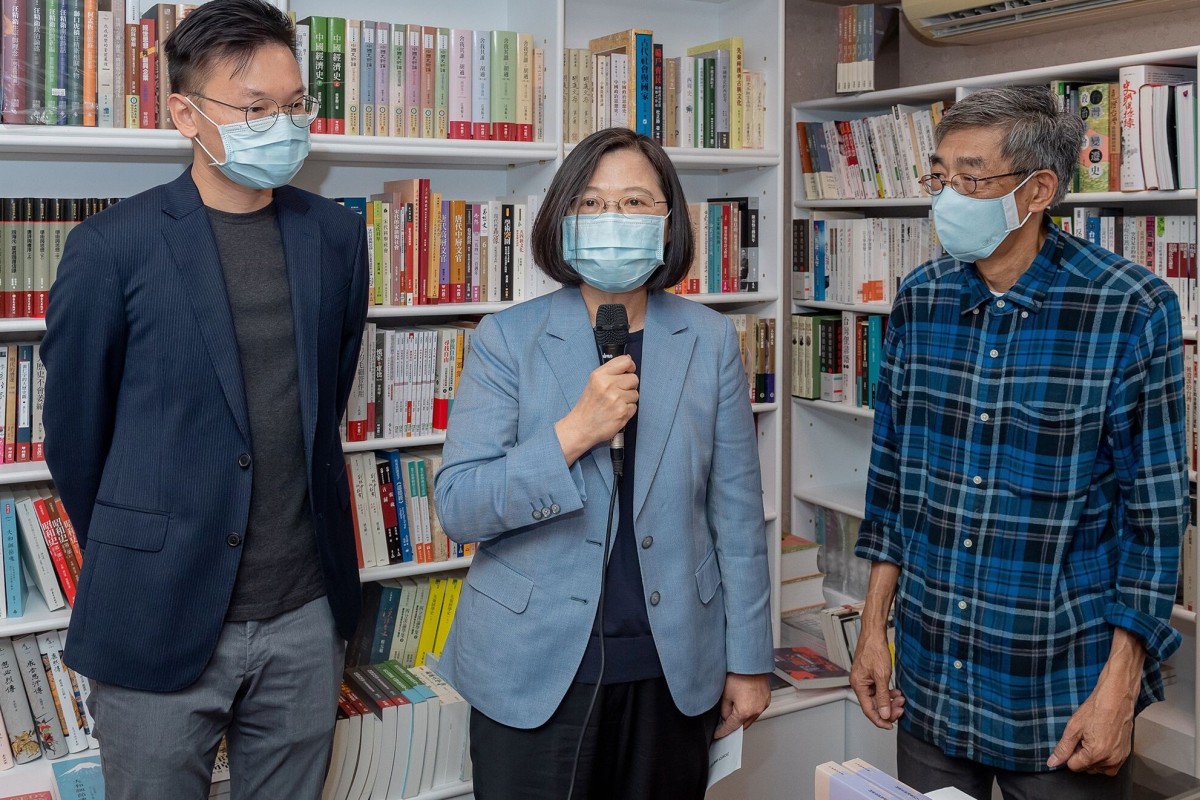
Tsai Ing-wen visited exiled Hong Kong bookseller a day after NPC voted in favour of legislation
Lam Wing-kee said fleeing Hongkongers saw Taiwan as a step towards applying for asylum in the West
President Tsai Ing-wen (centre) shows her support for Hong Kong bookseller Lam Wing-kee (right) with Lin Fei-fan, deputy secretary general of the ruling Democratic Progressive Party. Photo: Taiwan presidential office/AFP
Her visit came a day after China’s legislature, the National People’s Congress, voted in favour of a resolution to initiate the legal process for a national security law to be imposed on Hong Kong, despite concerns from the United States, the European Union and elsewhere that the move would erode human rights, freedom and autonomy in the city.
Tsai said on behalf of all Taiwanese people, she welcomed Lam to stay in Taiwan where he could bolster the island’s efforts to further freedom and democracy.
Hongkongers who want to flee to Taiwan ‘will go through strict screening’
28 May 2020
Lam, one of the five shareholders and staff at Hong Kong’s Causeway Bay Books, fled to Taiwan in April last year after he was detained by Chinese agents for eight months in 2015 for selling books critical of the Chinese leadership.
between October and December that year and it emerged they had been detained on the Chinese mainland.
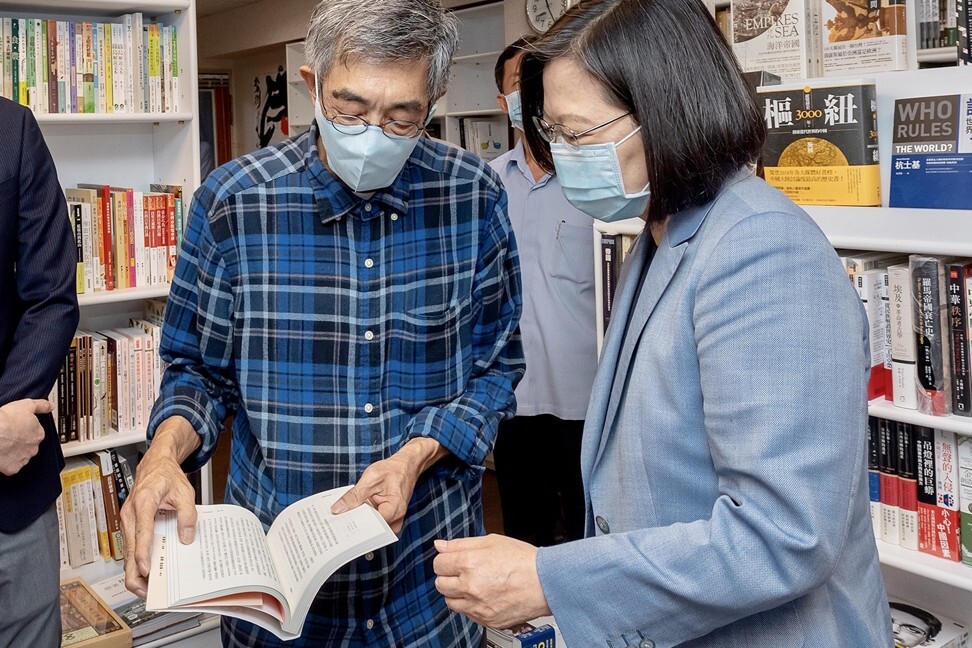
President Tsai Ing-wen looks at a book while visiting Lam Wing-kee on Friday. Photo: Taiwan presidential office/AFP
Lam later said he had been detained and blindfolded by police after crossing the border into mainland China from Hong Kong in October 2015.
The case triggered a huge controversy and raised fears of growing Chinese control in the city.
Seeing Lam as a representative of Hongkongers fleeing to Taiwan to avoid political persecution, Tsai said she wanted to understand what challenges these exiles faced and what help they needed during their stay on the self-ruled island.
“I want to tell Boss Lam [Wing-kee] and our Hong Kong friends that the government here has set up an ad hoc committee to offer help to them very soon,” she said.
On Wednesday, Tsai called for the government to set up an ad hoc committee to work out a “humanitarian help action plan” for Hong Kong people seeking to live in Taiwan or immigrate to the island. It was borne out of concern they would be arrested or prosecuted for taking part in months of anti-government protests triggered last year by the now-shelved extradition bill.
Chen Ming-tong, head of the Mainland Affairs Council, the island’s top mainland policy planner, said on Thursday his council would draft the measures for cabinet’s approval in a week.
Under the plan, the Mainland Affairs Council would issue special measures and coordinate with the island’s authorities on how to help Hongkongers relocate to Taiwan and take care of them.
Bookseller Lam told Tsai what Hongkongers needed most was to have their stay in Taiwan extended.
Lam said that currently, because of the absence of a political asylum law, Hongkongers could only apply to live in Taiwan through study, work, investment, their professional skills or close relatives.
He said fleeing Hongkongers usually came to Taiwan on tourist permits, which at most allowed them to stay for up to six months, giving them not enough time to apply for long-term residence in Taiwan.
“It would be better if they can stay for nine months and preferably one year,” he said.
Lam said some fleeing Hongkongers saw Taiwan as an intermediary base as they hoped to apply for asylum in the West, but it took a long time for Western countries to screen and approve their asylum requests.
Meanwhile, Premier Su Tseng-chang said Article 18 of the Laws and Regulations Regarding Hong Kong and Macau Affairs was good enough to deal with the current crisis in the absence of a political asylum law in Taiwan.
That article states that “necessary help shall be provided to Hong Kong or Macau residents whose safety and liberty are immediately threatened for political reasons”.
Image copyright GETTY IMAGESImage caption Around 300,000 in Hong Kong hold a British National (Overseas) passport
The UK has said it is considering more rights for holders of a special passport issued to some people in Hong Kong.
The territory, which used to be a British colony, was handed back to China in 1997. Anyone born before then is eligible to apply for a British National (Overseas) passport, known as a BNO.
If China implements a controversial proposed security law, people holding the BNO, could get a “path to citizenship”, the UK said.
What is the BNO and who has one?
The BNO passport is essentially a travel document that does not carry citizenship rights with it – although you are entitled to some consular assistance outside of Hong Kong and China with it.
It was issued to people in Hong Kong by the UK before Hong Kong was handed over to China.
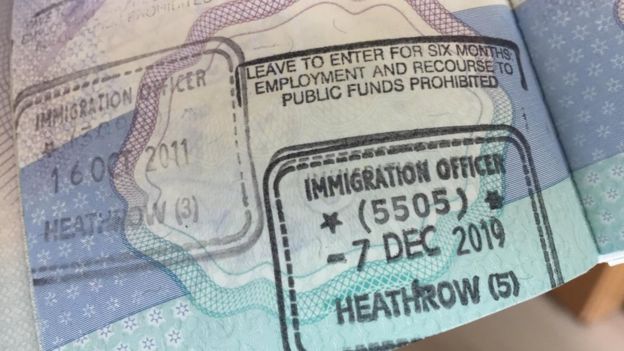
Around 300,000 people currently hold a BNO passport, allowing them to visit the UK visa-free for six months. An estimated 2.9 million people are eligible for a BNO passport, said the British Consulate General in Hong Kong.
Though it gives the passport holder the right to remain in the UK for up to six months, it doesn’t automatically allow them to reside or work there. They also aren’t allowed to access public funds, including things like government benefits.
BNO holders cannot pass this status on to their children.
What is the UK proposing – and why?
China on Thursday formally approved a plan to impose controversial national security legislation in Hong Kong. It could go into effect as early as the end of June.
Hong Kong was handed back to China, on a number of conditions. These include the region’s high level of autonomy and maintaining certain rights like freedom of speech that do not exist in mainland China.
But this new plan, if put into law, would make it a crime to undermine Beijing’s authority in Hong Kong, and many are concerned it could end Hong Kong’s unique status.
The move triggered a wave of criticism around the world, with many – including Chris Patten, the last governor of Hong Kong – urging the UK to stand up for the territory.
Image caption Under current rules, BNO holders are allowed to stay for six months
Later on Thursday, UK Foreign Secretary Dominic Raab said the country would move to scrap the six-month stay limit for BNO holders if China goes on to officially implement the law.
Mr Raab said that BNO passport holders would be allowed to “apply to work and study for extendable periods of 12 months and that will itself provide a pathway to future citizenship”.
What difference could it make?
As a way to help people in Hong Kong who would rather not stay there if the new security laws are implemented, it might prove more symbolic.
For starters only a small percentage of people in Hong Kong currently have a BNO.
But also, the people who the security laws are aimed at – the young anti-mainland protesters who have been getting into violent confrontations with police for months – are not likely to be eligible for the BNO because of their age.
Additionally, though the BNO gives the passport holder the right to visit the UK for up to a year potentially, it’s not clear what other benefits the extension might bring, or if the UK would make it any easier administratively for those already in the country to apply for work or study.
On social media, some Hong Kongers dismissed it as a gesture that amounted to little more than a 12-month tourist visa.
Effectively, it means that those who come to stay in the UK for a year, and who have the funds to be able to extend this enough, could eventually be eligible to apply for citizenship.
It cuts out some of the administrative hoops BNO holders would have had to jump through before this move if they wanted this path.
How has China reacted?
China has firmly opposed the move by the UK, saying it is a violation of the handover agreement that stipulates BNO passport holders do not enjoy UK residency.
China has repeatedly warned Britain to stay out of its affairs in Hong Kong.
The Chinese ambassador to the UK Liu Xiaoming had previously accused some British politicians of viewing Hong Kong “as part of the British empire”.
Image copyright GETTY IMAGESImage caption International students are uncertain of the future in the wake of Covid-19
Two years ago, 29-year-old Raunaq Singh started working towards his dream of pursuing an MBA from one of the world’s top business schools.
In January 2020, he was waitlisted by UC Berkeley’s Haas School of Business in California, and was asked to send more information to bolster his case for admission.
“So, I quit my stable job of five years and started working with a mental wellness start-up as a consultant,” Mr Singh says.
“I’m on a major pay cut because the purpose of joining this company wasn’t to earn money, but to add value to my application.”
Fortunately, he was accepted at Berkeley, and was due to start his course in September.
But then the world changed as Covid-19 spread, plunging the immediate future into uncertainty.
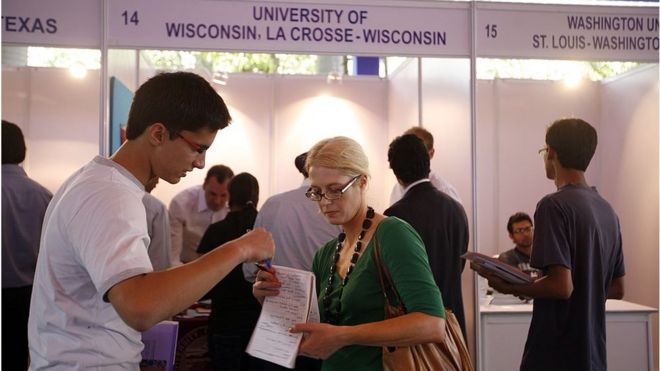
Mr Singh is one of hundreds of thousands of Indian students who were planning to study abroad. But now they are not quite sure what will happen given international travel restrictions, new social distancing norms and the sheer uncertainty of what the next few months will bring.
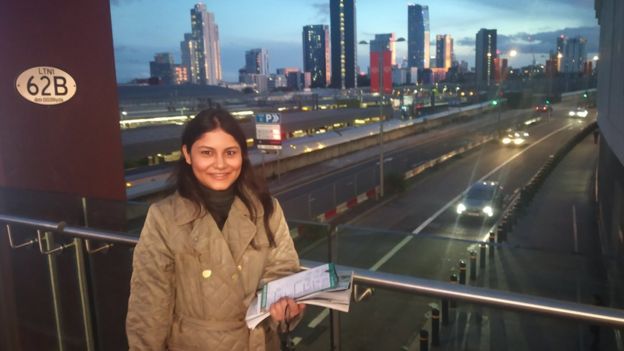
Image copyright MEEHIKA BARUAImage caption Ms Barua is one of the hundreds of thousands of Indians who wants to study abroad
Every year, in June and July, students flood visa centres and consulates to start the paperwork to travel and study abroad. But things look different this year.
“There’s a lot of stress and anxiety and tension at this time but not enough clarity,” says Meehika Barua, 23, who wants to study journalism in the UK.
“We don’t know when international travel restrictions will be lifted or whether we’d be able to get our visas in time. We may also have to take classes online.”
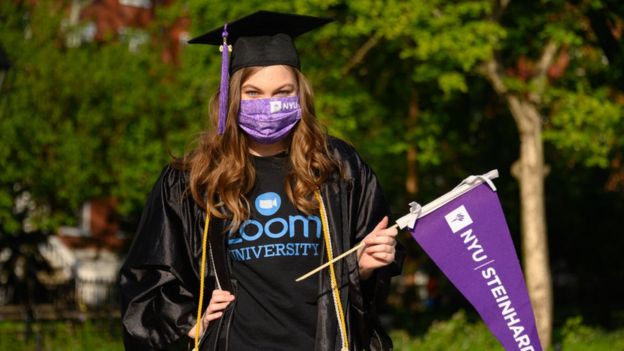
Some universities across the UK and the US are giving international students the option to defer their courses to the next semester or year, while others have mandated online classes until the situation improves.
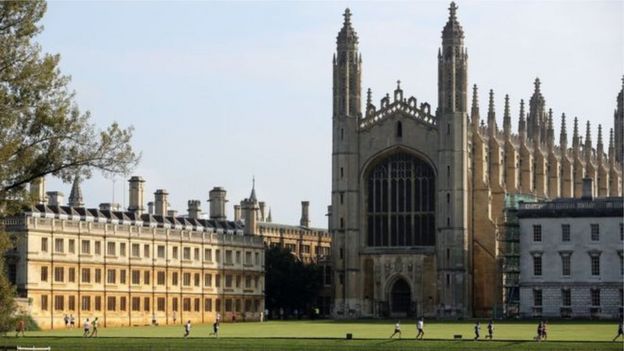
The University of Cambridge recently announced that lectures will be online only until next year. Others, like Greenwich University, will have a mix of online and face-to-face approaches while its international students can defer to the next semester.
“It feels a little unfair, especially after spending a year-and-half to get admission in one of these schools,” Mr Singh says. “Now, a part of the experience is compromised.”
Like him, many others are disappointed at the prospect of virtual classes.
Image copyright PA MEDIAImage caption Cambridge University has announced that all lectures will be online
“The main reason we apply to these universities is to be able to get the experience of studying on campus or because we want to work in these countries. We want to absorb the culture there,” Ms Barua says.
Studying abroad is also expensive. Many US and UK universities charge international students a higher fee. And then there’s the additional cost of applications or standardised tests.
Virtual classes mean they don’t have to pay for a visa, air tickets or living expenses. But many students are hesitant about spending their savings or borrowing money to pay for attending college in their living room.
Even if, months later, the situation improves to some extent, and students could travel abroad and enrol on campus, they say that brings its own challenges.
For one, Mr Singh points out, there is the steep cost of healthcare, and questions over access to it, as countries like the US are experiencing a deluge of infections and deaths.
Image copyright GETTY IMAGESImage caption Students are also unsure of finding jobs overseas after graduation
And then there are the dimming job prospects. The pandemic has squeezed the global economy, so employers are less likely to hire, or sponsor visas for foreign workers.
“For international students, the roller coaster has been more intense because there is increased uncertainty about their ability to get jobs in the US after graduation, and for some, in their ability to get to the US at all,” says Taya Carothers, who works in Northwestern University’s international student office.
The idea of returning to India with an expensive degree and the looming unemployment is scaring students – especially since for many of them, the decision to study abroad is tied to a desire to find a well-paying job there.
“The risk we take when we leave our home country and move to another country – that risk has increased manifold,” Mr Singh adds.
The current crisis – and its economic impact – has affected the decision of nearly half the Indians who wanted to study abroad, according to a recent report by the QS, a global education network.
And logistics will also pose a challenge – colleges have to enforce social distancing across campuses, including dormitories, and accommodate students from multiple time zones in virtual classes.
“Regardless of how good your technology is, you’re still going to face problems like internet issues,” says Sadiq Basha, who heads a study abroad consultancy.
He adds that there might be a knee-jerk reaction as a large number of international students consider deferring their admission to 2021. But he’s positive that “in the long term, the ambitions of Indian students are not going to go down.”
Mr Singh is still waiting to see how things will unfold in the next few months, but he’s almost certain he will enrol and start his first semester of the two-year program online.
“Since I’ve been preparing for over a year now, I think mentally I’m already there,” he says.
BEIJING (Reuters) – China said there was no need for a third party to mediate between China and India in an ongoing border dispute, when asked about U.S. President Donald Trump’s offer to mediate.
Foreign ministry spokesman Zhao Lijian made the comments a daily briefing Friday.
A train attendant poses next to a high-speed train during its trial operation along the Shangqiu-Hefei-Hangzhou High-speed Railway at Zhegao Railway Station in Chaohu City, east China’s Anhui Province, May 27, 2020. The Hefei-Huzhou section of the Shangqiu-Hefei-Hangzhou High-speed Railway entered a trial operation phase on Wednesday. (Xinhua/Liu Junxi)
BEIJING, May 28 (Xinhua) — Chinese lawmakers Thursday voted to adopt the country’s long-expected Civil Code at the third session of the 13th National People’s Congress, the top legislature.
The Civil Code will take effect on Jan. 1, 2021.
In addition to general provisions and supplementary provisions, the Civil Code, the world’s latest modern-day civil law, has six parts on real rights, contracts, personality rights, marriage and family, succession, and tort liabilities.
The personal rights, property rights and other lawful rights and interests of the parties to civil legal relations shall be protected by law and shall not be infringed upon by any organization or individual, reads the Civil Code in its opening chapter.
Lawmakers say the codification is not about formulating a new civil law but rather systematically incorporating existing civil laws and regulations, modifying and improving them to adapt to new situations while maintaining their consistency.
A major innovation of China’s Civil Code, jurists say, is embodied in the personality rights part. While some countries have related law provisions, few have a specific law book in civil code dedicated to protecting personality rights.
The personality rights part covers stipulations on a civil subject’s rights to his or her life, body, health, name, portrait, reputation and privacy, among others.
The personality rights part shows that China has reached a new height in protecting the dignity of people, said Chen Jingying, a national lawmaker and vice president of East China University of Political Science and Law.
The Civil Code is a milestone in developing the socialist legal system with Chinese characteristics, and will greatly boost the modernization of China’s system and capacity for governance, said Wang Yi, dean of the law school at Renmin University of China.
Li held a press conference to mark the end of the parliamentary session. This is the South China Morning Post’s live coverage.
Reporting by Wendy Wu, Gary Cheung, Frank Tang, Mai Jun, Sarah Zheng, Kinling Lo, Linda Lew, Coco Feng, Liu Zhen, Laura Zhou, Echo Xie, Keegan Elmer, Catherine Wong, Zhuang Pinghui, Tony Cheung
6:05PM
The End
Li’s key points
The main points from Li’s press conference:
The central government will stick to the principle of “one country, two systems”, and “Hong Kong people governing Hong Kong” with a high degree of autonomy. The NPC’s resolution for a
. But he said at the press conference that “peaceful reunification” was still Beijing’s policy and the mainland was open to further exchanges with Taiwan.
Even though the central government did not set a GDP growth target, China will implement
On the difficult and unpredictable external factors faced by China, Li said the pandemic had hit the world severely, greatly reducing exchanges between countries.
If conditions persisted, there would be more dangers to the global economy, which could undermine efforts to contain the coronavirus.
Combating the virus required an open economy to ensure the supply of goods for public health, he said.
He said China would to continue to open up and maintain the stability of the supply chain.
5:46PM
Rise in pensions
Li said that given the tough economic times, Beijing would expand coverage of subsistence allowances and unemployment benefits as well as increase pensions for the elderly.
“There can be no loopholes – if there are any gaps, then this will make people feel there is no hope for the future,” he said. “As the saying goes, the people are the foundation of a state and when the foundation is solid, the state enjoys tranquility.”
5:41PM
Ending poverty
Li said that even with the fallout from the coronavirus pandemic, the country was still determined to reach its goal of eliminating poverty by 2020.
He said there were some 5 million people living below the poverty line before the outbreak, and more may have fallen below it since then, making eliminating poverty a “daunting task”.
5:36PM
Questions
So far Li has taken nine questions, of which four were from foreign media, one was from Hong Kong and one from Taiwan.
Li said the central government must work hard to help business flourish, aiming at having 10,000 new enterprises registered each day.
The government must get rid of all unnecessary restrictions on the market, foster fair competition and create tangible wealth, he said.
He said there had been a surge in new kinds of businesses, such as online platforms, during the pandemic, and some of these businesses had seen their revenue grow by two-thirds.
5:20PM
China-US tensions
On escalations in China-US tensions and speculation about a new Cold War, Li acknowledged new challenges between the two countries, but said there was room for bilateral cooperation, including on the economy and technology.
Their relationship could be either mutually beneficial or mutually harmful, he said.
was not good for either country or the world, Li said.
Referring to a phase one trade deal reached in January, Li said the two countries should continue to follow through on the consensus reached by the leaders of both countries.
He said trade and economic cooperation should be based on market forces. There were differences in each other’s systems, and conflicts were inevitable, but the key was how to handle the problems.
We need to mutually respect each other’s core interests and search for areas for cooperation, Li said.
The US had in recent days issued a strategic policy that appeared to signal that Washington had abandoned its engagement policy towards Beijing.
He also spoke of new investment by a hi-tech US company in the central Chinese city of Wuhan, an example he said reflected the importance of business ties and cooperation between the countries.
Li had earlier sent a congratulatory letter to the company, the US conglomerate Honeywell.
5:11PM
Hong Kong and the national security law
Asked whether the NPC’s resolution for a national security law for Hong Kong
meant that Beijing had abandoned the “one country, two systems” model for Hong Kong, Li said the law was to secure the long-term stability of “one country, two systems”.
He said that “one country, two systems” and a high degree of autonomy were long an important part of Beijing’s basic state policy, and had been implemented from the start.
He said the national security law resolution was designed “for the steady implementation of one country, two systems and Hong Kong’s long-term stability and prosperity”.
5:04PM
Growth for jobs
Li said growth would be needed to support job creation, one issue of greatest public concern.
About one-third of recent comments left on the State Council’s website were on employment.
China was committed to helping businesses survive and retain jobs, he said.
University students are expected to graduate and enter the workforce in record numbers this year.
4:59PM
‘No change’ on Taiwan
Li said that Beijing’s cross-strait policy would not change, and that the mainland Chinese government was open to further exchanges with Taiwan to move forward on “peaceful reunification” with the self-ruled island.
He rejected all “Taiwanese independence forces” and external interference in Taiwan.
He said Beijing remained committed to the 1992 consensus – the political understanding that there is only “one China” but that each side has its own understanding of what this means.
Last week, Taiwanese President Tsai Ing-wen officially started her second term, after a landslide election win in January that many saw as an endorsement of her harder stand against Beijing.
Li said Beijing would continue to pay high attention to the island, adding that no Taiwanese died from the coronavirus in mainland China.
4:50PM
Jobs – not infrastructure
Li said the government’s measures to counter the coronavirus would focus on
About 70 per cent of the funds would support people’s income and boost consumption.
Smaller firms would also be targeted for support.
“The central government will live on a tight budget,” Li said.
4:44PM
‘No cover-up allowed’
Li said China had successfully controlled the coronavirus within its borders and Beijing had acted in a transparent and timely manner throughout the pandemic.
“No cover-up will ever be allowed,” he said.
Li said there were two main challenges in the pandemic: controlling the virus outbreak and reopening the economy. International cooperation was important for both.
“We may have to live with Covid-19 for some time to come,” he said.
4:36PM
Coronavirus inquiry
In response to a question about the origins of the coronavirus and calls for an
Li said that getting a clear, scientific understanding of the source of the virus could contribute to global public health.
He also referred to the World Health Assembly’s endorsement of an independent review into the World Health Organisation’s handling of the pandemic and its animal origins.
Li said the virus had no borders and much was still not known about it, adding that the international community needed to work together to keep the virus in check and create a vaccine.
Beijing and Washington have sparred over the origin of the virus, and earlier the Chinese foreign ministry condemned the US and Australia for their calls of an independent investigation into Beijing’s response to the pandemic.
The US has accused Beijing of cover-ups and a lack of transparency, while a Chinese foreign ministry spokesman suggested earlier that the US could be the origin of the virus.
Li said Beijing was open to international cooperation on research and development for a vaccine. Washington has accused China of seeking to steal its vaccine research, a charge that Beijing has strongly rejected.
Economic stability
The cabinet is determined to stabilise the economy, according to Li.
“If there are big changes, we still have policy room, including on the fiscal, financial and social security fronts,” he said.
“We are confident that under the strong leadership of [President] Xi Jinping and with joint efforts across the nation, we will be able to prevail in the difficulties and achieve the goal of building a moderately prosperous society.”
Chinese businesses still face grim economic reality despite Covid-19 restrictions being lifted
Coronavirus and the economy
Li said the Chinese economy was deeply integrated into the global economy, so China would not be immune from the impact of the coronavirus.
Economic development remained key to solving China’s problems today, Li said.
Li starts his annual press conference by saying that the restrictions imposed for Covid-19 will not affect his communication with the media.
Earlier, Li Zhanshu, chairman of the Standing Committee of the National People’s Congress, presided over a near-unanimous vote to pass a resolution on a national security law for Hong Kong that would ban separatism, subversion, foreign interference, and terrorism in the city.
The votes were 2,878 in favour, one against, six abstentions, and one who did not press the button to vote.
Critics say the move to enact a national security law will end the “one country, two systems” model in Hong Kong. The United States said on Thursday that Hong Kong was no longer autonomous from China, a decision that could end the city’s special trading status with the US.
This year all journalists are restricted to the press centre, the first time that the media have not been in the same room as the premier at his annual press conference.
Journalists waiting for the presser can watch a live broadcast of the NPC’s closing ceremony at the press centre’s lounge. But vote count is not shown at the broadcast. Photos: Jun Mai
All journalists attending the conference were tested for the coronavirus at 6am today and had to wait for the results at the Diaoyutai Hotel.



 A train attendant poses next to a high-speed train during its trial operation along the Shangqiu-Hefei-Hangzhou High-speed Railway at Zhegao Railway Station in Chaohu City, east China’s Anhui Province, May 27, 2020. The Hefei-Huzhou section of the Shangqiu-Hefei-Hangzhou High-speed Railway entered a trial operation phase on Wednesday. (Xinhua/Liu Junxi)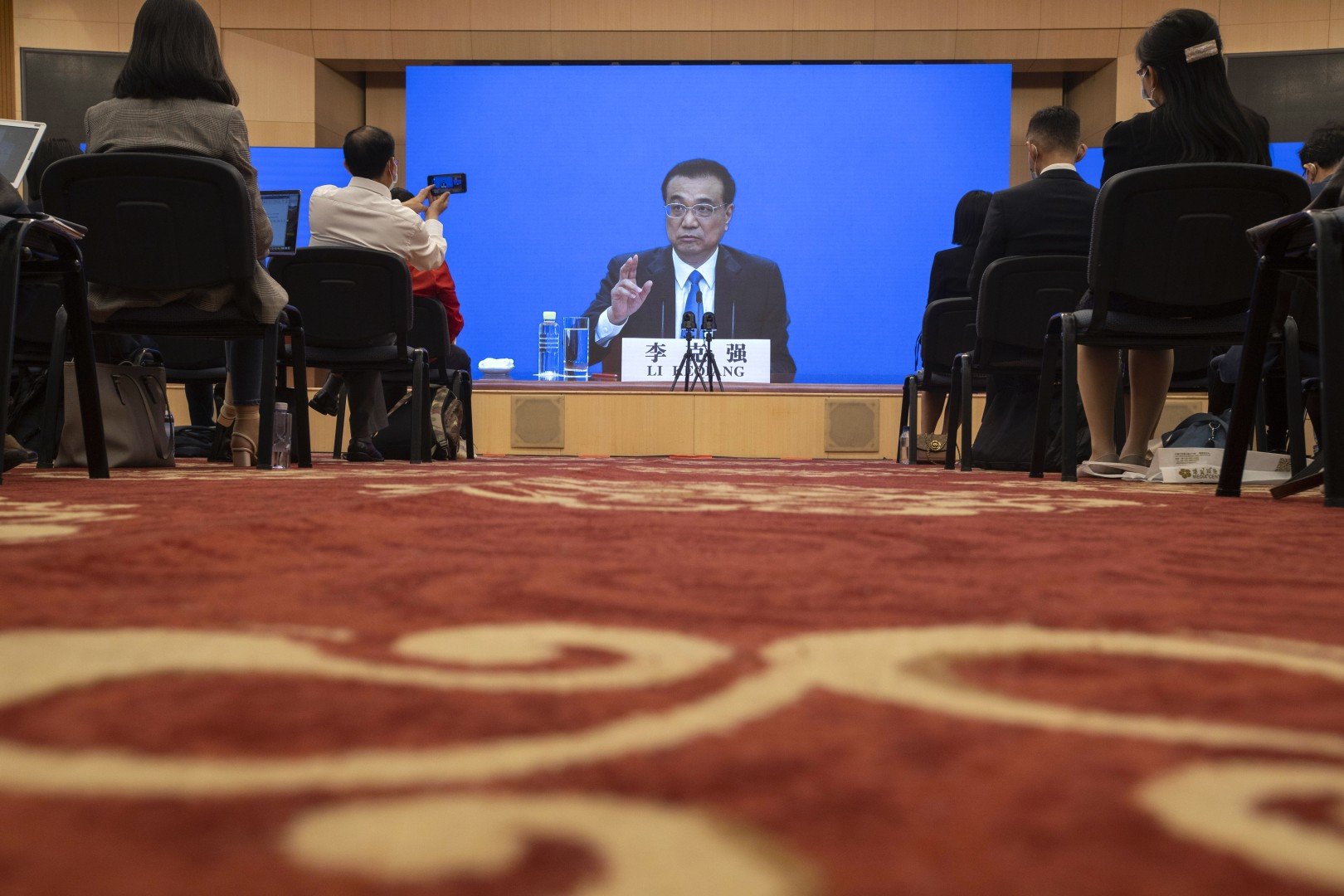


 CHINDIA ALERT: You'll be living in their world, very soon