30/09/2014

China’s Rapidly Aging Population Drives $652 Billion ‘Silver Hair’ Market – Businessweek

The increase in China’s elderly people to more than 200 million has created a host of challenges, from a shrinking labor force to soaring pension needs. But there’s a silver-haired lining.

China's Rapidly Aging Population Drives $652 Billion 'Silver Hair' Market

The market of goods and services for China’s rapidly aging population will reach 4 trillion yuan ($652 billion) this year, or eight percent of GDP, according to the “China Report on the Development of the Silver Hair Industry” issued Tuesday in Beijing.

The industry is expected to rise to 106 trillion yuan ($17 trillion) by 2050, amounting to a third of the Chinese economy. That would make it the world’s largest market for the aged. That year China will have 480 million people over 60—one quarter of the world’s elderly—says the report, which was published Sept. 23 by the China National Committee on Aging.

“The silver hair industry has started the rapid booming phase, making it a new promising industry in China,” said Wu Yushao, deputy director of the committee, reports the China Dailytoday. “The major reason for the boom is based on the growing number of aging people.”

Future opportunities to serve the elderly will be clustered in four main fields, the report explains. Those include appliances (to serve the less-mobile elderly, for example), services (such as home care and special transportation), real estate (assisted living centers), and financial services. The latter—insurance and money management for the elderly, for example—will make up the biggest portion of the market and still has lots of room to grow.

While 6.21 million people work in the U.S. financial industry and more than half focus on retirees, China has only 5.27 million, estimates Dang Junwu, deputy head of the Beijing’s Chinese Research Center on Aging. “There has been a huge gap in the financing industry for senior residents between China and the developed countries,” Dang told the English-language paper.

via China’s Rapidly Aging Population Drives $652 Billion ‘Silver Hair’ Market – Businessweek.

30/09/2014

China’s Legions of Tourists Will Spend $155 Billion Abroad This Year – Businessweek

China is preparing for roadways clogged with cars and trains overloaded with travelers during its weeklong National Day holiday starting Oct. 1. But the real action for Chinese tourists will be happening overseas.

Chinese tourists in Paris

Over the full year, 116 million Chinese tourists are expected to travel abroad and spend $155 billion, up 20 percent over 2013, projects a new report by the China Tourism Academy. That compares with less than $55 billion that will be spent by tourists inside the country, a gap of more than $100 billion. “The deficit will further increase in the future,” predicts academy head Dai Bin, who was quoted in the China Daily.

China now sends more tourists abroad than any country in the world, according to China’s National Tourism Administration. Favored destinations include Australia, South Korea, and Southeast Asian countries as well as, increasingly, Europe and the U.S. Chinese tourists abroad will exceed half a billion annually within five years, says Shao Qiwei, administration chief of the English language paper.

In the first half of this year, Chinese spent $70 billion on overseas travel, up 20.7 percent from the same period a year earlier. Chinese travelers abroad spend almost three times as much per capita as foreign tourists in China, says Fan Zhiyong, an economist at Renmin University in Beijing, the official Xinhua News Agency reported.

Along with hotel lodging fees and restaurant meals, overseas spending includes plenty of purchases of such high-priced products as Rolex watches, Prada (1913:HK) shoes, and Chanel handbags. One-third of all Chinese travel expenditures goes to buy goods, often “luxury items—to take back home,” says McKinsey & Co. in a June report. Total spending could reach $194 billion by 2015, Morgan Stanley (MS) estimated last year.

via China’s Legions of Tourists Will Spend $155 Billion Abroad This Year – Businessweek.

30/09/2014

India Plans to Clean Up for Gandhi’s Birthday – India Real Time – WSJ

On Sunday, India’s Prime Minister Narendra Modi told a crowd at Madison Square Garden that cleaning up India was his priority.

Mahatma Gandhi never compromised on cleanliness. He gave us freedom. We should give him a clean India,” said Mr. Modi.

To honor Gandhi on the anniversary of his birth on Oct. 2, Mr. Modi earlier this month announced the launch of the Swachh Bharat, or Clean India, Mission. “I myself will set out with a broom and contribute towards this pious task” on Thursday, said Mr. Modi in an official statement. Previously called the Nirmal Bharat Abhiyan, the program will be restructured into two separate programs for urban and rural India.

Sanitation is one of the most pressing challenges India faces: almost 600 million people defecate in the open in the country.

The movement aims to “create a Clean India” by 2019 to commemorate the 150th anniversary of Gandhi’s birth. It’s an ambitious initiative, but viewed as critical to sustainable development in a country that has long ignored the most basic needs of many of its people.

As Oct. 2 draws nearer, millions of people across the country are joining daily the cleanliness drives organized by government departments, nonprofits and local community centers.

But the federal government will carry out the lion’s share of the work. Here’s what it has pledged:

The urban component is expected to cost 620 billion rupees (around $10.1 billion) over 5 years, and includes plans to eliminate open defecation, convert insanitary toilets into pour-flush ones and eradicate manual scavenging.

Manual scavenging — the practice of scraping feces out of primitive dry latrines or collecting waste from fields where villagers relieve themselves — has been illegal for decades but still persists in Indian regions lacking indoor plumbing.

In urban areas, 10 million households will be provided with around half a million public and community toilets and waste management facilities.

In rural India, 1,340 billion rupees (around $21.7 billion) has been pledged to construct around 110 million toilets across the country, said India’s rural development minister in a statement.

That’s a lot of new toilets, which if built could help prevent water-borne diseases like diarrhea, which kills almost 100,000 Indian children each year.

More toilets could also make women in India safer — in June, two teenage girls were assaulted in the northern state of Uttar Pradesh when, lacking toilets, they had gone outside to relieve themselves in the privacy of the darkness.

Mr. Modi has also directed state governments to ensure that all schools have separate toilets for boys and girls by Aug. 2015, according to a government of India press release. Many girls in India quit school when they reach puberty because of a lack of functioning toilets on the premises.

via India Plans to Clean Up for Gandhi’s Birthday – India Real Time – WSJ.

30/09/2014

Centripetal and Centrifugal Forces at Work in the Nation-State | Stratfor

“Here begins our tale: The empire, long divided, must unite; long united, must divide. Thus it has ever been.” This opening adage of Romance of the Three Kingdoms, China’s classic novel of war and strategy, best captures the essential dynamism of Chinese geopolitics. At its heart is the millennia-long struggle by China’s would-be rulers to unite and govern the all-but-ungovernable geographic mass of China. It is a story of centrifugal forces and of insurmountable divisions rooted in geography and history — but also, and perhaps more fundamentally, of centripetal forces toward eventual unity.

Tibetan Settlement in India

This dynamism is not limited to China. The Scottish referendum and waves of secession movements — from Spain’s Catalonia to Turkey and Iraq’s ethnic Kurds — are working in different directions. More than half a century after World War II triggered a wave of post-colonial nationalism that changed the map of the world, buried nationalism and ethnic identity movements of various forms are challenging the modern idea of the inviolable unity of the nation-state.

Yet even as these sentiments pull on the loose threads of nations, in China, one of the most intractable issues in the struggle for unity — the status of Tibet — is poised for a possible reversal, or at least a major adjustment. The long-running but frequently unnoticed negotiations have raised the possibility that the Dalai Lama, Tibet’s spiritual leader, may be nearing a deal that would enable him to return to his Tibetan homeland. If it happens, it would end the Dalai Lama’s exile in Dharamsala, India — an exile that began after the Tibetan uprising in 1959, nine years after the People’s Republic of China annexed Tibet. More important, a settlement between Beijing and the Dalai Lama could be a major step in lessening the physical and psychological estrangement between the Chinese heartland and the Tibetan Plateau.

Read rest of article via Centripetal and Centrifugal Forces at Work in the Nation-State | Stratfor.

30/09/2014

Stand-off continues, Chinese army refuses to withdraw from Chumar


The standoff between the Indian Army and their Chinese counterparts continued on Monday at the Chumar sector in eastern Ladakh, along the Line of Actual Control. At one of the eight spots in the Chumar sector, the Indian Army made a tactical retreat in the face of a heavy Chinese presence. Despite diplomatic interventions on Monday, both sides continue to hold their tactical positions against each other. The standoff has continued primarily because of China’s unwillingness to stop its road-building exercise to the Line of Actual Control and India’s refusal to demolish structures built in the area to shelter troops.

via Scroll.in – News. Politics. Culture..

20/09/2014

China approves plan to combat climate change – China – Chinadaily.com.cn

The Chinese central government on Friday approved a plan that maps out major climate change goals to be met by 2020.

The State Council, China’s cabinet, gave a green light to the plan, which was proposed by the National Development and Reform Commission (NDRC), the country’s economic planner. A statement released on the State Council’s website urged the NDRC to carry out the plan.

China has pledged to reduce its carbon emission intensity, namely emissions per unit of GDP, by 40 percent to 45 percent by 2020 from the 2005 level. It will also aim to bring the proportion of non-fossil fuels to about 15 percent of its total primary energy consumption.

Other targets include increasing forest coverage by 40 million hectares within the next five years.

The government will speed up efforts to establish a carbon emission permit market, under the plan, which also calls for deepened international cooperation under the principles of “common but differentiated responsibilities,” equity and respective capability.

The State Council said local governments and departments at all levels should recognize the significance and urgency in dealing with climate change and give higher priority to action on this issue.

China’s release of the action plan came just before a climate summit to be held at UN Headquarters in New York on Tuesday. Chinese Vice Premier Zhang Gaoli will attend.

Xie Zhenhua, deputy chief of the NDRC and the country’s top official on climate change, told a press conference that the plan was concrete action by China to participate in the global process to tackle climate change.

By the end of last year, China had reduced carbon dioxide emissions per unit of GDP by 28.56 percent from 2005, which was equivalent to saving the world 2.5 billion tonnes of carbon dioxide emissions, Xie said.

At the end of 2013, China’s consumption ratio of non-fossil energy to primary energy stood at 9.8 percent. Forest growing stock had increased by 1.3 trillion cubic meters from 2005 to two trillion cubic meters, seven years ahead of schedule, according to the official.

In the first nine months of 2014, China’s energy consumption per unit of GDP dropped by 4.2 percent year on year and carbon intensity was cut by about 5 percent, both representing the largest drops in years, he said.

As a developing country, China is the world’s largest greenhouse gas emitter. With the plan, the country has showed its confidence in achieving its green goals.

via China approves plan to combat climate change – China – Chinadaily.com.cn.

20/09/2014

The rise and rise of Xi Jinping: Xi who must be obeyed | The Economist

THE madness unleashed by the rule of a charismatic despot, Mao Zedong, left China so traumatised that the late chairman’s successors vowed never to let a single person hold such sway again. Deng Xiaoping, who rose to power in the late 1970s, extolled the notion of “collective leadership”. Responsibilities would be shared out among leaders by the Communist Party’s general secretary; big decisions would be made by consensus. This has sometimes been ignored: Deng himself acted the despot in times of crisis. But the collective approach helped restore stability to China after Mao’s turbulent dictatorship.

Xi Jinping, China’s current leader, is now dismantling it. He has become the most powerful Chinese ruler certainly since Deng, and possibly since Mao. Whether this is good or bad for China depends on how Mr Xi uses his power. Mao pushed China to the brink of social and economic collapse, and Deng steered it on the right economic path but squandered a chance to reform it politically. If Mr Xi used his power to reform the way power works in China, he could do his country great good. So far, the signs are mixed.

It may well be that the decision to promote Mr Xi as a single personality at the expense of the group was itself a collective one. Some in China have been hankering for a strongman; a politician who would stamp out corruption, reverse growing inequalities and make the country stand tall abroad (a task Mr Xi has been taking up with relish—see article). So have many foreign businessfolk, who want a leader who would smash the monopolies of a bloated state sector and end years of dithering over economic reforms.

However the decision came about, Mr Xi has grabbed it and run with it. He has taken charge of secretive committees responsible for reforming government, overhauling the armed forces, finance and cyber-security. His campaign against corruption is the most sweeping in decades. It has snared the former second-in-command of the People’s Liberation Army and targeted the retired chief of China’s massive security apparatus—the highest-ranking official to be investigated for corruption since Mao came to power. The generals, wisely, bow to him: earlier this year state newspapers published pages of expressions of loyalty to him by military commanders.

He is the first leader to employ a big team to build his public profile. But he also has a flair for it—thanks to his stature (in a height-obsessed country he would tower over all his predecessors except Mao), his toughness and his common touch. One moment he is dumpling-eating with the masses, the next riding in a minibus instead of the presidential limousine. He is now more popular than any leader since Mao (see article).

All of this helps Mr Xi in his twofold mission. His first aim is to keep the economy growing fast enough to stave off unrest, while weaning it off an over-dependence on investment in property and infrastructure that threatens to mire it in debt. Mr Xi made a promising start last November, when he declared that market forces would play a decisive role (not even Deng had the courage to say that). There have since been encouraging moves, such as giving private companies bigger stakes in sectors that were once the exclusive preserve of state-owned enterprises, and selling shares in firms owned by local governments to private investors. Mr Xi has also started to overhaul the household-registration system, a legacy of the Mao era that makes it difficult for migrants from the countryside to settle permanently in cities. He has relaxed the one-child-per-couple policy, a Deng-era legacy that has led to widespread abuses.

via The rise and rise of Xi Jinping: Xi who must be obeyed | The Economist.

20/09/2014

Huawei: The great disrupter’s new targets | The Economist

“THE last time there were so many people down by here, the Rolling Stones were in town.” So declared one of those attending an unusual gathering this week in a vast auditorium along the shores of Shanghai’s Huangpu River. The music was blaring, the coloured lights flashing and the ceiling shimmering, but this was not another rock concert. Astonishingly, the enthusiastic throngs—10,000 squeezed into the venue and another 13,000 joined in via streaming video—had gathered for a technology conference.

The gig was organised by Huawei, a Chinese maker of telecoms equipment, which used the occasion to unveil a new business strategy. As they strode across the stage in front of a video screen nearly as wide as a football pitch, Huawei’s bosses declared their aim of making their firm the world’s leading information-technology (IT) company. In the first stage of this, Huawei plans to increase its sales of servers, storage and other data-centre equipment by a factor of ten by 2020. Last year such products brought in only about $1 billion of Huawei’s total revenues of $39 billion.

It is an audacious goal. It pits Huawei against such titans as IBM, Cisco and HP—innovative giants with deep customer relationships and comprehensive offerings that Huawei cannot yet match. Then again, a decade or so ago Huawei faced a similar challenge in telecoms equipment and has grown to become one of the world’s dominant vendors. It has also become big in smartphones. Evan Zeng of Gartner, a consulting firm, says Huawei starts with an edge in China’s fast-growing market, where state-owned firms favour domestic suppliers. That said, it has some strong local rivals, notably Lenovo and ZTE.

Bryan Wang of Forrester Research, another consulting firm, says Huawei is taking on this daunting challenge because the telecoms-equipment market has become saturated and is set to grow only sluggishly. The IT business is also crowded. But it is a far bigger market than telecoms equipment, and Huawei, since it has such a small share of it, has enormous scope for growth.

In an attempt to keep the company nimble, Huawei recently introduced a system in which three of its bosses take turns, six months at a time, at being the chief executive. Guo Ping, who is in charge at the moment, argues that the telecoms operators that are now his firm’s main customers are embracing cloud computing, so it makes sense for Huawei to make sure it can provide all the gear they need to do so.

Second, Mr Guo argues, the long-predicted convergence of the telecoms and IT businesses is finally happening. The switching of telecoms and internet traffic will no longer require so much of the costly, specialist hardware that Huawei now makes. Increasingly, the job will be done by software, which will run on cheaper, standard IT equipment—what is known as “software-defined networking”. Huawei is seeking to get ahead of this disruption of its core business by being a disrupter itself.

There are good reasons to think Huawei may be up to the challenge. As a privately-held company, “its managers don’t have quarterly pressure, and can invest for the long term,” notes Mark Gibbs of SAP, a German software firm that works closely with Huawei. Ryan Ding, Huawei’s head of product development, recalls that his firm stuck with its efforts to penetrate the markets for routers and LAN switches—two important bits of telecoms gear—despite losing money on each for more than a decade. Likewise, this year it is pumping $600m, or more than half of its entire revenues from IT products, into researching future ones.

Huawei is a proven innovator entering a bloated industry, ripe for change. Its bosses speak clearly and compellingly about what innovation is for: not to win Nobel prizes, or plaudits in the media for the “coolness” of its products, but to create value for customers. To this end, Huawei stations armies of engineers at 28 “joint innovation centres” at customers’ sites around the world. “My guys don’t just ask the customer what he wants: they go to the field site together, do the installation together, and figure out together how to increase efficiencies,” boasts Mr Ding.

The American and European giants of IT have been put on notice. Mr Wang of Forrester says Huawei has already shown it can deliver a potent combination of price, service and customisation. That is why he feels sure it will disrupt the IT business just as it did with telecoms.

via Huawei: The great disrupter’s new targets | The Economist.

20/09/2014

Modi Uses Another International Visit to Raise His Local Profile – India Real Time – WSJ

Prime Minister Narendra Modi’s meetings with Chinese President Xi Jinping this week once again showed that Mr. Modi is a master of media management.

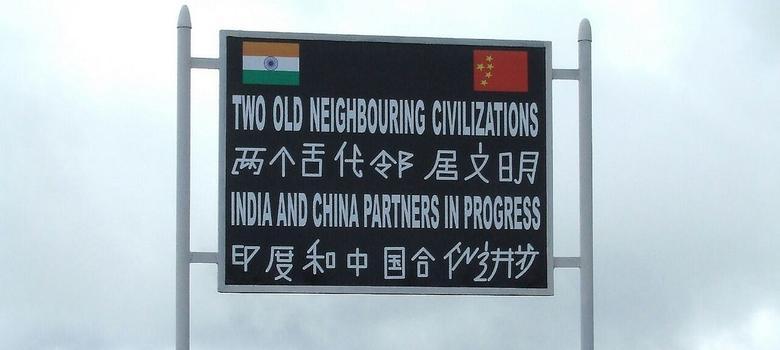
The summit of the heads of the world’s two most-populous countries produced mixed results. A lot of agreements were signed, but the $100 billion in Chinese investment pledges that some local media had predicted did not materialize. And just as the leaders were shaking hands, there was an embarrassing faceoff between Chinese and Indian troops along the countries’ disputed boundary.

That didn’t stop India’s prime minister from again using photo opportunities and body language to broadcast his confidence, an impression that is likely to remain long after local media stop discussing the border tension and whether China had promised enough money.

Indians watching the visit wouldn’t have missed some of the symbolism. Mr. Xi flew into Mr. Modi’s home state, on the Indian prime minister’s birthday. Mr. Xi wore an  Indian vest that Mr. Modi gave him. Video of the two showed Mr. Modi walking in front of Mr. Xi at one event and swinging on a swing with him. At one point it even looked like Mr. Xi was carrying an umbrella for Mr. Modi.

Reuters Xi Jinping looked like he was carrying an umbrella for Narendra Modi during a recent visit to Gujarat.

The Indian prime minister has used the same charisma in photo ops during other international summits, most recently in Japan where he gave Prime Minister Shinzo Abe a big bear hug and later performed a solo on traditional Japanese drums.

All of this has been beamed into Indian homes and marks a major change from the demeanor of the country’s previous prime minister, Manmohan Singh, who was soft- spoken and slow-moving.

Mr. Modi’s multimedia skills are one of the things that made him prime minister.  Whether it is his controversial selfies, the sight of hundreds of supporters wearing Modi masks, campaign speeches delivered through hologram, his stylish outfits or his willingness to put on almost any kind of regional headwear, Mr. Modi knows how to make an impression.

via Modi Uses Another International Visit to Raise His Local Profile – India Real Time – WSJ.

20/09/2014

To engage with China, India must stop peddling myths about the Line of Actual Control

Nehru’s hubris about his own statesmanship, coupled with a refusal to discuss the matter reasonably since 1962, has led us to the present tangle.

Political commentators have been gushing over the possibilities of strengthened economic and strategic relations between China and India, but the unresolved border dispute remains alive and can always play spoiler in the future. A border is, after all, more than a line on the map or a series of military posts on the ground; it is a reflection of how the political elite of a nation-state thinks about its security.

Chinese-controlled Aksai Chin is claimed by India as part of Jammu and Kashmir, and Indian-controlled Arunachal Pradesh is claimed by China. The only feasible solution is to accept the status quo and transform the Line of Actual Control into an international boundary. There have been several rounds of talks since the 1990s, but a resolution remains distant. Despite its parliamentary majority, Prime Minister Narendra Modi’s government will be unable to sell a permanent boundary settlement without being accused of ceding territory in Aksai Chin, though in reality it will only be giving up its claim over a territory India never controlled.

This raises a pertinent question: what precisely is the border upon which India and China cannot agree?

New neighbours

Through history, China and India have not been neighbours. The current de facto border has its genesis in a line drawn on a map by Henry McMahon during a secret treaty between Britain and Tibet in March 1914. Both entities, British India and Tibet, are no more: one has been transformed into postcolonial India and the other was occupied and colonised by communist China. Yet India and China, both of whom have overthrown the mantle of Western imperialism, are jostling over the same imperialists’ line – and have completely militarised and destroyed the traditional zone of contact that the border regions were.

The border is a legacy of a few dynamics, including the expansionist policies of the British in the Himalayan regions of India, the disappearance of the traditional Tibetan state, which had political and sacral hegemony over much of the region, and the modern nationalisms in postcolonial India and revolutionary China, which are keen on implementing a rigid notion of sovereignty in the border regions and legitimising the primacy of militarised security over the religious, cultural and human rights of the people inhabiting the region.

Stuck in the middle

The primary loser in the dispute is neither India nor China but Tibet. China has occupied most of Tibetan territory, while India has occupied the Tawang tract, which was historically part of Tibet. The Tibetan state had given up the Tawang region to British India in 1914 on the understanding that they would get friendship and assistance to protect their independence from China. When China went on to occupy Tibet in 1949-’50, India reneged on that understanding, preferring the diplomatically attractive Hindi-Chini-bhai-bhai rhetoric over a strategically sound and morally defensible Indo-Tibetan friendship.

Despite reluctantly hosting the Tibetan exile community today, India did not offer any tangible help to the Tibetans in their struggle for independence. Today, as Modi and Xi plan collaborations on various fronts, Tibetans are reminded that in this world of realpolitik, morality and human rights are subservient. Tibetans are perceived as strategic assets or liabilities in bargaining with China, not people of an occupied land for whom India should raise its voice. For India, it is the border matters, not the border inhabitants.

Myths peddled by India

The popular as well as strategic approach of many in India towards the border dispute is jaundiced by the myths the Indian state peddled about the humiliating war of 1962. After the 1962 defeat, there was no credible reflection at the policy level in India. Indians accepted as real the myths that Indian territorial claims were legitimate and sacrosanct, and that the Chinese were duplicitous and stabbed gullible India in the back. The reality could not be further from this. The first Survey of India Map in 1950 showed the boundary as undefined in Aksai Chin and as undemarcated in the north east. It was only in the summer of 1954 that Jawaharlal Nehru gave personal orders for all old maps to be withdrawn and destroyed and to remove qualifiers and show the McMahon Line in bold, as if that was the de jure boundary.

Nehru later claimed innocence, insisting that there was no boundary disagreement and that Chinese claims were surprising. Since 1959, India rejected all the diplomatic overtures of Zhou Enlai and said negotiations could only take place if China withdrew from Aksai Chin, though India would not offer anything in return. Since 1961, the Indian military followed a “forward policy” in the border regions that was not only provocative but based on the assumption that China would not retaliate.

A great unresolved mystery from the time is why the best Indian minds working in intelligence, military and diplomacy accepted this assumption without a murmur of protest. It can be explained by Nehru’s hubris in his own capacity as a statesperson, bureaucracies subservient to him, and the inability of the civilian and military elite to be independent-minded. Macho posturing was the order of the day. The Indianisation of the top brass in the military occurred only after independence in 1947, so they were inexperienced as leaders. Faced with an army that had its genesis in revolutionary wars, the Indian army, which had been servant to an imperial power, failed to perform its basic duty of protecting the country.

via Scroll.in – News. Politics. Culture..

Law of Unintended Consequences

continuously updated blog about China & India

ChiaHou's Book Reviews

continuously updated blog about China & India

What's wrong with the world; and its economy

continuously updated blog about China & India