Chindia Alert: You’ll be Living in their World Very Soon
aims to alert you to the threats and opportunities that China and India present. China and India require serious attention; case of ‘hidden dragon and crouching tiger’.
Without this attention, governments, businesses and, indeed, individuals may find themselves at a great disadvantage sooner rather than later.
The POSTs (front webpages) are mainly 'cuttings' from reliable sources, updated continuously.
The PAGEs (see Tabs, above) attempt to make the information more meaningful by putting some structure to the information we have researched and assembled since 2006.
FILE PHOTO: Huawei’s new flagship store is seen ahead of tomorrow’s official opening in Shanghai, following the coronavirus disease (COVID-19) outbreak, China June 23, 2020. REUTERS/Aly Song/File Photo
LONDON (Reuters) – BT (BT.L) CEO Philip Jansen urged the British government on Monday not to move too fast to ban China’s Huawei from the 5G network, cautioning that there could be outages and even security issues if it did.
Prime Minister Boris Johnson is due to decide this week whether to impose tougher restrictions on Huawei, after intense pressure from the United States to ban the Chinese telecoms behemoth from Western 5G networks.
Johnson in January defied President Donald Trump and granted Huawei a limited role in the 5G network, but the perception that China did not tell the whole truth over the coronavirus crisis and a row over Hong Kong has changed the mood in London.
“If you are to try not to have Huawei at all, ideally we would want seven years and we could probably do it in five,” Jansen told BBC radio.
Asked what the risks would be if telecoms operators were told to do it in less than five years, Jansen said: “We need to make sure that any change of direction does not lead to more risk in the short term.”
“If we get to a situation where things need to go very, very fast, then you are into a situation where potentially service for 24 million BT Group mobile customers is put into question – outages,” he said.
In what some have compared to the Cold War antagonism with the Soviet Union, the United States is worried that 5G dominance is a milestone towards Chinese technological supremacy that could define the geopolitics of the 21st century.
The United States says Huawei is an agent of the Chinese Communist State and cannot be trusted.
Huawei, the world’s biggest producer of telecoms equipment, has said the United States wants to frustrate its growth because no U.S. company could offer the same range of technology at a competitive price.
NEW DELHI (Reuters) – India’s government has petitioned a state court to stop any of the Chinese companies whose 59 apps it recently banned from obtaining an injunction to block the order, according to two sources and the legal filing.
FILE PHOTO: Smartphone with Chinese applications is seen in front of a displayed Indian flag and a “Banned app” sign in this illustration picture taken July 2, 2020. REUTERS/Dado Ruvic/Illustration/File Photo
India last month outlawed dozens of Chinese apps including ByteDance’s popular video-sharing app TikTok, Alibaba’s (BABA.N) UC Browser and Tencent’s (0700.HK) messaging app WeChat, saying they posed a “threat to sovereignty and integrity”.
Chinese firms have faced hostility since a border clash that killed 20 Indian soldiers, with Delhi intensifying scrutiny of Chinese imports and any funding from China.
Two sources with direct knowledge of the filing said the government had presented a so-called caveat in the High Court of the western state of Rajasthan, suggesting it expects one or more of the companies to challenge the Ministry of Electronics and Information Technology’s ban.
Such caveats are typically filed to prevent a ruling in favour of companies without hearing the government, Indian lawyers said. The filing, which one of the sources said was presented on Friday, has not previously been reported.
“Let nothing be done till the applicants (government) are heard in the matter,” said the court filing signed by Additional Solicitor General of India Rajdeepak Rastogi.
GUARDING CYBER SPACE
The order to ban the apps was passed to safeguard “the interests of Indian mobile and Internet users and ensure safety and sovereignty of Indian Cyber Space,” said the filing, which was seen by Reuters.
It was not immediately clear why the government approached the court in Rajasthan and whether there were plans to file similar petitions elsewhere.
India’s IT ministry and the Chinese Embassy in New Delhi did not immediately respond to requests for comment.
Indian courts do not comment on cases.
Previously, China has expressed strong concern about the ban, which could hurt expansion plans and cost jobs, and said it may violate World Trade Organization (WTO) rules.
None of the Chinese companies has yet mounted a legal challenge, with industry sources saying they were waiting for further clarity from the Indian government.
India’s IT ministry recently asked the companies associated with the 59 apps to answer a detailed questionnaire within three weeks on their business structure and data storage practices, the industry sources told Reuters.
The decision to ban the apps has jolted companies like ByteDance, which counted on India as an important growth market for TikTok and had plans to invest $1 billion in the country.
Forensic team work near a toppled vehicle which was carrying Vikas Dubey, accused of killing eight policemen, in Kanpur, Uttar Pradesh, India July 10, 2020, in this picture grab taken from a video. ANI/Reuters TV via REUTERS
LUCKNOW, India (Reuters) – Indian police shot dead on Friday a man who had been accused of ordering the killing of eight policemen when he tried to flee from officers who had taken him into custody after he surrendered, officials said.
Vikas Dubey, who was on the run for over a week after he allegedly ordered the eight policemen killed, was shot dead in northern state of Uttar Pradesh (UP) after an accident as he was being taken to detention.
“We were bringing Dubey to the prison when a car he was in overturned … we had to shoot him because he stole a policeman’s gun and tried to flee,” said a senior police official in the state capital of Lucknow.
Dubey had been accused in 60 criminal cases, of various offences including attempted murder, and talk of his links with police and politicians has been dominating headlines ever since the shootout last week in which the eight police were killed and seven wounded.
Two of Dubey’s aides were killed in last week’s violence and a police officer posted near Dubey’s village was arrested over allegations that he helped him flee.
With a population of more than 200 million, UP is India’s most populous state. It has long been plagued crime and corruption.
Not a single person has been fined by police in England and Wales for breaching quarantine rules after arriving from abroad, according to new figures.
Just 10 tickets were handed out to passengers for not wearing face coverings on public transport, according to the data released by the National Police Chiefs’ Council on Friday.
The figures do not include fines given by Border Force, who have issued three penalties.
Two British nationals were fined at Coquelles, near Calais, in northern France, on June 28, while a European was issued a penalty in Hull the following day.FacebookTwitterAdvertisementhttps://tpc.googlesyndication.com/safeframe/1-0-37/html/container.html
A trial is underway to use UV light to clean the handrails on escalators on London’s Tube network and is being assessed by Transport for London (TfL) with a view to rolling it out widely.
The device is connected to the escalator handrail and uses its motion to power a UV bulb that breaks down surface contamination to sanitise the handrail.
Andy Byford, London’s new Transport Commissioner, said: “A huge range of measures are in place across the transport network to ensure it is cleaner than ever, including the use of new hospital-grade substances, 1,000 hand sanitiser points, and a new trial of UV technology to sanitise hand rails.”FacebookTwitter
Today is the last day to register for free meals during the summer break and access the Covid-19 Summer Food Fund, which will allow schools to order free school meals vouchers for eligible children to cover the summer holidays.
Boris Johnson was forced last month into a humbling U-turn over providing the food vouchers for some of England’s poorest families after a campaign launched by footballer Marcus Rashford threatened to engulf his government in another crisis.
Deaths of 16 homeless people with Covid-19 may be underestimate – ONS
The deaths of 16 homeless people involving coronavirus were registered in England between March 26 and June 26, according to the Office for National Statistics.
But it stressed that the figure may be an underestimate of the true number of homeless people who have died with the virus.
It defined people as homeless who were sleeping rough, using homeless shelters and direct access hostels, or housed in emergency accommodation due to the pandemic at or around the time of death.
The 16 death certificates, mainly for homeless men, mentioned Covid-19 either as an underlying cause or a contributory factor.
Relatives of dementia patients should be key workers, say charities
Helen Pidd
Relatives of dementia patients should be treated as key workers so they can visit their family members and be tested for coronavirus where necessary, leading charities have told the government.
The heads of organisations including Dementia UK and the Alzheimer’s Society have signed a letter to the health and social care secretary, Matt Hancock, calling for visits to resume safely and for relatives to be given the same “key worker” access to care homes and coronavirus testing as staff, the BBC reported.
The letter reportedly argues the care given by family members is essential to the overall wellbeing of dementia patients, and that the social distancing restrictions have contributed to a “hidden catastrophe” in care homes, which have been closed to non-essential visitors since March.
Hancock said on Thursday that the government would be setting out details “in the next few days” of how Covid-secure care home visits could resume.
Alzheimer’s Society(@alzheimerssoc)
Today, dementia charities across the country are uniting with a single, urgent message in #OneDementiaVoice.
Peri-peri chicken chain Nando’s has today become one of the first major UK restaurant groups to confirm that it signing up to the Government’s ‘Eat in to help out’ scheme anounced by chancellor Rishi Sunak in his summer statement on Wednesday.
Diners will get a 50% discount off their restaurant bill – up to £10 per head – during August under Government plans to bolster the embattled hospitality sector. The deal will only apply from Monday to Wednesday and restaurants and pub chains must sign up to the scheme via a government website being launched next week. It is open to restaurant and pub chains as well as independent businesses.
A Nando’s spokesperson said: “We will be taking part in the ‘Eat in to help out’ campaign so our fans can look forward to great savings on their Peri-peri soon. We’re just working through the details and will have more to announce shortly.”
To get the best value for money, customers are likely to be drawn to “value” restaurants – and ordering meals costing no more than £20 a head. Children’s meals are covered, but not alcoholic drinks. Most restaurants reopening to diners after the lockdown are generally offering reduced menus.
Nando’s Chicken table marker with a menu Photograph: Stephen Barnes/Food and Drink/Alamy Stock Photo
The Gym Group, one of Britain’s largest operators of low-cost gyms, has set out plans to reopen almost all of its establishments in England from 25 July, with Covid-19 measures including apps for customers to check if gyms are busy.
Initially, 160 of its 179 branches will open on the first date permitted under government guidelines issued on Thursday, with the remainder – in Leicester, Scotland and Wales – to follow when restrictions are relaxed.
There will be a trial of 24-hour opening in a small number of establishments at first while new operating procedures are tried out, including spacing out equipment, limiting users at any one time, temperature checks on staff, improved ventilation and sanitation, and cleaning kit after each use.
The group will also encourage people to use gyms and leisure facilities at quieter periods by providing members with a live “gym busyness” online tracker and recent usage patterns.
The Gym Group has lost more than 20% of its membership during the four months of lockdown, despite freezing all payments, and has just under 700,000 remaining customers, with an average age of 32. It said it would give options for all members to continue to freeze payments if necessary.
An ‘Out Of Use’ marker on an exercise machine inside the Gym Group in Vauxhall, London, after it was announced that gyms will be allowed to reopen from 25 July. Photograph: Kirsty O’Connor/PA
There’s been unease in some quarters today at reports that the UK government has rejected the chance to join the European Union’s coronavirus vaccine programme due to concerns over “costly delays.”
The EU is planning to spend around €2bn (£1.8bn) on the advance purchase of vaccines that are undergoing testing on behalf of the 27 member states.
More accurate and correct to say that the UK has chosen not to ask to join the EU vaccine programme. You don’t get to opt out when you’re not in by default. pic.twitter.com/xzSD5yA1zqJuly 10, 2020
A government minister has been reacting to fury from the beauty sector at government guidance that allows salons to open but which still prohibits facial treatments such as eyebrow threading and tinting.
Some detect double standards in the form of rules which allow for beard trimming to take place.
Caroline Dinenage, a minister at the Department for Digital, Culture, Media and Sport, insisted the guidance on beard trimming was “actually quite tight” and said the scientific advice for now unfortunately meant that the restrictions on facial treatments had to remain.
Dizziana Gosney(@dizziana)
@10DowningStreet why is it possible that men can get their beards pampered in salons but the beauty therapy industry – a £7 billion industry!!! – can not offer facial treatments for women?!!! If this isn’t modern day sexism and misogyny I DON’T KNOW WHAT IS. #beautysalonsJuly 10, 2020
The minister added: “Of course I want these services to be opened as quickly as anybody – I haven’t had my eyebrows done in months.”
“I totally understand the challenges and the frustrations, but we just have to err on the side of caution and keep people safe.”
Dinenage was also pressed on BBC Radio 4’s Today programme on what some view as an apparent reluctance on the part of some senior government figures, including the prime minister, to be photographed or filmed wearing face masks.
Dinenage said told the BBC’s Mishal Hussein she would “have to ask them”, while insisting ministers had been photographed and filmed wearing masks. She was not able to name others when asked.
The exchange came after the chancellor, Rishi Sunak, faced criticism for not wearing a mask while taking part in a publicity stunt at a branch of Wagamama following the unveiling of an economic package this week.
Northern Ireland is moving ahead of the rest of the UK today by allowing the reopening of gyms 15 days ahead of England. No dates have been set for Scotland or Wales.
The Scottish government will scrap free university tuition for EU students next year – one of its key pledges after the 2016 referendum – as institutions continue to cope with a financial burden from the pandemic
Higher education minister Richard Lochhead said ministers had taken the decision with a “heavy heart”, blaming the “stark reality” of Brexit for the decision.
Referring to the financial stresses brought about by the impact of Covid-19, he said the money saved – which he estimated to be up to £19m for 2021-22 – will be kept within the higher education sector and the number of university places for Scottish students will rise as a result.
Students from EU countries have been eligible for free tuition since fees were scrapped, as is still the case for Scottish students.
Lochhead said: “That is the stark reality of Brexit and a painful reminder that our country’s decisions are affected by UK policies that we do not support and did not vote for. Our internationalism remains a key strength of higher education in Scotland.
“EU students who have already started their studies, or who start this autumn, will not be affected and will still be tuition-free for the entirety of their course.”
Theatres and music venues in England will be able to host physically distanced outdoor performances from Saturday 11 July under new government guidance, but industry figures are calling for more clarity on when full-capacity indoor performances can return.
The culture secretary, Oliver Dowden, announced the relaxing of restrictions at Thursday’s 5pm press conference where he said performances can now take place as long as they are “outside and with a limited and socially distanced audience”.
“As I’ve seen for myself at the Royal Academy this morning, the National Gallery and as we’ll see shortly from the National Museums Liverpool, our cultural institutions are beginning to welcome back visitors,” he said.
“I’m really urging people to get out there and to play their part, buy the tickets for outdoor plays and music recitals, get to your local gallery and support your local businesses.”
The Royal Academy reopens its London spaces to its ‘Friends’ initially with an opening to the public due to follow. Photograph: Guy Bell/REX/Shutterstock
British government follows Scotland on quarantine for travellers from Serbia
The British government is removing Serbia from its list of countries from which people can return to or visit England without going into quarantine, bringing England into line with Scotland.
A spokesman said: “The Joint Biosecurity Centre together with Public Health England have updated their coronavirus assessments of Serbia based on the latest data.
“As a result, the government has decided to remove Serbia from the list of countries from which passengers arriving in England are exempted from the need to self-isolate.
“We’ve always been clear that we would act immediately to remove a country where necessary. Both our list of exemptions and the FCO travel advice are being updated to reflect these latest risk assessments.”
I’m going to seek some clarity in relation to the position in Wales.
Update: A spokesperson for the Welsh Government tells me that Wales is aligning with England on this.
The Guardian has the warning from the World Health Organization (WHO) that the virus is accelerating, while the Mirror focuses on the economic carnage wrought in the UK
More than nine in 10 commuters are complying with rules requiring face coverings on public transport, a Guardian snapshot has found – though conspiracy theories, confusion over public messaging and concerns over lack of enforcement are prompting concern.
In Glasgow on Wednesday, compliance with the measure to control coronavirus was almost 100% on buses, overground trains and the subway. The Guardian saw only one passenger with a bare face out of a total of 160.
In Manchester, 91% of 184 passengers surveyed on trams and buses were wearing face coverings. Around 99% of 225 passengers observed on London underground and at overground stations were wearing face coverings – including two moving from carriage to carriage on the tube with a paper cup, begging for small change.
A woman on a London bus wearing a face mask. Photograph: Dave Rushen/SOPA Images/REX/Shutterstock
Good morning and welcome to the Guardian’s live coverage of coronavirus developments in the UK.
It’s a big day for the travel and hospitality sector – as well as would-be holidaymakers – with quarantine rules for people entering Britain from countries deemed “safe” being relaxed today, though the Scottish government is retaining a 14-day quarantine restriction for travellers from Spain.
In Scotland, the wearing of masks becomes mandatory today.
At around midday, Boris Johnson will take questions from the public as he hosts another edition of his so-called “People’s PMQs”, answering pre-selected questions about the government’s handling of the pandemic and other issues.
All of the above takes place against a bleak economic background, with many today digesting the latest job losses announced yesterday at Boots and John Lewis, who have plans to cut 5,300 jobs and close stores.
I’m Ben Quinn: you can tweet me at @BenQuinn75 or email ben.quinn@theguardian.com if you’d like to flag up developments that we should be picking up on.
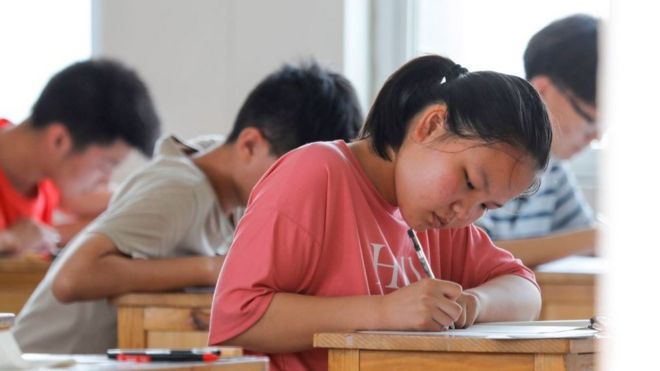
Image caption Millions have now sat for the most important exam of their lives
This week around 10 million students across China have sat the Gaokao – a college entrance exam which determines their entire future.
Hanging over their heads, though, is the recent revelation that hundreds of other students before them were victim to an identity theft scandal which saw them robbed of their results.
For Chen Chunxiu, it was an exam that could change everything. Doing well in the Gaokao meant the farmer’s daughter had a shot of getting into her dream university. Failing meant it would remain just that – a dream.
She failed.
Denied admission to college, she took up various jobs – a factory worker, a waitress – before eventually becoming a kindergarten teacher.
But 16 years later, she found to her shock that she had, in fact, earned a place at the Shandong University of Technology – and enrolled there.
But it hadn’t been her. Her score – and in fact, her entire identity – was stolen by a girl whose relatives had pulled strings to make this happen.
Her case is just one of 242 student identity thefts that took place in Shandong province between 2002 and 2009, according to recent media reports.
A shocking tale of systemic cheating
The notoriously hard Gaokao – or “high school exam” – tests school leavers on their Chinese, maths, English and another subject of their choice.
It has been the focal point of the education system since the 1950s, with a break during the Cultural Revolution.
But it’s not just an exam. For millions – especially those in less privileged positions – it’s the ticket to success and upward mobility.
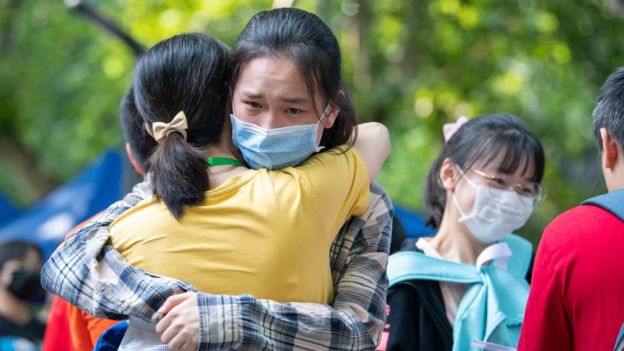
Image caption Failing the Gaokao is seen as bringing shame upon the family
The family of Ms Chen, whose story has been widely covered in China in recent weeks, had high hopes.
Because they lived in poverty and could only afford to fund one child’s education, they made her less academically-inclined older brother drop out of school to make way for her. This was rare in rural China, where typically the education of boys has been prioritised over that of girls.
It was with this hope that Ms Chen took the Gaokao in 2004. Back then, university students in China did not receive rejection letters – if you didn’t receive an acceptance letter, the assumption was simply that you didn’t get in.
So after waiting until September – when the university term usually begins – Ms Chen accepted that no letter was coming and decided to head to work in the city.
Then in May this year, she decided to enrol herself into a course for adults. Entering her details in an official government website, Ms Chen found that it listed her as having enrolled and entered university in 2004 and graduated in 2007.
But the picture shown wasn’t her. Slowly but surely, the truth started to emerge – revealing the shocking extent of cheating that had taken place.
According to state news outlet Xinhua, the imposter’s uncle – who was a local official – is accused of getting help from a local admissions director, who was able to access Ms Chen’s exam information.
Ms Chen had scored 546 out of 750, compared to her imposter, who had scored 303.
The imposter’s father then allegedly intercepted Ms Chen’s admissions letter at the county post office before it was posted. With help from Ms Chen’s high school principal, say reports, they faked an entirely new high school transcript bearing the imposter’s details.
The imposter’s relatives also worked with a police director and staff from the Shandong University of Technology to ensure the enrolment went through and that a blind eye was turned, it is alleged. Ms Chen – a relatively poor farmer’s daughter – did not stand a chance.
The imposter – whose real name is Chen Yanping – then assumed the identity of Ms Chen.
Until today, the imposter’s colleagues still know her as Chen Chunxiu, say media reports. Her degree has since been revoked and she has been sacked from her job. A government report says she is still under investigation.
“I want to ask her in person why she stole my identity,” the real Ms Chen told China’s CCTV in an interview. “You replaced me – what did you expect to happen to me? Are you so selfish?”
Her story has been met with widespread anger: many have questioned the point of working so hard for years for an exam that on the surface, promised equal opportunities for all.
“[Some people] have no idea how important the Gaokao is for those not so well off. Parents work so hard to support their kids… but their way is blocked by those with power,” said one person on Weibo.
‘What can a farmer do?’
According to Chu Zhaohui, a researcher at China’s National Institute of Education Sciences, Gaokao fraud can be divided into two sorts – the kind where where the victim has no idea and the other, where both parties mutually consent to it, perhaps for a fee.
The first category he says, typically involves oversight from more than just one party.
“Enrolment generally involves many parties – schools, examination institutes, enrolment offices, and household management department. So, if there’re loopholes in so many links, it can only show that it is… collaborative cheating”, Mr Chu told BBC Chinese.
In such cases victims are usually in “low social positions” and hence have little way of fighting back, even if they do eventually find out, he adds, as was the case for Ms Chen’s father.
“What can a farmer do?” he asked Chinese media. “If I was powerful, they wouldn’t have dared [do this to her].”
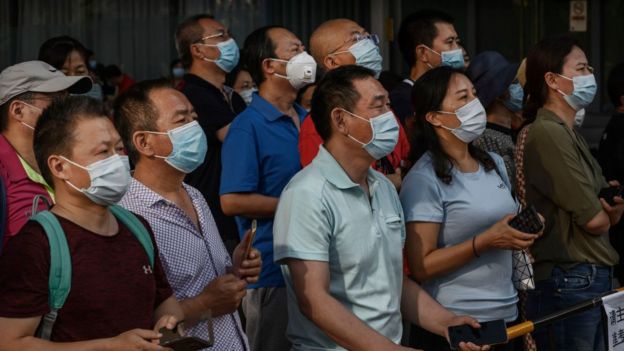
Image caption Parents wait nervously outside exam sites as their children take the Gaokao
At China’s parliament meeting last month, there were calls for college admission identity theft to be criminalised. One delegate said it was “much more harmful than [monetary] theft”.
Officials in Shandong say new processes are now in place to make sure such incidents will not happen again.
Students will need to submit their offer letter, identity card, residential certificate and an exam attendance certificate before their admission can be confirmed. University acceptance results will also be published online and sent via text message.
And Prof Cheng Fangping, at Renmin University, told BBC Chinese that as student documents were now largely online it was harder for them to be doctored.
The Ministry of Education has also announced that any students found to be involved in identity theft will not be allowed to enrol in university.
Image caption The incident has now been brought up to China’s top legislative body
Local authorities have launched an investigation into Chen Chunxiu’s case and 46 people have been punished.
Ms Chen is now trying to claim back what should have been her life, and she appealed to be re-admitted to the Shandong university.
After her initial rejection was met with public uproar, the university later said it would “actively strive” to help Ms Chen “realise her wishes”.
(Reuters) – Global coronavirus cases exceeded 12 million on Wednesday, according to a Reuters tally, as evidence mounts of the airborne spread of the disease that has killed more than half a million people in seven months.
FILE PHOTO: Relatives pray before the cremation of a woman, who died due to the coronavirus disease (COVID-19) at a crematorium in New Delhi, India, July 8, 2020. REUTERS/Danish Siddiqui/File Photo
The number of cases is triple that of severe influenza illnesses recorded annually, according to the World Health Organization.
Many hard-hit countries are easing lockdowns put in place to slow the spread of the novel virus, while others, such as China and Australia, implement another round of shutdowns in response to a resurgence in infections. Experts say alterations to work and social life could last until a vaccine is available.
The first case was reported in China in early January and it took 149 days to hit 6 million cases. It has taken less than a third of that time – just 39 days – to double to 12 million cases, the tally shows.
There have been more than 546,000 deaths linked to the virus so far, within the same range as the number of yearly influenza deaths reported worldwide. The first death was reported on Jan. 10 in Wuhan, China before infections and fatalities surged in Europe and then later in the United States.
The United States reported a daily global record of 56,818 new COVID-19 infections on July 3 when global cases reached the 11 million mark. The United States recorded a total of 3 million cases on Tuesday, and accounts for more than a quarter of both global cases and global fatalities putting President Donald Trump’s pandemic strategy under scrutiny.
Brazilian President Jair Bolsonaro tested positive for coronavirus after downplaying the seriousness of the pandemic. The country has reported between 20,000 and 50,000 new cases daily since July 1. Brazil has more than 1.7 million cases and nearly 68,000 deaths.
The Reuters tally, which is based on government reports, shows the disease is spreading the fastest in Latin America. The Americas account for more than half the world’s infections and almost half its deaths. Brazil and the United States account for around 45% of all new cases since the beginning of July.
India – the country with the third highest number of infections – is battling an outbreak of more than 20,000 new cases each day.
In countries with limited testing capacity, case numbers reflect only a proportion of total infections. Experts caution that official data likely underrepresents both cases and deaths.
Image caption Heavy security was in place of the opening, including a bomb disposal unit
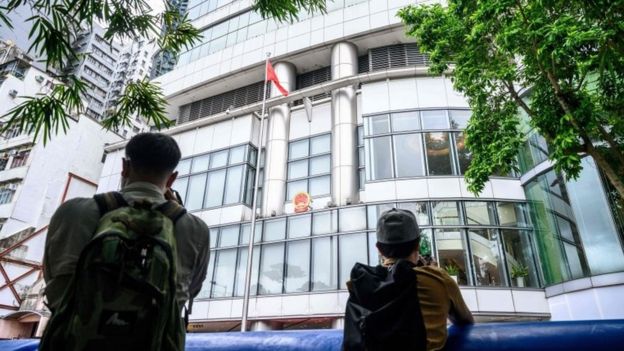
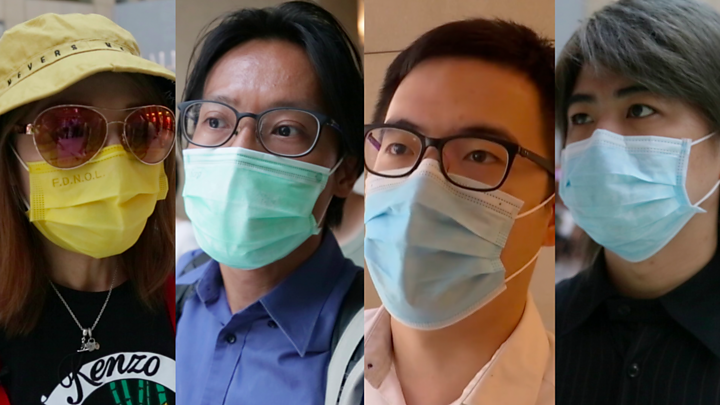
A new national security office has been officially opened in Hong Kong, placing mainland Chinese agents in the heart of the territory for the first time.
The office is one element of a sweeping new law which outlaws criticism of China’s government.
Hong Kong was, until the law was passed, the only part of China not subject to such policies.
The law has caused alarm in Hong Kong but officials say it will restore stability after violent protests.
Chief Executive Carrie Lam said on Tuesday that it was “actually relatively mild as far as national security laws are concerned” and would enable Hong Kongers to “exercise their rights and freedoms without being intimidated and attacked”.
Image caption The Chinese flag was raised outside the office in Causeway Bay
The temporary base of the new office is a hotel in Causeway Bay, the commercial district next to Victoria Park, which had long been the focal point of pro-democracy protest marches and rallies in Hong Kong.
The Chinese flag was raised outside the office, amid heavy security including a bomb disposal unit.
Luo Huining, head of the existing Hong Kong-Beijing liaison office, said the office would be “the envoy for Hong Kong’s safety and is also the gatekeeper of national security”.
Media caption Many Hong Kong residents are worried the new security law means the ‘one country, two systems’ principle no longer exists
Security agents from the mainland who are based in the new office will, for the first time, have the power to investigate people for a wide range of crimes defined by the new law, and potentially extradite them to the mainland for trial.
Chinese courts, which are controlled by the Communist Party, have a close to 100% conviction rate.
It has been heavily criticised globally for undermining freedoms guaranteed under the “one country, two systems” agreed as part of the handover, which gave the territory a lot of control over how it ran itself.
Several social media companies have said they will stop co-operating with the Hong Kong police on requests for user data over concerns about how it will be used, while TikTok has said it is pulling out of Hong Kong entirely.
The project is located in Sadhanoti district of PoK on Jhelum river and is expected to be completed in 2026.
PTI | New Delhi | July 7, 2020 2:47 pm
Pakistan Prime Minister Imran Khan (File Photo: IANS)
A Chinese company on Monday signed a USD 1.5 billion agreement with Pakistan to set up a hydropower project in Pakistan-occupied Kashmir (PoK) under the ambitious CPEC project. Pakistan Prime Minister Imran Khan witnessed the signing of the agreement with China Gezhouba for “Azad Pattan Hydropower Project” at a ceremony here.
The project is located in Sadhanoti district of PoK on Jhelum river and is expected to be completed in 2026.
The CPEC, which connects Gwadar Port in Balochistan with China’s Xinjiang province, is the flagship project of Chinese President Xi Jinping’s ambitious Belt and Road Initiative (BRI). Originally valued at USD 46 billion, the CPEC projects were worth USD 62 billion as of 2017.
Uttarakhand forest officials came across the jumbo while identifying elephants that need to be radio-collared ahead of Maha Kumbh 2021
INDIA Updated: Jul 06, 2020 16:12 IST
Suparna Roy | Edited by Ashutosh Tripathi Hindustan Times, Dehradun
The researchers are trying to find out where the elephants spend time during the day so that a plan on tranquilising and radio-collaring them can be formulated. The elephants usually come out at night, when radio-collaring the animal is difficult. (HT photo)
The Uttarakhand forest department and researchers from Wildlife Institute of India (WII) have come across a ‘giant’ elephant near Haridwar in Rajaji landscape recently which they say is so huge they can’t radio collar it. They said it is one of the biggest elephants they have come across in the Himalayan state, where the elephant population has crossed the 2000 mark, according to the elephant census released a few days back.
Bivash Pandav, a senior scientist from WII, who is heading the identification and selection process, confirmed that this was one of the largest animals found in the particular landscape.
“This elephant is likely to be one of the largest animals in the area around Haridwar forest division, where it primarily roams around and goes up to Uttar Pradesh. We have also seen it in the eastern part of Rajaji Tiger Reserve occasionally. It moves in the human-dominated area, except crop-raiding it has not attacked anyone,” said Pandav.
He added that this adult male elephant, approximately around 50 years of age, “roams around solitary and does not stay with the herd.”The ‘giant’ elephant spotted near Tedhipuliya region near Haridwar. (HT Photos)
The forest officials came across the jumbo while identifying elephants that need to be radio-collared ahead of Maha Kumbh 2021. The elephant is a suspected ‘problem elephant’ which ventures alone in the forests.
“There are many bulls (male elephants) roaming in the area and he is one of them. It would be difficult to radio-collar this elephant given its size as it is one of the largest elephants we have come across. We are still identifying problematic elephants which venture into human habitations that will be radio-collared for monitoring to ensure they don’t come into conflict with pilgrims during Maha Kumbh 2021. We have roughly identified around nine bulls who frequently use that area (where Maha Kumbh will take place),” added Pandav.
The researchers are trying to find out where the elephants spend time during the day so that a plan on tranquilising and radio-collaring them can be formulated. The elephants usually come out at night, when radio-collaring the animal is difficult.
Dr Aditi Sharma, senior veterinarian of the Rajaji Tiger Reserve, said, “This elephant is most likely a full-grown nine feet animal. Usually, dominant male elephants found in this region grow eight feet, but this particular elephant is most likely around nine feet given its physical features.”
Uttarakhand forest department authorities with the WII are working on radio-collaring some of the elephants prone to straying into human habitations in a bid to prevent attacks on pilgrims, who are expected to congregate in Haridwar for the next year’s Mahakumbh.
The state government is waiting for approval from the Central government before putting into motion the radio collar exercise. State forest department officials said elephants usually venture into areas, where tents are set up for the Mahakumbh pilgrims.
Tedhipuliya and Shyampur regions, near Haridwar, are found to be some of the areas most prone to man-elephant conflict, forest officials said.
“Those elephants, which stray into human habitations, will be radio-collared. We’ll get a sense of their movement pattern after they’re radio-collared and work out a mechanism to prevent man-animal conflicts,” Sharma said.
The forest officials had started their preparations since last November, when man-animal conflict hotspots were identified and geo-tagged.
The idyllic Southeast Asian island will gradually reopen this month for domestic tourists, while maintaining a “strict health protocol” to prevent the spread of the virus that causes Covid-19.
TRAVEL Updated: Jul 05, 2020 18:45 IST
Reuters | Posted by Saumya Sharma Karangasem, Indonesia
Bali conducted mass prayers on Sunday as the Indonesian resort island prepares to reopen to tourists shut out due to the Covid-19 pandemic. (Representational Image)(Unsplash)
Bali conducted mass prayers on Sunday as the Indonesian resort island prepares to reopen to tourists shut out due to the Covid-19 pandemic.
More than a thousand people attended a prayer at Besakih Hindu temple in the town of Karangasem, expressing gratitude for the handling of the new coronavirus on the island and seeking blessings for the start of a “new normal”.
Bali has reported 1,849 coronavirus infections and 20 deaths so far, while Indonesia as a whole has recorded 63,749 cases and 3,171 deaths since early March.
The idyllic Southeast Asian island will gradually reopen this month for domestic tourists, while maintaining a “strict health protocol” to prevent the spread of the virus that causes Covid-19, Bali provincial secretary Dewa Made Indra told reporters.
The local government expects to reopen Bali to foreign arrivals in September.
Tourism is Bali’s main source of income. Travel restrictions due to the pandemic have hammered the local economy.
The occupancy rate at Bali’s starred hotels plunged to 2.07% in May, according to Bali statistics bureau data, from 62.55% in December before the pandemic hit and down from 51.56% in May 2019. “What I hope is the best for Bali and … all the tourists will come to Bali and everybody will be happy and healthy again,” Robin Tesselar, a Dutch citizen staying in Bali, told Reuters after attending the Besakih prayers.
Tourism-related businesses are preparing to for the reopening by implementing the health protocols, aiming to improve them until Bali reopens for international tourists, said hospitality executive Yoga Iswara.
15-year-old girl encouraged by her marks, now aims higher and wants to a pursue a career in civil services.
SNS Web | New Delhi | July 5, 2020 4:05 pm
Representational Image (Photo: iStock)
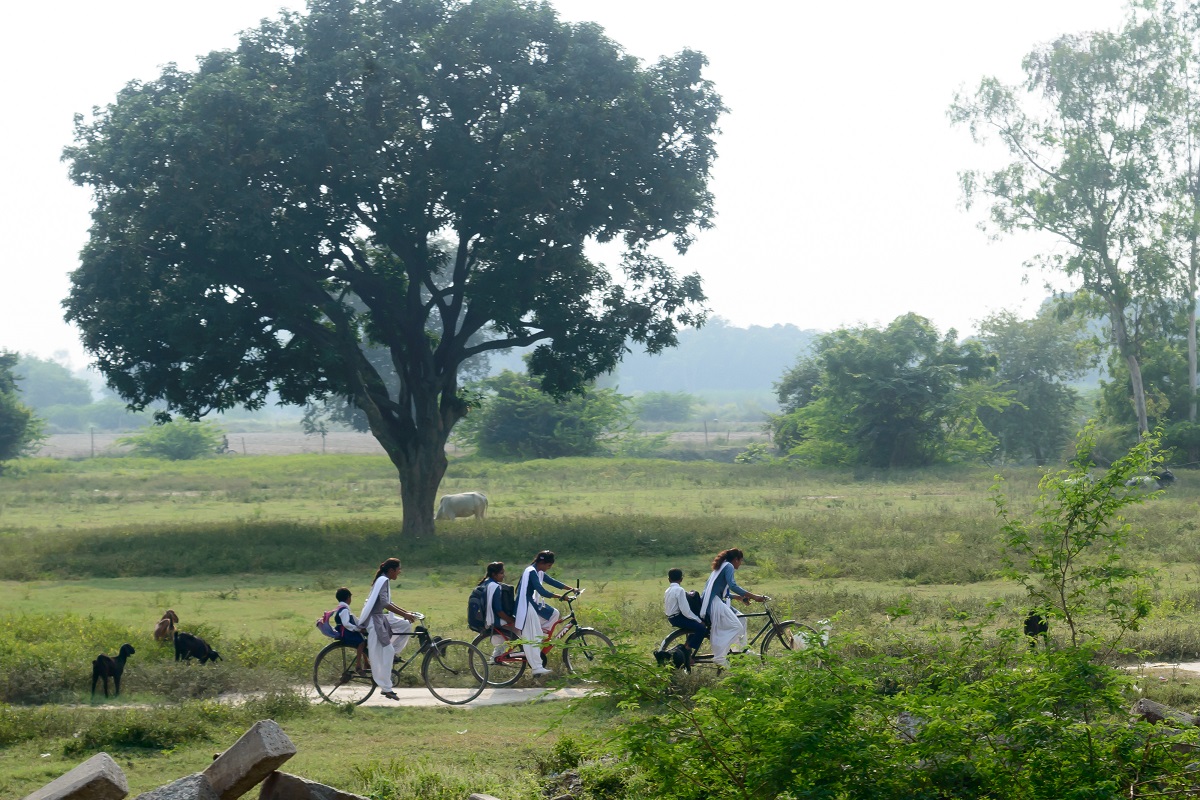
Roshani Bhadoriya’s determination to pursue her studies by cycling 24 km every day to and from her school in Ajnol village in Bhind district of Chambal region in Madhya Pradesh has paid off as she has secured 98.75 per cent marks in her Class 10 exams.
15-year-old girl encouraged by her marks, now aims higher and wants to a pursue a career in civil services.
Daughter of a farmer, her father said he is proud of her achievement and would now arrange a transport facility for her to go to school.
She secured 98.75 per cent marks and 8th rank in the merit list of the Madhya Pradesh Board of Secondary Education’s Class 10 exams, the results of which were declared on Saturday.
Till Class 8 Roshani studied in another school where bus facility was available but after that, she shifted to a government school in Mehgaon, located around 12 km from Ajnol, where transport facility was not available, the father Purushottam Bhadoriya told news agency PTI.
“Since Roshani got enrolled in Class 9 of Mehgaon’s Government Girls’ School two years back, she had to cycle to reach school on several days due to unavailability of other modes of transport like taxis,” he said.
Roshani’s father said that he will now make some other transport arrangement for her to go to school.
The farmer, who also has two sons, said everybody in Ajnol is happy with her daughter’s feat as none from the village attained such academic success.
Roshani shared her school journey experience. She said, “It was difficult to go to school on a bicycle. Though I didn’t count, I cycled for about 60 to 70 days a year to reach the school. My father also took me to school on his motorcycle whenever he had time.”
The girl said after returning home, she used to study for seven to eight hours every day.
Roshani said her aim is to clear the civil service exams and become an IAS officer.
Mehgaon Government Girls’ School principal Harishchandra Sharma appreciated the student’s achievement and determination.






















 The ‘giant’ elephant spotted near Tedhipuliya region near Haridwar. (HT Photos)

 CHINDIA ALERT: You'll be living in their world, very soon