Archive for ‘Academy of Military Sciences’

12/06/2019

How Tiananmen crackdown left a deep scar on China’s military psyche

  • Many of those involved feel profound ‘guilt and shame’ over the lives lost in Beijing 30 years ago, according to two former PLA officers
  • Move to tone down language used to describe movement – as ‘political turmoil’ rather than a ‘counter-revolutionary rebellion’ – came from army
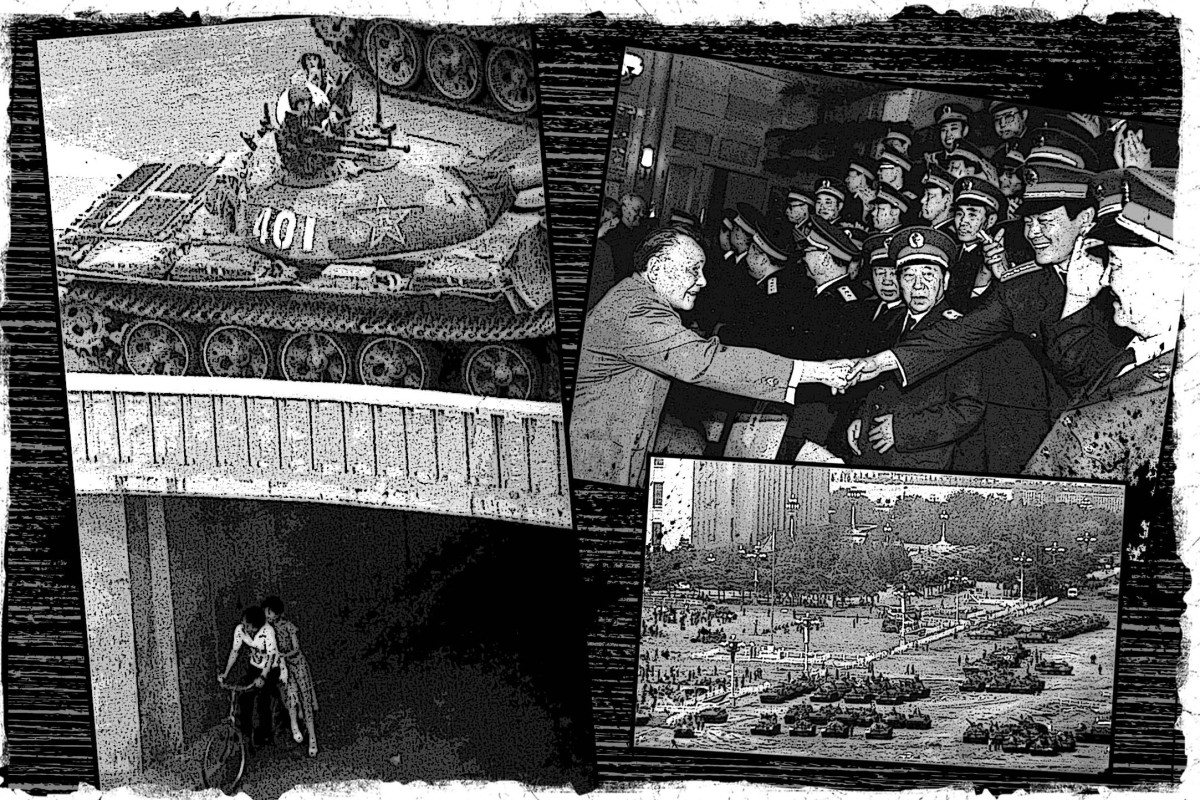
The brutal military crackdown on peaceful protesters in Beijing 30 years ago might have saved the Communist Party’s rule, but it has since become a cross to bear for the People’s Liberation Army.

Today, the world’s largest fighting force is still haunted by the 

Tiananmen Square

tragedy in 1989, despite efforts to rebuild its image. After the bloodshed, it was the military that suggested the pro-democracy student movement be referred to not as a “counter-revolutionary rebellion” but as a time of “political turmoil”, two former PLA officers told the South China Morning Post.

They said the move to tone down the language around the crackdown reflected the anxiety and shame felt by many rank-and-file officers over a fateful decision that has tainted the military’s reputation and legacy.

Up to that point, the PLA had been widely respected by the Chinese public. Even during the turbulent decade of the Cultural Revolution from 1966, the military was largely uninvolved. Rather, it was instrumental in bringing an end to the chaos and setting China on the path of reform and opening up.

The crackdown in 1989 was unprecedented for the PLA and dealt a crippling blow to its reputation and morale – and the question over the legitimacy of the decision to send in the tanks and open fire on the protesters remains.

“[I believe] the Tiananmen crackdown will be revisited one day – it’s just a matter of time. The ultimate responsibility will fall to those military leaders who directly implemented the decision,” a retired researcher with the PLA’s Academy of Military Science, who requested anonymity, told the Post.

PLA soldiers with automatic weapons eat ice creams as protesters plead with them to leave Tiananmen Square on June 3, 1989. Photo: Reuters

Throughout history and across cultures, following orders has been a fundamental principle of military service. But the absence of a written order on the mission from the commander in chief – late paramount leader Deng Xiaoping – puts its legality in doubt.

It is estimated that hundreds, or perhaps more than 1,000, civilians were killed during the crackdown that began on the night of June 3 and continued until the morning.

“No matter whether it is one or 10,000 people killed, it’s still wrong to shoot at unarmed civilians,” said a retired PLA officer who served in the army’s political department and also declined to be named. “But [the troops] had to do this dirty job because the party’s rule was in danger.”

According to the former military researcher, many commanders involved in the crackdown questioned the decision to use force to quell the protests, particularly since they had only been given a verbal order from above and never saw a written instruction from Deng, who was chairman of the Central Military Commission (CMC).
This was further complicated by the fact that Zhao Ziyang, the party’s general secretary at the time, openly opposed a military crackdown. Without the support and approval of the party’s chief, the operation violated the long-held principle of “the party commanding the gun”.
Even then CMC vice-chairman Yang Shangkun and Xu Qinxian, commander of the 38th Army Corps that had been sent to Beijing, had qualms about carrying out the verbal order, according to the former researcher.
It is not known how many troops were sent in to crush the protests, but the number could be as high as 200,000, according to a book by US-based scholar Wu Renhua.
Soldiers patrol Changan Avenue in Beijing on June 4, 1989. Photo: Jeff Widener/AP

The retired PLA political officer said the instruction to commanders was to “clear out Tiananmen Square by June 4 – and whoever stands in our way is an enemy of the state”.

“Most officers and soldiers were only trained to use heavy weapons like machine guns and tanks. They didn’t even know there were things like rubber bullets, tear gas or other kinds of non-lethal weapons for crowd control,” said the former officer.

“To meet the deadline to clean up the square, some commanders asked their troops to shoot into the air to scare away the crowds – that was the only thing they could think of doing,” he said.

But although they started off firing into the air, ricocheting bullets hit many protesters as they fled and in the chaos and bloodshed, inexperienced troops panicked and started firing into the crowd, according to the former officer.

The army’s clean image was destroyed overnight, and in the minds of many, renmin zidibing – the army of our sons – became the feared and reviled tool of a killing regime.

It also left a psychological scar on the military, which is reflected in the effort to tone down the narrative around the crackdown.

The former researcher said the push to use “political turmoil” instead of the more provocative “counter-revolutionary rebellion” to describe the movement first appeared in a military academy reference book, the Chinese Military Encyclopaedia, in 1997. He said it was proposed by military advisers who believed it could help soften attitudes towards the crackdown.
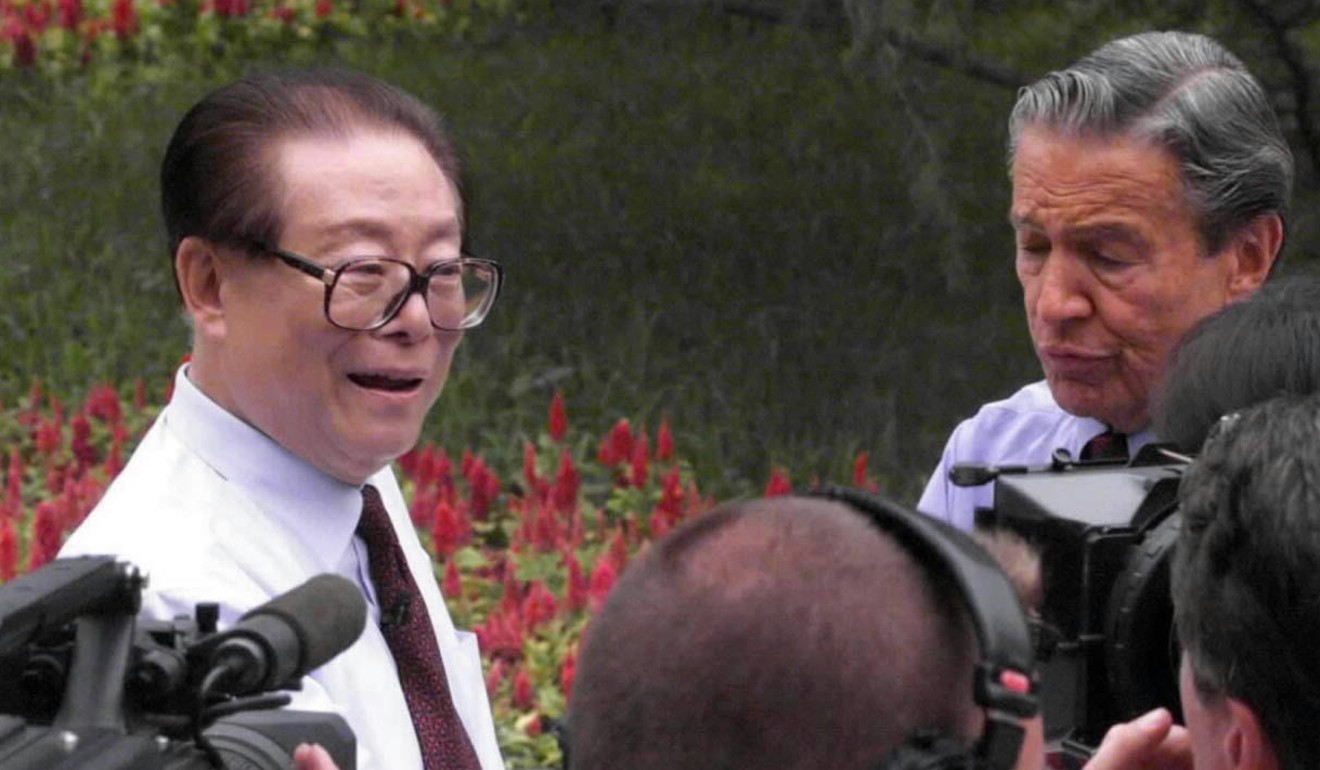
Then president Jiang Zemin with American journalist Mike Wallace during an interview in 2000. Photo: Xinhua

Former president Jiang Zemin spoke of the “political turmoil” in 1989 during an interview with American journalist Mike Wallace in 2000, and the wording has since been widely used by state media.

Meanwhile, the suppression of the protesters also prompted calls for a separation of the army and the party, so the PLA would be a “national” force rather than a political one.

But after 

a decade of debate

, the idea was squashed by the top leadership in 2007, on the eve of the PLA’s 80th anniversary. It was labelled as a plot by hostile Western forces to topple communist rule in China and is now a taboo subject.

“But despite banning discussion of military nationalisation, the calls from within the PLA to rehabilitate the military and for a review of what happened with the student movement have never stopped,” the former PLA political officer said.
“Many senior military officers believe the students weren’t attempting to overthrow communist rule – they were just asking for a better political system. That’s why calling it a counter-revolutionary rebellion is wrong.”
Curious Beijing residents gather to look at the military hardware in Tiananmen Square on June 7, 1989. Photo: AP
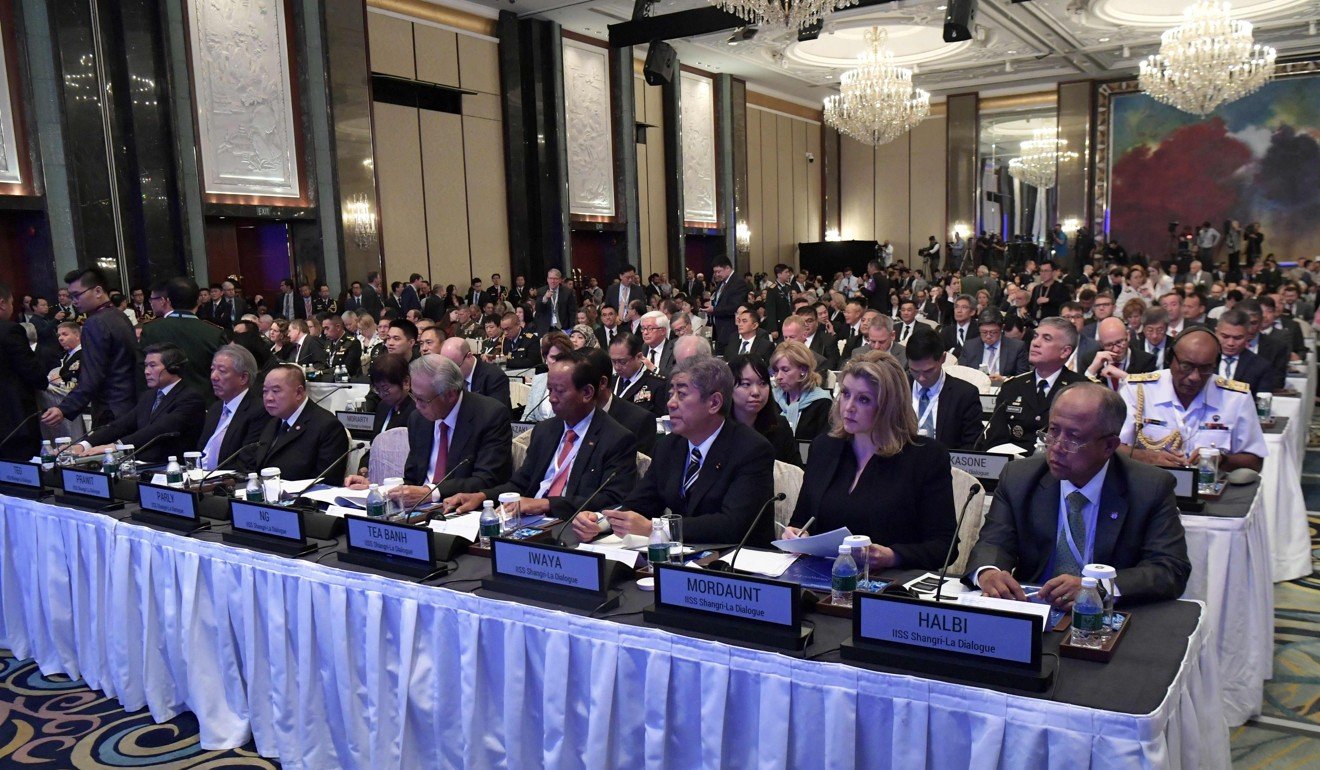
On Sunday, days ahead of the 30th anniversary, Defence Minister General Wei Fenghe

defended the Tiananmen crackdown

, telling a regional defence forum that putting an end to the “political turbulence” had been the “correct policy”.
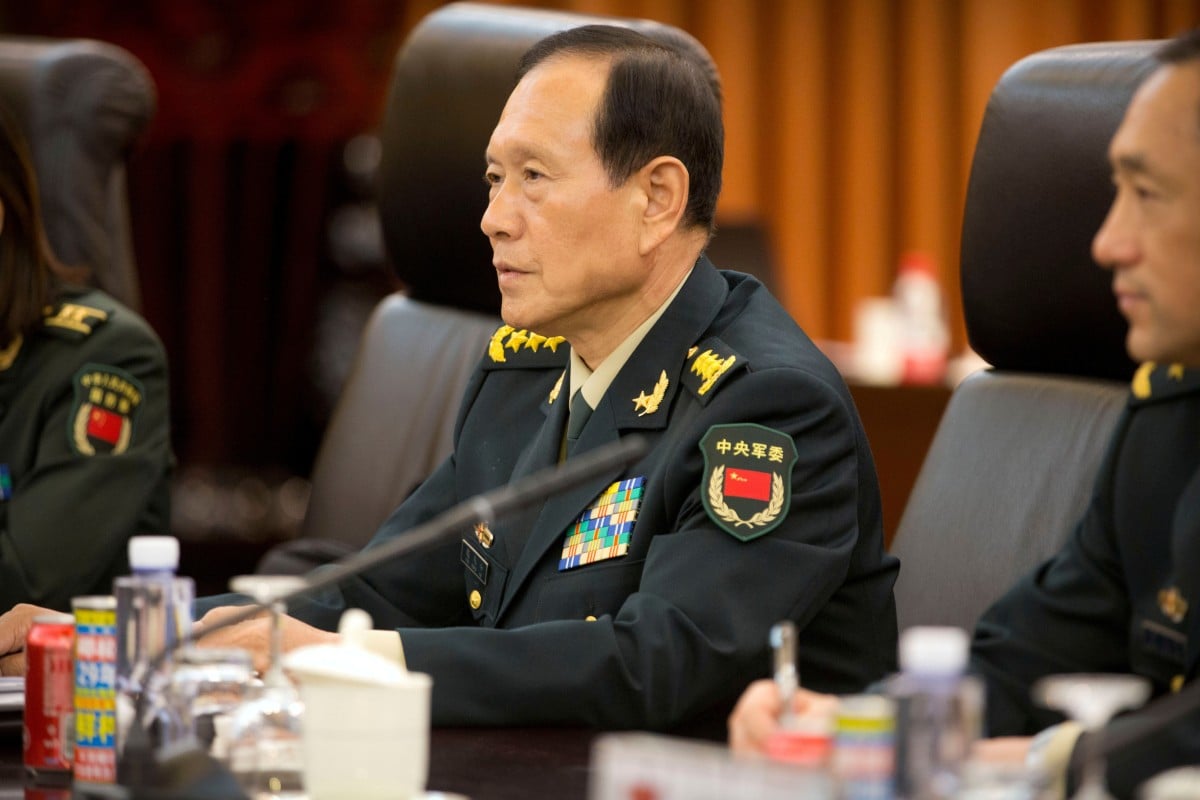
“Throughout the 30 years, China under the Communist Party has undergone many changes – do you think the government was wrong with the handling of June Fourth?
There was a conclusion to that incident. The government was decisive in stopping the turbulence,” Wei said at the Shangri-La Dialogue in Singapore.
But according to the former PLA researcher, military top brass involved in the crackdown still felt profound “guilt and shame” over the lives lost.
“None of those people in the PLA would feel a sense of honour for participating in the crackdown,” he said. “Instead they harbour a deep feeling of shame.”
Source: SCMP
12/06/2019

China to send defence minister to Singapore security conference as tensions with US rise

  • Observers will be watching to see if General Wei Fenghe holds talks with his American counterpart
  • Forum comes as Beijing and Washington are at odds over issues ranging from security to trade
General Wei Fenghe will be the first Chinese defence minister to attend the Shangri-La Dialogue in eight years. Photo: Reuters
China is sending its defence minister to a leading Asian security forum next week, the first time in eight years that a high-ranking Chinese general will represent the country at the conference.
General Wei Fenghe, a State Councillor and China’s defence minister, will speak at the three-day Shangri-La Dialogue in Singapore, a gathering that comes as Beijing and Washington are at odds over issues ranging from security to trade.
“In a highly anticipated speech, General Wei Fenghe will speak on China’s role in the Indo-Pacific at a pivotal time for the region,” the International Institute for Strategic Studies, an organiser of the conference, said on Monday night.

Chinese military sources said that Wei would lead a “relatively big” delegation to the gathering, which starts on May 31 and is co-organised by the Singaporean government.

South China Sea stand-offs ‘a contest of wills’
The last time Beijing sent a high-ranking officer to the event was in 2011 when General Liang Guanglie, then the defence minister, attended.
Acting US secretary of defence Patrick Shanahan will also attend the conference and deliver a speech.
The spoils of trade war: Asia’s winners and losers in US-China clash

Beijing-based military specialist Zhou Chenming said observers would be watching to see whether the two senior defence officials held talks.

“The whole world will keep a close eye on any possible encounters between the Chinese and the Americans … At least now China has shown its sincerity in sending Wei to attend the conference, who is of equal standing as Shanahan, if the latter is willing to hold talks with him in good faith,” Zhou said.

But he said a meeting between Wei and Shanahan would be difficult because of the current distance between Beijing and Washington on major issues.

How Trump’s tweets bested China in the trade war publicity battle

“It’s not realistic to expect they will make a breakthrough because both sides will just sound their own bugles. The … mistrust between China and the US is actually growing every day,” Zhou said.

Just on Sunday, the USS Preble, an Arleigh Burke-class guided missile destroyer, sailed within 12 nautical miles of the Scarborough Shoal, an area in the South China Sea claimed by both China and the Philippines.

The 

Chinese foreign ministry responded on Monday

by strongly urging “the US to stop such provocative actions” and saying it would “take all necessary measures” to protect its “national sovereignty”.

Military analysts said the size of the Chinese delegation at the conference would underscore the importance of the People’s Liberation Army (PLA) attached to the event this year.
One military insider said the delegation would also include Lieutenant General He Lei, former vice-president of the Academy of Military Science, who headed China’s delegation in 2017 and 2018; and Senior Colonel Zhou Bo, director of the defence ministry’s Centre for Security Cooperation. In addition, the PLA would send a number of Chinese academics to speak at various sessions of the forum.
China tries to go one on one with Malaysia to settle South China Sea disputes

Singaporean Prime Minister Lee Hsien Loong will deliver a keynote speech on the opening day of the annual dialogue.

Japan and South Korea are also sending their defence ministers, according to a report by The Korean Times on Tuesday. The report also said South Korean Defence Minister Jeong Kyeong-doo was keen to hold one-on-one meetings with his Chinese and Japanese counterparts on the sidelines of the conference.

Source: SCMP

10/06/2019

Why China struggles to win friends and make itself heard

  • Beijing has to reconcile the competing needs to appear tough to the Chinese public and conciliatory to an international audience
  • China feels US has long had the advantage in shaping global opinion but it now needs to make itself heard
China must appear tough for an increasingly nationalistic audience at home and be conciliatory to an international audience wary of China’s assertive foreign and defence policy. Photo: Xinhua
In just the last week, a Chinese official posed a question that would resonate among his fellow cadres: as China rises, why are we not making more friends and why are our voices not heard?
The question has gained weight as the trade war with the United States has deepened, and Chinese officials have scrambled to win the battle of public opinion at home and abroad.
It also came to the fore at the annual Shangri-La Dialogue security forum in Singapore on the weekend, when Chinese officials were faced with balancing the need to appear tough for an increasingly nationalistic audience at home and being conciliatory to an international audience wary of China’s assertive foreign and defence policy.
Senior Colonel Zhao Xiaozhuo, a senior fellow at the People’s Liberation Army’s Academy of Military Sciences and a public diplomacy veteran for the military, said the expectations clashed in Singapore.
“Currently there are two parallel worlds in the public opinion landscape, one domestic and another international, and the two of them are basically split and in two extremes,” Zhao said.
“[The Shangri-La Dialogue] is a place where the two worlds clash. As the Chinese delegation [at the forum] we need to show our position, but it is becoming more difficult to balance [the expectations of the two sides].
“If you are tough, the domestic audience will be satisfied, but it won’t bode well with the international audience. But if we appear to be soft, we will be the target of overwhelming criticism at home.”
China asks state media to pick battles carefully with long US trade war looming, sources say

Zhao said this was an unprecedented challenge for Chinese cadres, who must also satisfy the expectations of the leadership.

“Our task was about diplomacy and making friends. But [with the tough position] you may not be able to make friends, and might even exacerbate the tension,” he said.

The pressure was immense when Chinese Defence Minister General Wei Fenghe took to the stage on Sunday in a rare appearance at the forum. Concerned about how Wei’s performance would be received at home, Beijing ordered Chinese media to minimise their coverage of acting US defence secretary Patrick Shanahan’s address in case it made China appear weak, according to a source familiar with the arrangements for Chinese media.

In his speech, Wei struck a defiant tone, vowing that the PLA would “fight at all costs” for “reunification” with Taiwan and that China was ready to fight the US to the end on the trade front.

Chinese Defence Minister Wei Fenghe makes a rare appearance at the Shangri-La Dialogue in Singapore. Photo: Reuters

Major General Jin Yinan, from the PLA’s National Defence University, a member of the Chinese delegation to the Singapore summit, said Wei’s speech defied expectations that China would show restraint with the US, and demonstrated China’s confidence on the world stage.

The public response at home was immediate and positive. Tens of thousands of Chinese internet users flooded social media platforms such as the Twitter-like Weibo service to express their approval for Wei’s hard line.

“This is the attitude that the Chinese military should show to the world,” one commenter said.

“I am proud of my country for being so strong and powerful,” another said.

Over the past year, Beijing’s propaganda apparatus has tightly controlled the domestic media narrative on the trade war, barring independent reporting on the tensions. But since the breakdown of trade talks in early May, the authorities have gone one step further by escalating nationalistic rhetoric in newspapers and on television.

How Donald Trump’s tweets outgunned China’s heavy media weapons in the trade war publicity battle

China has also tried to make its case to the world with an official statement. On the same day that Wei addressed the gathering in Singapore, the State Council, China’s cabinet, put China’s side of the dispute in a white paper, saying the US should bear responsibility for the breakdown of the trade talks.

A Chinese delegate at the forum said Beijing felt Washington had long had the advantage in shaping global opinion and there was an urgent need for China to make itself heard.

“We should get more used to voicing our position through Western platforms. The US has been criticising us on many issues. But why should the Americans dominate all the platforms and have the final say over everything?” the delegate said.

Before Wei’s appearance at the dialogue, China had not sent such a high-ranking official for eight years. It had long sought to play down the importance of the forum, seeing it as a platform wielded by the US and its Western allies to attack China.

In 2002, China set up the Beijing Xiangshan Forum to rival the Singapore gathering and amplify its voice on security issues.

But Chinese officials are well aware that Xiangshan does not have the same impact and profile as the Shangri-La Dialogue, according to Collin Koh, a research fellow at the S. Rajaratnam School of International Studies at Nanyang Technological University in Singapore.

“[At the same time, the long absence of high-level Chinese representation to the Shangri-La Dialogue also] raises the question of whether it might be sustainable in the long run for [the dialogue] if they continue to not have such ministerial representation [from China],” Koh said.

Zhao, who is also the director of the Xiangshan forum’s secretariat office, agreed that China lagged the US in promoting the image of the military and in winning public opinion.

“China has not fought a war in 30 years. We have only built some islands in the South China Sea and yet have received so much criticism from the international media. The US has engaged in many wars but they are seldom criticised. This reflects that China is in a disadvantaged position in international discourse,” he said.

Expectations collided at the Shangri-La Dialogue in Singapore this month. Photo: AFP
In a rare conciliatory gesture – and just days before the 30th anniversary of the crackdown on pro-democracy protesters in Tiananmen Square – Wei took questions from a room of international delegates on a range of sensitive issues, including the crackdown and China’s mass internment camps in Xinjiang. While he largely toed the official line in his reply, his presence at the forum and willingness to address the questions raised hopes that China would become a more responsible partner in global affairs despite its continuing disputes with the US.
Andrea Thompson, US undersecretary of state for arms control and international security, said Wei’s attendance at the Singapore gathering was a “positive sign” and she hoped that China would be more open and transparent in addressing issues such as arms control and cybersecurity.
“I appreciate that he is here. I think it’s important to have a dialogue … There will be areas where we will agree, and some areas where we disagree, but you still have to have dialogue,” Thompson said.
Source: SCMP
06/03/2019

China Focus: China to lower defense budget growth to 7.5 percent

BEIJING, March 5 (Xinhua) — China will lower its defense budget growth rate to 7.5 percent in 2019, from last year’s 8.1 percent, according to a draft budget report submitted to the annual session of the National People’s Congress (NPC) Tuesday.

The 2019 defense budget will be 1.19 trillion yuan (about 177.61 billion U.S. dollars), figures from the report show.

The rate marks the fourth straight year for the budgeted growth rate remaining single digit, following five consecutive years of double-digit increases.

China’s budgeted defense spending growth rate stood at 8.1 percent in 2018, 7 percent in 2017, and 7.6 percent in 2016.

“The Chinese government has always paid attention to controlling the scale of defense expenditure,” said He Lei, former deputy head of the Academy of Military Sciences.

Describing China’s defense budget increase as reasonable and appropriate, Zhang Yesui, spokesperson for the legislative session, said the rise aimed to “meet the country’s demand in safeguarding national security and military reform with Chinese characteristics.”

“China’s limited defense spending, which is for safeguarding its national sovereignty, security and territorial integrity, poses no threat to any other country,” Zhang said at a press conference Monday.

The expenditure has been mainly used for advancing defense and military reforms, supporting military training and diverse tasks, modernizing weapons and equipment, and improving welfare of service personnel, according to He, who is also a deputy to the NPC.

“The defense budget increase is appropriate against the backdrop of profound changes in the country’s overall strength, its security environment, and the global strategic situation,” He said.

China’s defense budget takes up a fairly small share of its GDP and national fiscal expenditure compared with other major countries, said He, noting that its military spending per capita and per soldier was also very low.

While the national defense spending in a number of major developed countries accounts for more than 2 percent of their GDP, the ratio was only about 1.3 percent for China in 2018.

The United States has increased its national defense expenditure for the fiscal year 2019 to 716 billion dollars, about four times the budget of China, the world’s second largest economy.

China’s military spending per capita is only about one-nineteenth of that of the United States.

“When it comes to whether a country poses a threat to other countries, the key is not that country’s national strength and armed forces, but the policies it adopts,” said Chen Zhou, research fellow with the Academy of Military Sciences.

“China has always been following the path of peaceful development and firmly adheres to a defense policy that is defensive in nature,” Chen said, noting that China’s development would not pose a threat to any other country.

He Lei highlighted China’s role in providing public security goods for the international community, saying the Chinese military had actively participated in UN peacekeeping missions, maintained security of marine passages, and engaged in international rescue and security cooperation.

“The growth in China’s defense spending is the growth of forces for world peace,” he noted.

Source: Xinhua

Law of Unintended Consequences

continuously updated blog about China & India

ChiaHou's Book Reviews

continuously updated blog about China & India

What's wrong with the world; and its economy

continuously updated blog about China & India