Archive for ‘African countries’

08/04/2020

Xi and his unremitting call for global health cooperation

BEIJING, April 7 (Xinhua) — Over the past seven years, Chinese President Xi Jinping has on various occasions stressed the importance of global health cooperation, expressed China’s support for international health organizations, and voiced the country’s determination to help improve global health governance.

His remarks on global public health in recent years, especially in the last few months, have become particularly meaningful as countries worldwide mark the 2020 World Health Day on Tuesday amid a raging COVID-19 pandemic.

Back in 2013, during a meeting with then World Health Organization (WHO) Director-General Margaret Chan in Beijing, Xi said China will continue to improve public health and enhance cooperation with the WHO.

He also expressed his hope that China and the WHO could work closer to help promote Chinese medicine and medical products into overseas markets, and jointly assist African countries to improve their disease control and public health systems to meet the United Nations Millennium Development Goals.

In March 2015, Xi pointed out in a meeting in China’s Hainan province with Bill Gates, co-chair of the Bill & Melinda Gates Foundation, that preventing and controlling public epidemics is a common challenge to the international community and requires strengthening international cooperation on joint control.

Two years later, during his trip to Switzerland, Xi paid a special visit to the WHO headquarters, in which he co-witnessed with Chan the signing of a memorandum of understanding between China and the WHO pledging to step up health cooperation under the framework of the China-proposed Belt and Road Initiative.

During the meeting with Chan, Xi noted that China stands ready to enhance cooperation with the WHO in implementing the 2030 Agenda for Sustainable Development and assisting other developing countries.

Also in 2017, in his congratulatory letter to a meeting of BRICS countries’ health ministers, Xi called on relevant parties to study work in the field of traditional medicine and make joint efforts to tackle public health challenges.

“It is our common good vision that everyone enjoys good health,” he said in the letter.

In the past several months of 2020 which witnessed a hike in global caseload of COVID-19 infections, Xi has taken each opportunity to reiterate his call for global public health cooperation against the virus.

When meeting with visiting WHO Director-General Tedros Adhanom Ghebreyesus in Beijing in January, Xi said China attaches great importance to the cooperation with the WHO, and is ready to work with the organization as well as the international community to safeguard regional and global public health security.

In February, in a reply letter to Gates, Xi said “we are resolute in protecting the life and health of the people of China, and of all countries around the world. We are determined to do our part to uphold global public health security.”

In March, when the global anti-virus fight entered a critical stage, Xi highlighted the need for international health cooperation not only in several domestic meetings on epidemic prevention and control, but also in phone conversations with foreign leaders and heads of international organizations, as well as in such global events as the Extraordinary G20 Leaders’ Summit.

On March 12, Xi spoke with United Nations (UN) Secretary-General Antonio Guterres over phone, and urged the international community to take urgent action and carry out effective international cooperation in joint prevention and control, so as to form a strong concerted force to beat the disease.

China stands ready to share its experience with other countries, carry out joint research and development on drugs and vaccines, and offer as much assistance as it can to countries where the disease is spreading, Xi said.

Several days later, speaking at a meeting of the Standing Committee of the Political Bureau of the Communist Party of China Central Committee, he required closer cooperation with the WHO to strengthen the analysis and prediction of the changes in the global epidemic situation, and improvement in strategies and policies to cope with imported risks.

On March 21, in a phone conversation with his French counterpart, Emmanuel Macron, Xi pointed out that public health security is a common challenge faced by humanity.

China, he said, is willing to make concerted efforts with France to enhance international cooperation in epidemic prevention and control, support the UN and WHO playing a core role in improving global public health governance, and build a community of common health for mankind.

Three days later, talking with Kazakh President Kassym-Jomart Tokayev over phone, Xi said in the battle against the current global public health crisis, the urgency and significance of building a community with a shared future for mankind have become even greater.

On March 26, in his keynote speech at the Extraordinary G20 Leaders’ Summit via video, Xi said at such a moment, it is imperative for the international community to strengthen confidence, act with unity and work together in a collective response.

He called on G20 members to jointly help developing countries with weak public health systems enhance preparedness and response, and enhance anti-epidemic information sharing with the support of WHO and to promote control and treatment protocols that are comprehensive, systematic and effective.

Source: Xinhua
02/02/2020

Coronavirus: hundreds more Europeans flee China virus as second evacuation plane lands in France

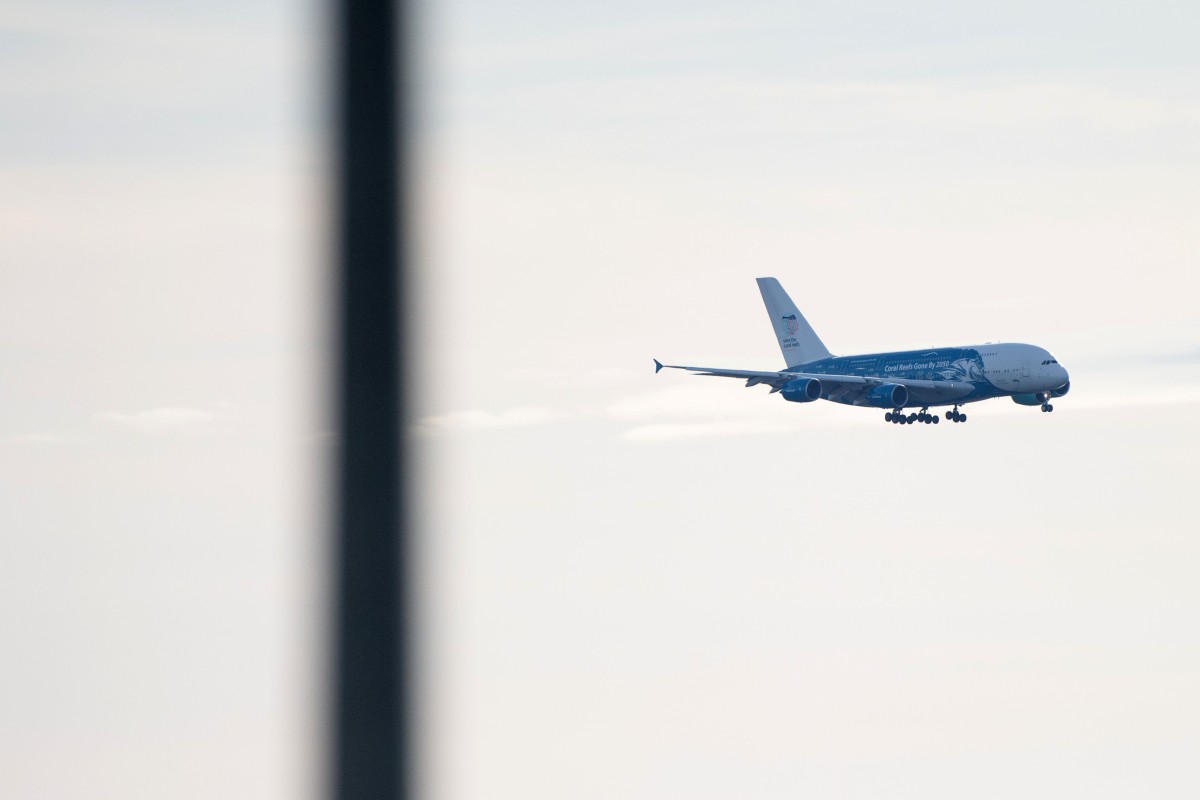
  • An Airbus A380 landed at the military base of Istres in the southern French region of Bouches-du-Rhone on Sunday
  • Of the 180 French people who were flown back from Wuhan on Friday, one showed symptoms of being infected with the virus
An Airbus A380-84, believed to be carrying European citizens flown out from the coronavirus zone in Wuhan, approaches the Istres-Le Tube Air Base near Istres. Photo: AFP

A second French-chartered plane carrying 300 evacuees from China flew to France on Sunday as more foreigners fled China’s rapidly developing virus.

The Airbus A380 landed at the military base of Istres in the southern French region of Bouches-du-Rhone. A first French plane landed Friday.

Officials said that when this latest flight left the central Chinese city of Wuhan, none of the passengers had symptoms of coronavirus. They include French, Belgians, Dutch, Danes, Czechs, Slovaks and some citizens of African countries.

Authorities said the plane would drop off most of its passengers at Istres before leaving for Belgium with several dozen people from northern Europe. Authorities haven’t said if the travellers arriving at Istres will be put into quarantine.

Of the 180 French people who were flown back from Wuhan on Friday, one showed symptoms of being infected with the virus and was sent to a Marseille hospital for testing, French Health Minister Agnes Buzyn said.

The other passengers were being quarantined for 14 days at a large, isolated Mediterranean resort not far from Marseille near Carry-le-Rouet.

German Health Minister Jens Spahn said that two people who were flown back to Germany on Saturday were found to be infected with the virus. That brought the total of cases in Germany to 10. Spahn said the two had been symptom-free when they left Wuhan and when they arrived in Frankfurt, and that they were “doing well at the moment” in quarantine at a Frankfurt hospital.

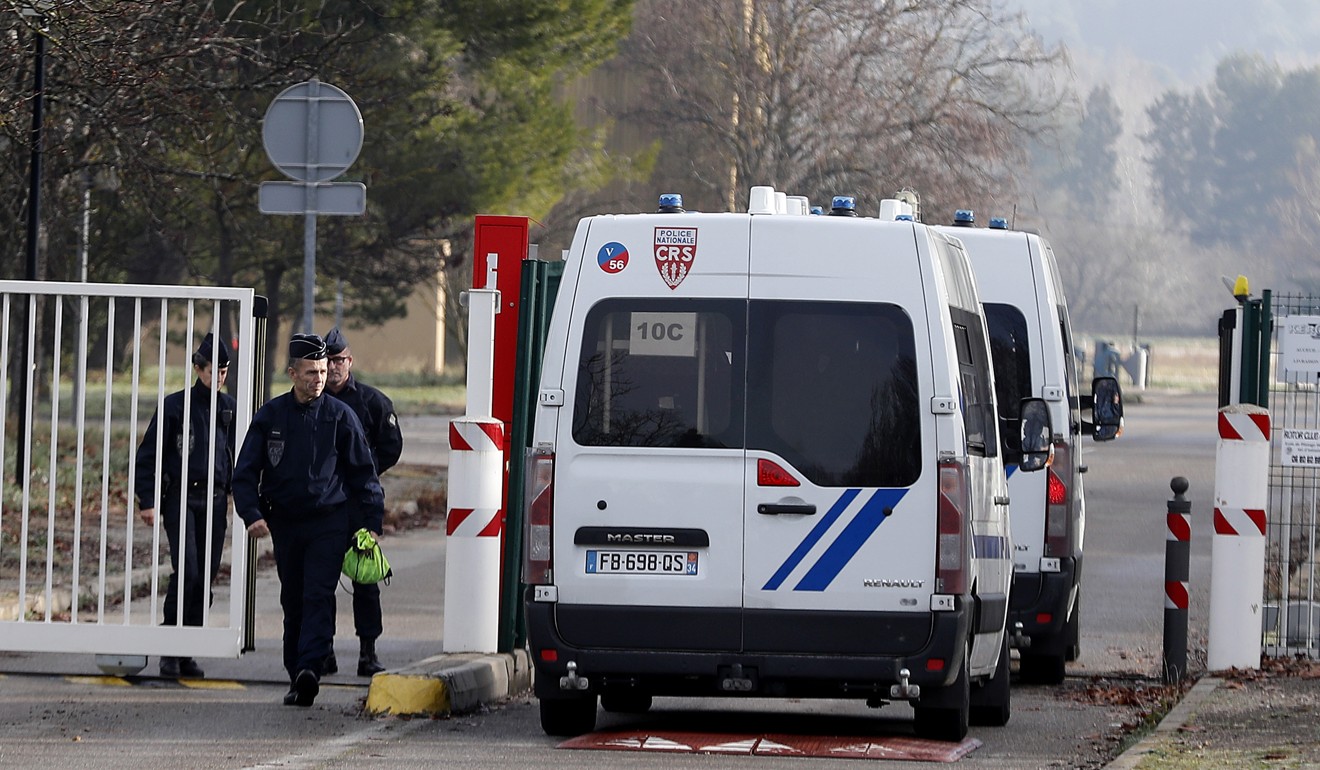
French police officers gather at the entrance gate of the ENSOSP (French National Fire Officers Academy) where French citizens will be quarantined after their repatriation from Wuhan. Photo: EPA-EFE
Europe has 25 reported cases of people who have been infected with the virus that emerged from Wuhan: Germany has 10; France has six; Russia, Italy and the U.K have two each and Finland, Sweden and Spain each have one.

The Italian foreign ministry said permission had been given for cargo flights to fly between Italy and China.

Separately, the special commissioner in charge of coordinating Italy’s efforts during the viral outbreak said consideration was being given to letting a handful of Chinese commercial airliners fly to Italy to pick up Chinese tourists and other Chinese citizens stranded in Italy by the suspension of commercial flights.

The commissioner, Angelo Borrelli, was quoted by Italian media as saying that Italy would like those flights, if approved, not to fly to Italy empty, but instead to bring back Italians from China. There are an estimated 500 other Italians in China who have apparently expressed an interest in returning home during the outbreak, but nothing firm had been decided on those flight possibilities.

Meanwhile, an estimated 3,000 tourists and others from China are stranded in Italy and want to return to home, according to Italian media.

Coronavirus:  Indonesia evacuates citizens, stops flights from China

2 Feb 2020

The death toll in China climbed Sunday to 304 and the number of infections rose to 14,380. In addition, the Philippines on Sunday reported the first death from the virus outside China.

On Saturday night, a Turkish military transport plane carrying 42 people arrived in Ankara from Wutan. The 32 Turkish, six Azerbaijani, three Georgian and one Albanian nationals will remain under observation in a hospital for 14 days, Health Minister Fahrettin Koca said.

Twenty Turkish personnel who took part in the evacuation will also be kept in quarantine.

The Egyptian government said 306 of its nationals would return home from Wuhan on a chartered plane later Sunday and will be subject to a 14-day quarantine. The online news outlet Masrawy reported that authorities prepared a hotel in the northwestern city of Marsa Matruh where the returnees would be quarantined.

Source: SCMP

27/09/2019

EU and Japan play ‘guardians of universal values’ in effort to challenge China’s Belt and Road Initiative

  • Japan’s Prime Minister Shinzo Abe and EC President Jean-Claude Juncker mark first anniversary of EU-Asia Connectivity scheme with swipes at China
  • Partners reach out to countries in Balkans and Africa and agree US$65.5 billion development plan
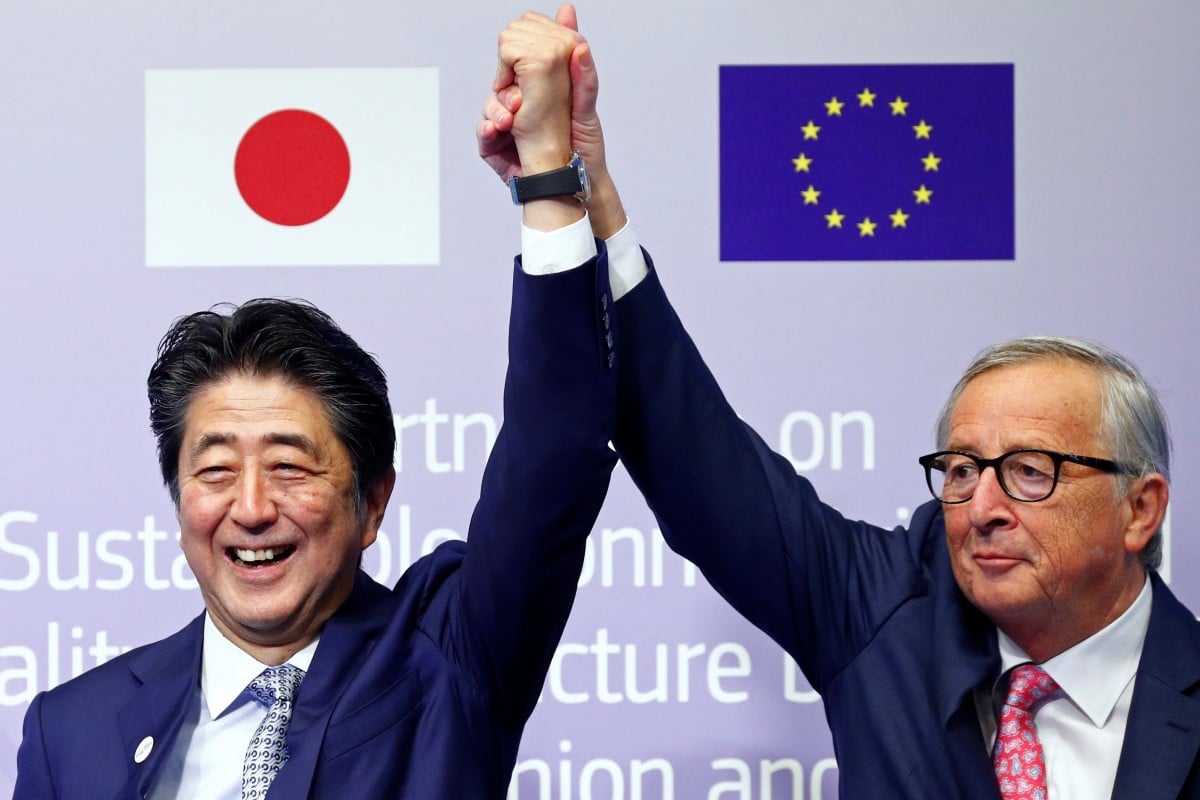
Japan’s Prime Minister Shinzo Abe (left) and European Commission President Jean-Claude Juncker mark the anniversary of the EU-Asia Connectivity scheme in Brussels, Belgium. Photo: Reuters
The European Union and Japan are stepping up their efforts to counter China’s

Belt and Road Initiative

, with their leaders vowing to be “guardians of universal values” such as democracy, sustainability and good governance.

Speaking in Brussels on Friday, Japanese Prime Minister Shinzo Abe said the world’s third-biggest economy would work with the EU to strengthen their transport, energy and digital ties to Africa and the Balkans – key regions for China’s flagship trade and development project.
At a forum to mark the first anniversary of the EU-Asia Connectivity scheme, Abe and European Commission President Jean-Claude Juncker signed an agreement formalising Japan’s involvement in the Europe-Asia plan that will be backed by a 60 billion (US$65.54 billion) EU guarantee fund, development banks and private investors.

Abe said Japan would ensure that officials from 30 African countries would be trained in sovereign debt management over the next three years, a veiled attack on what Western diplomats claim is China’s debt trap for its belt and road partners.

“The EU and Japan are linked through and through,” Abe said. “The infrastructure we build from now on must be [high] quality infrastructure.

“Whether it be a single road or a single port, when the EU and Japan undertake something, we are able to build sustainable, comprehensive and rules-based connectivity, from the Indo-Pacific to the west Balkans and Africa.”

Japan wants to extend its business reach through its alliance with the EU as its economy slows and geopolitical competition from China takes its toll.

Japan indicates China is bigger threat than North Korea in latest defence review

China’s low-key delegation to the forum was led by Guo Xuejun, deputy director general of international affairs at the foreign ministry.

The US was represented by its deputy assistant secretary of state for cyber policy, Robert Strayer, who was in Europe to lobby against Chinese telecoms giant Huawei Technologies and its involvement in fifth-generation telecoms networks.

Abe and Juncker made cybersecurity the highlight of their addresses. Juncker, who will step down from the presidency by the end of October, repeated his attack on China’s trade policies without naming the country.

“Openness is reciprocal, based on high standards of transparency and good governance, especially for public procurement, and equal access to businesses while respecting intellectual property rights,” he said.

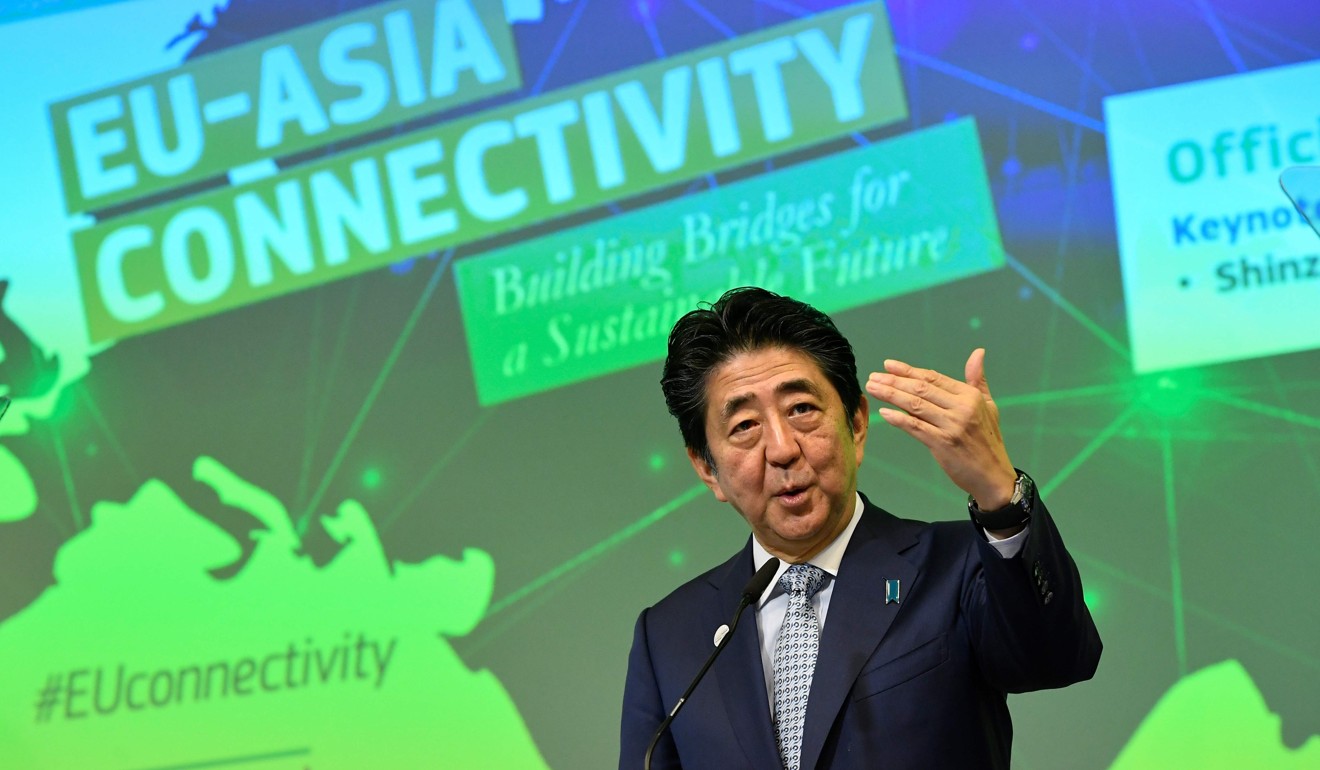
Prime Minister Shinzo Abe says Japan will train officials from 30 African countries in sovereign debt management in three years. Photo: AFP

European policymakers and businesses have for years complained about China’s refusal to allow foreign companies in without a Chinese joint venture partner, a practice that critics claimed involved forced transfer of intellectual property to the Chinese side.

“One of the keys to successful connectivity is to respect basic rules and common sense,” Juncker said, stressing that EU-Japanese cooperation focused on the “same commitment to democracy, rule of law, freedom and human dignity”.

European businesses urge EU to take ‘defensive’ measures against China’s state-owned enterprises

When the commission proposed improved transport, energy and digital infrastructure links with Asia last year, it denied it was seeking to stymie Chinese ambitions.

The EU plan, which would be backed by additional funds from the EU’s common budget from 2021, private sector loans and development banks, amounted to a response to China’s largesse in much of central Asia and south-eastern Europe, where Beijing has invested billions of dollars.

Source: SCMP

08/09/2019

How a ban on sale of wild African elephants to zoos could affect China

  • International watchdog to vote on whether to extend restrictions to southern African countries that are the biggest exporters
  • If passed, China may find it hard to buy elephants from Africa
An elephant is hoisted into Chongqing zoo in southwestern China, on loan from another Chinese zoo. Photo: Reuters

China, one of the leading buyers of African elephants, could face difficulty in acquiring the mammals if a widening of a ban on their sale to zoos is ratified next week by the global regulator of wildlife trade.

A motion further restricting the sale of live elephants was on Sunday supported by 46 countries at the committee stage of the Convention on International Trade in Endangered Species of Wild Fauna and Flora (Cites) in Geneva. It will go to a final vote on August 28.

The sale of elephants from West, Central and East Africa is already banned – but there is a lower level of protection for them in southern African countries such as South Africa, Namibia and Zimbabwe, which are the top three exporters of wild elephants to overseas zoos, according to Cites.

Keeping elephants caught from the wild in zoos is considered cruel by conservation and animal rights groups.

Conservationists criticised Zimbabwe’s capture of 35 baby elephants that were exported to a Chinese zoo in February. There was also uproar from activists in 2015 when a video filmed in a Chinese zoo showed two dozen elephants bought from Zimbabwe exhibiting signs of distress.

Zimbabwe was among 18 countries that opposed the potential ban at the committee stage, along with the United States – another leading buyer of elephants from Africa. China was one of 19 countries that abstained, while the European Union’s 28 countries did not vote.

If the motion is passed, China and the US – both known to be buying elephants from Africa and keeping them in so-called captive facilities or zoos – may find it hard to source the animals from the continent. Zimbabwe has come under global scrutiny
for its capture and sale of elephants to captive facilities including zoos and safari parks in China and the US.

Peter Knights, founder and chief executive of WildAid, an environmental organisation in San Francisco, explained that Cites still allowed the movement of live elephants for on-site conservation efforts such as moving the animals back into the wild or to a national park where they had been depleted.

“This is not primarily a conservation issue but more about animal welfare,” he said. “As highly social, intelligent animals, African elephants do not usually do well in captivity, requiring very large areas, and often developing behavioural problems in captivity and not usually reproducing successfully – indicating far from ideal housing.”

According to Humane Society International, which promotes animal welfare, Zimbabwe has sold more than 100 baby elephants to zoos in China since 2012, with a further 35 reportedly awaiting export.

On Monday, 55 elephant specialists protested to the US wildlife management agency about plans for the country’s zoos to import juvenile elephants caught in the wild from Zimbabwe. They asked the agency to prohibit imports of wild-caught elephants for captivity in US facilities.

“We are vehemently opposed to the proposed imports,” the experts wrote in a letter to the agency. “Young elephants are dependent on their mothers and other family members to acquire necessary social and behavioural skills. Male calves only leave their natal families at 12 to 15 years old and females remain for life. Disruption of this bond is physically and psychologically traumatic for both the calves and remaining herds and the negative effects can be severe and lifelong.”

The letter said that eSwatini, formerly Swaziland, had sold a total of 11 wild elephants to two American zoos in 2003, and a further 18 to three US zoos in 2016.

‘Hundreds’ of elephants are being poached each year in Botswana

Concerns about keeping elephants in zoos come at a time when the animals remain under threat in Africa from poachers who kill them for ivory.

Southern African countries such as Botswana, Namibia, Zimbabwe and Zambia are pushing to reopen the trade in ivory. Zambia is seeking to have the classification of its elephants downgraded to allow commercial trade in registered raw ivory with approved trading partners.

Other countries, including Kenya, Nigeria and Gabon, are seeking the highest possible levels of protection for all of Africa’s elephants.

Two previous attempts at regulating the ivory trade failed to curb poaching, which has caused elephant numbers to dwindle over the past two decades. A 2016 study estimated that 30,000 to 40,000 elephants were being killed every year, with about 400,000 remaining in total.

Knights, of WildAid, said that between 1975 and 1989 – the first period in which the ivory trade was regulated – half of Africa’s elephants were lost. During the second attempt at regulation between 2008 and 2017, participating countries claimed to have addressed the problem but poaching increased.

“It is clear that we cannot control ivory trade and that legal trade stimulates poaching and demand for ivory, rather than substituting for it as some countries suggest. The price fell by two-thirds when China banned domestic sales,” Knights said, adding that demand for ivory came primarily from Asia.

“Most seized shipments are en route to China. It has banned all sales and is making a great effort to crack down on illegal trade.”

Source: SCMP

25/06/2019

China, African countries vow to enhance cooperation

CHINA-BEIJING-WANG YI-SOUTH AFRICA-FM-MEETING (CN)

Chinese State Councilor and Foreign Minister Wang Yi (R) meets with South African Foreign Minister Naledi Pandor in Beijing, capital of China, June 24, 2019. Naledi Pandor was here to attend the Coordinators’ Meeting on the Implementation of the Follow-up Actions of the Beijing Summit of the Forum on the China-Africa Cooperation (FOCAC). (Xinhua/Zhai Jianlan)

BEIJING, June 24 (Xinhua) — Chinese State Councilor and Foreign Minister Wang Yi held respective meetings with foreign ministers from nine African countries on Monday, and they pledged efforts to strengthen cooperation and uphold multilateralism.

The foreign ministers are Naledi Pandor from South Africa, Palamagamba Kabudi from Tanzania, Ezechiel Nibigira from Burundi, Aurelien Agbenonci from Benin, Nhial Deng Nhial from South Sudan, Mamadou Tangara from Gambia, Joseph Malanji from Zambia, Luis Filipe Tavares from Cape Verde, and Gbehzohngar Findley from Liberia.

The African foreign ministers are in Beijing to attend the Coordinators’ Meeting on the Implementation of the Follow-up Actions of the Beijing Summit of the Forum on the China-Africa Cooperation (FOCAC), with the aim of better implementing the outcomes of Beijing Summit in 2018.

While holding talks with Pandor, Wang hailed the solid mutual trust and deep-rooted traditional friendship between China and South Africa.

Wang said China and South Africa, both as major representatives of emerging markets and developing countries, should jointly safeguard the missions and principles of the United Nations Charter, champion multilateralism, uphold basic norms governing international relations, and oppose any form of unilateralism and bullying, to promote world peace, development and prosperity.

Pandor said South Africa and the whole African continent, as China’s partners for jointly resisting unilateralism and bullying practice, would stand together with China in safeguarding multilateralism and an open, inclusive global trade system.

In the meeting with Kabudi, Wang expressed China’s readiness to work with Tanzania to keep high-level exchanges, and avail the opportunity of jointly building the Belt and Road and the Coordinators’ Meeting to ensure better outcomes in bilateral cooperation.

Calling the Beijing Summit of the FOCAC a milestone, Kabudi said Tanzania is willing to facilitate cooperation in infrastructure construction, industrial capacity, and in cultural, educational sectors and other areas.

In respective meetings with Nibigira, Agbenonci, Nhial and Tangara, Wang said the current international situation is complex but China’s determination to strengthen its solidarity and friendship with African countries remains unchanged.

Nibigira said Burundi agreed with the Belt and Road Initiative and would continue to support China on issues concerning China’s core interests and major concerns.

Agbenonci said multilateralism was now the only correct choice. Only through multilateralism can the voice of small and medium-sized countries, especially African nations, be heard, he said.

Nhial said South Sudan thanked China for its help in various fields, especially its support and contributions to the peace process in South Sudan.

Tangara said since the resumption of diplomatic relations between China and Gambia, bilateral cooperation in various fields had developed fast, and Gambia can be trusted as a sincere partner of China.

When holding separate meetings with Malanji, Tavares and Findley, Wang said China would continue to uphold justice and pursue the shared principles of sincerity, results, affinity and good faith.

China’s cooperation with Africa is sincere and selfless, and has no geopolitical purposes, said Wang, adding that China had always followed the principle of non-interference, provided aid as Africa needed, carried out South-South cooperation, and helped achieve common development.

He said China-Africa cooperation was conducive to Africa’s infrastructure construction, economic and social benefits, and self-development.

“Africa offers a grand stage of cooperation between different countries, not an arena of major powers’ game,” said Wang, adding that “African friends will get a right conclusion on who truly attaches importance to, respect, and support Africa.”

Malanji said claims that Zambia-China cooperation had led to Zambia’s debt problem were inconsistent with the facts and China’s loans were used on the infrastructure that Zambia needs most, to promote Zambia’s economic development and bring social welfare.

Tavares said Cape Verde cherished relations with China and upheld the one-China principle. He said Cape Verde stood ready to fully implement consensus reached by leaders of the two countries, enhance strategic dialogue, and deepen cooperation, particularly marine economy cooperation, to push bilateral relations into a new era.

Findley said China is Liberia’s true friend which has helped fight Ebola alongside Liberia and played an important role in post-epidemic reconstruction. He said Liberia is ready to enhance mutually beneficial cooperation with China.

Also on Monday, Yang Jiechi, a member of the Political Bureau of the Central Committee of the Communist Party of China (CPC) and director of the Office of the Foreign Affairs Commission of the CPC Central Committee, met with all delegation heads here to attend the coordinators’ meeting.

The meeting will formally open Tuesday morning.

Source: Xinhua

13/02/2019

Bill Gates says China a major contributor to global progress

NEW YORK, Feb. 12 (Xinhua) — Bill Gates, co-chair of the Bill & Melinda Gates Foundation, said Tuesday that exciting progress against poverty and disease around the world has been made in 2018, and China has been a major contributor to this progress.

In a video speech exclusively broadcast via Xinhua, Gates said over the past four decades, China lifted over 800 million people out of poverty and became the second largest economy in the world. Now, it’s stepping up its efforts to help solve some of the toughest challenges in the rest of the world.

He said during his recent visit to China, he attended the Reinvented Toilet Expo and once again saw China’s innovation capacity, with companies showcasing game-changing products that will benefit billions who today do not have access to safe sanitation.

He met Chinese scientists who are developing new drugs to tackle infectious diseases like tuberculosis that affect the poor, and talked with Chinese partners who are sharing lessons from China’s own development, so that African countries can make progress on vital priorities such as strengthening health systems and controlling deadly diseases like malaria, and also improving agricultural transformation.

“I believe in China’s ability to help hundreds of millions of young people in the world’s poorest countries fulfil their potential. As we usher in the New Year, our foundation is committed, as always, to supporting China in building a better future for all,” he said.

The video coincides with the release of Bill and Melinda Gates 2019 Annual Letter, in which they focussed on nine surprises and what can be learned from them.

“Some surprises help people see when the status quo needs to change. Others underscore that needed transformation is already happening,” he said.

“In 2018, we continued to see exciting progress against poverty and disease around the world. But as many nations turn inward, we risk losing sight of crucial global priorities, especially the need to invest in the health and education of young people,” Gates said.

He said one surprise they share in the letter is how much Africa is the world’s youngest continent. Between now and the end of the century, an increasing proportion of young people will come from countries on the African continent.

“Whether we ensure that these people (who) grow up healthily and well-educated and have the opportunity to thrive will determine the future trajectory of the whole globe,” he stressed. “We hope observations like these will prod readers to take action to accelerate the progress the world has been making.”

Source: Xinhua

Law of Unintended Consequences

continuously updated blog about China & India

ChiaHou's Book Reviews

continuously updated blog about China & India

What's wrong with the world; and its economy

continuously updated blog about China & India