Archive for ‘Aid’

20/04/2020

China sees higher 2020 soybean, pork imports aid industry challenges

BEIJING/SHANGHAI (Reuters) – China expects to import more soybeans and pork this year following the novel coronavirus outbreak and African swine fever, which has decimated its pig herds.

Soybean imports are forecast at 92.48 million tonnes this year, rising to 96.62 million tonnes in 2025 and 99.52 million tonnes in 2029, an official from the agriculture ministry told a video conference on the outlook for agriculture released on Monday.

Pork imports this year are seen rising to 2.8 million tonnes, a 32.7% increase from the previous year.

China is a key buyer and consumer of soybeans and pork globally, and typically imports millions of tonnes of soybeans per year to crush for meal to feed its livestock.

The African swine fever outbreak, however, had slashed China’s pig herd by over 40% last year, reducing supplies in the world’s biggest pork consumer.

Combined with the coronavirus outbreak, which hit the transport of pigs and delayed the restart of slaughtering plants, prices of China’s favourite meat rose to record levels in February.

China has been increasing pork imports in recent months to make up for the drop in domestic supply.

Despite the expected surge in imports, China’s 2020 pork consumption is forecast to fall to 42.06 million tonnes, down 5.6% year-on-year, hit by high prices and a fall in consumer demand due to the coronavirus outbreak, according to the agriculture ministry.

In line with the slowing consumption, China’s slaughtered pig herd this year will fall 7.8% year-on-year to 501.49 million heads. Pork output this year will also decline to 39.34 million tonnes from 2019, but will rebound to around 54 million tonnes in 2022.

In the longer term, however, pork imports are expected to gradually fall, the ministry forecast, while beef and mutton imports are set to increase in the next decade.

Meanwhile, China’s domestic soybean output is seen at 18.81 million tonnes in 2020, a 3.9% gain from the previous year, while crushing volumes were pegged at 85.98 million tonnes.

Soybean consumption will increase steadily and continue to rely mainly on imports in the next 10 years, said a ministry official.

The ministry also said China’s corn acreage and output are both set to increase in 2020, with production forecast to reach over 260 million tonnes this year, while annual rice output is expected to hold steady above 200 million tonnes per year in the next 10 years.

Source: Reuters

18/04/2020

Ukraine court rejects Chinese appeal in aerospace deal opposed by United States

  • China’s Skyrizon Aircraft Holdings bought a majority stake in Motor Sich, but the shares were frozen in 2017 pending an investigation by Ukraine’s security service
  • Washington and Beijing have competed for influence in Ukraine since its relations with Moscow soured when Russia annexed the Crimea peninsula in 2014
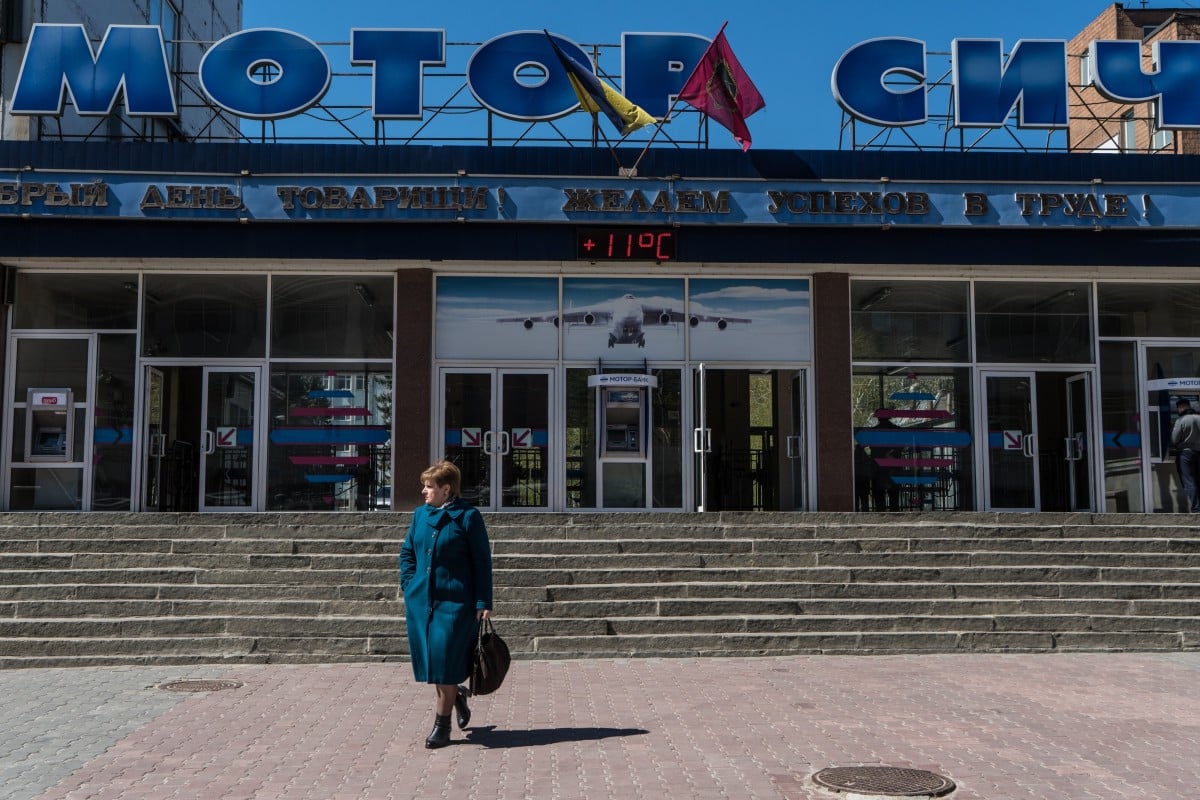
Chnia’s Skyrizon says it will appeal a Kiev court’s decision to block its purchase of Ukrainian aircraft engine maker Motor Sich. Photo: Getty Images

A court in Kiev has rejected an appeal by Chinese investors to unfreeze the shares of a Ukrainian aircraft engine maker, a setback for the Chinese company that sought to buy the Ukrainian firm in a deal opposed by the United States.

China’s Skyrizon Aircraft Holdings bought a majority stake in Motor Sich, but the shares were frozen in 2017 pending an investigation by Ukraine’s security service (SBU). Washington wants the deal scrapped.

The US and China have competed for influence in Ukraine since its relations with Moscow soured when Russia annexed the Crimea peninsula in 2014.

In its ruling, the court kept the shares frozen, citing the SBU investigation into whether selling Motor Sich sabotages national security by allowing sensitive technology into foreign hands. The ruling was dated March 13, shared with the parties this week.

Skyrizon plans further appeals, said a lawyer involved in the case, speaking anonymously due to the political sensitivity of the case. Zelensky’s office, the US embassy and the Chinese embassy did not respond to requests for comment. Motor Sich and the SBU declined to comment.

Motor Sich severed ties with Russia after the annexation of Crimea. Photo: Wikipedia
Motor Sich severed ties with Russia, its biggest client, after the annexation of Crimea. The wrangle over its future has held up efforts to find new markets, and supporters of a quick resolution say it is now operating at less than half capacity.

“Motor Sich has become a hostage to the geopolitical situation,” former prime minister Anatoliy Kinakh, chairman of an industrial union which has called for the government to resolve the dispute quickly, said.

The state’s anti-monopoly committee has launched its own investigation and says it is waiting to receive more documents before deciding whether to sanction the sale.

President Volodymyr Zelensky’s administration has had to balance strengthening ties to Beijing with keeping the United States, its biggest military aid donor, onside. In recent weeks, Beijing and Washington have both offered aid to Ukraine to fight the coronavirus.

At the moment it is a very difficult task when we have the biggest powers in the world and their interests are in conflict in Ukraine,” Oleksandr Danylyuk, a former top security official under Zelensky, said.

Source: SCMP

08/04/2020

Coronavirus: Carrie Lam takes pay cut, Hong Kong set for HK$138 billion in Covid-19 aid

  • Most of the relief fund earmarked to subsidise employees’ wages in affected industries
  • Lam and ministers slash their salaries following controversy over chief executive’s pay
Many businesses have been forced to close because of the coronavirus outbreak. Photo: Winson Wong

More than 1 million Hong Kong workers will have part of their wages paid for by the government under a HK$137.5 billion package of measures to help businesses and residents struggling during the Covid-19 crisis, while the city’s leader and her ministers have vowed to take a pay cut, the Post has learned.

Revealing the massive relief fund on Wednesday, Chief Executive Carrie Lam Cheng Yuet-ngor said HK$80 billion would go towards the wage scheme, targeting coronavirus-hit industries over six months with individual payments capped at 50 per cent of salaries, up to HK$9,000 a month. The employers receiving the lifeline must pledge not to lay off workers, she added.

Hong Kong records 25 new cases, including two-month-old baby; tally at 960

8 Apr 2020

Lam said the package, together with other recent pledges of financial relief, would cost a total of HK$287.5 billion, causing the budget deficit to surge from HK$139.1 billion this financial year to HK$276.6 billion, which is equivalent to 9.5 per cent of gross domestic product.

The relief deal is equivalent in size to 4.6 per cent of the city’s GDP.

Meanwhile, Lam’s monthly salary will fall to HK$390,000 after rising to HK$434,000 last July.

Lam and her 16 ministers had voluntarily agreed to a 10 per cent pay reduction for a year, the chief executive told the press conference.

The HK$137.5 billion deal – which was given the green light by her Executive Council earlier in the day – aims to safeguard employment and ease the woes of businesses, with the number of confirmed Covid-19 cases in the city reaching 960 on Wednesday.

A source said: “The scheme is aimed at coping with the economic hardship brought by the pandemic in the next six months. More than 1 million employees from various sectors, on top of those directly affected by the government’s social-distancing measures, will benefit.”

Staff affected by the latest social-distancing rules – including businesses forced to close – will benefit from the wage scheme, along with employees in sectors such as tourism and construction, two other sources said.

Some businesses set to benefit would be those related to education, such as tutorial centres, school bus operators and  PE coaches contracted from outside, according to one.

In February, the government unveiled a HK$30 billion fund that included 24 initiatives to help struggling sectors.
‘Lost faith’: EU’s top scientist quits over Covid-19 response
8 Apr 2020

“The government is drawing reference from the British government’s recent practice of paying 80 per cent of salaries of employees in affected industries, although the percentage and cap are lower in Hong Kong,” one source said.

In an unprecedented step announced last month, the UK government said the state would pay grants covering up to 80 per cent of salaries if companies kept workers on the payroll rather than laying them off.

In Singapore, the government has offered to pay 75 per cent of workers’ April wages, capped at S$4,600 (HK$25,000) per person.

The Japanese government on Tuesday approved its largest-ever economic relief package, which includes grants of up to 2 million yen (US$18,350), for small and medium-sized businesses whose revenues had more than halved.

Hongkonger recalls weeks of lockdown in Wuhan, China, the first epicentre of the Covid-19 pandemic
With the Hong Kong government sitting on reserves of more than HK$1.1 trillion, the Professional Commons think tank said the authorities should spend HK$200 billion on businesses and workers, including handing HK$7,500 a month over six months to sacked staff and covering 80 per cent of salaries up to a monthly maximum of HK$25,000 for workers at struggling firms and the self-employed.
Source: SCMP
19/03/2020

Rich world pumps aid to fight coronavirus, epicentre Europe reeling

LONDON/BEIJING (Reuters) – The world’s wealthiest nations poured unprecedented aid into the traumatized global economy on Thursday as coronavirus cases ballooned in the current epicentre Europe even as they waned at the pandemic’s point of origin, China.

With almost 219,000 infections and more than 8,900 deaths so far, the epidemic has stunned the world and drawn comparisons with painful periods such as World War Two, the 2008 financial crisis and the 1918 Spanish flu.

“This is like an Egyptian plague,” said Argentinian hotelier Patricia Duran, who has seen bookings dry up for her two establishments near the famous Iguazu Falls.

“The hotels are empty – tourist activity has died.”

Tourism and airlines have been particularly battered, as the world’s citizens hunker down to minimize contact and curb the spread of the flu-like COVID-19. But few sectors have been spared by a crisis threatening lengthy global recession.

On markets, investors have dumped assets everywhere, many switching to U.S. dollars as a safe haven. Other currencies hit historic lows, with Britain’s pound near its weakest since 1985.

Policymakers in the United States, Europe and Asia have slashed interest rates and opened liquidity taps to try to stabilise economies hit by quarantined consumers, broken supply chains, disrupted transport and paralysed businesses.

The virus, thought to have originated from wildlife on mainland China late last year, has jumped to 172 other nations and territories with more than 20,000 new cases reported in the past 24 hours – a new daily record.

Cases in Germany, Iran and Spain rose to over 12,000 each. An official in Tehran tweeted that the coronavirus was killing one person every 10 minutes.

LONDON LOCKDOWN?

Britain, which had sought to take a gradual approach to containment, was closing dozens of underground stations in London and ordering schools shut from Friday.

Some 20,000 military personnel were on standby to help and Queen Elizabeth was due to leave Buckingham Palace in the capital for her ancient castle at Windsor. Britain has reported 104 deaths and 2,626 cases, but scientific advisers say the real number of infections may be more than 50,000.

Italian soldiers transported corpses overnight from an overwhelmed cemetery in Europe’s worst-hit nation where nearly 3,000 people have died. Germany’s military was also readying to help despite national sensitivities over its deployment dating back to the Nazi era.

Supermarkets in many countries were besieged with shoppers stocking up on food staples and hygiene products. Some rationed sales and fixed special hours for the elderly.

Solidarity projects were springing up in some of the world’s poorest corners. In Kenya’s Kibera slum, for example, volunteers with plastic drums and boxes of soap on motorbikes set up handwashing stations for people without clean water.

Russia reported its first coronavirus death on Thursday.

Amid the gloom, China provided a ray of hope, as it reported zero new local transmissions in a thumbs-up for its draconian containment policies since January. Imported cases, however, surged, accounting for all 34 new infections.

The United States, where President Donald Trump had initially played down the coronavirus threat, saw infections close in on 8,000 and deaths reach at least 151.

Trump has infuriated Beijing’s communist government by rebuking it for not acting faster and drawn accusations of racism by referring to the “Chinese virus”.

“EXTRAORDINARY TIMES”

In a bewildering raft of financial measures around the world, the European Central Bank launched new bond purchases worth 750 billion euros ($817 billion). That brought some relief to bond markets and also halted European shares’ slide, though equities remained shaky elsewhere.

“Extraordinary times require extraordinary action,” ECB President Christine Lagarde said, amid concerns that the strains could tear apart the euro zone as a single currency bloc.

The U.S. Federal Reserve rolled out its third emergency credit programme in two days, aimed at keeping the $3.8 trillion money market mutual fund industry functioning.

China was to unleash trillions of yuan of fiscal stimulus and South Korea pledged 50 trillion won ($39 billion).

The desperate state of industry was writ large in Detroit, where the big three automakers – Ford Motor Co (F.N), General Motors Co (GM.N) and Fiat Chrysler Automobiles NV (FCHA.MI) (FCAU.N) – were shutting U.S. plants, as well as factories in Canada and Mexico.

With some economists fearing prolonged pain akin to the 1930s Great Depression but others anticipating a post-virus bounceback, gloomy data and forecasts abounded.

In one of the most dire calls, J.P. Morgan economists forecast the Chinese economy to drop more than 40% this quarter and the U.S. economy to shrink 14% in the next.

There was a backlash against conspiracy theories and rumours circulating on social media, with Morocco arresting a woman who denied the disease existed.

And in Brazil, where President Jair Bolsonaro initially labelled the virus “a fantasy”, more members of the political elite fell ill. At night, housebound protesters banged pots and pans, shouting “Bolsonaro out!” from their windows.

Source: Reuters

Law of Unintended Consequences

continuously updated blog about China & India

ChiaHou's Book Reviews

continuously updated blog about China & India

What's wrong with the world; and its economy

continuously updated blog about China & India