28/04/2020
QINGDAO, April 27 (Xinhua) — New cargo train services have been launched between east China’s Shandong Province and countries of Shanghai Cooperation Organization (SCO).
A train carrying 45 containers departed Monday from the intermodal transportation center of the demonstration zone for China-SCO local economic and trade cooperation in the city of Qingdao, according to the demonstration zone.
The train, loaded with excavators and land levelers worth a total of 20 million yuan (2.8 million U.S. dollars), is expected to arrive at Almaty, Kazakhstan, in eight days.
With the intermodal transportation center in Qingdao as the cargo distribution center, the monthly train services will deliver cargo to more than 30 cities of SCO countries, including Tashkent, Minsk and Ulan Bator.
Source: Xinhua
Posted in 30, Almaty, between, cargo, cargo distribution center, cargo train service, center, China, China-SCO, cities, City, containers, countries, days, deliver, demonstration, departed, east China's, eight, excavators, expected, including, intermodal, Kazakhstan, land levelers, launched, loaded, local economic, million, Minsk, Monday, monthly, more than, new, Qingdao, SCO countries, shandong province, Shanghai Cooperation Organization (SCO), Tashkent, to arrive, trade cooperation, Train, Train services, transportation, U.S. dollars, Ulan Bator, Uncategorized, yuan, zone |
Leave a Comment »
21/09/2019
ALMATY/NUR-SULTAN (Reuters) – Police detained dozens in Kazakhstan’s two largest cities on Saturday as they took part in the latest protest against China’s influence in the Central Asian republic.
Neighbouring China is already one of Kazakhstan’s largest investors and trade partners and a plan to relocate a number of Chinese plants and factories to the former Soviet republic has faced public opposition.
The latest round of protests on Saturday was organised by supporters of Mukhtar Ablyazov, a fugitive banker living in France who has been the fiercest critic of Kazakhstan’s first president, Nursultan Nazarbayev.
Nazarbayev resigned last March after running the oil-rich nation for almost thirty years, but retains sweeping powers as the head of the security council and the ruling Nur Otan party.
Kazakh authorities consider Ablyazov’s political movement extremist and involvement in its activities a crime. Authorities have detained 57 people and may be charged, the interior ministry said.
“You know that as of today’s date at 2 p.m. the banned DCK in Kazakhsan was called upon to gather… we (the police) asked people to disperse, and those who didn’t, were taken to the district offices for questioning,” Bakytzhan Malybayev, first deputy chief of Nur-Sultan police, told reporters. “We will carry out questioning and then the people will be released.”
Reuters reporters witnessed several arrests in Nur-Sultan and Almaty. In Kazakhstan’s capital Nur-Sultan, police detained a man with a banner reading: “Let’s not give way to Chinese expansion” and “The old man is the enemy”, an anti-Nazarbayev slogan. Several people chanted:”Freedom to political prisoners”.
Some protesters tried to escape as police moved in and smashed the windows of a police bus.
In Almaty, protesters were quickly taken away to police buses as they began chanting slogans against Chinese expansion and “Old man, go away!”
China is a major investor in Kazakhstan’s energy sector and buys oil and gas from the mostly Muslim nation of 18 million, but critics accuse some Chinese companies – as well as Western ones – of hiring too few local staff and paying them less than foreign workers.
Source: Reuters
Posted in Almaty, anti-China, Central Asian republic, detained, Dozens, Kazakhstan, Mukhtar Ablyazov, Muslim nation, Nur-Sultan, Nursultan Nazarbayev, Old man, go away!, protests, Uncategorized |
Leave a Comment »
12/02/2019
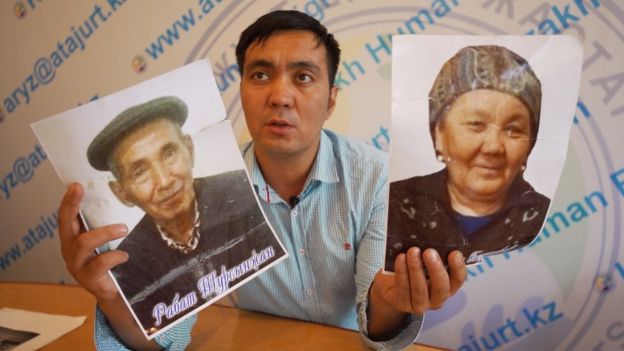
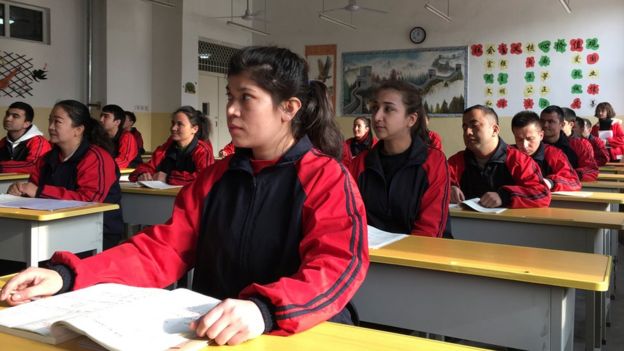
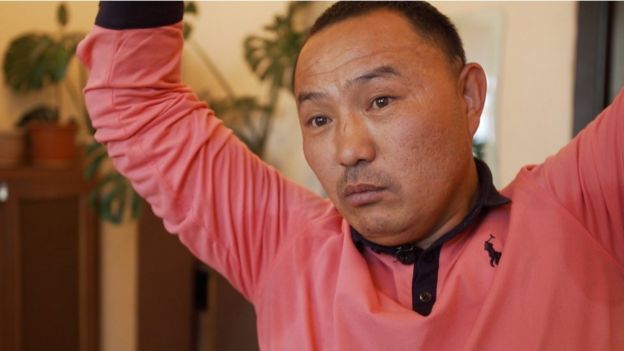
Posted in Aibota Serik, Almaty, Bekmurat Nusupkan uulu, China alert, Chinese camps, hell, Human Rights Watch, imam, Kazakh, Kudaybergen Serik, Nurbulat Tursunjan uulu, Orynbek Koksybek, Tarbagatay (Tacheng), Uighur, UN Committee on the Elimination of Racial Discrimination, Uncategorized, Xinjiang |
Leave a Comment »




 CHINDIA ALERT: You'll be living in their world, very soon