04/09/2019
- Researchers say they have developed a substance that is 13 times better in tests than widely used alternative
- Experiments could help solve a power source problem that has plagued commercial and military devices
Scientists at the Fujian Institute of Research on the Structure of Matter think they have found a super efficient crystal to make high-energy beams from low-energy lasers. Photo: Alamy
Scientists in southeast China say they have synthesised a crystal with the potential to significantly improve the performance of lasers used in consumer and military equipment.
Crystals of caesium bismuth germanate (CBGO) can turn low-energy beams into high-energy emissions with unparalleled efficiency, according to Professor Mao Jianggao, team leader at the Fujian Institute of Research on the Structure of Matter, part of the Chinese Academy of Sciences, in Fuzhou.
The team looked at several candidate crystals in their experiments. Compared with widely used potassium dihydrogen phosphate crystals, the CBGO crystal was 13 times more efficient at turning infrared lasers into more energised green beams.
“This is a record performance,” Mao said on Tuesday. “This is why we think the crystal may have potential.”
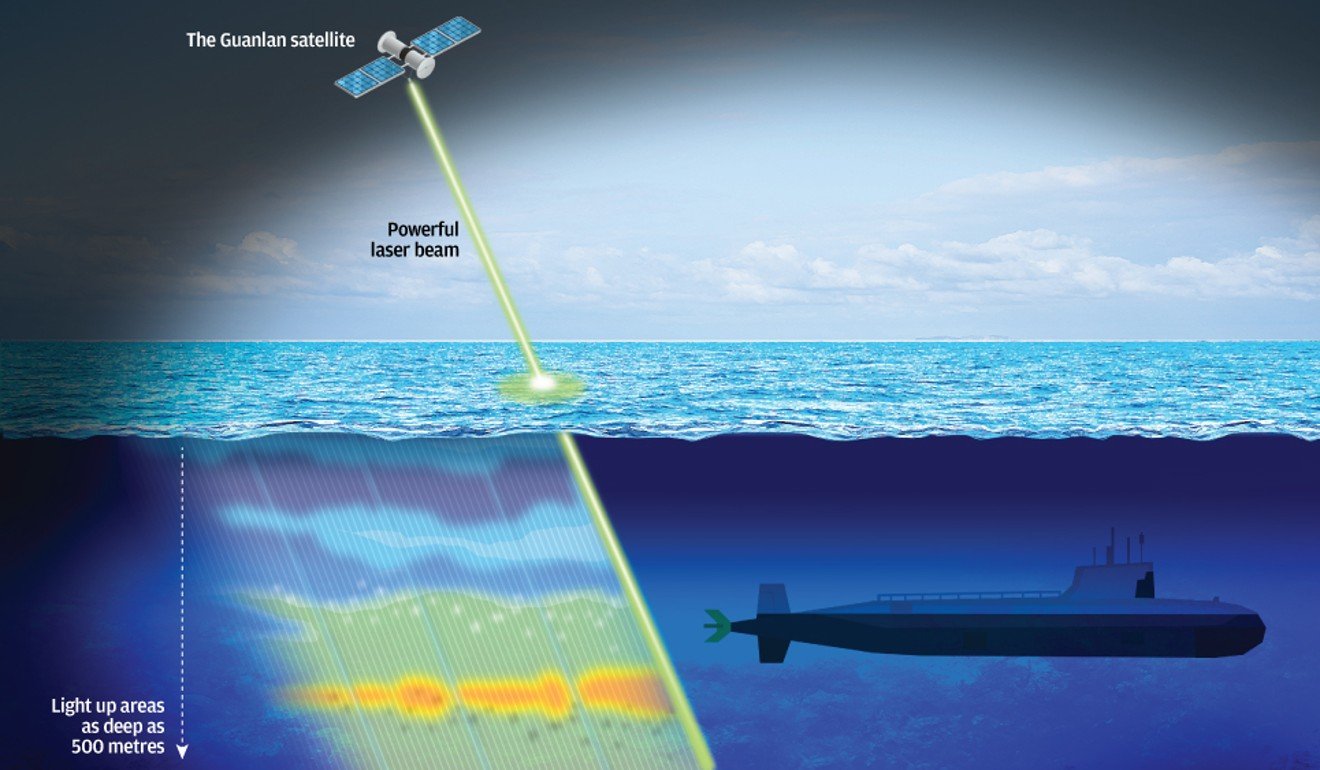
China’s prototype Guanlan anti-submarine warfare satellite uses a high-energy laser to sweep beneath the sea to a depth of 500 metres. Illustration: SCMP
Their findings were published in the German weekly scientific peer-reviewed journal Angewandte Chemie, or Applied Chemistry, last month.
The researchers said CBGO crystals could be a way around a problem that has limited the performance of lasers – the huge amount of electricity needed to power them.
China is building world’s most powerful laser radar to study Earth’s solar shield
The demand on power is great because existing technology is not efficient at converting low-energy beams to high-energy ones – one reason that laser weapons are not yet as common as scientists predicted in the 1960s.
CBGO belongs to a family known as non-linear crystals, which cause abrupt changes to energy that passes through them. The scientists found that CBGO crystals could double the frequency of a laser beam.
As high-energy lasers can be created by merging two low-energy photons, or particles of light, a process known as frequency doubling, CBGO crystals are an ideal medium, and the higher frequency of the laser, the more energy it carries.
Many military and civilian applications required high-energy beams, they said. These included directed energy weapons designed to destroy drones or missiles, or China’s prototype Guanlan anti-submarine warfare satellite, which will use a green laser to penetrate water to a depth of 500 metres (1,640 feet) to detect a target.
Mao said his team’s research was at an early stage and that years of testing would be needed before the CBGO crystals found their way to market.
The CBGO crystal grown in the Fuzhou laboratory was the size of a grain of sand, he said. For industrial use, crystals would need to be at least the size of a dice.
Growing them was a very slow and challenging job, and there was no certainty that CBGO crystals could be grown on an industrial scale, Mao said.
Chinese military could soon disable sensors on enemy missiles using suitcase-sized device after ‘groundbreaking’ study on ultrafast lasers
China is a world leader in crystal research, and some of those most commonly used in laser devices were developed by Chinese scientists thanks to heavy investment from central government.
Professor Li Qiang, deputy director with the Institute of Laser Engineering at Beijing University of Technology, said the discovery of CBGO was encouraging, but its success should be evaluated not only on its efficiency, but also on attributes such as mechanical strength, tolerance to laser damage, and stability in extreme environments such as high humidity.
“Lots of crystals have been proposed over the decades, but only a handful are useful. It’s a high-risk business,” Li said. “China has achieved a leading position in this field not because of luck, but by continuous effort by several generations of researchers through countless failures.”
Source: SCMP
Posted in Angewandte Chemie, Applied Chemistry, Beijing University of Technology, caesium bismuth germanate (CBGO), CBGO, Central government, China’s laser technology, Chinese Academy of Sciences, chinese military, consumer and military equipment, crystal research, crystals, disable sensors, enemy missiles, energised green beams, Fujian Institute of Research on the Structure of Matter, Fuzhou, Guanlan anti-submarine warfare satellite, heavy investment, high-energy beams, infrared lasers, Institute of Laser Engineering, leap forward, low-energy lasers, military and civilian applications, potassium dihydrogen phosphate crystals, suitcase-sized device, super efficient crystal, ultrafast lasers, Uncategorized |
Leave a Comment »
14/08/2019
- Scientists’ large-scale conversion of agricultural waste into fuel offers savings up to 60 per cent, they say
- Discovery could slash military costs and bring civilian applications of hypersonic flight technology closer
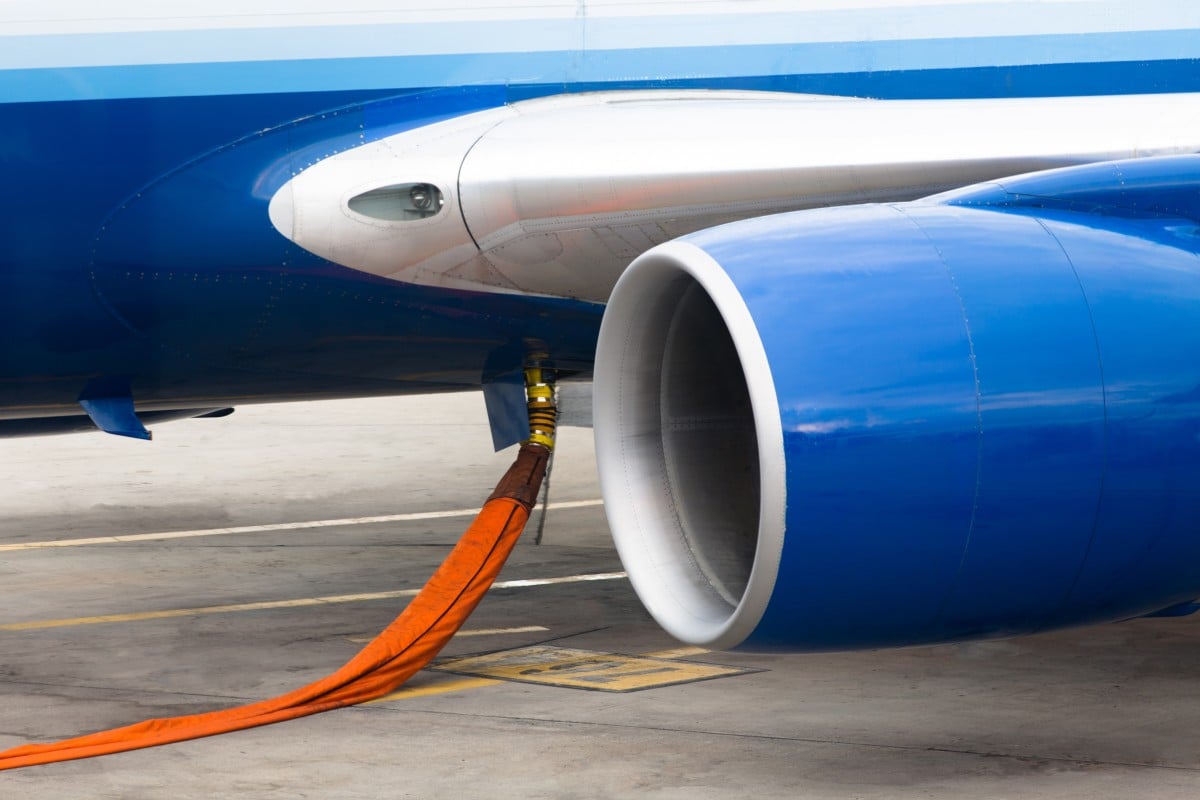
Super-fuel for military aircraft costs nearly 10 times as much as ordinary jet fuel for commercial planes. Photo: Shutterstock
Chinese scientists say they have developed a technology to convert bio-waste into fuel for missiles and hypersonic planes, reducing fuel costs by as much as 60 per cent.
The existing JP-10 super-fuel for military aircraft has numerous advantages including high energy density, good thermal stability and low freezing point, but it costs more than US$7,000 per tonne – nearly 10 times as much as ordinary jet fuel for commercial aircraft.
It is used mainly in cruise missiles and ramjet or scramjet engines on new-generation aircraft travelling at hypersonic speed, or five times faster than sound.
Scientists from the Dalian Institute of Chemical Physics, at the Chinese Academy of Sciences in the northeastern province of Liaoning, predicted using the new technology in the near future could reduce the cost to as low as US$2,547 per tonne.
The secret, according to their paper, published in the latest issue of German chemistry journal Angewandte Chemie, lies in cheap bio-waste.
Using agricultural and forestry residues including bran, chaff and mill dust, Professor Zhang Tao, Li Ning and colleagues discovered new chemical processes that can turn the waste to JP-10 fuel on a large scale with unprecedented efficiency.
At present, the super-fuel comes from coal tar or naphtha, and the synthesis is extremely costly and unfriendly to the environment.
The bio-JP-10 fuel can be produced by two different methods, one involving six steps of chemical reactions and the other only four, according to the paper.
China’s plan to make jet fuel from restaurant leftovers
Combining these methods with the latest technology in biomass conversion, the researchers said, the super-fuel can be mass-produced at a price equivalent to that of some of the bio-jet fuels already in commercial use, thanks to government subsidies provided for their environmental benefits.
“We believe that the future commercialisation of bio-JP-10 fuel is very promising, especially taking policy support and exemption from CO2 emission tax into consideration,” the authors wrote in the paper.
Liu Huoxing, professor at the school of energy and power engineering at Beijing University of Aeronautics and Astronautics, said civilian applications of hypersonic flight technology faced many challenges that remained to be solved, with the problem of high fuel prices being one of the headaches.
“No airline will buy a plane if the fuel costs too much, however fast it can fly,” he said.
Liu, who conducts research on engine technology for
hypersonic vehicles but was not involved in the Dalian study, said the reduction of production costs for jet fuel was usually incremental and it was quite rare to see a significant drop.
“This can be an important development,” he said of the Dalian findings.
China is developing various models of hypersonic speed aircraft for military and civilian use. Some are aimed at flying distances such as Shanghai to Los Angeles in a couple of hours.
Posted in agricultural waste, Angewandte Chemie, Beijing University of Aeronautics and Astronautics, bio-waste, biomass conversion, bran, chaff, cheap, China alert, Chinese Academy of Sciences, civilian applications, coal tar, commercialisation, costly, cruise missiles, Dalian Institute of Chemical Physics, Dalian study, Environment, faster than sound, forestry residues, hours, hypersonic flight technology, Hypersonic speed, jet fuel, JP-10 super-fuel, Liaoning, Los Angeles, mass-produce, Military aircraft, mill dust, missiles, naphtha, ramjet engines, restaurant leftovers, school of energy and power engineering, scramjet engines, Shanghai, super-fuel, synthesis, Uncategorized, unfriendly |
Leave a Comment »




 CHINDIA ALERT: You'll be living in their world, very soon