Chindia Alert: You’ll be Living in their World Very Soon
aims to alert you to the threats and opportunities that China and India present. China and India require serious attention; case of ‘hidden dragon and crouching tiger’.
Without this attention, governments, businesses and, indeed, individuals may find themselves at a great disadvantage sooner rather than later.
The POSTs (front webpages) are mainly 'cuttings' from reliable sources, updated continuously.
The PAGEs (see Tabs, above) attempt to make the information more meaningful by putting some structure to the information we have researched and assembled since 2006.
Image copyright GETTY IMAGESImage caption Delhi’sair quality has improved remarkably during the shutdown
When India shut down last month and suspended all transport to contain the spread of coronavirus, the skies over its polluted cities quickly turned an azure blue, and the air, unusually fresh.
As air pollution plummeted to levels unseen in living memory, people shared pictures of spotless skies and even Himalayan peaks from cities where the view had been obscured by fog for decades.
On one social messaging group, a resident of the capital, Delhi, which regularly records some of the foulest air in the world, celebrated the city’s “alpine weather“. Politician and author Shashi Tharoor wrote that the “blissful sight of blue skies and the joy of breathing clean air provides just the contrast to illustrate what we are doing to ourselves the rest of the time”.
Media caption India coronavirus lockdown cleans up Ganges river
Less than six months ago, Delhi was gasping for breath. Authorities said air quality had reached “unbearable levels”. Schools were shut, flights were diverted, and people were asked to wear masks, avoid polluted areas and keep doors and windows closed.
Delhi and 13 other Indian cities feature on a list of the world’s 20 most polluted. It is estimated that more than a million Indians die every year because of air pollution-related diseases. Industrial smoke, vehicular emissions, burning of trash and crop residue, and construction and road dust are the major contributors.
As urban Indians gazed at the skies and breathed clean air inside their homes, researchers hunkered down to track data on how the grinding lockdown – now extended to 3 May – was impacting air pollution across the country.
Image copyright GETTY IMAGESImage caption Lucknow is another city on the top 20 world’s most polluted list
“This was an unprecedented opportunity for us to take a close look at how air pollution levels have responded to an extraordinary development,” Sarath Guttikunda, who heads Urban Emissions, an independent research group that provides air quality forecasts, told me.
Dr Guttikunda and his team of researchers looked at the data spewed out by the 100-odd air quality monitoring stations all over India. They decided to concentrate on the capital Delhi and its suburbs – a massive sprawl called the National Capital region, where more than 20 million people live. Last winter, air pollution here had reached more than 20 times the World Health Organization’s safe limit.
Image copyright HINDUSTAN TIMESImage caption The financial capital Mumbai also seems very different
The deadliest particle in Delhi’s foul air is the tiny but deadly PM 2.5, which increases the likelihood of respiratory and cardiovascular diseases. They primarily come from combustion – fires, automobiles and power plants.
Urban Emissions found the levels of PM 2.5 in Delhi during the lockdown plummeted to 20 micrograms per cubic metre with a 20-day average of 35.
To put this into context, between 2017 and 2019, the monthly average of PM 2.5 in the capital was up to four times higher. (The national standard is set at 40, and the WHO has an annual average guideline of just 10 micrograms per cubic metre.)
“If 35 is the average lowest available PM2.5 with limited local emissions, it means that at least 70% of the pollution is locally generated,” Mr Guttikunda told me.
Media caption India coronavirus lockdown cleans up Ganges river
His study also found a marked dip in PM 10, caused mainly by road and construction dust, and nitrogen dioxide, which comes mainly from vehicular emissions, and nearly 90% of vehicles are off the road.
“The current crisis has shown us that clear skies and breathable air can be achieved very fast if concrete action is taken to reduce burning of fossil fuels,” says Sunil Dahiya, of the Centre for Research on Energy and Clean Air, which has also been tracking air pollution levels during the lockdown.
But will this prompt change? After all, urban Indians’ and the media’s panic and outrage during the deadly winter pollution every year soon gets lost in the fog of summer heat and concerns over monsoon rains and droughts.
“We don’t yet have a democratic demand for clean air,” Arunabha Ghosh, Chief Executive Officer of the Council on Energy, Environment and Water, a leading climate think tank, told me. Orders to clean up the air have almost always come from the courts, responding to pleas by NGOs.
Image copyright GETTY IMAGESImage caption Pollution in Delhi peaks during winter
However, Dr Ghosh still hopes that “the experience of blue skies and fresh air could be a trigger to create a democratic demand for clean air in India”.
Crises often trigger life changing reforms. A fatal four-day “pea-souper” that engulfed London in 1952 and killed thousands provoked the passing of the Clean Air Act to reduce the use of smoky fuels.
China tried to clean up its air several times before hosting marquee international events – like the Beijing Olympics in 2008, the World Expo in Shanghai and the Guangzhou Asian Games in 2010 – before sliding back to grey, smoky skies.
But many believe the 2014 Apec meeting in Beijing, when China hosted 21 heads of Asia-Pacific economies, was a turning point. The rare blue skies over Beijing spawned the phrase ‘Apec blue‘. In a rush to clean its air, China introduced a set of far-reaching measures. Over the next four years, this resulted in a 32% drop in average pollution across major Chinese cities.
So could a lockdown to prevent the spread of a pandemic, which has imperilled the health and livelihoods of millions, trigger similar policy changes to clean up India’s air?
Image copyright GETTY IMAGESImage caption The movement for clean air has been sporadic and mainly pushed by NGOs
Could it move to a shift in reducing traffic on the road by asking people to work from home in shifts now that millions have experienced clean air for the first time in years? (Facing energy shortages after the loss of the Fukushima nuclear power plant, Japan unleashed a Cool Biz campaign to cut down air conditioning in workplaces and reduce carbon emissions by asking office workers to shed their suits.)
Or can India use some of the money from an inevitable stimulus to help kick-start the economy go towards helping green industries? Renewables, experts say, creates more jobs than coal: India has already created nearly 100,000 jobs in solar and wind energy firms.
Can the country use the windfall revenues accruing from the steep decline in oil prices – most of India’s oil is imported – to provide rebates to polluting factories to set up much-needed emission control equipment?
“We have to learn lessons to deploy the economic recovery from the pandemic. We need growth, jobs and sustainable development,” says Dr Ghosh. Cleaning up the air could be the key. For too long, India – and Indians – have ignored their right to breathe easy.
What’s more, if China can reduce air pollution by 32% in four-and-a-half years, why can’t India pledge to reduce pollution by 80% in 80 cities by 2027, which is our 80th anniversary of Independence? asks Dr Ghosh.
SEOUL (Reuters) – South Korean and Chinese officials on Tuesday cast doubt on reports North Korean leader Kim Jong Un was ill after media outlets said he had undergone a cardiovascular procedure and was in “grave danger”.
Daily NK, a Seoul-based speciality website, reported late on Monday, citing one unnamed source in North Korea, that Kim was recovering after undergoing the procedure on April 12. The North Korean leader is believed to be about 36.
CNN cited a U.S. official with direct knowledge of the matter as saying Washington was “monitoring intelligence” that Kim was in grave danger after surgery. Bloomberg quoted an unnamed U.S. official as saying the White House was told that Kim took a turn for the worse after the surgery.
However, two South Korean government officials rejected the CNN report without elaborating on whether Kim had undergone surgery. The presidential Blue House said there were no unusual signs coming from the reclusive, nuclear-capable state.
Kim is the unquestioned leader of North Korea and the sole commander of its nuclear arsenal. He has no clear successor and any instability in the country could be a major international risk.
RELATED COVERAGE
Factbox: Questions hang over North Korea succession amid reports on Kim health
The state KCNA news agency gave no indication of the whereabouts of Kim in routine dispatches on Tuesday, but said he had sent birthday gifts to prominent citizens.
An official at the Chinese Communist Party’s International Liaison Department, which deals with North Korea, told Reuters the source did not believe Kim was critically ill. China is North Korea’s only major ally.
Chinese foreign ministry spokesman Geng Shuang said Beijing was aware of reports about the health of Kim, but said it does not know their source, without commenting on whether it has any information about the situation.
South Korean shares exposed to North Korea tumbled and the Korean won fell on the reports. The won traded down more than 1% against the dollar even as South Korean government sources said Kim was not gravely ill.
U.S. stock futures were trading 0.5% lower, but it was not clear how much of that weakness was owing to the collapse in U.S. oil prices and consequent concerns over global demand.
Daily NK said Kim had been admitted to hospital on April 12, just hours before the cardiovascular procedure, as his health had deteriorated since August due to heavy smoking, obesity and overwork.
It said he was now receiving treatment at a villa in the Mount Myohyang resort north of the capital Pyongyang.
“My understanding is that he had been struggling (with cardiovascular problems) since last August but it worsened after repeated visits to Mount Paektu,” a source was quoted as saying, referring to the country’s sacred mountain.
Accompanied by senior North Korean figures, Kim took two well-publicised rides on a stallion on the snowy slopes of the mountain in October and December.
KIM’S HEALTH KEY TO STABILITY
An authoritative U.S. source familiar with internal U.S. government reporting on North Korea questioned the CNN report that Kim was in “grave danger”.
“Any credible direct reporting having to do with Kim would be highly compartmented intelligence and unlikely to leak to the media,” a Korea specialist working for the U.S. government said on condition of anonymity.
Japan’s top government spokesman, Yoshihide Suga, declined to comment on the reports of Kim’s health.
“We are regularly gathering and analysing information about North Korea with great concern,” he said. “We will keep gathering and analysing information regarding North Korea by collaborating with other countries such as the U.S.”
Kim’s potential health issues could fuel uncertainty over the future of the reclusive state’s dynastic rule and stalled denuclearisation talks with the United States, issues in which Kim wields absolute authority.
With no details known about his young children, analysts say his sister and loyalists could form a regency until a successor is old enough to take over.
Speculation about Kim’s health first arose following his absence from the anniversary of the birthday of its founding father and Kim’s grandfather, Kim Il Sung, on April 15.
On April 12, North Korean state media reported that Kim Jong Un had visited an airbase and observed drills by fighter jets and attack aircraft.
Two days later North Korea launched multiple short-range anti-ship cruise missiles into the sea and Sukhoi jets fired air-to-surface missiles as part of military exercises.
The missile launches were part of the celebrations for Kim’s grandfather, Seoul officials said, but there was no North Korea state media report on his attendance or the tests.
Reporting from inside North Korea is notoriously difficult, especially on matters concerning the country’s leadership, given tight controls on information. There have been false and conflicting reports in the past on matters related to its leaders.
Kim is a third-generation hereditary leader who rules North Korea with an iron-fist, taking over the titles of head of state and commander in chief of the military since late 2011.
In recent years Kim has launched a diplomatic offensive to promote both himself as a world leader and his hermit kingdom, holding three meetings with U.S. President Donald Trump, four with South Korean President Moon Jae-in and five with China’s President Xi Jinping.
He was the first North Korean leader to cross the border into South Korea to meet Moon in 2018. Both Koreas are technically still at war, as the Korean War of 1950-53 ended in an armistice, not a peace treaty.
Kim has sought to have international sanctions against his country eased, but has refused to dismantle his nuclear weapons programme, a steadfast demand by the United States.
Zhuhai police, at the end of the world’s longest sea bridge, use body armour and tear gas in preparation for Macau’s 20th anniversary celebration
Hong Kong is just an hour’s drive away from Macau using the bridge
More than 1,000 police officers took part in the anti-terror drill in Zhuhai. Photo: Toutiao
Armed police in the southern Chinese city of Zhuhai held a massive anti-terror drill at its end of the Hong Kong-Zhuhai-Macau Bridge on Friday morning as part of its preparations for the 20th anniversary of the handover of Macau, when President Xi Jinping is expected to visit the city.
More than 1,000 police officers and 80 vehicles were involved in the exercise, amid
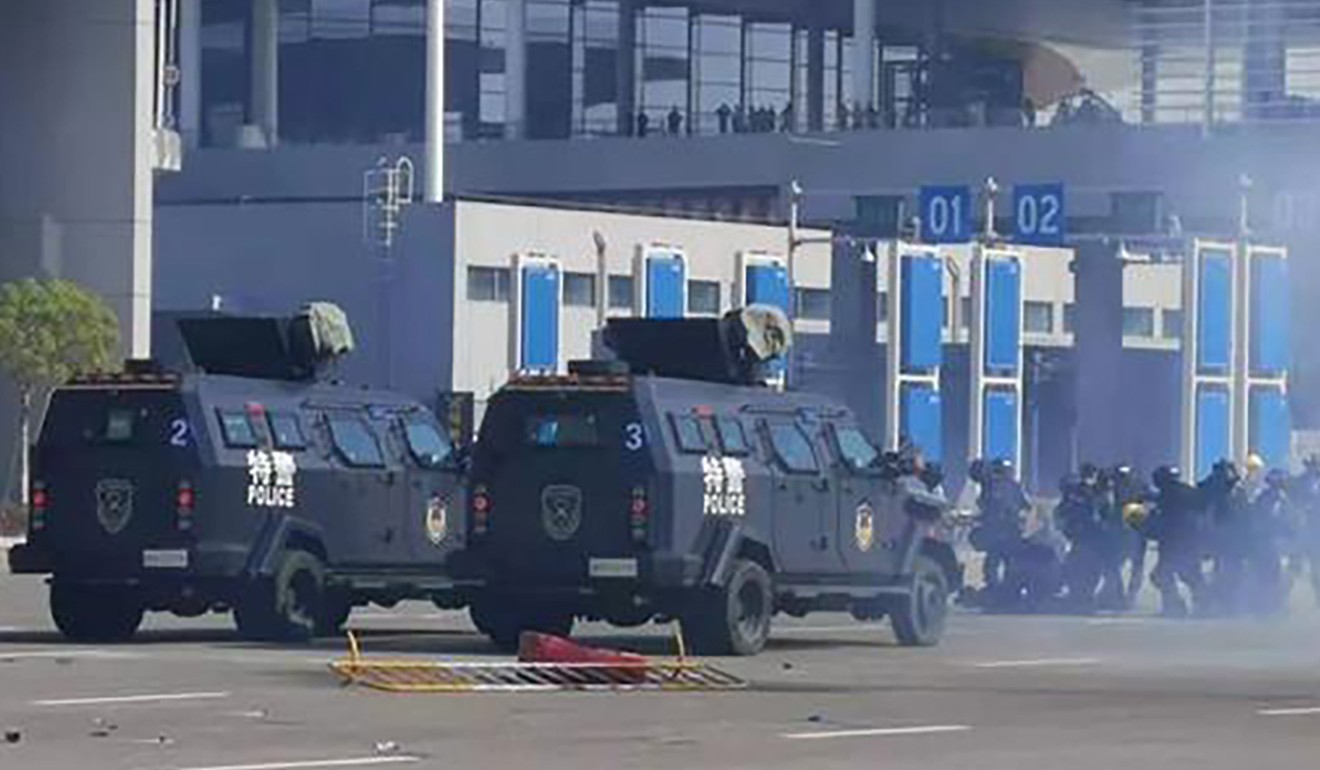
Photos circulated online showed officers in body armour, helmets and shields firing tear gas as they confronted a group of people carrying sticks and wearing black shirts and yellow helmets – attire associated with the protesters in Hong Kong, 60km (37 miles) away from Macau.
The drill was held three weeks before the 20th anniversary of Macau’s return to Chinese administration under the “one country, two systems” policy on December 20.
Police trucks and riot officers during Friday’s exercise at the Zhuhai end of the Hong Kong-Zhuhai-Macau Bridge. Photo: Toutiao
Security is expected to be tightened when Xi visits the city, in response to the violent clashes in Hong Kong over the past six months, which Beijing has repeatedly blamed on radical protesters.
The former Portuguese colony is connected to Hong Kong and its neighbouring city of Zhuhai, Guangdong province, by the world’s longest sea crossing bridge. It takes about an hour to drive from Hong Kong to Macau via the bridge.
Guo Yonghang, Zhuhai party chief, urged the local police to stay loyal to the party. “[Police] should be loyal and fulfil duty and mission to create a peaceful and stable political and social environment for the construction of the Guangdong-Hong Kong-Macau Greater Bay Area and the celebration of the 20th anniversary of Macau’s reunification to the motherland,” he said.
Macau was returned to China two years after Hong Kong and celebrations of its success under one country, two systems could be overshadowed by its neighbour’s anti-government protests which stemmed from opposition to proposed extradition legislation and have escalated into violence on the streets and in university campuses.
In August, two months after more than 2 million people in Hong Kong took to the streets to protest the now-suspended extradition bill, police in Shenzhen held at least three drills featuring anti-riot exercises involving tear gas, armoured vehicles and water cannon.
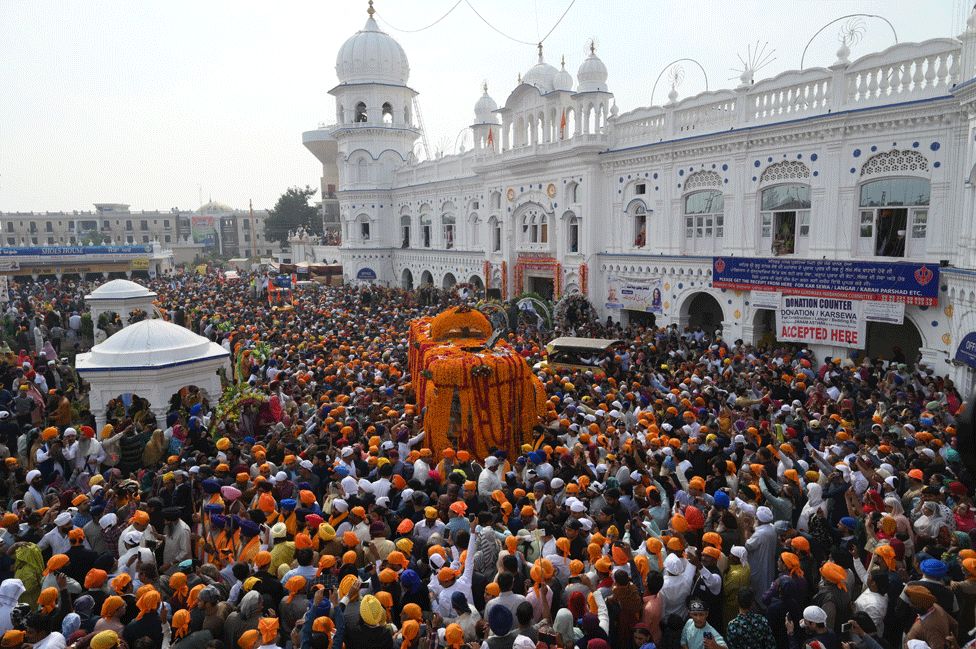
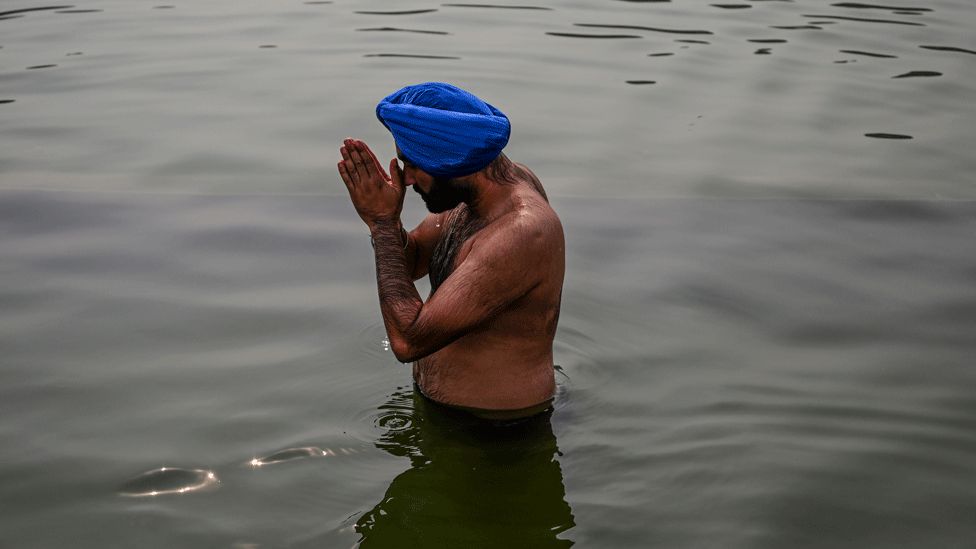
Image copyright AFPCelebrations have taken place in India and Pakistan to mark the 550th anniversary of the birth of Guru Nanak – the founder of Sikhism.
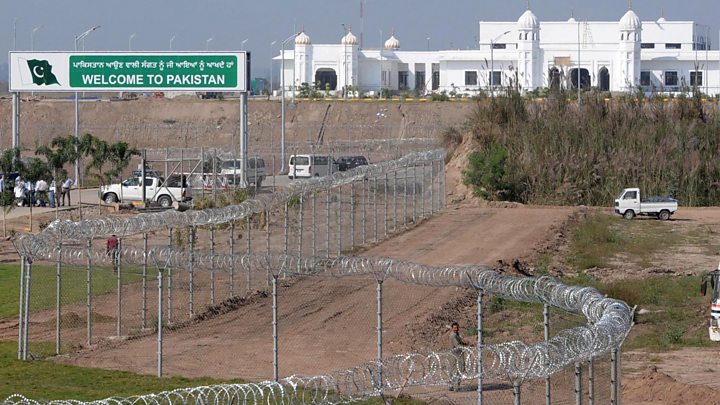
The anniversary comes just a few days after the historic opening of the Kartarpur corridor, which allows Indians access to one of Sikhism’s holiest shrines in Pakistan without having to apply for a visa.
Tensions between the neighbours have made it difficult for Indian pilgrims to visit the site in Pakistan in recent years. But an agreement reached last month allows Indians to make the 4km (2.5-mile) crossing to the Gurdwara Darbar Sahib Kartarpur – where Guru Nanak spent the last 18 years of his life.
On Tuesday, Sikh pilgrims in Pakistan gathered at Nankana Sahib, the birth place of Guru Nanak, which is about 80km (50 miles) from the city of Lahore.
Image copyright AFP
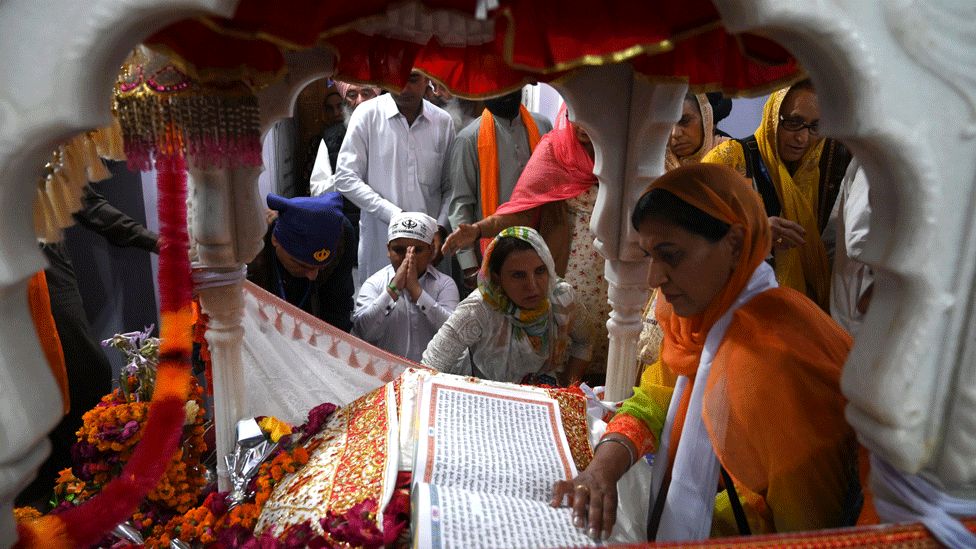
Large numbers of devotees, including women, took part in the religious rituals.
Image copyright AFP
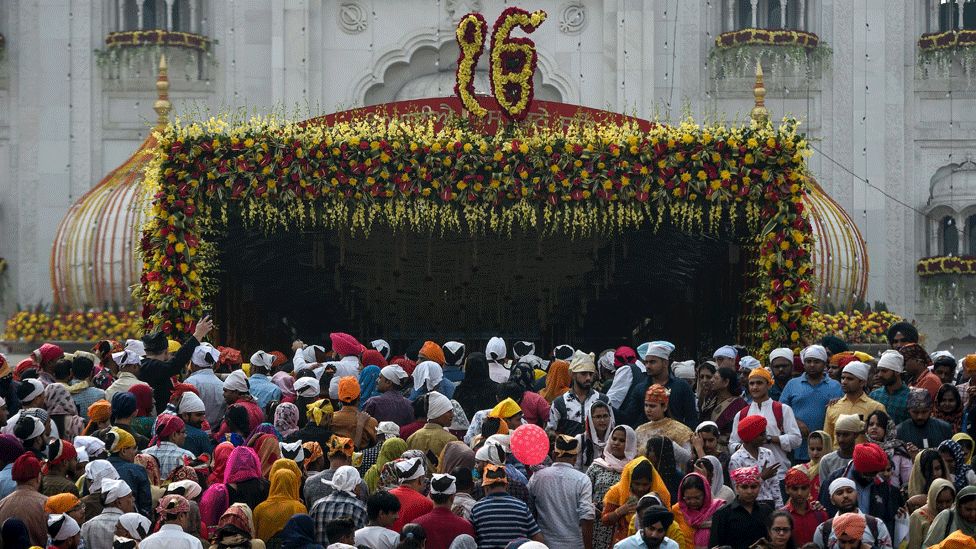
The auspicious day for Sikhs was also marked in India, where Guru Nanak’s birth anniversary is an annual public holiday.
Image copyright AFPSikh devotees gathered in huge numbers at the Bangla Sahib Gurdwara in the capital Delhi.Image copyright AFP
Indian Prime Minister Narendra Modi greeted the nation on the occasion, saying it was “a day to rededicate ourselves” to Guru Nanak’s “dream of a just, inclusive and harmonious society”.
Though Guru Nanak’s anniversary is an important event for Sikhs annually, this time the celebrations were more special due to the opening of the Kartarpur corridor.
Devotees from across the world visit the Kartarpur shrine every year to commemorate his birth. Indian Sikhs will now be able to visit with just their passports, but they will not be allowed to leave the site or stay overnight.
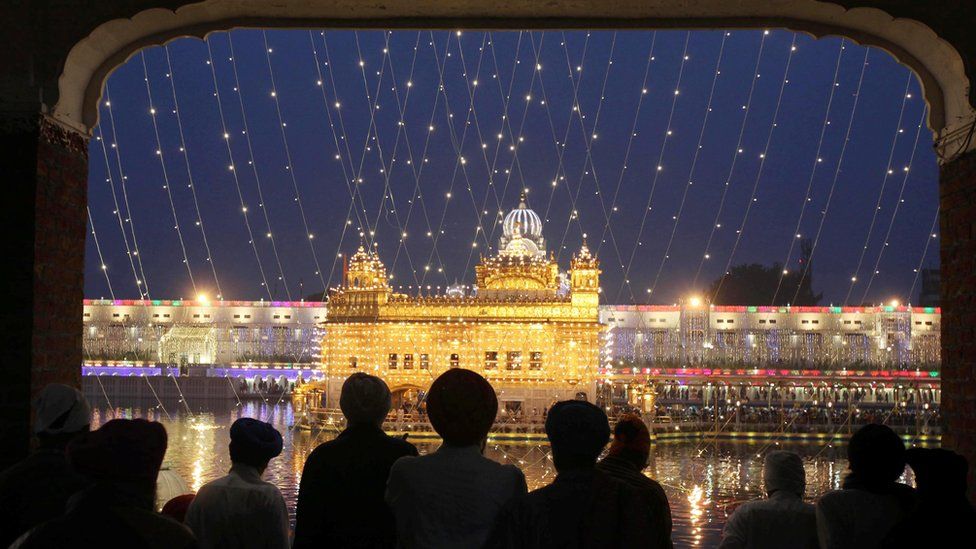
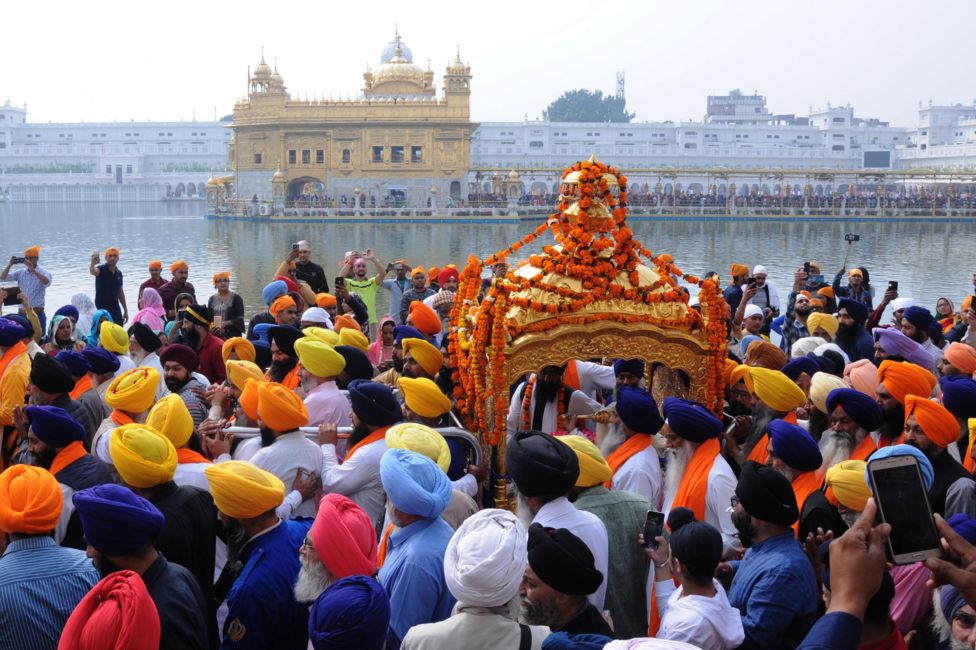
The Golden Temple in Amritsar, in north-western India, is the holiest Gurdwara (where Sikhs worship). On the eve of the anniversary, it was lit up to host processions as Sikh worshippers took part in the three-day celebration of Guru Nanak’s birth.
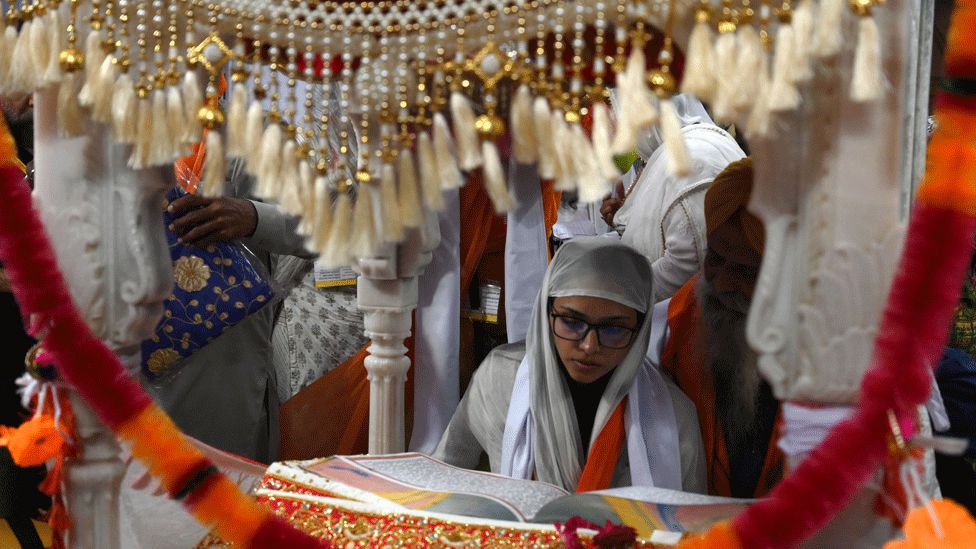
Image copyright REUTERSOn the first day of the celebrations, Sikhs read the Sikh holy book – the Guru Granth Sahib – from beginning to end.
NEW DELHI (Reuters) – Indian Prime Minister Narendra Modi called on the nation to work toward ending the consumption of single-use plastics by 2022, in a speech on Wednesday.
“Hygiene, protection of environment and protection of life were of keen interest to Gandhi,” said Modi, speaking on the anniversary of the freedom movement leader’s birth. “Plastic is dangerous to all these three goals. So we need to reach the goal of ending single-use plastic by 2022.”
Meanwhile, India held off a plan to impose a blanket ban on single-use plastics as it was seen as a measure too disruptive for industry at a time when India is dealing with an economic slowdown and job losses, officials told Reuters on Tuesday.
In a tweet on Wednesday, India’s environment ministry however, denied that it had planned to issue a ban.
“India, today is on the verge of starting a historic movement against #SingleUsePlastic, setting an example for the world. At such a time, discovering a shelved ban, when none was planned is indeed misleading & doesn’t do justice to its fight against single use plastic,” the ministry said in a tweet.
Reuters had in August reported that India was set to impose a nationwide ban on plastic bags, cups and straws on Oct. 2, in a sweeping measure to stamp out single-use plastics from cities and villages that rank among the world’s most polluted.
Concerns are growing worldwide about plastic pollution, especially in oceans, where nearly 50% of single-use plastic products end up, killing marine life and entering the human food chain, studies have shown.
You Quan, a member of the Secretariat of the Communist Party of China (CPC) Central Committee and head of the United Front Work Department of the CPC Central Committee, attends a symposium to commemorate the 74th anniversary of the victory in the Chinese People’s War of Resistance Against Japanese Aggression and the World Anti-Fascist War in Beijing, capital of China, Sept. 3, 2019. (Xinhua/Shen Hong)
BEIJING, Sept. 3 (Xinhua) — China on Tuesday held a symposium to commemorate the 74th anniversary of the victory in the Chinese People’s War of Resistance Against Japanese Aggression and the World Anti-Fascist War.
You Quan, a member of the Secretariat of the Communist Party of China (CPC) Central Committee and head of the United Front Work Department of the CPC Central Committee, joined about 200 representatives from various sectors at the event in Beijing.
Participants including Party officials, military officers, war veterans and student representatives spoke highly of the great achievements made by the Chinese people in safeguarding national independence and liberty and protecting the sovereignty and sanctity of the country at the symposium.
Families of war heroes, representatives of non-Communist parties and foreigners who contributed to China’s war against Japanese aggression also attended the symposium.
CAIRO, July 28 (Xinhua) — The Chinese Embassy in Cairo hosted a ceremony on Sunday evening to celebrate the 92nd anniversary of the founding of the Chinese People’s Liberation Army (PLA), which falls on Aug. 1.
“The Chinese People’s Liberation Army (PLA) is always an army that serves the people wholeheartedly,” said Chinese Ambassador to Egypt Liao Liqiang in the opening speech, noting the PLA has made great historic contributions to China’s national liberation and prosperity for the past 92 years under the leadership of the Communist Party of China.
As challenges are on the rise around the world, the PLA is always determined to preserve global peace. So far, China has participated in 24 UN peacekeeping missions and has sent more than 40,000 peacekeepers, Liao added.
In terms of the cooperation between Chinese and Egyptian militaries, Liao stressed that the two armies have made great achievements by strengthening high-level exchanges and cooperation in personnel training, equipment technology and other areas.
During the ceremony, guests lauded China’s contributions to regional and global peace and development, looking forward to strengthening military cooperation between China and Egypt.
BEIJING (Reuters) – It’s the most sensitive day of the year for China’s internet, the anniversary of the bloody June 4 crackdown on pro-democracy protests at Tiananmen Square, and with under two weeks to go, China’s robot censors are working overtime.
Censors at Chinese internet companies say tools to detect and block content related to the 1989 crackdown have reached unprecedented levels of accuracy, aided by machine learning and voice and image recognition.
“We sometimes say that the artificial intelligence is a scalpel, and a human is a machete,” said one content screening employee at Beijing Bytedance Co Ltd, who asked not to be identified because they are not authorised to speak to media.
Two employees at the firm said censorship of the Tiananmen crackdown, along with other highly sensitive issues including Taiwan and Tibet, is now largely automated.
Posts that allude to dates, images and names associated with the protests are automatically rejected.
“When I first began this kind of work four years ago there was opportunity to remove the images of Tiananmen, but now the artificial intelligence is very accurate,” one of the people said.
Four censors, working across Bytedance, Weibo Corp and Baidu Inc apps said they censor between 5,000-10,000 pieces of information a day, or five to seven pieces a minute, most of which they said were pornographic or violent content.
Despite advances in AI censorship, current-day tourist snaps in the square are sometimes unintentionally blocked, one of the censors said.
Bytedance declined to comment, while Weibo and Baidu did not respond to requests for comment.
SENSITIVE PERIOD
The Tiananmen crackdown is a taboo subject in China 30 years after the government sent tanks to quell student-led protests calling for democratic reforms. Beijing has never released a death toll but estimates from human rights groups and witnesses range from several hundred to several thousand.
June 4th itself is marked by a cat-and-mouse game as people use more and more obscure references on social media sites, with obvious allusions blocked immediately. In some years, even the word “today” has been scrubbed.
In 2012, China’s most-watched stock index fell 64.89 points on the anniversary day here, echoing the date of the original event in what analysts said was likely a strange coincidence rather than a deliberate reference.
Still, censors blocked access to the term “Shanghai stock market” and to the index numbers themselves on microblogs, along with other obscure references to sensitive issues.
While companies censorship tools are becoming more refined, analysts, academics and users say heavy-handed policies mean sensitive periods before anniversaries and political events have become catch-alls for a wide range of sensitive content.
In the lead-up to this year’s Tiananmen Square anniversary, censorship on social media has targeted LGBT groups, labour and environment activists and NGOs, they say.
Upgrades to censorship tech have been urged on by new policies introduced by the Cyberspace Administration of China (CAC). The group was set up – and officially led – by President Xi Jinping, whose tenure has been defined by increasingly strict ideological control of the internet.
The CAC did not respond to a request for comment.
Last November, the CAC introduced new rules aimed at quashing dissent online in China, where “falsifying the history of the Communist Party” on the internet is a punishable offence for both platforms and individuals.
The new rules require assessment reports and site visits for any internet platform that could be used to “socially mobilise” or lead to “major changes in public opinion”, including access to real names, network addresses, times of use, chat logs and call logs.
One official who works for CAC told Reuters the recent boost in online censorship is “very likely” linked to the upcoming anniversary.
“There is constant communication with the companies during this time,” said the official, who declined to directly talk about the Tiananmen, instead referring to the “the sensitive period in June”.
Companies, which are largely responsible for their own censorship, receive little in the way of directives from the CAC, but are responsible for creating guidelines in their own “internal ethical and party units”, the official said.
SECRET FACTS
With Xi’s tightening grip on the internet, the flow of information has been centralised under the Communist Party’s Propaganda Department and state media network. Censors and company staff say this reduces the pressure of censoring some events, including major political news, natural disasters and diplomatic visits.
“When it comes to news, the rule is simple… If it is not from state media first, it is not authorised, especially regarding the leaders and political items,” said one Baidu staffer.
“We have a basic list of keywords which include the 1989 details, but (AI) can more easily select those.”
Punishment for failing to properly censor content can be severe.
In the past six weeks, popular services including a Netease Inc news app, Tencent Holdings Ltd’s news app TianTian, and Sina Corp have all been hit with suspensions ranging from days to weeks, according to the CAC, meaning services are made temporarily unavailable on apps stores and online.
For internet users and activists, penalties can range from fines to jail time for spreading information about sensitive events online.
In China, social media accounts are linked to real names and national ID numbers by law, and companies are legally compelled to offer user information to authorities when requested.
“It has become normal to know things and also understand that they can’t be shared,” said one user, Andrew Hu. “They’re secret facts.”
In 2015, Hu spent three days in detention in his home region of Inner Mongolia after posting a comment about air pollution onto an unrelated image that alluded to the Tiananmen crackdown on Twitter-like social media site Weibo.
Hu, who declined to use his full Chinese name to avoid further run-ins with the law, said when police officers came to his parents house while he was on leave from his job in Beijing he was surprised, but not frightened.
“The responsible authorities and the internet users are equally confused,” said Hu. “Even if the enforcement is irregular, they know the simple option is to increase pressure.”
BEIJING, Jan. 8 (Xinhua) — Chinese President Xi Jinping on Tuesday exchanged congratulatory messages with Djibouti President Ismail Omar Guelleh to mark the 40th anniversary of bilateral relations.
In his message, Xi said that in the past 40 years, China and Djibouti have seen a healthy and stable development of their relations, with mutual understanding and support on issues of great concern to or concerning the core interests of each other, in addition to plentiful fruits of cooperation in various fields.
Xi recalled the top-level exchanges that included Guelleh’s state visit to China in November 2017 when they together announced the establishment of a bilateral strategic partnership; and their exchange in September 2018 when they reached a new consensus on further ties and witnessed the signing of a memorandum of understanding on pushing forward the Belt and Road construction.
Xi said he highly values the development of China-Djibouti relations, and is willing to work with Guelleh and take the opportunity of the 40th anniversary of bilateral diplomatic ties to consolidate the mutual political trust, deepen the cooperation in co-building the Belt and Road, and implement the results from the Forum on China-Africa Cooperation (FOCAC) Beijing Summit, so as to lift the bilateral strategic partnership to new heights.
In his message to Xi, Guelleh said he is satisfied with and proud of the smooth development of bilateral ties over the 40 years since his country and China established a diplomatic relationship.
The November 2017 decision to lift bilateral relations to a strategic partnership showed the two countries’ resolve to forge closer ties while providing the direction for their economic and trade cooperation, he said.
Guelleh thanks the Chinese government and people for the help and support to Djibouti. He said Djibouti will continue adhering to the one-China policy.
Guelleh added that he is willing to join Xi in the efforts to push bilateral relations further forward.
Chinese President Xi Jinping, also general secretary of the Communist Party of China (CPC) Central Committee and chairman of the Central Military Commission, delivers a speech at a gathering to commemorate the 40th anniversary of issuing Message to Compatriots in Taiwan, at the Great Hall of the People in Beijing, capital of China, Jan. 2, 2019. (Xinhua/Li Tao)
BEIJING, Jan. 2 (Xinhua) — President Xi Jinping on Wednesday said China must be and will be reunified, as he addressed a gathering in Beijing to commemorate the 40th anniversary of the Chinese mainland’s Message to Compatriots in Taiwan.
“It is a historical conclusion drawn over the 70 years of the development of cross-Strait relations, and a must for the great rejuvenation of the Chinese nation in the new era,” said Xi, also general secretary of the Communist Party of China (CPC) Central Committee and chairman of the Central Military Commission.
Speaking at the Great Hall of the People, Xi called for joint efforts across the Taiwan Strait to advance peaceful national reunification.
The long-standing political differences can not be dragged on generation after generation, Xi said.
The Taiwan question originated from national weakness and disorder and has lasted for 70 years.
Xi said since 1949 the CPC, the Chinese government and the Chinese people have always unwaveringly taken resolving the Taiwan question to realize China’s complete reunification as a historic task.
He expressed confidence that the Taiwan question will definitely end with national rejuvenation.
BEST APPROACH
On Jan. 1, 1979, the National People’s Congress Standing Committee issued the Message to Compatriots in Taiwan. It was considered a declaration of the mainland’s policy for peaceful reunification.
Halt to military confrontations was proposed. Visits, cross-Strait transportation, postal services and economic and cultural exchanges were promoted. A page on cross-Strait relations has been turned.
On Wednesday, Xi raised a five-point proposal for peaceful reunification.
He said the principles of “peaceful reunification” and “one country, two systems” are the best approach to realizing national reunification.
He proposed that the mainland and Taiwan conduct democratic consultation on cross-Strait relations and the future of the nation, and establish institutional arrangement for peaceful development of cross-Strait relations.
He said on the basis of ensuring China’s sovereignty, security and interests of development, the social system and way of life in Taiwan will be fully respected, and the private property, religious beliefs and legitimate rights and interests of Taiwan compatriots will be fully protected after peaceful reunification is realized.
The president pledged “utmost sincerity and greatest efforts” for the prospect of peaceful reunification and said Taiwan will be guaranteed lasting peace after reunification.
“We are all of the same family,” Xi said.
While stressing that the “Chinese don’t fight Chinese,” Xi said, “We make no promise to renounce the use of force and reserve the option of taking all necessary means.”
This targets only the interference of external forces and the very small number of “Taiwan independence” separatists and their activities, he added.
IRRESISTIBLE TREND
“‘Taiwan independence’ goes against the trend of history and will lead to a dead end,” Xi said.
The president said achieving the country’s greatness, national rejuvenation and cross-Strait reunification is the trend of history, which can never be blocked by anyone or any force.
The peaceful and stable development of cross-Strait situations and the progress of cross-Strait relations are the tide of the time that can never be stopped by anyone or any force, he said.
Liu Jieyi, head of the State Council Taiwan Affairs Office, noted the strengthened political, economic, cultural, personnel exchanges over the decades.
Between 1988 and 2018, 134 million cross-Strait visits were logged; two-way trade reached 2.6 trillion U.S. dollars; and the mainland has been Taiwan’s largest market and top investment destination outside the island, Liu said.
In his speech, Xi said the future of Taiwan lies in national reunification.
“We sincerely hope all the compatriots in Taiwan treasure peace as much as they treasure their own eyes, and pursue national reunification as much as they pursue happiness.”
NO INTERFERENCE FROM OUTSIDE
Xi said the Taiwan question is China’s internal affair and allows no external interference.
The Chinese people’s affairs should be decided by the Chinese people, Xi said, stressing that the Taiwan question concerns China’s core interests and the national bond of the Chinese people.
China’s reunification does not harm any country’s legitimate interests, including their economic interests in Taiwan, Xi said, adding that it will only bring more development opportunities to other countries.
Over the 70 years, more and more countries and peoples have understood and supported China’s cause of reunification, the president noted.
Wednesday’s gathering was attended by Li Zhanshu, a member of the Standing Committee of the Political Bureau of the CPC Central Committee and chairman of the National People’s Congress Standing Committee.
Wang Yang, a member of the Standing Committee of the Political Bureau of the CPC Central Committee and chairman of the National Committee of the Chinese People’s Political Consultative Conference, presided over the event.
Wang said Xi’s speech demonstrated the historical trend of cross-Strait relations and called for joint efforts to forge ahead for the peaceful national reunification.
Chen Ching-lung, a 54-year-old hotel operator in Xiamen, Fujian Province, followed Xi’s speech, which was broadcast live by China Media Group and on Xinhua News Agency’s website (xinhuanet.com).
A veteran who was once stationed in Kinmen, Chen joined the influx of Taiwan compatriots who found bristle business chances on the mainland.
“The direction of peaceful development is totally correct,” he said. “What the two sides should do is to mitigate differences and enhance their communications.”
Hsueh Ching-te, another Taiwan compatriot who runs a business in Fujian, said he looks forward to complete reunification so that “all Chinese people will live in peace, prosperity and with dignity.”


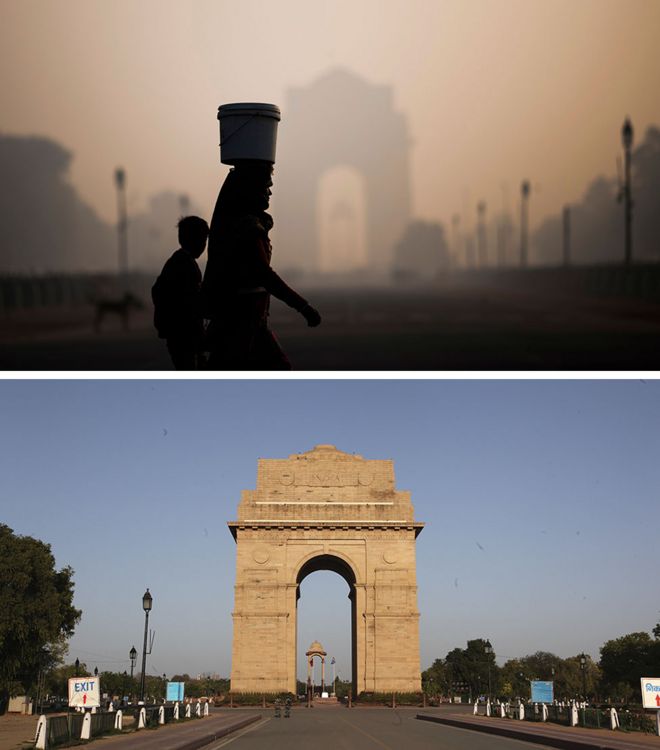 Image copyright GETTY IMAGES
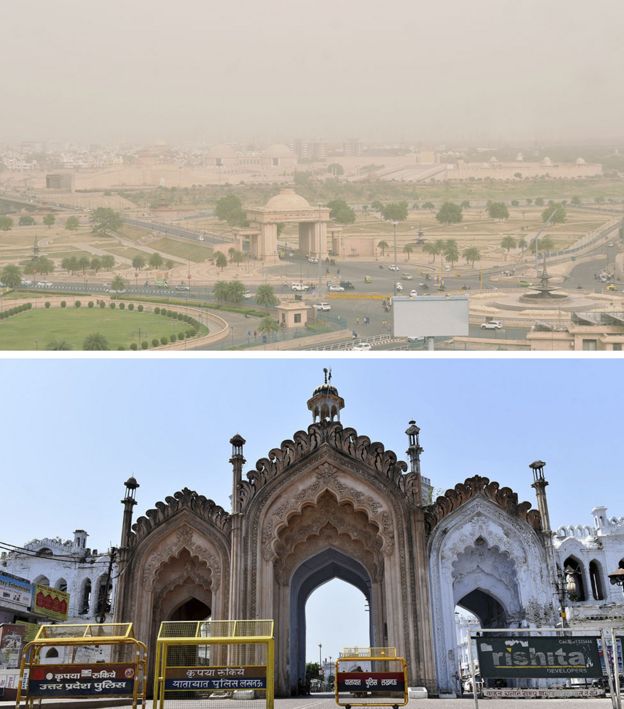 Image copyright GETTY IMAGES
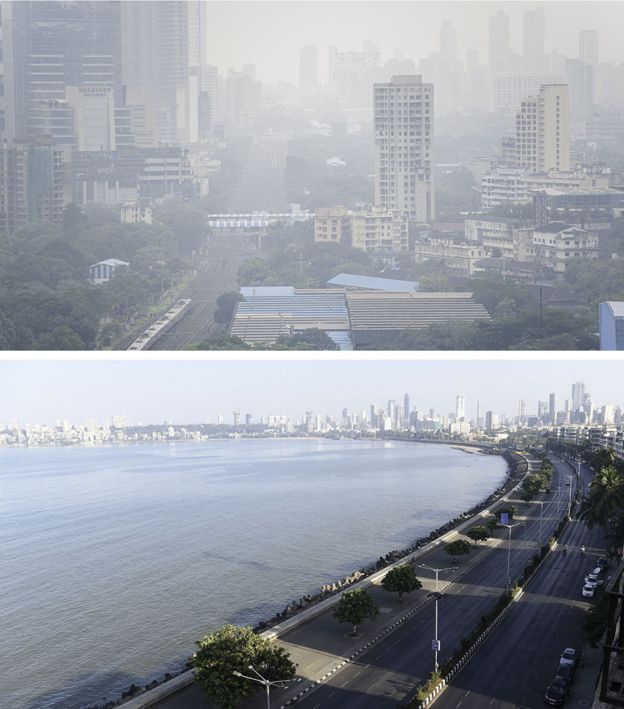 Image copyright HINDUSTAN TIMES
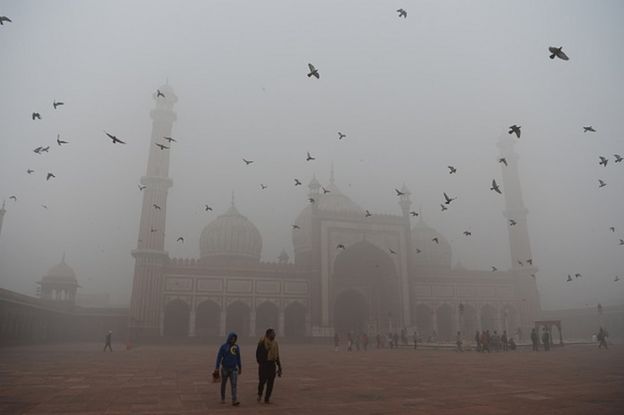 Image copyright GETTY IMAGES
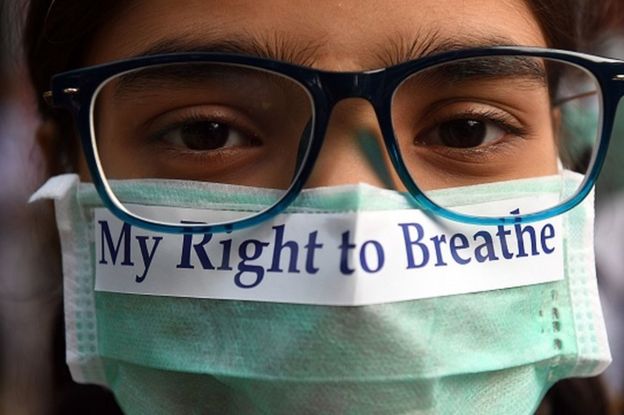 Image copyright GETTY IMAGES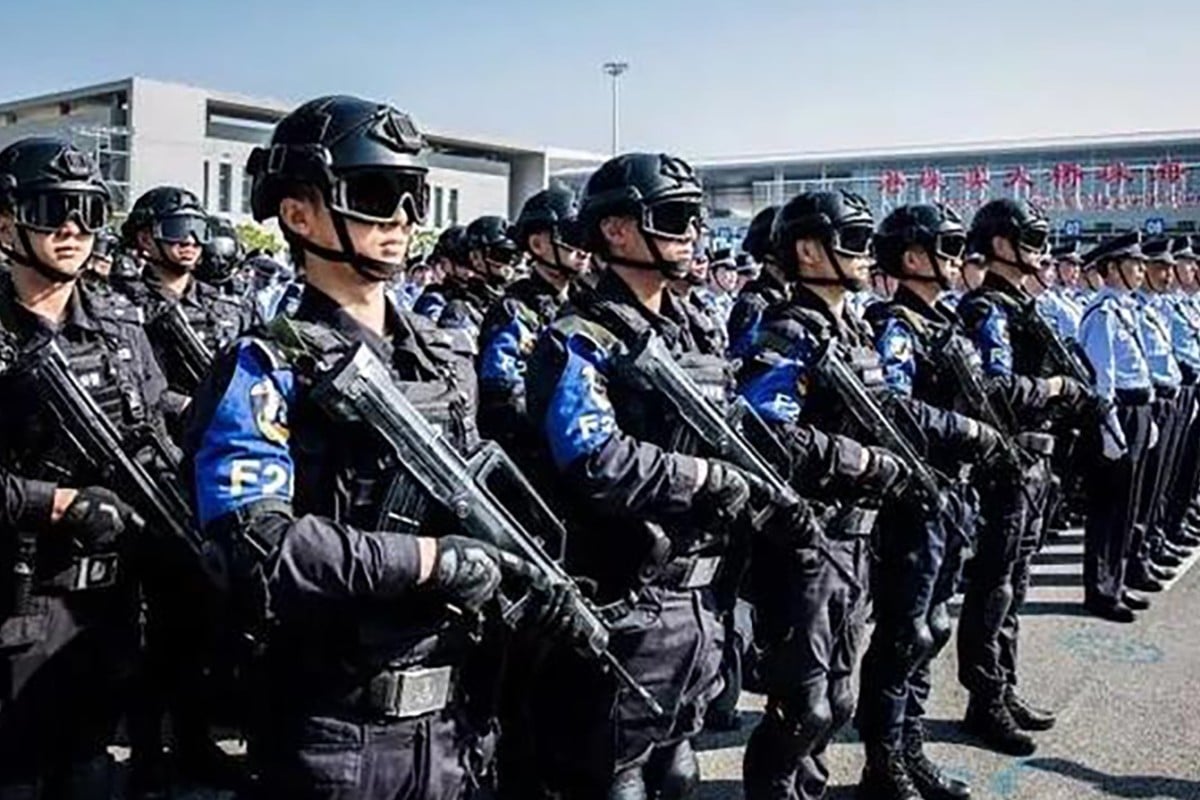


 CHINDIA ALERT: You'll be living in their world, very soon
South Korea, China cast doubt on reports North Korean leader Kim gravely ill
SEOUL (Reuters) – South Korean and Chinese officials on Tuesday cast doubt on reports North Korean leader Kim Jong Un was ill after media outlets said he had undergone a cardiovascular procedure and was in “grave danger”.
Daily NK, a Seoul-based speciality website, reported late on Monday, citing one unnamed source in North Korea, that Kim was recovering after undergoing the procedure on April 12. The North Korean leader is believed to be about 36.
CNN cited a U.S. official with direct knowledge of the matter as saying Washington was “monitoring intelligence” that Kim was in grave danger after surgery. Bloomberg quoted an unnamed U.S. official as saying the White House was told that Kim took a turn for the worse after the surgery.
However, two South Korean government officials rejected the CNN report without elaborating on whether Kim had undergone surgery. The presidential Blue House said there were no unusual signs coming from the reclusive, nuclear-capable state.
Kim is the unquestioned leader of North Korea and the sole commander of its nuclear arsenal. He has no clear successor and any instability in the country could be a major international risk.
RELATED COVERAGE
The state KCNA news agency gave no indication of the whereabouts of Kim in routine dispatches on Tuesday, but said he had sent birthday gifts to prominent citizens.
An official at the Chinese Communist Party’s International Liaison Department, which deals with North Korea, told Reuters the source did not believe Kim was critically ill. China is North Korea’s only major ally.
Chinese foreign ministry spokesman Geng Shuang said Beijing was aware of reports about the health of Kim, but said it does not know their source, without commenting on whether it has any information about the situation.
South Korean shares exposed to North Korea tumbled and the Korean won fell on the reports. The won traded down more than 1% against the dollar even as South Korean government sources said Kim was not gravely ill.
U.S. stock futures were trading 0.5% lower, but it was not clear how much of that weakness was owing to the collapse in U.S. oil prices and consequent concerns over global demand.
Daily NK said Kim had been admitted to hospital on April 12, just hours before the cardiovascular procedure, as his health had deteriorated since August due to heavy smoking, obesity and overwork.
It said he was now receiving treatment at a villa in the Mount Myohyang resort north of the capital Pyongyang.
“My understanding is that he had been struggling (with cardiovascular problems) since last August but it worsened after repeated visits to Mount Paektu,” a source was quoted as saying, referring to the country’s sacred mountain.
Accompanied by senior North Korean figures, Kim took two well-publicised rides on a stallion on the snowy slopes of the mountain in October and December.
KIM’S HEALTH KEY TO STABILITY
An authoritative U.S. source familiar with internal U.S. government reporting on North Korea questioned the CNN report that Kim was in “grave danger”.
“Any credible direct reporting having to do with Kim would be highly compartmented intelligence and unlikely to leak to the media,” a Korea specialist working for the U.S. government said on condition of anonymity.
Japan’s top government spokesman, Yoshihide Suga, declined to comment on the reports of Kim’s health.
“We are regularly gathering and analysing information about North Korea with great concern,” he said. “We will keep gathering and analysing information regarding North Korea by collaborating with other countries such as the U.S.”
Kim’s potential health issues could fuel uncertainty over the future of the reclusive state’s dynastic rule and stalled denuclearisation talks with the United States, issues in which Kim wields absolute authority.
With no details known about his young children, analysts say his sister and loyalists could form a regency until a successor is old enough to take over.
Speculation about Kim’s health first arose following his absence from the anniversary of the birthday of its founding father and Kim’s grandfather, Kim Il Sung, on April 15.
On April 12, North Korean state media reported that Kim Jong Un had visited an airbase and observed drills by fighter jets and attack aircraft.
Two days later North Korea launched multiple short-range anti-ship cruise missiles into the sea and Sukhoi jets fired air-to-surface missiles as part of military exercises.
The missile launches were part of the celebrations for Kim’s grandfather, Seoul officials said, but there was no North Korea state media report on his attendance or the tests.
Reporting from inside North Korea is notoriously difficult, especially on matters concerning the country’s leadership, given tight controls on information. There have been false and conflicting reports in the past on matters related to its leaders.
Kim is a third-generation hereditary leader who rules North Korea with an iron-fist, taking over the titles of head of state and commander in chief of the military since late 2011.
In recent years Kim has launched a diplomatic offensive to promote both himself as a world leader and his hermit kingdom, holding three meetings with U.S. President Donald Trump, four with South Korean President Moon Jae-in and five with China’s President Xi Jinping.
He was the first North Korean leader to cross the border into South Korea to meet Moon in 2018. Both Koreas are technically still at war, as the Korean War of 1950-53 ended in an armistice, not a peace treaty.
Kim has sought to have international sanctions against his country eased, but has refused to dismantle his nuclear weapons programme, a steadfast demand by the United States.
Source: Reuters
Posted in 1950-53, 2018, 36, about, absence, absolute, accompanied, admitted, after, air-to-surface missiles, airbase, ally, analysts, anniversary, anonymity, anti-ship, April, armistice, arose, attack aircraft, attendance, August, authoritative, authority, aware, “grave danger”, “monitoring intelligence”, before, Beijing, believed, Birthday, birthday gifts, Bloomberg, Blue House, border, capital, cardiovascular, cardiovascular problems, cast, celebrations, China, China's President Xi Jinping, China’s, Chinese Communist Party’s International Liaison Department, chinese foreign ministry spokesman, Chinese officials, cited, citing, Citizens, clear, CNN, collaborating, collapse, coming from, commander-in-chief, comment, commenting, compartmented, concerning, concerns, condition, conflicting, consequent, controls, Country, country’s, critically ill, cross, Daily NK, deals, December, declined, demand, denuclearisation, details, deteriorated, difficult, diplomatic offensive, Direct, dismantle, dollar, doubt, drills, dynastic rule, eased, elaborating, enough, especially, exposed, false, fighter jets, fired, first, five, following, founding father, four, future, given, global demand, government officials, government spokesman, grandfather, gravely, head of state, health, heavy smoking, hereditary, hermit kingdom, himself, Hospital, hours, ill, indication, information, Instability, intelligence, international, international risk, iron-fist, issues, Japan’s, KCNA news agency, Kim, Kim Il Sung, Kim Jong Un, knowledge, Korean, Korean War, launched, leader, leadership, leak, lower, loyalists, Major, matter, matters, media, media outlets, meetings, Military, military exercises, Monday, Mount Myohyang, Mount Paektu, Mountain, multiple, North, North Korean leader, notoriously, nuclear arsenal, nuclear weapons, nuclear-capable, obesity, observed, October, Official, old, one, only, overwork, owing, part, peace treaty, President Moon Jae-in, presidential, procedure, programme, prominent, promote, Pyongyang, quoted, receiving, reclusive, recovering, refused, regency, rejected, repeated, report, reported, reports, Resort, Reuters, rides, routine dispatche, routine dispatches, rules, sacred mountain, sanctions, saying, sea, senior, sent, Seoul, shares, short-range, sister, situation, snowy slopes, sole commander, source, South Korea, South Korean, speciality, speculation, stalled, stallion, state, steadfast, still at war, struggling, succession, successor, Sukhoi jets, surgery, take over, taking, talks, technically, tests, Third-generation, Three, tight, titles, told, top, trading, treatment, Tuesday, tumbled, turn for the worse, two, U.S. official, U.S. oil prices, U.S. President Donald Trump, Uncategorized, uncertainty, undergoing, undergone, United States, unlikely, unnamed, unquestioned, unusual signs, urn for the worse, villa, visited, visits, Washington, weakness, website, well-publicised, whereabouts, whether, White House, wields, without, won, world leader, worsened, young children | Leave a Comment »