Archive for ‘Antarctica’

03/03/2020

Wuhan doctor who worked with whistle-blower Li Wenliang dies after contracting coronavirus on front line

  • Ophthalmologist Mei Zhongming, 57, said to have been infected after working long hours treating patients
  • He is the third doctor from the hospital to die from Covid-19

Mei Zhongming died at the age of 57 after contracting the virus while he was working at the Wuhan Central Hospital. Photo: Weibo

An ophthalmologist who worked with whistle-blower doctor Li Wenliang on the coronavirus front line in Wuhan has also died from Covid-19, the disease caused by the virus.

Mei Zhongming, 57, contracted the virus while he was working at the Wuhan Central Hospital and died on Tuesday.

His 34-year-old colleague Li – who was silenced by police for sounding the alarm about the new virus strain – also died from the pneumonia-like illness last month, prompting an outpouring of grief and anger in China.

Mei is the third doctor from the hospital to die from Covid-19. Two days ago, Jiang Xueqing, head of thyroid and breast surgery, also died from the disease at the age of 55.

The hospital expressed condolences to Mei’s family and praised his 30 years of service in a brief announcement on social network WeChat.

Public mourning in China after death of coronavirus whistle-blower doctor Li Wenliang
According to the official numbers, 13 doctors and nurses have died from Covid-19 and more than 3,000 have been infected in China since the epidemic began in the central city of Wuhan in December. Hospitals in Wuhan and across the province of Hubei have been swamped with tens of thousands of patients, and health care workers treating them have also had to cope with a shortage of protective gear and medical supplies.

Part of the Wuhan Central Hospital is located just 2km (1.2 miles) from the Huanan Seafood Wholesale Market – the place the first coronavirus patients were linked to.

The hospital started treating patients who had been in close contact with the market in the middle of December, the director of its emergency department Ai Fen told China News Weekly last month.

Doctors reported the cases to management but no action was taken to protect medical staff at first, and they were warned not to talk publicly about the respiratory illness, the report said.

The Chinese medical workers on the front line of the coronavirus fight in Wuhan
Ophthalmologist Li

posted a message to a closed group of medical school classmates on WeChat on December 30, warning them about an outbreak of a mysterious viral pneumonia at his hospital.

Two days later, Wuhan police announced that eight people had been punished for “spreading rumours”. It was later reported that they were all medical staff and one of them was Li.

The young doctor fell ill on January 10, later saying that he was probably infected by an 82-year-old glaucoma patient. “The patient did not have a fever, and I didn’t wear extra protection while taking care of her,” Li wrote in his blog. “I was careless.”

Li died from the illness on February 7, sparking widespread grief and fury over Beijing’s crackdown on “online rumours”, and calls for freedom of speech.

According to emergency department director Ai, staff on the front line at Wuhan Central Hospital began wearing N95 respirator masks and other protective gear in January as the number of virus cases jumped – but before authorities confirmed the virus was being transmitted between humans on January 20.

Despite the precautions, the first medical worker at the hospital was confirmed with the virus on January 10. More than 30 others from the emergency department alone have tested positive for Covid-19 since then, Ai told China News Weekly. The department has a staff of 200.

Jiang Xueqing, 55, head of thyroid and breast surgery at the hospital, died on Sunday. Photo: Weibo
The hospital did not give details of how Mei contracted the virus. But a report from the Wuhan Committee of the Chinese People’s Political Consultative Conference on February 18 said he had been infected after working long hours on the coronavirus front line.

Similarly, little information was released about Jiang’s death on Sunday. His colleague Li Hai told official newspaper People’s Daily that Jiang had been exhausted after working “non-stop” treating coronavirus patients.

Wuhan, China scrambles to handle massive amount of medical waste during the epidemic
Ian Lipkin, John Snow professor of epidemiology at the Mailman School of Public Health at Columbia University, said the risks faced by health care workers were high, even with protective gear, as they had a very intimate relationship with their patients.
“In addition, those individuals who are working in hospital settings may be immunosuppressed because, frankly, they’re exhausted … the viral load that they receive may be larger,” Lipkin said in a briefing last month after visiting China at the invitation of the government.
The coronavirus has claimed the lives of several young medical workers. Among the youngest was 29-year-old respiratory and critical care doctor Peng Yinhua, who worked at the Jiangxia district People’s No 1 Hospital in Wuhan and died last month from the disease. Peng had planned to get married over the Lunar New Year holiday but postponed his wedding to help treat coronavirus patients.
Another 29-year-old, gastroenterologist Xia Sisi, also died last month after she became infected while working at the Union Jiangbei Hospital in Wuhan.
The coronavirus has killed more than 3,100 people and infected over 92,000, mostly in China, since the outbreak began, and it has spread to more than 50 countries in every continent except Antarctica.
Source: SCMP
02/12/2019

China’s icebreakers unload cargos for Zhongshan Station in Antarctica

(EyesonSci)CHINA-ICEBREAKERS-ANTARCTIC EXPEDITION-UNLOADING CARGOS

Members of China’s 36th Antarctic expedition team unload cargos from China’s icebreaker Xuelong at the roadstead off the China’s Zhongshan Station in Antarctica, Nov. 23, 2019. The task of unloading cargos for China’s Zhongshan Station and inland departure base draws to a close. (Xinhua/Liu Shiping)

Source: Xinhua

02/11/2019

Chinese scientists create tiny battery capable of working in ultra-low temperatures

  • Team from Dalian Institute of Chemical Physics says its goal is to ‘develop an all-season battery that is low cost but high safety for consumer products’
  • Researchers make breakthrough by using hard carbon and lithium vanadium phosphate
Chinese researchers say they have made a breakthrough in the development of small lithium batteries that can withstand low temperatures. Photo: Xinhua

Chinese researchers say they have found a way to produce a tiny, lightweight lithium battery for use in mobile phones and electric cars that can hold up to 80 per cent of its charge in temperatures as low as minus 40 degrees Celsius.

The breakthrough came by using a combination of a new material called hard carbon along with lithium vanadium phosphate, the team from the Dalian Institute of Chemical Physics said in a paper published in this month’s edition of the scientific journal Nano Energy.

“Our goal is to develop an all-season battery that is low-cost but high-safety for consumer products,” said Song Zihan, its lead author.

It was an unprecedented approach, but “we proved it works”, he said.

The idea of a battery that can withstand extreme cold is not new. Photo: Shutterstock

The idea of a battery that can withstand extreme cold is not new, and they are already in use in space and in the Arctic and Antarctic.

But they tend to be very bulky because of the heating system and large amount of insulation they need to function properly at sub-zero temperatures.

Such measures are neither physically nor economically viable for applications like smartphones, cameras, laptops or electric cars. The trick, Song said, was replacing the soft graphite in normal lithium batteries with hard carbon.

Graphite is a good conductor and often used for the anode at the bottom of a battery, where electrons are generated. But the performance of graphite drops as the mercury slides.

How military tech sparked a robot revolution in firework factories

Song said that hard carbon was a new material that had attracted a lot of research interest in recent years, and compared with graphite, it had a much higher tolerance for the cold.

That was because of its highly irregular and “almost messy” structure, comprising layers of carbon atoms that are interconnected with each other, he said.

However, hard carbon also caused a rapid depletion of the lithium ions that served as an agent carrying the electric flow in battery, he said.

The researchers want to make battery suitable for use in consumer products. Photo: EPA-EFE

In the past, researchers have tried adding lithium powders or flakes to improve battery life, but the approach has proven costly and dangerous, mostly because pure lithium is highly reactive.

So Song and his colleagues used a composite material called lithium vanadium phosphate as the positive cathode on top of the battery.

The composite was capable of providing enough extra lithium ions for the hard carbon’s need without increasing the risk of fire or explosion, and it was cheap, he said.

“The pairing of hard carbon and lithium vanadium phosphate worked a charm,” Song said.

But the technology is still a long way from being commercially viable.

The battery Song’s team made is far too small for any real-life applications, and enlarging it would require some “innovative engineering solutions”, he said.

Another scientist involved in the project said the team was working with battery manufacturers to see if the technology could be commercialised.

Source: SCMP

14/08/2019

China is building world’s most powerful laser radar to study Earth’s solar shield

  • New facility is designed to help scientists study particles that help deflect cosmic rays in the high atmosphere
  • Despite scepticism among some scientists, those familiar with the project insist radar will have a range about 10 times greater than existing ones
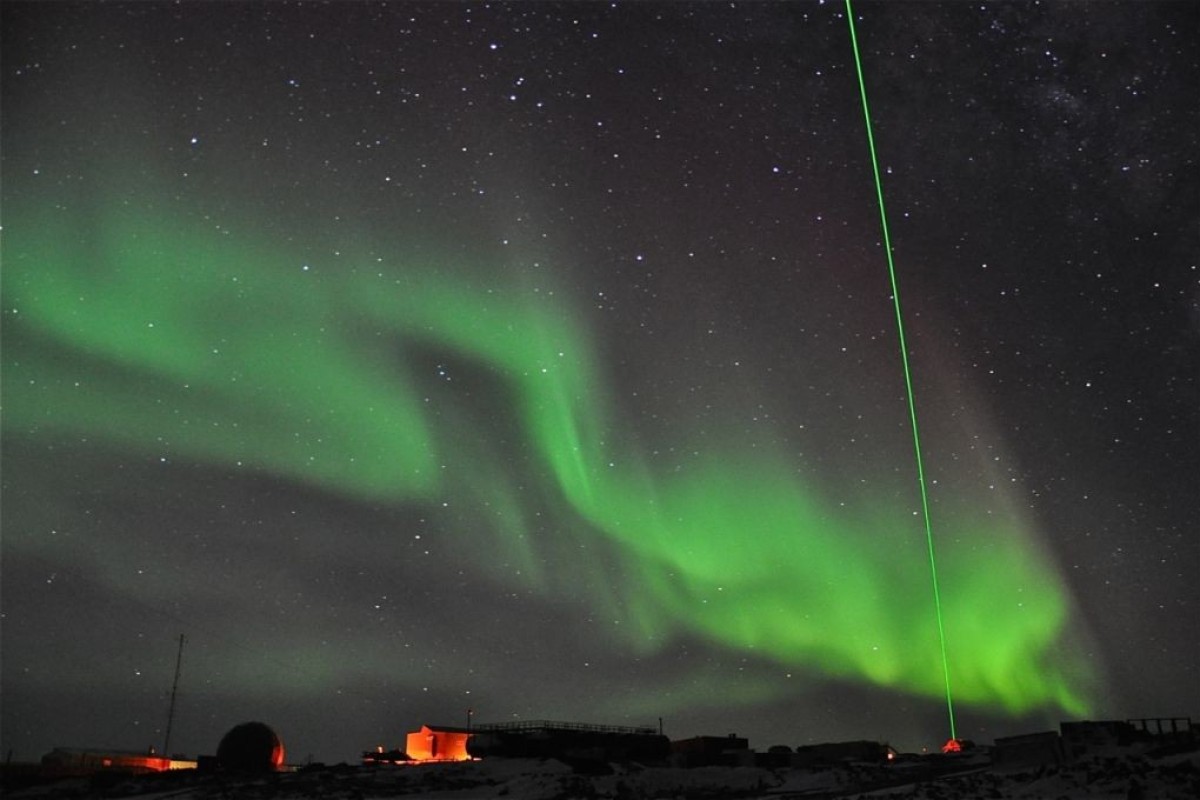
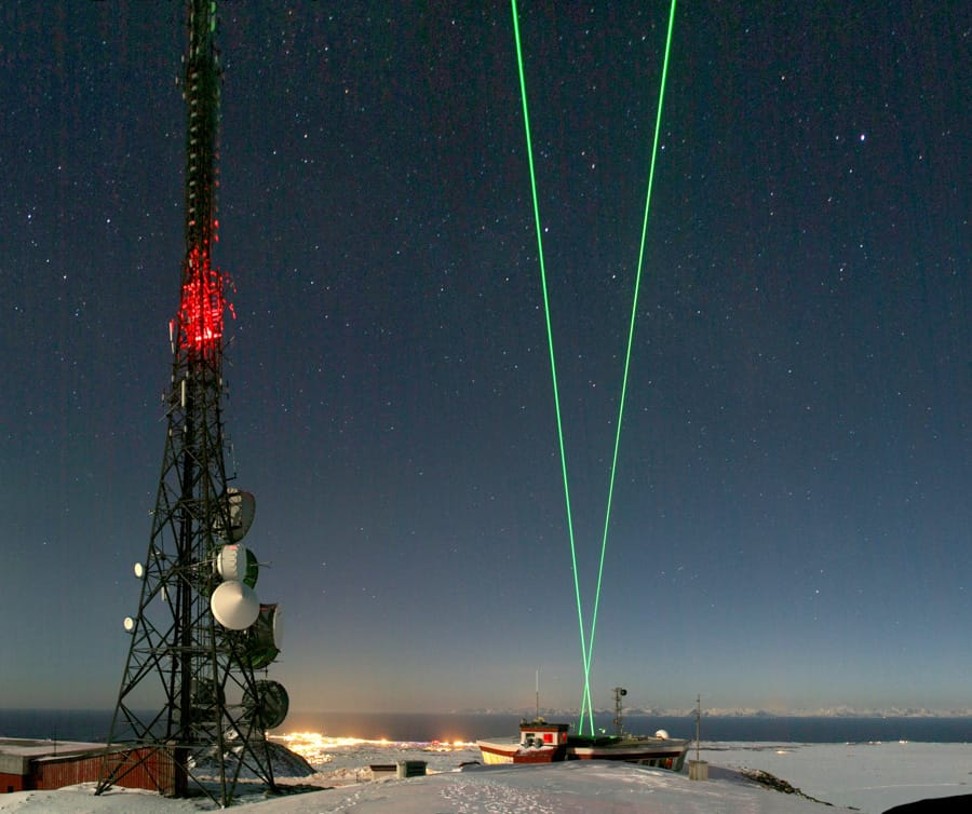
When completed the new laser radar will be used to study the high atmosphere. Photo: Handout
China has started building the world’s most powerful laser radar designed to study the physics of the Earth’s high atmosphere, according to state media reports and scientists informed of the project.
It is described as having a detection range of 1,000km (600 miles) – 10 times that of existing lasers – and will be used to study atmospheric particles that form the planet’s first line of defence against hostile elements from outer space such as cosmic rays and solar winds.
The facility, to be built on a site that remains classified, is expected to be up and running within four years and will form part of an ambitious project to reduce the risk from abnormal solar activities.
The radar will use a high-energy laser beam that can pierce through clouds, bypass the International Space Station and reach the outskirts of the atmosphere, beyond the orbiting height of most Earth observation satellites.
Lasers help tell ghostly story of doomed Nazi submarine U-576 and its entombed crew

There, the air becomes so thin that scientists will be able to count the number of gas atoms found within a radius of several metres.

These high-altitude observations could greatly expand our knowledge of a part of the atmosphere that has been little studied because the distances involved mean no one has been able to make direct observations from the ground.

“The large-calibre laser radar array will achieve the first detection of atmospheric density of up to 1,000km in human history,” said a statement posted on the website of the Chinese Academy of Sciences on Tuesday, a day after the launch of the project.

But the claim has been greeted with some scepticism in the scientific world.

“I think the 1,000km is a misprint!” professor Geraint Vaughan, director of observations at the National Centre for Atmospheric Science in the UK, replied when asked about the project.

Vaughan, who is also a Fellow of the Royal Meteorological Society, said that while he thought the Chinese announcement was “very interesting”, it did not seem possible with existing technology.

At present, the effective range of atmospheric lasers is about 100 kilometres.

Some other senior scientists in China and overseas also expressed doubt about the project, although they requested anonymity due to the sensitivity of the issue.

US warns airmen to beware of laser attacks near China’s military base in Djibouti
“There are other approaches, such as launching a satellite. Building such a huge, expensive machine on the ground does not make sense,” said a Beijing-based laser scientist.
But several researchers told the South China Morning Post that the project did exist, and insisted that 1,000km range was not a mistake.
Hua Dengxin, a professor at Xian University of Technology and a lead scientist in China’s laser radar development programmes, said: “I have heard of the project, yes. But I cannot speak about it.”
Powerful telescopes will pick up the signals reflected back to earth. Photo: Handout

According to publicly available information, the facility will use several large optical telescopes to pick up the faint signals reflected by the high-altitude atoms when the laser is fired at them.

The project is part of the Meridian Space Weather Monitoring Project, an ambitious programme that started in 2008 to build one of the largest, most advanced observation networks on Earth to monitor and forecast solar activities.

By 2025 Meridian stations containing some of the world’s most powerful radar systems will be established across the world – with facilities in Arctic and Antarctic, South China Sea, the Gobi desert, the Middle East, Central Asia and South America.

China in race for counter-drone tech and laser weapons as it tries to catch up with US

The purpose of the Meridian project, according to the Chinese government, is to reduce the risk abnormal solar activities pose to a wide range of Chinese assets including super-high voltage power grids, wireless communication, satellite constellations, space stations or even a future base on the Moon.

Chinese laser scientists have developed some of the world’s most sophisticated systems in recent years, including ranging stations that can track the movement of satellites and space debris, which the Pentagon has claimed have temporarily blinded some American scientists.

Last year researchers based in Xian, the capital of Shaanxi province, announced that they had developed a “ laser AK-47” that could set fire to target from a distance of 800 metres.

The Chinese government is also funding the development of a laser satellite that can penetrate seawater to a depth of 500 metres from space to detect the waves generated by submarines.

The use of such a powerful laser raises concerns that passing objects such as planes, satellites or spacecraft – to say nothing of birds – may be at risk from its beams.

But Professor Qiao Yanli, engineer in chief at the Anhui Institute of Optics and Fine Mechanics, part of the Chinese Academy of Sciences, said there was an “extremely low” risk of this happening.

“The sky is enormous. Getting hit by a tiny beam is almost impossible,” he said.

Some much smaller laser radars, such as those installed in auto-driving test vehicles, have reportedly damaged digital cameras by burning a few pixels on sensor.

But spacecraft such as earth observation satellites, according to Qiao, usually have some protection mechanisms, such as a warning system, to avoid permanent damage caused by an accidental laser hit.

‘Laser AK-47’? Chinese developer answers sceptics with videos of gun being tested

Professor Li Yuqiang, a researcher at the Yunnan Observatories in Kunming, whose team has measured the distance between the Earth and the Moon by shooting lasers at a reflector placed on the lunar surface during the US Apollo 15 mission, said detecting atom-sized targets on the fringes of the atmosphere posed many technical challenges.

“The number of photons [particles of light] reflected by the sparse gas particles will be very small. Even if they can be picked up by large telescopes on the ground, the analysis will require some very good algorithms to separate the useful signals from the noise,” Li said.

“How that can be achieved is beyond the scope of my knowledge.”

Source: SCMP

23/05/2019

Ozone layer: Banned CFCs traced to China say scientists

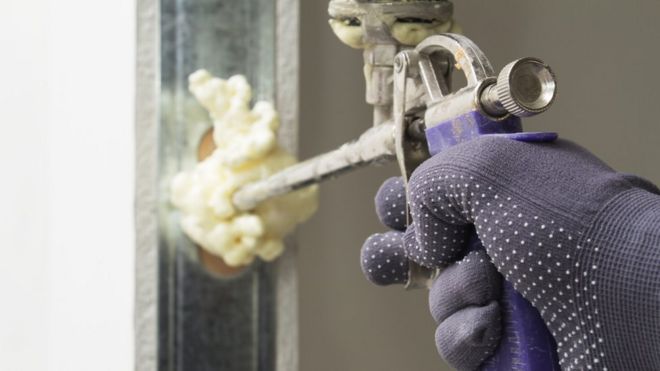
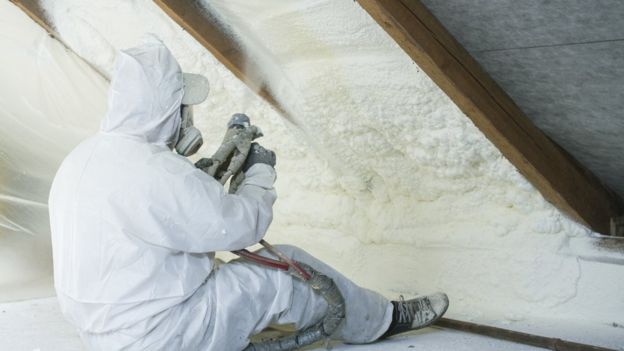
home insulationImage copyright GETTY IMAGES
Image caption Much of the CFC-11 gas has been used in home insulation

Researchers say that they have pinpointed the major sources of a mysterious recent rise in a dangerous, ozone-destroying chemical.

CFC-11 was primarily used for home insulation but global production was due to be phased out in 2010.

But scientists have seen a big slowdown in the rate of depletion over the past six years.

This new study says this is mostly being caused by new gas production in eastern provinces of China.

CFC-11 is also known as trichlorofluoromethane, and is one of a number of chloroflurocarbon (CFC) chemicals that were initially developed as refrigerants during the 1930s.

However, it took many decades for scientists to discover that when CFCs break down in the atmosphere, they release chlorine atoms that are able to rapidly destroy the ozone layer which protects us from ultraviolet light. A gaping hole in the ozone layer over Antarctica was discovered in the mid 1980s.

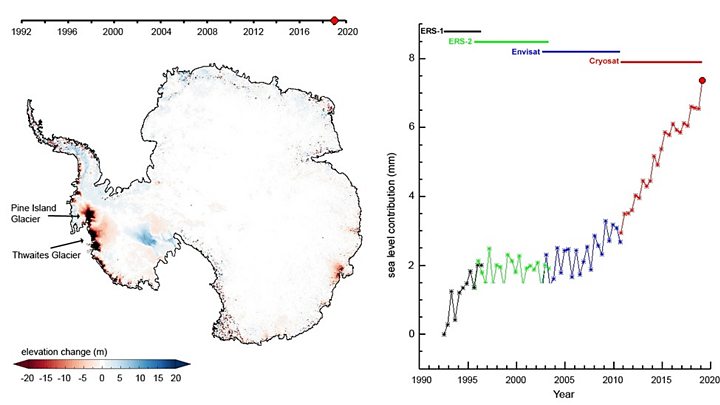
Media caption Twenty-five years of ice loss in the Antarctic

The international community agreed the Montreal Protocol in 1987, which banned most of the offending chemicals. Recent research suggests that the hole in the Northern Hemisphere could be fully fixed by the 2030s and Antarctica by the 2060s.

When was the CFC problem discovered?

CFC-11 was the second most abundant CFCs and was initially seen to be declining as expected.

However in 2018 a team of researchers monitoring the atmosphere found that the rate of decline had slowed by about 50% after 2012.

graphic
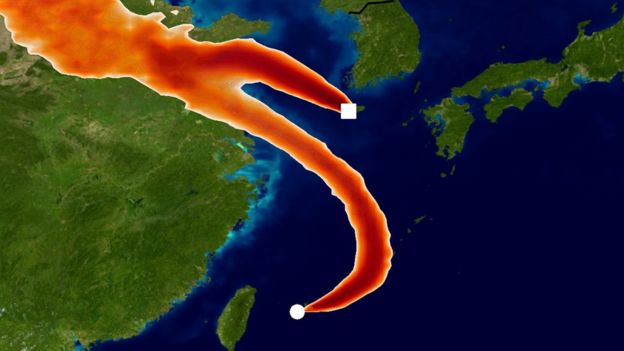
Image caption Monitoring stations in Korea and Japan were key to detecting the mystery sources of CFC-11

That team reasoned that they were seeing new production of the gas, coming from East Asia. The authors of that paper argued that if the sources of new production weren’t shut down, it could delay the healing of the ozone layer by a decade.

What did investigators find on the ground?

Further detective work in China by the Environmental Investigation Agency in 2018 seemed to indicate that the country was indeed the source. They found that the illegal chemical was used in the majority of the polyurethane insulation produced by firms they contacted.

One seller of CFC-11 estimated that 70% of China’s domestic sales used the illegal gas. The reason was quite simple – CFC-11 is better quality and much cheaper than the alternatives.

So what does this latest study show?

This new paper seems to confirm beyond any reasonable doubt that some 40-60% of the increase in emissions is coming from provinces in eastern China.

Using what are termed “top-down” measurements from air monitoring stations in South Korea and Japan, the researchers were able to show that since 2012 CFC-11 has increased from production sites in eastern China.

home insulationImage copyright GETTY IMAGES

They calculated that there was a 110% rise in emissions from these parts of China for the years 2014-2017 compared to the period between 2008-2012.

“This new study is based on spikes in the data on air that comes from China,” lead author Dr Matt Rigby, a reader at the University of Bristol, told BBC Inside Science.

“Using computer simulations of the transport of these gases through the atmosphere we can start to put numbers on emissions from different regions and that’s where we come up with this number of around 7,000 tonnes of extra CFC-11 emissions coming out of China compared to before 2012.

“But from the data, all we just see are the ultimate releases to the atmosphere, we don’t have any information on how that CFC-11 was used or where it was produced, it is entirely possible that it was manufactured in some other region, some other part of China or even some other country and was transported to the place where they are making insulating foams at which point some of it could have been emitted to the atmosphere.”

Where are the rest of the emissions coming from?

The researchers are not sure. It’s possible that the missing emissions are coming from other parts of China, as the monitoring stations just can’t see them. They could also be coming from India, Africa or South America as again there is very little monitoring in these regions.

Does this have implications for climate change?

Yes – the authors say that these CFCs are also very potent greenhouse gases. One tonne of CFC-11 is equivalent to around 5,000 tonnes of CO2.

“If we look at these extra emissions that we’ve identified from eastern China, it equates to about 35 million tonnes of CO2 being emitted into the atmosphere every year, that’s equivalent to about 10% of UK emissions, or similar to the whole of London.”

Will China clampdown on the production?

The Chinese say they have already started to clamp down on production by what they term “rogue manufacturers”. Last November, several suspects were arrested in Henan province, in possession of 30 tonnes of CFC-11.

Clare Perry from the Environmental Investigations Agency (EIA) said that the new findings re-affirmed the need to stamp out production.

“I think with this study, it is beyond doubt that China is the source of these unexpected emissions, and we would hope that China is leaving no stone unturned to discover the source of the CFC-11 production.

“Unless the production of the chemical is shut down it will be near impossible to end the use and emissions in the foam companies.”

The study has been published in the journal Nature.

Source: The BBC

Law of Unintended Consequences

continuously updated blog about China & India

ChiaHou's Book Reviews

continuously updated blog about China & India

What's wrong with the world; and its economy

continuously updated blog about China & India