Archive for ‘Apple’

11/09/2019

iPhone 11: Will Apple’s latest phones capture India’s growing market?

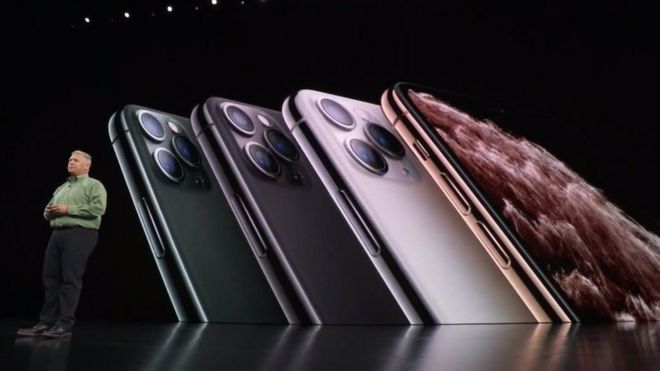
iPhone 11 ProImage copyright APPLE
Image caption The iPhone 11 Pro is said to last four hours more than before, while the Pro Max is said to last five hours longer

Apple has unveiled its iPhone 11 range of handsets, featuring more cameras and more battery life. But will it be enough to capture one of the world’s only growing smartphone markets?

Samsung has traditionally held dominance in the Indian “premium smartphone” segment, which refers to mobiles that cost 40,000 rupees (£451; $558) or more.

But this year, for the first time ever, Apple surged ahead of the Korean electronics giant in India. It swept up 41.2% of the premium smartphone market in the second quarter of 2019, according to research firm International Data Corporation.

“The Indian smartphone market is a game of changing fortunes,” technology journalist Mala Bhargava told the BBC. “There isn’t a company, no matter how dominant a position it commands, that can afford to sit idle.”

Apple’s latest mobile phones – the iPhone 11, 11 Pro and 11 Pro Max – will be available in India from 27 September.

And the iPhone 11, Ms Bhargava added, is primed to find success in the Indian market.

In recent months, Apple dropped its price for the iPhone 11’s predecessor, the iPhone XR, from 73,900 rupees to 53,900 rupees. The 20,000 rupee price drop was significant enough to make an impact.

“Consumers in India are known to be discount and deal-oriented,” Ms Bhargava said. “Seeing the iPhone as an aspirational product, many snapped up the mobile once prices were slashed.”

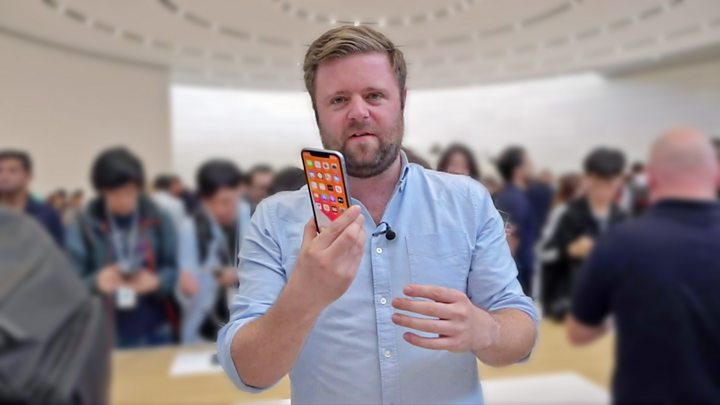
Media caption WATCH: Taking a slowfie with the iPhone 11

This, she said, is also what gave Apple the lead for the first time in India in the smartphone market.

The latest iPhones feature more cameras than before and a processor that has been updated to be faster while consuming less power. There are two Pro models, which the company said would last between four to five hours longer than their XS predecessors.

The entry-level iPhone 11 is the “perfect successor” to the iPhone XR, Ms Bhargava said.

It will start at a price of 64,900 rupees – which is not drastically higher than what the iPhone XR currently sells for.

“The discounted iPhone XR played a big part in bolstering sales in India, so it’s likely that with such a price for the iPhone 11, the company can really extend its market share,” she added.

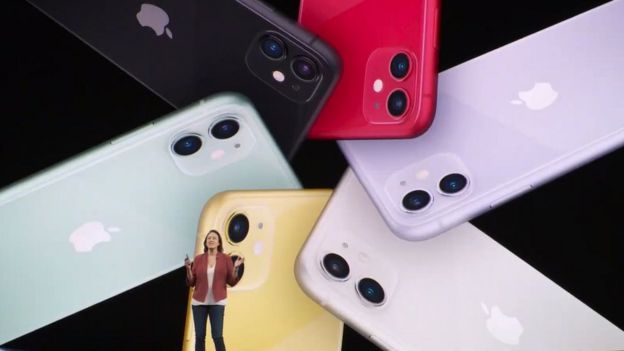
iPhone 11Image copyright APPLE
Image caption The entry-level iPhone 11 is said to last up to one hour longer than the earlier XR

Apple also launched the iPhone 11 Pro and iPhone 11 Pro Max, which at 99,990 rupees and 109,900 rupees a piece, will not be a key attraction as consumers will find that unaffordable.

“But at the same time, this gap could still benefit the company, leaving the field open for older iPhones and for the new iPhone 11 to increase Apple’s share in the country,” Ms Bhargava said.

The company is still selling the iPhone XR, along with the older iPhone 8, which will give consumers more choices and prices to choose from.

“With the sales of smartphones falling in the rest of the world, Apple can’t help but look to consolidate its position in India – it is almost the only market growing at an enthusiastic pace,” she added.

In the second quarter of 2019, 36.9 million handsets were shipped in India – up 9.9% from last year.

In comparison, the premium global smartphone market collapsed 8% in the first quarter this year, with much of the decline pushed by a 20% drop in Apple’s shipments.

“India still has millions of first-time phone buyers,” said Ms Bhargava, “and many of those who have been using budget phones are read to buy something better.”

Source: The BBC

04/07/2019

China’s top talent now wants to work for rising domestic tech stars, not big brand multinationals

  • China’s talent is turning away from multinationals and towards domestic tech champions in the search for a more fulfilling career
  • Change in sentiment comes amid raging US-China tech war and perceptions of ‘bamboo ceiling’ in the West
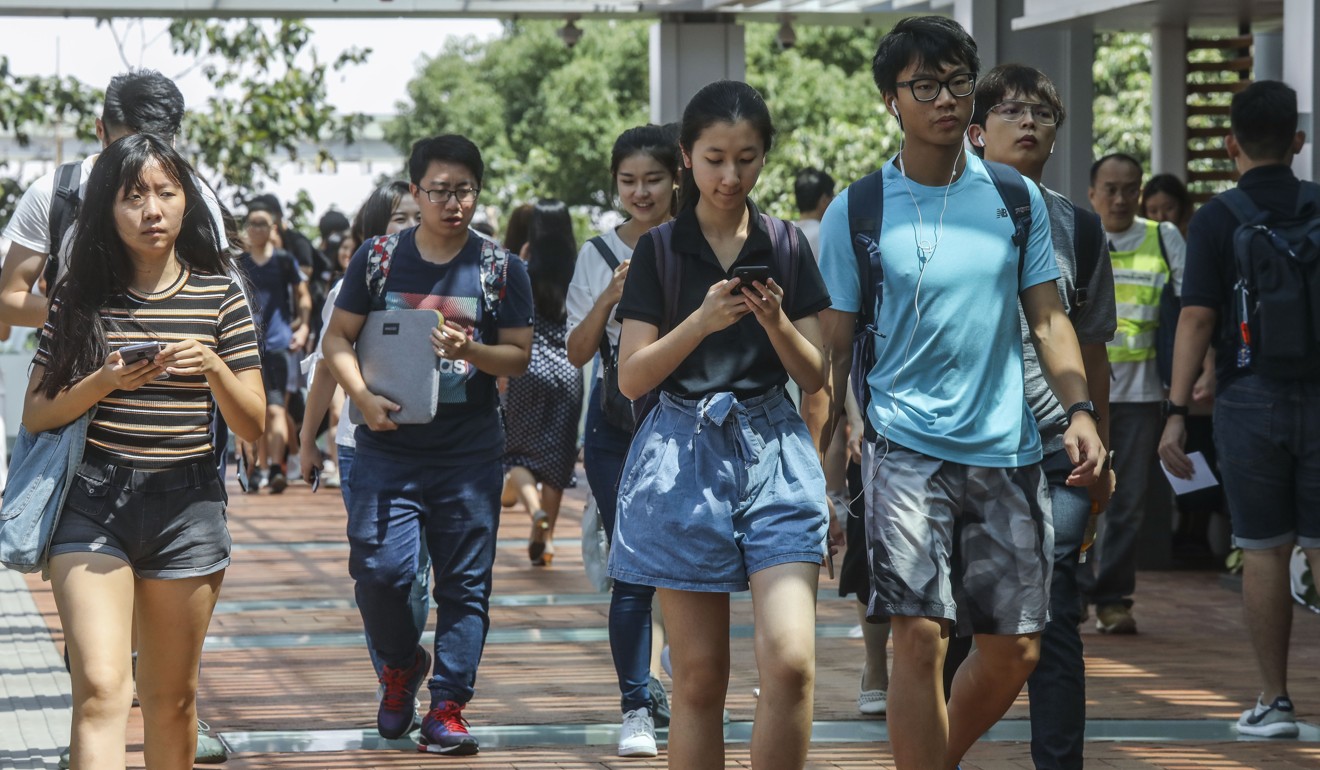
An increasing number of Chinese jobseekers are looking towards domestic tech firms. Image: SCMP
Molly Liu left her hometown Beijing to pursue a master’s degree in the United States in the 1990s.
After graduation, she fought hard to win an entry-level position at a US-based consultancy and after a period was later sent back to China to help the company’s expansion.
In the land of opportunity, the ambitious US firm showered her with avenues to pursue her career and she ended up working in Hong Kong as well as being one of the first people on the ground for the consultancy in Shanghai, Beijing, Taipei and Singapore.
Times have changed, though. Recently, her only son, Ben Zhang, turned down a hard-to-get job offer from a Boeing subsidiary in the US after gaining a master’s degree in computer science from Carnegie Mellon University in Pittsburgh, Pennsylvania.
Chinese students educated in the US are now looking more at jobs in China. Photo: SCMP

He decided to return to Beijing in 2018 and now works as a product manager at Chinese smartphone maker Xiaomi. He is convinced that the start-up turned tech major can offer him the same sort of opportunities today that the US tech consultancy offered his mother in the 1990s.

This family story about the career choices of two different generations of US-educated Chinese students reflects a wider trend. Once upon a time, US corporations could cherry-pick top Chinese talent from American universities with the promise of large salaries, generous benefits and the chance to work at market-leading organisations.

Today, China’s cutting-edge technology companies – often referred to as China Tech Corporation (CTC) – are the most sought-after employers among many Chinese students, who want more than just a cushy life.

This marks another blow for multinational corporations (MNCs) already struggling to do business in China amid a myriad of restrictions and growing hostility towards them as the US-China trade and tech war gathers pace.

“What I look for in a job is not money. My parents are not counting on me to support them,” says 28-year-old Zhang, whose team in Xiaomi is working on a wide array of connected devices, from televisions to lamps to smart locks. “What I care about most is personal improvement and access to the best resources a company can offer.”

“In Boeing, I could probably work on a new product once every two to three years. But at Xiaomi, every three months, we can roll out a new product,” he added. “You can bring so many things into people’s everyday lives in China, like using your voice to control a TV or an air conditioner – things you can only imagine in the US.”

Zhang is not alone and many Chinese today perceive a “bamboo ceiling” in the US, where they are more often seen as engineers rather than executives.

One Chinese executive who now oversees the technology unit of a listed finance and insurance firm in China said that he used to lead a team of 20 engineers at one of the world’s most valuable tech companies in Silicon Valley.

“My job was to keep optimising the performance of a product [in Silicon Valley],” he said.

“But within three years in China, I was promoted to the chief scientist of our entire company, leading a team of 1,000,” said the man, who asked to remain anonymous as some of his family still reside in the US.

How Trump’s assault on Huawei is forcing the world to contemplate a digital iron curtain

According to an April survey by professional networking site LinkedIn, an increasing number of Chinese jobseekers share Zhang’s outlook. LinkedIn compiled a list of the top 25 most desired employers in China, and about 60 per cent were local Chinese companies, with 13 of them internet firms.

CTC bagged four of the top five spots, with e-commerce giant Alibaba, search giant operator Baidu and Bytedance – which operates short video hit TikTok – taking the lead.

Tesla ranked sixth behind its Chinese challenger Nio. Amazon, the only other foreign company in the top ten, ranked eighth.

Alibaba is the owner of the South China Morning Post.

Li Qiang, executive vice-president of Zhaopin, one of China’s largest online recruiters, described the rising status of CTC among jobseekers as “the dawning of a new era”.

“Nowadays, there is nothing a multinational can offer that a domestic firm cannot, be it a compensation package or the chance to be part of international expansion,” said Beijing-based Li.

“Jobseekers are not particularly looking for domestic firms or multinational firms. They are after good firms and most of the good firms in China these days happen to be domestic tech firms,” said Li.

Li’s comments reflect the wider opportunities within the domestic economy for Chinese jobseekers today, after the rise of many successful private-sector companies and a thriving start-up scene over the past 10 years, meaning it’s not just a one-way street to a state-owned enterprise (SOE) any longer.

A survey by Zhaopin in late 2018 found that 28 per cent of Chinese university students said MNCs were their employer of choice, down from 33.6 per cent in 2017.

Even on pay and benefits, CTC is catching up with multinationals. Zhang said Xiaomi matched the offer from the Boeing unit in the US and many leading tech firms offer benefits such as gym memberships and childcare facilities.

And the rags-to-riches stories of many leading China tech entrepreneurs, some of whom have become billionaires, continue to grab media attention and inspire the younger generation.

To be sure, Chinese students would still rather work for an MNC than an SOE – but the rise of CTC can be seen in company rankings and in the total number of CTC companies in the top employer list, according to Zhaopin.

For a growing number of Chinese students, the doors to America are closing

William Wu, China country manager of global employer brand consultancy Universum, said that the one element Chinese jobseekers pay most attention to these days is whether or not a job can be “a good reference point for a future career”. And a growing number of private Chinese companies now have global brand recognition.

A recent survey by Universum shows that Apple and Siemens were the only two Western names in the top 10 ideal employers for Chinese students in the engineering sector this year, while there were four foreign firms in the top 10 list in 2017.

Huawei Technologies, the Chinese telecoms giant that has been put on a US trade blacklist after the Trump administration said it was a national security risk, ranked top in the Universum list. Xiaomi, the smartphone maker Ben Zhang works for, ranked second while Apple, one of the most valuable tech firms in the US, ranked seventh.

It seems that China’s rising clout in the world is now an attractive factor for jobseekers.

“Every engineer would like to see the technology they’ve worked on have the potential to change the world one day,” said Li Yan, head of multimedia understanding at Chinese short video major Kuaishou. “In the old times Chinese companies were at the bottom of the global value chain, now they are climbing up, providing more opportunities for talent to create world-changing products.”

At Beijing-based Kuaishou, Li’s 100-strong artificial intelligence algorithm team – many of whom joined from Microsoft Asia Research – is working to make machines understand content better than humans by studying the millions of user-generated videos on the company’s platform every day.

CTC companies do have a strong home advantage, with big Western firms having to navigate a myriad of restrictions.

For example, the “Great Firewall” lets Chinese authorities control the content and information reaching the country’s 800 million-plus internet population. Western firms also face other forms of red tape, such as having to form joint ventures with local partners.

Amazon earlier this year announced the close of its China marketplace, giving up the brutal fight with Chinese online shopping giants such as Alibaba to capture domestic e-commerce market share. Oracle China reportedly laid off 900 people in March as it winds down its research and development center in the country.

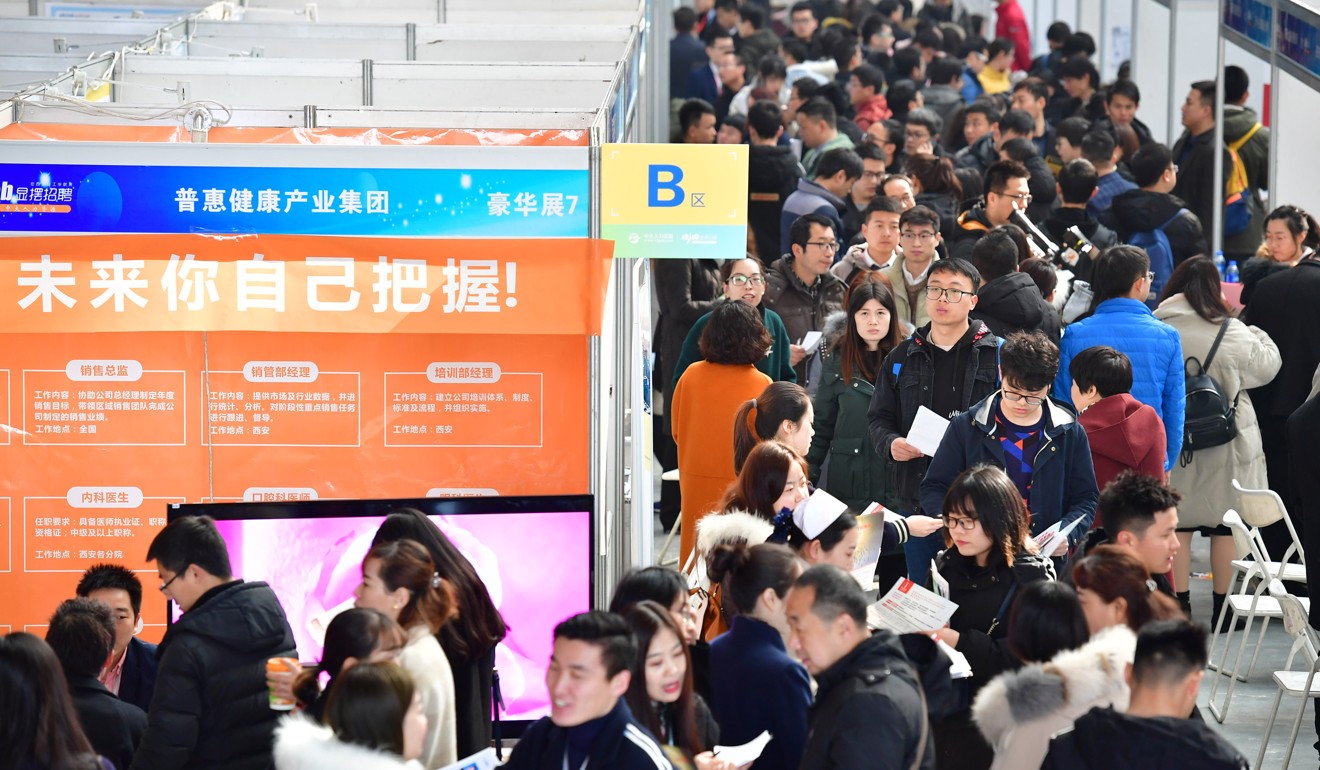
Job applicants visit a provincial job fair at Qujiang International Conference and Exhibition Center in Xian, northwest China's Shaanxi Province in February. Photo: Xinhua
Job applicants visit a provincial job fair at Qujiang International Conference and Exhibition Center in Xian, northwest China’s Shaanxi Province in February. Photo: Xinhua

Oracle has never confirmed the number of lay-offs but said the job cuts formed part of an overall global strategy transformation.

However, there has been little sympathy for those losing their jobs in China, judging by social media posts.

Some people posted that those working for big US tech firms are not “wolf” enough compared with counterparts who work for local tech firms, referring to the long work-hours culture of the domestic tech scene.

A viral story titled “Why there should be no pity for the sacked Oracle China employees” said the company was Beijing’s biggest nursery because of the flexible “work from home” culture and generous compensation package offered to employees.

Oracle said to begin mass lay-offs in China as part of global move to cloud services

“They had every chance to join rising domestic internet firms. But they settled for high salary and low work pressure, which eventually made them frogs in boiling water. Why pity them?” said the article, adding that the earlier people give up on the “glory” of working for MNCs, the quicker they will benefit.

Not all Chinese workers would agree, and there has been a recent backlash against the “996” culture within China’s tech sector, where people routinely work from 9am to 9pm, six days a week.

With geopolitical uncertainty growing day by day, though, many Chinese are asking why leave the family behind for an uncertain fate overseas?

A survey done by consultancy BCG and The Network in 2018 showed that only one in three China residents was willing to move abroad for work, down from 61 per cent in 2014. The country is also the 20th most popular destination worldwide to relocate for a job, compared with 29th in the 2014.

“One of my graduate classmates in the US just gave up a six-digit package at Oracle and joined drone maker DJI in Shenzhen,” said Ben Zhang. “I asked what prompted his return to China. He sent me the viral article and asked, ‘who wants a life that one can see the end of from the very beginning?’”

Source: SCMP

11/04/2019

China urges relevant countries to offer fair business environment for enterprises

BEIJING, April 10 (Xinhua) — China on Wednesday urged relevant countries to offer a fair, just and non-discriminatory business environment for enterprises of various countries, including Chinese ones.

Foreign Ministry spokesperson Lu Kang made the remarks at a routine press briefing when asked whether Australia applies double standards on the cybersecurity issue.

Recently, a number of Australian media reported that relevant Australian law mandated communication enterprises install “backdoors” for the Australian government. Google, Apple, Amazon and other technology companies have expressed serious concern about the act, saying it threatens cybersecurity in Australia and the world.

While the Australian side previously claimed that the country does not want any company in its communications networks that have an obligation to any other government. For this reason, Australia banned Huawei from the 5G telecommunications network.

Noting China has been closely following the relevant developments, Lu said the communication market and international cooperation will be seriously affected when it forces enterprises to install “backdoors” by legislation, which builds its own security and interests on the basis of violating other countries’ security and the privacy of their citizens.

“As you can see, the business communities have expressed serious concern about this,” Lu said.

A puzzling thing is that on the one hand, relevant countries use cybersecurity and sensationalize the so-called “security threat” of other countries or enterprises with trumped-up charges. On the other hand, they are doing things that endanger cybersecurity, Lu said.

“I am just as interested as you are in what the Australian government would say,” said the spokesperson.

Emphasizing that China has always attached great importance to and firmly maintained cybersecurity, Lu said that the Chinese side is willing to continue to actively participate in international cooperation in cybersecurity and work with all parties to build a peaceful, secure, open, cooperative and orderly cyberspace.

Source: Xinhua

26/03/2019

Chinese smartphone firms jazz up products, seize turf in home market from Apple

SHANGHAI (Reuters) – Smartphone retailers in China say it’s a tough sell of late with consumers reluctant to upgrade, put off by chill economic winds.

Even so domestic brands led by Huawei have made big strides, wooing consumers with top-notch hardware and innovative features as they move upmarket in the $500-$800 price range. The result: a loss of share in a key segment for Apple Inc and fresh price cuts for iPhones by Chinese retailers.

“Of those people who are upgrading, there are many switching from Apple to Chinese brands but very few switching from Chinese brands to Apple,” said Jiang Ning, who manages a Xiaomi store in the northern province of Shandong.

Huawei Technologies Co Ltd, Xiaomi Corp, Oppo and Vivo once sought to grab share in the world’s biggest smartphone market with value-for-money devices, but consumer demand for better phones has prompted strategic rethinks.

“People are more attached to their phone than ever and have higher expectations for the function and experience it offers. The response has been constant upgrading of hardware specs,” Alen Wu, global vice president at Oppo, told Reuters.

He Fan, CEO of Huishoubao which buys and resells used phones, said he has seen a consumer shift to Huawei from Apple, driven by the Chinese love of selfies and emphasis on camera quality. Huawei has had a tie-up with German camera maker Leica since 2016.

“Huawei’s cameras have become noticeably better than Apple’s in that they suit the tastes of Chinese consumers more,” he said.

Compared to dual-cameras common in most smartphones, Huawei’s P20 Pro device boasts three rear-facing cameras, with the additional one improving zoom capabilities.

It is one of several new devices in its P20 and Mate 20 lines, which helped Huawei’s share of the $500-$800 segment in China surge to 26.6 percent last year from 8.8 percent, data from research firm Counterpoint shows.

Apple, by contrast, saw its share of the segment tumble to 54.6 percent from 81.2 percent, also hurt by its decision to move even further upmarket with the iPhone X series.

“Most Chinese smartphone buyers are not ready to shell out beyond $1,000 for a phone,” said Neil Shah, research director at Counterpoint. “This left a gap in the below-$800 segment, which Chinese vendors grabbed with both hands.”

Shipments of phones priced above $600 in China grew 10 percent in 2018, data from research firm Canalys shows. By contrast, the overall market shrunk 14 percent, marking a second year of contraction.

OVERSEAS GAINS

The weaker cachet for Apple in China was underscored this month when several major retailers simultaneously cut iPhone prices for a second time this year.

A 64GB iPhone 8 sold at Suning.com Co Ltd now costs 3,899 yuan ($580), roughly 25 percent less than it did in December. That’s also lower than its $599 price tag in the United States, where iPhones typically cost less to buy than in China. Most iPhone models through to the iPhone 8 series have seen prices in China cut, albeit not equally.

In earnings too, it seems to be a tale of divergent fortunes. Apple’s October-December revenue from the Greater China region fell by about a quarter from a year earlier. Greater China currently accounts for 15.6 percent of its overall revenue.

Huawei, the world’s No. 2 smartphone maker, has estimated revenue for 2018 rose 21 percent, which analysts attribute in large part to robust smartphone sales.

More broadly, fewer sales for Apple means fewer customers for its App Store and media streaming services. The shift to higher-end phones by Chinese brands has also meant greater inroads in overseas markets.

Huawei’s shipments in Europe jumped 55 percent in the latest quarter and it now has 23.6 percent market share, according to Canalys. That’s not far behind Samsung Electronics and Apple which saw small declines in shipments.

OPPO, VIVO

If Huawei is taking the lion’s share of turf that Apple once had in China, Oppo and Vivo – brands owned by electronics hardware conglomerate BBK – are the newest threats.

In June, Vivo launched the Nex which starts from 3,898 yuan ($610) and in July, Oppo launched the Find X, priced at 4,999 yuan ($755).

The models mark the first time the brands have priced a phone above $600, a sharp departure from their roots selling $300-$500 models to young consumers in second-tier cities.

The devices came with features unavailable in the iPhone, including under-the-glass fingerprint sensors and “notchless” displays, both of which increase the size of usable screen.

Xiaomi too is going upmarket, announcing in January it would split off its low-budget Redmi range of phones into a sub-brand. In doing so, it is taking a leaf out of Huawei’s book which has for years sold cheaper devices under the Honor brand, helping differentiate its products.

Redmi will target international markets and e-commerce sales, while the flagship Xiaomi brand will target China and offline retail markets, company founder Lei Jun told reporters.

Last month, Xiaomi unveiled the Mi 9, its latest flagship device with a price tag of 2,999 yuan ($450). But the company also said it might be the last time a Xiaomi flagship phone would be priced under 3,000 yuan.

“Xiaomi’s flagship series phones were once always set at 1,999 yuan,” said Lei. “This was a contributing factor to our rise, but it also became an obstacle to our growth,” he said.
Source: Reuters
13/03/2019

Smartphone shipments to China hit six-year low in February: market data

SHANGHAI (Reuters) – Smartphone shipments to China in February fell to their lowest in six years, market data indicated, as consumers continued to put off handset purchases amid a slowing economy.

Shipments to the world’s biggest smartphone market totaled 14.5 million units, down 19.9 percent from a year ago, according to data from the China Academy of Information and Communications Technology, a government-affiliated research institute.

That is the lowest since February 2013, when shipments to the China totaled 20.7 million.

Overall consumer purchases typically slow during February as the Chinese spend much of the month with family celebrating the Lunar New Year. But shipments this year fell more than usual as a slowing economy, exacerbated by a Sino-U.S. trade war, hurt demand for gadgets across the board.

Apple cited slowing iPhone sales in China when it took the rare step of cutting its sales forecast earlier this year. The firm then teamed up with China’s Ant Financial and local banks to offer interest-free iPhone financing in its first such move in the country as it looked to boost waning sales.

Several third-party retailers have also offered iPhones at discounted prices.

With smartphone sales expected to stay weak, companies like Chinese market leader Huawei Technologies have aimed to launch more expensive models to corner higher margins.

In 2018, Huawei’s market share of China’s $500-$800 device segment rose to 26.6 percent from 8.8 percent, according to Counterpoint Research. Apple’s share fell to 54.6 percent from 81.2 percent as it launched devices cracking the $1,000 price point, while others released competitive devices for less.

Source: Reuters

25/02/2019

Huawei says Trump ‘clear and correct’ on 5G as trade deadline looms

(This Feb. 24 story corrects paragraph 12 to show Huawei was world’s third-largest smartphone vendor last year, not second largest)

BARCELONA (Reuters) – China’s Huawei welcomed comments from President Donald Trump about the future of U.S. mobile communications on Sunday and asserted its position as a world-leading smartphone producer as Washington and Beijing seek a trade war ceasefire.


At the center of the imbroglio is Huawei Technologies, accused by Washington of sanctions busting, intellectual property theft and facilitating Chinese state espionage operations.

Speaking ahead of the mobile industry’s biggest global event which begins in Barcelona on Monday, Huawei Chairman Guo Ping reiterated his company’s position that it has never and would never allow any country to spy through its equipment.

Guo, who holds Huawei’s rotating chairmanship, said Trump’s recent assertion that the United States needed to get ahead in mobile communications through competition rather than seeking to block technology was “clear and correct”.


Trump’s tweets on Thursday did not specifically mention Huawei, the world’s largest producer of mobile network equipment, but appeared to soften earlier U.S. statements that it should be barred from Western networks on security grounds.

“I have noticed the president’s Twitter, he said that the U.S. needs faster and smarter 5G, or even 6G in the future, and he has realized that the U.S. is lagging behind in this respect, and I think his message is clear and correct,” Guo said, speaking through an interpreter.

He said the United States did not represent the whole world and called for equipment makers, network operators and governments to work together to devise trustworthy standards to manage cyber security risks.

The Huawei logo is displayed ahead of the Mobile World Congress (MWC 19) in Barcelona, Spain, February 24, 2019. REUTERS/Sergio Perez

“We need to have unified standard that should be verifiable. It should not be based on politics,” Guo said.

FOLDING PHONE, RIGID PRICE TAG

Huawei also sought to reaffirm its position as one of the world’s leading technology companies, unveiling a folding 5G smartphone to an audience of media and analysts in Barcelona.

Huawei, the world’s third-largest smartphone vendor after Samsung and Apple, said it had taken the lead in developing phones for 5G – which promises super-fast internet speeds – because it was also involved in developing the networks.

Folding phones?
Makers pray you’ll want one
The new Huawei Mate X will have two back-to-back screens which unfold to become an eight-inch tablet display, and goes on sale later this year priced at 2,299 euros ($2,607), setting a new upper limit for consumer smartphones.
Samsung had unveiled its own folding smartphone last week, priced at nearly $2,000, as part of a bid to top the technology of Chinese rivals and Apple Inc.
Thomas Husson, principal analyst at Forrester Research, said the Mate X showed Huawei was an innovative technology company and no longer trailing American and Korean competitors.
“The fact that Huawei is not just a network equipment provider but also a smartphone manufacturer … gives them a competitive advantage for 5G. It is also a double-edge sword as some argue the security risks are higher,” Husson said.
China’s Xiaomi, the world’s fourth-largest smartphone maker, also unveiled a 5G handset on Sunday, but without the folding screen or high price tags touted by the Huawei and Samsung devices. Xiaomi’s offering will start at 599 euros ($679) when it hits the market in May.
Source: Reuters
Law of Unintended Consequences

continuously updated blog about China & India

ChiaHou's Book Reviews

continuously updated blog about China & India

What's wrong with the world; and its economy

continuously updated blog about China & India