Archive for ‘Argentina’

15/03/2020

Lockdowns, self-isolation and entry bans imposed to fight global coronavirus spread

(Reuters) – France and Spain joined Italy in imposing lockdowns on tens of millions of people, Australia ordered self-isolation of arriving foreigners, and Argentina and El Salvadore extended entry bans as the world sought to contain the spreading coronavirus.

Panic buying in Australia, the United States and Britain saw leaders appeal for calm over the virus that has infected over 138,000 people globally and killed more than 5,000.

Several countries imposed bans on mass gathering, shuttered sporting, cultural and religious events, while medical experts urged people to practice “social distancing” to curb the spread.

All of Pope Francis’ Easter services next month will be held without the faithful attending, the Vatican said on Sunday, in a step believed to be unprecedented in modern times.

The services, four days of major events from Holy Thursday to Easter Sunday, usually draw tens of thousands of people to sites in Rome and in the Vatican.

Australian Prime Minister Scott Morrison said from midnight Sunday international travellers arriving in the country would need to isolate themselves for 14 days, and foreign cruise ships would be banned for 30 days, given a rise in imported cases.

“What we’ve seen in recent weeks, is more countries having issues with the virus and that means the source of some of those transmissions are coming from more and more countries,” Morrison told a news conference.

Australia’s latest restrictions mirror those announced by neighbouring New Zealand on Saturday. Australia has recorded more than 250 coronavirus cases and three deaths.

TRAVEL BANS, AIRLINE CUTBACKS

U.S. President Donald Trump declared a national emergency on Friday. The United States has recorded more than 2,000 cases and 50 deaths, but has been criticised for slow testing.

Travel bans and a plunge in global air travel saw further airline cut backs, with American Airlines Inc (AAL.O) planning to cut 75% of international flights through May 6 and ground nearly all its widebody fleet.

The dramatic announcement by the largest U.S. airline came hours after the White House said the United States would widen new travel restrictions on Europeans to include travellers in the United Kingdom and Ireland, starting Monday night.

Washington has already imposed flight restrictions on China.

China tightened checks on international travellers arriving at Beijing airport on Sunday, after the number of imported new coronavirus infections surpassed locally transmitted cases for a second day in a row.

Anyone arriving to Beijing from abroad will be transferred directly to a central quarantine facility for 14 days for observation starting March 16, a city government official said.

China, where the epidemic began in December, appears to now face a greater threat of new infections from outside its borders as it continues to slow the spread of the virus domestically.

China has reported 80,984 cases and 3,203 deaths, according to a Reuters tally, of which 66,911 have recovered in mainland China, which has imposed draconian containment policies, locking down several major cities.

LOCKDOWNS, STAY HOME

Spain put its 47 million inhabitants under partial lockdown on Saturday as part of a 15-day state of emergency to combat the epidemic in Europe’s second worst-affected country after Italy.

Spain had 193 coronavirus deaths and 6,250 cases, public broadcaster TVE said on Saturday, up from 120 deaths reported on Friday.

France will shut shops, restaurants and entertainment facilities from Sunday with its 67 million people were told to stay home after confirmed infections doubled in 72 hours.

French Prime Minister Edouard Philippe said the government had no other option after the public health authority said 91 people had died in France and almost 4,500 were now infected.

“We must absolutely limit our movements,” he said.

Britain is preparing to ban mass gatherings, while isolating people aged over 70 for up to four months is part of its action plan to tackle coronavirus which will be implemented in the coming weeks, Health Secretary Matt Hancock said on Sunday.

Argentina banned entry to non-residents who have travelled to a country highly affected by coronavirus in the last 14 days, the government officially announced late on Saturday.

The ban will last 30 days. Argentina has 45 cases of coronavirus, the health ministry said, up from 21 on March 12.

Panama said flights arriving from Europe and Asia would be temporarily suspended, with the exception of flights that transport doctors, medical equipment or other humanitarian aid.

Colombia will expel four Europeans for violating compulsory quarantine protocols, just hours after it closed its border with Venezuela, the government said on Saturday.

ANTI-TERRORISM TRACKING TO FIGHT VIRUS

Israel will use anti-terrorism tracking technology and partially shutdown its economy to minimise transmission risks, Prime Minister Benjamin Netanyahu said on Saturday.

Cyber tech monitoring would be deployed to locate people who have been in contact with those carrying the virus, subject to cabinet approval, Netanyahu told a news conference in Jerusalem.

Starting Sunday, South Korea began to subject visitors from France, Germany, Britain, Spain and the Netherlands to stricter border checks, after imposing similar rules for China, Italy and Iran which have major outbreaks.

Visitors from those countries now need to download an app which will report whether they have symptoms. South Korea has been testing hundreds of thousands of people and tracking potential carriers using cell phone and satellite technology.

Source: Reuters
09/12/2019

China Focus: Xinjiang, an emerging investment hotspot

URUMQI, Dec. 8 (Xinhua) — Rich in resources but remote, Xinjiang in China’s far west has become a magnet for investors for its unique position on the Silk Road.

In a workshop of the Amer International Group in Urumqi, capital of Xinjiang Uygur Autonomous Region, workers are busy adjusting and packing laptops.

Recently, Amer sent the first batch of 2,000 laptops it produced for the German company TrekStor to the European market via China-Europe freight trains.

Headquartered in the southern Chinese city of Shenzhen, Amer invested 20 billion yuan (around 2.8 billion U.S. dollars) to build an industrial park in Xinjiang in 2018. So far, the industrial park has produced and exported around 1.5 million mobile phones, according to Wang Wenyin, the founder and chairman of Amer International Group.

“We saw Xinjiang’s geographical advantages, so we established the industrial park and cooperated with our counterparts in South and Central Asia in the fields of smartphones and IT high-end manufacturing,” Wang said.

Amer International Group is among a growing number of enterprises that have been attracted by Xinjiang in recent years, as trains and planes have made Xinjiang better connected than ever before.

As China’s key trade gateway to Central and West Asia, the remote region’s position as the heart of the Belt and Road Initiative is unmistakable. In 2013, China proposed the BRI, which opened up new space for the world economy, spurring trade and economic growth and stimulating investment and creating jobs worldwide.

Urumqi Customs saw the number of China-Europe freight trains skyrocket to 5,743 in the first 10 months this year, up 53.68 percent year on year, outnumbering the total of 2018.

To attract more investors, the local government has gone to great lengths creating a more friendly business environment, such as cutting the time required for starting a business and lowering the entry threshold for products.

Up to now, Xinjiang has had more than 1.8 million market entities including 359,000 enterprises, up 18 percent year on year.

Foreign and domestic business giants including German chemical giant BASF and China’s real estate conglomerates Wanda Group have also invested in the region.

Lai Naixiang, head of Kashgar Oumeisheng Energy Technology, a home appliance manufacturer, moved his business from Shenzhen to Kashgar in southern Xinjiang in 2017.

“We chose to settle in Kashgar because of the great market potential in adjacent Central Asian countries as well as Xinjiang’s lower electricity prices and preferential tax policy,” he said.

Last year, the company exported electric kettles worth more than 16 million yuan to Kyrgyzstan and Tajikistan.

Foreign trade in Xinjiang has seen booming growth. The region recorded around 131.5 billion yuan in imports and exports in the first 10 months of this year, up 28 percent year on year.

In the first 10 months, Kazakhstan topped the list of Xinjiang’s major trade partners, with trade volume between the two growing by 28.2 percent to 60.2 billion yuan.

Xinjiang’s trade with Kyrgyzstan, Australia, Pakistan, Britain, Argentina and Vietnam also showed fast growth, according to the local customs authorities.

“With further Belt and Road construction, Xinjiang will get more impetus in economic and social development. I see great potential in the region,” Wang said.

Source: Xnhua

12/11/2019

Feature: Xi spearheads closer China-LatAm cooperation for common prosperity

MEXICO CITY, Nov. 12 (Xinhua) — China and Latin America sit on the opposite sides of the globe, but the formidably vast Pacific Ocean that separates them did not stop them from sharing a long history of exchanges.

Today, the major developing country in the East is forging an increasingly close partnership with the dynamic region in the Western Hemisphere, especially since Chinese President Xi Jinping took office in 2013, and set into motion what is now known as Xiplomacy.

In the past six years, Xi has visited 11 Latin American and the Caribbean (LAC) countries. On Tuesday, he is setting foot on the region for the fifth time as president, as he arrives in Brazil for the upcoming 11th BRICS summit.

Thanks in no small part to Xi’s push, the time-honored, distance-defying China-Latin America relationship is flourishing with new vitality. China has become the second largest trading partner of Latin America, while the latter is one of the fastest growing sources of exports to China. Two-way trade rose 18.9 percent year on year to 307.4 billion U.S. dollars in 2018.

GRAND VISION

Every time Xi visited Latin America, he reaffirmed China’s commitment to cementing bilateral friendship and expanding win-win cooperation.

His first trip to the region as head of state, in 2013, took him to Trinidad and Tobago, Costa Rica and Mexico. The following year saw him travel to Brazil, Argentina, Venezuela and Cuba.

It was in Brazil that Xi met with leaders from 11 LAC countries, and for the first time laid out his grand vision for building a China-Latin American community with a shared future.

“Let us seize the opportunities presented to us and work together to blaze new trails in building a community of shared destiny for common progress and usher in a bright future for the relations between China and Latin America and the Caribbean,” Xi said in a keynote speech at the first ever China-Latin American and Carribean Countries Leaders’ Meeting in 2014.

He then proposed a “1+3+6” cooperation framework to “promote faster, broader and deeper cooperation between the two sides for real results.”

The “1” refers to “one plan,” the Chinese-Latin American and Caribbean Cooperation Plan (2015-2019), formulated to promote inclusive growth and sustainable development.

The “3” alludes to “three engines” for driving practical cooperation for comprehensive development, namely trade, investment and financial cooperation.

The “6” means the six priority cooperation fields of energy and resources, infrastructure building, agriculture, manufacturing, scientific and technological innovation, and information technologies.

In 2016, Xi visited Ecuador, Peru and Chile. Two years later, he traveled to Argentina for the Group of 20 summit as well as Panama, a Central American country which established diplomatic ties with China in June 2017.

In a landmark speech at the Peruvian Congress in Lima in 2016, Xi expounded the significance of strengthening China-Latin America cooperation.

“With one fifth of the world’s total area and nearly one third of the world’s population, China and Latin America and the Caribbean are crucial forces for world peace and stability,” he said.

China, he added, “will increase sharing of governance experience and improve planning and coordination of macro policies with Latin American and Caribbean states to better synergize our development plans and strategies.”

Besides top-level engagement, Xi also reaches out to local people from all walks of life, in order to keep cementing the China-Latin America friendship and the public support for bilateral cooperation.

While in Costa Rica, Xi visited a family-run coffee plantation and tried some local brew. “I think some more coffee can well be exported to China,” Xi told his hosts with a smile.

Today, Costa Rica exports coffee to the Asian market, along with pork, dairy, pineapples and other high-quality agricultural goods, especially after the inauguration of the China International Import Expo in 2018.

NEW OPPORTUNITIES

With international cooperation within the framework of the Belt and Road Initiative (BRI) gaining steam worldwide, the Xi-proposed vision is creating new opportunities for China-Latin America cooperation.

The BRI, designed to promote common development along and beyond the ancient Silk Road trade routes, comprises the Silk Road Economic Belt and the 21st Century Maritime Silk Road, and the latter is closely connected to Latin America.

For two and a half centuries, from the mid-1500s to the early 1800s, galleons laden with Chinese silk, spices, porcelain and other goods sailed across the ocean to today’s port city of Acapulco on the Mexican Pacific coast.

Latin America is the natural extension of the 21st Century Maritime Silk Road, Xi said in a meeting with visiting Argentine President Mauricio Macri in May 2017.

In a congratulatory message to the second Ministerial Meeting of the China-Community of Latin American and Caribbean States (CELAC) Forum held in Chile on Jan. 22, 2018, Xi stressed that China and LAC countries “need to draw a new blueprint for our joint effort under the Belt and Road Initiative and open a path of cooperation across the Pacific Ocean that will better connect the richly endowed lands of China and Latin America and usher in a new era of China-LAC relations.”

During Xi’s visits, the Chinese president is always dedicated to better aligning the BRI — an open platform for cooperation — with the development plans of LAC countries.

In his meeting with Macri, Xi called for dovetailing the BRI with Argentina’s development strategy, expanding cooperation in such sectors as infrastructure, energy, agriculture, mining and manufacturing, and implementing existing major cooperation projects in hydro-power, railway and other fields.

Similarly, during the state visit to Panama in December 2018, Xi said the National Logistics Strategy of Panama 2030 and the BRI are highly compatible, calling on the two sides to synergize their respective development strategies, boost cooperation and promote connectivity.

So far, 19 LAC countries have signed BRI cooperation agreements with China. China-Latin America cooperation in various areas has effectively promoted local economic and social development, bringing visible and tangible benefits to the Latin American people.

Just as Xi said in his speech at the Peruvian Congress in 2016, “China will share its development experience and opportunities with the rest of the world and welcome other countries to board the express train of its development, so that we can all develop together.”

SOurce: Xinhua

06/11/2019

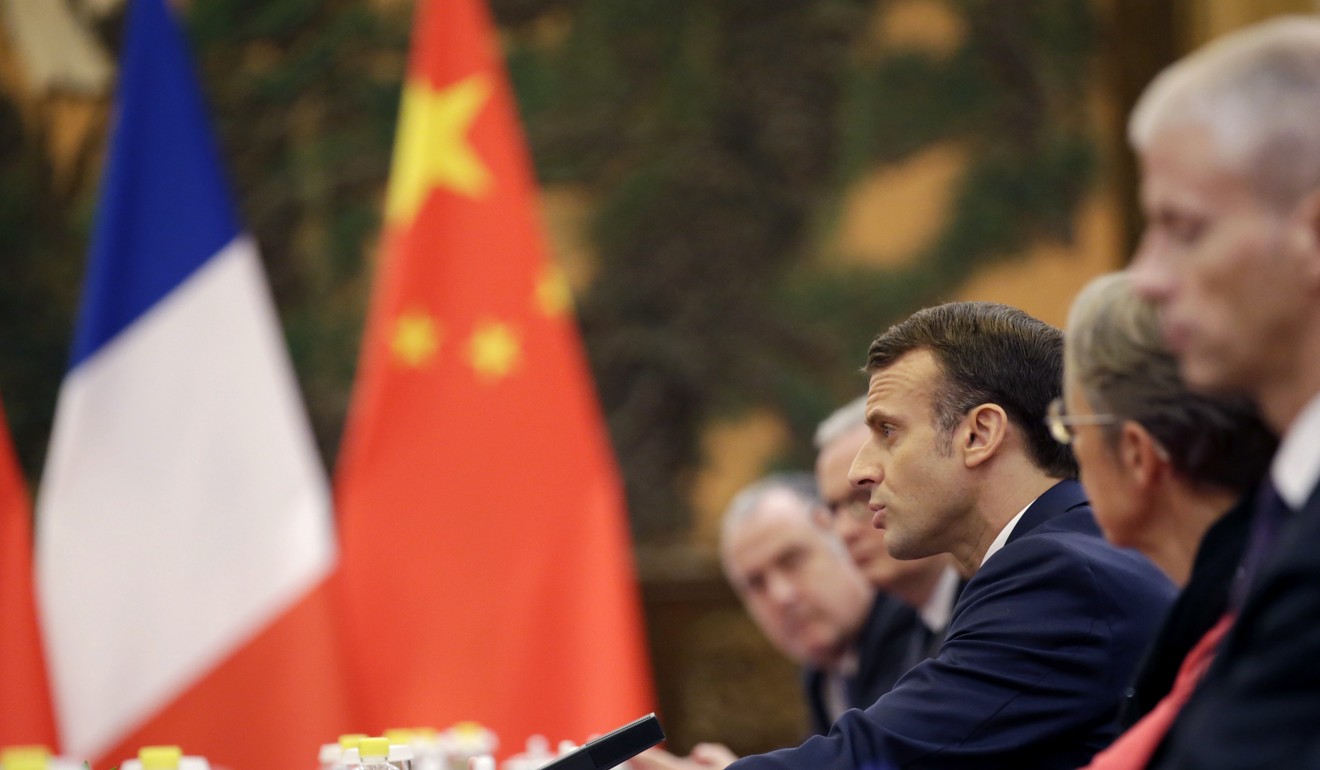
French President Emmanuel Macron tells Chinese leader Xi Jinping talks are needed to calm Hong Kong situation

  • French leader calls for restraint and says he raised the topic ‘on several occasions’ during his visit
  • Two sides find common ground on need to defend free trade and fight climate change as Donald Trump starts process of pulling US out of Paris Climate Agreement
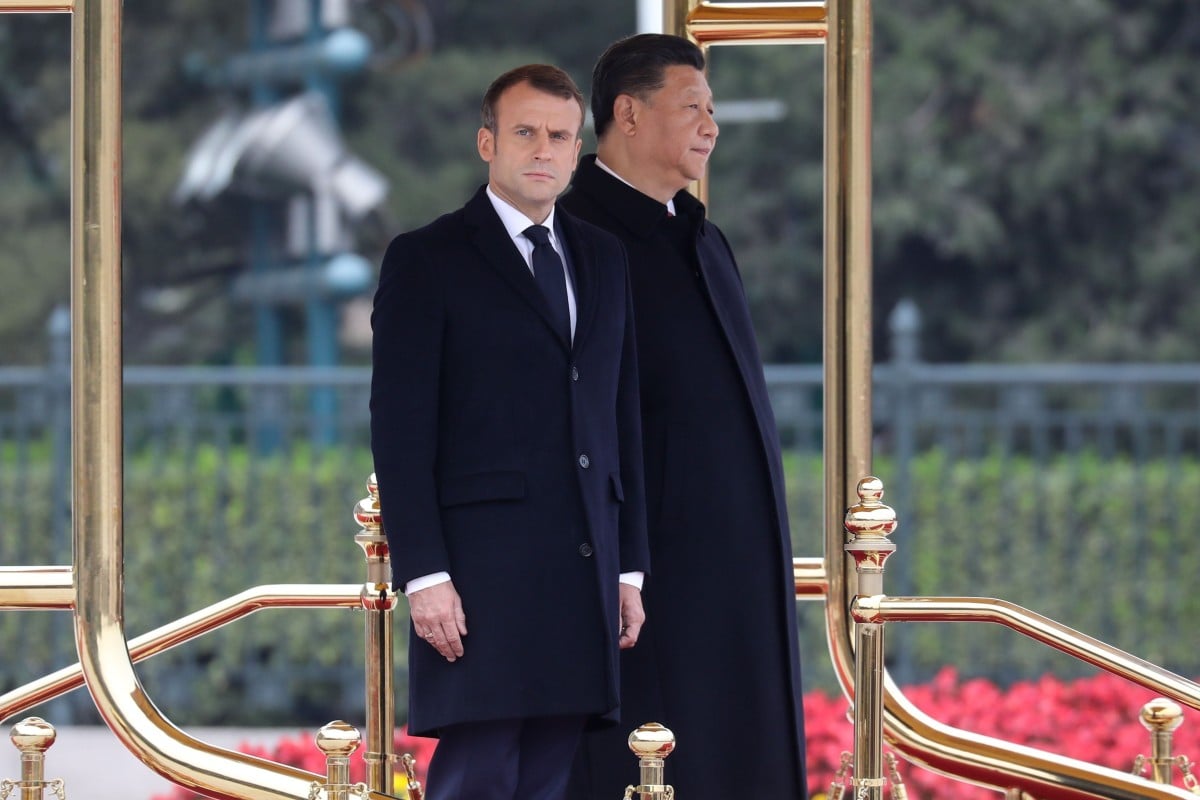
Xi Jinping and Emmanuel Macron at a welcome ceremony ahead of their talks in Beijing on Wednesday. Photo: AFP

French President Emmanuel Macron said he raised human rights and the Hong Kong situation during his talks with his Chinese counterpart Xi Jinping on Wednesday.

Macron’s visit to China concluded with pledges to work together on climate change, but the French leader also said he also called for a de-escalation of the situation in the city through dialogue after months of protests.

Macron, who had promised to raise “taboo” topics during the visit, told a press conference: “I obviously raised this with President Xi Jinping on several occasions.

“We have repeatedly called on the parties involved to [engage in] dialogue, to show restraint, to de-escalate.”

The discussion followed Xi’s meeting with Hong Kong’s embattled Chief Executive Carrie Lam Cheng Yuet-ngor in Shanghai on Monday, where he expressed “high trust” in her and “fully affirmed” support for her response to the unrest that has gripped the city since June.

Earlier the French and Chinese leaders had restated their commitment to protect free trade and pledged their continued support for the Paris Agreement as the United States begins the process of formally withdrawing from the global climate deal.

Macron expressed “regret” over “some countries’ negative attitude” towards environmental protection and the fight against climate change and pledged to work with China to halt the loss of biodiversity.

The French president’s office also released a statement on Wednesday that reaffirmed France and China’s joint support for the “irreversible” Paris Agreement.

Macron points to common ground with China on tariffs and climate action

With the European Union, China and Russia backing the pact, he added, “the isolated choice of one or another is not enough to change the course of the world. It only leads to marginalisation.”

The two countries also agreed to work together to develop joint nuclear power projects and signed a series of contracts worth US$15 billion.

The deals covered aeronautics, energy and agriculture, including approval for 20 French companies to export poultry, beef and pork to China.

An additional action plan released after the talks said French utility giant EDF and China General Nuclear Power should be encouraged to cooperate on projects in China or third countries, citing the joint efforts by the two companies to build nuclear reactors at the Hinkley Point C station in Britain as an example.

The two sides also committed to signing a contract for the construction of a nuclear fuel recycling plant in China, which would involve French energy giant Orano, by January 31.

Xi took what appeared to be a veiled swipe at the United States, which is still embroiled in a protracted trade war and other confrontations with Beijing.

“We advocate for mutual respect and equal treatment, and are opposed to the law of the jungle and acts of intimidation,” Xi said.

“We advocate for openness, inclusion and for mutually beneficial cooperation, and are opposed to protectionism and a zero-sum game.”

Macron said China and the European Union should work in partnership as the world became more unstable, calling on the two sides to further open up market access.

“We call again for trade multilateralism to respond to distortions that have appeared in the global economy, which have led to a profound rise in inequalities and imbalances that explain the surge of challenges to the international systems,” he said.

“China and Europe also share the same views that the trade war only leads to loss.”

Macron kicks off China visit with deal to protect wine and cheese from counterfeiting

Chinese state news agency Xinhua said the two countries agreed to work together to push forward with plans to assemble Airbus’s A350 model in China.

Meanwhile, Beijing Gas Group and French utility firm Engie will collaborate on a liquefied natural gas terminal and storage in the northern city of Tianjin, while France’s Total will set up a joint venture with China’s Shenergy Group to distribute liquid nitrogen gas by truck in the Yangtze River Delta.

The two countries also agreed to reach an agreement by the end of January 2020 on the cost and location of a nuclear fuel reprocessing facility to be built by Orano, formerly known as Areva.

Wu Libo a professor and director of the Centre for Energy Economics and Strategies Studies at Fudan University, said there was “great potential” for further cooperation between the two countries on nuclear energy.

“France has many useful experiences in the operation and management of nuclear power plants and its plants have long-term safe and stable operation records,” she said.

The two sides agreed to work together on joint nuclear power projects. Photo: AP

Jiang Kejun, a senior researcher at the Energy Research Institute of China’s National Development and Reform Commission, said China’s cooperation with France would add credibility to potential third-country projects.

“China has advanced third-generation technology but it’s still a new member in the nuclear power market, while France has developed nuclear energy for a long time, and its EPR reactors – a technology designed and developed in France – are in business operation,” he said.

Jiang said possible markets for the joint projects included Argentina and India, while some Middle Eastern states – such as Saudi Arabia and Qatar – had expressed interest in nuclear energy.

China’s ambassador hits out at Macron’s team for backing ‘hypocritical’ EU stance on Hong Kong

Tong Jiadong, professor of international trade at Nankai University, said that the deals between the two sides helped show that France and China could work together to counteract US unilateralism.

“Objectively speaking, this will form, or at least imply, an opposition to US unilateralism,” Tong said. “China hopes the cooperation between these two countries produces demonstrable effects for other EU member states.”

Ding Chun, a professor of European Studies at Fudan University, said he did not think the EU wanted to “choose a side” between the US and China.

But Ding continued: “If we are talking about free trade and multilateralism, there’s no doubt that the EU and China share a common view and can balance Donald Trump’s unilateralism.”

Source: SCMP

06/09/2019

Chinese medicine herbs could defeat devastating cotton virus, study suggests

  • Scientists find some chemicals can kill the cotton leaf curl Multan virus and others can boost cotton plants’ immunity to it
  • It is feared the virus could wreak havoc in China’s Xinjiang region, which produces most of the country’s cotton
A cotton picker in Xinjiang, where cases of the virus have been reported. Photo: Xinhua

Chinese scientists have found chemicals in medicinal herbs that could tame a destructive plant virus threatening the cotton industry in its western Xinjiang region.

Some small-molecule chemicals in herbs commonly used in Chinese medicine can effectively suppress cotton leaf curl Multan virus, according to ongoing research led by Professor Ye Jian at the Institute of Microbiology in Beijing.

By targeting WRKY20, a gene in the virus’ DNA, the chemicals could disrupt the viral infection and transmission, Ye’s team found.

Some early findings from their research were published last month in the journal Science Advances.

The leaf curl virus – a species of Begomovirus, the largest genus of plant viruses – poses a significant threat to the world’s cotton plantations, causing leaf curling, stunted growth and lower yields of cotton fibre. It costs the cotton industry in the Indian subcontinent about US$1 billion a year, according to a press release about the study from the Chinese Academy of Sciences.

Were there to be a pandemic in China, the drop in output and measures to contain it could cost the cotton farming industry 50 billion yuan (US$7 billion), according to some researchers’ estimates, the academy added.

The first known cases of the virus in China over the past decade were limited to coastal areas in the country’s east, but several cases have now been reported in Xinjiang Uygur autonomous region.

“We are running out of time,” Ye told the South China Morning Post.

Cotton is a pillar industry in Xinjiang, which provides more than 80 per cent of China’s total cotton production. The industry also contributes up to 50 per cent of the income of farmers involved in it, according to government statistics.

Exact figures for infections in the region are not available, but outbreaks so far remain isolated, according to Ye and other researchers with knowledge of the situation.

Double threat to China’s cotton industry: warmer weather and mirid bug

However, Professor Gao Feng, cotton researcher at the Agricultural College of Shihezi University in Xinjiang, warned that leaf curl virus could reduce cotton production in an infected field to almost zero.

“A large-scale outbreak has not occurred yet, but the threat is very serious and people are very nervous,” Gao told the Post. “We are in desperate need of a solution.”

The challenges facing China’s pork industry highlight the danger viruses can pose to the domestic market. A swine fever outbreak that has wiped out 100 million pigs caused pork prices to rise, forcing China to look to new countries to import from, such as Portugal and Argentina.

Its biggest overseas supplier of cotton is the United States, with which it is locked in a protracted trade war. In July, the government allowed some Chinese companies to buy a total of 50,000 tonnes of cotton from the US without tariffs being charged.

The central and regional governments fear that falling incomes caused by the impact of an outbreak on the cotton industry would increase the risk of ethnic conflict, social instability and anti-government thoughts.

Ye’s team adopted two approaches to fighting the virus.

How trade war with the US is changing China’s cotton industry

Some chemicals they discovered could improve cotton plants’ immunity against the infection by stimulating them to generate an antibody that killed the virus. The other chemicals they found could target the virus, directly reducing its intensity.

“They can be used as sprays,” Ye said, adding that he planned to reveal the chemical composites and related herbs in a paper to be published in a peer-reviewed journal in the coming months.

The discovery could offer an environmental benefit, too. Cotton farmers in Xinjiang use pesticides to deter the whiteflies that transmit the virus, but their overuse has affected Xinjiang’s delicate ecology, which in its desert areas is particularly vulnerable to disturbance.

In the agricultural research community, there is growing concern that some whitefly species will become resistant to pesticides. “If that happens, we will have a major problem,” Ye said.

He said the chemicals identified in the ongoing study would not harm the environment.

“These chemicals come from plants, so the negative impact to the environment would be minimal,” he said.

The study also found that it may be possible to use the cotton leaf curl Multan virus to benefit farmers. It stimulates cotton plants to generate a chemical that is harmful to other insects, such as the bollworm, that compete with whiteflies for food, meaning that it could be genetically modified into a pest control agent.

Most cotton species in commercial plantations are genetically modified to produce an insecticide to kill bollworm. Ye said a man-made virus could reduce the dependence on genetically modified plants.

Source: SCMP

28/07/2019

Latin America trade grows as China and US tussle for influence

  • Chinese Foreign Minister Wang Yi wraps up tour of Brazil and Chile, as Colombian president heads for Beijing
  • Ecuador president tells US Secretary of State Mike Pompeo ‘smaller countries pay when the big ones fight’
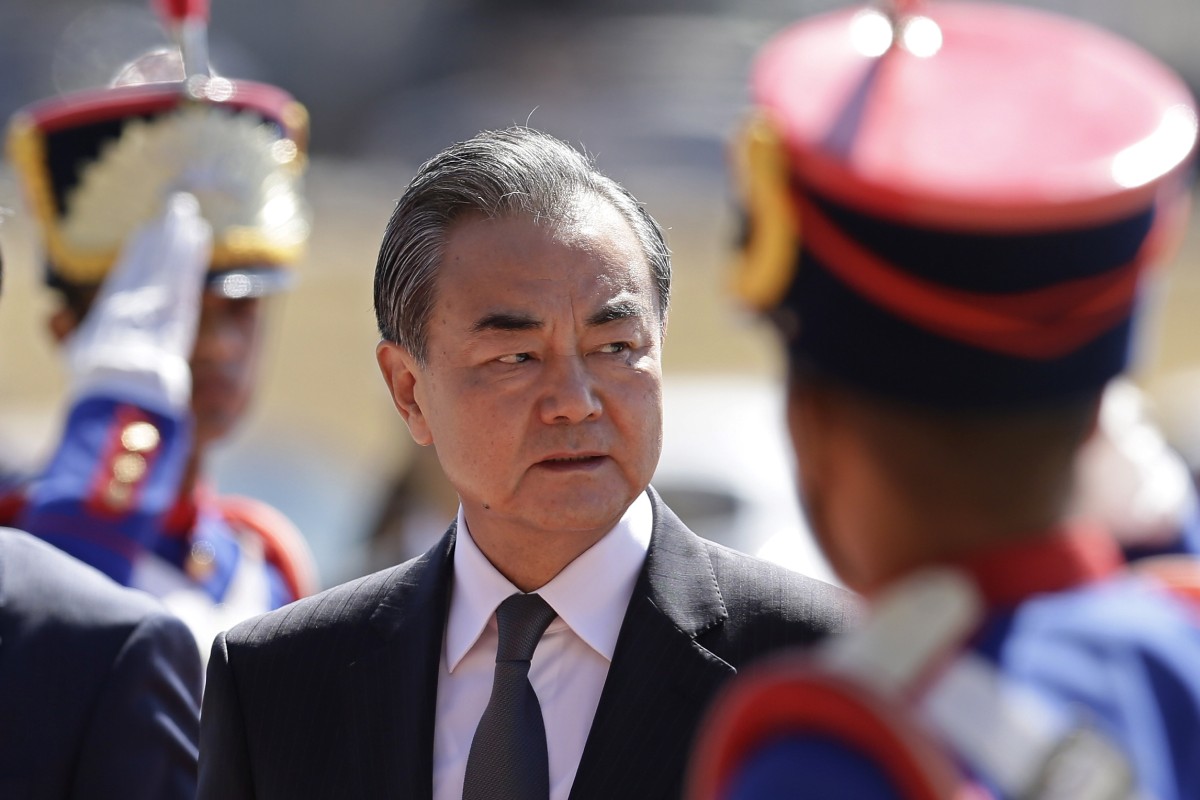
Chinese Foreign Minister Wang Yi is greeted by an honour guard as he arrives at the Itamaraty Palace for a meeting with his Brazilian counterpart Ernesto Araujo on Thursday. Photo: AP
Latin American countries are caught in the middle of a geopolitical tug of war between Beijing and Washington as China boosts its ties in the region in a bid to counterbalance the effects of its trade war with the US.
China’s Foreign Minister Wang Yi wraps up a tour of Latin America on Sunday which began last week in Brazil and ended with an official visit to Chile. He returns to Beijing on the same day Colombia’s President Ivan Duque Marquez arrives for a three-day state visit to China which will include a meeting with Chinese President Xi Jinping.
Wang was in Brazil for the latest summit of foreign ministers from the BRICS countries – an association of emerging countries made up of Brazil, Russia, India, China and South Africa – as well as the third China-Brazil foreign ministers’ comprehensive strategic dialogue with Brazilian Foreign Minister Ernesto Araujo.
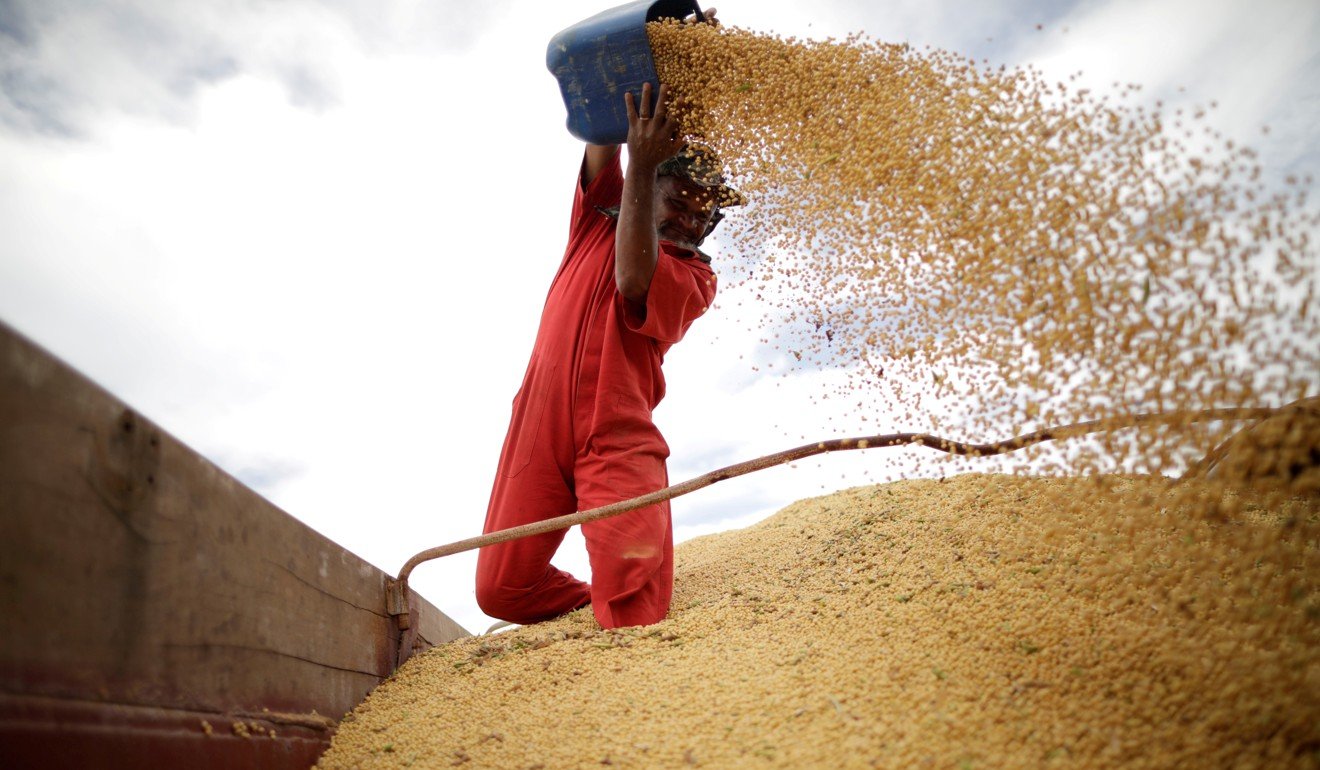
China has overtaken the US as Brazil’s largest trading partner, with Brazilian soybeans – one of the country’s biggest exports – and other agricultural products replacing American imports since the start of the US-China trade war a year ago.
Brazilian soybeans – one of the country’s biggest exports – and other farm products are being sold to China as a result of the trade war. Photo: Reuters

The growing importance of China to Brazil’s economy has created a difficult position for President Jair Bolsonaro, who accused Beijing of trying to buy Brazil during his election campaign, but changed tack on assuming office in January.

In March, Bolsonaro called China his country’s “main partner, politically as well as economically and commercially” and announced plans to travel to Beijing this year, a visit which was confirmed on Tuesday for late October.

China is now Latin America’s second largest trading partner with bilateral trade at US$307.4 billion, growing 18.9 per cent over the previous year, according to China’s ministry of commerce, in a relationship focused on commodity imports, including mining products like copper and energy, as well as soybeans and other agricultural goods.

While the US and China have tentatively agreed to resume talks in Shanghai next week, China and Latin American countries are likely to continue deepening their trade relations as production chains realign as a result of the trade war, according to Gustavo Oliveira, assistant professor of global and international studies at the University of California, Irvine.

“This means Chinese imports of Latin American agricultural and mineral commodities, and Latin American imports of Chinese manufactured products and hi-tech, might contribute to China’s ability to stand its ground against US pressure,” he said.

China in Latin America: partner or predator?
Oliveira said domestic contradictions in most Latin American countries complicated relations with China, as few leaders had the capacity to press or leverage China for much. “Unfortunately, therefore, most in this crop of Latin American leaders are basically placing themselves as junior partners or pawns in the geopolitical tug of war between the US and China.”
US Secretary of State Mike Pompeo put the pressure on Latin American countries over their relationship with China during his four-day tour of the region last weekend, when he visited Argentina, Ecuador, Mexico, and El Salvador.
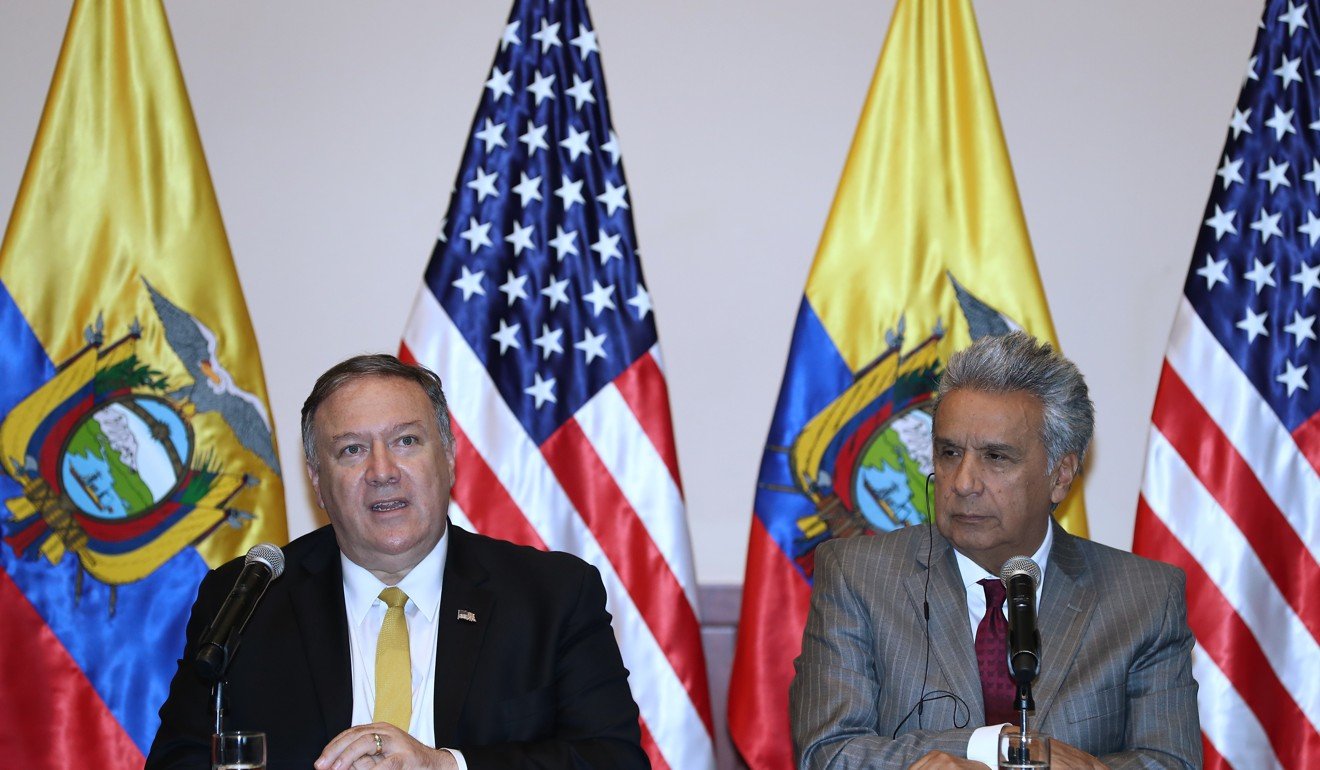
In a joint interview with Pompeo during the visit, Ecuador’s new President Lenin Moreno defended the country’s China ties, and urged Washington and Beijing to resolve their conflicts for the benefit of other nations in the region.
“We hope that the US and China, the greatest powers in the world now, will find agreement easily because, unfortunately, when the big ones are discussing or fighting and have conflicts, the ones that are paying for all of that are the smaller countries,” he said.
“Now, when two elephants fight, the ones who lose are the insects who are of course being crushed by the elephants in the attempt to evade them.”
US Secretary of State Mike Pompeo (left) and Ecuadorian President Lenin Moreno hold a joint press conference during Pompeo’s tour of Latin America on July 20. Photo: EPA-EFE

Pompeo blasted China’s role in the region during a previous tour of South America in April, when he singled out Beijing’s support for President Nicolas Maduro of Venezuela. Maduro is backed by Beijing, Russia and other allies, while the US and many European countries have supported opposition leader Juan Guaido as legitimate president since elections in January.

Speaking from Chile on that tour, Pompeo said Beijing’s calls for non-intervention in Venezuela were “hypocritical” and aimed at protecting Beijing’s investments in the country, as well as debts owed to China by Venezuela.

Pompeo also accused Beijing of “sowing discord” in the region through debt traps. “When China does business in places like Latin America, it often injects corrosive capital into the economic bloodstream, giving life to corruption and eroding good governance,” he said.

Professor Cui Shoujun of Renmin University in Beijing said Washington’s concerns about “debt trap diplomacy” in Latin America reflected concerns that China’s growing involvement in financing infrastructure and development projects would make the region more pro-China.

“China’s interests in Latin America go beyond raw materials extraction,” he said. “The biggest point of tension between the US and China in the region is perhaps that China presents an alternative model for development that is very different from the Western model.”

‘Mr Pompeo, you can stop’: China hits back over Latin America criticism

While the US was drumming up tensions about China across the world, Beijing was not openly retaliating but responding with investment and trade for global partners, said Kevin Gallagher, researcher on China-Latin America ties, and professor at Boston University.

“The US points fingers and makes angry speeches in the region as China cuts investment deals and helps address infrastructure needs,” he said.

“Latin American countries’ governments are rightly keeping their heads down on the broader geopolitical winds, and are getting down to business with their largest trading partner.”

Source: SCMP

28/06/2019

Commentary: Xi-Trump meeting an opportunity to bring talks back on track

BEIJING, June 28 (Xinhua) — Chinese President Xi Jinping is set to sit down with his U.S. counterpart, Donald Trump, on the sidelines of the Group of 20 (G20) summit in the Japanese city of Osaka, igniting a flicker of hope to bring the China-U.S. trade talks back on track.

The meeting arrives at a time when Washington’s trade offensive against China is not only poisoning one of the world’s most important bilateral relationships, but also risking throttling the already frail global economic recovery. Its significance is thus too great to miss.

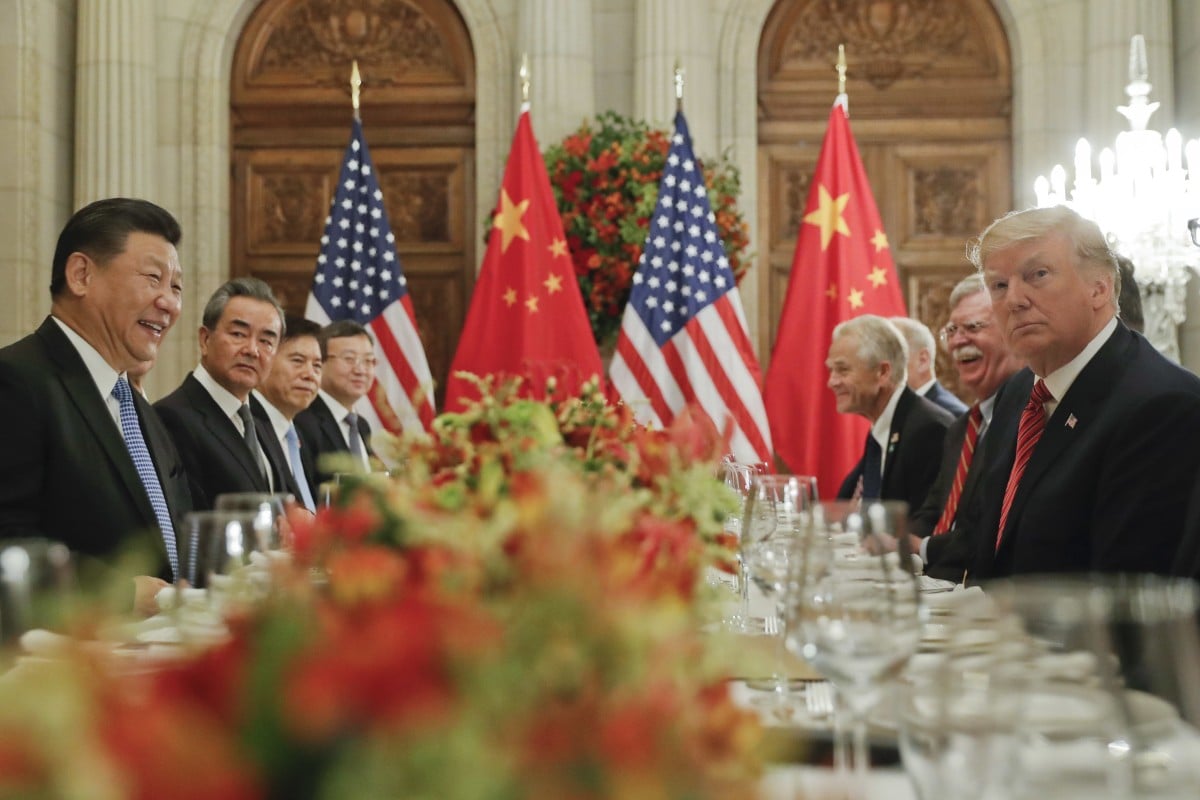
When the two presidents met each other at last year’s G20 summit in Argentina’s capital city of Buenos Aires, they reached an important consensus to pause the trade confrontation and resume talks. Since then, negotiating teams on both sides have held seven rounds of consultations in search for an early settlement.

However, China’s utmost sincerity demonstrated over the months seems to have only prompted some trade hawks in Washington to press for their luck.

Following its failure to coerce Beijing into swallowing a deal with unequal terms, a disappointed and enraged Washington returned to its tactic of tariffs by raising additional levies on 200 billion U.S. dollars’ worth of Chinese goods from 10 percent to 25 percent, and threatening a new round of tariff hikes on another 300 billion dollars’ worth of goods.

Some ultra-conservative U.S. decision-makers, who have for many years seen in China a “threat” to Washington’s sole superpower status, have tried to extend the trade campaign into a broader operation to shut China out and contain its rise.

As a result, Washington is cracking down on Chinese high-tech companies including telecom equipment provider Huawei, while many Chinese students seeking to study in the United States are facing more restrictions like months-long visa delay.

Thanks to Washington’s relentless efforts, the two countries, which should have celebrated the 40th anniversary of their diplomatic ties this year, are seeing their relations slipping down the path to a possible all-out confrontation.

Despite Washington’s “in-your-face” style of maximum pressure strategy, China has been steadfastly consistent in its position. It has always been committed to settling trade frictions via dialogue and consultation and safeguarding its legitimate and sovereign rights at the same time.

Beijing, as it has on various occasions reaffirmed, does not want a trade war, but is not afraid of one, and will fight to the end if necessary.

Last week, Xi had a telephone conversation with Trump at the request of the U.S. leader, saying that he stands ready to meet Trump in Osaka to exchange views on fundamental issues concerning the development of China-U.S. relations.

Xi’s words reflect an alarming fact that the two countries are facing a challenge to the fundamentals of their relationship. The upcoming Xi-Trump meeting provides a unique opportunity for the two sides to find new common ground in easing trade tensions and bring the troubled ties back onto the right track.

If the two sides can reach an agreement to pick up the talks, the United States needs to place itself on an equal footing with China, and accommodate China’s legitimate concerns on the basis of mutual respect, equality and mutual benefit in order to seek win-win results in the future negotiations.

Just one day ahead of the Osaka G20 summit, some U.S. politician again threatened to slap punitive levies on imported Chinese goods. Such cheap tactics to bring China down to its knees with pressure will get nowhere.

For more than a year, Washington’s spoils in its tariff campaign have so far only seen rising daily costs for ordinary American consumers, growing rejections from U.S. farmers, industry workers and business leaders, roller-coaster rides in U.S. stock markets, as well as China’s increasingly stronger determination to defend its rights.

The trade fight between the world’s two largest economies has already hit hard the global market and dented investors’ confidence worldwide. The latest World Trade Outlook Indicator reading of 96.3 remains at the weakest level since 2010, signaling continued falling trade growth in the first half of 2019, according to the World Trade Organization.

Trade wars produce no winner. In his latest telephone talk with Xi, Trump said he believes the entire world hopes to see the United States and China reach an agreement. To get an agreement, Washington’s hardliners need to know that Beijing will neither surrender to their pressure, nor permit Washington to deprive Chinese people of their rights to pursue a better life.

And for the agreement to be sustainable, Washington’s China policy should be rational. A rising China is not seeking to grab global hegemony. It will continue to work with nations around the world, including the United States, to boost common development and build a community with a shared future for mankind.

The past 40 years of China-U.S. relationship have proved that when the two countries work together, they both win and the world gains as well. But when they fight each other, all are poised to lose.

China and the United States, as two major economies in the international community, bear special responsibility for the wider world.

Therefore, the two sides, just as what Xi said during his meeting with The Elders delegation this April in Beijing, need to manage their differences, expand cooperation and jointly promote bilateral relations based on coordination, cooperation and stability so as to provide more stable and expectable factors to the world.

Source: Xinhua

17/06/2019

China quiet on Xi Jinping’s G20 meeting and trade talk demands in face of fiery Donald Trump rhetoric

  • It is expected the two leaders will meet in Japan at the end of June
  • Analysts see an increasing caution from China amid low expectations of any deal
Chinese President Xi Jinping and US President Donald Trump last met in Argentina in December on the sidelines of the G20 summit. Photo: AP
China’s relative silence in response to comments by US President Donald Trump in relation to the trade war is due to Beijing redoubling its efforts to take a cautious approach ahead of future talks amid “low expectations” of a quick deal after negotiations collapsed last month, analysts said.
Trump has openly threatened to levy tariffs on additional Chinese products if a meeting with counterpart Xi Jinping does not take place at the G20 summit in Japan at the end of the month, while also urging Beijing to return to talks based on terms negotiated earlier in the year.
“It’s me right now that’s holding up the deal,” Trump said on Tuesday. “And we’re going to either do a great deal with China or we’re not going to do a deal at all.”
China, though, has remained tight-lipped on both a meeting and also the prospects of future talks, with the foreign ministry yet to confirm whether there will be a summit between 
Trump and Xi

in Osaka. The South China Morning Post reported this week that the two leaders could share a more formal dinner, similar to the scene witnessed on the sidelines of the G20 summit in Argentina in December.

That meeting produced a ceasefire and more than five months of negotiations until early May when the talks broke down and the US more than doubled tariffs on US$200 billion in Chinese imports to 25 per cent.
Shi Yinhong, an international relations expert from Renmin University of China, said China had very low expectations ahead of the G20 summit in Japan due to the current level of strained bilateral relations.

Trump’s open threats had put Xi “in a very disadvantageous position”, as any agreement “would be seen as being weak or surrendering to US pressure”, he said.

Instead, the two sides were likely to reach “piecemeal deals” on smaller issues such as people-to-people exchanges and relaxation of visa restrictions, according to Shi, which in turn might help to build a friendlier atmosphere to pave the way for more substantive talks in the future.

It’s me right now that’s holding up the deal. And we’re going to either do a great deal with China or we’re not going to do a deal at all: Donald Trump

China’s state-controlled media outlets have maintained their criticism of the US for starting the trade war, although editorials carried by Xinhua and the People’s Daily have not given concrete information about Beijing’s demands, instead, in its latest editorial, Xinhua urged “US politicians to treat China’s rise with reasonable sense”.
Geng Shuang, a foreign ministry spokesman, said last week that China was aware of hopes emerging from the US side of a meeting between Trump and Xi in Osaka, but that China had no information to disclose on that subject, reiterating government statements from previous days.
Amid a war of words between Beijing and Washington over which side is to blame for the stalled trade talks, both sides have showcased their willingness to talk as long as the conditions are appropriate. Commerce vice-minister Wang Shouwen said at the start of June that China “is always sincere” about negotiating with the US, but the talks must be conducted with mutual respect.
“Otherwise, the negotiation would be meaningless. Even if there’s negotiation, there won’t be an enforceable and sustainable agreement,” Wang said.
Xi said at an economic forum in Russia last week that he did not want to see a decoupling of the US and China and believed that “my friend” Trump did not want that either.
“Trump’s stance that he is unlikely to make any concessions is very clear. So, China should be very cautious when arranging a bilateral meeting with him,” said Liu Weidong, a China-US affairs expert from the Chinese Academy of Social Sciences, a state think tank
Scott Kennedy, a senior adviser at the Centre for Strategic and International Studies in Washington, said Trump and Xi may reach “some sort of truce” as they did in Buenos Aires so that “both sides agree to put on hold their various actions against the other and not further escalate”, but added that the chance was small.
Source: SCMP
16/03/2019

Chinese delegation set to revive stalled Argentina nuclear power plant talks

  • Technical team expected to go to Latin American country to discuss project reportedly worth up to US$8 billion
Argentina had hoped to announce an agreement on China-financed construction of Atucha III during a state visit by Chinese President Xi Jinping after November’s G20 summit in Buenos Aires. Image: Handout

A delegation from China will visit Argentina this month to discuss the construction of a nuclear power plant, signalling possible progress in a deal that could increase Beijing’s deepening influence in the South American nation.

An Argentinian government source told Reuters this week the “technical team” from China would meet local suppliers about the long-stalled nuclear power plant project, reportedly worth up to US$8 billion.

Argentina had hoped to announce an agreement on China-financed construction of Atucha III, as it has been referred to in the past, during a state visit by Chinese President Xi Jinping after November’s G20 summit in Buenos Aires.

But the deal failed to emerge then, and in January Argentina’s nuclear energy undersecretary, Julian Gadano, and the ambassador to China, Diego Guelar, met officials in Beijing for talks about the project, the government source said.

Argentina seeks new currency swap deal with China as Beijing pursues closer ties in Latin America

A second government source, in the foreign ministry, said talks about the nuclear plant with China were ongoing but added that there had been no “concrete progress” towards signing a deal.

If finalised, the nuclear plant would be one of the biggest projects financed in Argentina by China, which has become a key trading partner for the South American country and its biggest non-institutional lender.

Source: SCMP

30/12/2018

Xi, Trump have telephone conversation, agree to implement consensus in Argentina meeting

BEIJING, Dec. 30 (Xinhua) — Chinese President Xi Jinping and U.S. President Donald Trump on Saturday held a telephone conversation, expressing their willingness to push for implementation of their agreements reached during the G-20 summit in Argentina.

Trump wished Xi and the Chinese people a happy new year, saying that the U.S.-China relations are very important and closely followed by the whole world.

He said he values the great relations with Xi, adding that he is pleased to see the teams of both countries are working hard to implement the important consensus reached between him and Xi during their meeting in Argentina.

Trump said relevant talks and coordination are producing positive progress. He hopes results will be reached to the benefit of both U.S. and Chinese peoples as well as people of all nations.

Xi, for his part, extended best wishes to Trump and the U.S. people upon the arrival of the new year.

Xi said both he and Trump hope to push for a stable progress of the China-U.S. relations, adding that the bilateral ties are now in a vital stage.

The Chinese president said he and Trump had a very successful meeting early this month and reached important consensus in Argentina.

The teams from both countries have since been actively working to implement such consensus, he said, expressing hopes that both teams can meet each other halfway and reach an agreement beneficial to both countries and the world as early as possible.

Xi said next year marks the 40th anniversary of the establishment of diplomatic ties between the United States and China, adding that China attaches great importance to the development of bilateral relations and appreciates the willingness of the U.S. side to develop cooperative and constructive bilateral relations.

China is willing to work with the United States to summarize the experience of 40 years of the development of China-U.S. relations, and strengthen exchanges and cooperation in fields of economy and trade, military, law enforcement, anti-drug operations, local issues and culture, Xi said.

Xi added that China is also willing to work with the United States to maintain communication and coordination on major international and regional issues, respect each other’s important interests, promote China-U.S. relations based on coordination, cooperation and stability, and let the development of bilateral relations better benefit the two peoples and people around the world.

The two heads of state also exchanged views on international and regional issues of common concern such as the situation on the Korean Peninsula. Xi reiterated that China encourages and supports further talks between the United States and the Democratic People’s Republic of Korea, and hopes for positive results.

Law of Unintended Consequences

continuously updated blog about China & India

ChiaHou's Book Reviews

continuously updated blog about China & India

What's wrong with the world; and its economy

continuously updated blog about China & India