13/09/2019
- US National Security Adviser recently said an unnamed Chinese fighter ‘looks a lot like the F-35 … because it is the F-35’
- The PLA’s only active stealth fighter the J-20 looks rather different to its US counterpart, but the FC-31 prototype may be closer to the mark
A Chinese FC031 stealth fighter pictured during a test flight in November 2014. Photo: Xinhua
US National Security Adviser John Bolton recently accused China of stealing US technology to make a stealth fighter, a charge Beijing has denied.
On a visit to Ukraine last week, Bolton said an unnamed fifth-generation aircraft “looks a lot like the F-35, that’s because it is the F-35. They just stole it”.
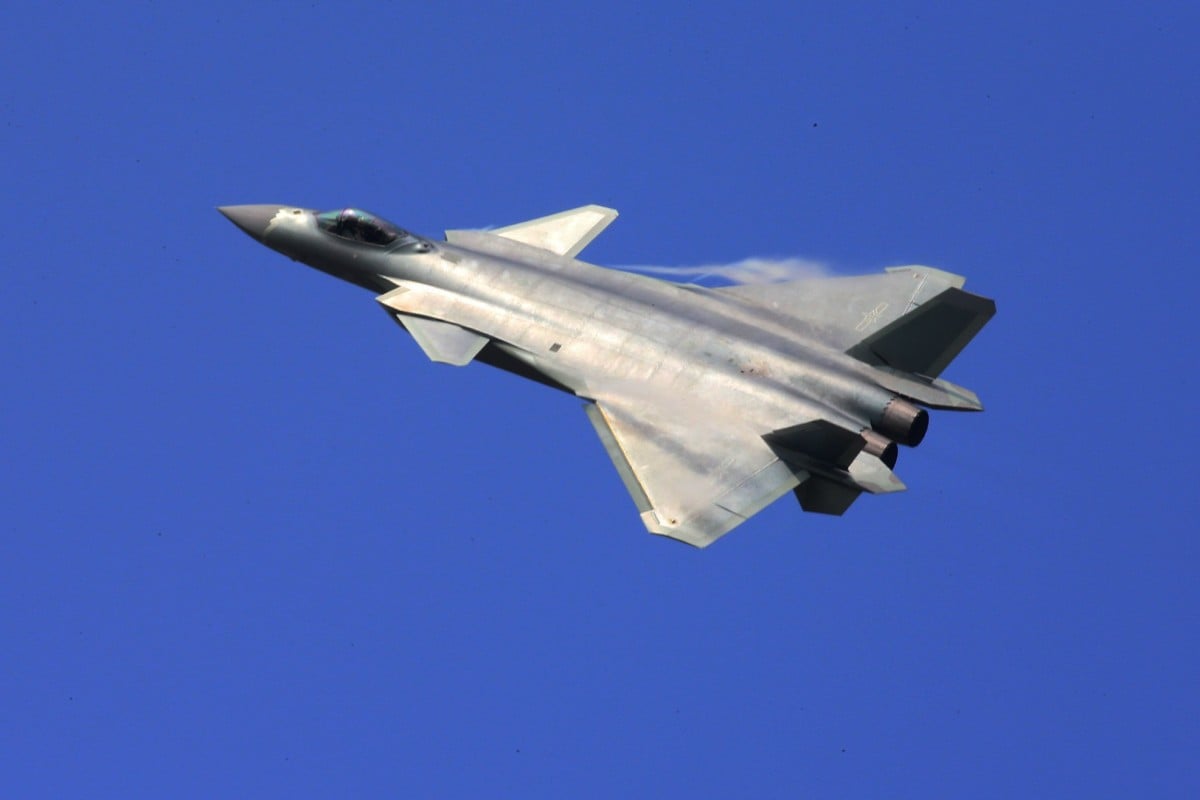
At present China’s only active stealth fighter, the J-20 or Mighty Dragon, looks very different to the F-35 because it has two nose canards – which are not found on any modern US fighters – and it is larger and around 50 per cent heavier.
However, Bolton might have had another fighter in mind – the Shenyang FC-31 Gyrfalcon, which is still in the prototype phase.
John Bolton said China “just stole” the F-35 for its own fighter. Photo: EPA-EFE
The FC-31 is made by the Shenyang Aircraft Design and Research Institute, a branch of the state-owned Aviation Industry Corporation of China.
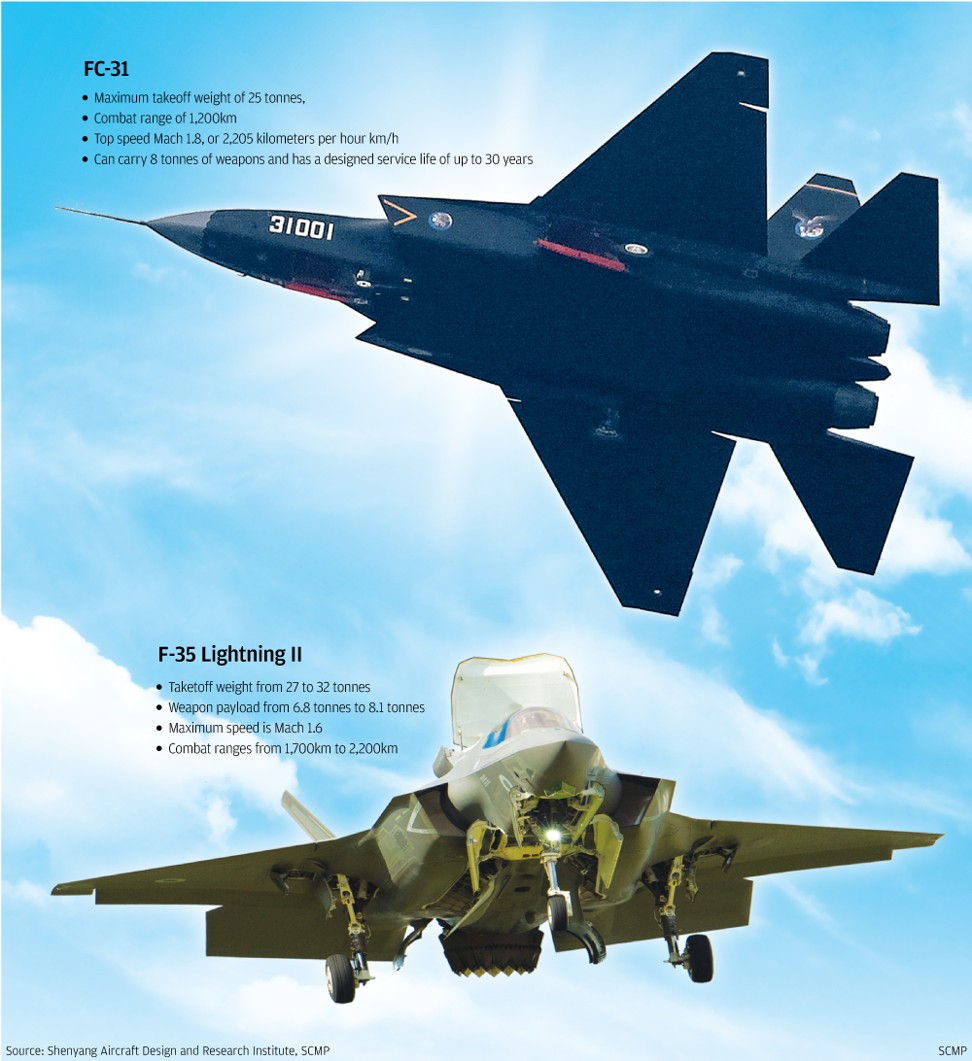
The aircraft, which made its maiden flight in 2012, has broadly similar specifications to the F-35 although it does have twin engines rather than the American jet’s single engine.
The Chinese fighter has a maximum take off weight of 25 tonnes, a combat range of 1,200km (746 miles) and a top speed of Mach 1.8, or 2,205km/h (1,370mph), whereas the US fighter’s take-off weight varies between 27 and 32 tonnes, has a top speed of Mach 1.6 and a range of up to 2,200km (1,367 miles).
The FC-31 has a weapons payload of 8 tonnes, compared with 6.8 to 8.1 tonnes for the different varieties of F-35, and a service life of up to 30 years.
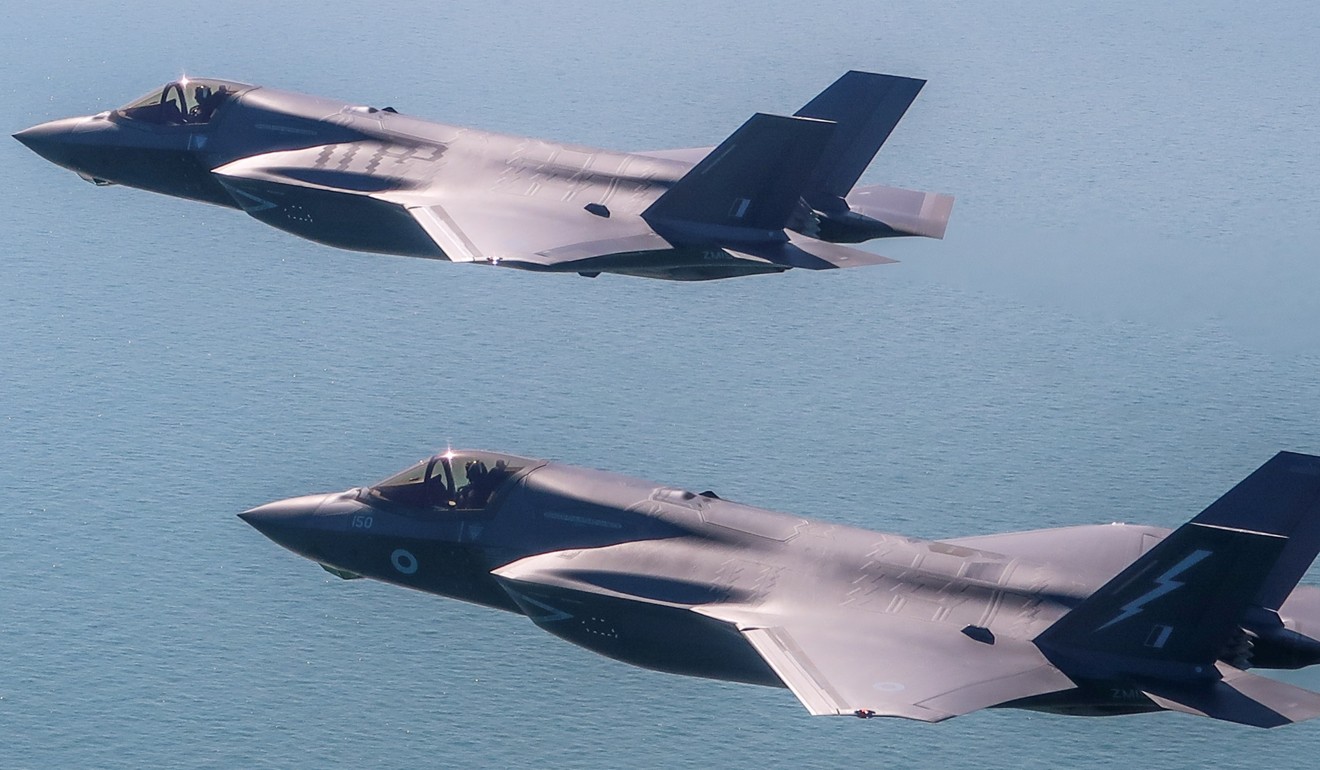
Lockheed Martin, which makes the American stealth fighter, has produced three different varieties – the land-based f-35A and two for use on ships: the vertical jump F-35B and catapult-assisted F-35C.
While the Chinese jet was primarily designed for the use of the air force, its light weight also means it could be adapted for use on carriers.
It was reported to have been in the running to be used on China’s next-generation aircraft carriers, but military sources recently said it would lose out to the J-20 because of its slow pace of development and reports of technological problems.
The US currently restricts sales of the F-35 to its closest allies: Photo: EPA-EFE/ USAF
However, the Chinese manufacturer is already actively marketing the fighter to other countries and a model of the plane appeared at the Paris Air Show in June.
One official from the Aviation Industry Corporation of China who attended the Air Show told state media that the firm hoped to “seize some share in the military aircraft market of developed nations”.
One area where the plane does have a definite advantage over its American counterpart is price. The price of a single FC-31 is expected to be about US$70 million, significantly less than the F-35 which has a price tag of around US$100 million per unit.
The US also restricts sales of the fighter to its allies, leaving a potential gap in the market for China to exploit when the fighter is ready for use.
Source: SCMP
Posted in accuses, air force, Aviation Industry Corporation of China, Beijing, China alert, F-35 technology, John Bolton, Lockheed Martin, make, Mighty Dragon, military aircraft market, Paris Air Show, Shenyang Aircraft Design and Research Institute, Shenyang FC-31 Gyrfalcon, stealing, stealth fighter, two nose canards, Ukraine, Uncategorized, US National Security Adviser |
Leave a Comment »
28/08/2019
- Military insiders say the aircraft appears to have beaten the FC-31 in the race to become the PLA Navy’s fighter of the future
- A military source close said it would be almost impossible to develop both aircraft over the next few years given the risk of an economic downturn
The J-20 stealth fighter is likely to be modified to serve on China’s next generation aircraft carriers. Photo: Xinhua
China’s military is likely to pick the country’s first active stealth fighter, the J-20, for its next generation aircraft carriers, according to military sources and a recent report on state media.
The J-20, made by the Chengdu Aerospace Corporation (CAC), appears to have a won a head-to-head contest with the FC-31, a fighter made by another company which is still undergoing testing.
A military insider told the South China Morning Post that the Central Military Commission, the People’s Liberation Army’s top decision-making body, now favoured adapting the J-20 for its new carriers.
“The Chengdu Aerospace Corporation will announce some new products, which will include a new version of their J-20. You can guess what type it will be,” the military insider, who requested anonymity because of the sensitivity of the subject, said.
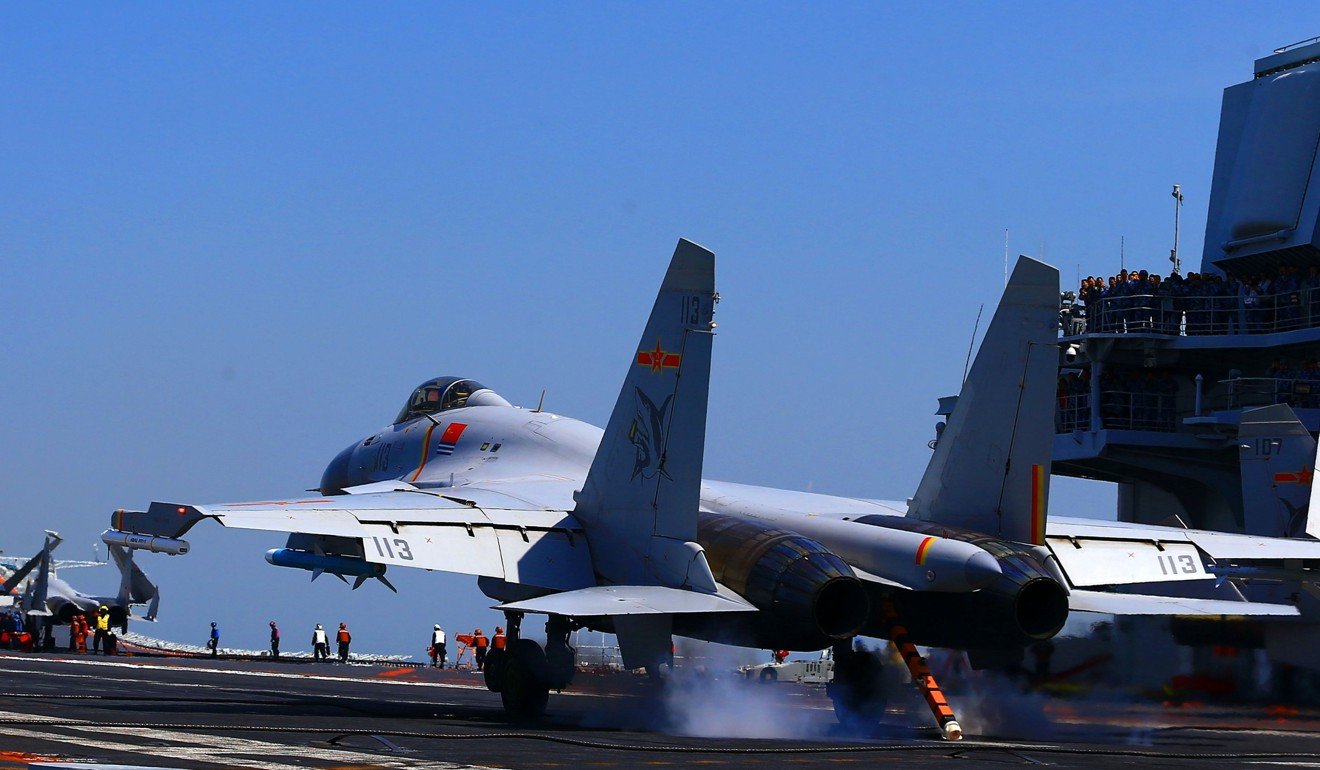
The FC-31 was independently developed by CAC’s sister company Shenyang Aircraft Corporation (SAC), which also produced the J-15 – the jets currently in use on the country’s only active aircraft carrier, the Liaoning.
Both aerospace firms are subsidiaries of the state-owned giant Aviation Industry Corporation of China, which specialises in designing and developing military aircraft, and were set up to ensure benign competition between manufacturers.
However, the SAC has faced criticism from some military leaders and experts for being too conservative and failing to innovate because of its bureaucratic structure.
A recent programme aired by the state broadcaster China Central Television also suggests the J-20 will be chosen.
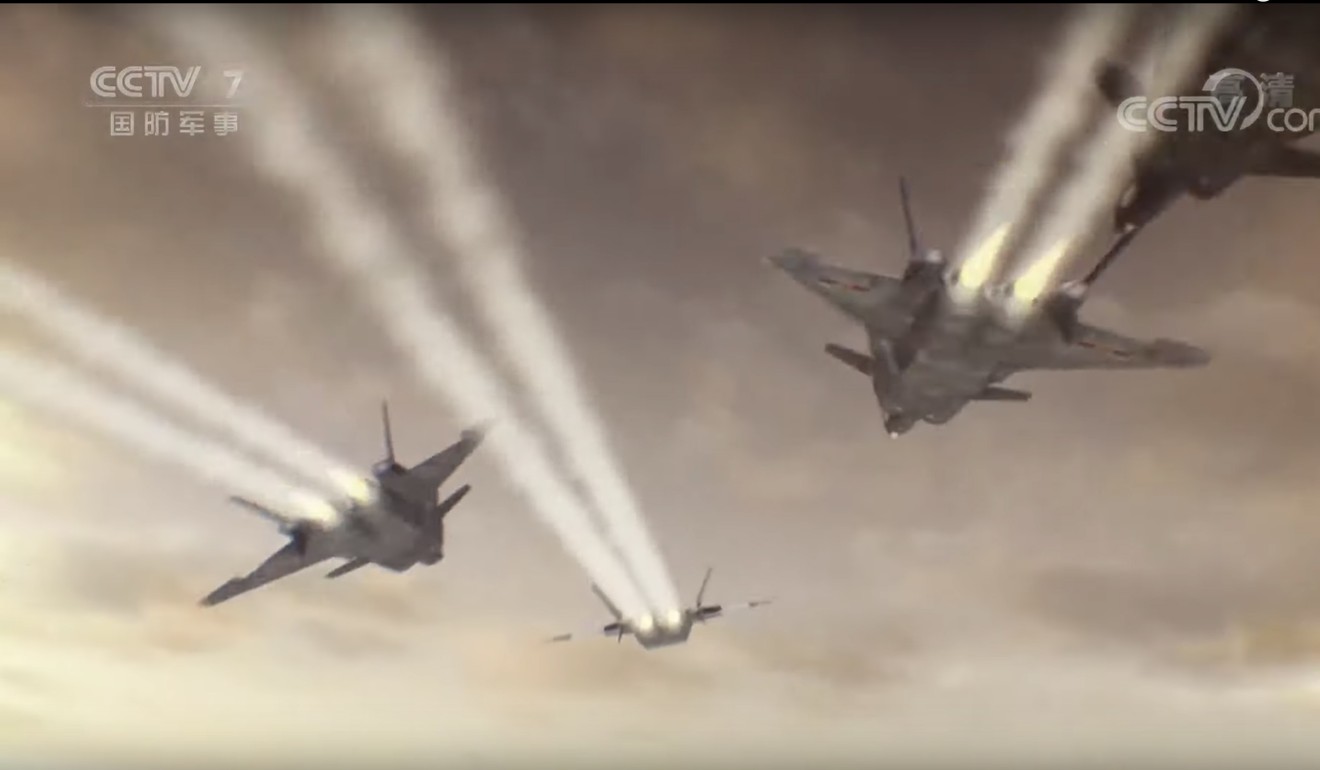
An episode of Military Documentary shown on August 16 reported how the PLA Navy was selecting candidates for pilot training and illustrated the feature with a mock-up of jets that looked like J-20s taking off from a carrier.
Ground-based J-20s – also known as Powerful Dragons – entered service with the PLA Air Force in 2017.
as China stepped up its efforts to counter the deployment of American F-22s and F-35s in the Asia-Pacific region.
A J-15 fighter lands on the Liaoning. Photo: AFP
If the selection of the J-20 is confirmed it will mark the end of a lengthy debate between its supporters and advocates of the FC-31 as to which would make a better carrier-based fighter.
Those who favoured the J-20 said it was more advanced and reliable than the FC-31, but its supporters said it was more light and nimble.
“Both the J-20 and FC-31 have their advantages. The size of the J-20 is similar to the J-15 since both are powerful heavy fighters,” Song Zhongping, a military commentator for Hong Kong-based Phoenix Television, said.
Song said the lighter FC-31 could be developed into a medium-sized carrier fighter that would complement the J-20 in future.
But another military source close to the PLA Navy said it would be almost impossible to develop both aircraft over the next few years given the risk of an economic downturn as the trade war with the US continues to escalate.
A video simulation broadcast on state television earlier this month showed fighters that resembled the J-20 taking off from a carrier. Photo: CCTV
The source said China’s next generation aircraft carriers would be with equipped electromagnetic catapults similar to those used on the US Navy’s Ford-class supercarriers.
These enable the use of heavier fighters because they are more powerful than the older diesel systems used on older carriers.
“The key problem of the J-20 is not weight, but length. If it wants to be a carrier-based fighter jet, it needs to be made shorter.”
Military insiders have previously said that CAC engineers are working to produce a shorter version of the J-20 that will work with the new launch system.
At present both the J-20 and F-31 still rely on Russian engines. The WS-15 engine that has been purpose built for the J-20 has undergone hundreds of hours of testing b
ut has yet to meet reliability targets while the F-31 prototype does not have a purpose-built engine.
China’s navy plans to build at least four carrier battle groups by 2030, three of which will be active at any given time.
Military analysts say China will need at least a decade to develop its new generation carrier-based fighters, so the J-15 will remain in service for at least a decade, if not two.
The J-15 made its maiden flight in 2009 and has been in service since 2012. They are the only fighters based on the Liaoning and will be used by its sister ship the Type 001A when it enters service, probably later this year.
Source: SCMP
Posted in aircraft carriers, Aviation Industry Corporation of China, benign competition, CAC engineers, carrier battle groups, carrier-based fighter, carriers, Central Military Commission, Central Military Commission (CMC), Chengdu Aerospace Corporation, Chengdu Aerospace Corporation (CAC), China Central Television, China Central Television (CCTV), China’s navy, electromagnetic catapults, Ford-class supercarriers, J-20 stealth jets, Liaoning, manufacturers, Military aircraft, Military Documentary, mock-up, new launch system, next generation, People’s Liberation Army, People’s Liberation Army (PLA), Phoenix Television, pick, pilot training, PLA Air Force, pla navy, Powerful Dragons, Russian engines, selecting candidates, Shenyang Aircraft Corporation (SAC), south china morning post, State broadcaster, state broadcaster CCTV, Uncategorized, US Navy |
Leave a Comment »




 CHINDIA ALERT: You'll be living in their world, very soon