Chindia Alert: You’ll be Living in their World Very Soon
aims to alert you to the threats and opportunities that China and India present. China and India require serious attention; case of ‘hidden dragon and crouching tiger’.
Without this attention, governments, businesses and, indeed, individuals may find themselves at a great disadvantage sooner rather than later.
The POSTs (front webpages) are mainly 'cuttings' from reliable sources, updated continuously.
The PAGEs (see Tabs, above) attempt to make the information more meaningful by putting some structure to the information we have researched and assembled since 2006.
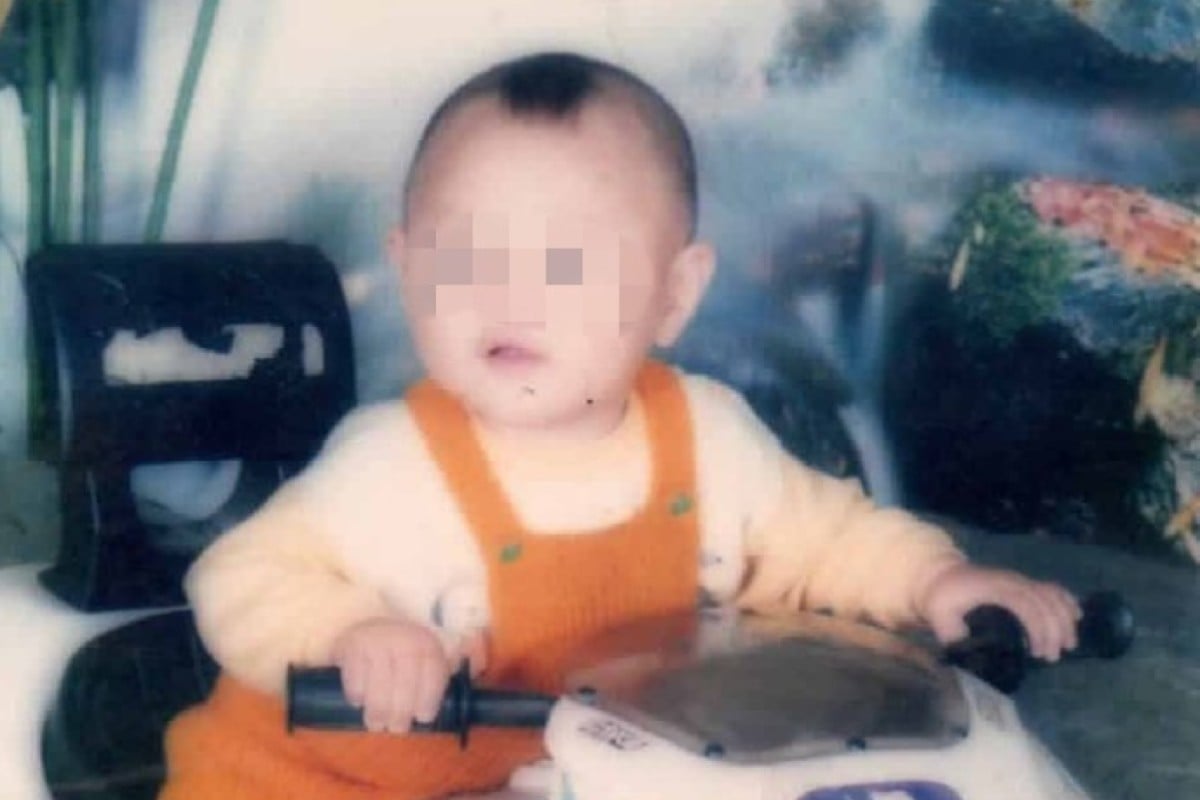
Shen Cong, taken from the family home in Guangzhou 15 years ago, was found in a nearby city last week
He was one of nine children abducted by a gang, but police say there is no evidence of a woman alleged to be the go-between
Shen Cong’s parents had been searching for him since he was abducted in 2005. Photo: Handout
A teenage boy was reunited with his parents in the southern Chinese city of Guangzhou on Saturday after being kidnapped from their home as an infant, ending a 15-year search by his family.
The boy was taken in 2005 – one of nine children abducted by a gang in Guangdong province around that time. In recent years the case has drawn attention on Chinese social media, particularly the alleged involvement of a shadowy go-between known as “Aunt Mei”, but Guangzhou police stressed there was no evidence such a person existed.
Police said 16-year-old Shen Cong had been found on Wednesday in Meizhou, a city about 400km (250 miles) away. DNA testing confirmed he was the missing child and police arranged the reunion with his parents, Shen Junliang and his wife, who was identified as Yu in the statement.
Police did not say what had led to the discovery of the boy, but they said his foster parents had been taken in for questioning.
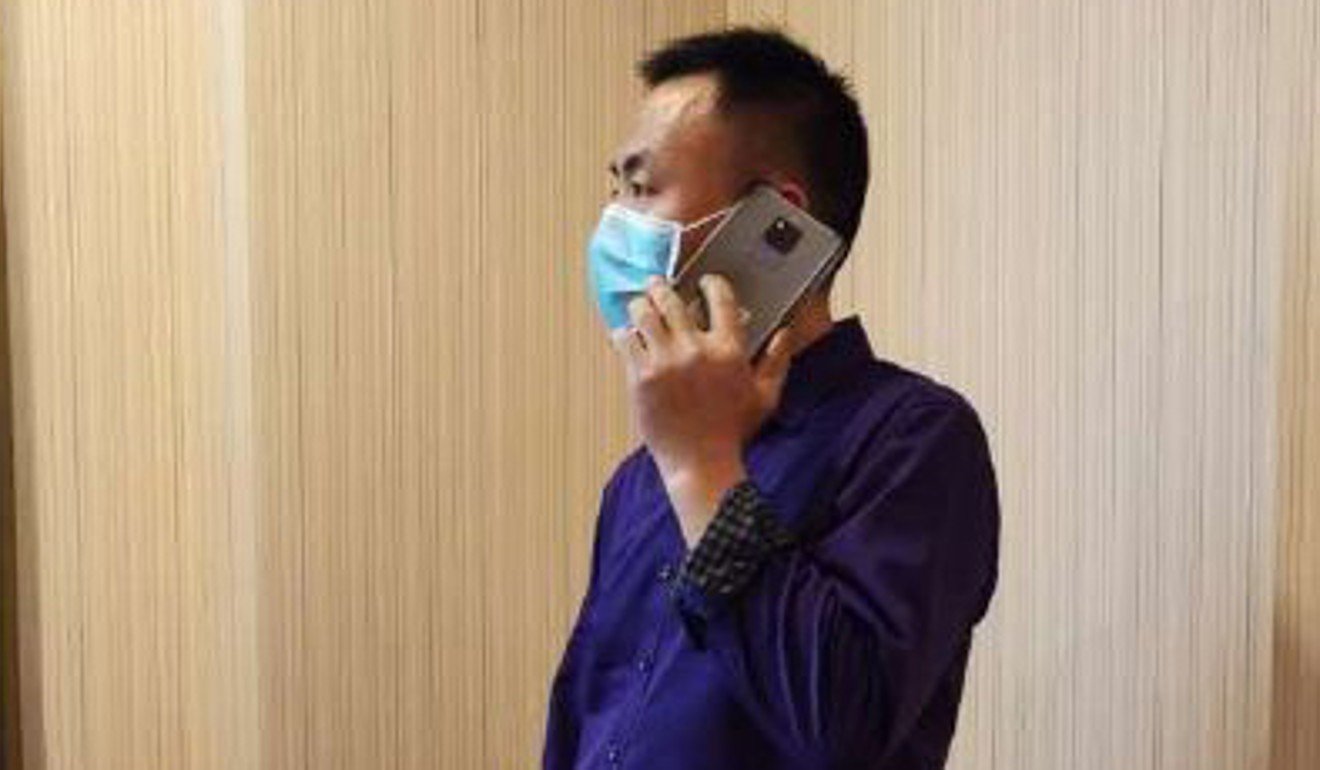
His biological father Shen Junliang on Sunday said they were overjoyed to have their son back home, adding that he was healthy and a tall boy who loved sports.
“Before I met my son I’d been imagining what it would be like to talk to him. I didn’t think he would be this mature – he seems more mature than his peers and he has good manners,” the father wrote on Weibo, China’s Twitter. “We’ve spent the entire time together, from Saturday night until now. We’re getting along and he’s happy too.”
Shen Junliang said they were overjoyed to have their son back home at last. Photo: Handout
The parents are now getting to know their son, having not seen him since he was abducted from their rented flat in Zengcheng district on January 4, 2005.
That day, the child had been at home with his mother while his father was at work. Shen Junliang has alleged that two of their neighbours led two strangers into the flat at about 10.40am, and the two strangers drugged and tied up Yu before kidnapping the one-year-old boy.
His mum revealed she was abandoned as a kid. A film was born
21 Dec 2019
Shen Junliang had been searching for his boy ever since. He gave up his job and has travelled all over Guangdong province looking for him. He had more than 1 million posters printed with photos and a description of his son, offering a reward of 100,000 yuan (US$14,400) for any information on the case.
One of them read: “Shen Cong has birthmarks on the toe of his left foot, his right buttock and his right thigh. Anyone who has any leads … please contact me or Guangzhou police.”
Kidnapped: the Chinese parents desperately searching for missing children
He started posting about the case on Weibo in 2016, sharing every piece of news related to the kidnap and appealing for anyone with information to come forward.
In March that year, there was a development, with police arresting five suspects in the case.
Police said the lead suspect, Zhang Weiping, had confessed to selling Shen Cong to a couple in Heyuan, another city in Guangdong, for 13,000 yuan on January 6, 2005.
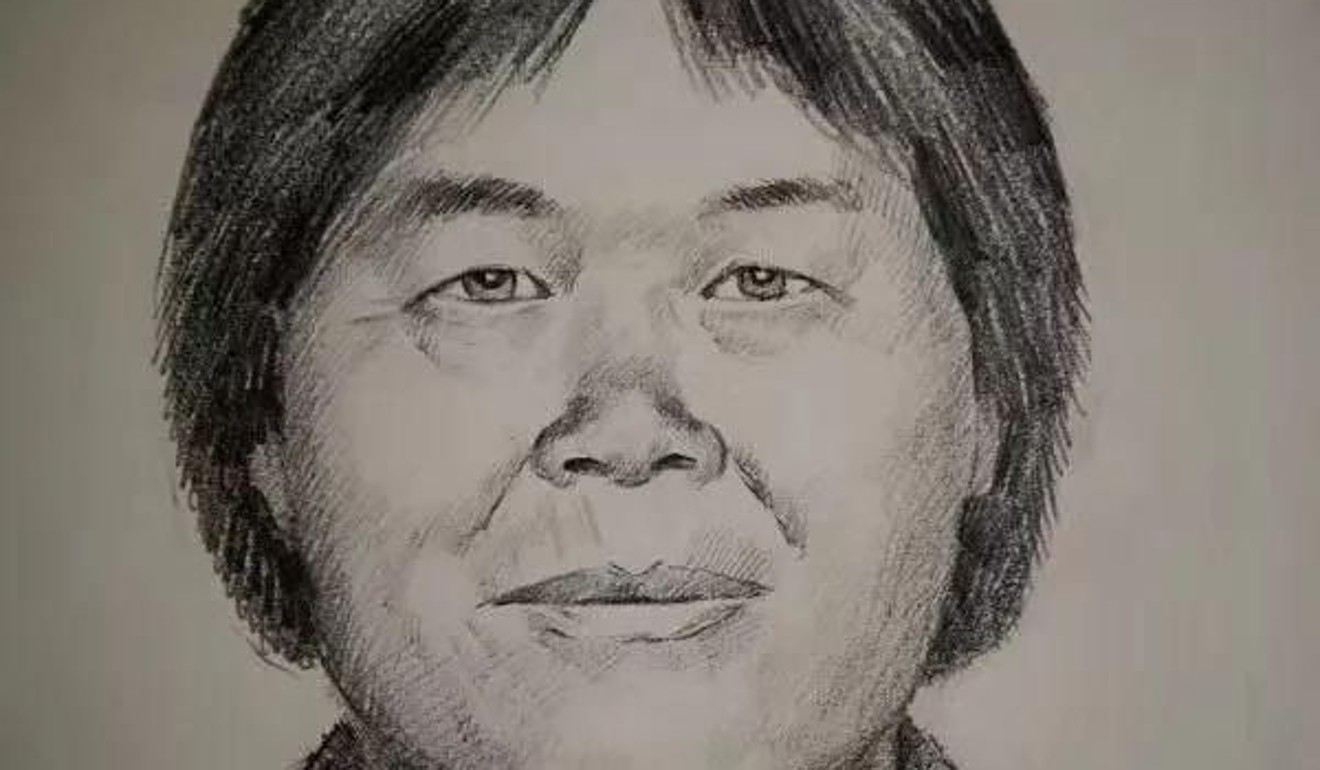
Zhang told police that an intermediary nicknamed Aunt Mei had been involved in that deal and the sale of eight other boys in the province from 2003 to 2005.
Zhang Weiping, who was sentenced to death for kidnapping children, alleged an intermediary known as Aunt Mei was involved in the case. Photo: Handout
Zhang and another gang member were sentenced to death for kidnapping children in 2018, two others were jailed for life, and a fifth person was jailed for 10 years.
Two of the other boys who had been abducted were found by police last year.
But Guangzhou police said they had not found any information leading them to the mysterious woman – apparently in her 60s and a Cantonese and Hakka speaker – Zhang alleged was the go-between.
“Police have checked all the details, all the people and places related to Zhang’s confession,” the statement said. “We’ve also received reports from people all over China since 2017 about Aunt Mei, but so far none of these tips have proved to be true.”
Doctors perform a cesarean operation on a woman who has successfully received a womb at the Xijing Hospital in Xi’an, northwest China’s Shaanxi Province, Jan. 20, 2019. A woman who successfully received a womb donated by her mother after a uterus transplant in November 2015 gave birth to a healthy baby boy in Shaanxi Province on Sunday. Weighing 2 kg and measuring 48 cm long, the baby is considered to be China’s first and the world’s 14th baby who was born from a transplanted womb, said doctors with the Xijing Hospital. (Xinhua/Zhang Yinan)
XI’AN, Jan. 23 (Xinhua) — A woman who successfully received a womb donated from her mother after a uterus transplant in November 2015 gave birth to a healthy baby boy in northwest China’s Shaanxi Province on Sunday.
Weighing 2 kg and measuring 48 cm long, the baby is China’s first and the world’s 14th baby born from a transplanted womb, doctors with the Xijing Hospital in Xi’an, capital of the province, said Wednesday.
Yang Hua, 26, the new mother, was born without a uterus but has her own ovaries.
When the mother-daughter womb transplant, China’s first human womb transplant, was done in 2015, Yang was 22 and her mother was 43.
Doctors at the Xijing Hospital extracted eggs from Yang. With the help of assisted reproductive technology, they froze 14 embryos in August 2015.
The frozen embryo was successfully implanted in Yang’s womb on June 13, 2018. Yang became pregnant after two weeks.
To ensure the health of Yang and her baby during the pregnancy, the experts from the obstetrics and gynecology department and the urology department of Xijing Hospital made a series of individual immune anti-rejection medication plans and conducted regular ultrasound, plasma concentration and hormone level monitoring.
“The full-term fetus can bring pressure to the transplanted womb, which increases risks during labor,” said Chen Biliang, director of the obstetrics and gynecology department of Xijing Hospital.
Therefore, Chen and his team decided to conduct a cesarean section during the 33th week of Yang’s pregnancy.
Uterus transplants are not new. In the 1960s, Britain and the United States began to experiment with uterus transplants on animals.
In 2000, the world’s first human womb transplant took place on a 26-year-old woman in Saudi Arabia. The transplanted uterus failed after three months and had to be removed.
In 2011, doctors successfully performed a uterus transplant on a woman in Turkey. Two years later, nine women in Sweden successfully received transplanted wombs donated by relatives.
Chen said uterus transplants still remained a medical challenge.
The uterus, with plenty of tenuous blood vessels, grows in the depths of a woman’s pelvic cavity. Therefore, a string of problems including cutting, the structure of the blood vessels during the transplant and strong rejection reactions may occur, according to Chen.
There are about a million women in China suffering from uterine infertility. Due to the limitation of the current assisted reproductive technology and the prohibition of surrogacy in many countries, uterus transplants have provided an effective way for women plagued by uterine infertility to have their own babies, according to Chen.
Image captionKhazanchi Nath was born two years ago as his mother Sarvesha Devi stood in a bank queue to withdraw cash
He arrived in the world with a bang. His birth in a bank queue made global news. But two-year-old Khazanchi Nath is now at the centre of a bitter fight between the two sides of his family and two villages because of his celebrity status. The BBC’s Geeta Pandey travels to rural Kanpur in northern India to piece together the toddler’s story.
Khazanchi, which means “treasurer”, was born in the state of Uttar Pradesh on 2 December 2016, less than a month after the Indian government banned 1,000 and 500 rupee notes overnight.
The decision by Prime Minister Narendra Modi, locally called demonetisation, led to a major cash crunch and for weeks millions of Indians were seen queuing outside banks to withdraw new currency notes.
A very heavily pregnant Sarvesha Devi had walked from her home in Sardar Pur village to the bank in Jhinjhak town and taken her place in the line – along with her mother-in-law Sashi Devi, her eldest child, 10-year-old daughter Priti, and hundreds of others – when she went into labour.
Her story made headlines and tiny Khazanchi became the poster boy in the state election campaign against India’s ruling BJP. When he was just over two months old, I travelled to their dusty village to see him.
Image captionKhazanchi’s birth made global news
Four months before his birth, his father had died from tuberculosis. Describing the trauma of giving birth in the bank, his mother told me she too would have died if it wasn’t for her mother-in-law.
But last week, when I wanted to see Khazanchi again, I had to visit another dusty village – Anantpur Dhaukal, where his mother moved last year after a bitter row with her in-laws. It’s where Sarvesha Devi’s parental home is, where her mother and three brothers live with their families.
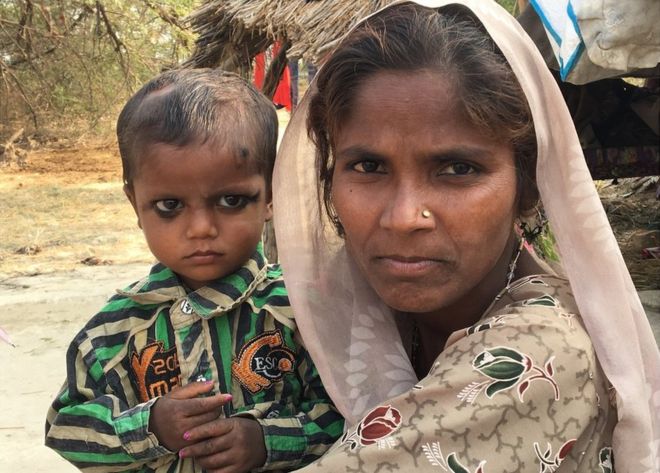
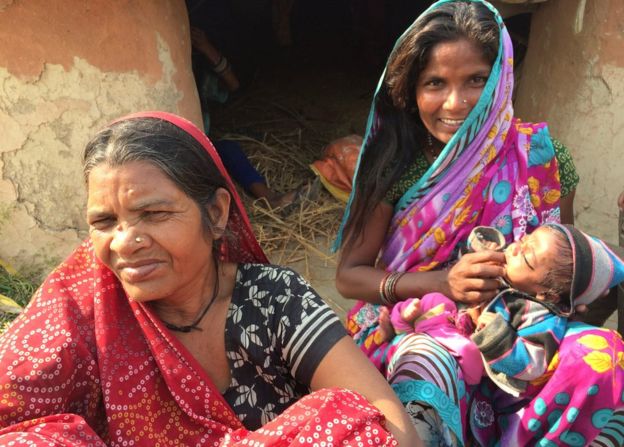
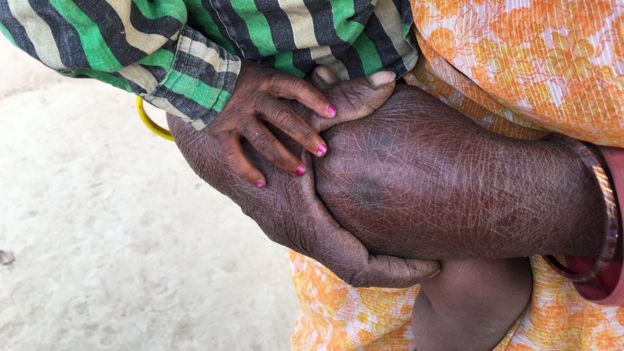
Khazanchi is curious about me – he fixes his kohl-lined eyes on me and, at his mother’s prompting, shakes my hand. I ask him who painted his nails deep pink. He smiles and points at Priti, his sister.
Unaware of the bitter battle being fought over him, he seems more interested in my glasses and tries to snatch away my phone when I get close to him to take a photo.
Sarvesha Devi borrows two wobbly plastic chairs from a neighbour’s house and we sit facing each other to chat. Within minutes, Khazanchi begins to get cranky. “He’s hungry,” she says and starts breastfeeding him. By now, word has spread about my visit and we are soon joined by her mother, her brothers and a few neighbours.
Once Khazanchi has quietened down, I ask Sarvesha Devi about her relationship with her mother-in-law. This time, she has nothing complimentary to say about Sashi Devi. In fact, the relationship has soured so much that she talks about threats to life – her own and Khazanchi’s.
After her baby was born, Sarvesha Devi was awarded 200,000 rupees ($2,990; £2,395) as compensation from the government for having to give birth in a bank queue.
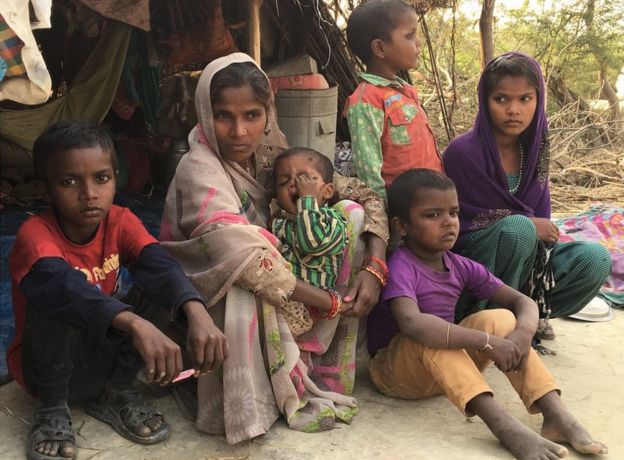
Image captionKhazanchi lives with his mother and four siblings
The previously life-saving, loving mother-in-law is now described as the dreaded monster-in-law whom she accuses of hitting her regularly and demanding half the compensation money.
It’s a significant amount of money for a family steeped in poverty with no fixed sources of income. And it was then that the family relations began unravelling.
So what happened that tore the family apart like this? That’s the question I posed to Sarvesha Devi – and to her mother-in-law when I visited her later in Sardar Pur. And their family members and villagers.
In the claims and counterclaims, sometimes it’s difficult to sift the truth from falsehood, to understand who’s being honest and who’s just exaggerating.
Khazanchi’s family belongs to the Baiga tribe, which is among India’s poorest and most deprived communities. They have little education, own no land and most make a living through begging.
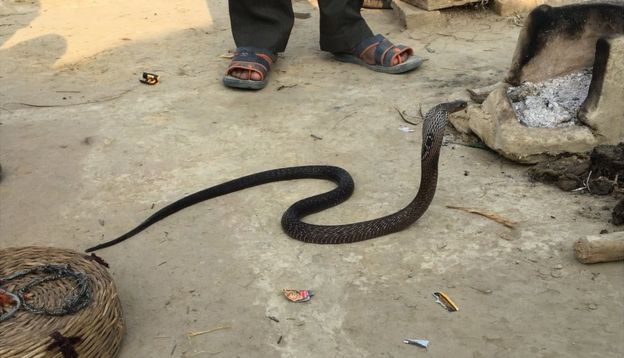
Traditionally though, the Baigas were snake-charmers, and even though catching snakes was outlawed a long time ago, every time I’ve visited them, they’ve proudly shown off reptiles.
Image captionKhazanchi’s family belongs to the Baiga tribe, who have traditionally worked as snake-charmers
This time too, one villager asks me if I want to see the latest catch and even before I can respond, an angry baby cobra is brought out of a basket. He prods and pokes the reptile which begins to crawl on the ground, less than a metre from me. It’s defanged, he assures me.
It’ll grow up to three times its current size, he explains before packing it back in the basket. I keep a wary eye on it as we resume talking.
Uttar Pradesh, where Sardar Pur and Anantpur Dhaukal villages are located, is India’s most populous state. It’s home to more than 200 million people and more than 15,000 babies are born here daily, so it’s difficult to imagine that the birth of one child could generate much excitement.
But Khazanchi was catapulted to stardom because of the circumstances of his birth, and that it came at a time when the state was getting ready to hold key regional elections. The then chief minister Akhilesh Yadav used the “birth in the bank queue” to point out what a misadventure demonetisation had been.
He invoked the infant at every political rally, insisting that PM Modi’s currency ban had hurt the poor most, the sort of family that is Khazanchi’s.
A few months after his birth, Mr Yadav presented his mother with the compensation money.
Image captionJust after Khazanchi’s birth, Sarvesha Devi (right) said she would have died if were not for her mother-in-law
Sarvesha Devi says she spent a part of it clearing debts her husband had left and on the treatment of her eldest son, who also suffers from tuberculosis. The remainder has been secured in a bank deposit.
But then, she says, her mother-in-law demanded half the reward money and when she refused, “the family threw me on the ground and beat me up”. And that’s when she decided to leave.
The 37-year-old mother-of-five, who walks with a very pronounced limp, says she refused to part with the money because “I’m disabled and with my husband gone, there’s no-one to look after my children and I have to secure our future”.
Relations further deteriorated after she moved. Malkhan Nath, her eldest brother, says he’s come under pressure from the community to send her back.
“We keep telling her that’s your family, your home, please go back, but she refuses because she says they beat her and treat her badly. We don’t know what to do. She’s my sister: how can I tell her to go if she doesn’t want to?”
The family dispute is now in the community court that Malkhan Nath calls their “high court”. It comprises prominent community elders who adjudicate in matters involving Baigas. Their rulings are not legally binding, but they’re rarely ignored because the defiant can face a social boycott and have to pay monetary fines.
Malkhan Nath says that in the past year he’s had to appear before the “court” three times, and that once he had to pay 650 rupees as a fine because his sister defied the order to appear along with Khazanchi.
Image captionMalkhan Nath says he’s come under pressure from the community to send his sister back to her in-laws’ home
Matters came to a head earlier this month. On 1 December, a day before Khazanchi’s birthday, Sarvesha Devi says two car-loads of officials turned up late at night at her home.
“I was just sitting down for dinner and Khazanchi was asleep. They insisted that we go with them to Sardar Pur for his birthday celebrations the next day. I refused, so they picked him up and took him to the car. He woke up and started crying. We raised an alarm and chased them. All our neighbours came over and helped us rescue him. They were trying to kidnap him,” she insists.
Though Mr Yadav didn’t win last year’s regional election, he has maintained contact with Khazanchi. Local journalists say he had planned to use the toddler as his mascot for the general elections due in the summer and had announced that he would be gifting him two homes on his birthday – one each in Sardar Pur and Anantpur Dhaukal.
The plan was for the former chief minister to visit Sardar Pur on his birthday and hand over the keys to Khazanchi. With local journalists invited to cover the celebrations, it was meant to be a perfect photo-op.
But when Mr Yadav arrived at Sardar Pur, Khazanchi wasn’t there so the keys were handed over to Sashi Devi.
Clearly disappointed at the toddler’s absence, Mr Yadav said he didn’t know about the “battle between his maternal and paternal grandmothers” and sacked two senior party colleagues for “embarrassing” him.
Image captionSashi Devi’s relations with her daughter-in-law have turned bitter in the last year
A few days later when I visited Sardar Pur, I found the spanking new house right by the roadside. Sashi Devi had gone to the market, so I chatted with her relatives and neighbours as I waited for her return. The marigold flowers used to decorate the house had nearly wilted, and the mood was downbeat too.
“A lot of people had gathered to see Khazanchi, but his mother chose to stay away,” says his great-uncle Asharfi Nath. “Mr Yadav had come laden with presents, but he took it back. Sarvesha Devi could have come for an hour. By refusing to attend the celebrations, she humiliated Mr Yadav.”
The villagers say all was well until Khazanchi’s birth and they blame “the greed and jealousy of his mother’s family and her village” for ruining things. They allege that her family wants her money and her village believes that if the boy stays there, they will see development.
The villagers also darkly hint at a wider political conspiracy – Sardar Pur supports Mr Yadav’s Samajwadi Party while Anantpur Dhaukal is dominated by upper-caste Thakurs who support Mr Modi’s BJP.
Mulayam Nath, a villager, says if Sarvesha Devi doesn’t want to return, she can stay on in her parental village but “she must send Khazanchi back because he is our baby, he belongs to our village. The progress and the benefits the authorities have promised must come to us”.
By the time Sashi Devi returns, it’s beginning to get dark. She squats on the ground outside the newly constructed house as I ask her to respond to the allegations against her.
“It’s all lies,” she says. “I never asked my daughter-in-law for any money. She’s been coached to say what she’s saying.”
Sashi Devi talks about how Sarvesha Devi and her five children were fed and clothed by the family when her son was too sick to work. And in the months after his death, how the little money her husband and other sons brought home was shared with her even though no-one was obliged to do so.
She rejects allegations that they ever hit Sarvesha Devi. “I have four more daughters-in-law and 16 grandchildren. How come no-one else gets hit?” she asks.
She has her own stories of assault and abuse: “I went to her village twice to bring her and the children back. Each time, they hid Khazanchi, and the women there assaulted me.”
Sashi Devi also rubbishes the charge that she or any of her family members could hurt Sarvesha Devi or Khazanchi. “How can we kill our own daughter-in-law and grandchild?”
As I prepare to leave, I ask her if there’s any chance of a reconciliation, but she’s not very hopeful.
“I’ve met her thrice recently and asked her to come back and live in her new house, but she has refused,” she says, wiping a tear with the corner of her sari. “Earlier, I lost my son. Now I’ve lost my grandchildren too.”





 CHINDIA ALERT: You'll be living in their world, very soon