Archive for ‘ban’

02/04/2020

Shenzhen becomes first Chinese city to ban eating cats and dogs

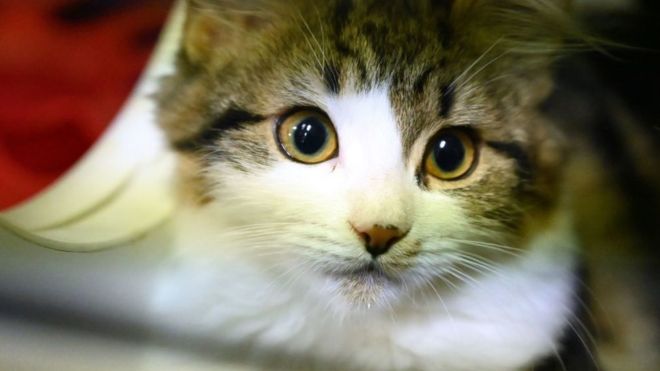
A cat waiting to be adopted looks out of its cage at the Royal Society for the Prevention of Cruelty to Animals (RSPCA)Image copyright GETTY IMAGES
Image caption Most Chinese people don’t actually consume dogs and cats and never plan to

Shenzhen has become the first Chinese city to ban the sale and consumption of dog and cat meat.

It comes after the coronavirus outbreak was linked to wildlife meat, prompting Chinese authorities to ban the trade and consumption of wild animals.

Shenzhen went a step further, extending the ban to dogs and cats. The new law will come into force on 1 May.

Thirty million dogs a year are killed across Asia for meat, says Humane Society International (HSI).

However, the practice of eating dog meat in China is not that common – the majority of Chinese people have never done so and say don’t want to.

“Dogs and cats as pets have established a much closer relationship with humans than all other animals, and banning the consumption of dogs and cats and other pets is a common practice in developed countries and in Hong Kong and Taiwan,” the Shenzhen city government said, according to a Reuters report.

“This ban also responds to the demand and spirit of human civilization.”

Animal advocacy organisation HSI praised the move.

“This really could be a watershed moment in efforts to end this brutal trade that kills an estimated 10 million dogs and 4 million cats in China every year,” said Dr Peter Li, China policy specialist for HSI.

However, at the same time as this ruling, China approved the use of bear bile to treat coronavirus patients.

Bear bile – a digestive fluid drained from living captive bears – has long been used in traditional Chinese medicine.

The active ingredient, ursodeoxycholic acid, is used to dissolve gallstones and treat liver disease. But there is no proof that it is effective against the coronavirus and the process is painful and distressing for the animals

Brian Daly, a spokesman for the Animals Asia Foundation, told AFP: “We shouldn’t be relying on wildlife products like bear bile as the solution to combat a deadly virus that appears to have originated from wildlife.”

Banner image reading 'more about coronavirus'
Banner

A wildlife market

In February, Chinese authorities banned the trade and consumption of wild animals.

The move came after it emerged that a market in Wuhan selling wild animals and wildlife meat could have been the starting point for the outbreak of the new coronavirus, providing the means for the virus to travel from animals to humans.

News of this led the Chinese government to crack down strongly on the trade and on the markets that sold such products.
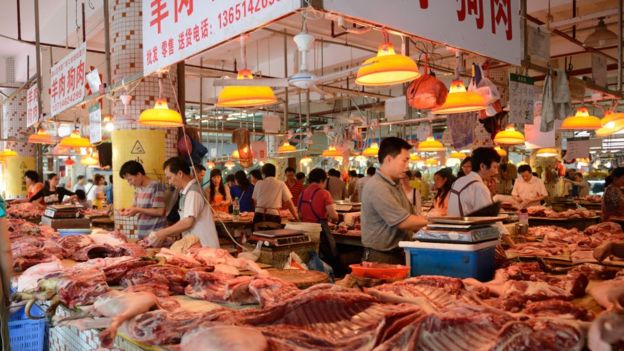
Covered market in ShenzhenImage copyright GETTY IMAGES
Image caption File photo of a wet market in China

There are now close to one million confirmed cases of the virus worldwide, and more than 47,000 deaths, according to a Johns Hopkins University tally.

In China alone, there are 81,589 confirmed cases and 3,318 deaths, said the National Health Commission.

Scientists and researchers are still no closer to finding out what the source of the virus is and how it could have spread to humans.

Source: The BBC

28/02/2020

Sun Yang: Eight-year ban for Chinese Olympic champion

Sun Yang
Sun Yang was a double Olympic gold medallist at London 2012 and won the men’s 200m freestyle title in 2016

China’s three-time Olympic champion Sun Yang has been banned for eight years for missing a doping test in September 2018.

The 28-year-old was initially cleared of wrongdoing by Fina, the swimming federation, in January 2019.

Following an appeal by the World Anti-Doping Agency (Wada) to the Court of Arbitration for Sport (Cas), the decision has been overturned.

An eight-year ban was imposed on Sun because this was his second offence.

He had served a three-month suspension in 2014 for taking prohibited stimulant Trimetazidine.

Sun told China’s Xinhua news agency that he plans to appeal against the decision.

He said: “This is unfair. I firmly believe in my innocence.”

Cas said its decision can be challenged before the Swiss Federal Tribunal within 30 days.

Sun had told an appeal hearing in November that he missed a test because testers failed to prove their identity when they arrived at his home.

He also denied a vial containing his blood samples was smashed with a hammer.

‘You’re a loser, I’m a winner’ – ugly scenes as GB’s Scott refuses to share podium with Sun

Cas said: “The athlete failed to establish that he had a compelling justification to destroy his sample collection containers and forego the doping control when, in his opinion, the collection protocol was not in compliance with the ISTI (international standard for testing and investigations).

“As the Cas panel noted, it is one thing, having provided a blood sample, to question the accreditation of the testing personnel while keeping the intact samples in the possession of the testing authorities; it is quite another thing, after lengthy exchanges and warnings as to the consequences, to act in such a way that results in destroying the sample containers, thereby eliminating any chance of testing the sample at a later stage.”

Wada welcomed the ruling, and added that it was “satisfied that justice in this case has been rendered”.

At the 2019 World Aquatics Championships in July, Sun won gold in the 200m freestyle but Britain’s Duncan Scott refused to share the podium with him.

Australian Mack Horton took a similar stance after the 400m freestyle, years after accusing him of being a “drug cheat”.

Scott said on Friday: “I fully respect and support the decision that has been made.

“I believe in clean sport and a level playing field for all athletes and I trust in Cas and Wada to uphold these values.”

Sun’s results prior to, during and after the championships will stand because he has not tested positive for doping.

He has won 11 world titles since 2011, including two golds at last year’s event in Gwangju, South Korea.

When Fina originally cleared him, it said that testers had breached several rules, including failing to produce authorisation letters and a nursing licence. Sun was subsequently issued with a warning.

The Cas appeal was heard in public. The only previous time that had happened was in 1999 when Ireland’s triple Olympic swimming champion Michelle Smith de Bruin failed with her appeal against a four-year ban for tampering with an anti-doping sample.

‘You’re disrespecting your country’ – reaction

Adam Peaty, British Olympic 100m breaststroke champion: “Very good. For anyone that’s been banned once, potentially it’s a mistake.

“You’re looking at it twice – you’re a fool. I believe that you’re disrespecting the sport, you’re disrespecting yourself and you’re disrespecting your country.”

Lizzie Simmonds, British two-time Olympian & former European champion: “I once called this man the Harry Houdini of doping control, but it seems that justice has finally been served.

“Imagine there will be a few very relieved freestylers waking up across the world.

“Given the damning length of this sentence, it seems inconceivable that he originally just received a slap on the wrist from Fina.

“A strong message to those who cheat, but I hope an even stronger message to those who seek to protect bureaucratic harmony over sporting integrity.”

James Guy, British four-time world swimming champion: “The truth always comes out.”

Source: The BBC

19/11/2019

China needs to divert more water to north to fight risk of drought, says premier

  • Li Keqiang tells senior officials to step up efforts to channel water from Yangtze River to arid regions
  • Impact of pollution and rising population has prompted increased efforts to improve efficiency and supply
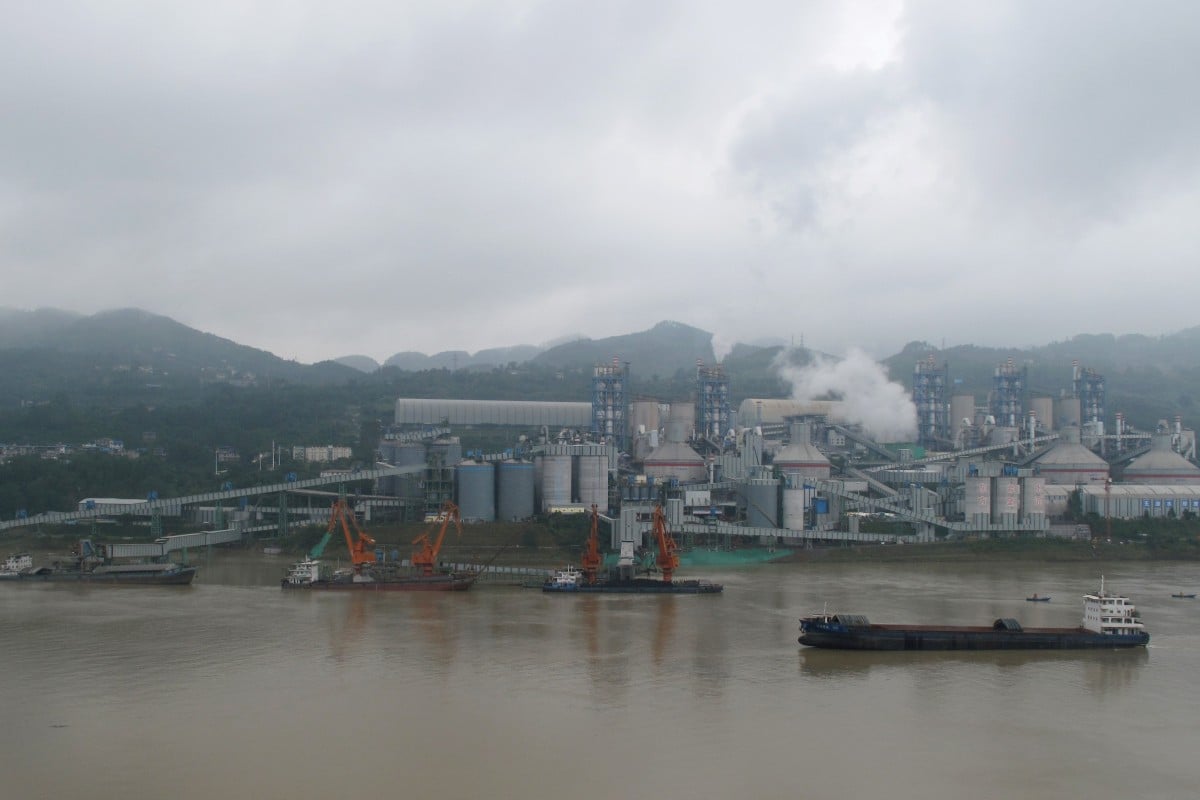
A cement plant on the banks of the Yangtze in Chongqing. The authorities are now trying to stop further development along the river. Photo: Reuters

China needs to divert more water to its arid northern regions and invest more in water infrastructure as shortages get worse because of pollution, overexploitation and rising population levels, Premier Li Keqiang has said.

China’s per capita water supplies are around a quarter of the global average. With demand still rising, the government has sought to make more of scarce supplies by rehabilitating contaminated sources and improving efficiency.

Water remained one of China’s major growth bottlenecks, and persistent droughts this year underlined the need to build new infrastructure, Li told a meeting of senior Communist Party officials on Monday. An account of the meeting was published by China’s official government website.

Local government bonds should be “tilted” in the direction of water infrastructure, he said, and innovative financing tools were also needed.

He also called for research into new pricing policies to encourage conservation.

Li said China’s water supply problems had been improved considerably as a result of the South-North Water Diversion Project, a plan to divert billions of cubic metres of water to the north by building channels connecting the Yangtze and Yellow rivers.

World ‘woefully unprepared’ for climate change’s effects on drinking water supplies drawn from mountains

He said opening up more channels to deliver water to regions north of the Yangtze River Delta would support economic and social development and optimise China’s national development strategy, according to a summary of the meeting on the government website.

China is in the middle of a wide-reaching programme to clean up the Yangtze River, its biggest waterway, and put an end to major development along its banks.

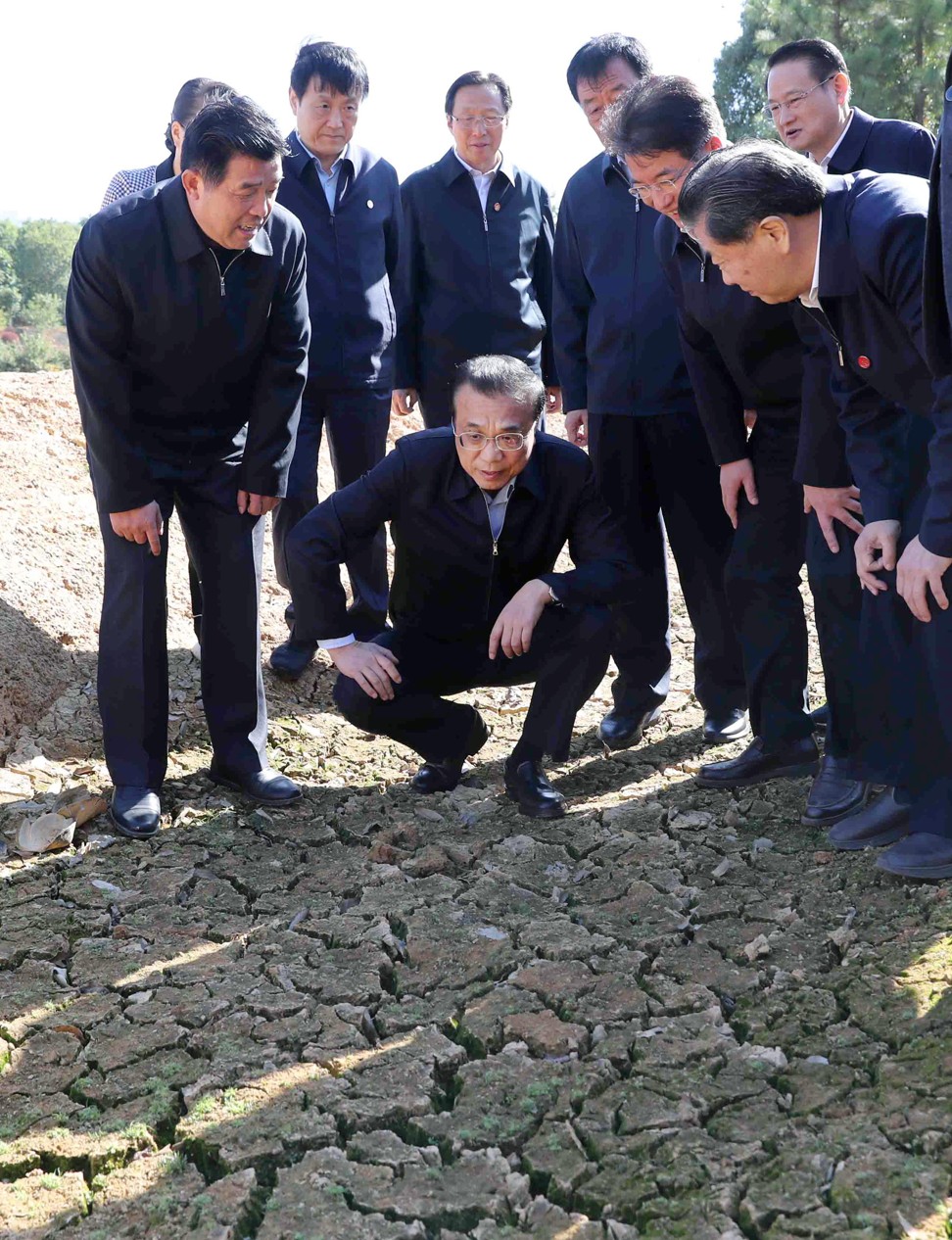
Chinese Premier Li Keqiang inspects an empty reservoir during a visit to Jiangxi province last week. Photo: Xinhua

Local governments have been under pressure to dismantle dams, relocate factories and even ban fishing and farming in ecologically fragile regions.

But experts say the ongoing campaign to divert the course of the Yangtze to other regions is still causing long-term damage to the river’s environmental health.

Many cities that had polluted their own water sources had drawn replacement supplies from the Yangtze, exceeding the river’s environmental capacity, said Ma Jun, founder of the Institute of Public and Environmental Affairs, which monitors water pollution.

Beijing already relied on diversion channels from the Yangtze to supply 70 per cent of its water, but had done little to improve conservation or reduce per capita consumption, which was higher than many Western countries, he said.

“[Diversion] has caused so much suffering and needs so many dams to keep up supply, and that has impacted biodiversity,” he said.

Source: SCMP

08/09/2019

How a ban on sale of wild African elephants to zoos could affect China

  • International watchdog to vote on whether to extend restrictions to southern African countries that are the biggest exporters
  • If passed, China may find it hard to buy elephants from Africa
An elephant is hoisted into Chongqing zoo in southwestern China, on loan from another Chinese zoo. Photo: Reuters

China, one of the leading buyers of African elephants, could face difficulty in acquiring the mammals if a widening of a ban on their sale to zoos is ratified next week by the global regulator of wildlife trade.

A motion further restricting the sale of live elephants was on Sunday supported by 46 countries at the committee stage of the Convention on International Trade in Endangered Species of Wild Fauna and Flora (Cites) in Geneva. It will go to a final vote on August 28.

The sale of elephants from West, Central and East Africa is already banned – but there is a lower level of protection for them in southern African countries such as South Africa, Namibia and Zimbabwe, which are the top three exporters of wild elephants to overseas zoos, according to Cites.

Keeping elephants caught from the wild in zoos is considered cruel by conservation and animal rights groups.

Conservationists criticised Zimbabwe’s capture of 35 baby elephants that were exported to a Chinese zoo in February. There was also uproar from activists in 2015 when a video filmed in a Chinese zoo showed two dozen elephants bought from Zimbabwe exhibiting signs of distress.

Zimbabwe was among 18 countries that opposed the potential ban at the committee stage, along with the United States – another leading buyer of elephants from Africa. China was one of 19 countries that abstained, while the European Union’s 28 countries did not vote.

If the motion is passed, China and the US – both known to be buying elephants from Africa and keeping them in so-called captive facilities or zoos – may find it hard to source the animals from the continent. Zimbabwe has come under global scrutiny
for its capture and sale of elephants to captive facilities including zoos and safari parks in China and the US.

Peter Knights, founder and chief executive of WildAid, an environmental organisation in San Francisco, explained that Cites still allowed the movement of live elephants for on-site conservation efforts such as moving the animals back into the wild or to a national park where they had been depleted.

“This is not primarily a conservation issue but more about animal welfare,” he said. “As highly social, intelligent animals, African elephants do not usually do well in captivity, requiring very large areas, and often developing behavioural problems in captivity and not usually reproducing successfully – indicating far from ideal housing.”

According to Humane Society International, which promotes animal welfare, Zimbabwe has sold more than 100 baby elephants to zoos in China since 2012, with a further 35 reportedly awaiting export.

On Monday, 55 elephant specialists protested to the US wildlife management agency about plans for the country’s zoos to import juvenile elephants caught in the wild from Zimbabwe. They asked the agency to prohibit imports of wild-caught elephants for captivity in US facilities.

“We are vehemently opposed to the proposed imports,” the experts wrote in a letter to the agency. “Young elephants are dependent on their mothers and other family members to acquire necessary social and behavioural skills. Male calves only leave their natal families at 12 to 15 years old and females remain for life. Disruption of this bond is physically and psychologically traumatic for both the calves and remaining herds and the negative effects can be severe and lifelong.”

The letter said that eSwatini, formerly Swaziland, had sold a total of 11 wild elephants to two American zoos in 2003, and a further 18 to three US zoos in 2016.

‘Hundreds’ of elephants are being poached each year in Botswana

Concerns about keeping elephants in zoos come at a time when the animals remain under threat in Africa from poachers who kill them for ivory.

Southern African countries such as Botswana, Namibia, Zimbabwe and Zambia are pushing to reopen the trade in ivory. Zambia is seeking to have the classification of its elephants downgraded to allow commercial trade in registered raw ivory with approved trading partners.

Other countries, including Kenya, Nigeria and Gabon, are seeking the highest possible levels of protection for all of Africa’s elephants.

Two previous attempts at regulating the ivory trade failed to curb poaching, which has caused elephant numbers to dwindle over the past two decades. A 2016 study estimated that 30,000 to 40,000 elephants were being killed every year, with about 400,000 remaining in total.

Knights, of WildAid, said that between 1975 and 1989 – the first period in which the ivory trade was regulated – half of Africa’s elephants were lost. During the second attempt at regulation between 2008 and 2017, participating countries claimed to have addressed the problem but poaching increased.

“It is clear that we cannot control ivory trade and that legal trade stimulates poaching and demand for ivory, rather than substituting for it as some countries suggest. The price fell by two-thirds when China banned domestic sales,” Knights said, adding that demand for ivory came primarily from Asia.

“Most seized shipments are en route to China. It has banned all sales and is making a great effort to crack down on illegal trade.”

Source: SCMP

17/01/2019

China watchdog bans officials from close ties with liquor giant Moutai

BEIJING (Reuters) – The anti-graft watchdog in China’s southwestern Guizhou province on Thursday banned officials and their family members from taking part in operations or using their position to influence sales for liquor giant Kweichow Moutai Co Ltd.

Guizhou-based Moutai is the world’s largest alcohol firm by market cap, valued at around $110 billion (£85.32 billion), and sells the pungent liquor baijiu for more than $200 per 500 ml bottle.

The brand has close ties to Chinese politics and has largely weathered a crackdown on luxury spending under President Xi Jinping, who has called on Communist Party officials to be frugal, upright and disciplined.

Officials, their spouses and children are prohibited from taking part in the operations of Moutai, according to new rules posted online by the Guizhou Discipline Inspection Commission, the provincial anti-corruption watchdog.

Cadres are also banned from using the power and influence of their position to acquire Moutai business licenses for people they have a “special relationship” with, or to raise sales targets and help facilitate resales at a profit, the rules said.

Cadres should “educate and properly manage” relatives and those close to them to avoid breaking the new rules, the document said.

Officials who engage in any form of business-related interaction with the company have to be recorded in a new registry and failing to do so will trigger a “serious” investigation, the watchdog said.

Moutai’s baijiu liquor is often a lubricant at official banquets and business dinners, and it was once hailed as helping China’s Red Army survive the tortuous Long March in the 1930s.

The company in October posted its weakest quarterly profit since 2015, depressing its shares and raising concerns about the luxury liquor market.

Moutai on Jan. 2 announced a higher than expected sales target for 2019, leading analysts to predict sustained stable growth in the medium-and-long run.

Reporting by Christian Shepherd; editing by Darren Schuettler

Source: Reuters

Law of Unintended Consequences

continuously updated blog about China & India

ChiaHou's Book Reviews

continuously updated blog about China & India

What's wrong with the world; and its economy

continuously updated blog about China & India