23/06/2019
- Stalled denuclearisation talks also expected to be on the agenda when Chinese president meets Kim Jong-un this week
- Analysts say Korean peninsula has become intense diplomatic battleground between Beijing and Washington
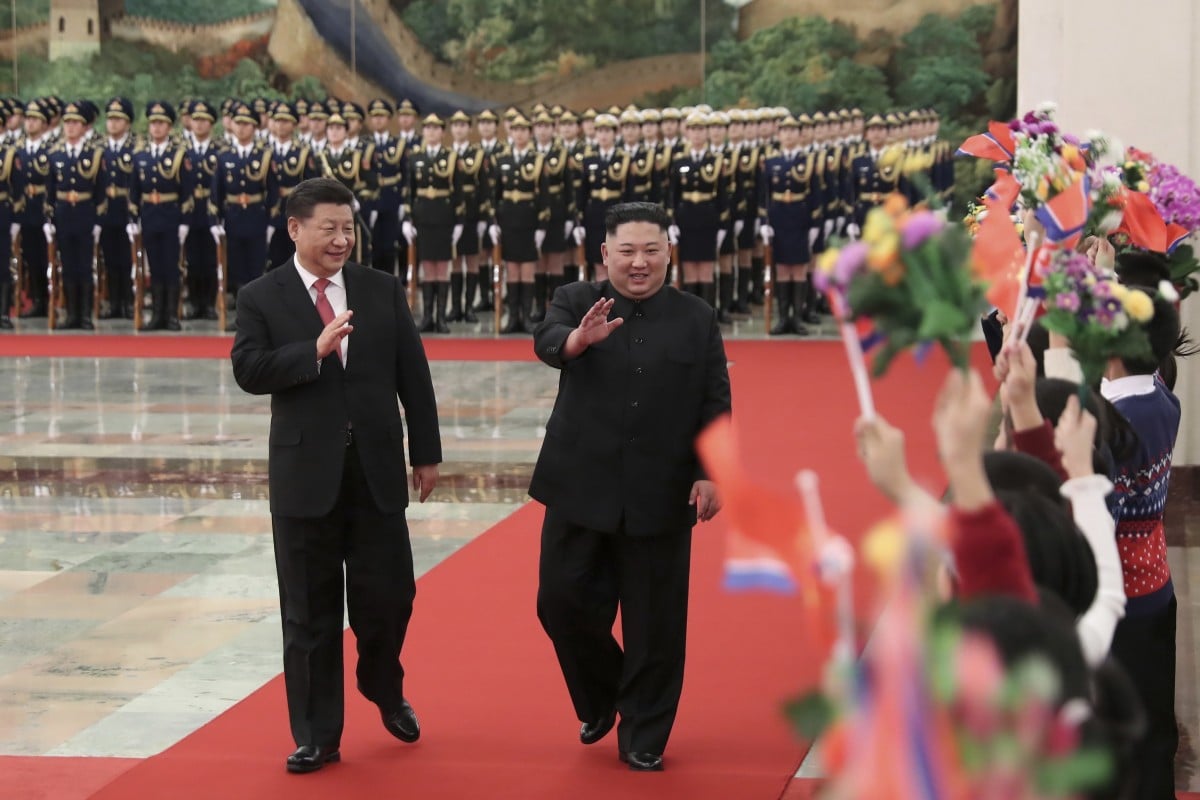
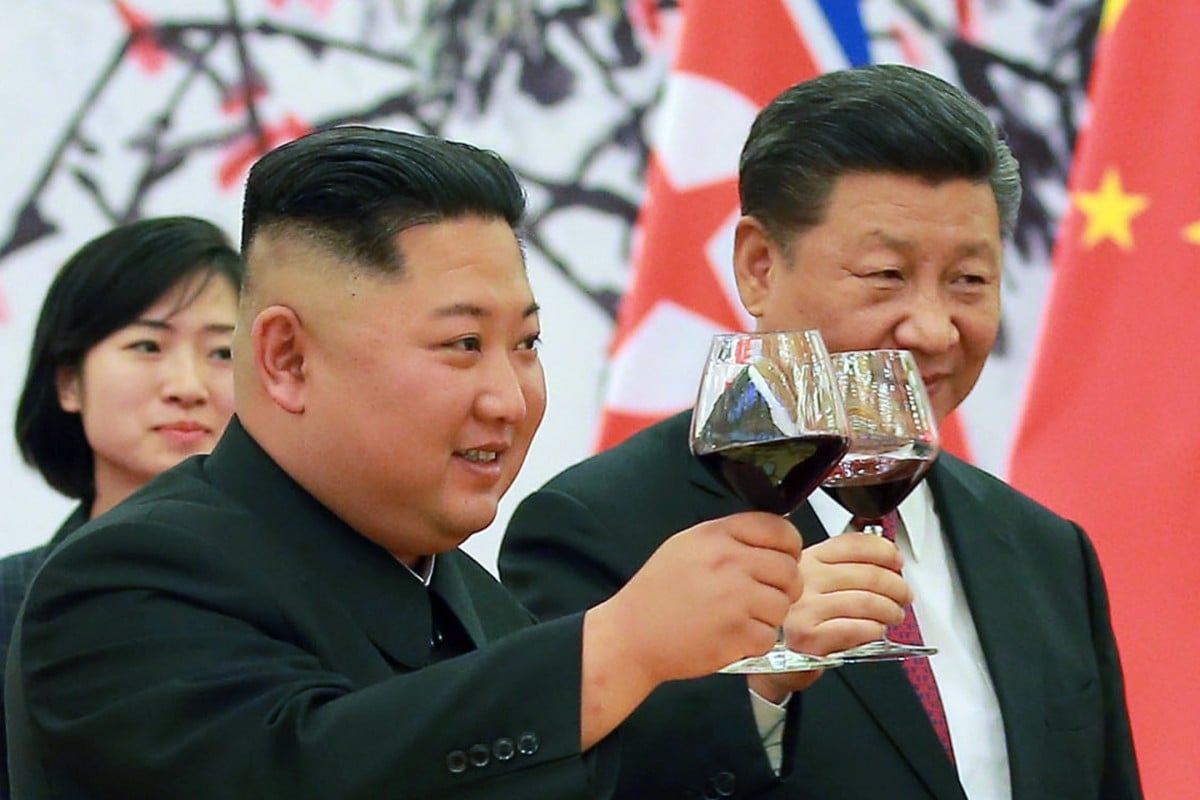
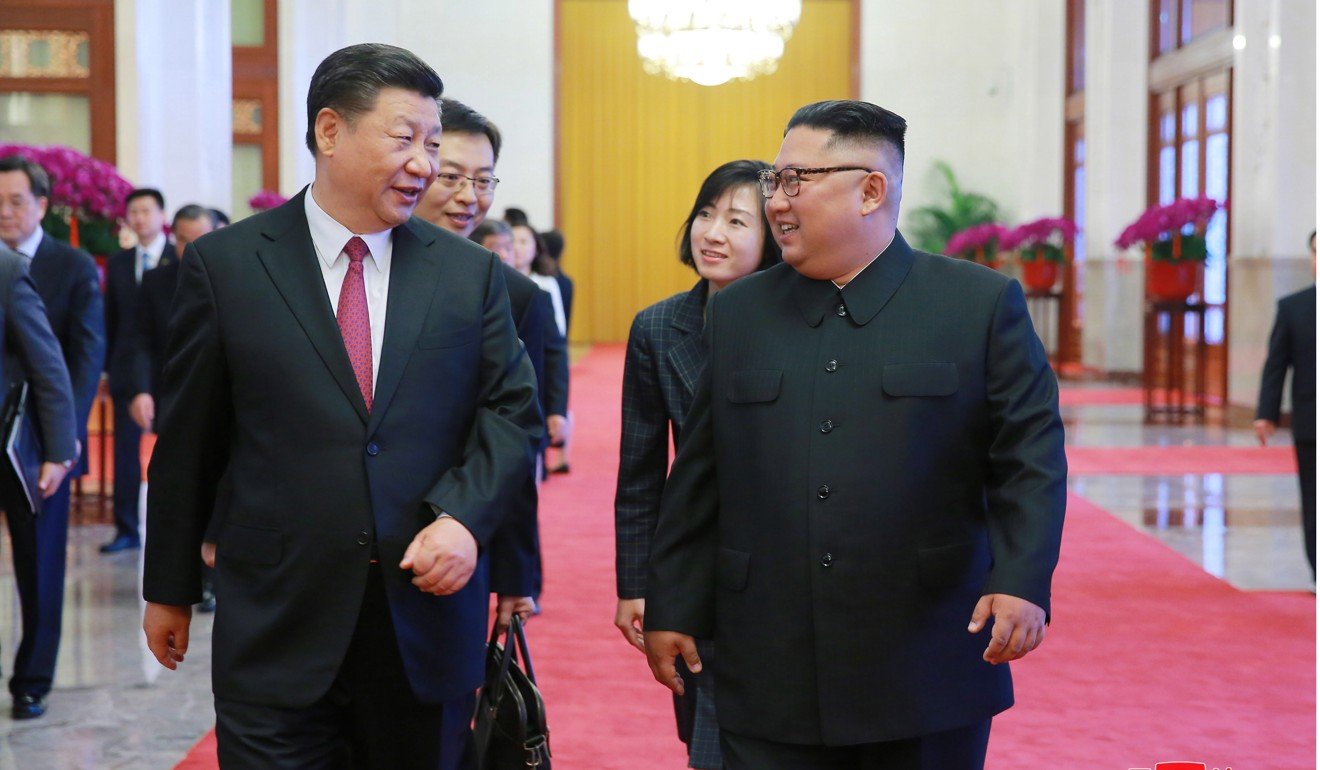
North Korean leader Kim Jong-un (right) attends a welcome ceremony in Beijing with Chinese President Xi Jinping in January. Xi will begin a visit to Pyongyang on Thursday. Photo: AP
Xi Jinping’s upcoming trip to
will be a state visit – a higher status than the last trip to the hermit kingdom by a Chinese president, highlighting the close bilateral ties between Beijing and Pyongyang.
Xi’s two-day trip, which
, is the first by a Chinese president to North Korea in 14 years and comes just a week before he is due to meet US President Donald Trump for talks on the sidelines of the Group of 20 summit in Japan.
“Leaders of the two countries will review the development of the bilateral relationship and carry out an in-depth exchange of opinions on the development of Sino-North Korean relations in the new era, and chart the future course of development,” state news agency Xinhua reported on Tuesday.
Xi’s predecessor, Hu Jintao, went to North Korea in October 2005 on a three-day trip described as an “official goodwill” visit.
Speaking at a regular press briefing in Beijing on Tuesday, foreign ministry spokesman Lu Kang said Xi’s visit aimed to “inject new impetus” into relations in the year the two countries marked the 70th anniversary of establishing diplomatic ties, and to give stalled denuclearisation talks a much needed push.
“Regarding the progress on denuclearisation, as I said, the result of the Hanoi leaders’ meeting in February was indeed a little unexpected. But after that, everyone actually looks forward to the resumption of dialogue in a good direction,” Lu said, referring to the failed talks between Trump and North Korean leader Kim Jong-un in the Vietnamese capital four months ago.
Trump hinted at the possibility of another meeting with Kim after receiving what he called “a beautiful letter” from the North Korean leader last week. On Tuesday, South Korea’s chief nuclear negotiator, Lee Do-hoon, said the US had been in contact with the North.
Life in North Korea the ‘admiration and envy’ of others, state media says
Washington will also send US Special Representative for North Korea Stephen Biegun to South Korea next week, days after Xi’s visit to Pyongyang, to fully align its position on North Korea with its ally.
Meanwhile, Trump confirmed he would meet Xi for talks in Osaka next week, saying in a tweet on Tuesday they had “a very good telephone conversation” and would hold “an extended meeting” at the G20 summit, where they are
over an almost year-long trade war.
Pyongyang has demanded the lifting of sanctions imposed on the regime following its nuclear and missile tests, while Beijing has said the livelihoods of North Koreans should not be affected. But Washington insists full sanctions should remain in place.
The US has also voiced scepticism about Chinese compliance with the sanctions. At a security summit in Singapore earlier this month, US acting Pentagon chief Patrick Shanahan – who on Wednesday stepped down from his role
– presented his Chinese counterpart Wei Fenghe with photographs and satellite images of North Korean ships transferring oil near China’s coast.
Analysts said Xi would seek to use the visit to boost China’s diplomatic leverage on the North Korean nuclear front, strengthening its hand in dealing with the US.
Exports from North Korea to China, which account for the bulk of its trade, plunged 87 per cent last year from 2017, and the country has faced other economic problems at a time when Kim has vowed to deliver on the economy.
A diplomatic source said China was expected to offer a large amount of humanitarian assistance, such as food and fertiliser, to North Korea, which could weaken the impact of sanctions.
China’s goal of denuclearisation on the Korean peninsula is unwavering and will not changeLu Chao, North Korean affairs expert at Liaoning Academy of Social Sciences
Communist Party mouthpiece People’s Daily on Tuesday said via its social media account that Xi would discuss economic and trade cooperation with Kim during the visit.
Quoting Zheng Jiyong, director of the Centre for Korean Studies at Fudan University in Shanghai, the newspaper said Pyongyang had taken steps to reform its economy and introduced China’s industrial manufacturing blueprint.
In September, Beijing proposed building a rail link from the city of Dandong, in China’s northeastern Liaoning province, to Pyongyang and then on to Seoul and Busan in the South, as well as a new road between Dandong and Pyongyang through Sinuiju.
Lu Chao, a North Korean affairs expert at the Liaoning Academy of Social Sciences, said large-scale economic cooperation between China and North Korea was unlikely because of the sanctions, but smaller moves were possible.
Chinese tourists flood North Korea as Beijing remains Pyongyang’s key ally
“For example, China may export daily necessities to North Korea. And if it’s needed, China is very likely to provide [food] assistance to North Korea,” Lu said. “I believe the UN sanctions on North Korea should change, because it has shown a more substantive approach to [achieving] denuclearisation.”
But analysts said Beijing remained firm on the need for Pyongyang to honour its pledges so that denuclearisation could be achieved.
“China’s goal of denuclearisation on the Korean peninsula is unwavering and will not change … China supports [North Korea] and the US continuing to hold talks,” Lu said.
Beijing also had an important part to play in the peace process, according to Boo Seung-chan, an adjunct professor at the Yonsei Institute for North Korean Studies in Seoul.
“China can have a positive role as a mediator to facilitate the peace process on the Korean peninsula,” Boo said.
Source: SCMP
Posted in aims, Asan Institute for Policy Studies, Beijing, Busan, Centre for Korean Studies, chinese tourists, Dandong, denuclearisation, diplomatic battleground, Fudan University, hermit kingdom, Hu Jintao, Kim Jong-un, Korean peninsula, Liaoning Academy of Social Sciences, Liaoning province, new impetus, North Korea, Patrick Shanahan, People’s Daily, President Donald Trump, President Xi Jinping, Pyongyang, Seoul, Shanghai, Singapore, Sino-North Korean relations, South Korea, State visit, ties, Uncategorized, US acting Pentagon chief, US Special Representative for North Korea, Washington, Wei Fenghe, Xinhua, Yonsei Institute for North Korean Studies |
Leave a Comment »
22/06/2019
- Beijing-based hi-tech firm says its technology keeps real-time tabs on firearms and is already in use in the military
A Chinese company has developed a chip to track the location of firearms. Photo: Shutterstock
China has developed a satellite positioning chip to pinpoint the location of firearms and trigger an alert when guns are taken out of designated areas, according to a Chinese hi-tech firm.
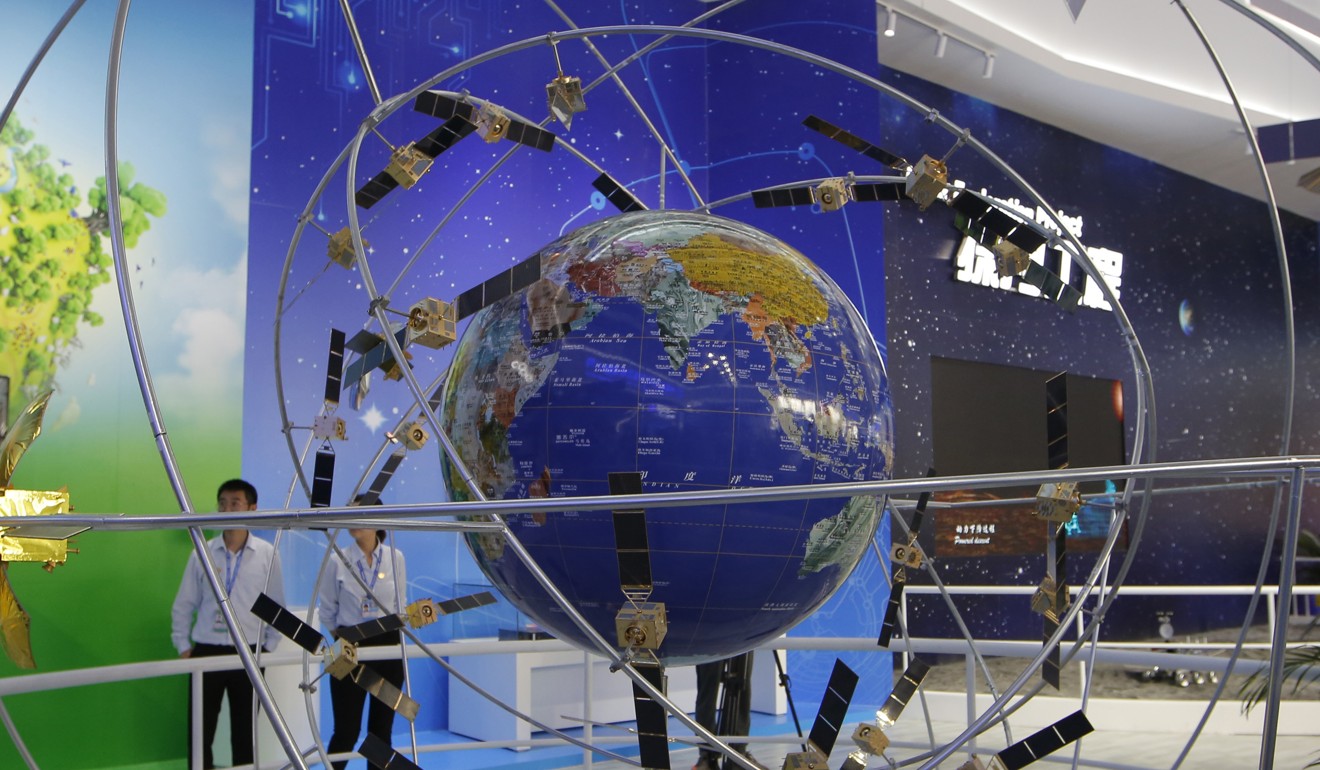
Beijing Bailineng Technology, the developer of the technology, said in Beijing that the chips used China’s BeiDou Navigation Satellite System to send real-time location data back to a control centre.
Authorised handlers of the weapons would also be issued with BeiDou watches to send alerts if they are separated from their firearm, with the aim of stopping the weapons falling into the hands of criminals.
“At the moment the accuracy of positioning is about 3 metres,” Ge Chunsheng, a company spokesman, said at a defence equipment fair which ended on Thursday.
“The chips are built in inside, can’t be seen from the outside and very difficult to remove … without damaging the gun.”
China’s BeiDou satellite navigation system breaks underwater barriers, naval shipbuilder says
Ge said the chips were too big for pistols at the moment and could only be fitted in bigger weapons.
But the system was already in use in various People’s Liberation Army units in Beijing and Nanjing, he said.
The chips use the BeiDou Navigation Satellite System to relay real-time data to a control centre. Photo: AP
China has strict gun control regulations banning civilians from owning firearms. Only the military, police and some specific personnel such as armed transport crews can legally possess firearms.
Previous gun-tracking systems relied on the US-owned and operated Global Positioning System (GPS). But China hopes the BeiDou system, set to be completed in 2020, will be able to replace GPS in China and compete with it globally.
China adds new satellite to its Beidou network that aims to rival US global positioning system
BeiDou was developed for military use but also has civilian applications. It began to cover parts of China in 2000, and launched a basic global service in December 2018.
The Chinese government has ordered all of its buses, heavy trucks and fishing boats to install BeiDou technology for real-time monitoring and tracking. As of 2017, 22 million vehicles and 50,000 vessels had been equipped with BeiDou terminals.
Source: SCMP
Posted in automatic rifle, bank-robbing spree, BeiDou-linked satnav chip, Beijing, Beijing Bailineng Technology, China alert, Global Positioning System (GPS), murdered, People’s Liberation Army units, PLA soldier, Shanghai, stole, tracking guns, Uncategorized |
Leave a Comment »
22/06/2019
- Inadequate infrastructure and industry standards are holding the country back in the battle to save the environment, new study finds
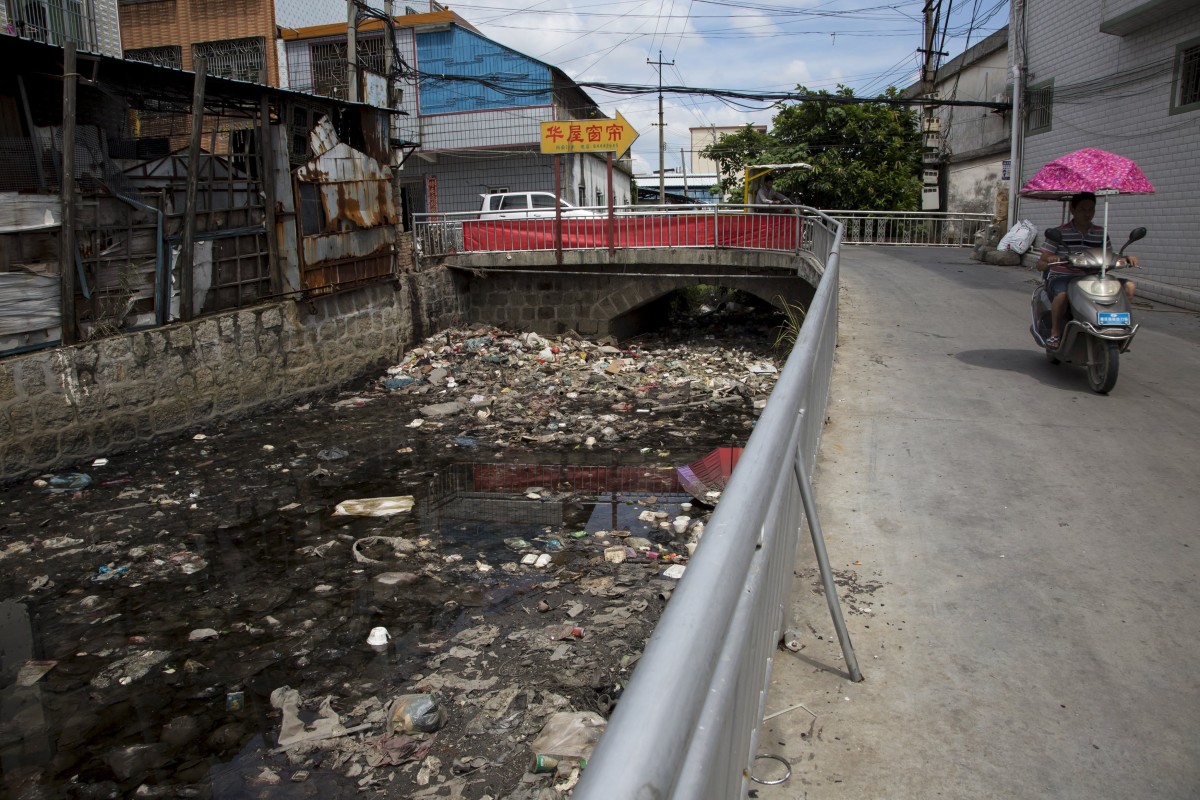
In some extreme cases, incomplete pipework meant factories in industrial parks discharged directly into waterways. Photo: Reuters
A shortage of waste water pipelines, lax local government oversight and a lack of industry standards are holding back efforts to cut industrial water pollution in China, according to a new joint study.
The research by Greenpeace and Nanjing University also found that many of the country’s waste water treatment plants were among its biggest polluters singled out by authorities.
Researchers made the assessment by examining data and reports released by the Ministry of Ecology and Environment last year. According to the reports, 243 – or 56 per cent – of the 436 major polluters fined in 2018 for excessive discharges were waste water treatment plants.
That is despite Beijing claiming to be one of the biggest processors of industrial and household waste water by volume in the world.
Fighting water pollution is part of Beijing’s pledge to fix the country’s depleted environment by 2020, one of the priorities President Xi Jinping identified at the start of his second five-year term in late 2017.
Dong Zhanfeng, deputy director of the Environmental Policy Department at the Chinese Academy for Environmental Planning, said waste water treatment was an important part of the fight against pollution.
“It’s called a ‘critical battle’ because the work is really tough,” Dong said.
China says progress made on water pollution, but battle remains
To try to curb contamination from industry, the central government has urged provincial authorities to concentrate factories in industrial parks, where infrastructure must be built to treat waste water.
The Greenpeace-Nanjing University researchers found that by the end of the third quarter last year, 97 per cent of 2,411 industrial waste water treatment plants needed for industrial parks around the country had been constructed. But not all of the completed plants were in full use because of insufficient pipes connecting factories and the treatment plants.
In extreme examples cited by the report, incomplete pipework meant two treatment plants in Hubei laid dormant for two years, forcing factories in the industrial parks to discharge directly into waterways.
In other cases, factories not linked to industrial waste water treatment plants discharged into the general sewage system, with the effluent ending up at household waste water treatment plants that could only filter part of the industrial waste.
This was the case in the southwest province of Guizhou, where a lack of pipework meant 89 of the 128 industrial parks relied on city sewage systems to treat polluted water.
Deng Tingting, a Beijing-based campaigner with Greenpeace East Asia, said conditions were a mess.
“Brand new waste water treatment plants sit unused while waste pumps into streams and rivers.
The current state of affairs is a mess, and it keeps companies from entering the growing market for waste water treatment. The decision not to shepherd this growing industry is a risky one,” Deng said.
China admits patchy progress tackling soil, water pollution, with some rivers worsening
The Ministry of Ecology and Environment estimated last year that in all China needed 400,000km (248,550 miles) of waste water pipework, costing around 1 trillion yuan (US$145 billion). The ministry did not say how much remained to be built.
Another major problem identified by the study was the lack of treatment standards for industrial waste water plants, with many plants relying on quality standards for household waste water treatment.
In addition, the researchers highlighted the problem of local governments and industrial park administrators shirking their responsibility to enforce standards.
The study called for clear demarcation of regulatory and oversight responsibilities among local environmental watchdogs, industry, industrial parks and water treatment plants.
Source: SCMP
Posted in Beijing, China alert, clean up, factories, Greenpeace, Inadequate infrastructure, incomplete pipework, industrial parks, Ministry of Ecology and Environment, Nanjing University, President Xi Jinping, Uncategorized, waste water, waste water pipelines, waste water treatment plants |
Leave a Comment »
22/06/2019
- After two decades of inaction, Chinese President Xi Jinping has set a deadline for the nation
- Small, local successes show education is the key
The sorting of household waste is more of a novelty than the norm in China. Photo: Xinhua
As 60-year-old Xu Mingan hurried to the rubbish bins on her Beijing estate, she saw an abandoned aluminium clothes rack.
Standing in front of several bins labelled “recyclables”, “kitchen waste” and “other waste”, she tore apart the rack, packed the aluminium parts together for selling to the recycling men who drop by occasionally, and threw the remaining plastics randomly into the bins.
“People don’t sort their waste here. We can’t even tell the difference between these bins,” she said.
But unlike other residents of the estate, Xu likes to rummage through the bins, picking up recyclables and selling them, as well as sharing discarded clothes, shoes, quilts and blankets that are still in good condition to the janitors.
The concept of sorting waste is still new in China. Photo: Xinhua
Xu, who has lived in Beijing for 10 years, admitted her family never sorted its household waste, despite two decades of encouragement from the government to do so. Her attitude may be about to change.
As part of the three major tasks Chinese President Xi Jinping has set the nation to achieve by 2020, China has adopted a new plan which aims to build a standard waste sorting system.
China must heed Xi’s call on tackling waste
In 2000, the government chose eight cities, including Beijing, Shanghai and Guangzhou, as pilots for the waste sorting plan, but the slogans fell on deaf ears and there have been few signs of progress.
But Xi appears to have given the grass-roots environmental policy his attention once more, delivering a long statement on June 3 about how the country needs to do better on sorting its waste.
“[We should have] extensive education and guidance, to let people realise the importance and necessity of waste sorting; through effective supervision and guidance, [we should] let more people take action and form a good habit on waste sorting,” he said.
In 2000 the Chinese government chose eight cities to pilot a waste sorting plan but it made little progress. Photo: Xinhua
In March 2017, the government set out a plan to formalise a standard system and regulations for rubbish sorting by 2020, with a target for 46 major cities – including Beijing – to recycle 35 per cent of their waste by that year. Three months later, the housing ministry published a notice requiring the cities to classify their waste and build a basic sorting system.
The recent attention from the top leaders has seen a spike in activity among local officials. Shanghai’s Communist Party chief Li Qiang was among the first to release local plans to implement household waste sorting in February, going in front of television cameras to demonstrate how to recycle plastic bottles.
“Waste sorting is a now a political task for local officials, and they might lose their jobs if they can’t do the job well,” said Zhang Yi, an expert with the ministry, which has primary responsibility for waste management.
G20 set to agree on ways to reduce problem of plastics in oceans
But the political will still needs time to translate into actual sorting and recycling, with environmental activists pointing out that little has been done in the two years since the plan was published.
“The vast majority of cities are still at the same level they were two years ago. They just change one bin into two or three bins in the community, but in the end, they are emptied into a single garbage truck,” said Chen Liwen, co-founder of Zero-Waste Villages, a non-government environmental organisation.
Waste classification should be done systematically, she said, with residents, government and sorting companies working together, “but we don’t have that at all”.
“The government should do a vast amount of work on education in the early stages, as well as change the sorting system in the later stage,” she said.
The recent attention from the top leaders has seen a spike in activity among local officials. Photo: Handout
There are four main processes in the sorting of waste: dumping, collection, transport and treatment, Chen said. But currently, “not even one city has got the first step, trash sorting, sorted out”.
On May 31, China’s environment ministry published a report into its citizens’ thoughts on green issues and found a large gap between people’s recognition of the problem and their actions.
According to the study, 92 per cent of respondents believe rubbish sorting is important for environmental protection, but only 30 per cent said they were doing it “very well” or “fairly well”.
More than half gave their reasons for not sorting waste as “no classification bins in the community” and “no classification for the garbage truck, so no need to sort in the dumping process”. More than 30 per cent said they did not know how to classify their rubbish.
A government report found a large gap between people’s recognition of environmental problems and their actions. Photo: Handout
Wang Xi, a 29-year-old Beijing resident, said she did not know the standards for “recyclables” and “non-recyclables” so had never sorted her household waste. She only began to understand when she spent some time in Japan.
The difference there, she said, was that there was a guide in every home that showed how to sort waste into the different types – kitchen waste, plastic, paper – and designated collection days for each kind.
“If you mix the garbage, like put plastic in with the kitchen waste, the garbage company will send it back to you,” she said.
“But in China, all the bins are emptied into one garbage truck, so I don’t know what the point is for us to sort it in the first place.”
I don’t know what the point is for us to sort it in the first place – Beijing resident Wang Xi
Chen said the government needed to take the lead in waste sorting as a matter of public interest instead of only paying lip service to the issue.
Zhang said waste classification was a social issue but local officials had so far not paid enough attention to it. Most of the targeted 46 cities now had a plan on paper and had established offices with specific targets but, at the moment, waste sorting remained on paper too, he said.
How China’s ban on plastic waste imports threw recycling efforts into turmoil
Pilot projects in rural areas
Despite the challenges ahead, some projects have shown promising results. Chen has been classifying waste in rural areas since 2017 and today her pilot projects have been replicated across more than 20 villages.
The greatest success has been in Jiangxi province, where 12 villages have been sorting their rubbish since December.
A government official in Dongyang county checks if a woman has correctly sorted her rubbish. Photo: Handout
Wang Qinghai, party chief of Dongyang county in the northeastern part of the province, said preparation work began last June.
“We investigated the scale of household residents in our county, and the number of hotels, restaurants and schools, to estimate the garbage production per capita and how much we could reduce after sorting,” he said.
The hardest part was educating the public, he said. “We organised training and meetings and sent materials, we also guided people when they dumped their garbage.”
Wang said the effect had been very good and people’s understanding of environmental protection and their cooperation with the government had been beyond his expectations.
Beijing struggling to contain its growing garbage problem
According to his estimates, after the introduction of classification system the amount of waste had decreased by 50 per cent. Now, the amount of waste being classified correctly in Dongyang county was over 99 per cent.
A successful waste programme needed the government’s lead and the cooperation of the relevant departments, Wang said. In Dongyang, the agricultural, water resources and urban-rural development departments had all taken part.
As for investment, Zhang estimated China needed to double its financing to introduce sorting facilities and build treatment systems but, speaking from his experience, Wang said waste sorting had not required any extra money.
Zhang remains optimistic that the 46 cities named in the latest waste management plan can achieve their goal by 2020.
“Waste sorting was a big problem in China that hadn’t been solved for nearly two decades, but as our ‘big boss’ pays attention to this, it will be solved,” he said.
Source: SCMP
Posted in aluminium clothes rack, Beijing, Beijing estate, blankets, Chinese President Xi Jinping, clothes, Dongyang county, Guangzhou, household waste, janitors, Jiangxi Province, kitchen waste, other waste, Plastics, quilts, recyclables, recycling men, recycling problem, rubbish bins, Shanghai, Shanghai’s Communist Party chief, shoes, Uncategorized, Zero-Waste Villages |
1 Comment »
20/06/2019
Wang Yang (front C), a member of the Standing Committee of the Political Bureau of the Communist Party of China (CPC) Central Committee and chairman of the Chinese People’s Political Consultative Conference (CPPCC) National Committee, meets with members of the China-Africa Friendship Group of the CPPCC in Beijing, capital of China, June 19, 2019. (Xinhua/Gao Jie)
BEIJING, June 19 (Xinhua) — China’s top political advisor Wang Yang on Wednesday called on the newly established China-Africa Friendship Group of the national political advisory body to contribute to building a closer China-Africa community with a shared future.
Wang, a member of the Standing Committee of the Political Bureau of the Communist Party of China (CPC) Central Committee and chairman of the Chinese People’s Political Consultative Conference (CPPCC) National Committee, made the remarks while meeting here with members of the friendship group.
The members are in Beijing to attend the inauguration ceremony of the group and its first plenary session.
Wang said the group was the first friendship group between China and other countries under the CPPCC approved by the CPC Central Committee, and that its establishment was a groundbreaking event in the history of CPPCC’s foreign exchanges.
He urged the friendship group to implement the CPC Central Committee’s policy on China’s relations with Africa and to help deliver the outcomes of the 2018 Beijing Summit of the Forum on China-Africa Cooperation.
He also called on the group to make efforts to promote the CPPCC’s foreign exchanges.
Source: Xinhua
Posted in Beijing, China-Africa cooperation, China-Africa Friendship Group, Chinese People's Political Consultative Conference (CPPCC) National Committee, promote, Standing Committee of the Political Bureau of the Communist Party of China (CPC) Central Committee, Top political advisor, Uncategorized |
Leave a Comment »
19/06/2019
- ‘Traditional friendship’ between two nations will continue whatever the future brings, Xi says ahead of two-day trip to Pyongyang
- Visit comes amid rising tensions between Beijing and Washington, and stalled negotiations on the denuclearisation of the Korean peninsula
Chinese President Xi Jinping says China will continue to “firmly support” North Korean leader Kim Jong-un. Photo: AP
Chinese President Xi Jinping has pledged his full support for North Korean leader Kim Jong-un and promised to play an active role in efforts to bring peace and stability to the region, a day ahead of his
Xi’s comments, in an editorial published by North Korean newspaper Rodong Sinmunon Wednesday, come as China remains locked in a trade and technology war with the United States, and after a second summit between US President Donald Trump and Kim in Hanoi in February failed to achieve any progress on the denuclearisation of the Korean peninsula.
“No matter how the international situation changes”, China would “firmly support Chairman Kim Jong-un to lead the North Korean party and people to implement the new strategic line”, the article said.
As well as expressing the two sides’ desire to strengthen “strategic communication and exchanges”, Xi said Beijing would continue to support Pyongyang in its negotiations with other countries.
Xi Jinping (left) says China will “contribute to peace, stability, development and prosperity in the region”. Photo: EPA-EFE
“We will actively contribute to peace, stability, development and prosperity in the region by strengthening communication and coordination with the Democratic People’s Republic of Korea,” he said, referring to the country by its official name.
China would also engage with other stakeholders “by jointly expediting progress on dialogue and negotiations on the issues of the Korean peninsula”, he said.
Xi’s state visit to North Korea aims for ‘new impetus’ in ties
Speaking ahead of Xi’s two-day trip to Pyongyang, which starts on Thursday, Chinese foreign ministry spokesman Lu Kang said on Tuesday that the outcome of the Trump-Kim summit in Hanoi was “a little unexpected” and that China was encouraging both sides to continue their dialogue.
Trump said last week that he had received a “
” from Kim that had “reset” the tone between the two countries. In May, he said Pyongyang was “not ready to negotiate”.
One of the major stumbling blocks in the negotiation process has been the United Nations sanctions. Pyongyang has stipulated that they should be lifted as a precondition of the denuclearisation process while Washington has insisted they should remain in place until North Korea provides clear evidence the process is under way.
China, meanwhile, has been accused of providing large amounts of humanitarian aid to its neighbour to help offset the impact of the sanctions.
Xi said China would continue to support North Korea in raising “legitimate concerns through dialogue”.
“No matter how the wind and clouds of the international situation change, our two parties and two peoples inherit and carry forward the traditional friendship between China and the DPRK,” he said.
Zhao Tong, a fellow at the Carnegie-Tsinghua Centre for Global Policy, said that while the main aim of Xi’s visit was to reaffirm ties, its timing, amid the US-China dispute, was designed to show Beijing still had a role to play in the negotiations.
“As China-US strategic rivalry grows, China wants to maintain its geopolitical influence on the Korean peninsula. By demonstrating its unique relations with the DPRK at a time when neither Washington nor Seoul is able to resume high-level engagements with Pyongyang, Beijing is signalling to Washington that it is still a helpful, constructive and indispensable partner to resolve important regional problems,” he said.
Xi’s visit to North Korea will be the first by a Chinese leader since Hu Jintao in 2005.
Source: SCMP
Posted in Beijing, Carnegie-Tsinghua Centre for Global Policy, Chinese President Xi Jinping, Democratic People’s Republic of Korea, denuclearisation, full support, Hu Jintao, Kim Jong-un, Korean peninsula, North Korean leader, Pyongyang, Rodong Sinmunon, Seoul, Uncategorized, Washington |
Leave a Comment »
19/06/2019
- Osaka summit intended to pull bilateral ties away from brinkmanship that has dragged relations to lowest point in decades
- Trade war just one of the items on the agenda, analysts say, along with principles of relationship, North Korea, and Huawei
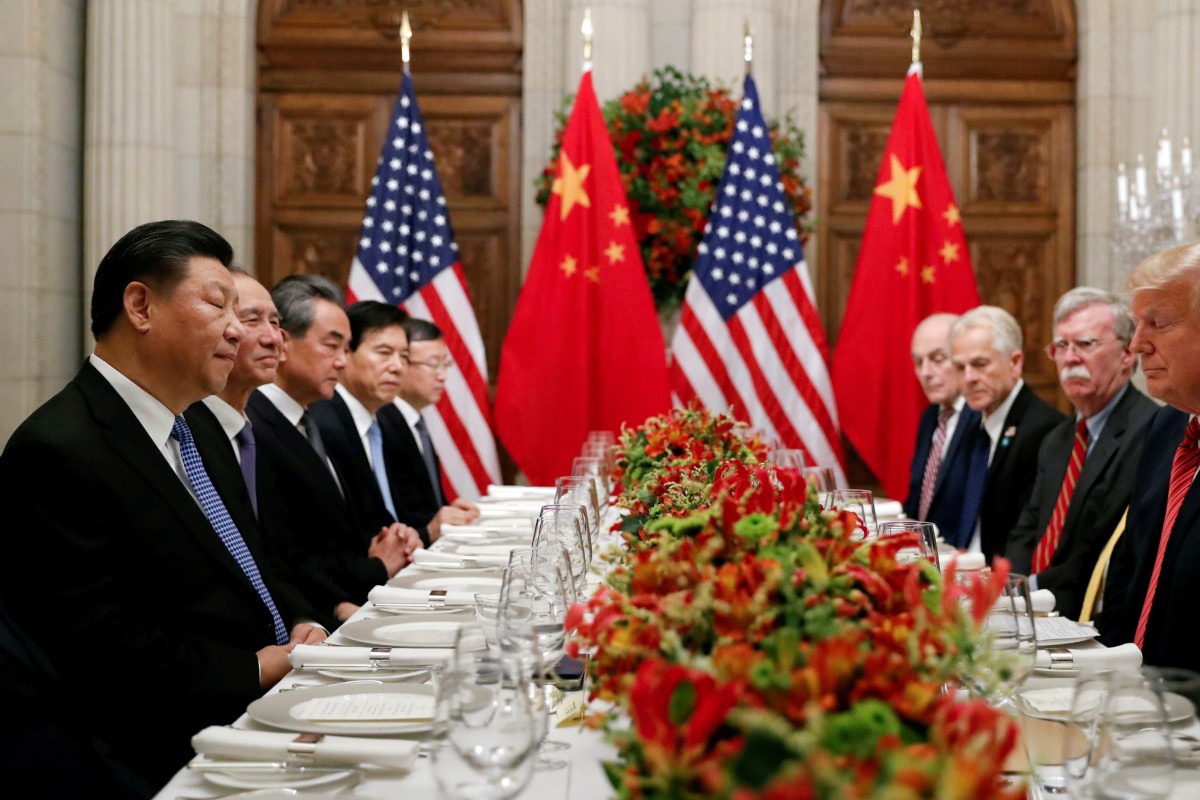
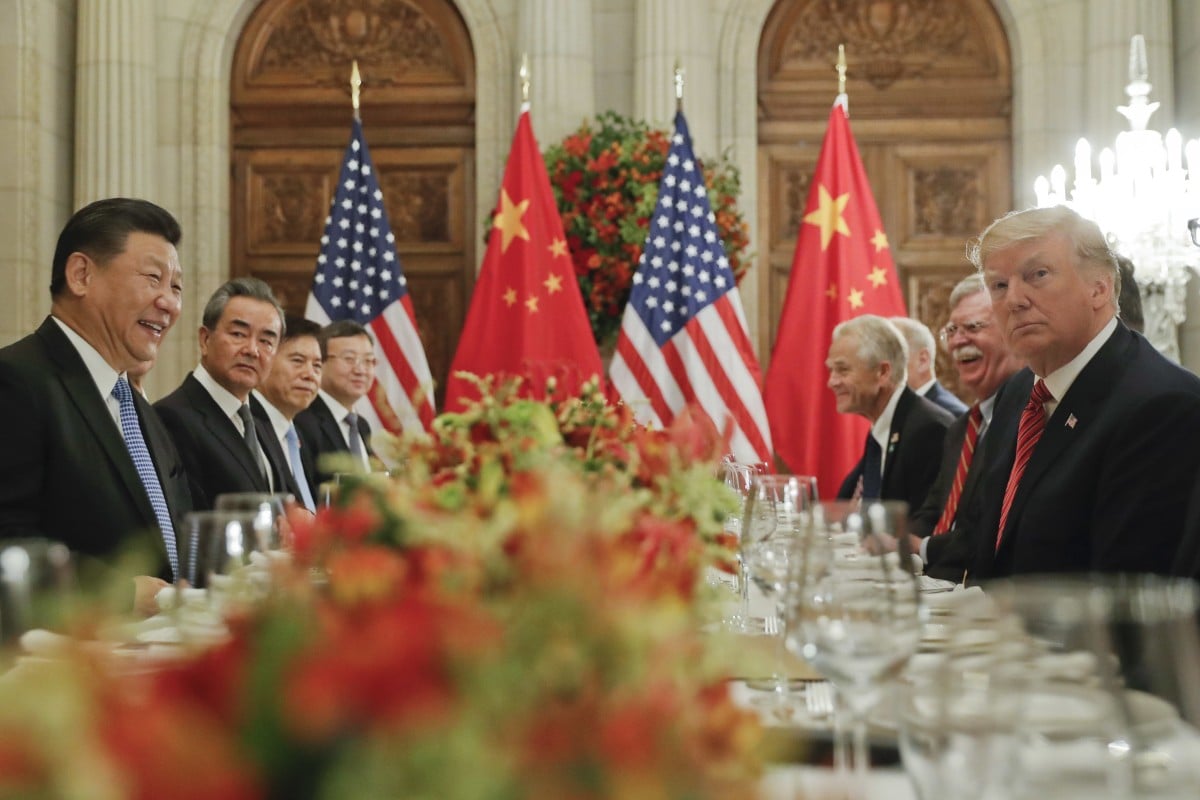
The last time the US President Donald Trump and China’s President Xi Jinping met was in Buenos Aires in December. Analysts are confident that their meeting at the G20 Summit in Osaka this month can yield a freeze in the escalation of the trade war. Photo: Reuters
When Chinese President Xi Jinping meets his US counterpart Donald Trump in Japan at the end of the month they are expected to discuss a broad range of issues, including the trade war, in an effort to stop the relationship from tilting towards sustained confrontation, analysts said.
Neither side has provided an agenda for the meeting on the sidelines of the G20 leaders summit in Osaka, despite confirmation coming from both sides that it was to take place, after weeks of speculation.
A summary of Tuesday’s phone conversation between Xi and Trump published by Xinhua, however, implied that the leaders would cover more strategic issues, leaving the nuts and bolts of a trade deal to their negotiating teams. Meanwhile, China’s foreign ministry spokesperson Lu Kang said at a regular press conference on Wednesday that the two leaders would discuss the overall direction of bilateral relations, but he did not elaborate further.
Both China and the United States have confirmed that their leaders will meet in Osaka at the end of June, at a time when US-China relations have nosedived. Photo: AP
, a former vice-minister at China’s Ministry of Commerce, predicted that Beijing would use the meeting to make clear a few principles regarding the bilateral relationship.
“It’s inevitable [for China and the US] to have problems in certain fields, but both sides should resolve the problems through dialogue on an equal footing rather than opting for a trade war, a tech war, or a financial war,” said Wei, now a vice-chair at the state-backed China Centre for International Economic Exchanges, a think tank.
He added that China would try to convince the US that it had no intention of challenging its global hegemony, but that China’s own “core interests”, including its sovereignty, territorial rights and room to develop, “must be respected”.
A government official in Beijing, who declined to be identified, said China was pinning its hopes on the leaders’ summit to ease general tensions between Beijing and Washington, even though the chances of the leaders reaching any concrete agreements in Osaka was small.
“Without a leaders’ summit, it would be difficult to push ahead the work [to reach agreements] at the ministerial or lower levels,” the source said.
Wei Jianguo, a former vice-minister at China’s Ministry of Commerce, predicted that Beijing would use the meeting to make clear a few principles regarding the bilateral relationship. Photo: Handout
The last summit between Trump and Xi in Buenos Aires in December resulted in a tariff truce and negotiations that continued until early-May. But the talks failed to achieve a deal to end the conflict, resulting in the US more than doubling tariffs on US$200 billion of Chinese imports and threatening tariffs on almost all remaining Chinese imports, valued at US$300 billion by the US government.
Tuesday’s telephone call, in which
he was willing to exchange views with Trump on “the fundamental issues” affecting China-US relations, came at a low point in recent China-US relations.
The tariff increase followed the collapse of trade talks in early-May, while hostile rhetoric has spread into the political and military spheres. The US labelled China a “strategic competitor” and accused Beijing of conducting sustained espionage to impede US’s national security, while China blamed the US for trying to thwart China’s development by targeting Huawei and infringing on China’s sovereignty over Taiwan and Hong Kong.
Zhou Rong, a senior fellow from the Chongyang Institute for Financial Studies at the Renmin University of China, said the two leaders have a long list of issues to talk about this time in addition to trade, including Taiwan, the South China Sea, as well as the treatment of Chinese companies in the US. China can offer to help on some issues but “the US should not force China to swallow bitter fruit it cannot digest”, Zhou said.
Ni Feng, a specialist in Sino-US relations at the Chinese Academy of Social Sciences, said they would discuss the “overall direction” of their bilateral relationship, including where the two nations could engage in “competition and cooperation”.
He added that North Korea may be on the agenda because “China and the US share the same goal of the denuclearisation of the Korean peninsula.”
a two-day state visit to Pyongyang on Thursday.
Another source in the Chinese government, who wished to remain anonymous, said Xi was very likely to bring up the US’ blacklisting of Huawei, China’s leading technology firm. Washington has effectively banned American companies from providing key components to the Shenzhen-based company.
Meng Wanzhou, Huawei’s chief financial officer and the daughter of founder Ren Zhengfei, is currently on bail in Canada awaiting extradition to the US to face charges that both she and Huawei violated US sanctions on Iran.
During Tuesday’s call, Xi told Trump that China “hopes the US side can treat Chinese businesses fairly”, Xinhua reported.
China’s President Xi Jinping waits for the start of the G20 summit in Buenos Aires, Argentina, Friday, Nov. 30, 2018. Photo: AP
At the same time, Trump and Xi agreed that the two countries’ trade negotiators would start to talk again before the meeting in Japan, raising prospects for a second truce in the trade war, or even a deal to end the conflict.
Matthew Goodman, a researcher at the Centre for Strategic and International Studies in Washington, wrote in a note that a Trump-Xi deal on trade-in Osaka “is certainly possible”.
The most likely outcome is similar to the one reached in Buenos Aires in December last year, when Trump and Xi “agreed to a temporary truce while trade negotiators work to hammer out a deal”, Goodman wrote. “This would postpone the worst effects of the current escalation but is unlikely to solve the deepening and dangerous rift in US-China relations”.
The South China Morning Post previously reported that the Osaka summit meeting, which is likely to take place on Saturday June 29, could also be a sit-down dinner between Trump, Xi and their top economic and security aides, as occurred in Buenos Aires. Trump tweeted Tuesday night that he would have an “extended” meeting with Xi in Japan.
Source: SCMP
Posted in Beijing, broaden agenda, Buenos Aires, Centre for Strategic and International Studies, China Centre for International Economic Exchanges, China’s Ministry of Commerce, Chinese Academy of Social Sciences (CASS), Chongyang Institute for Financial Studies, G20 summit, Japan, North Korea, Osaka, President Donald Trump, President Xi Jinping, south china morning post, Uncategorized, US-China trade war, Washington |
Leave a Comment »
17/06/2019
- It is expected the two leaders will meet in Japan at the end of June
- Analysts see an increasing caution from China amid low expectations of any deal
Chinese President Xi Jinping and US President Donald Trump last met in Argentina in December on the sidelines of the G20 summit. Photo: AP
China’s relative silence in response to comments by US President Donald Trump in relation to the trade war is due to Beijing redoubling its efforts to take a cautious approach ahead of future talks amid “low expectations” of a quick deal after negotiations collapsed last month, analysts said.
Trump has openly threatened to levy tariffs on additional Chinese products if a meeting with counterpart Xi Jinping does not take place at the G20 summit in Japan at the end of the month, while also urging Beijing to return to talks based on terms negotiated earlier in the year.
“It’s me right now that’s holding up the deal,” Trump said on Tuesday. “And we’re going to either do a great deal with China or we’re not going to do a deal at all.”
China, though, has remained tight-lipped on both a meeting and also the prospects of future talks, with the foreign ministry yet to confirm whether there will be a summit between
in Osaka. The South China Morning Post reported this week that the two leaders could share a more formal dinner, similar to the scene witnessed on the sidelines of the G20 summit in Argentina in December.
That meeting produced a ceasefire and more than five months of negotiations until early May when the talks broke down and the US more than doubled tariffs on US$200 billion in Chinese imports to 25 per cent.
Shi Yinhong, an international relations expert from Renmin University of China, said China had very low expectations ahead of the G20 summit in Japan due to the current level of strained bilateral relations.
Trump’s open threats had put Xi “in a very disadvantageous position”, as any agreement “would be seen as being weak or surrendering to US pressure”, he said.
Instead, the two sides were likely to reach “piecemeal deals” on smaller issues such as people-to-people exchanges and relaxation of visa restrictions, according to Shi, which in turn might help to build a friendlier atmosphere to pave the way for more substantive talks in the future.
It’s me right now that’s holding up the deal. And we’re going to either do a great deal with China or we’re not going to do a deal at all: Donald Trump
China’s state-controlled media outlets have maintained their criticism of the US for starting the trade war, although editorials carried by Xinhua and the People’s Daily have not given concrete information about Beijing’s demands, instead, in its latest editorial, Xinhua urged “US politicians to treat China’s rise with reasonable sense”.
Geng Shuang, a foreign ministry spokesman, said last week that China was aware of hopes emerging from the US side of a meeting between Trump and Xi in Osaka, but that China had no information to disclose on that subject, reiterating government statements from previous days.
Amid a war of words between Beijing and Washington over which side is to blame for the stalled trade talks, both sides have showcased their willingness to talk as long as the conditions are appropriate. Commerce vice-minister Wang Shouwen said at the start of June that China “is always sincere” about negotiating with the US, but the talks must be conducted with mutual respect.
“Otherwise, the negotiation would be meaningless. Even if there’s negotiation, there won’t be an enforceable and sustainable agreement,” Wang said.
Xi said at an economic forum in Russia last week that he did not want to see a decoupling of the US and China and believed that “my friend” Trump did not want that either.
“Trump’s stance that he is unlikely to make any concessions is very clear. So, China should be very cautious when arranging a bilateral meeting with him,” said Liu Weidong, a China-US affairs expert from the Chinese Academy of Social Sciences, a state think tank
Scott Kennedy, a senior adviser at the Centre for Strategic and International Studies in Washington, said Trump and Xi may reach “some sort of truce” as they did in Buenos Aires so that “both sides agree to put on hold their various actions against the other and not further escalate”, but added that the chance was small.
Source: SCMP
Posted in Argentina, Beijing, Chinese Academy of Social Sciences, Chinese President Xi Jinping, fiery rhetoric, G20 meeting, Japan, Osaka, President Donald Trump, Renmin University of China, south china morning post, trade talk demands, Uncategorized, Washington |
Leave a Comment »
17/06/2019
- Washington has blamed Tehran for an attack on two oil tankers near the Strait of Hormuz, putting pressure on Iran’s allies like China
- Beijing usually backs its trade partner – but experts say the trade war with the US and problems with Huawei may have changed the equation
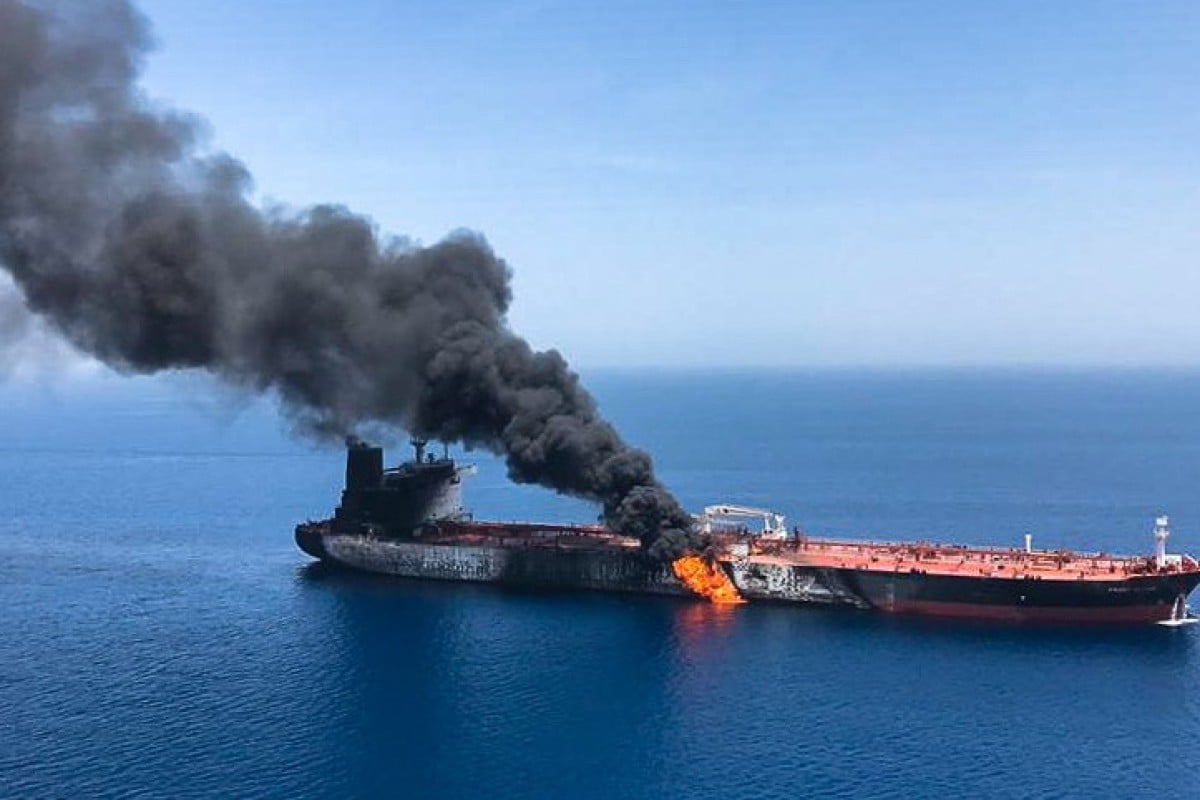
A tanker burns in the Gulf of Oman after a mystery attack that the United States has blamed on Iran. Photo: AFP
When
headed to Tehran this week for the first visit by a sitting Japanese prime minister in four decades, some in the diplomatic world imagined he could be the man to bring
back to the negotiating table with the
.
Those hopes were torpedoed on Thursday when, on the same day Abe was meeting Iran’s supreme leader Ayatollah Khamenei, explosions ripped through two oil tankers, one Japanese and one Norwegian, near the Strait of Hormuz, a strategically significant shipping lane.
The attack immediately overshadowed an earlier success for Abe, who had met President Hassan Rowhani a day before and was assured Iran would stick to the terms of a 2015 agreement limiting its nuclear activities.
Washington accused Iran of being behind the attack on the tankers, releasing a video on Friday that it said showed Iran’s revolutionary guard removing an unexploded mine from one of the ships, and warning that it would “defend its interests”.
Iranian President Hassan Rowhani and Japanese Prime Minister Shinzo Abe meet Iran’s Supreme Leader Ayatollah Ali Khamenei in Tehran. Photo: Reuters
Tehran, for its part, claimed to have been set up, with its foreign minister Mohammad Javad Zarif saying “suspicious doesn’t begin to describe” the incident. So much, then, for hopes of mediation.
US President
, who had encouraged the Japanese leader’s visit, admitted on Twitter soon afterwards that when it came to negotiating, “they are not ready, and neither are we!”
Still, the incident exposed more than just the naivety of those hoping for an Abe-led breakthrough. In raising the stakes in Washington’s confrontation with Tehran, it also threw the spotlight on Iran’s dwindling number of allies – and perhaps most significantly on its largest trading partner, China – which face mounting pressure to rethink the relationship.
Tanker attacks: world divided over Iran role as Saudi prince breaks silence
The day after the attack, China’s President
said Beijing would promote its ties with Iran “however the situation changes” – a comment made during a meeting with Iranian President Hassan Rowhani on the sidelines of the Shanghai Cooperation Organisation summit in Kyrgyzstan – but diplomatic observers question just how far China can go in accommodating its controversial trading partner.
BEST FRIENDS FOREVER?
Iran has long been able to count on support from China, which accounts for 30 per cent of the Islamic republic’s exports and imports, and its willingness to defy US pressure is a gamble at least partly based on an assumption it can continue to count on Beijing’s support.
As Iran’s largest economic partner – Chinese direct investment in Iran hit a record high of nearly US$4 billion last year, according to data analysis project ChinaMed – Beijing already plays a key role in relieving US pressure on Iran, said Mohsen Shariatinia, assistant professor of regional studies at Shahid Beheshti University in Tehran.
But experts warn that reliance will come into question as China becomes increasingly hamstrung by its own problems.
China has enough problems of its own, starting with US pressure on Huawei. Photo: EPA
Chief among Beijing’s headaches are its
with Washington and the related assault on its
giant
– which, as analysts point out, originally ignited over allegations it was defying US sanctions on Iran. Beijing will also be well aware of the need to keep
, its second-biggest oil supplier and Tehran’s critic-in-chief, happy.
On the other hand, analysts say, China will be wary of being seen to abandon its old friend, as doing so would send a message to other nations at odds with Washington that they could no longer look to China as a diversification strategy.
“This could mean Chinese investment is vulnerable to US interference,” said Esfandyar Batmanghelidj, founder of Bourse Bazaar, a media company that supports business diplomacy between Europe and Iran.
Sanctions drive Iranian students away from US towards Asia
Doing so, Batmanghelidj said, would put a question mark over one of China’s most significant foreign policies of recent years – President Xi’s signature
to fund infrastructure across Eurasia.
THE BELT AND ROAD QUESTION
Tensions between Iran and the US have reached boiling point in recent weeks, after the Trump administration last month ended waivers on sanctions for nations importing Iranian oil – a move the US says is aimed at making the republic “radioactive to the international community” and which Rowhani has described as an “economic war against Iran”.
So far, China has largely stuck by the Islamic Republic, continuing to buy fuel from it despite the latest wave of US sanctions on Iranian oil that followed Trump’s decision last year to withdraw the US from the landmark 2015 agreement curbing Tehran’s nuclear development.
The deal had been widely lauded as a triumph of multilateralism and the dawning of a new economic era for Iran.
US releases video of ‘Iranian forces removing unexploded mine’ from ship
Part of its eagerness to support Iran has stemmed from the Islamic Republic’s key position in the Belt and Road plan. In 2017 alone, China signed deals for more than US$15 billion in Iranian infrastructure investment, according to the
mouthpiece China Daily.
Planned projects include high-speed rail lines, upgrades to the nation’s electrical grid, and natural gas pipelines. The two nations have also vowed to boost bilateral trade to US$600 billion in the next seven years.
“China sees Iran as its Western gateway, where not only is it a big market in itself, but it will also be the gateway to the rest of the
and ultimately to Europe for China,” said Anoush Ehteshami, professor of international relations at Durham University in Britain.
Nisha Mary Mathew, at the Middle East Institute in Singapore, said that China’s relationship with Iran was not just economic – but primarily strategic, with both nations envisioning an international order that was no longer dominated by the US and its Western allies.
DEFIANCE, FOR NOW
If the belt and road gives China good reason to stick with Iran, there are plenty of voices urging just that action. As Andrea Ghiselli at Shanghai’s Fudan University pointed out, US sanctions until now have only strengthened the hardline factions in Iran’s government.
The combination of the US withdrawal from the nuclear deal – which had the support of the international community – along with Europe’s tepid efforts to rescue it, may have emboldened those favouring resistance over negotiation.
Xi’s supportive comments in Kyrgyzstan were only the latest in a string of remarks from China that could encourage such factions.
If Trump kills off Huawei, do Asia’s 5G dreams die?
After China’s Foreign Minister Wang Yi met Iranian Foreign Minister Mohammad Javad Zarif in Beijing last month, the ministry’s spokesman Lu Kang said China’s economic relationship with Iran was “reasonable and lawful”.
Two months prior to that, China’s Minister of Commerce Zhong Shan, while hosting his Iranian counterpart Farhad Dejpasand, had claimed China’s “determination to maintain and develop the China-Iran comprehensive strategic partnership is unshakeable”.
Chinese President Xi Jinping with Iranian President Hassan Rowhani. Photo: AFP
Even so, the pressure is getting to some. In February, Foreign Minister Zarif temporarily resigned, in what Andrea Ghiselli at Fudan University in Shanghai called a clear sign of the “changing and precarious power balance with Iran’s foreign policy establishment”.
And nowhere is the pressure felt more keenly than the economy and China’s ability to serve as a lifeline.
“The real anxiety in Iran right now is about market share,” said Bourse and Bazaar’s Batmanghelidj. “If you’re exporting zero oil and your customers are buying oil elsewhere, you lose market share.
“The government wants to know if it agreed to go back to the negotiating table and the US promised sanctions relief, that there are people who are going to buy in significant volume.”
TURNING POINT: HUAWEI
For many analysts, the event most likely to have changed the equation in Beijing’s eyes is the arrest by the Canadian authorities of
, the chief financial officer of Chinese telecom giant Huawei.
Meng’s arrest came at the request of the US government, which claimed her company had violated sanctions by selling equipment to Iran.
Many observers saw the action as Washington’s way of signalling to Chinese companies that they would face repercussions if they eased the pressure on Iran by continuing to trade.
Huawei’s chief financial officer Meng Wanzhou. Photo: Reuters
“Going after Huawei was about going after Chinese enterprises – signalling that they can no longer trade with Iran with impunity,” Batmanghelidj said.
Since then, Chinese firms have shown increased skittishness towards trading with Iran. According to China’s General Customs Administration, Chinese exports to Iran declined by more than half between October 2018 and February 2019, from over US$1 billion to just under US$500 million.
Mohammad Ali Shabani, a researcher at the School of Oriental and African Studies in London, said other countries in the region were now watching to see if China would blink in the face of US pressure. “This could have dire consequences for China’s image as a reliable partner,” he said.
NOT JUST ABOUT AMERICA
There are reasons beyond US pressure that may factor into Beijing’s thinking. It has long stated its opposition to Iranian nuclear weapons development, and Chinese Foreign Minister Wang Yi has said that China is “ready” to take on “its due responsibilities and make a greater contribution to world peace and common development”.
Trade war: here are Beijing’s options – and none look any good
Zhao Hong, at the Research School of Southeast Asian Studies at Xiamen University, said that in stepping up as a responsible world power Beijing faced a dilemma over its approach to Iran.
“Chinese leaders have to painfully balance an impulse towards economic cooperation with Iran against other vital interests, including convincing Washington that China is a responsible stakeholder,” he wrote in the Journal of Contemporary China.
Saudi Aramco’s Ras Tanura oil refinery. The country is China’s second-largest oil supplier after Russia. Photo: Reuters
Then there is China’s relationship with Iran’s chief adversary, Saudi Arabia, to consider. Riyadh is China’s second-largest oil supplier, behind Russia, and it plays a central role in Beijing’s energy strategy.
According to International Trade Centre data, more than 12 per cent of China’s imported oil came from Saudi Arabia last year, compared with just 6 per cent from Iran. Last year, Saudi Arabia shipped 56.73 million tonnes of oil to China, or 1.135 million barrels per day.
Why would Kim Jong-un trust Trump, now that he’s ripped up Iran’s nuclear deal?
This April, China imported 6.3 million tonnes of oil from Saudi Arabia, nearly twice the 3.24 million tonnes it imported from Iran, according to China’s General Administration of Customs.
Iran’s comparatively small share of China’s oil imports market and its heavy reliance on China as a trading partner add up to a deeply uneven relationship, experts say, and it is this imbalance that will encourage the US that China may be open to rethinking its ties.
As Jon Alterman, director of the Middle East programme at Washington DC think tank the Centre for Strategic and International Studies, pointed out, while China was Iran’s largest trading partner, Iran represented less than 1 per cent of China’s international trade.
“Iran needs China,” Alterman said. “But to China, Iran is expendable.”
Source: SCMP
Posted in Ayatollah Khamenei, Beijing, Belt and Road (B&R), Centre for Strategic and International Studies, Durham University in Britain, Farhad Dejpasand, Foreign Minister Wang Yi, Fudan University, General Administration of Customs, General Customs Administration, Gulf of Oman, high-speed rail lines, Huawei, iran, Iran’s ties with China, Iranian Foreign Minister Mohammad Javad Zarif, Iranian President Hassan Rowhani, Islamic Republic, Japanese Prime Minister Shinzo Abe, Journal of Contemporary China, Kyrgyzstan, Meng Wanzhou, Middle East, Middle East Institute in Singapore, Minister of Commerce Zhong Shan, Oil tanker attacks, oil tankers, President Xi Jinping, Research School of Southeast Asian Studies, Riyadh, Russia, Saudi Arabia, Saudi Aramco's Ras Tanura oil refinery, Strait of Hormuz, Tehran, torpedoed, Uncategorized, United States, US President Donald Trump, Washington, Xiamen University |
Leave a Comment »
17/06/2019
- Chinese President Xi Jinping has made becoming a “space flight superpower” a priority for his government
Chinese space authorities prepare to launch a rocket from a commercial cargo ship at sea. Photo: Handout
China has rolled out its first rules to regulate the manufacture of commercial space rockets and test flights in a move to guide healthy development of the commercial space sector, mirroring similar moves by the US in recent years.
As a rising number of start-ups set out to be China’s version of Elon Musk’s SpaceX, the guidelines are the first since China’s space industry was opened to the private sector in 2014. They require companies to obtain official permission before carrying out rocket research and development as well as production, according to a notice published on the web site of the State Administration of Science, Technology and Industry for National Defense on Monday.
The new rules also require a confidentiality system to be established among commercial rocket companies and asks them to follow state export control regulations when in doubt about whether they can provide overseas services and products.
The detailed regulations come as the number of private companies engaged in the commercialisation of China’s space industry increased to almost 100 in 2018 from 30 a year earlier, and as Beijing puts more emphasis on private sector involvement to boost its space ambitions.
China rockets to forefront of global space race with sea launch success
“The specifics give clear direction for China’s commercial space industry, clarifying the qualifications, operational boundaries and national guarantees, which will be conducive to the sector’s healthy and orderly development,” Shu Chang, CEO of Beijing-based commercial rocket pioneer OneSpace Technology, was quoted as saying to state media Global Times on Tuesday
Since coming to power in 2012, Chinese President Xi Jinping has made becoming a “space flight superpower” a priority for his government. Since 2014, Beijing has encouraged more private investors to participate in its space push to bolster commercial space technology development, including policies directed at investment and providing land for launches.
The guidelines issued on Monday said commercial rocket development had the potential to lower the cost of space sector development, improving China’s space power and competitiveness globally. It also encourages private companies to partner with state-backed organisations to take full advantage of the latter’s resources in research development, production and launch facilities.
Trump criticises Nasa moon mission after previously promoting it
The move by China mirrors similar efforts by the US in recent years to shift the burden of space exploration and technology development away from the state and into the private sector, leading to space rocket development by the likes of Elon Musk, Jeff Bezos and Richard Branson.
Military interests still weigh though. President Donald Trump has championed a return to the moon, calling for a lunar gateway that would allow a continuous stream of spacecraft and people to visit the moon, and serve as a leaping off point for Mars. Trump has also called for the creation of a “Space Force”, a sixth branch of the military that would be focused on defending US interests.
China accounts for roughly 3 per cent of the US$16.1 billion invested in private space companies and partnerships since 2009 in the world. But investments have increased rapidly since 2016, and the country led the world in the third quarter of 2018, according to Space Angels, a US investment firm that specialises in private space ventures.
Source: SCMP
Posted in Beijing, China alert, Chinese President Xi Jinping, Government, guide development, NASA, President Donald Trump, priority, rolls out, space flight superpower, SpaceX-style commercial rocket research, State Administration of Science, Technology and Industry for National Defense, Uncategorized |
Leave a Comment »


 Donald J. Trump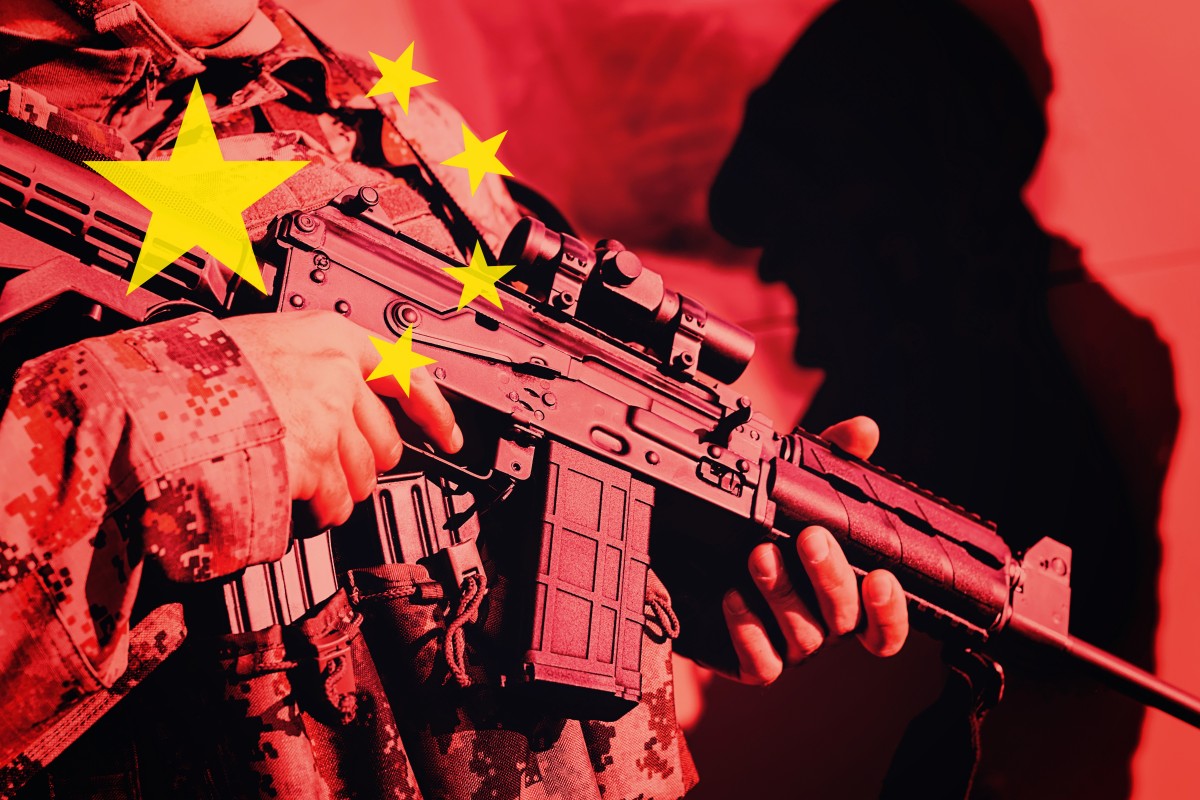




 CHINDIA ALERT: You'll be living in their world, very soon