Archive for ‘Beijing’

18/05/2019

Chinese passenger tries to smash high-speed train window to ‘get some air’

  • Man hits glass with emergency hammer because ‘he had been drinking and felt ill’
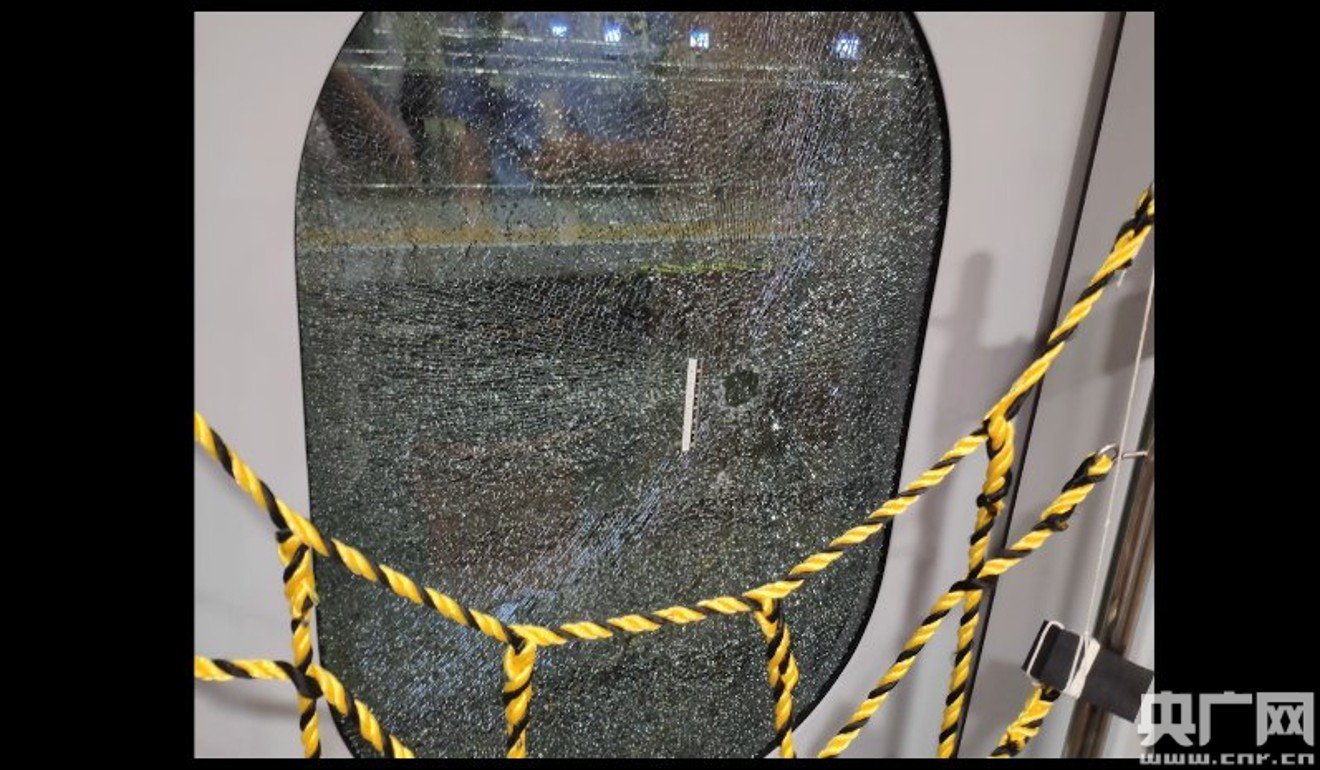
The train passenger tried to smash a hole in the door glass to let in some fresh air, according to Chinese media. Photo: CNR
Chinese railway police detained a passenger after he tried to smash the door window of a high-speed train to “get some fresh air” according to mainland media reports.
The 30-year-old man, identified only by his surname Xu, said he tried and failed to unlock the door and then decided to break the glass with an emergency hammer because he had been drinking and felt sick, China National Radio reported on Saturday.
Xu tried to smash the door after mechanical failure had forced the Beijing-bound train from Shanghai to stop at the main railway station in Jinan in Shandong province on Tuesday.
He said the train had been stranded for half an hour when he became impatient and wanted to have some fresh air, according to the report.
A Chinese train passenger attacked the door glass of a high-speed train as it was stranded in Jinan. Photo: CNR

Surveillance footage showed the man pulling on the door handle before hitting the glass with an emergency hammer mounted on a train wall.

Train staff quickly intervened and stopped Xu, who was taken into police custody after the train arrived in Beijing.

“I just smashed it once. I assumed this would allow air to come in, so I stopped,” Xu was quoted as saying.

“I felt unwell at that moment because I had been drinking at lunchtime. I did it on impulse.”

He was detained for allegedly intentionally damaging property, an offence that could lead to up to three years in jail.

The incident comes just a few months after a woman

tried to use an emergency hammer

to smash the window of a moving train on the way from Beijing to Qingdao.

The woman had been arguing with her boyfriend and hit the window in a fit of pique, according to media reports.
She was charged with criminal damage and sentenced to five days in detention.
Source: SCMP
18/05/2019

IMF’s Lagarde says U.S.-China trade war could be risk for world economic outlook

TASHKENT (Reuters) – The trade war between the United States and China could be a risk to the world economic outlook if it is not resolved, International Monetary Fund Managing Director Christine Lagarde told Reuters on Friday during a visit to Uzbekistan.

“Obviously, the downside risk that we have is continued trade tensions between the United States and China,” Lagarde said, referring to the IMF’s world economic outlook.

“And if these tensions are not resolved, that clearly is a risk going forward.”

The IMF last month cut its growth forecast for 2019 to 3.3%, down from the 3.5% it had previously predicted.

It warned at the time that growth could slow further due to trade tensions and a potentially disorderly British exit from the European Union.

“But we expect that at the end of 2019 and in 2020 it will bounce back,” Lagarde said of the world economic outlook on Friday.

The United States infuriated China this week when it announced it was putting Huawei Technologies Co Ltd, the world’s biggest telecoms equipment maker, on a blacklist that could make it hard to do business with U.S. companies.

On Friday Beijing suggested a resumption of talks between the world’s two largest economies would be meaningless unless Washington changes course.

Source: Reuters

16/05/2019

Trump administration hits China’s Huawei with one-two punch

WASHINGTON/NEW YORK (Reuters) – The Trump administration on Wednesday took aim at China’s Huawei Technologies Co Ltd, banning the firm from buying vital U.S. technology without special approval and effectively barring its equipment from U.S. telecom networks on national security grounds.

Taken together, the two moves threaten Huawei’s ability to continue to sell many products because of its reliance on American suppliers, and represents a significant escalation in the U.S. government’s worldwide campaign against the company.

The steps also come at a delicate time in relations between China and the United States as the world’s two largest economies ratchet up tariffs in a battle over what U.S. officials call China’s unfair trade practices.

Washington believes the handsets and network equipment for telecommunications companies made by Huawei could be used by the Chinese state to spy on Americans.

Huawei, which has repeatedly denied the allegations, said in a statement that “restricting Huawei from doing business in the U.S. will not make the U.S. more secure or stronger; instead, this will only serve to limit the U.S. to inferior yet more expensive alternatives, leaving the U.S. lagging behind in 5G deployment.”

“In addition, unreasonable restrictions will infringe upon Huawei’s rights and raise other serious legal issues.”

The ban on U.S. suppliers, which appears similar to one on Huawei rival ZTE Corp. last year, could hit the shares of Huawei’s biggest U.S. suppliers, including chipmakers Qualcomm Inc and Broadcom Inc (AVGO.O).

In the first action taken on Wednesday, President Donald Trump signed a long-awaited executive order declaring a national emergency and barring U.S. companies from using telecommunications equipment made by firms posing a national security risk.

The order invoked the International Emergency Economic Powers Act, which gives the president the authority to regulate commerce in response to a national emergency that threatens the United States. It directs the Commerce Department, working with other government agencies, to draw up an enforcement plan by October.

Members of Congress said Trump’s order was squarely aimed at Chinese companies like Huawei, which generated $93 billion in revenue last year and is seen as a national champion in China.

“China’s main export is espionage, and the distinction between the Chinese Communist Party and Chinese ‘private-sector’ businesses like Huawei is imaginary,” Republican Senator Ben Sasse said.

ENTITY LIST

Soon after the White House announced the order had been signed, the Commerce Department said it had added Huawei and 70 affiliates to its so-called Entity List – a move that bans the telecom giant from buying parts and components from U.S. companies without U.S. government approval.

U.S. officials told Reuters the decision would make it difficult, if not impossible, for Huawei, the largest telecommunications equipment producer in the world, to sell some products because of its reliance on U.S. suppliers. It will take effect in the coming days.

Commerce Secretary Wilbur Ross said in a statement Trump backed the decision that will “prevent American technology from being used by foreign owned entities in ways that potentially undermine U.S. national security or foreign policy interests.”

With Huawei on the Entity List, U.S. suppliers will need to apply for licenses to provide the Chinese company with anything subject to U.S. export control regulations. Obtaining such licenses will be difficult because they will have to show the transfer of items will not harm U.S. national security, said John Larkin, a former export control officer in Beijing for the Commerce Department.

The United States in January unsealed a 13-count indictment against Huawei accusing the company and its chief financial officer of conspiring to defraud global financial institutions by misrepresenting Huawei’s relationship with a suspected front company that operated in Iran.

The indictment was unsealed a month after CFO Meng Wanzhou was arrested in Canada on a U.S. warrant for her role in the alleged fraud. Meng, who maintains her innocence, is fighting extradition.

5G NETWORKS

Reuters reported on Tuesday that Trump was expected to sign his long-awaited executive order this week. The order does not specifically name any country or company, but U.S. officials have previously labeled Huawei a “threat”.

The United States has been actively pushing other countries not to use the Chinese company’s equipment in next-generation 5G networks that it calls “untrustworthy.” In August, Trump signed a bill that barred the U.S. government from using equipment from Huawei and another Chinese provider, ZTE Corp.

ZTE was added to the Commerce Department’s Entity List in March 2016 over allegations it organised an elaborate scheme to hide its re-export of U.S. items to sanctioned countries in violation of U.S. law.

The restrictions prevented suppliers from providing ZTE with U.S. equipment, potentially freezing the company’s supply chain, but the restrictions were suspended in a series of temporary reprieves, allowing the company to maintain ties to U.S. suppliers until it agreed to a plea deal a year later.

The status of Huawei and ZTE has taken on new urgency as U.S. wireless carriers rollout 5G networks.

While the big wireless companies have already cut ties with Huawei, small rural carriers continue to rely on both Huawei and ZTE switches and other equipment because they tend to be cheaper. Trump’s order applies to future purchases and does not address existing hardware, officials said Wednesday.

Source: Reuters

13/05/2019

Beijing’s new airport completes 1st passenger plane test flight

BEIJING, May 13 (Xinhua) — Beijing Daxing International Airport completed its first test flight of passenger planes as four aircraft landed safely on the runway Monday morning.

China Southern Airlines, China Eastern Airlines, Air China and Xiamen Airlines sent their flagship models A380, A350-900, B747-8 and B787-9, respectively, for the test.

“The test shows that the new airport has now turned its focus from infrastructure construction to operation preparations,” said Wan Xiangdong, chief pilot of Civil Aviation Administration of China.

The test followed the airport’s first flight of verification planes on Jan. 22 this year. The airport is scheduled to take low-visibility flight test in August and go into operation before Sept. 30.

Located 46 km south of downtown Beijing, the new airport is aimed at taking pressure off the overcrowded Beijing Capital International Airport in the northeastern suburbs. It sits at the junction of Beijing’s Daxing District and Langfang, a city of neighboring Hebei Province.

It is expected to handle 45 million passengers annually by 2021 and 72 million by 2025.

Source: Xinhua

13/05/2019

China’s top diplomat Yang Jiechi to visit Japan ahead of possible Xi Jinping trip

  • Three-day visit comes ahead of Chinese President’s planned attendance at G20 summit in Osaka next month
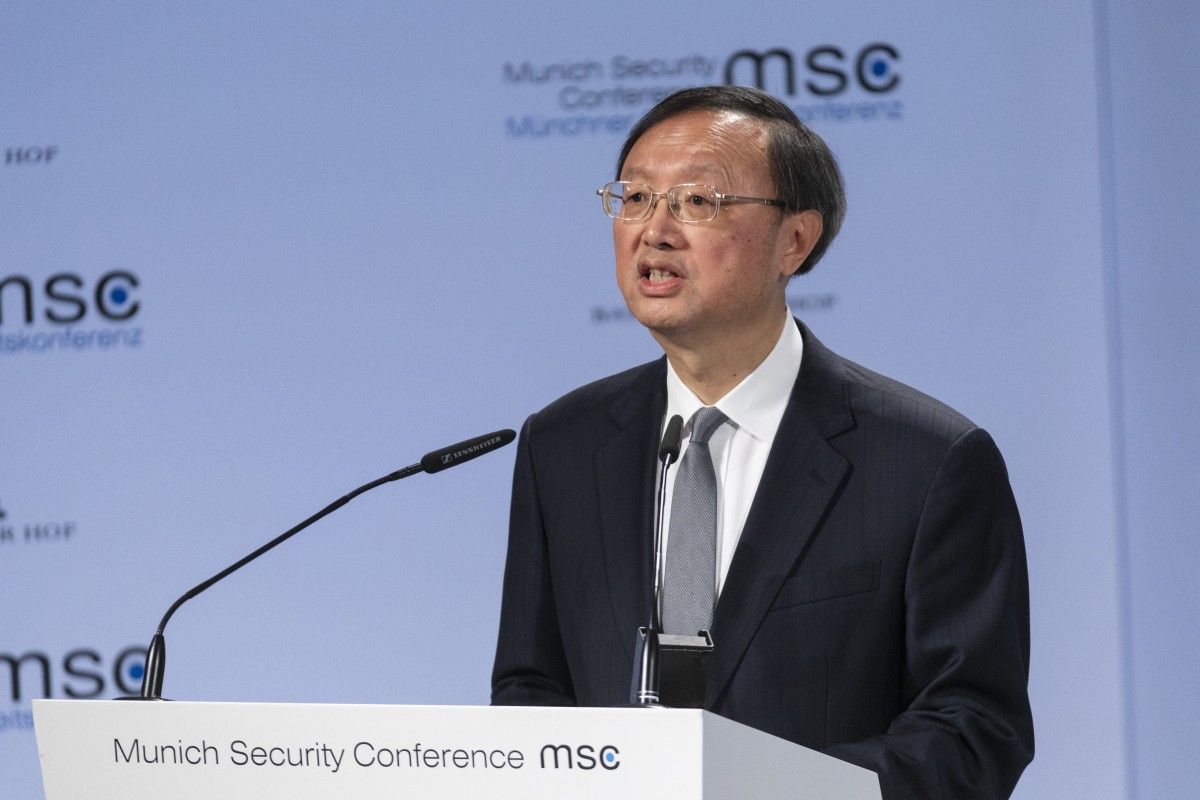
Yang Jiechi’s three-day visit to Japan starts on Thursday. Photo: Bloomberg
China’s top diplomat Yang Jiechi will visit Japan for three days from Thursday, the Chinese Foreign Ministry said on Monday.
The visit is likely to work out details of President Xi Jinping’s planned visit to Japan for this year’s summit of the Group of 20 major economies in Osaka in late June, sources familiar with bilateral relations had said last week.
Yang, a member of the Political Bureau of the Chinese Communist Party’s Central Committee, is likely to meet the country’s national security adviser Shotaro Yachi on Thursday and Prime Minister Shinzo Abe the following day, according to the sources.
Xi’s visit, if it goes ahead, would be his first since he came to power in 2013 and the first by a Chinese head of state since Hu Jintao in November 2010.
Yang and Yachi will also hold the sixth China-Japan high-level political dialogue.
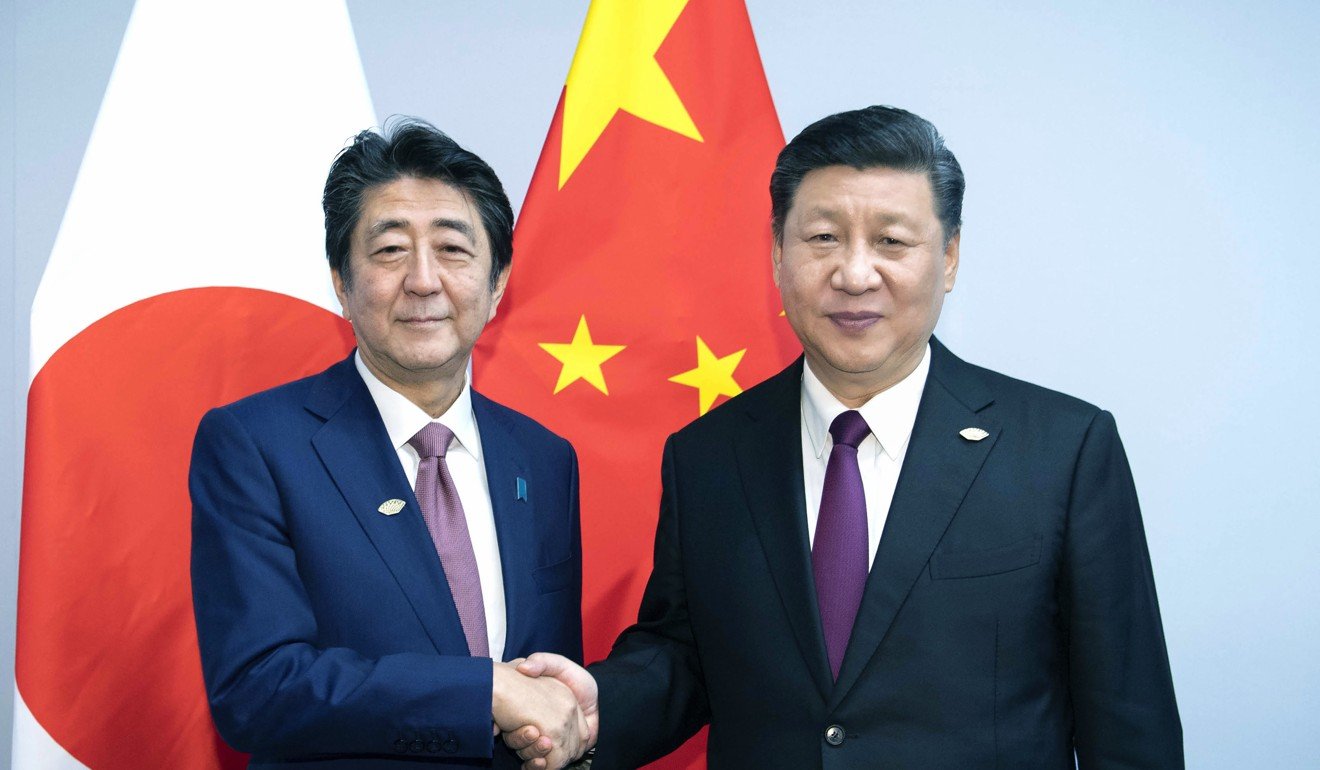
Chinese President Xi Jinping and Japanese Prime Minister Shinzo Abe pictured at the G20 summit in Argentina last year. Photo: AP

At this dialogue, which is an annual consultation plan agreed on by the two sides, the two sides will exchange views on China-Japan relations and issues of common concern, Chinese Foreign Ministry spokesperson Geng Shuang said at a regular press briefing.

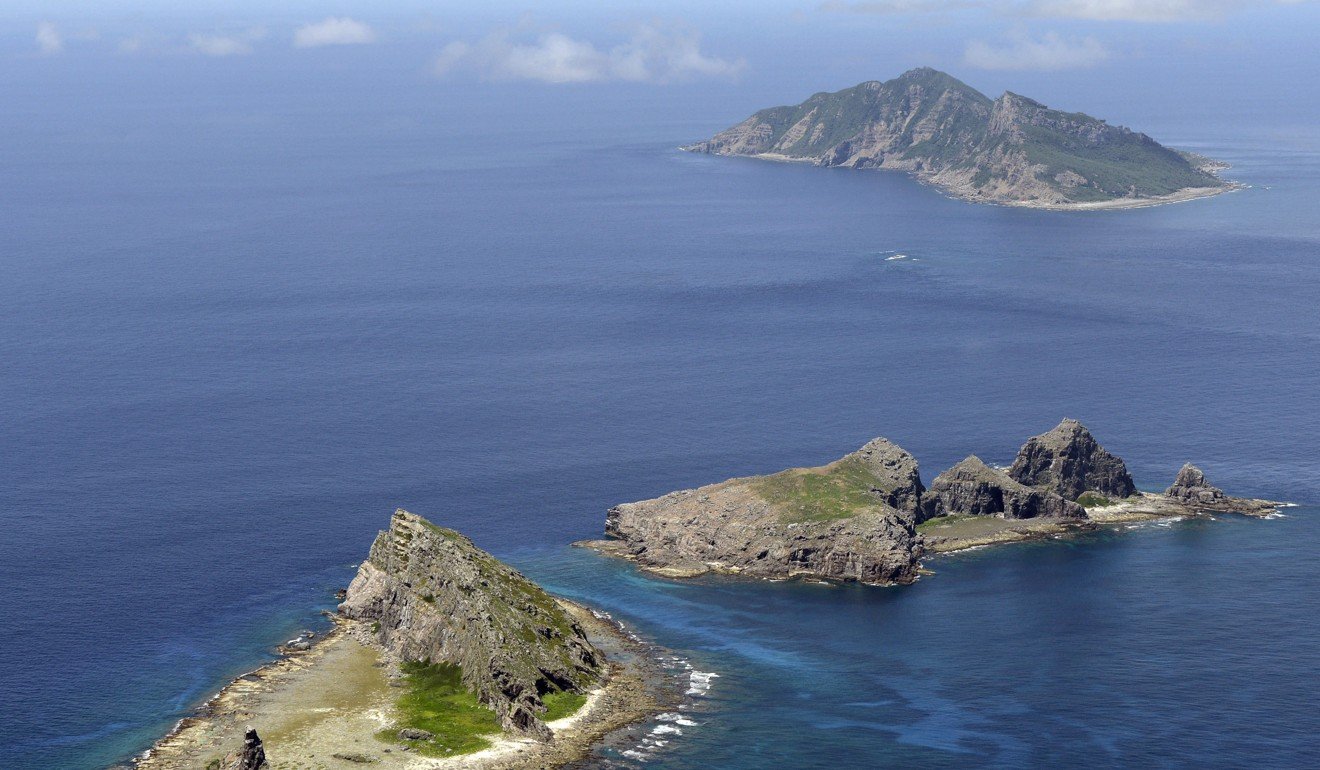
For years, the two neighbours have been mired in a territorial dispute over the Senkaku Islands in the East China Sea. The group of uninhabited islets, which are called Diaoyu in Chinese, are controlled by Japan but claimed by China.

But Sino-Japanese ties have been markedly improving recently, with 2018 – the 40th anniversary of the signing and entering into force of the bilateral Treaty of Peace and Friendship – serving as an incentive to forge better relations.

The dispute over the Senkaku – or Diaoyu – Islands is a long-standing barrier to better relations. Photo: Kyodo

In an interview with Japanese media, Chinese vice foreign minister Kong Xuanyou said the relationship between China and Japan has just returned to normal after going through ups and downs over the years, and both sides need to treasure the development.

“China is willing to work with Japan to further promote China-Japan relations,” he was quoted as saying in a Chinese foreign ministry transcript.

Kong also rejected suggestions that ties between China and Japan have become closer because of the China-US trade war – which pushed Beijing to seek support from its neighbours.

“Putting the relations between China, Japan and the US at opposite from each other is a zero-sum game and cold war mentality. China does not agree with it,” he said. “The friendly relationship among these two nations can be developed in parallel. This is welcomed by the region and the world”.

Source: SCMP

12/05/2019

Various activities feature 1000-day countdown to Beijing 2022

BEIJING, May 11 (Xinhua) — With the official 1000-day countdown timer of the Beijing 2022 Olympic Winter Games having been launched at Beijing’s iconic Olympic Park on Friday evening, various commemorative activities related to winter sports and Olympic culture were held across China on Saturday.

At Beijing’s Shijingshan District, where the 2022 Beijing Organizing Committee of Winter Olympic and Paralympic Games (BOCWOG) located, Gaojinglu community was named as the first Winter Olympic Community for its efforts in developing winter sports among the residents.

Supported by the community since 2018, people living in the area were provided with the chances to experience winter sports like skating and curling. Many have shown great interests and established their own teams.

In the Yanqing District, which serves as one of the three competition zones of Beijing 2022, lectures about the Games were taken into schools and students are learning more about Olympic culture through the course.

At Zhangjiakou competition zone in Hebei province, a video which tells the story of Zhangjiakou engaging in the bidding and preparing work of Beijing 2022 came to the public.

Except for Beijing and Hebei, other parts of China also engaged in the milestone moment of Beijing 2022. In Altay of northwestern Chinese Xinjiang Uygur Autonomous Region, a skiing competition was held to promote Olympic culture in the area.

Altay has a long history of skiing as discoveries have shown that ancient people there already skied 12,000 years ago. In recent years, the local government has spent a lot of efforts in promoting winter sports, especially in schools. Over 9,000 students have benefited from a plan which aims to bring PE lessons to the skiing resorts.

Source: Xinhua

12/05/2019

WMO “honor day” kicks off at horticultural expo

CHINA-BEIJING-HORTICULTURAL EXPO-THEME EVENT-WMO HONORARY DAY (CN)

People make satellite models in ecological and meteorological house during the “World Meteorological Organization Honorary Day” theme event held as part of the Beijing International Horticultural Exhibition in Yanqing District in Beijing, capital of China, May 11, 2019. (Xinhua/Ju Huanzong)

BEIJING, May 11 (Xinhua) — World Meteorological Organization (WMO) “honor day” kicked off at the ongoing International Horticultural Exhibition in Beijing Saturday.

Zhang Wenjian, assistant secretary-general of the WMO, said a majority of the natural disasters in 2018 related to extreme weather and environmental degradation, which affected nearly 62 million people.

As global warming and climate change have increasing influence on the society and economy, WMO is devoted to providing operational, accessible and authoritative information and service on the changing earth system, Zhang told a press conference on the “honor day” event.

The ecological and meteorological exhibition area at the expo was supported jointly by the WMO, China Meteorological Administration and Beijing Meteorological Service, focusing on the relationship between meteorology, horticulture and life.

The exhibition area not only interpreted how climate change closely related to human civilization but also established the eco-meteorological observing station which was capable of providing real-time observation data on meteorology.

Source: Xinhua

11/05/2019

Top political advisor meets with media representatives across Taiwan Strait

CHINA-BEIJING-WANG YANG-MEDIA REPRESENTATIVES ACROSS TAIWAN STRAIT (CN)

Wang Yang, a member of the Standing Committee of the Political Bureau of the Communist Party of China Central Committee and chairman of the Chinese People’s Political Consultative Conference National Committee, meets with representatives of media outlets from both sides of the Taiwan Strait, who attended a media summit, in Beijing, capital of China, May 10, 2019. (Xinhua/Yao Dawei)

BEIJING, May 10 (Xinhua) — Top political advisor Wang Yang Friday met with representatives of media outlets from both sides of the Taiwan Strait.

The trend of the times that the cross-Strait relations move forward in the new era cannot be obstructed by anyone or any forces, said Wang, chairman of the Chinese People’s Political Consultative Conference National Committee, while meeting with the representatives who attended a media summit in Beijing.

Media outlets across the Strait shoulder the social responsibility of maintaining and promoting the peaceful development of cross-Strait relations, said Wang, also a member of the Standing Committee of the Political Bureau of the Communist Party of China Central Committee.

He called on the media on both sides to continue giving voice to pushing forward the peaceful development of cross-Strait relations and advancing the process toward the peaceful reunification of the motherland and to make their contributions to realizing the rejuvenation of the Chinese nation.

Source: Xinhua

11/05/2019

China, BiH, Serbia to remake classic movie “The Bridge”

SARAJEVO, May 10 (Xinhua) — An agreement has been signed in Beijing on recording a remake of the 1969 movie “The Bridge” by the Sarajevo Film Center (SFC), Shanghai Huahua Culture Media Co. Ltd and Dandelion Productions Inc. of Serbia, SFC Director Jasmin Durakovic told Xinhua on Friday.

Directed by Hajrudin “Siba” Krvavac, “The Bridge” tells the story of partisans during World War II who send an elite team of explosive experts to blow up a strategically important bridge.

Durakovic emphasized that all movies directed by Krvavac are precious cultural assets in the Bosnia and Herzegovina’s (BiH) film archives.

He hopes that the remake of “The Bridge” — and possibly also of “Walter Defends Sarajevo” — will present the culture of BiH and the region through the global language of the film to today’s audiences.

Durakovic said he was highly confident that the remake will attract audiences in the countries of the former Yugoslavia, in other European countries and even in the United States.

In a telephone interview with Xinhua, Huahua Chief Executive Officer Kefei Wang, said his company will use cutting-edge film technology to present this period of history and its heroes “so as to revitalize the classics and live up to the profound expectations of the people of China, Serbia, and Bosnia and Herzegovina for movies.”

Production on the remake will begin in early 2020.

Source: Xinhua

11/05/2019

China’s mothers say no to more babies, they can’t afford them

  • Birth rate continues to fall three years after one-child policy was relaxed
  • Survey finds high cost of raising children biggest deterrent to second baby
Chinese mothers say financial pressures are stopping them from having another child. Photo: Shutterstock
Half of China’s working mothers do not want a second child, mainly because of financial pressures, a survey released ahead of Mother’s Day has found.
Another 40 per cent said they hoped to have a second child, but dared not to, according to the 2019 working mothers’ living condition survey by Chinese recruitment website Zhaopin.com, which polled 8,739 women over the past two weeks.
The biggest obstacle deterring the mothers from having a second child was economic pressure, with 85 per cent saying they could not afford the high cost of raising children.
China’s low birth rate has been a top concern for the government since it introduced a universal two-child policy in 2016. After decades of a rigidly enforced restriction on couples to have only one child, the number of newborns has not risen as expected.
Births across the country have continued to fall over the past three years, from 17.86 million in 2016, to 17.23 million in 2017, and 15.23 million last year, according to data from the National Bureau of Statistics.
Social demography professor Yang Juhua, from the Centre for Population and Development Studies at Renmin University of China in Beijing, said there were several factors influencing Chinese women’s decision to stick to one child, despite the policy relaxation.

“People are reluctant to give birth because of two reasons: no money to raise kids and no people to look after them, especially when the babies are too young to be admitted to kindergartens,” she said.

The economic stress of raising a child was not about basic living costs, but the expense of extracurricular courses and tuition fees at elite private schools, she said.
“Parents have to send their kids to learn various subjects in order to keep up with their peers amid fierce competition. So the kids are called cash-smashers.”
‘Burden’ of homework leaves kids sleep-deprived Doris Ding, a mother of an eight-year-old boy in Shanghai, said she decided years ago not to have another child.
The senior manager at an audit firm and her husband, an IT engineer at a technology company, pay more than 200,000 yuan (US$30,000) a year for their son to attend an international primary school. His after-school classes, which include piano and public speaking, cost another 50,000 yuan a year.
“So it’s out of our reach to raise a second kid,” Ding said.
Yang said that for many families the second major challenge was an inability to find relatives or other trustworthy people to take care of their children while they were at work.
“Grandparents are too old or not strong enough to do that. We often hear complaints from old people that they are tired of raising the first kid and don’t want to help raise the second one. Otherwise, they don’t have a personal life at all for many years,” she said.
Chinese database lists whether 1.8 million women are ‘BreedReady’
Nurseries providing places for children under the age of three was far from sufficient to resolve the problem, Yang said.
On Thursday, China’s executive State Council proposed a raft of policies aimed at easing the childcare burden for new parents, including encouraging companies to set up day care services for children aged three and under, as well as extended childcare and maternity leave.
According to research by Zhu Qin, a professor from the Centre for Population and Development Policy Studies at Shanghai’s Fudan University, China’s total fertility rate is just 1.54 per woman, putting the country among the lowest birth rates in the world.
As well as the economic factors, Zhu said women were not willing to give birth because of the lack of support from society.
The latest survey from Zhaopin.com showed only 8 per cent of companies had designated rooms for mothers and infants, while 40 per cent of working mothers said they did not take their legally entitled maternity or breastfeeding leave.
“In big cities, white-collar women face the challenge that their career progress will be affected by having babies,” Zhu said.
Source: SCMP
Law of Unintended Consequences

continuously updated blog about China & India

ChiaHou's Book Reviews

continuously updated blog about China & India

What's wrong with the world; and its economy

continuously updated blog about China & India