Archive for ‘Beijing’s authority’

29/05/2020

Hong Kong: What is the BNO and what does the UK move mean?

A Petitioner is seen holding up a BNO passport outside the British Consulate in Hong Kong on August 21, 2019Image copyright GETTY IMAGES
Image caption Around 300,000 in Hong Kong hold a British National (Overseas) passport

The UK has said it is considering more rights for holders of a special passport issued to some people in Hong Kong.

The territory, which used to be a British colony, was handed back to China in 1997. Anyone born before then is eligible to apply for a British National (Overseas) passport, known as a BNO.

If China implements a controversial proposed security law, people holding the BNO, could get a “path to citizenship”, the UK said.

What is the BNO and who has one?

The BNO passport is essentially a travel document that does not carry citizenship rights with it – although you are entitled to some consular assistance outside of Hong Kong and China with it.

It was issued to people in Hong Kong by the UK before Hong Kong was handed over to China.

Around 300,000 people currently hold a BNO passport, allowing them to visit the UK visa-free for six months. An estimated 2.9 million people are eligible for a BNO passport, said the British Consulate General in Hong Kong.

Though it gives the passport holder the right to remain in the UK for up to six months, it doesn’t automatically allow them to reside or work there. They also aren’t allowed to access public funds, including things like government benefits.

BNO holders cannot pass this status on to their children.

What is the UK proposing – and why?

China on Thursday formally approved a plan to impose controversial national security legislation in Hong Kong. It could go into effect as early as the end of June.

Hong Kong was handed back to China, on a number of conditions. These include the region’s high level of autonomy and maintaining certain rights like freedom of speech that do not exist in mainland China.

But this new plan, if put into law, would make it a crime to undermine Beijing’s authority in Hong Kong, and many are concerned it could end Hong Kong’s unique status.

The move triggered a wave of  criticism around the world, with many – including Chris Patten, the last governor of Hong Kong – urging the UK to stand up for the territory.
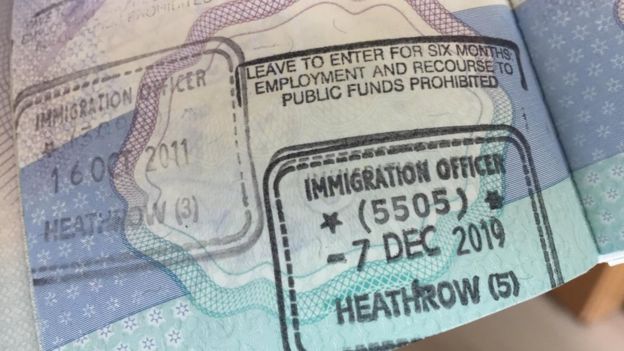
A BNO passport
Image caption Under current rules, BNO holders are allowed to stay for six months

Later on Thursday, UK Foreign Secretary Dominic Raab said the country would move to scrap the six-month stay limit for BNO holders if China goes on to officially implement the law.

Mr Raab said that BNO passport holders would be allowed to “apply to work and study for extendable periods of 12 months and that will itself provide a pathway to future citizenship”.

What difference could it make?

As a way to help people in Hong Kong who would rather not stay there if the new security laws are implemented, it might prove more symbolic.

For starters only a small percentage of people in Hong Kong currently have a BNO.

But also, the people who the security laws are aimed at – the young anti-mainland protesters who have been getting into violent confrontations with police for months – are not likely to be eligible for the BNO because of their age.

Additionally, though the BNO gives the passport holder the right to visit the UK for up to a year potentially, it’s not clear what other benefits the extension might bring, or if the UK would make it any easier administratively for those already in the country to apply for work or study.

On social media, some Hong Kongers dismissed it as a gesture that amounted to little more than a 12-month tourist visa.

Effectively, it means that those who come to stay in the UK for a year, and who have the funds to be able to extend this enough, could eventually be eligible to apply for citizenship.

It cuts out some of the administrative hoops BNO holders would have had to jump through before this move if they wanted this path.

How has China reacted?

China has firmly opposed the move by the UK, saying it is a violation of the handover agreement that stipulates BNO passport holders do not enjoy UK residency.

China has repeatedly warned Britain to stay out of its affairs in Hong Kong.

The Chinese ambassador to the UK Liu Xiaoming had previously accused some British politicians of viewing Hong Kong “as part of the British empire”.

Source: The BBC
05/08/2019

Hong Kong protests: Police and protesters fight running battles

Police in Hong Kong have been fighting running battles with activists in a third consecutive day of protests, after a call for a general strike caused widespread disruption on Monday.

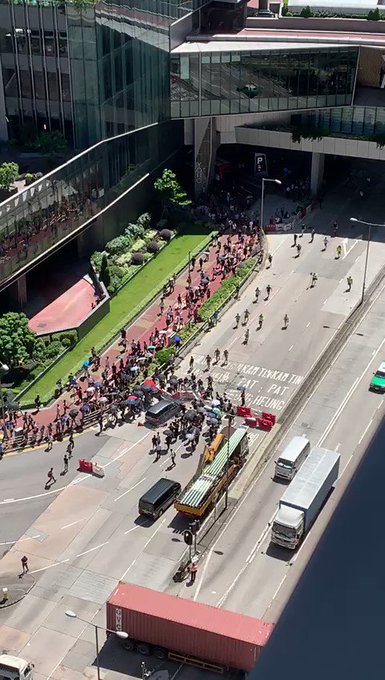
Protesters blocked roads and paralysed train services at peak times on a day of action across the city.

More than 200 flights were cancelled as the protests entered their ninth week.

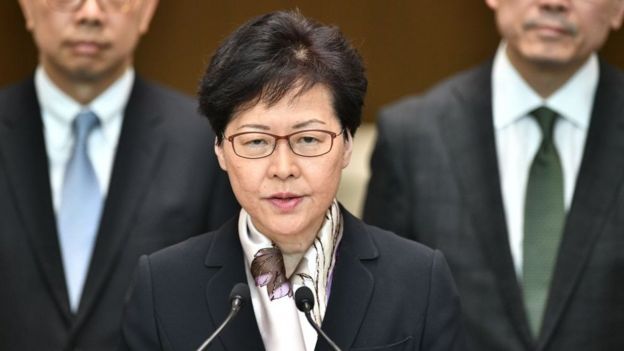
Hong Kong’s leader, Carrie Lam, has pledged to restore law and order, rejecting calls for her resignation.

Initially the demonstrations, which began on 9 June, focused on a controversial extradition law, which would have allowed the transfer of suspects to mainland China. However, the protests have now become a wider challenge to Beijing’s authority.

Ms Lam warned that Hong Kong was “on the verge of a very dangerous situation”.

Media caption Protests take place in Hong Kong for the ninth weekend – for and against the authorities

In her first media address in two weeks, Ms Lam said the protesters’ actions had challenged the principle of “one country, two systems” – the extra freedoms granted to Hong Kong when it was returned from British to Chinese rule in 1997.

She also accused activists of using the extradition bill as a cover for their real goals.

“We continue to allow these violent protesters to make use of the [extradition] bill to conceal their ulterior motives,” she said. “Those ulterior motives are going to destroy Hong Kong.”

Hong Kong Chief Executive Carrie Lam (C) speaks during a press conference in Hong Kong on August 5, 2019Image copyright GETTY IMAGES

The Chinese foreign ministry said no one should underestimate China’s resolve to safeguard the stability of Hong Kong, Reuters news agency reports.

What happened on Monday?

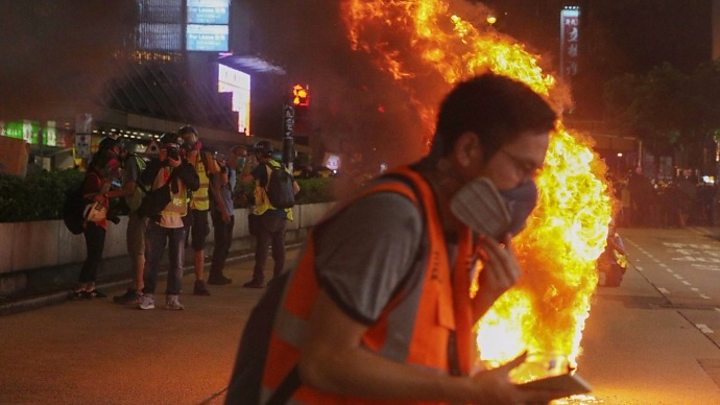
Police fired tear gas at several locations as protesters rallied into the night, setting fires and besieging police stations. In the North Point district, which has a reputation for pro-Beijing sympathies, men wielding long poles clashed with demonstrators before falling back.

More than 80 people were arrested, in addition to the 420 detained since 9 June. In that time, police said they had used more than 1,000 tear gas canisters and 160 rubber bullets.

Protest leaders had called for a general strike. While many people made it to work, in some areas protesters blocked trains from leaving stations and scuffled with commuters. Several lines of the Mass Transit Railway (MTR) were suspended for a time, and the Cross-Harbour Tunnel was also blocked.

One video circulating on Twitter reportedly showed a car in the district of Yuen Long forcefully hitting a barricade set up by protesters, injuring one person.

It is not clear how many joined the strike, but tens of thousands of protesters were out on the streets. Several shops and businesses were closed, including international fashion retailers like Topshop and Zara.

Hong Kong airport, one of the busiest in the world, said travellers should check its website and seek updates directly from the airlines.

Most of the cancelled flights were with local carriers Cathay Pacific and Hong Kong Airlines.

“The Airport Authority advises passengers… to proceed to the airport only when their seats and flight time have been confirmed,” the airport said in a statement.

What’s behind the Hong Kong protests?

The protests were initially sparked by a controversial bill that would allow China to extradite suspects from Hong Kong to the mainland.

Critics said it would undermine the territory’s judicial independence and could be used to target those who spoke out against the Chinese government.

Although the bill has now been suspended, demonstrators want it fully withdrawn.

Their demands have broadened to include an independent inquiry into alleged police brutality, Ms Lam’s resignation, and the dropping of riot charges linked to the protests.

Last week, more than 40 activists appeared in court charged with rioting. If convicted, they could be jailed for up to 10 years.

The Chinese army has so far stayed out of the dispute, but China’s top policy office in Hong Kong has previously condemned the protests, calling them “horrendous incidents” that have caused “serious damage to the rule of law”.

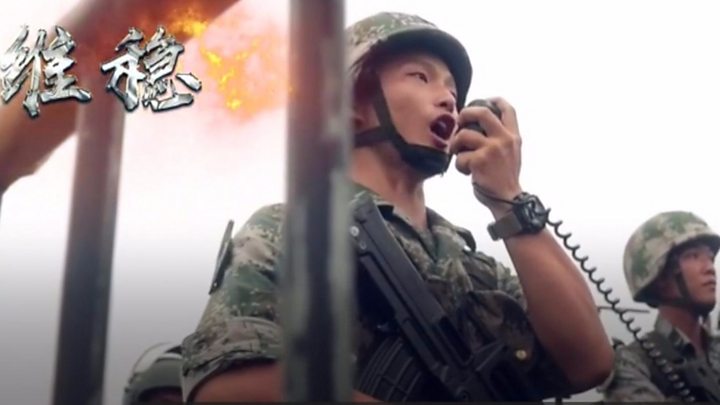
Unease rose last week when China’s army in Hong Kong posted a video on Chinese social media network Weibo showing soldiers conducting anti-riot drills.

Media caption The video shows a soldier using a loudspeaker to warn protesters
Source: The BBC
Law of Unintended Consequences

continuously updated blog about China & India

ChiaHou's Book Reviews

continuously updated blog about China & India

What's wrong with the world; and its economy

continuously updated blog about China & India