Archive for ‘Belt and Road Initiative (BRI)’

14/06/2019

Chinese, Afghan presidents pledge joint efforts to promote ties

KYRGYZSTAN-BISHKEK-CHINA-AFGHANISTAN-PRESIDENTS-MEETING

Chinese President Xi Jinping meets with Afghan President Mohammad Ashraf Ghani in Bishkek, Kyrgyzstan, June 13, 2019. (Xinhua/Xie Huanchi)

BISHKEK, June 13 (Xinhua) — Chinese President Xi Jinping and his Afghan counterpart, Mohammad Ashraf Ghani, met here Thursday, pledging joint efforts to promote bilateral relations.

Xi congratulated Afghanistan on the 100th anniversary of its independence and wished the country an early restoration of peace, stability and development.

China and Afghanistan are neighbors that enjoy traditional friendship and strategic partnership of cooperation, Xi said.

China is willing to deepen the mutually beneficial cooperation with Afghanistan in various sectors within the framework of the Belt and Road Initiative (BRI), steadily promote practical cooperation in economy and trade, and support the two countries’ enterprises to strengthen cooperation based on the principles of mutual benefit and win-win outcomes, he said.

Xi said China will, as always, continue to help Afghanistan build its capacity in fighting terrorism and maintaining stability.

He called on the Afghan side to continue to firmly support China in its fight against the terrorist force of East Turkistan Islamic Movement (ETIM).

The Chinese side firmly supports a comprehensive and inclusive Afghan-led and Afghan-owned peace and reconciliation process, and will continue to actively encourage and promote talks through various channels to help the Afghan people achieve internal dialogue, Xi said.

China supports Afghanistan and Pakistan to improve relations, enhance mutual trust and carry out cooperation, and is ready to further promote the China-Afghanistan-Pakistan trilateral cooperation, he said.

Ghani conveyed congratulations on the 70th anniversary of the founding of the People’s Republic of China.

By proposing to build a community with a shared future for mankind and supporting the economic globalization, China has set an example of promoting the construction of a new type of international relations in the 21st century, Ghani said.

Ghani thanked China for the active role it has played in his country’s peace process and in safeguarding regional peace and stability, adding that Afghanistan is committed to fighting, side by side with China, against the “three forces” including the ETIM.

Afghanistan stands ready to align its plan of reconstruction and development with the BRI and set up an even closer trade and economic partnership with China, Ghani added.

Source: Xinhua

03/06/2019

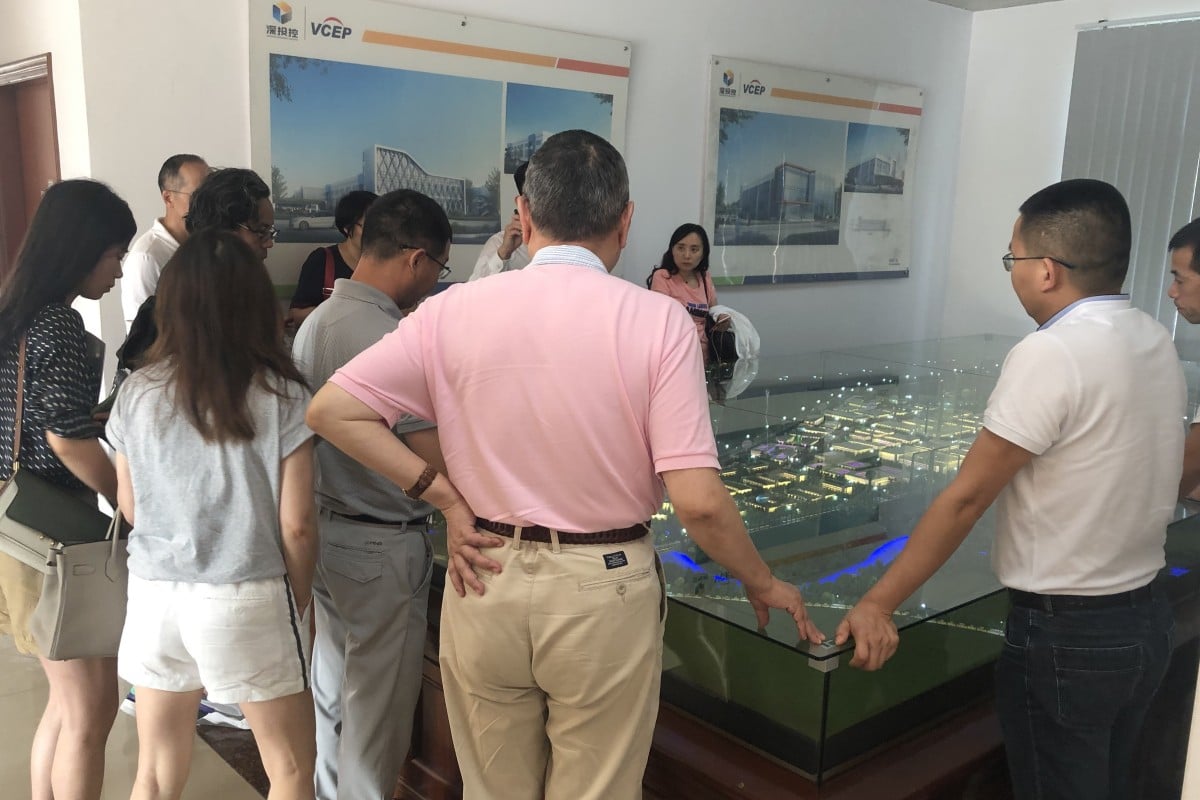
Inside China’s state-owned industrial park in Vietnam, Beijing’s image trumps trade war profits

  • China-Vietnam (Shenzhen-Haiphong) Economic and Trade Cooperation Zone is only Chinese state-owned industrial park in Vietnam
  • Venture has attracted increasing interest since start of US-China trade war, but operators say first duty is to support Xi Jinping’s trade initiative
A total of 16 of the 21 Chinese companies that have relocated to the China-Vietnam (Shenzhen-Haiphong) Economic and Trade Cooperation Zone did so after the start of the US-China trade war. Photo: Cissy Zhou
Until the middle of 2018, business was slow for the only Chinese state-owned industrial park in Vietnam, located in the northeastern manufacturing hub of Haiphong and wholly-owned by the Shenzhen city government.
US President Donald Trump’s tariffs on Chinese goods enacted last year changed that, with 16 of the 21 Chinese companies that have relocated to the China-Vietnam
(Shenzhen-Haiphong) Economic and Trade Cooperation Zone – many of them electronic device manufacturers – having done so since the start of the trade war.
However, profit-making was never the top priority for the park’s operators, which took over the reins from private investors after a series anti-Chinese riots raged through southern and central Vietnam in May 2014 forced the owners to abandon the project.
Protesters set fire to other industrial parks and factories and attacked Chinese workers, killing more than 20 people and injuring more than 100.

While any commercial organisation would be thrilled at the rush of manufacturing firms into Vietnam, for the park’s operators, the first duty is to showcase the Chinese government’s top international economic cooperation project, the Belt and Road Initiative.

[They] requested that we make this industrial park a showcase for the Belt and Road Initiative, so that when our top leaders pay state visits to Vietnam, they can come to our park Chen Xu

The Shenzhen arm of the State-owned Assets Control and Supervision Commission (SASAC), which oversees all city owned companies “has requested that we make this industrial park a showcase for the Belt and Road Initiative, so that when our top leaders pay state visits to Vietnam, they can come to our park”, Chen Xu, vice general manager at the Vietnam-China Economic and Trade Cooperation Park (VCEP), told the South China Morning Post.
The Chinese industrial enclave in Vietnam is part of a largely untold story of the trade war. The common narrative is that Chinese and international firms are fleeing China to avoid paying tariffs, setting up in low-cost hubs in Vietnam and elsewhere in Southeast Asia, but the picture is more nuanced than that.

In Haiphong, a part of the Chinese government is actively encouraging firms to come to Vietnam, armed with US$200 million in investment capital and with a vision of creating 30,000 jobs by the time the entire three-phase project is completed in 2022.

The then-private VCEP project was suspended after the 2014 riots, and after the local government in Vietnam said it would reclaim the land unless it resumed, the Shenzhen government “decided to fully take over the project”, according to VCEP general manager Zhang Xiaotao.

Newcomers must now buy land from the park and build their facilities themselves as the original buildings have already been rented out. Photo: Cissy Zhou

“Our evaluation then was that we could not make a profit out of this project. Then why did we still take it over? We have to serve the Belt and Road Initiative, as it is a national strategy,” Zhang added. “In fact, we surrender part of our profit [because] we sell the land [in the park] at a lower price and with better facilities than in neighbouring industrial parks. We are still in the red based upon the current land price. Our bosses understand the situation and ask us at least not to lose money.

“To make a profit is of course the priority of any company. But we are different, we are not a pure commercial project.”

Furthermore, it is a commonly held assumption that China is only open to losing low-end, labour intensive and high-polluting industry, as it looks to upgrade its manufacturing profile domestically. And while there is certainly truth to that as examples of low-value Chinese manufacturing plants litter Vietnam, VCEP is keen to avoid that persona.

Because of the need to maintain a relatively high-profile, the park does not welcome labour-intensive manufacturers such as shoes factories, because “it is bad for our image”, Chen said. Instead, it is focused on hi-tech engineering – exactly the kind of industry China is desperate to nurture on its own soil. In this sense, the Shenzhen-Haiphong facility represents something of a paradox.

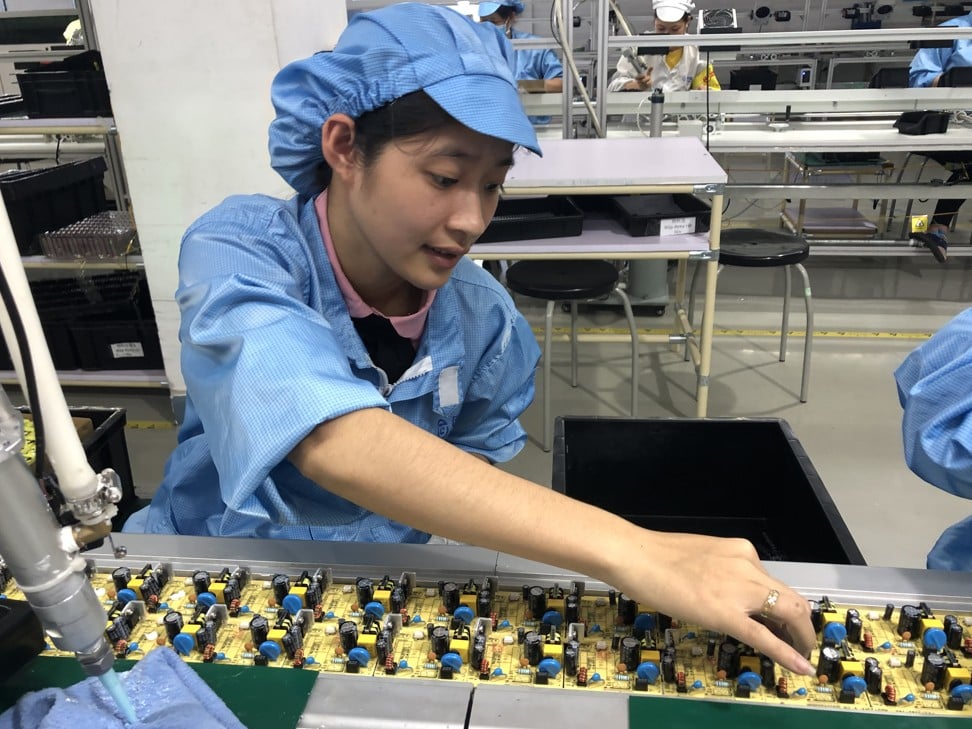
With 1,500 people currently employed, it is some way from reaching its 30,000 goal, but the number of Chinese manufacturers wanting to set up factories in the park is now about eight times what it was before the trade war started last July, according to both Chen and Zhang. Newcomers must now buy land from the park and build their facilities themselves as the original buildings have already been rented out.

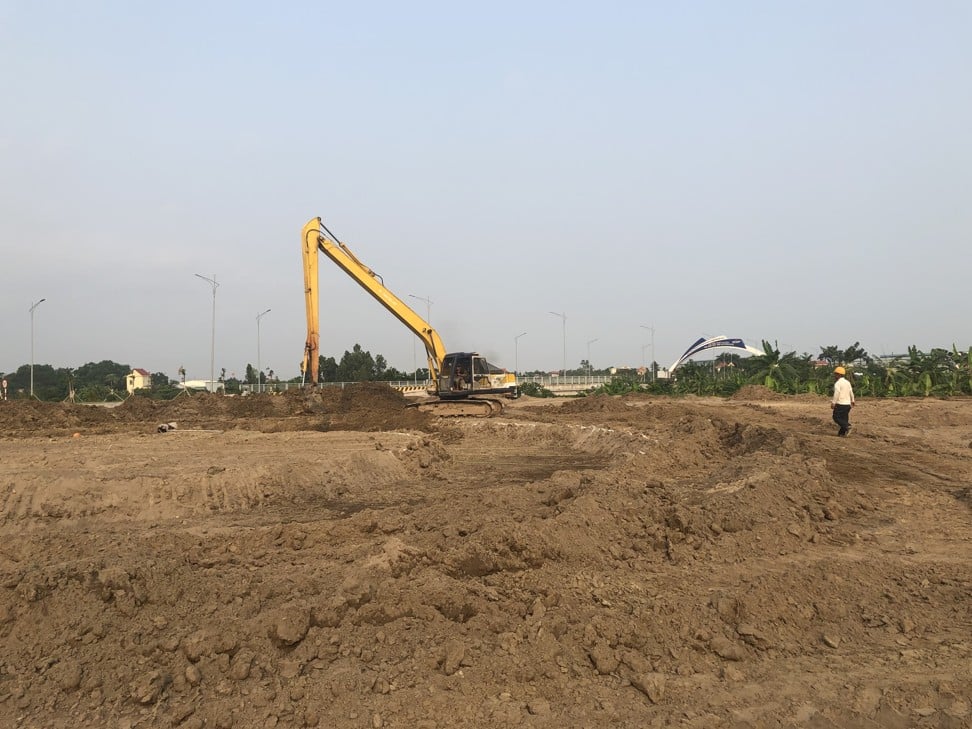
The relatively poor state of the surrounding infrastructure has also led VCEP to spend 30 million yuan (US$4.3 million) on a new road and bridge linking the park to the national highway in Haiphong.

“We could not wait for the Vietnamese government to build the infrastructure. They don’t have the money and their efficiency is low, so we built it ourselves,” said Li Meng, a member of VCEP’s Strategic Investment Department, who said it took less than nine months to finish the project.

The cost of the bridge was more than triple what it would have cost in China as “the efficiency is much lower here and we needed to import a lot of material from China due to lack of material in Vietnam”, Li added

“Every inch of the road and the bridge linking the national highway in Haiphong to VCEP is paved with renminbi.”

The Vietnam-China Economic and Trade Cooperation Park has a vision of creating 30,000 jobs by the time the entire three-phase project is completed in 2022. Photo: Cissy Zhou

TP-Link, the Shenzhen-based Chinese manufacturer of computer networking products, has rented a plant in the park and will start testing its equipment in July. The company, the world’s largest provider of consumer Wi-fi networking devices, has bought an additional 140,000 square metres of land in the park to expand production.

When TP-Link bought the land in late-2018, the price was between US$75 to US$80 per square metre, Chen said. Now, six months later, the price has risen to US$90 per square metre. This is indicative of the huge spike in interest in manufacturing in Vietnam caused by the trade war. Data from Vietnam’s Foreign Investment Agency shows that Vietnam attracted US$16.74 billion in foreign capital over the first five months of 2019, a year-on-year increase of 69.1 per cent. Of this, 72 per cent was invested in the processing and manufacturing sectors.

“Chinese local governments are, of course, unhappy with the increasing number of manufacturers who are relocating to Vietnam, but President Xi has clearly put forward the Belt and Road Initiative, which local governments cannot disturb. So local governments are not encouraging manufacturers to relocate, but they dare not try to stop them,” said vice-general manager Chen.

The Chinese inflow has also met with opposition in Vietnam, although far from the scale of the deadly riots of 2014.

“Some local [Vietnamese] media have been demonising China, with local prime time TV news talking about fake Chinese meat and poisoned food and hyping these cases. High-ranking Chinese officials have asked the Vietnamese government to guide public opinion in the right direction,” Chen added.

General manager Zhang added that the Vietnamese authorities have also become more sensitive to investment from China, a view reflected by Lam Thanh Ha, a senior lecturer at the Diplomatic Academy of Vietnam university which operates under the management of Vietnam’s Ministry of Foreign Affairs. “Overreliance on foreign cash in general and Chinese capital in particular may pose risks for Vietnam in terms of exchange rate fluctuations and external influences,” Ha warned.

“As production is generally dependent on transnational supply chains, foreign enterprises in Vietnam are often deeply engaged in both import and export processes, leaving the Vietnamese economy vulnerable to global economic conditions,” Ha added.

In a 

commentary published

by the Post earlier in May, Ha warned that Vietnam should avoid “becoming China’s dirty industrial backyard”, although Zhang had the opposite view.

“We are not shifting all our low-end industries to Vietnam, which would be irresponsible. China is trying to help Vietnam with sincerity, even if we don’t make a profit, we still want to proceed with the project,” he said.
Source: SCMP
29/05/2019

Short of war, US can’t help but lose to China’s rise in Asia, says think tank Lowy Institute

  • Lowy Institute’s 2019 Asia Power Index puts Washington behind both Beijing and Tokyo for diplomatic influence
  • Trump’s assault on trade has done little to stop Washington’s decline in regional influence, compared to Beijing, say experts
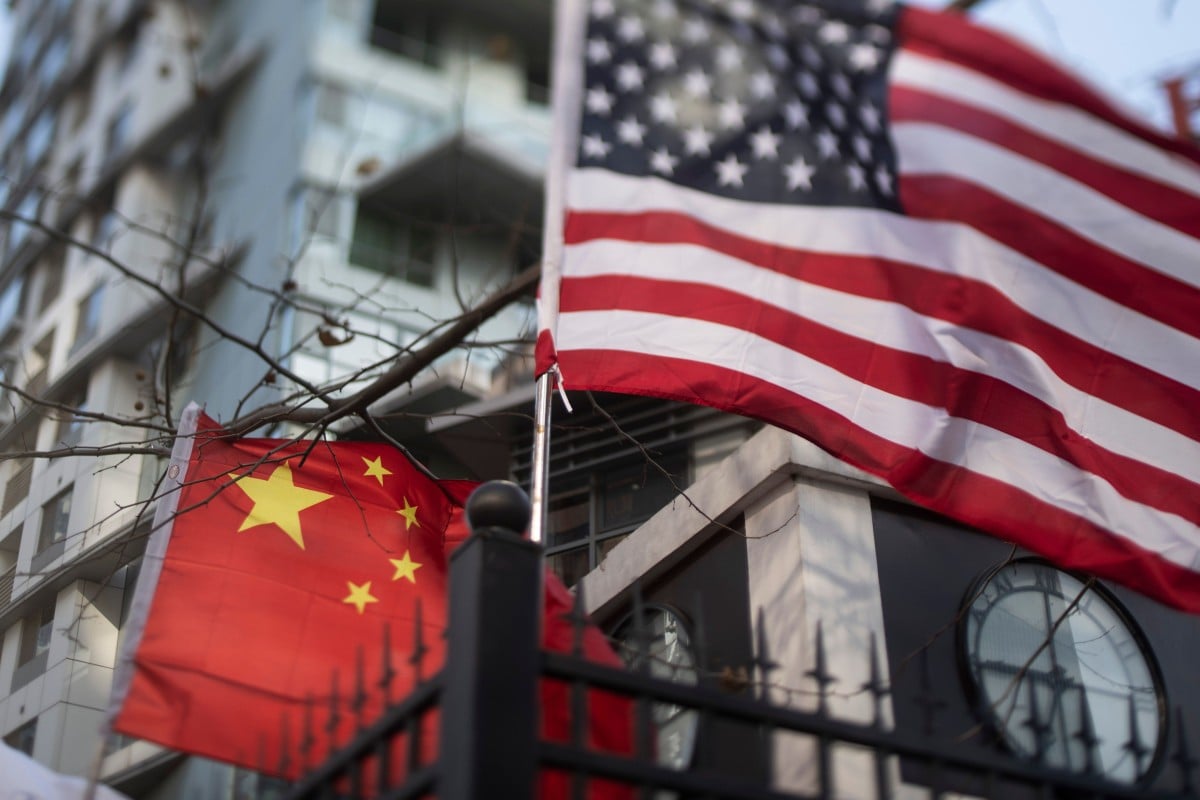
Chinese and US flags at an international school in Beijing. Photo: AFP
The 
United States

may be a dominant military force in Asia for now but short of going to war, it will be unable to stop its economic and diplomatic clout from declining relative to China’s power.

That’s the view of Australian think tank the Lowy Institute, which on Tuesday evening released its 2019 index on the distribution of power in Asia.

However, the institute also said China faced its own obstacles in the region, and that its ambitions would be constrained by a lack of trust from its neighbours.

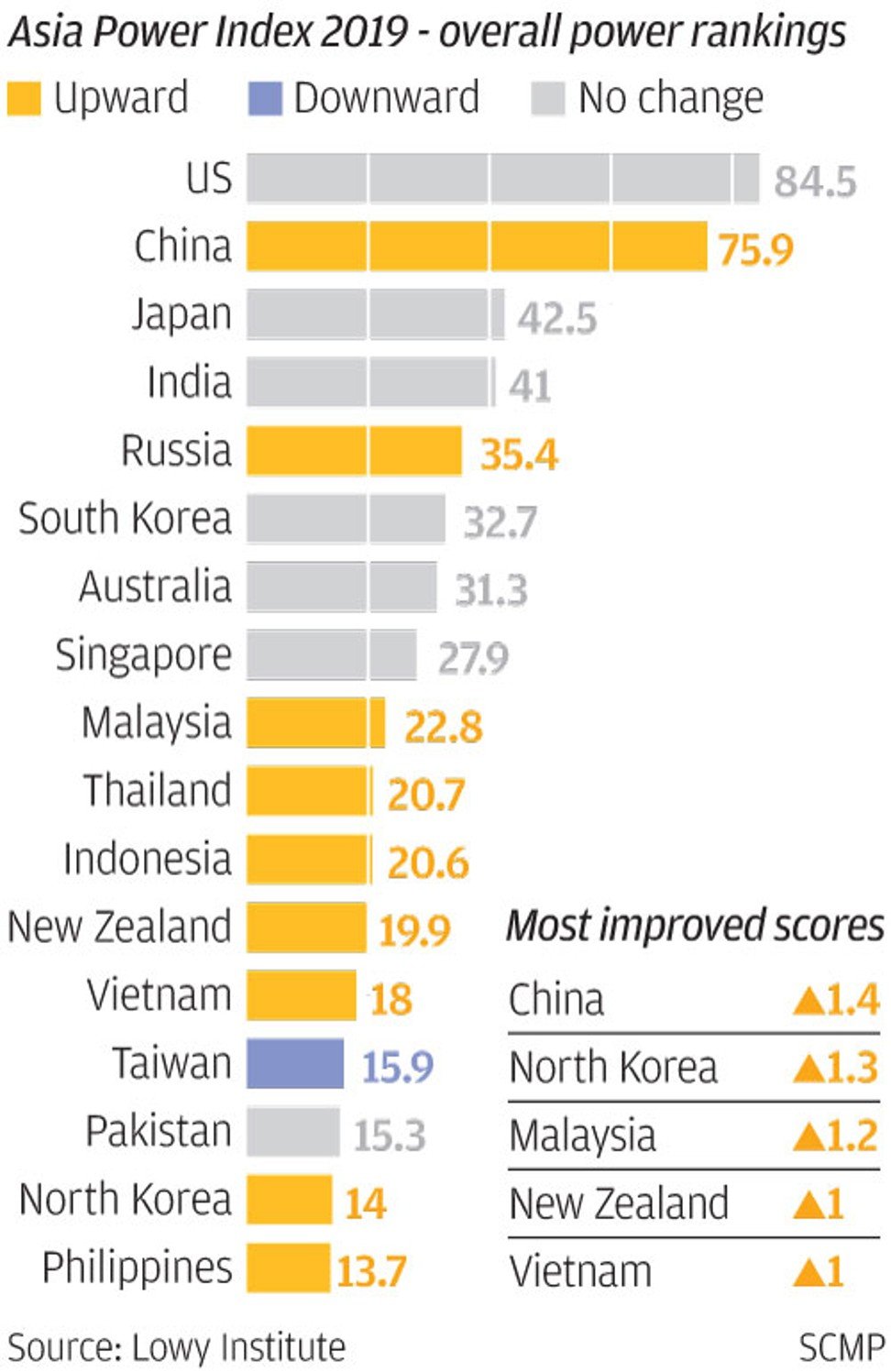
The index scored China 75.9 out of 100, just behind the US, on 84.5. The gap was less than America’s 10 point lead last year, when the index was released for the first time.
“Current US foreign policy may be accelerating this trend,” said the institute, which contended that “under most scenarios, short of war, the United States is unlikely to halt the narrowing power differential between itself and China”.
The Lowy Institute’s Asia Power Index. Click to enlarge.
Since July, US President

Donald Trump

has slapped tariffs on Chinese imports to reduce his country’s

trade deficit with China

. He most recently hiked a 10 per cent levy on US$200 billion worth of Chinese goods to 25 per cent and has also threatened to impose tariffs on other trading partners such as the European Union and Japan.

Herve Lemahieu, the director of the Lowy Institute’s Asian Power and Diplomacy programme, said: “The Trump administration’s focus on trade wars and balancing trade flows one country at a time has done little to reverse the relative decline of the United States, and carries significant collateral risk for third countries, including key allies of the United States.”

The index rates a nation’s power – which it defines as the ability to direct or influence choices of both state and non-state actors – using eight criteria. These include a country’s defence networks, economic relationships, future resources and military capability.

It ranked Washington behind both Beijing and Tokyo in terms of diplomatic influence in Asia, due in part to “contradictions” between its recent economic agenda and its traditional role of offering consensus-based leadership.

The spoils of trade war: Asia’s winners and losers in US-China clash

Toshihiro Nakayama, a fellow at the Wilson Centre in Washington, said the US had become its own enemy in terms of influence.

“I don’t see the US being overwhelmed by China in terms of sheer power,” said Nakayama. “It’s whether America is willing to maintain its internationalist outlook.”

But John Lee, a senior fellow at the Hudson Institute, said the Trump administration’s willingness to challenge the status quo on issues like trade could ultimately boost US standing in Asia.

“The current administration is disruptive but has earned respect for taking on difficult challenges which are of high regional concern but were largely ignored by the Obama administration – 

North Korea’s

illegal weapons and China’s predatory economic policies to name two,” said Lee.

“One’s diplomatic standing is not just about being ‘liked’ or ‘uncontroversial’ but being seen as a constructive presence.”
CHINA’S RISE
China’s move up the index overall – from 74.5 last year to 75.9 this year – was partly due to it overtaking the US on the criteria of “economic resources”, which encompasses GDP size, international leverage and technology.
China’s economy grew by more than the size of Australia’s GDP in 2018, the report noted, arguing that its growing base of upper-middle class consumers would blunt the impact of US efforts to restrict Chinese tech firms in Western markets.
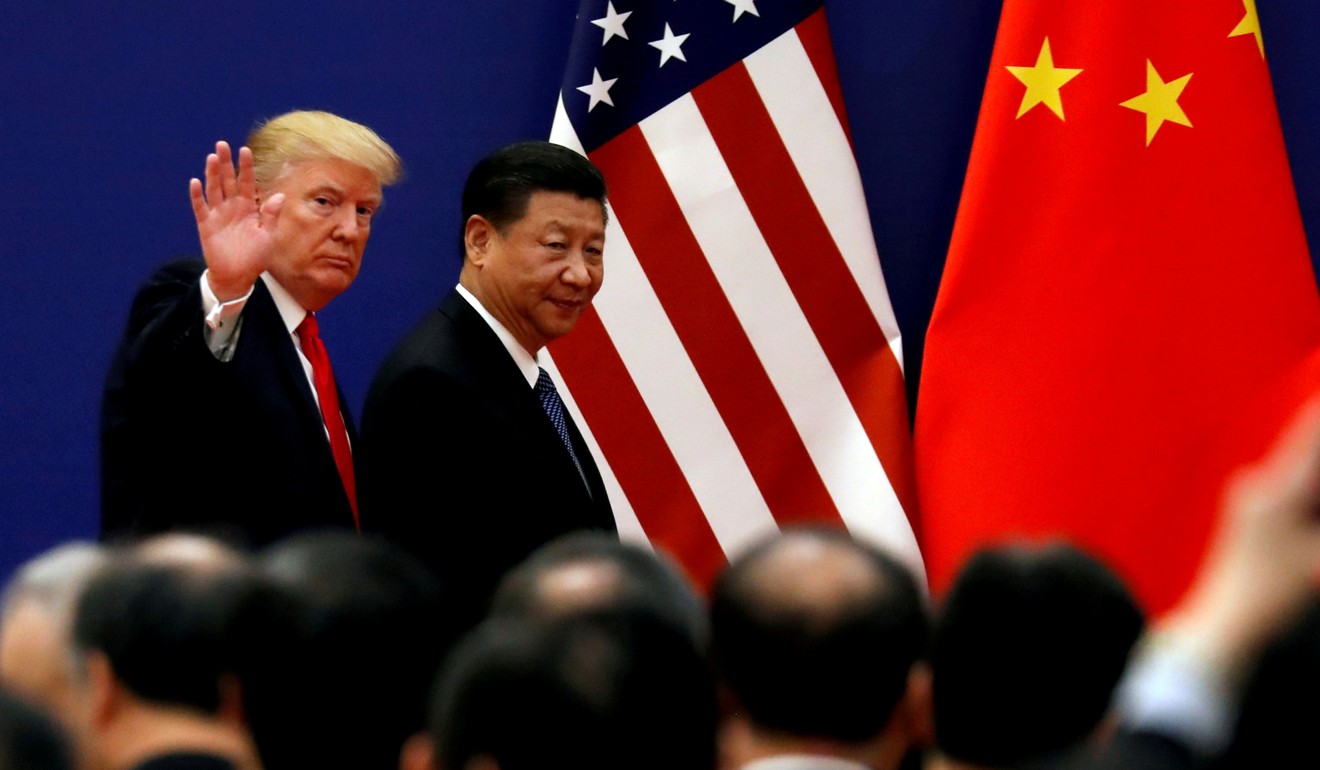
US President Donald Trump with Chinese counterpart Xi Jinping. Photo: Reuters

“In midstream products such as smartphones and with regard to developing country markets, Chinese tech companies can still be competitive and profitable due to their economies of scale and price competitiveness,” said Jingdong Yuan, an associate professor at the China Studies Centre at the University of Sydney.

“However, to become a true superpower in the tech sector and dominate the global market remains a steep climb for China, and the Trump administration is making it all the more difficult.”

The future competitiveness of Beijing’s military, currently a distant second to Washington’s, will depend on long-term political will, according to the report, which noted that China already spends over 50 per cent more on defence than the 10 

Asean

economies,

India

and

Japan

combined.

TRUST ISSUE
However, 
distrust of China

stands in the way of its primacy in Asia, according to the index, which noted Beijing’s unresolved territorial and historical disputes with 11 neighbouring countries and “growing degrees of opposition” to its signature

Belt and Road Initiative

.

Beijing is locked in disputes in the

South China Sea

with a raft of countries including Vietnam, the Philippines and Brunei, and has been forced to renegotiate infrastructure projects in

Malaysia

and Myanmar due to concerns over feasibility and cost.

If Trump kills off Huawei, do Asia’s 5G dreams die?
Xin Qiang, a professor at the Centre for American Studies at Fudan University in Shanghai, said Beijing still needed to persuade its neighbours it could be a “constructive, instead of a detrimental, force for the region”.
“There are still many challenges for [China to increase its] power and influence in the Asia-Pacific,” Xin said.
Wu Xinbo, also at Fudan University’s Centre for American Studies, said Beijing was having mixed success in terms of winning regional friends and allies.
“For China, the key challenge is how to manage the maritime disputes with its neighbours,” said Wu. “I don’t think there is growing opposition to the Belt and Road Initiative from the region, actually more and more countries are jumping aboard. It is the US that is intensifying its opposition to the project as Washington worries it may promote China’s geopolitical influence.”
Yuan said the rivalry between the

US and China

would persist and shape the global order into the distant future.

“They can still and do wish to cooperate where both find it mutually beneficial, but I think the more important task for now and for some time to come, is to manage their disputes in ways that do not escalate to a dangerous level,” Yuan said. “These differences probably cannot be resolved given their divergent interests, perspectives, etc, but they can and should be managed, simply because their issues are not confined to the bilateral [relationship] but have enormous regional and global implications.”
Elsewhere in Asia, the report spotlighted Japan, ranked third in the index, as the leader of the liberal order in Asia, and fourth-placed India as an “underachiever relative to both its size and potential”.
China’s wrong, the US can kill off Huawei. But here’s why it won’t
Lee said the index supported a growing perception that Tokyo had emerged as a “political and strategic leader among democracies in Asia” under

Shinzo Abe

.

“This is important because Prime Minister Abe wants Japan to emerge as a constructive strategic player in the Indo-Pacific and high diplomatic standing is important to that end,” Lee said.

Russia

, South Korea, Australia,

Singapore

, Malaysia and Thailand rounded out the top-10 most powerful countries, in that order. Among the pack, Russia, Malaysia and Thailand stood out as nations that improved their standing from the previous year.

Taiwan

, ranked 14th, was the only place to record an overall decline in score, reflecting its waning diplomatic influence

after losing three of its few remaining diplomatic allies

during the past year.

Source: SCMP
22/05/2019

China’s top legislator seeks to tap cooperation potentials with Austria

AUSTRIA-VIENNA-LI ZHANSHU-AUSTRIAN PRESIDENT-MEET

Li Zhanshu (L), chairman of the Standing Committee of the National People’s Congress (NPC), meets with Austrian President Alexander Van der Bellen in Vienna, Austria, on May 20, 2019. China’s top legislator Li Zhanshu paid an official friendly visit from May 18 to 21 to Austria, where he met with Austrian leaders on promoting bilateral ties and expressed China’s stance on upholding multilateralism and free trade. (Xinhua/Shen Hong)

VIENNA, May 21 (Xinhua) — China’s top legislator Li Zhanshu paid an official friendly visit from May 18 to 21 to Austria, where he met with Austrian leaders on promoting bilateral ties and expressed China’s stance on upholding multilateralism and free trade.

EXCHANGING VIEWS ON TIES AND GLOBAL ISSUES

In meeting with Austrian President Alexander Van der Bellen, Li, chairman of the Standing Committee of the National People’s Congress (NPC), conveyed Chinese President Xi Jinping’s greetings.

He said during the Austrian president’s state visit to China in April last year, the two countries’ heads of state jointly established a new orientation for bilateral ties, which pushed forward the ties to usher in a new stage.

“China is willing to work together with the Austrian side to implement the important consensus of the two heads of state and promote the in-depth development of cooperation in various fields,” said Li.

During the meeting, Li and Van der Bellen also exchanged in-depth views on issues of common concerns, including free trade, climate change, and the Iranian nuclear issue.

Li said China always adheres to the principle of mutual respect, equal treatment, mutual benefit and common development in dealing with the relationship between countries.

“Maintaining multilateralism and free trade is the common responsibility of the international community. Unilateralism and trade protectionism are not in line with the world trend,” said Li, adding that unilateral withdrawal and unilateral sanctions will not only harm other countries but also harm the interests of the countries which take the moves.

Li said China advocates that economic and trade differences should be resolved through negotiation and consultation. In the meantime, people who conduct negotiations must follow a bottom line and some principles, conform to international trade rules, adhere to equality, mutual benefit, and non-discrimination, and resolutely oppose “long-arm jurisdiction”.

China is willing to work with countries including Austria to uphold multilateralism and free trade, work together to address global challenges, and promote the building of a community of shared future for the mankind, said Li.

For his part, Van der Bellen spoke highly of the development of bilateral ties, and highly appreciated China’s positive role in global affairs. He said that the Austrian side shares the same or similar position with China on many issues.

The two sides should strengthen communication and coordination in international and regional affairs, support liberalization and facilitation in trade and investment, jointly address climate change, and promote friendly cooperation to yield more results, the president said.

TO FURTHER TAP COOPERATION POTENTIALS

When meeting with Austrian Chancellor Sebastian Kurz, Li said jointly building the “Belt and Road” has become a new growth point for bilateral cooperation. The two sides should adhere to the principle of extensive consultation, joint contribution and shared benefits, and continuously explore and tap the potential of cooperation.

Li called on the two countries to deepen cooperation in fields like high-end manufacturing, energy conservation, environmental protection, ecological agriculture, tourism, and finance. And the two sides are expected to actively explore innovative cooperation in such area as the Internet, big data, artificial intelligence and 5G technology.

Noting China is preparing for the 2022 Beijing Winter Olympic Games, Li said China will learn from Austria’s experience, and carry out cooperation in athlete training, winter sports education and research, and winter sports equipment.

“China always regards Europe as a comprehensive strategic partner and an important global power which is indispensable,” said Li, adding that China is happy to see Europe maintain unity, stability, openness and prosperity, and supports the integration process in Europe.

Kurz said that the Belt and Road Initiative has set up a new platform for equal cooperation among the countries in the world. China is Austria’s largest trading partner in Asia, and the two countries have strong economic complementarities.

Noting the two sides share strong aspiration of deepening cooperation, Kurz said the cooperation potential is huge, and more investment from Chinese companies as well as more Chinese tourists are welcome to Austria.

TO ENHANCE EXCHANGES BETWEEN LEGISLATIVE BODIES

In his respective talks with Austrian National Council President Wolfgang Sobotka and Federal Council President Ingo Appe, Li said the cooperation between the two countries’ legislative bodies should “closely follow the pace of development of state-to-state relations,” through cementing mutual understanding and exchanging experience on such areas as legislative supervision in regular visits, so as to create a good law environment for pragmatic cooperation.

Noting that people-to-people and cultural exchanges have always been the most active part of China-Austria relations, Li called on the legislative bodies to “respond to the voices of the people” by promoting cooperation in art, music, sports, and local areas, and advancing exchanges among young people.

The two leaders of the Austrian parliament expressed the willingness to strengthen exchanges and cooperation with the National People’s Congress of China, saying the Austrian side highly values the development of ties between the two countries. They will promote the implementation of the bilateral cooperation agreement, and forge ahead personnel and culture exchanges between the two countries.

During his stay in Austria, Li also met with regional officials from Salzburg to discuss cooperation between local areas of the two countries. Li and Van der Bellen also attended a ceremony in which a giant panda from China was officially handed over to the Austrian side.

After wrapping up his tour in Norway on May 18, Li’s stay in Austria marked the second lag of his 10-day tour in Europe, which will also take him to Hungary.

Source: Xinhua

16/05/2019

4th Silk Road int’l expo concludes in Xi’an

XI’AN, May 16 (Xinhua) — The fourth Silk Road International Exposition concluded Wednesday in Xi’an, capital of northwest China’s Shaanxi Province.

During the five-day expo, 65 contracts in various fields including education, medical care, modern agriculture and intelligent manufacturing were signed with a total investment of 115.1 billion yuan (about 16.7 billion U.S. dollars).

Themed “New Era, New Pattern, and New Development,” the fourth Silk Road International Exposition attracted more than 2,000 Chinese enterprises and more than 200 overseas enterprises from 25 countries and regions, including Russia, the United States and Cambodia.

More than 30 activities and exhibitions were staged during the five-day event, including forums, conferences and investment and trade activities. An international forum on poverty relief was first held during the expo to contribute China’s experience and efforts to the global poverty reduction.

Known in ancient times as Chang’an, Xi’an was the starting point of the ancient Silk Road and plays a key role in the Belt and Road Initiative.

Source: Xinhua

01/05/2019

China Focus: Xi holds talks with Lao president to promote ties

CHINA-BEIJING-XI JINPING-LAO PRESIDENT-TALKS (CN)

Xi Jinping (R), general secretary of the Communist Party of China (CPC) Central Committee and Chinese president, holds talks with Lao President Bounnhang Vorachit, who is also general secretary of the Lao People’s Revolutionary Party Central Committee, in Beijing, capital of China, April 30, 2019. (Xinhua/Li Xueren)

BEIJING, April 30 (Xinhua) — Xi Jinping, general secretary of the Communist Party of China (CPC) Central Committee and Chinese president, held talks here Tuesday with Lao President Bounnhang Vorachit, who is also general secretary of the Lao People’s Revolutionary Party Central Committee.

The two leaders agreed to forge ahead with the efforts in building a community with a shared future for the two countries and work together to usher in a new era for bilateral ties.

After the talks, the two leaders inked an action plan between the CPC and the Lao People’s Revolutionary Party on building a community with a shared future for the two countries.

Noting that this year marks the 10th anniversary of the establishment of the comprehensive strategic cooperative partnership between China and Laos, Xi said as bilateral ties now stand at the best stage in history, China will work with Laos to take the opportunity of signing the action plan to jointly cultivate the bilateral relationship in the new era.

Xi said China and Laos should take strengthening the leadership of the CPC and the Lao People’s Revolutionary Party as guidance and grasp the correct direction of the development of bilateral ties in the new era.

He said the two parties must strengthen their strategic self-confidence and sense of urgency, uphold party leadership and ensure the long-term stability of the two countries, so as to contribute to the development of the socialist cause.

Noting the two sides should maintain close high-level exchanges, Xi said he would like to carry on the good tradition of conducting annual meetings with Bounnhang.

Xi also called on the two sides to deepen theoretical exchanges and strengthen exchanges between their cadres.

China and Laos should accelerate the synergy of each other’s development strategies, promote the construction of economic corridors, expand the radiation and demonstration effects of major projects such as the China-Laos railway, so as to contribute more to regional connectivity, common development and prosperity, Xi said.

The two sides should also closely coordinate and cooperate within multilateral mechanisms such as the United Nations, East Asian cooperation and the Lancang-Mekong cooperation, said the Chinese president.

Bounnhang spoke highly of China’s great achievements in Party and state building and hailed China’s successful experience in poverty alleviation.

He said it is an unshakable policy of Laos to develop its traditional friendship with China. Laos appreciates China’s long-term support and will work with China to give further play to the leading role of the inter-party ties in the development of the state-to-state relationship, and maintain regular high-level meetings between the two parties.

Regarding the Belt and Road initiative, Bounnhang said Laos will continue to accelerate cooperation in major projects, so as to further promote the prosperity of the two countries and the region.

Concerning the action plan, Xi said this is the first time for China and Laos to sign a cooperation document on building a community with a shared future on the bilateral level, which will not only benefit the two parties, countries and peoples, but also serve as a significant exploration in advancing humanity.

Bounnhang said the signing of the action plan will further promote the building of a community with a shared future for humanity.

The two leaders also watched the signing of a series of cooperation documents after the talks.

Source: Xinhua

30/04/2019

Xi holds talks with Nepalese president

CHINA-BEIJING-XI JINPING-NEPALESE PRESIDENT-TALKS (CN)

Chinese President Xi Jinping (R) holds talks with Nepalese President Bidhya Devi Bhandari in Beijing, capital of China, April 29, 2019. (Xinhua/Huang Jingwen)

BEIJING, April 29 (Xinhua) — Chinese President Xi Jinping held talks with Nepalese President Bidhya Devi Bhandari in Beijing on Monday.

China highly values the development of bilateral relations, and supports Nepal’s efforts in safeguarding national independence, sovereign and territorial integrity, and in exploring a development path suited to Nepal’s own conditions, Xi said.

He expressed appreciation for Nepal’s long-time firm support on issues related to China’s core interests and major concerns, and Nepal’s active participation in the Belt and Road Initiative.

China and Nepal should strengthen cooperation in infrastructure construction, and continue to advance the construction of cross-border economic cooperation zone, Xi said, adding that China is willing to continue to support Nepal’s economic and social development.

Xi called on the two countries to intensify exchanges among legislative institutions, political parties, youth, think tanks and media, consolidate public support for China-Nepal friendship, and advance the friendly cooperative relations to a new level.

Bhandari said that China’s prosperity and stability present opportunities to Nepal, and her country is willing to deepen mutually beneficial cooperation with China in various fields.

She said that Nepal adheres to the one-China policy, and that Nepal will not allow any forces to engage in anti-China activities by using the territory of Nepal.

The two heads of state attended a ceremony for the signing of bilateral cooperation documents after the talks.

Source: Xinhua

28/04/2019

Xi meets Italian prime minister

(BRF)CHINA-BEIJING-XI JINPING-ITALIAN PM-MEETING (CN)

Chinese President Xi Jinping (R) meets with Italian Prime Minister Giuseppe Conte at the Great Hall of the People in Beijing, capital of China, April 27, 2019. (Xinhua/Huang Jingwen)

BEIJING, April 27 (Xinhua) — Chinese President Xi Jinping on Saturday met with Italian Prime Minister Giuseppe Conte, who attended the Second Belt and Road Forum for International Cooperation in Beijing.

China highly commends Italy’s signing of a memorandum of understanding with China on jointly building the Belt and Road, taking the lead among major Western countries, according to Xi.

The country is ready to work with Italy in advancing the Belt and Road Initiative (BRI), and make the bilateral relations a model of Belt and Road cooperation between China and European countries, Xi said.

Xi called on both sides to firmly grasp the strategic significance of the bilateral ties, step up coordination and collaboration in improving global governance system and safeguarding free trade and multilateralism, and forge a new form of international relations featuring mutual respect, fairness, justice and win-win cooperation.

Conte said the speeches delivered by Xi at the forum helped the international community understand the significant benefits of the BRI for the world.

Italy is firmly committed to participating in the BRI, he said, adding that the initiative is a good opportunity for the world and more countries will join.

Italy welcomes Chinese companies to invest in the country, and will not adopt discriminatory policies against them, Conte said, calling on the two countries to reinforce solidarity and cooperation, and safeguard multilateralism.

Source: Xinhua

27/04/2019

(BRF) Feature: In Schwab’s eyes, BRI growing into mature initiative

BEIJING, April 26 (Xinhua) — The Belt and Road Initiative (BRI) is growing up and gaining global traction, said Klaus Schwab, founder and executive chairman of the World Economic Forum (WEF), here on Friday.

In an interview with Xinhua on the sidelines of the second Belt and Road Forum for International Cooperation (BRF), he said that when he attended the first BRF in 2017, the BRI “was still a child growing up and you don’t know what the end of it will be.”

“Now the BRI has become an adult, which means that it has become an important factor in the global economy. It has grown up,” he told Xinhua.

Illustrating his understanding of the BRI in a speech at the ongoing second BRF, the professor said that through the BRI and institutions like the Asian Infrastructure Investment Bank, China can demonstrate to the world that “the philosophy and concept of the Belt and Road is more than an important initiative.”

The WEF founder, an advocate of “Globalization 4.0,” said that if people want globalization to continue as a positive force, a higher level of globalization is needed to respond to the needs and realities of a transforming world.

The BRI, he added, can be “a building block and a role model of” an advanced pattern of global cooperation that should be more sustainable, more inclusive and more collaborative.

Over the years, Schwab has articulated on many occasions his views of the BRI. At the 2015 Summer Davos Forum in northeast China’s port city of Dalian, he said he was happy to see that China proposed the BRI.

There was a huge infrastructure demand in Asia and Europe, and it was a good thing for China to play a leading role in building infrastructure in the region, he noted.

Partly thanks to the fact that it met the development needs of many countries, the BRI continued with rapid progress, promoting common development in participating countries and bringing Asia and Europe ever closer.

On May 13, 2017, the 1,000th China-Europe freight train that year departed from China’s eastern city of Yiwu to Europe, fully loaded with commodities like smallware and clothes.

The next day, Schwab reaffirmed his full support for the BRI in an address at the first BRF. Not hiding his enthusiasm about the BRI, he said the initiative “takes a long-term and holistic view, and makes a unique contribution to international cooperation and economic development.”

He pointed out that connectivity, a primary focus of the BRI, “is the new meta-pattern of our era and a key driver of our future economy.”

Citing a Chinese saying that “if you want to get rich, build a road,” he said, “I would update this to say: ‘If you seek prosperity, build connectivity.'”

One month later, in an interview with Xinhua ahead of the 2017 Summer Davos Forum, also held in Dalian, Schwab pointed to the BRI’s paradigm-shifting significance.

“The Belt and Road Initiative has great significance because it is a new approach to reach a new and open cooperation … and everybody can participate in a win-win situation as an equal partner,” he said.

Since Chinese President Xi Jinping proposed the initiative six years ago, 126 countries and 29 international organizations have signed BRI cooperation documents with China. The initiative has become the world’s largest platform for international cooperation and the most welcomed global public good.

The BRI “is now growing up into a mature initiative that can have even more impact,” Schwab told Xinhua.

Source: Xinhua

26/04/2019

Interview: Belt and Road helps Latin America to achieve UN 2030 agenda, says ECLAC official

BEIJING, April 26 (Xinhua) — The China-proposed Belt and Road Initiative (BRI) facilitates the compliance with the UN 2030 Agenda for Sustainable Development and the realization of the 17 Sustainable Development Goals in Latin America, said a senior official of a UN body based in Latin America.

Mario Cimoli, deputy executive secretary of the Economic Commission for Latin America and the caribbean (ECLAC), made the remarks in an interview with Xinhua.

Also as chief of the division of production, productivity and management of ECLAC, Cimoli has arrived in Beijing to participate in the second Belt and Road Forum for International Cooperation on April 25-27.

So far, 18 Latin American countries have signed the Memorandum of Understanding on jointly building the Belt and Road cooperation with China.

“The countries in Latin America view China as a fundamental actor,” he said. “The fact that 18 Latin American countries have joined the Belt and Road Initiative means that these countries think that China is necessary and China is also aware of the importance of dialogue. It’s a historical process.”

In his opinion, the BRI makes “greater integration, greater multilateralism and more dialogue” possible and “does good to Latin America.”

He said that both the 2030 Agenda and the BRI seek sustainable development and reduction of inequality and poverty, without contradicting with the proper model of each country.

“Given that the growth rates of Latin America will not be very high for the next few years, a rational process of cooperation such as the Belt and Road will surely help the region and allow each country to seek and improve their model of development and growth,” the ECLAC official said.

The BRI is a much more horizontal dialogue, a platform, in that sense that it is a process that helps and allows a much more positive coexistence despite current global tensions, he said.

In the dialogue with China, Latin America can demonstrate the importance of being an integrated area of trade, policies, and infrastructures in order to trade better with Asia, he said.

Cimoli also affirmed that the incorporation of new technologies in Latin America is a course under discussion, and dialogue with China can accelerate and improve the process.

Cimoli said his one observation of his ongoing China trip is the extensive use of electronic commerce among ordinary people.

He said when he went out to buy something, he found almost everyone use e-payments.

The way in which technologies immerge into the daily life of Chinese citizens is an example and would be a valuable contribution of China to the world and especially to Latin America, Cimoli said.

“The example of China shows the role that a state should play to trigger the technological development. In this dialogue with China, Latin America surely has to learn from the pragmatism of China,” he said.

The ECLAC official mentioned that China invests over 2 percent of its GDP in science and technology, while the average investment of Latin American countries in the field is between 0.4 and 0.5 percent of its GDP, plus, it appears to be swaying instead of stable state policies.

“There is a lot of cooperation to be done, much experience to be shared and much a platform for dialogue like the Belt and Road Initiative could do,” said Cimoli.

Source: Xinhua

Law of Unintended Consequences

continuously updated blog about China & India

ChiaHou's Book Reviews

continuously updated blog about China & India

What's wrong with the world; and its economy

continuously updated blog about China & India