28/08/2019
Chinese Premier Li Keqiang (L) holds a welcoming ceremony for visiting Uzbek Prime Minister Abdulla Aripov before their talks in Beijing, capital of China, Aug. 27, 2019. (Xinhua/Yin Bogu)
BEIJING, Aug. 27 (Xinhua) — Chinese Premier Li Keqiang held talks Tuesday with visiting Uzbek Prime Minister Abdulla Aripov, and the two sides agreed to cement cooperation.
Li said China attaches great importance to China-Uzbekistan relations and is willing to maintain close high-level exchanges with Uzbekistan, promote trade and investment liberalization and facilitation, and strengthen communication and coordination in international and regional affairs.
Li said China is ready to seek synergy between the Belt and Road Initiative and Uzbekistan’s development strategy, deepen cooperation in production capacity, interconnection and agriculture, and make efforts to ensure the stability of energy cooperation.
He expected the two sides to promote cooperation in culture, tourism and higher education, so as to consolidate the people-to-people foundation of bilateral ties.
China is willing to continue to expand the scale of bilateral trade, import Uzbek products that meet the needs of the Chinese market, and support capable Chinese companies investing in Uzbekistan in accordance with market rules, Li said, hoping Uzbekistan will create a good business environment.
Aripov said Uzbekistan is ready to continue to participate in the Belt and Road Initiative, deepen cooperation in various fields, and welcome Chinese enterprises to expand investment in Uzbekistan, so as to push bilateral relations to a higher level.
The two leaders witnessed the signing of a series of cooperation documents after the talks.
Source: Xinhua
Posted in Abdulla Aripov, Belt and Road Initiative, Belt and Road Initiative (BRI), bilateral trade, China-Uzbekistan relations, Chinese premier Li Keqiang, Culture, higher education, Import, promote cooperation, Tourism, Uncategorized, Uzbek Prime Minister, Uzbek products, Uzbekistan |
Leave a Comment »
25/08/2019
- A recent joint exercise in Tajikistan is the latest example of Beijing’s growing security and economic interests in the former Soviet republic
- Analysts say Moscow may not be happy about China’s growing reach in the lawless, mountainous area and will be keeping an eye on the situation
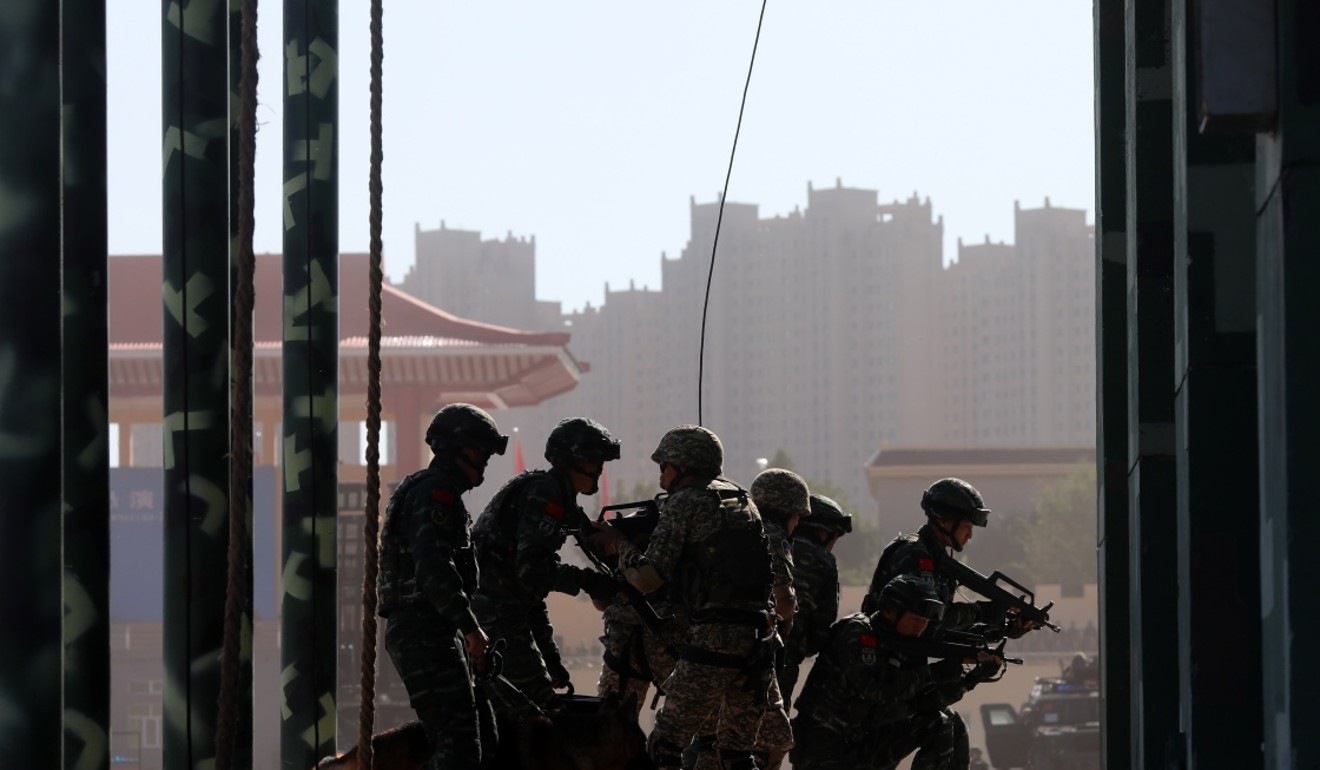
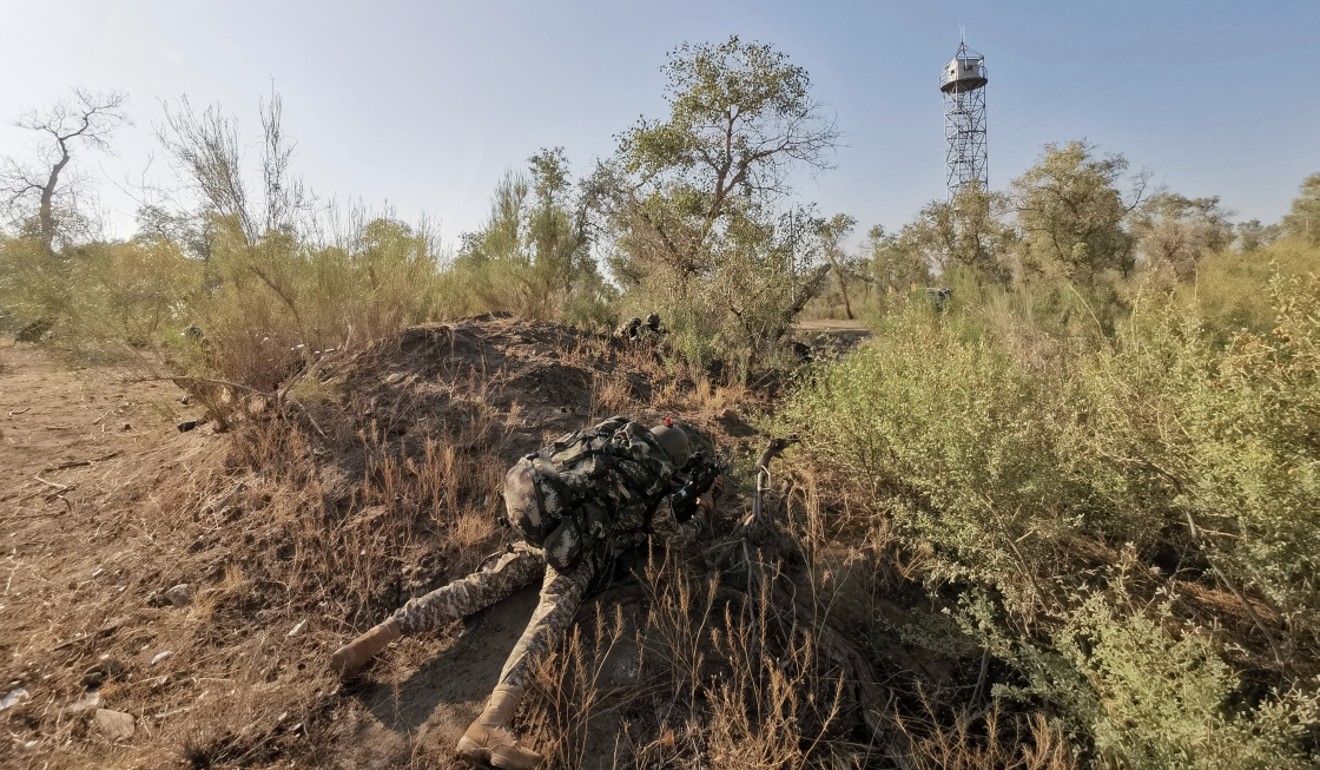
Chinese and Tajik troops completed a joint exercise earlier this month in the mountainous region of Gorno-Badakhshan. Photo: Xinhua
China is increasing its military and economic presence in parts of central Asia that Russia has traditionally considered its sphere of influence – a development some analysts believe could cause concern in Moscow.
While Russia’s influence remains strong in many former Soviet republics, China is steadily building up its military and economic influence in Tajikistan, particularly in the remote, mountainous areas on its western borders where central government authority is weak.
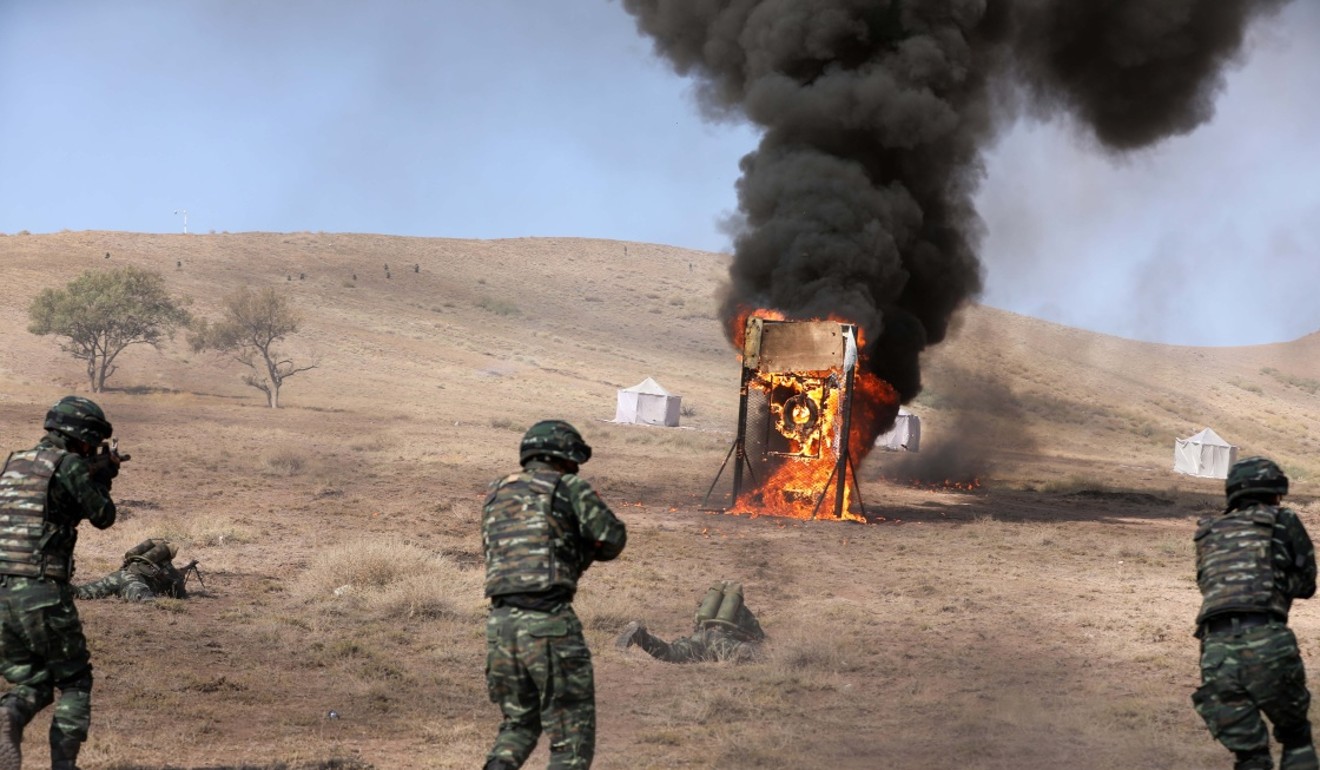
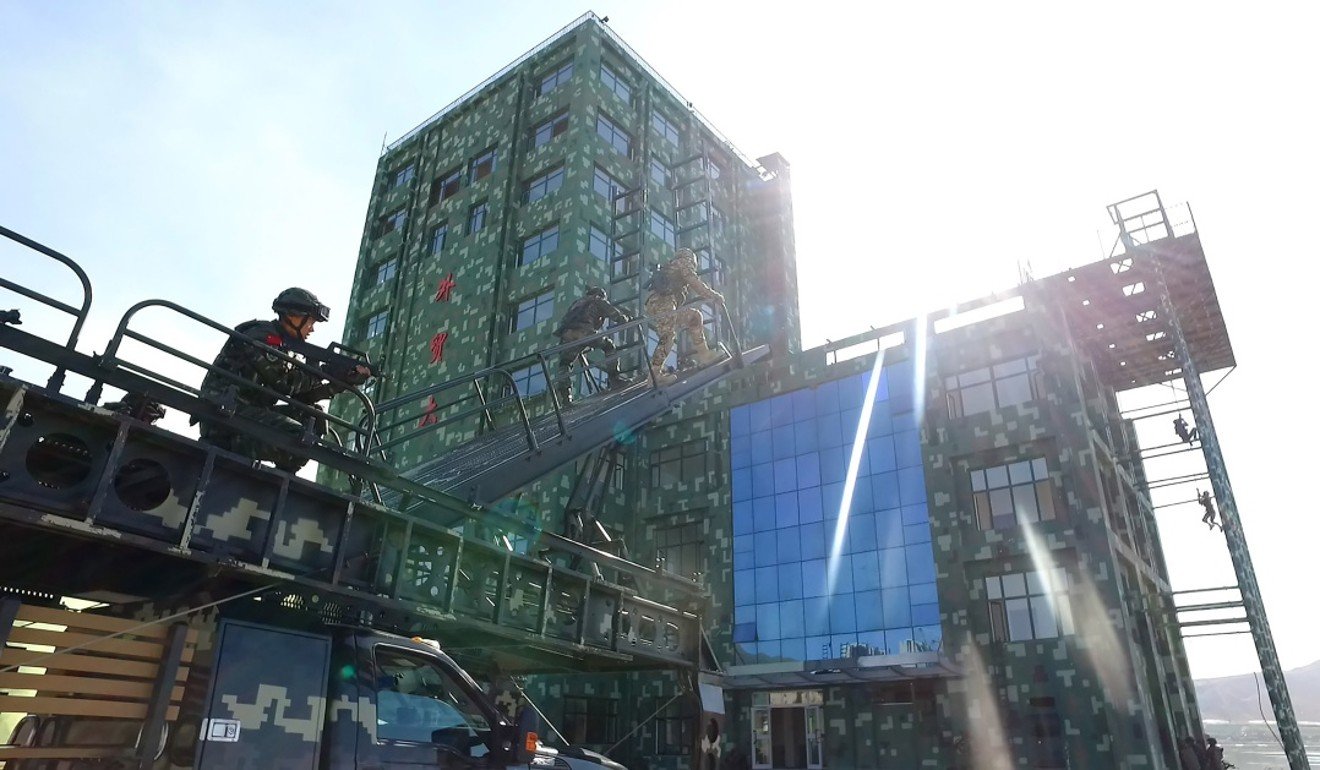
Chinese troops recently concluded a joint drill in eastern Tajikistan involving 1,200 troops from both countries.
The eight-day exercise that finished on August 13 was conducted in the autonomous Gorno-Badakhshan autonomous region, a sparsely populated territory in the high Pamir mountains, which borders China’s Xinjiang region and Afghanistan.
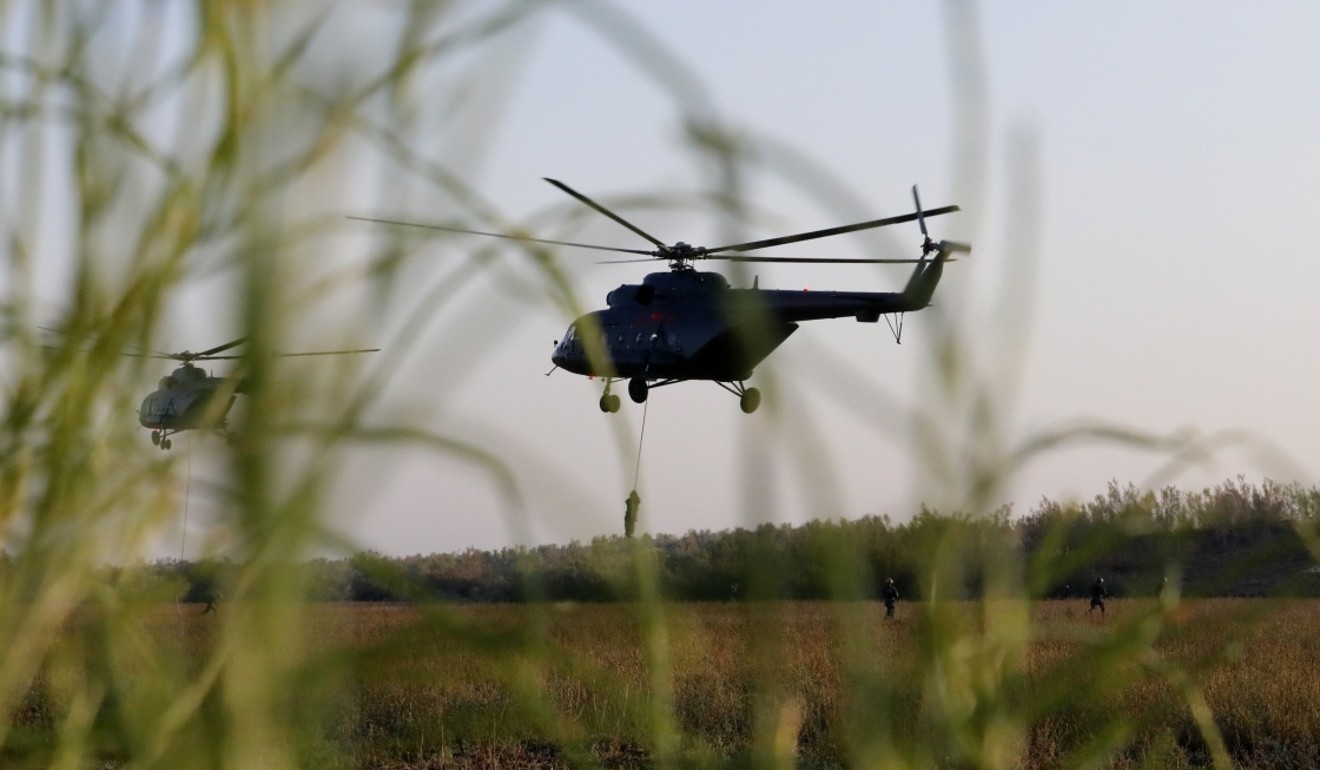
China has been increasing its security presence in the strategically sensitive region. Photo: Xinhua
Although this year’s exercise involved fewer troops than the 10,000 involved in a previous drill three years ago, it tested the use of advanced aerial vehicles and ground reconnaissance technology to monitor the area.
The landlocked country is strategically important for China, which is worried that the porous borders will serve as an entry point for drugs and Islamic militants into Xinjiang, where its deradicalisation strategy has led to the detention of a million Muslim minorities in reeducation camps.
It also sits along the trade routes China hopes to develop under the Belt and Road Initiative – Beijing’s flagship plan to expand its global influence through infrastructure, trade and investment – but the area has long been plagued by lawlessness and outbreaks of violence.
The recent exercise tested aerial surveillance techniques. Photo: Xinhua
Artyom Lukin, a professor of international politics at Far Eastern Federal University in Vladivostok, said Russia was not happy about the deployment of Chinese forces in Tajikistan.
“Russia has traditionally considered Central Asia, including Tajikistan, as its sphere of political-military influence,” he said.
Observers said other Central Asian republics – such as Kazakhstan, Uzbekistan and Kyrgyzstan – are likely to stay within Moscow’s orbit, but China is steadily building closer security ties with Tajikistan.
In February, China’s defence ministry denied that it was building a base and stationing troops in the country, but defended its closer military cooperation with Tajikistan.
The recent training exercise was conducted in an area Russia has long seen as part of its sphere of influence. Photo: Xinhua
China has long-standing security interests in the country and in 2016 it agreed to finance 11 border outposts and a training centre for guards along the Afghan border.
This was part of a deal Beijing made through the Quadrilateral Cooperation and Coordination Mechanism – which also involves Pakistan, Afghanistan and Tajikistan – to strengthen cooperation in combating terrorism and improving security.
China has also overtaken Russia economically, becoming the largest foreign investor in Tajikistan in 2016, accounting for 30 per cent of Tajikistan’s total direct accumulated investments, state news agency Xinhua reported.
Banned Muslim political party blamed for deadly attack on tourists in Tajikistan
China’s direct investment in Tajikistan was worth US$95 million in 2017, according to the latest available figures. China has also grown to become the country’s third largest trading partner with bilateral trade reaching around US$1.5 billion in 2018.
A recent opinion piece published by the Russian state-owned news agency Sputnik suggested China may be “getting carried away” by its investments in the region.
The article suggested that China’s growing presence in the country could lead to a “partial loss” of Tajikistan’s sovereignty and argued that Beijing may want to take control of the border with Afghanistan.
China also has economic interests to protect. Photo: Xinhua
But Lukin said even though this growing involvement may be an irritant for Russia, the strategic partnership between China and Russia will remain strong.
The two countries remain the key players in the Shanghai Cooperation Organisation, an economic and security alliance that includes the Central Asian republics and India and Pakistan.
The two are also keen to cooperate more closely due to their tense relationship with the United States. This year Russian and Chinese armed forces have stepped up their cooperation, and last week used a UN Security Council debate to criticise the US for pulling out of the Intermediate-Range Nuclear Forces Treaty. Washington defended the move as necessary response to Beijing and Moscow’s build up of arms.
Why Chinese investors are struggling to gain a foothold in Tajikistan
Lukin said: “Moscow no doubt understands that in terms of security, Tajikistan’s border, adjacent to China’s Xinjiang and Afghanistan, is truly a vital concern for Beijing.
“The presence of Chinese troops could actually benefit Russia, because it will be China bearing the costs of policing Tajikistan’s mountainous border areas.”
Stephen Blank, a former professor at the US Army War College and a specialist in Eurasian security, said that while Russia has mostly stayed silent about China’s presence in Tajikistan, it was closely watching the situation.
“What happens in the long run depends on how far China goes to extend its military presence in Central Asia. And if it keeps extending, it may well provoke some expression of concern in Russia beyond the silence that has hitherto been the case,” Blank said.
Chinese troops could play an increasing role in policing the area in future. Photo: Xinhua
“[The recent drills] look like conventional war-fighting exercises as much as anti-terrorist operations and suggest that China may have bigger contingencies than anti-terrorism in mind.”
Mathieu Duchatel, director of the Asia programme at the Institut Montaigne, a French think tank, said both Russia and China share similar concerns about terrorism and drug trafficking in Central Asia.
He said Russia had not objected to the security pact with Pakistan, Afghanistan and Tajikistan because there are more important strategic priorities in China-Russia relations.
“Overall, Russia’s acceptance of a security role for China in Central Asia shows how Russia realistically adjusts to the changing balance of power with China, and is able to avoid a zero-sum game on issues where parallel efforts by China and Russia can serve Russian security interests,” he said.
Source: SCMP
Posted in aerial surveillance techniques, aerial vehicles, Afghan border, Afghanistan, backyard, Beijing, Belt and Road Initiative, Belt and Road Initiative (BRI), Central Asia, Central Asian, Central Asian republics, China alert, China-Russia relations, Chinese armed forces, combating terrorism, drug trafficking, former, French think tank, Gorno-Badakhshan, ground reconnaissance technology, improving security, increases, India alert, Infrastructure, Institut Montaigne, Intermediate-Range Nuclear Forces Treaty, Investment, Islamic militants, Kazakhstan, Kyrgyzstan, lawlessness, Moscow, Muslim minorities, outbreaks of violence, Pakistan, Pamir Mountains, presence, Quadrilateral Cooperation and Coordination Mechanism, reeducation camps, Russia, Russian armed forces, security and economic interests, Shanghai Cooperation Organisation (SCO), Soviet republic, Tajikistan, terrorism, Trade, UN Security Council debate, Uncategorized, United States, US Army War College, Uzbekistan, Washington, Xinjiang, zero-sum game |
Leave a Comment »
18/08/2019
- Beijing will be watching as leaders of African nations and international organisations gather for development summit in Yokohama later this month
- Tokyo is expected to use the conference to articulate how its approach to aid and infrastructure is different from Chinese projects
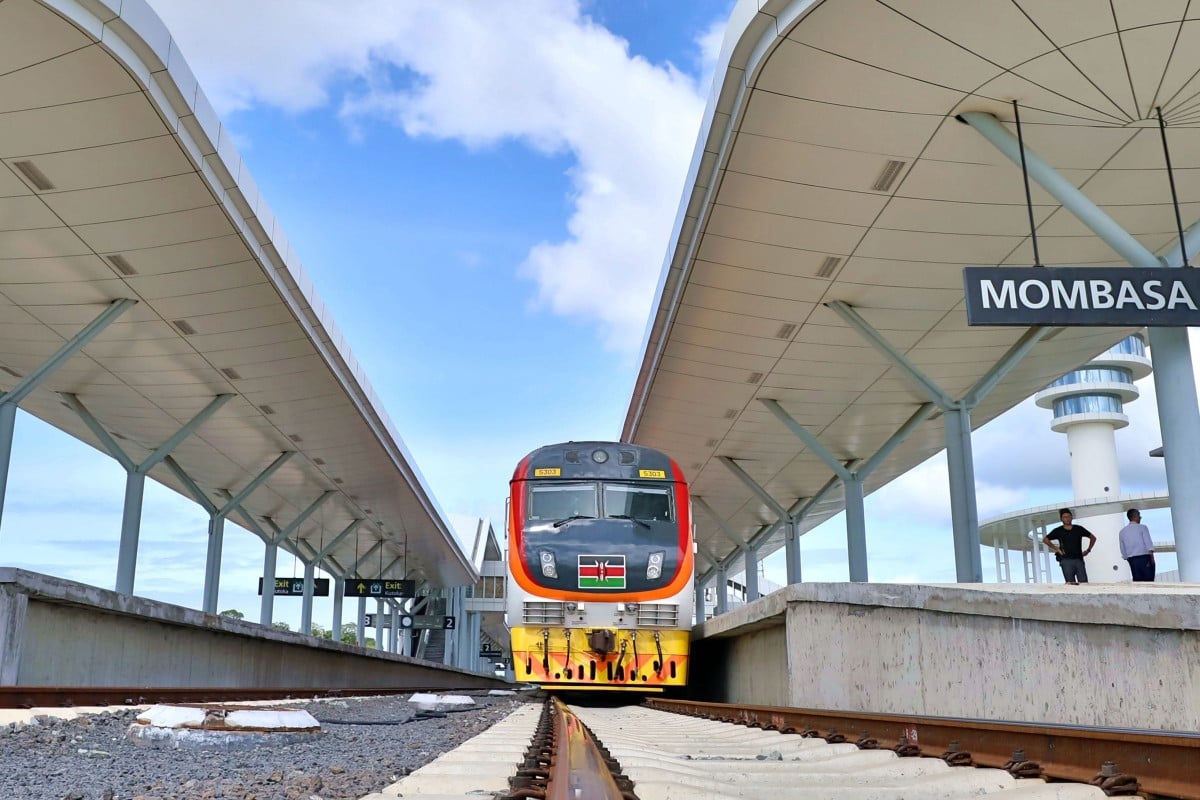
The Mombasa-Nairobi Standard Gauge Railway, funded by China, opened in 2017. Japan has criticised Chinese lending practices in Africa. Photo: Xinhua
The long rivalry between China and Japan is again playing out in Africa, with Tokyo planning to pour more aid into the continent and invest in infrastructure projects there.
Beijing – which has for decades funnelled money into the continent – will be watching as the leaders of 54 African countries and international organisations descend on Yokohama later this month for the seventh Tokyo International Conference on African Development (TICAD).
Japan reportedly plans to pledge more than 300 billion yen (US$2.83 billion) in aid to Africa during the conference. While that might not be enough to alarm China – which in recent years has been on a spending spree in the continent – it will be paying close attention.
Japan has in the past used the meetings to criticise Chinese lending practices in Africa, saying it was worried about the “unrealistic” level of debt incurred by African countries – concerns that China has dismissed.
This year, analysts expect Tokyo will use the conference to articulate how its approach to African development is substantively different from that of the Chinese.
“So, look for the words ‘quality’, ‘transparency’ and ‘sustainability’ to be used a lot throughout the event,” said Eric Olander, managing editor of the non-partisan China Africa Project.
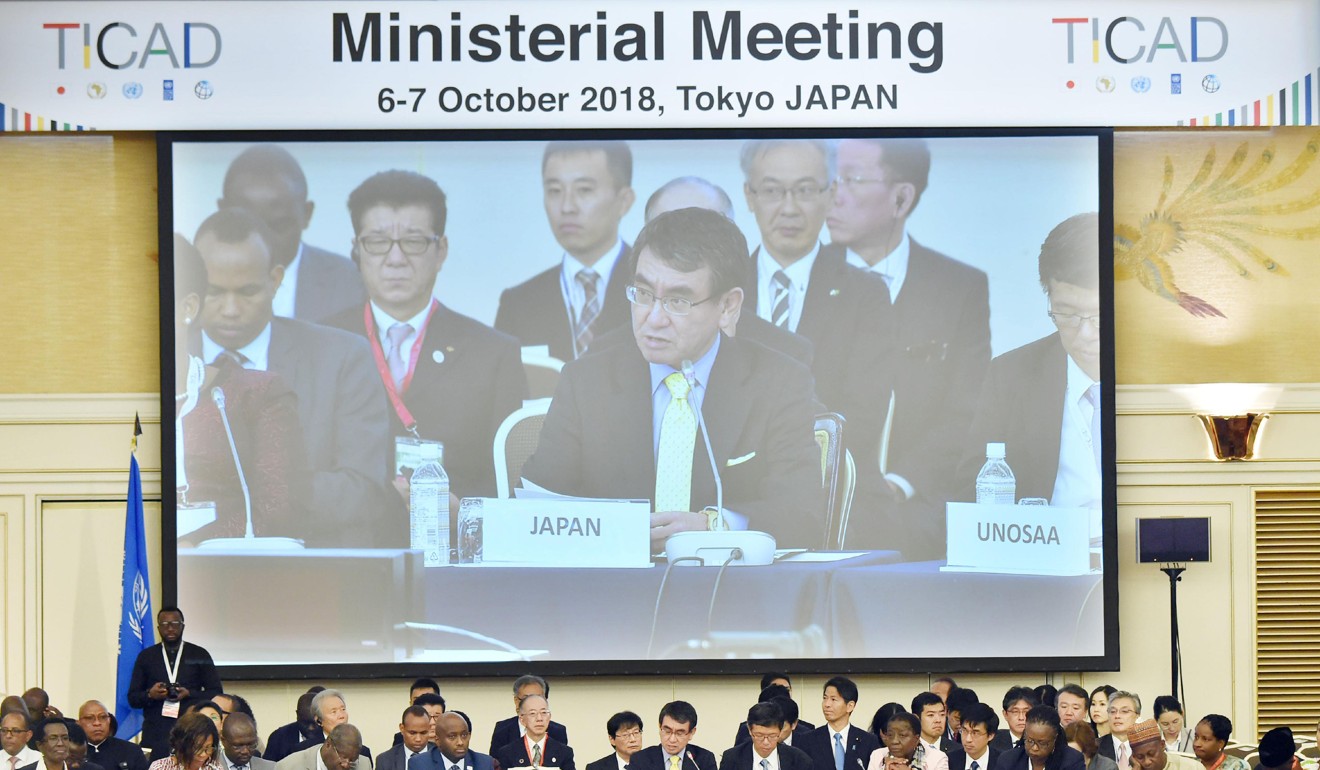
Japanese Foreign Minister Taro Kono gives a speech at the TICAD in Tokyo in October. Japan will reportedly pledge US$2.83 billion in aid to Africa this year. Photo: The Yomiuri Shimbun
Olander said Japan often sought to position its aid and development programmes as an alternative to China’s by emphasising more transparency in loan deals, higher-quality infrastructure projects and avoiding saddling countries with too much debt.
“In some ways, the Japanese position is very similar to that of the US where they express many of the same criticisms of China’s engagement strategy in Africa,” Olander said.
But the rivalry between China and Japan had little to do with Africa, according to Seifudein Adem, a professor at Doshisha University in Kyoto, Japan.
“It is a spillover effect of their contest for supremacy in East Asia,” said Adem, who is from Ethiopia.
“Japan’s trade with Africa, compared to China’s trade with Africa, is not only relatively small but it is even shrinking. It is a result of the acceleration of China’s engagement with Africa.”
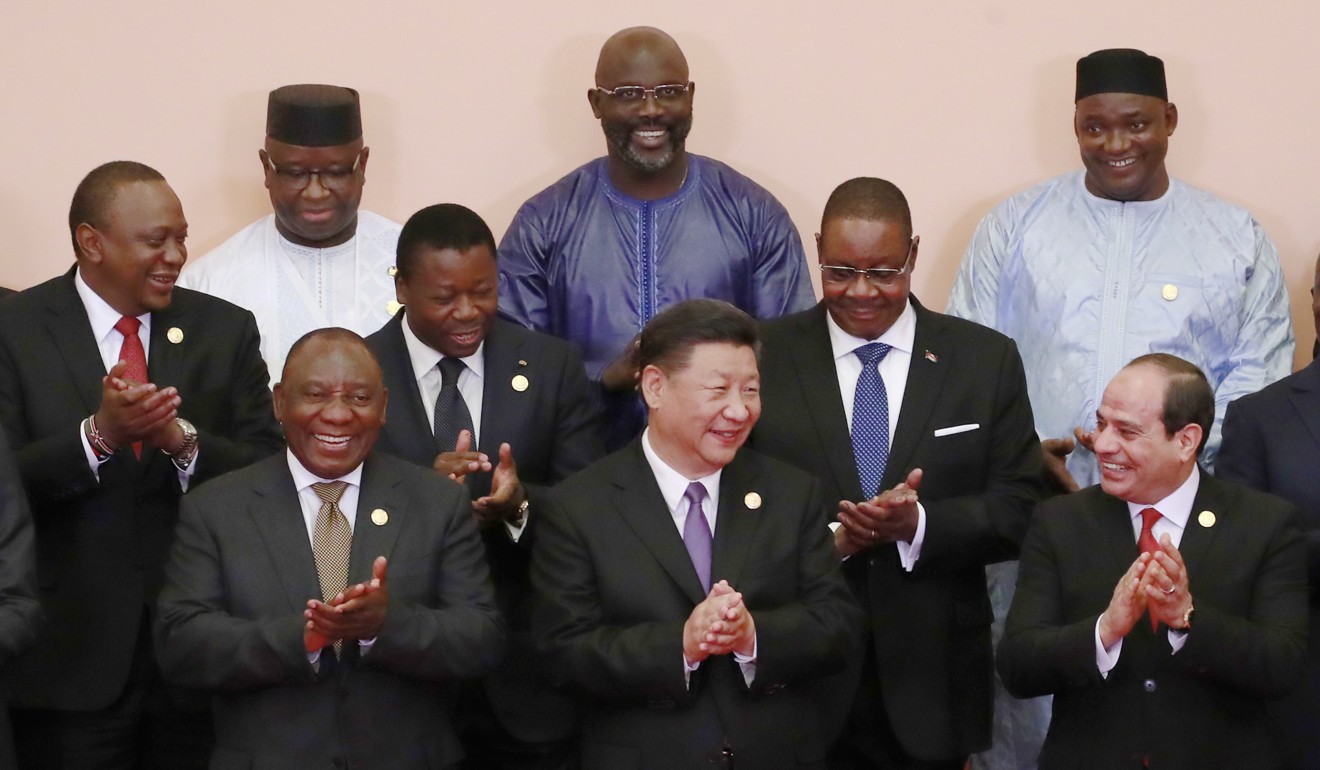
Chinese President Xi Jinping attends a group photo session with African leaders during the Forum on China-Africa Cooperation in Beijing last year. Photo: AP
Japan launched the TICAD in 1993, to revive interest in the continent and find raw materials for its industries and markets for products. About a decade later, China began holding a rival event, the Forum on China-Africa Cooperation.
It is at heart an ideological rivalry unfolding on the continent, according to Martin Rupiya, head of innovation and training at the African Centre for the Constructive Resolution of Disputes in Durban, South Africa.
“China cast Japan as its former colonial interloper – and not necessarily master – until about 1949. Thereafter, China’s Mao [Zedong] developed close relations, mostly liberation linkages with several African nationalist movements,” Rupiya said.
Beijing had continued to invoke those traditional and historical ties, which Japan did not have, he said.
“Furthermore, Japan does not command the type of resources – call it largesse – that China has and occasionally makes available to Africa,” Rupiya said.
Although both Asian giants have made inroads in Africa, the scale is vastly different.
While Japan turned inward as it sought to rebuild its struggling economy amid a slowdown, China was ramping up trade with African countries at a time of rapid growth on the continent.
That saw trade between China and Africa growing twentyfold in the last two decades. The value of their trade reached US$204.2 billion last year, up 20 per cent from 2017, according to Chinese customs data. Exports from Africa to China stood at US$99 billion last year, the highest level since the 1990s. Meanwhile, through its Belt and Road Initiative that aims to revive the Silk Road to connect Asia with Europe and Africa, China is funding and building Kenya’s Standard Gauge Railway and the Addis Ababa-Djibouti Railway. Beijing is also building major infrastructure projects in Zambia, Angola and Nigeria.
Japan’s trade with Africa is just a small fraction of Africa’s trade with China. In 2017, Japan’s exports to the continent totalled US$7.8 billion, while imports were US$8.7 billion, according to trade data compiled by the Massachusetts Institute of Technology.
How speaking with one voice could help Africa get a better deal from China
But Japan now appears eager to get back in the game and expand its presence in Africa, and analysts say this year’s TICAD will be critical – both in terms of the amount of money Tokyo commits to African development and how it positions itself as an alternative to the Chinese model.
Ryo Hinata-Yamaguchi, a visiting professor at Pusan National University in South Korea, said the continent was “economically vital to Japan, both in trade and investments”.
“Moreover, Japan has established some strong links with African states through foreign aid,” Hinata-Yamaguchi said.
“Japan’s move is driven by both economic and political interests. Economically, Japan needs to secure and maintain its presence in, and linkages with, the African states while opening new markets and opportunities,” he said.
To counter China’s belt and road strategy, Japan has launched the Asia-Africa Growth Corridor project, an economic cooperation deal, with India and African countries.
Tokyo meanwhile pledged about US$30 billion in public-private development assistance to Africa over three years at the 2016 TICAD, in Nairobi. But China offered to double that amount last year, during its Forum on China-Africa Cooperation in Beijing.
Still, Japan continues to push forward infrastructure projects on the continent. It is building the Mombasa Port on the Kenyan coast, while Ngong Road, a major artery in Nairobi, is being converted into a dual carriageway with a grant from Tokyo.
Japan is also funding the construction of the Kampala Metropolitan transmission line, which draws power from Karuma dam in Uganda. In Tanzania, it provided funding for the Tanzania-Zambia Railway Authority (Tazara) flyover. And through the Japan International Cooperation Agency, Tokyo also helps African countries improve their rice yields using Japanese technology.
There are nearly 1,000 Japanese companies – including carmakers like Nissan and Toyota – operating in Africa, but that is just one-tenth the number of Chinese businesses on the continent.
Are Chinese loans putting Africa on the debt-trap express?
Olander said Japan’s construction companies were among the best in the world, albeit not necessarily the cheapest, and that Tokyo was pushing its message about “high-quality” construction.
XN Iraki, an associate professor at the University of Nairobi School of Business, said Japan wanted to change its approach to Africa on trade, which had long been dominated by cars and electronics.
“[It has] no big deals like China’s Standard Gauge Railway. But after China’s entry with a bang – including teaching Mandarin through Confucius Institutes – Japan has realised its market was under threat and hence the importance of the TICAD, which should remind us that Japan is also there.”
Source: SCMP
Posted in Addis Ababa-Djibouti railway, africa, African Centre for the Constructive Resolution of Disputes, aid and infrastructure, alternative, Angola, Asia, Beijing, Belt and Road Initiative, Belt and Road Initiative (BRI), best in the world, carmakers, cars, cheapest, China Africa Project, China alert, Chinese President Xi Jinping, Chinese projects, colonial interloper, Confucius Institutes, construction companies, continent, counter, debt-trap express, development summit, different, Doshisha University in Kyoto, dual carriageway, Durban, East Asia, Electronics, Ethiopia, Europe, flyover, Forum on China-Africa Cooperation, Forum on China-Africa Cooperation (FOCAC), Forum on China–Africa Cooperation, high-quality development, ideological rivalry, Japan, Japanese Foreign Minister, Japanese technology, Kampala Metropolitan transmission line, Karuma dam, Kenya’s Standard Gauge Railway, Kenyan coast, largesse, leaders of African nations organisations, leaders of international organisations, Mandarin, Mao Zedong, Massachusetts Institute of Technology, master, Mombasa Port, Mombasa-Nairobi Standard Gauge Railway, Nairobi, Nigeria, Nissan, Pusan National University, quality, resources, rice yields, rivalry, seeks, Silk Road, South Africa, South Korea, Standard Gauge Railway, Sustainability, Tanzania, Tanzania-Zambia Railway Authority (Tazara), Taro Kono, TICAD, Tokyo, Tokyo International Conference on African Development (TICAD), Toyota, Transparency, Uganda, Uncategorized, University of Nairobi School of Business, watching, Yokohama, Yomiuri Shimbun, Zambia |
Leave a Comment »
05/08/2019
BAGHDAD, Aug. 5 (Xinhua) — China and Iraq vowed to enhance cooperation and develop bilateral relations in various fields, the Chinese embassy in Baghdad said in a statement on Monday.
The statement came after Iraqi President Barham Salih received on Sunday China’s Ambassador to Iraq Zhang Tao at the presidential palace, where the two sides exchanged views on bilateral relations.
During the meeting, Salih said that the two countries have a long history of friendship, and the bilateral ties have currently maintained a sound momentum of development with fruitful pragmatic cooperation in various fields, the statement said.
Salih added that “Iraq attaches great importance to developing relations with China.”
He said that “Iraq is willing to continuously strengthen exchanges at all levels, deepen the strategic integration of each other’s development strategies, enhance strategic cooperation under the framework of the Belt and Road Initiative and promote the new strategic partnership between Iraq and China,” according to the statement.
For his part, Zhang said that China is “willing to encourage more Chinese enterprises to participate in post-war reconstruction in Iraq, support Iraq’s economic and social development, and continuously enrich the content of China-Iraq strategic partnership,” the statement said.
He added that “the traditional friendship between China and Iraq is profound and long-lasting, and the establishment of diplomatic relations has contributed to developing bilateral ties in a healthy and stable manner.”
Zhang believes that “since the establishment of the strategic partnership in 2015, the development of China-Iraq relations entered the fast lane, as the political mutual trust between the two countries has been consolidated, pragmatic cooperation has been deepened, and cultural exchanges have continued to expand.”
On May 5, Zhang said in an interview with Iraqi state-run al-Sabah newspaper that the volume of the trade exchange between China and Iraq exceeded 30 billion U.S. dollars in 2018.
He asserted that “China is considered the biggest trading partner of Iraq, and Iraq is the second biggest oil supplier to China, and the fourth biggest trading partner of China in the Middle East.”
Source: Xinhua
Posted in Baghdad, Belt and Road Initiative, Belt and Road Initiative (BRI), biggest trading partner, bilateral ties, boost, China alert, China's Ambassador to Iraq, China-Iraq strategic partnership, Chinese embassy, cooperation, Iraq, Iraqi President, Middle East, Uncategorized |
Leave a Comment »
03/06/2019
- China-Vietnam (Shenzhen-Haiphong) Economic and Trade Cooperation Zone is only Chinese state-owned industrial park in Vietnam
- Venture has attracted increasing interest since start of US-China trade war, but operators say first duty is to support Xi Jinping’s trade initiative
A total of 16 of the 21 Chinese companies that have relocated to the China-Vietnam (Shenzhen-Haiphong) Economic and Trade Cooperation Zone did so after the start of the US-China trade war. Photo: Cissy Zhou
Until the middle of 2018, business was slow for the only Chinese state-owned industrial park in Vietnam, located in the northeastern manufacturing hub of Haiphong and wholly-owned by the Shenzhen city government.
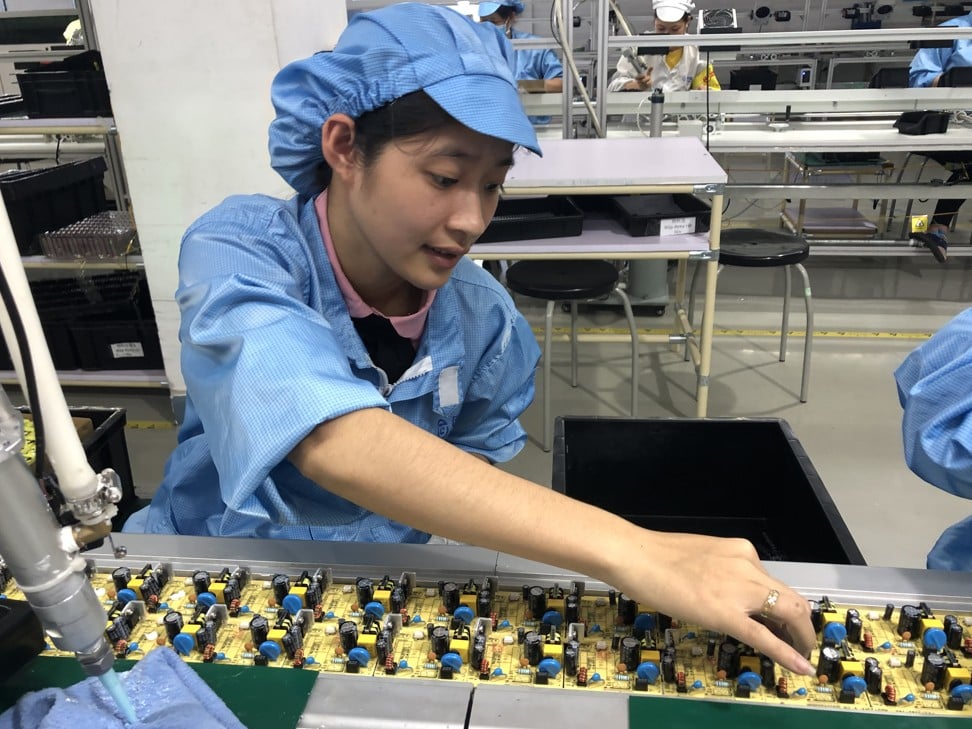
US President Donald Trump’s tariffs on Chinese goods enacted last year changed that, with 16 of the 21 Chinese companies that have relocated to the China-Vietnam
(Shenzhen-Haiphong) Economic and Trade Cooperation Zone – many of them electronic device manufacturers – having done so since the start of the trade war.
However, profit-making was never the top priority for the park’s operators, which took over the reins from private investors after a series anti-Chinese riots raged through southern and central Vietnam in May 2014 forced the owners to abandon the project.
Protesters set fire to other industrial parks and factories and attacked Chinese workers, killing more than 20 people and injuring more than 100.
While any commercial organisation would be thrilled at the rush of manufacturing firms into Vietnam, for the park’s operators, the first duty is to showcase the Chinese government’s top international economic cooperation project, the Belt and Road Initiative.
[They] requested that we make this industrial park a showcase for the Belt and Road Initiative, so that when our top leaders pay state visits to Vietnam, they can come to our park Chen Xu
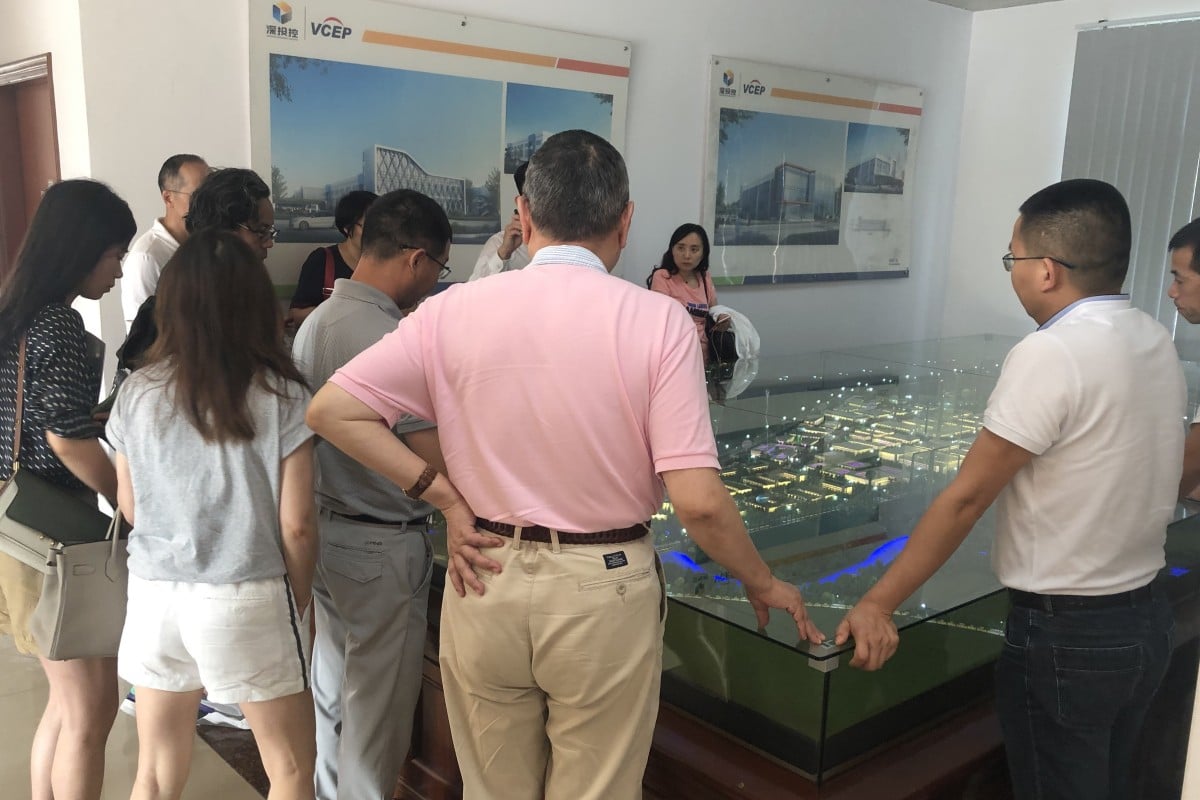
The Shenzhen arm of the State-owned Assets Control and Supervision Commission (SASAC), which oversees all city owned companies “has requested that we make this industrial park a showcase for the Belt and Road Initiative, so that when our top leaders pay state visits to Vietnam, they can come to our park”, Chen Xu, vice general manager at the Vietnam-China Economic and Trade Cooperation Park (VCEP), told the South China Morning Post.
The Chinese industrial enclave in Vietnam is part of a largely untold story of the trade war. The common narrative is that Chinese and international firms are fleeing China to avoid paying tariffs, setting up in low-cost hubs in Vietnam and elsewhere in Southeast Asia, but the picture is more nuanced than that.
In Haiphong, a part of the Chinese government is actively encouraging firms to come to Vietnam, armed with US$200 million in investment capital and with a vision of creating 30,000 jobs by the time the entire three-phase project is completed in 2022.
The then-private VCEP project was suspended after the 2014 riots, and after the local government in Vietnam said it would reclaim the land unless it resumed, the Shenzhen government “decided to fully take over the project”, according to VCEP general manager Zhang Xiaotao.
Newcomers must now buy land from the park and build their facilities themselves as the original buildings have already been rented out. Photo: Cissy Zhou
“Our evaluation then was that we could not make a profit out of this project. Then why did we still take it over? We have to serve the Belt and Road Initiative, as it is a national strategy,” Zhang added. “In fact, we surrender part of our profit [because] we sell the land [in the park] at a lower price and with better facilities than in neighbouring industrial parks. We are still in the red based upon the current land price. Our bosses understand the situation and ask us at least not to lose money.
“To make a profit is of course the priority of any company. But we are different, we are not a pure commercial project.”
Furthermore, it is a commonly held assumption that China is only open to losing low-end, labour intensive and high-polluting industry, as it looks to upgrade its manufacturing profile domestically. And while there is certainly truth to that as examples of low-value Chinese manufacturing plants litter Vietnam, VCEP is keen to avoid that persona.
Because of the need to maintain a relatively high-profile, the park does not welcome labour-intensive manufacturers such as shoes factories, because “it is bad for our image”, Chen said. Instead, it is focused on hi-tech engineering – exactly the kind of industry China is desperate to nurture on its own soil. In this sense, the Shenzhen-Haiphong facility represents something of a paradox.
With 1,500 people currently employed, it is some way from reaching its 30,000 goal, but the number of Chinese manufacturers wanting to set up factories in the park is now about eight times what it was before the trade war started last July, according to both Chen and Zhang. Newcomers must now buy land from the park and build their facilities themselves as the original buildings have already been rented out.
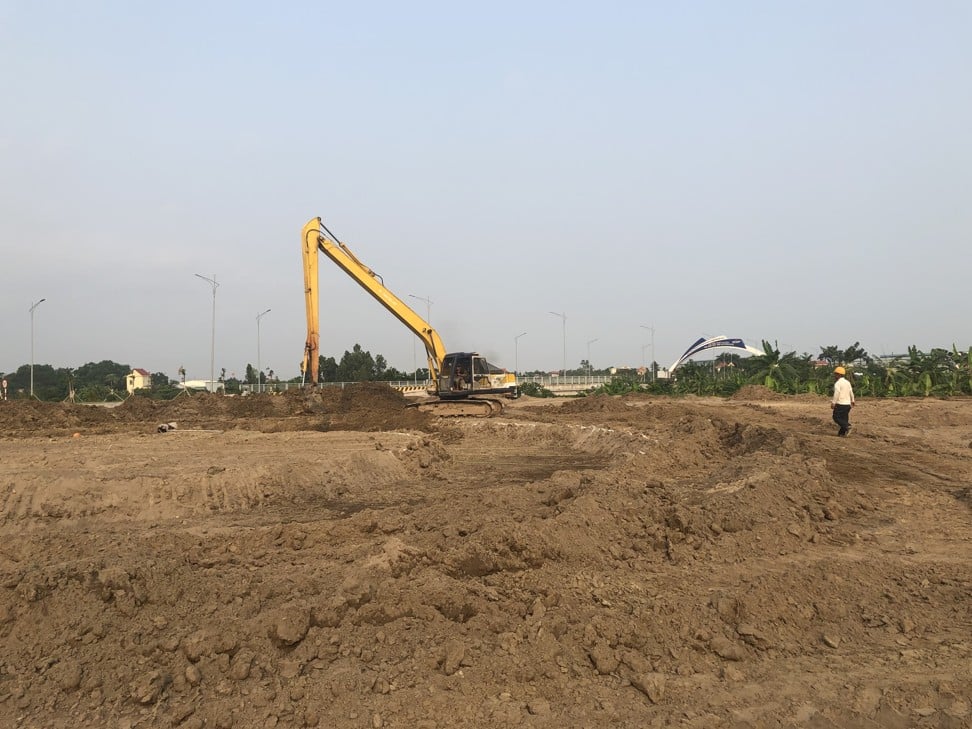
The relatively poor state of the surrounding infrastructure has also led VCEP to spend 30 million yuan (US$4.3 million) on a new road and bridge linking the park to the national highway in Haiphong.
“We could not wait for the Vietnamese government to build the infrastructure. They don’t have the money and their efficiency is low, so we built it ourselves,” said Li Meng, a member of VCEP’s Strategic Investment Department, who said it took less than nine months to finish the project.
The cost of the bridge was more than triple what it would have cost in China as “the efficiency is much lower here and we needed to import a lot of material from China due to lack of material in Vietnam”, Li added
“Every inch of the road and the bridge linking the national highway in Haiphong to VCEP is paved with renminbi.”
The Vietnam-China Economic and Trade Cooperation Park has a vision of creating 30,000 jobs by the time the entire three-phase project is completed in 2022. Photo: Cissy Zhou
TP-Link, the Shenzhen-based Chinese manufacturer of computer networking products, has rented a plant in the park and will start testing its equipment in July. The company, the world’s largest provider of consumer Wi-fi networking devices, has bought an additional 140,000 square metres of land in the park to expand production.
When TP-Link bought the land in late-2018, the price was between US$75 to US$80 per square metre, Chen said. Now, six months later, the price has risen to US$90 per square metre. This is indicative of the huge spike in interest in manufacturing in Vietnam caused by the trade war. Data from Vietnam’s Foreign Investment Agency shows that Vietnam attracted US$16.74 billion in foreign capital over the first five months of 2019, a year-on-year increase of 69.1 per cent. Of this, 72 per cent was invested in the processing and manufacturing sectors.
“Chinese local governments are, of course, unhappy with the increasing number of manufacturers who are relocating to Vietnam, but President Xi has clearly put forward the Belt and Road Initiative, which local governments cannot disturb. So local governments are not encouraging manufacturers to relocate, but they dare not try to stop them,” said vice-general manager Chen.
The Chinese inflow has also met with opposition in Vietnam, although far from the scale of the deadly riots of 2014.
“Some local [Vietnamese] media have been demonising China, with local prime time TV news talking about fake Chinese meat and poisoned food and hyping these cases. High-ranking Chinese officials have asked the Vietnamese government to guide public opinion in the right direction,” Chen added.
General manager Zhang added that the Vietnamese authorities have also become more sensitive to investment from China, a view reflected by Lam Thanh Ha, a senior lecturer at the Diplomatic Academy of Vietnam university which operates under the management of Vietnam’s Ministry of Foreign Affairs. “Overreliance on foreign cash in general and Chinese capital in particular may pose risks for Vietnam in terms of exchange rate fluctuations and external influences,” Ha warned.
“As production is generally dependent on transnational supply chains, foreign enterprises in Vietnam are often deeply engaged in both import and export processes, leaving the Vietnamese economy vulnerable to global economic conditions,” Ha added.
In a
by the Post earlier in May, Ha warned that Vietnam should avoid “becoming China’s dirty industrial backyard”, although Zhang had the opposite view.
“We are not shifting all our low-end industries to Vietnam, which would be irresponsible. China is trying to help Vietnam with sincerity, even if we don’t make a profit, we still want to proceed with the project,” he said.
Source: SCMP
Posted in Assets Control and Supervision Commission (SASAC), Beijing, Belt and Road Initiative, Belt and Road Initiative (BRI), China-Vietnam (Shenzhen-Haiphong) Economic and Trade Cooperation Zone, China’s state-owned industrial park, Foreign Investment Agency, Haiphong, image, processing and manufacturing sectors, profits, Shenzhen, Strategic Investment Department, TP-Link, trade war, trumps, Uncategorized, VCEP, Vietnam, Vietnam-China Economic and Trade Cooperation Park (VCEP), Vietnamese government, Xi JinPing |
Leave a Comment »
08/03/2019
Visitors are seen at a tulip fair at Baiwankui garden in Nansha free trade zone in south China’s Guangdong Province, Feb. 9, 2019. (Xinhua/Liu Dawei)
BEIJING, March 7 (Xinhua) — China expects to see wider opening-up as it pledges to do more to attract foreign investment and promote global cooperation at the ongoing annual “two sessions.”
“We will promote all-round opening-up and foster new strengths in international economic cooperation and competition,” Chinese Premier Li Keqiang said when delivering the government work report to the annual legislative session Tuesday.
At the session, further relax of controls over market access has been announced, a draft foreign investment law will be deliberated, and the Belt and Road cooperation has been promoted.
UNVEILING OPPORTUNITIES
The government will further shorten the negative list which outlines fields off-limits to foreign investors, Ning Jizhe, deputy director of the National Development and Reform Commission, told a press conference on the sidelines of the annual legislative session Wednesday.
China will roll out more opening measures to the agriculture, mining, manufacturing and service sectors, and allow wholly foreign-funded enterprises to operate in more sectors, Ning said.
John Huang with the British information service provider Experian believes that international investors will welcome China’s further opening-up.
“Some core industries, once considered to be ‘the most difficult areas to open up,’ such as automobile manufacturing and financial services, are now welcoming foreign investment,” said Huang, managing director for decision analytics of Experian Greater China.
“The Chinese government’s consistent commitment to opening-up has given foreign enterprises confidence about the business environment here,” said SangBoem Han, CEO of LG Display from the Republic of Korea.
In July 2018, LG Display opened an OLED panel factory in south China’s Guangdong Province with a total investment of 46 billion yuan (6.9 billion U.S. dollars).
China saw a record foreign direct investment of 135 billion U.S. dollars in 2018 despite a global economic downturn and rising protectionism.
“In the early days, foreign firms received preferential policies regarding land, electricity and taxes in China,” Han said, “but more recently, the government has increased its protection of intellectual property and improved efficiency.”
FOREIGN INVESTMENT LAW
On Tuesday, Premier Li emphasized opening up based on rules and related institutions.
This will help China better conform with the international rules, said Zhang Jin, a national political advisor and businessman from Guangdong.
“This is also in line with China’s further integration with globalization and engagement in international competition,” Zhang said.
A highlight at this year’s “two sessions” is the draft foreign investment law, which is to be submitted to this year’s session of the 13th National People’s Congress (NPC) for review.
Once adopted, the unified law will replace three existing laws on Chinese-foreign equity joint ventures, non-equity joint ventures (or contractual joint ventures) and wholly foreign-owned enterprises.
The foreign investment law would be highly significant to protect legitimate rights and interests of foreign investors and ensure fair competition, said Loh Jen Yuh, president of China & Investment Management of CapitaLand Group, one of Asia’s largest real estate companies.
“The law shows China’s openness and the rule of law,” said Han, who hoped that the enact of the law would further improve China’s business environment.
PROMOTING GLOBAL COOPERATION
Along with the efforts to attract foreign businesses, China is also stepping up the implementation of the Belt and Road Initiative (BRI) to benefit more participants.
To date, a total of 152 countries and international organizations have signed cooperation documents with China on the BRI.
“Many countries along the Belt and Road have shown their intention to cooperate with Chinese manufacturers,” said Wu Gang, a national political advisor and chairman of wind power firm Xinjiang Goldwind Science & Technology.
“We are more confident in going global under the government’s favorable policies related to the BRI,” said Wu, whose business has gained great market shares in Pakistan and Australia.
According to the government work report, China will continue to “promote the joint pursuit” of the BRI, aiming at “shared growth through discussion and collaboration.”
China has signed free trade agreements with over 20 countries and regions. According to Zhao Ji, a national political advisor and president of China’s Northeastern University, the country’s efforts to strengthen the opening-up are especially important against the weak global economic growth.
“The development of China, which has been closely connected with the world, will continue to play a key role in promoting globalization,” Zhao said.
Source: Xinhua
Posted in annual legislative session, Australia, automobile manufacturing, Belt and Road Initiative, Belt and Road Initiative (BRI), British information service provider, China & Investment Management of CapitaLand Group, China alert, Chinese-foreign equity joint ventures, deputy director of the National Development and Reform Commission, Experian, Experian Greater China, Financial Services, foreign investment law, globalization, guangdong province, John Huang, LG Display, Loh Jen Yuh, managing director for decision analytics, market access, National People's Congress (NPC), national political advisor, Ning Jizhe, non-equity joint ventures (or contractual joint ventures), Northeastern University, OLED panel factory, Pakistan, Premier Li, Premier Li Keqiang, real estate companies, Republic of Korea, SangBoem Han, Uncategorized, wholly foreign-owned enterprises, Zhang Jin, Zhao Ji |
Leave a Comment »
06/03/2019
Rwandan Foreign Minister Richard Sezibera speaks at a press conference held by the Rwandan Ministry of Foreign Affairs and International Cooperation in Kigali, capital of Rwanda, March 5, 2019. The Belt and Road Initiative is a partnership that is mutually beneficial for Rwanda and addresses Rwanda’s development challenges, Rwandan Foreign Minister Richard Sezibera said here Tuesday. (Xinhua/Cyril Ndegeya)
KIGALI, March 5 (Xinhua) — The Belt and Road Initiative is a partnership that is mutually beneficial for Rwanda and addresses Rwanda’s development challenges, Rwandan foreign minister Richard Sezibera said Tuesday in Rwandan capital city Kigali.
The Belt and Road Initiative is a good initiative, which addresses development requirements of China’s partners, said Sezibera when responding to a question on the Belt and Road Initiative and second Belt and Road Forum for International Cooperation at a press conference held by Rwandan Ministry of Foreign Affairs and International Cooperation.
China is an important partner for Rwanda at all levels, and Rwanda welcomes the growing partnership with China, he said, adding that Rwanda and China have important relationships in infrastructure development, party-to-party and people-to-people exchanges, and at the political level.
The second Belt and Road Forum for International Cooperation is going to be held in April in Beijing.
Source: Xinhua
Posted in Beijing, Belt and Road Initiative, China alert, foreign minister, Kigali, Richard Sezibera, Rwanda, Rwandan capital city, Rwandan foreign minister, Rwandan Ministry of Foreign Affairs and International Cooperation, Uncategorized |
Leave a Comment »
01/03/2019
BEIJING/GUANGZHOU, March 1 (Xinhua) — The world’s attention is on China as the country is to open its most important annual political meetings next week, known as the “two sessions.”
Foreign business leaders, observers and China watchers have expressed high hopes of seeing a more open China during the meetings and look forward to greater opportunities its development will bring to the world.
Harley Seyedin, president of American Chamber of Commerce in South China, said foreign businesses in China would keep a close eye on the discussion of the draft of foreign investment law, as it will “create a level playing field where everyone can participate,” once it is adopted and enforced.
“It will help China open up more,” Seyedin said.
A draft of China’s foreign investment law will be submitted to the upcoming plenary session of the National People’s Congress (NPC), which is scheduled to open on March 5.
Seyedin noted that foreign businesses in China have already sensed a positive signal last year, with the shortened negative list, and have confidence investing in China, fueled by the country’s efforts to protect intellectual property rights.
Mizumoto Shinji, president of Hitachi Elevator (China), said the anticipated adoption of the foreign investment law will help build a more law-based business environment in China.
“China’s business environment has greatly improved in recent years,” said Mizumoto. “We hope that China will further ease its management of foreign capital, so as to create a more stable, transparent and predictable investment environment.”
Once adopted, the unified foreign investment law will become a basic law in the field, replacing three existing laws on Chinese-foreign equity joint ventures, non-equity joint ventures (or contractual joint ventures) and wholly foreign-owned enterprises.
Pablo Rovetta Dubinsky, general manager of Spanish firm Tecnicas Reunidas’s China branch, said the law would help dispel misgivings among some foreign businesses over China’s determination to open up further.
“The foreign investment law to be discussed at the annual legislative session will mark a new beginning in China’s opening-up to the world,” Rovetta said. “It is a clear demonstration of China’s resolve to open up.”
In an interview with Xinhua ahead of the “two sessions,” Argentine ambassador to China Diego Ramiro Guelar hailed China’s spirit of cooperation as the country has been expanding its presence in commerce and investment across the globe.
“Compared to some western countries, China has a much more open attitude toward sharing and transferring its technology, which, in my opinion, is the core spirit of the Belt and Road Initiative,” Guelar said.
The ambassador added that as a region, Latin America had established a close association and mutual trust with China, and was keen to maintain the robust cooperation.
Khalifa Mohammed Alkhorafi, the consul-general of the State of Kuwait in the southern Chinese city of Guangzhou, expressed hope that the upcoming “two sessions” would send more positive signals on the Chinese economy. He added that Kuwait, which is strategically situated in the Persian Gulf region, would provide a lot of business opportunities for Chinese companies.
“There is a very strong relationship between China and Kuwait. There will be many big projects coming soon,” he said.
Lusa news agency reporter Joao Pimenta said that China’s economic achievements and its efforts on poverty alleviation had impressed the world.
“More and more Chinese families are enjoying a relatively comfortable life. China has also made remarkable achievements in poverty reduction in the process of reform and opening-up,” Pimenta said.
Diego Garcia, a Brazilian expert with China Radio International, believes that the international community is paying more attention to China’s diplomacy in global affairs.
“China is playing a constructive role on international issues, especially those concerning developing countries,” Garcia said. “In particular, the Belt and Road Initiative and the China International Import Expo have served the interests of many developing countries.”
Posted in American Chamber of Commerce, Argentine ambassador, Belt and Road Initiative, Brazilian expert, China alert, China International Import Expo, China Radio International, China's diplomacy, Diego Garcia, Diego Ramiro Guelar, Foreigners, global affairs, Guangzhou, Harley Seyedin, Hitachi Elevator (China), international community, Joao Pimenta, Khalifa Mohammed Alkhorafi, Lusa news agency, Mizumoto Shinji, more open China, National People's Congress (NPC), Pablo Rovetta Dubinsky, Persian Gulf, State of Kuwait, Tecnicas Reunidas, Uncategorized |
Leave a Comment »
28/02/2019
HONG KONG, Feb. 27 (Xinhua) — The financial secretary of China’s Hong Kong Special Administrative Region (HKSAR) government delivered Hong Kong’s annual budget on Wednesday, saying the Guangdong-Hong Kong-Macao Greater Bay Area offers golden opportunities for Hong Kong to explore new directions and open up new horizons.
To support implementation of various measures, the budget, themed “supporting enterprises, safeguarding jobs, stabilizing the economy, strengthening livelihoods,” provides new resources ready for use of about 150 billion HK dollars (about 19.1 billion U.S. dollars), with additional resources earmarked for various purposes.
“This demonstrates our determination to enhance public services, support enterprises, relieve people’s burden and invest for the future,” Financial Secretary of the HKSAR government Paul Chan said.
Under mounting external pressures, Hong Kong’s economic growth moderated from 4.1 percent in the first half of 2018 to 2.1 percent in the second half of the year, with growth for the fourth quarter at a mere 1.3 percent, the lowest since the first quarter of 2016, he said.
Overall, Hong Kong’s economy grew by 3 percent in 2018, at the lower end of the range projected in last year’s Budget but still higher than the trend growth rate of 2.8 percent over the past decade, he added.
Chan forecast a surplus of 58.7 billion HK dollars for 2018-19. Fiscal reserves are expected to reach 1,161.6 billion HK dollars by March 31, 2019; economic growth of 2 to 3 percent in real terms for Hong Kong in 2019.
He said the development of innovation and technology (I&T) will bring huge economic benefits to Hong Kong, adding that sufficient resources, with a commitment of over 100 billion HK dollars has been allocated in this area so far.
More efforts will be made to support scientific research and I&T sectors by developing I&T infrastructure, promoting research and development (R&D), pooling talent, supporting enterprises and promoting reindustrialization.
Talking about national development strategy, Chan emphasized that the Greater Bay Area development and the Belt and Road Initiative are providing rare opportunities for Hong Kong.
Chan said that the outline development plan for the Greater Bay Area, promulgated last week, is a milestone setting out the development directions for the Greater Bay Area up to 2035.
Hong Kong, positioned as international financial, transportation and trade centers as well as an international aviation hub in the Greater Bay Area, will strengthen its roles as a global offshore Renminbi business hub and an international asset and risk management center; and will devote great efforts to develop I&T industries as well as international legal and dispute resolution services, the financial chief said.
Meanwhile, the Belt and Road Initiative will create greater room for Hong Kong’s economic and social development. There has been positive outcomes in areas such as supporting industries in exploring markets, establishing business matching platforms for enterprises and encouraging Hong Kong’s professional services sector to participate in Belt and Road projects.
As for land supply, Chan said, the HKSAR government will ensure that adequate resources are provided to support fully the short, medium and long-term measures to increase land and housing supply.
The estimated public housing production for the next five years is about 100,400 units and the supply of first-hand private residential units is expected to remain at a relatively high level in the coming three to four years at about 93,000 units, according to Chan. (1 U.S. dollar = 7.84 HK dollars)
Source: Xinhua
Posted in Belt and Road Initiative, China alert, enterprises, financial, financial secretary, Greater Bay Area, Guangdong-Hong Kong-Macao, HKSAR government, Hong Kong, Hong Kong Special Administrative Region (HKSAR), Infrastructure, national development strategy, new horizons, Paul Chan, private residential units, professional services, public housing, reindustrialization, Renminbi, research and development (R&D), trade centers, transportation, Uncategorized |
Leave a Comment »
26/02/2019
BEIJING, Feb. 26 (Xinhua) — China’s service trade rose 11.5 percent year-on-year and hit a record high in 2018, the Ministry of Commerce said Tuesday.
Imports and exports of services totaled 5.24 trillion yuan (about 782.1 billion U.S. dollars) last year, ranking the world’s second largest for five years in a row, the Ministry of Commerce said on its website after a national meeting on service trade.
As the country continued to transition its economy, the service sector prospered and contributed to nearly 60 percent of GDP growth.
The country will move to expand service exports, boost service consumption and push poverty reduction through development of the household service industry, according to the ministry.
The country will also work to promote high-quality development of the service trade and commercial service sector, and expand the overseas service market with a focus on countries along the Belt and Road, Xian Guoyi, a ministry official, said at Tuesday’s meeting.
Source: Xinhua
Posted in Belt and Road Initiative, China alert, gdp growth, Imports and exports, Ministry of Commerce, ministry official,, record high, service trade, Uncategorized, Xian Guoyi, yuan |
Leave a Comment »





 CHINDIA ALERT: You'll be living in their world, very soon