Chindia Alert: You’ll be Living in their World Very Soon
aims to alert you to the threats and opportunities that China and India present. China and India require serious attention; case of ‘hidden dragon and crouching tiger’.
Without this attention, governments, businesses and, indeed, individuals may find themselves at a great disadvantage sooner rather than later.
The POSTs (front webpages) are mainly 'cuttings' from reliable sources, updated continuously.
The PAGEs (see Tabs, above) attempt to make the information more meaningful by putting some structure to the information we have researched and assembled since 2006.
Research sheds light on 500-year Chinese weather cycle and suggests a cool change could be on the way
Findings leave no room for complacency or inaction
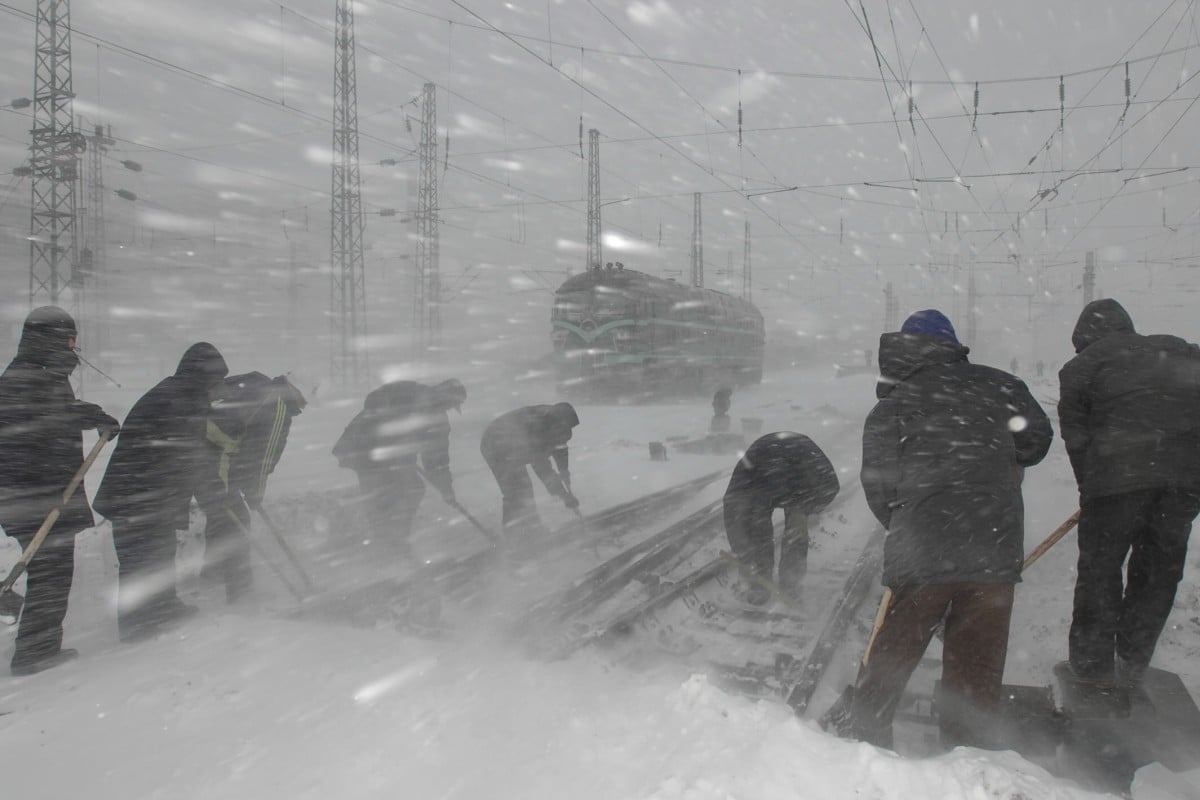
A team of Chinese researchers says a period of global cooling could be on the way, but the consequences will be serious. Photo: Xinhua
A new study has found winters in northern China have been warming since 4,000BC – regardless of human activity – but the mainland scientists behind the research warn there is no room for complacency or inaction on climate change, with the prospect of a sudden global cooling also posing a danger.
The study found that winds from Arctic Siberia have been growing weaker, the conifer tree line has been retreating north, and there has been a steady rise in biodiversity in a general warming trend that continues today. It appears to have little to do with the increase in greenhouse gases which began with the industrial revolution, according to the researchers.
Lead scientist Dr Wu Jing, from the Key Laboratory of Cenozoic Geology and Environment at the Institute of Geology and Geophysics, part of the Chinese Academy of Sciences, said the study had found no evidence of human influence on northern China’s warming winters.
“Driving forces include the sun, the atmosphere, and its interaction with the ocean,” Wu said. “We have detected no evidence of human influence. But that doesn’t mean we can just relax and do nothing.”
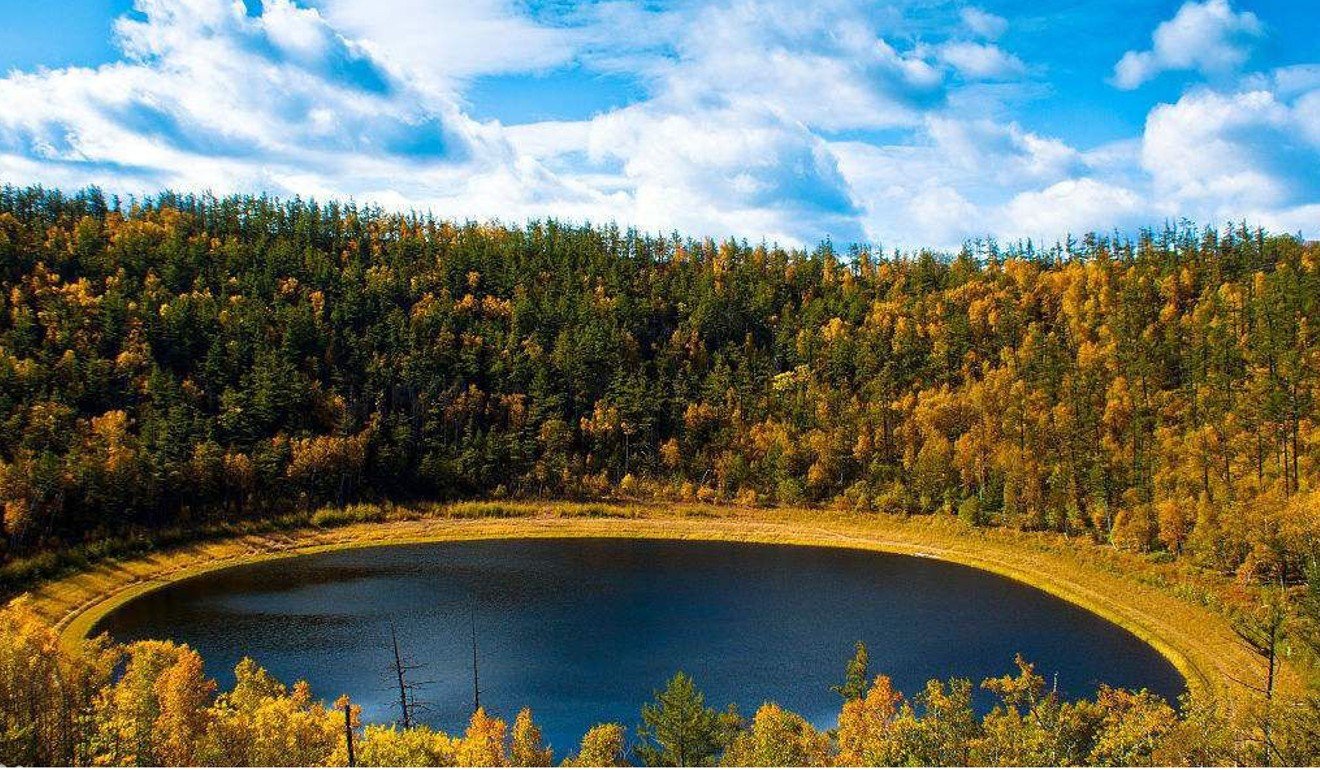
Moon Lake, a small volcanic lake hidden in the deep forest of China’s Greater Khingan Mountain Range, where a team of scientists spent more than a decade studying the secrets hidden in its sediments. Photo: Baidu
Wu and her colleagues are concerned that, as societies grow more used to the concept of global warming, people will develop a misplaced confidence in our ability to control climate change. Nature, they warned, may trick us and might catch us totally unprepared – causing chaos, panic, famine and even wars as the global climate system is disrupted.
There are already alarming signs, according to their paper, which has been accepted for publication by the online Journal of Geophysical Research: Atmospheres.
Wu and her colleagues spent more than a dozen years studying sediments under Moon Lake, a small volcanic lake hidden in the deep forests of the Greater Khingan Mountain Range in China’s Inner Mongolia autonomous region. They found that winter warming over the past 6,000 years had not been a smooth ride, with ups and downs occurring about every 500 years.
Their findings confirmed an earlier study by a separate team of Chinese scientists, published by online journal Scientific Reports in 2014, which first detected the 500-year cyclical pattern of China’s summer monsoons and linked it to solar activity.
The 2014 research, which drew on 5,000 years’ worth of data, suggested the current warm phase of the cycle could terminate over the next several decades, ushering in a 250-year cool phase, potentially leading to a partial slowdown in man-made global warming.
Wu said the latest study, with 10,000 years’ worth of new data, not only helped to draw a more complete picture of the 500-year cycle, but also revealed a previously unknown mechanism behind the phenomenon, which suggested the impact of the sun on the Earth’s climate may be greater than previously thought.
According to Wu, the variation in solar activity alone was usually not strong enough to induce the rapid changes in vegetation the research team recorded in the sediment cores of Moon Lake. Instead, the scientists found the warming impact was amplified by a massive, random interaction between surface seawater and the atmosphere in the Pacific Ocean known as the El Nino-Southern Oscillation.
As a result of the research findings, Wu said she was now more worried about cooling than warming.
“A sharp drop of temperature will benefit nobody. The biggest problem is, we know it will come, but we don’t know exactly when.”
Chinese Vice Premier Han Zheng, also a member of the Standing Committee of the Political Bureau of the Communist Party of China Central Committee, presides over a meeting of China National Committee for Biodiversity Conservation in Beijing, capital of China, Feb. 13, 2019. (Xinhua/Wang Ye)
BEIJING, Feb. 13 (Xinhua) — Chinese Vice Premier Han Zheng on Wednesday stressed solid efforts to further protect biological diversity.
Han, also a member of the Standing Committee of the Political Bureau of the Communist Party of China Central Committee, made the remarks when presiding over a meeting of China National Committee for Biodiversity Conservation.
Despite the substantial progress that has been made, more needs to be done to stop the current decline in biodiversity, he said.
In order to offer the highest level of protection for biodiversity, Han stressed establishing a management system for protected nature areas by establishing a network of national parks, nature reserves and parks.
He urged stepping up protection of wild fauna and flora with strengthened oversight and cracking down on related illegalities, adding that biodiversity should be supported with the optimal institutional and legal framework.
Han also called for making preparations to host the 15th meeting of the Conference of the Parties to the Convention on Biological Diversity in China next year.
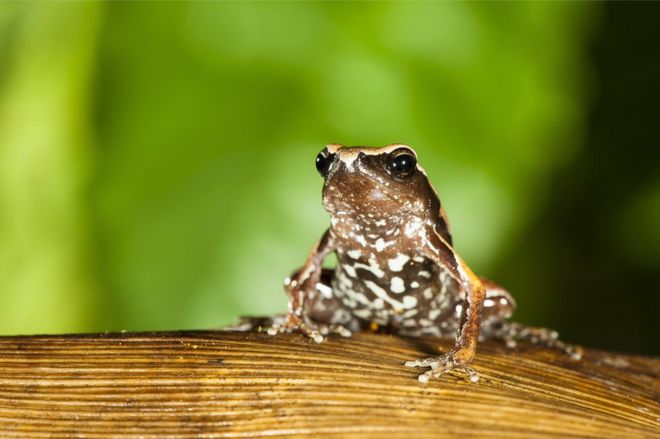
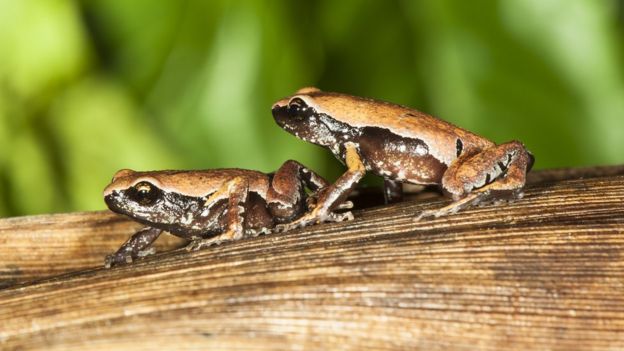
Indian researchers have discovered a new species of frog – in a roadside puddle.
Sonali Garg, a PhD student at Delhi University, and her supervisor SD Biju found the new species in the Western Ghats, a biodiversity hotspot in southern India.
The species belongs to a new Indian frog group or genus which the scientists have named Mysticellus.
The name is derived from Latin and means mysterious and diminutive.
The scientists discovered the narrow-mouthed frog after three years of extensive explorations, and have confirmed that it represents an entirely new species and genus of microhylid frogs.
The new genus is currently known only in a single locality.
“Our discovery of this new frog genus from one of the most explored and researched regions in the Western Ghats indicates that documentation of amphibians in this globally recognised biodiversity hotspot is still far from being complete,” says Sonali Garg.
“This frog went unnoticed until now probably because it appears for less than four days for breeding activities and lives a secretive lifestyle for the rest of the year.”
A number of new frog species have been discovered in the Western Ghats in the past decade, making it one of the leading biodiversity hotspots in the world.
“At the same time, Indian amphibians face various extinction threats, especially due to habitat loss and degradation. The only known population of the new genus is found in a wayside area disturbed with vehicular movement, plantation activities and human settlements,” says Ms Garg.
“Since little is known about the habitat requirements and the distribution range of the new frog, the specific site needs to be preserved to protect this frog.”
A new tadpole that burrows through sand was discovered in Western Ghats in 2016, and an extraordinary tree frog thought to have died out more than a century ago was also rediscovered in the same year.




 CHINDIA ALERT: You'll be living in their world, very soon