Chindia Alert: You’ll be Living in their World Very Soon
aims to alert you to the threats and opportunities that China and India present. China and India require serious attention; case of ‘hidden dragon and crouching tiger’.
Without this attention, governments, businesses and, indeed, individuals may find themselves at a great disadvantage sooner rather than later.
The POSTs (front webpages) are mainly 'cuttings' from reliable sources, updated continuously.
The PAGEs (see Tabs, above) attempt to make the information more meaningful by putting some structure to the information we have researched and assembled since 2006.
Indian officials have begun relocating some 300 crocodiles from a reservoir next to the world’s tallest statue to allow a seaplane service for visitors.
The animals, some around 3m (9ft) long, are being lured into metal cages and sent elsewhere in the western state of Gujarat.
But conservationists have criticised the plan.
The 182m statue of independence hero Sardar Vallabhbhai Patel was inaugurated last October.
The bronze-clad statue sculpture, located some 200km (125 miles) from the state’s main city of Ahmedabad, has become a popular attraction.
But there are no train services and most tourists reach the site, known as “Statue of Unity”, by bus.
Image copyrightAFPImage captionThe statue is nearly twice as tall as the Statue of Liberty in New YorkLocal forestry official Anuradha Sahu said the instruction had come from the state government “for safety reasons as the tourist influx has increased”, AFP news agency reports.
So far about a dozen crocodiles have been removed and transported on the back of pick-up trucks.
Community Science Centre Director Jitendra Gavali said the decision to remove the crocodiles was a violation of the country’s wildlife protection legislation.
15 out, 485 more to go: Crocodiles removed for seaplane to Unity statue
Using fish as bait to lure them into cages, the Forest Department has started removing the crocodiles, the largest of them so far about 10 feet. There is no deadline as of now for finishing the…
indianexpress.com
Prime Minister Narendra Modi – who, like Patel, was born in Gujarat – commissioned the statue when he was the state’s chief minister in 2010.
In recent years, Mr Modi’s ruling Hindu nationalist Bharatiya Janata Party (BJP) has embraced Patel in an attempt to claim his legacy.
The bill attempts to grant citizenship to immigrants who are not Muslim.
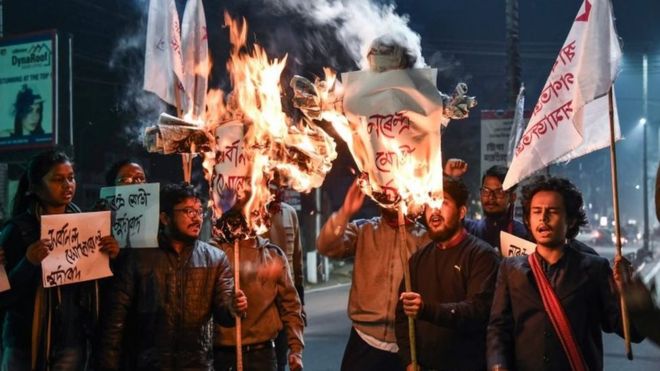
Students, activists, politicians and celebrities have all joined the protests against India’s ruling party.
What does the bill say?
The Citizenship (Amendment) bill seeks to provide citizenship to non-Muslim migrants from Pakistan, Bangladesh and Afghanistan.
Supporters of the bill defend it by saying that Muslims have been excluded as the bill offers Indian nationality only to religious minorities fleeing persecution in neighbouring countries.
It comes months after the publication of the National Register of Citizens (NRC) – a list of people who can prove they came to the state by 24 March 1971, a day before neighbouring Bangladesh became an independent country. Around 3.62 million of those left off the register have submitted claims for inclusion again.
Media captionLiving in limbo: Assam’s four million unwanted
India said the process was needed to identify illegal Bangladeshi migrants.
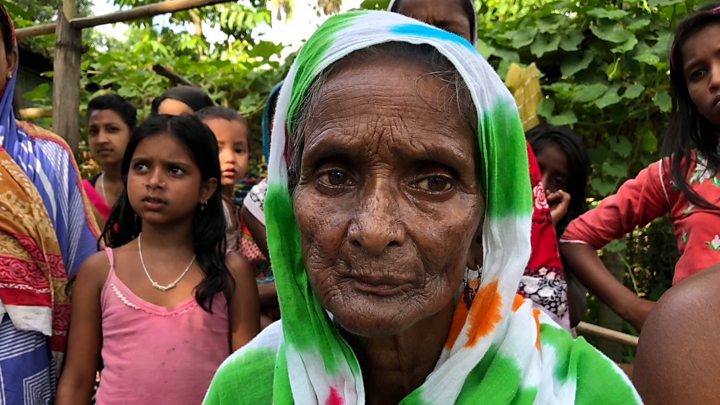
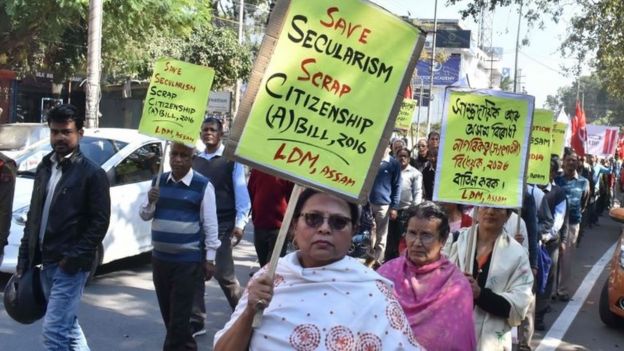
Thousands of students have joined writers, artists and activists in regular protests against the bill, fearing that tens of thousands of Bengali Hindu migrants who were not included in the NRC may still get citizenship to stay on in the state.
How bad are the protests?
Offices of the Bharatiya Janata Party (BJP), which runs both the federal government and Assam’s state government, have been burnt down by angry mobs in many places.
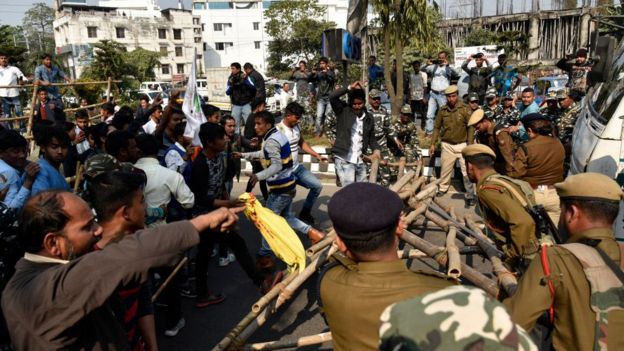
Protesters have also frequently surrounded the state secretariat in the capital, Guwahati, demanding the shelving of the amendment.
Some supporters of Assamese peasant leader Akhil Gogoi even staged a nude protest in the national capital, Delhi, earlier this month.
“The movement against the bill has gained momentum across the north-east and if it is not withdrawn, the situation in the region may turn volatile,” Sammujal Bhattacharyya of the All Assam Students Union (Aasu), which is leading the protests against the bill in Assam, told the BBC.
He said it was an attempt to provide citizenship “by backdoor” to illegal non-Muslim migrants who were excluded from the NRC.
Image copyrightGETTY IMAGESImage captionAssam has seen vocal protests against the bill
In the early 1980s, Aasu was behind the anti-migrant protests in Assam that paralysed the state and degenerated into rioting that led to more than 3,000 deaths.
The agitation ended in 1985 after March 1971 was agreed as the cut-off date to determine citizenship.
Why is the BJP determined to get the bill through?
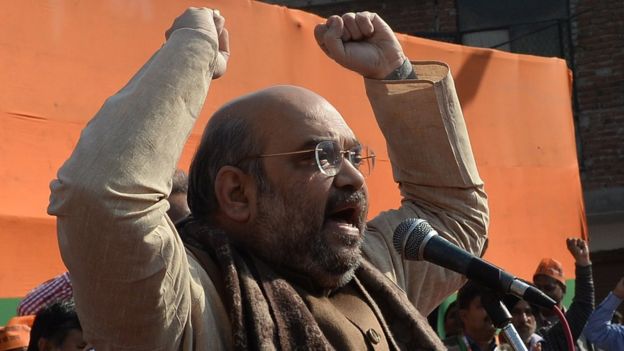
Despite the protests, BJP president Amit Shah has insisted that the government is determined to pass the bill.
“Hindus from these countries have nothing to fear, they will all get Indian citizenship,” Mr Shah told a rally in West Bengal state this week. Analysts say it’s an obvious attempt to win over Bengali Hindus to the BJP’s cause.
The Bengali Hindus are in a majority in the states of West Bengal and Tripura, with substantial numbers in Assam. The three states together will account for 58 seats in upcoming general elections.
Image copyrightGETTY IMAGESImage caption BJP president Amit Shah has said the government is committed to pass the bill
But while the BJP may seek to win many of these seats to offset possible losses in north India, it risks losing the support of the ethnic Assamese, who voted for the party in the 2016 state elections.
Assam Chief Minister Sarbananda Sonowal, himself a former Aasu leader, is on the defensive, requesting students not to join the agitation which, he says, is fuelled by “misinformation”.
“Nobody will automatically get citizenship if the amendment is passed into law. The government will closely examine all applications and reject those that are not tenable,” he said this week.
What are the other reactions to the bill?
India’s main opposition Congress party opposes the bill on the grounds that determining citizenship on the basis of religion goes against the spirit of the constitution.
Regional parties who have joined hands with the BJP to form governments in Assam and the neighbouring states of Meghalaya, Nagaland and Mizoram have threatened to renege on their alliances because they all oppose the bill.
Image copyrightAFPImage caption Demands to scrap the bill have been growing louder
“Anyone who came to Assam after March 1971 is a foreigner, an illegal migrant. We don’t care if he or she is Hindu or Muslim. Religion is not the issue here, it is a question of protecting indigenous people from being swamped by foreigners in their own land,” university student Mitali Baruah told the BBC as she marched to a protest rally.
That has been the dominant sentiment with most of the indigenous communities – a migrant is unwelcome, regardless of religion.
“The BJP has failed to understand the pulse of the region, because they see everything through the prism of religion,” said analyst Samir Purkayastha.
Assembly election result 2018: The leaders decided to lay a roadmap for the 2019 Lok Sabha elections to oust the BJP from power by evolving a common strategy.
Assembly election result 2018: West Bengal chief minister Mamata Banerjee was among the 21 opposition party leaders who on Monday agreed to work together to defeat the BJP.(AP)
It was people’s verdict and their victory, West Bengal chief minister Mamata Banerjee tweeted as the Congress was ahead in three states with votes being counted in the assembly elections, billed as the semi-final before next year’s Lok Sabha polls.
All three states — Madhya Pradesh, Rajasthan and Chhattisgarh — were won last time by the BJP, which had also won 60 of the 65 total parliament seats in these states in the 2014 general elections.
Votes are also being counted in Telangana, where K Chandrashekhar Rao’s Telangana Rashtriya Samiti (TRS) has raced to a massive lead, validating his decision to call early elections. In Mizoram, the Congress’ last bastion in the state, the Mizo National Front is ahead.
“Victory of democracy and victory against injustice, atrocities, destruction of institutions, misuse of agencies, no work for poor people, farmers, youth, Dalits, SC, ST, OBC, minorities and general caste,” Banerjee tweeted.
“Semifinal proves that BJP is nowhere in all the states. This is a real democratic indication of 2019 final match. Ultimately, people are always the ‘man of the match’ of democracy. My congrats to the winners,” she said.
Banerjee was among the 21 opposition party leaders who on Monday agreed to work together to defeat the Bharatiya Janata Party (BJP) and the Rashtriya Swayamsevak Sangh (RSS) and “stop their assault on the Constitution and institutions such as the Central Bureau of Investigation (CBI), the Reserve Bank of India (RBI) and the Election Commission” in a key meeting ahead of the Lok Sabha election next year.
The leaders decided to lay a roadmap for the 2019 Lok Sabha elections to oust the BJP from power by evolving a common strategy.
“In the course of the next few months, we will place before the people of the country, a comprehensive programme of work anchored in complete transparency and accountability,” read a joint statement issued after the meeting.
The parties also appealed to all “liberal, progressive and secular forces to join them in their battle to save the Constitution and protect parliamentary democracy”.
NEW DELHI (Reuters) – Indian Prime Minister Narendra Modi’s ruling party is likely to lose two heartland states while a third is too close to call, exit polls showed on Friday in the final test of popularity before a national election due by May next year.
Surveys broadcast at the end of voting for five state assemblies showed the ruling Hindu nationalist Bharatiya Janata Party (BJP) trailing behind the rival Congress party in some areas.
The actual votes will be counted on Tuesday, and exit polls have been wrong in the past, partly because of the sheer scale of Indian elections involving millions of votes.
Still, nearly all the polls showed that the Congress – led by Rahul Gandhi, the scion of the Nehru-Gandhi family – will win a clear majority in western Rajasthan state and scrape through in eastern Chhattisgarh, according a survey of surveys pulled together by NDTV.
In Madhya Pradesh, the same polls suggested the BJP and the Congress were locked in a fight down to the wire.
The combined surveys showed the BJP winning 110 seats, the Congress 108, and smaller groups 12 in the 230-member house. To rule, a party requires 116 seats.
The three states are part of the northern Hindi belt, a bastion of the ruling Hindu nationalists.
CLUES
“The BJP is struggling everywhere, for all its bravado,” said Juhi Singh, a spokesman of the regional Samajwadi Party.
Modi, who came to power with a sweeping majority in 2014, has been praised for improving governance and cutting some red tape, but has been criticised for failing to create enough jobs for the thousands of young people entering the jobs market every month.
He has also faced criticism for allowing hardliners in his party to undermine India’s secular foundations.
Foreign investors who largely remain bullish on India’s long-term prospects, are watching the state polls closely for clues to the national vote.
“The result would be consistent with what most polls are showing: that we are heading for hung parliament,” said Jan Dehn, head of research at emerging markets fund manager Ashmore.


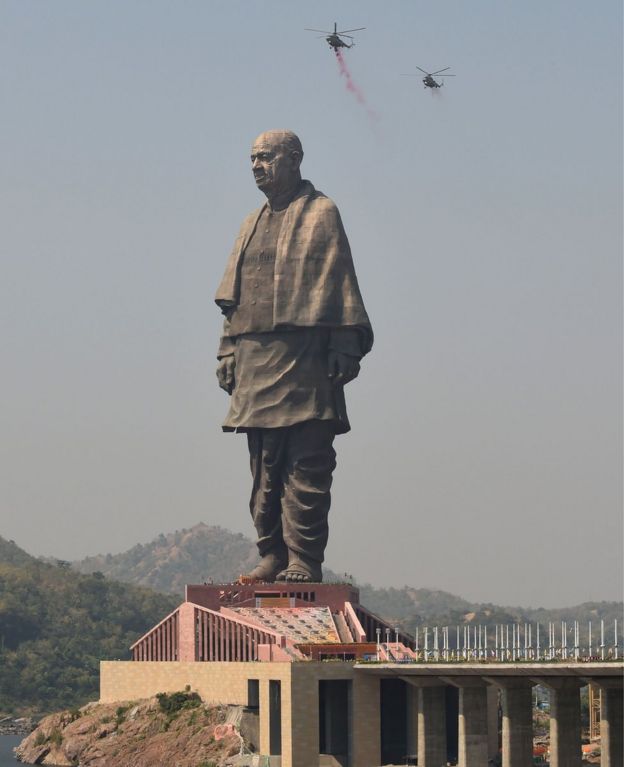 Image copyrightAFP
 Bittu Sahgal@BittuSahgal


 CHINDIA ALERT: You'll be living in their world, very soon