Archive for ‘bookstore’

23/04/2020

McDonald’s, Starbucks, Subway among foreign firms set to test China’s digital currency

  • Test in Xiong’an, the new city being built south of Beijing, will focus on everyday goods and services for the first time
  • American food outlets to be included in the digital currency tests, conducting small transactions with local firms
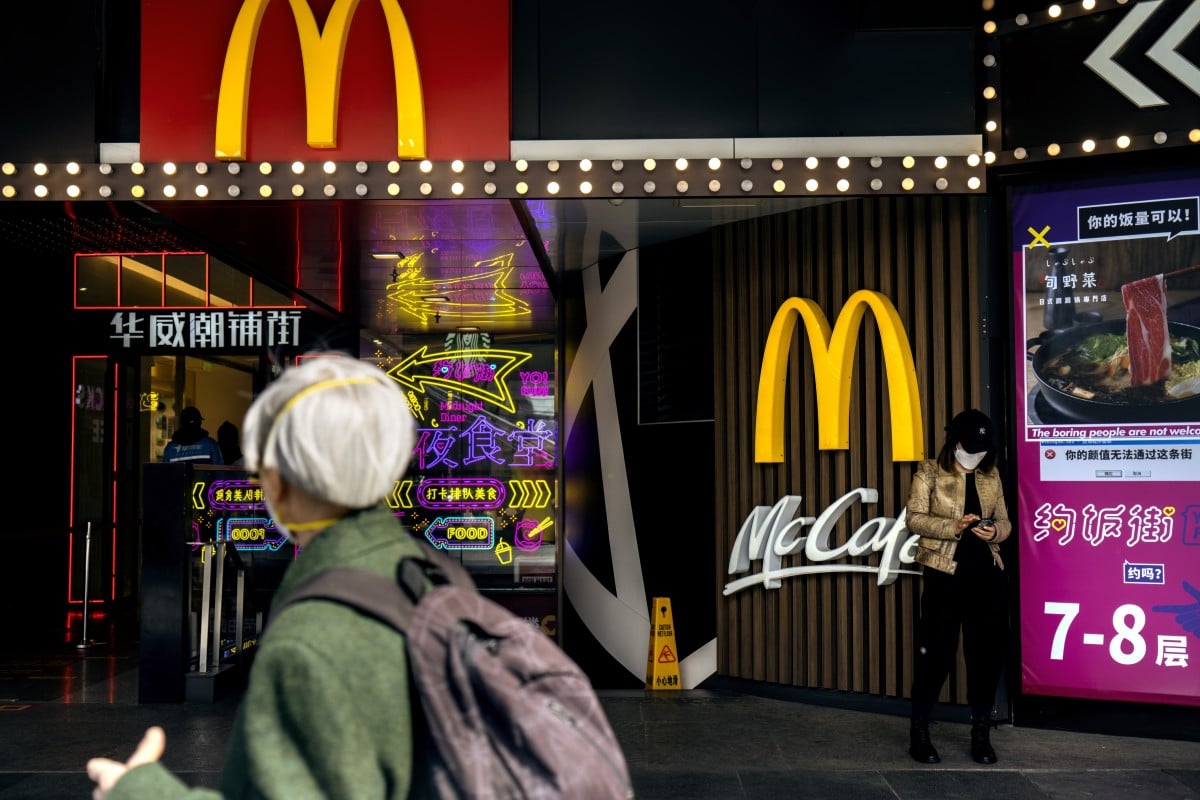
American chains Starbucks, McDonald’s and Subway were named on the People’s Bank of China’s list of firms that will test the digital currency in small transactions with 19 local businesses. Photo: Bloomberg

China’s central bank has accelerated the testing of its new sovereign digital currency and, for the first time, will include some foreign consumer brands in the programme.

American chains Starbucks, McDonald’s and Subway were named on the People’s Bank of China (PBOC)’s list of firms that will test the digital currency in small transactions with 19 local businesses.
The global names will be joined by local hotels, convenience stores, a stuffed bun shop, a bakery, a bookstore and a gym, according to details revealed at a promotional event in the Xiong’an New Area, a city being built south of Beijing, news portal Sina.com reported.
The inclusion of businesses providing everyday goods and services marks an expansion of the PBOC’s testing. It follows a previous disclosure that last week in Suzhou the digital currency was used to pay half public sector workers’ travel subsidies for May.
Is China a currency manipulator?
Wednesday’s promotional event was organised by the local branch of the National Development and Reform Commission, the powerful planning agency, and attended by representatives of the Big Four state-owned banks and two of the country’s internet giants – Alibaba and Tencent.

China has not released a timetable for launching the digital yuan, but last week’s reports on new testing have fanned speculation that it could be imminent.

The tests were reportedly accelerated after Facebook launched its Libra project in June last year, an attempt to create a global digital currency pegged to a basket of currencies and backed by global commercial giants.

The Libra Association, the consortium managing the project, announced changes last week in an attempt to win regulatory approval and pave the way for an official launch sometime later this year. The consortium said it would create multiple digital units tied to existing currencies such as the US dollar or the euro, rather than a single token based on a basket of currencies.

China’s official digital currency, known as Digital Currency Electronic Payment (DCEP), came into the public spotlight last week when a screenshot of a test version of an app developed by the Agricultural Bank of China circulated online.

The digital currency app has several basic functions, similarly to other Chinese online payment platforms such as Alipay and WeChat Pay – the country’s two most popular online payment tools – allowing users to make and receive payments, and transfer money.

“It’s certain that the DCEP is now in its final testing stage and should be officially launched,” BlockVC, an investment firm, said in a research note.

The PBOC’s digital currency research institute confirmed last Friday that testing was being conducted in four cities: Shenzhen, Suzhou, Xiong’an and Chengdu. In addition, venues for the 2022 Winter Olympics in Beijing and Zhangjiakou will join the testing programme in the future.

What is the Hong Kong Dollar Peg?
The institute, which was inaugurated in 2017, said that the test versions and applications of the currency had not been finalised.

The project testing is based on two principles: the central bank issues the virtual money to commercial banks who then pass it on to consumers, and that is aimed at replacing cash in all transactions.

China is the first major economy to publicly announce plans for a sovereign digital currency, aiming to better control the rapid rise of digital payments worldwide.

The PBOC has, however, cracked down on the trading of other digital currencies and banned banks from accepting cryptocurrencies, which it views as a risk to financial stability.

Source: SCMP

22/01/2019

Ma Ying-jeou appears as ‘shopkeeper for a day’ in Taipei bookstore

  • Video clip shows 68-year-old serving customers to ‘earn some money’ for calligraphy brushes and ink to write Lunar New Year couplets for supporters
  • Former Taiwanese president has been trying to rebuild his popularity, but his office says they are unaware of whether he plans to join 2020 election race
PUBLISHED : Tuesday, 22 January, 2019, 7:48pm
UPDATED : Tuesday, 22 January, 2019, 7:58pm

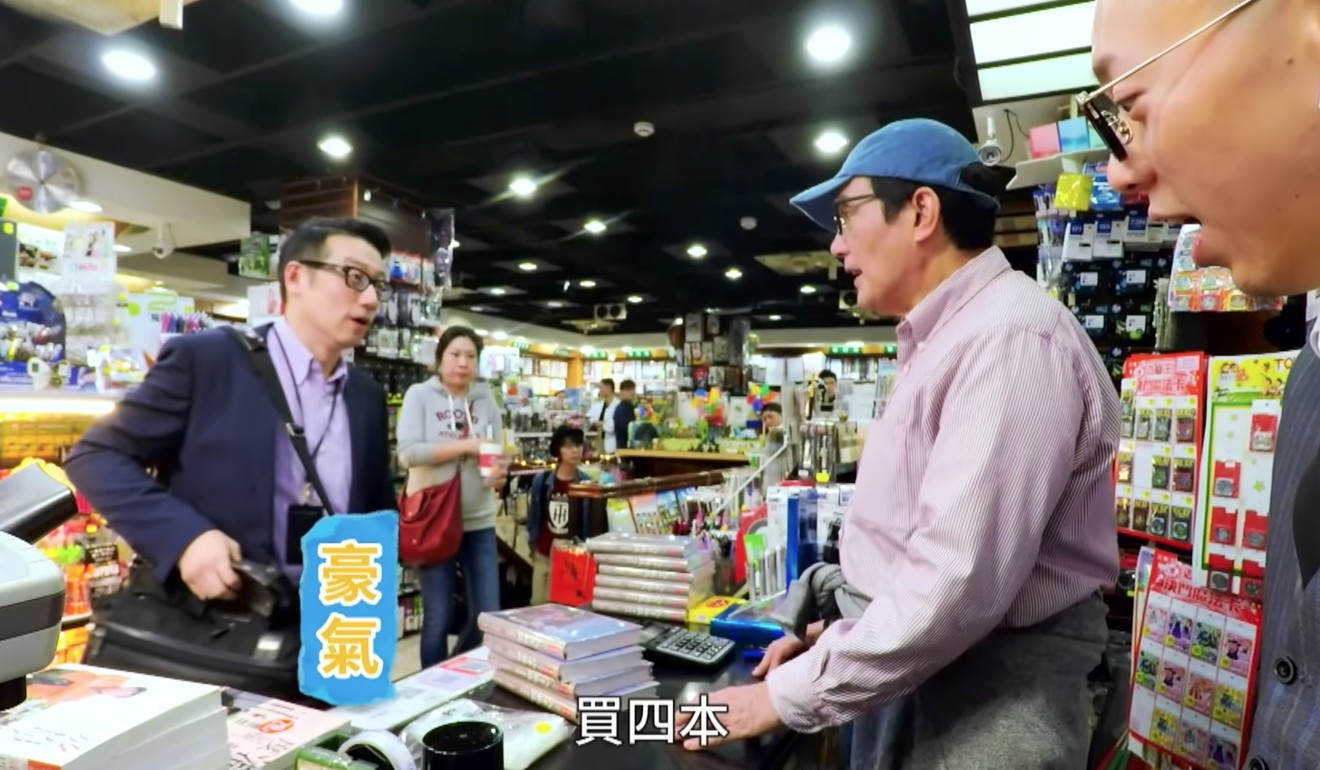
Ma Ying-jeou has been trying to rebuild his popularity, and the latest effort involves a video clip of the former Taiwanese president working as a “shopkeeper for a day” at a bookstore in Taipei.

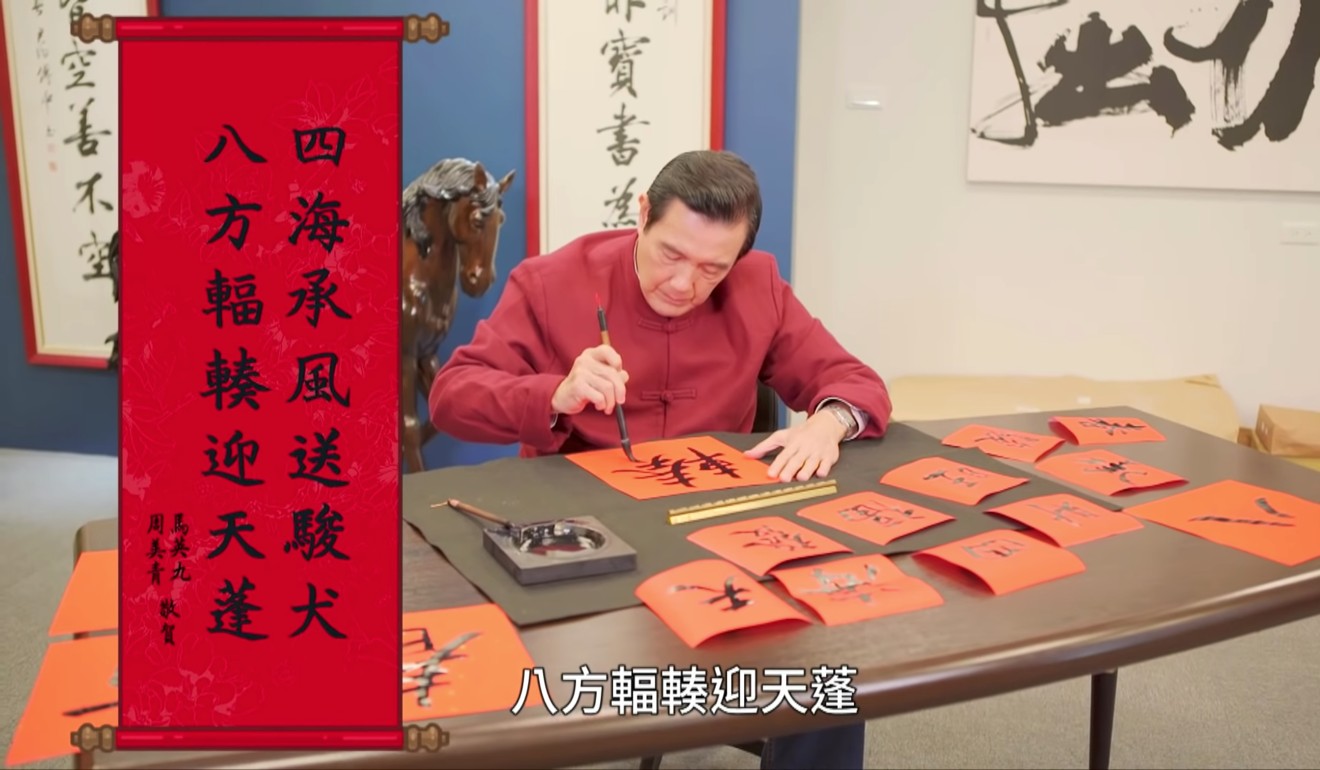
More than two years after he stepped down from the top job and the helm of the mainland-friendly Kuomintang, the 68-year-old is seen in the video serving customers to “earn some money” so that he can buy calligraphy brushes and ink to write Lunar New Year couplets to give to his supporters.

The video has been viewed more than 110,000 times since Ma’s office posted it on YouTube on Friday.

But the Harvard Law School graduate is not a natural for retail work, judging from the footage. Dressed casually and wearing a face mask to hide his identity, when a customer asks to use JKo Pay – the local version of Apple Pay – Ma appears to have never heard of it.

Still, it is a chance to try to sell some copies of his book. But he fails to drum up any interest in his memoir until he removes the face mask, to the delight of some of the women customers at least.

According to his office, the video aims to show another side to Ma who, in his younger days, was known for his movie star looks and squeaky clean image.

“We want to let the public know that the ex-president is actually an easy-going person, the man next door type,” an official from the office said.

But he would not be drawn on whether the video had anything to do with Ma potentially joining the 2020 presidential election race.

“This kind of question has been around for some time, you’ll have to ask the former president because we have no idea at all,” the official said.

In a recent radio interview, Ma also deflected questions about a possible comeback, saying he had been asked about his intentions numerous times since he launched a political foundation in July and released his memoir in December. “They are much too imaginative,” he said.

Yet efforts on social media such as the “shopkeeper” video are clearly aimed at promoting his image and winning support.

On the self-ruled island, politicians such as Taipei mayor Ko Wen-je, a former doctor with no political affiliation, has had the most success amassing fans on platforms such as YouTube and Facebook.

Kaohsiung mayor Han Kuo-yu, of the KMT, also used social media to help his campaign in the November local government elections.

Lin Ching-hung, an author and commentator, said social media campaigns were a valid way to win public support.

“To improve public understanding of serious topics or to create a laid-back image, there’s nothing wrong with politicians trying to turn around their image or do something lighthearted online – like Ma acting as a shopkeeper for a day, or President Tsai Ing-wen going to Ximending [in Taipei] to eat and shop, or former New Taipei mayor Eric Chu making a pig gesture on Facebook,” Lin said.

But he added that gaining popularity online was not the same as doing a good job in government, and voters knew that.

Ma’s popularity has risen sharply in the past year or so, in contrast with his time as president – especially during the last few years of his second term, which ended in 2016.

When he was first elected in 2008, Ma’s approval rating was at 68 per cent. But his government’s mishandling of the economy and issues such as a devastating typhoon that killed nearly 700 people in 2009, as well as the Sunflower movement – which saw hundreds of students storming the legislature in 2014 – made him highly unpopular.

Law of Unintended Consequences

continuously updated blog about China & India

ChiaHou's Book Reviews

continuously updated blog about China & India

What's wrong with the world; and its economy

continuously updated blog about China & India